

Lighting Maintenance Guide: Keep Every Light Bright & Working (2026)
A homeowner's plain-language guide to keeping a home's lighting bright, even and safe over the years — why dust quietly steals light, how to clean each fixture without damage, what actually fails in the LED era, and the clear line where a lamp swap ends and a licensed electrician begins.
Good lighting is not a one-time purchase — it is a system that slowly loses brightness, shifts colour and, in a few fittings, quietly becomes a safety concern. The most common complaint homeowners have years after a fit-out is not "my design was wrong" but "my rooms feel dimmer than they used to." Usually nothing has broken. A film of dust, kitchen grease and monsoon grime has settled on every shade, diffuser and downlight, and it is eating a surprising share of the light you paid for. The rest of the ageing story — flicker, buzz, a strip that goes half-dark, a warm white that drifts cool — is mostly about the electronics behind the light, not the light-emitting part itself.
This guide is the keep-it-working companion to the complete guide to lighting. It covers the two jobs a homeowner can and should own — cleaning and spotting what is failing — and draws a firm line at the third: anything touching wiring, circuits or a fixture that has to come off the ceiling is a licensed electrician's work. Do the cleaning, learn to read the symptoms, and hand the rest across safely.
Scope & how to read this. This is a design-and-upkeep guide, not a repair manual. The safe homeowner tasks here — dusting, wiping and swapping a plug-in lamp bulb you can reach — assume the light is switched off and cool first. Anything involving wiring, opening a fixture, removing a recessed or ceiling light, a flickering circuit, tripping, or any outdoor/bathroom fitting is safety-critical electrical work for a licensed electrician — switch off at the board and call one. Costs are indicative bands to help you plan; get local quotes. For the deep technical side of LEDs, drivers and IP ratings, we cross-link the Electrical hub and the lighting safety and IP ratings guide rather than repeat it.
Why lighting maintenance matters
Three things happen to a home's lighting over the years, and only one of them is dramatic.
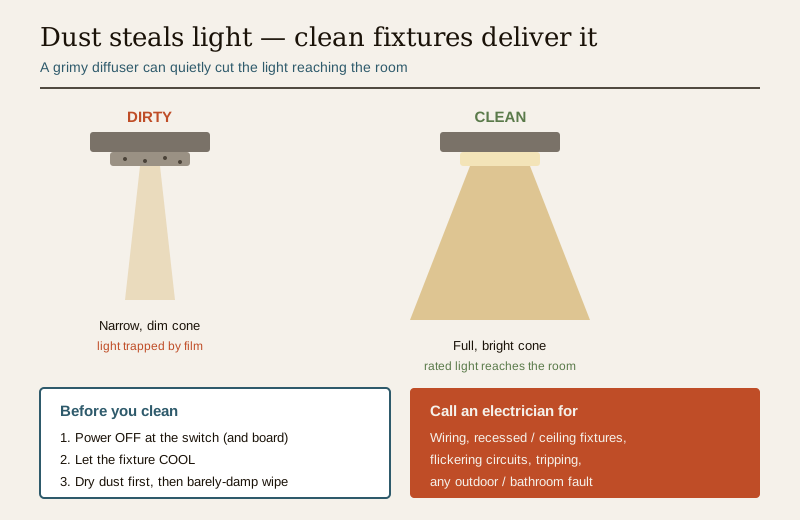
- Dust and grime steal light — a lot of it. A layer of dust on a diffuser, a greasy film on a kitchen fixture, or a monsoon's worth of grime on an outdoor lamp can cut the light actually reaching the room by a large margin — think of a bright fixture quietly performing like a dim one. This is the single biggest, cheapest-to-fix reason rooms feel darker. The light source is fine; the light just cannot get out.
- Electronics age and fail. LEDs themselves last many years, but the driver (the small power supply that feeds them), cheap strips and connectors, and old switches and holders do not always keep pace. This shows up as flicker, buzz, a section going dark, or colour drifting.
- Old fittings become a safety question. Decades-old holders, brittle wiring insulation, corroded outdoor and bathroom fixtures, and heat-baked plastic can stop being merely ugly and start being a shock or fire risk. This is exactly where the homeowner stops and the electrician starts.
Maintenance is mostly about the first point — keeping light output up with a cloth — plus the discipline to notice the second and act on the third before it becomes urgent. It is the cheapest performance upgrade a home has: no new fixtures, no rewiring, just clean glass and a habit.
Cleaning — the biggest, cheapest win
Cleaning is the one maintenance job that is entirely yours, delivers the most visible result, and costs nothing but care. The rule that governs all of it: power off first, and let the fixture cool. LEDs run cooler than old bulbs but still get warm; a hot fixture or a live circuit turns a dusting into a hazard.
The safe sequence
1. Switch the light off — at the wall switch, and for anything you will handle closely, at the board too.
2. Let it cool for a few minutes.
3. Dust dry first with a soft, dry microfibre cloth or a soft brush — never start wet, or you smear grime into a paste.
4. Then wipe with a slightly damp cloth if needed, wrung nearly dry, and dry it off. Never spray liquid onto or into a fixture, and never let water near the wiring, holder or driver.
5. Reach safely — a stable step-stool, not a wobbly chair. If a fixture is high, recessed, or has to come down, that is a professional job, not a stretch.
Right cleaner for each material
Using the wrong cleaner is how people ruin finishes and diffusers. Match it to the surface.
| Fixture / part | Safe cleaning | Avoid |
|---|---|---|
| Glass shades, diffusers | Soft cloth, dry then barely-damp; a little mild glass cleaner on the cloth (not sprayed on) | Spraying liquid into the fixture; abrasive scrubbers |
| Metal bodies (brass, chrome, painted) | Dry microfibre; damp cloth for marks; dry immediately | Harsh acids, scouring pads, ammonia on lacquered brass |
| Fabric / paper shades | Soft brush or vacuum on low with a brush head; spot-dab only | Soaking, rubbing wet — it stains and warps |
| Acrylic / polycarbonate diffusers | Damp microfibre only, gentle | Solvents, alcohol, glass cleaner — they craze and cloud plastic |
| Chandelier crystals | Cloth lightly damped with a mild solution, one drop at a time, dry each; support each drop, do not tug | Dunhooking many crystals at once; spraying the whole fixture |
| Kitchen fixtures (grease) | Degrade grease with a mild dish-soap dampened cloth, then wipe clean and dry | Flooding it; harsh solvents on plastic; cleaning while warm |
Kitchen lighting deserves a special mention: cooking throws up an oily aerosol that bonds dust into a sticky film far faster than in other rooms, which is why kitchen fixtures dim first. Wipe them more often, gently, with a mild dish-soap cloth — the same discipline covered in kitchen lighting. Chandelier crystals are the fussiest job of all; clean a few at a time, support each drop so you do not stress the arms, and if it is a large or high piece, get help — the chandeliers guide explains why these fixtures reward gentle, patient care.
What fails in the LED era — and what does not
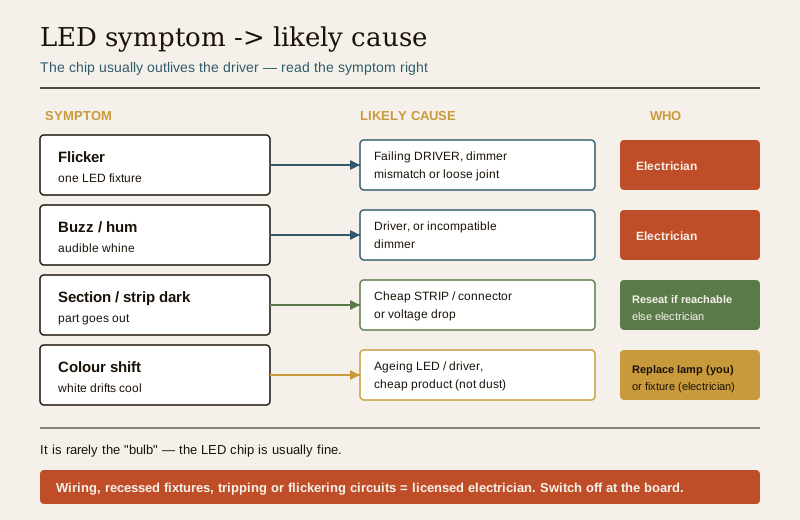
The biggest shift from the old bulb world is this: the LED chip usually outlives everything around it. When an "LED light" misbehaves, the emitter is rarely the culprit. Reading the symptom correctly saves you from throwing away a good fixture.
- The driver fails before the LED. The driver is a small electronic power supply. Heat, cheap components and voltage spikes wear it out long before the LEDs dim. A dead or dying driver is the classic cause of a fixture that has stopped working, flickers, or buzzes.
- Flicker, buzz and colour shift usually mean driver or a cheap product — not a "bulb" to replace. Flicker can also come from an incompatible dimmer or a loose connection. Colour drift (a warm white slowly going cooler or greenish) points to a low-quality LED or driver, not dust.
- A partial strip or one dead section is almost always a strip or connector fault, or voltage drop — again, not the whole thing being "burnt out."
Replaceable lamps vs integrated fixtures — the repairability trap
This is the maintenance decision people wish they had understood at purchase.
- Replaceable-lamp fixtures take a standard bulb or lamp you can swap yourself (within reach, power off). When the light dies, you change a cheap lamp. Easy, long-lived, homeowner-serviceable.
- Integrated-LED fixtures have the LEDs and often the driver built in and sealed. Many slim downlights, panels and designer pieces are like this. When the driver fails, there is often no user-replaceable part — the whole fixture is replaced, by an electrician if it is recessed or wired in. Cheaper up front, more wasteful and costlier to fix later.
Neither is wrong, but knowing which you own tells you what "it stopped working" will mean. Where you can, favour replaceable lamps and separately accessible drivers for anything hard to reach — a point made in the homeowner's guide to lighting and the energy-efficient lighting guide. Replacing an integrated recessed or ceiling fixture is not a lamp swap; it is electrician work.
LED strip failures
Strip lighting in coves, under cabinets and behind TVs is wonderful when it works and fiddly when it does not — and the failure is rarely the LEDs. The strip and profile lighting guide covers specification; for upkeep, know the four culprits:
- A segment gone dark. Strips are cut into segments; if one section dies while the rest glow, it is usually a failed segment or a bad solder/connector joint, not the whole strip.
- A loose or oxidised connector. Clip-on connectors work loose or corrode, especially in humid or kitchen runs. Reseating or replacing the connector often revives the run.
- The driver / power supply. If the whole strip is dead or dim, suspect the driver before the strip.
- Voltage drop on long runs. A strip that is bright near the supply and fades toward the far end is showing voltage drop — the run is too long for a single feed. Fixing it properly (re-feeding, correct power supply) is best done by whoever installed it, or an electrician.
If a strip is glued into a plaster cove or hard-wired to a concealed driver, treat repair as a professional job — you cannot get to it without opening finishes.
Damp and corrosion — outdoor and bathroom fixtures
Water and lighting are a serious combination, and this is where "maintenance" overlaps with safety. Outdoor lamps, garden and facade lights, and bathroom fittings live in damp, and their protection depends on seals staying intact.
- IP seals and gaskets. Weatherproof fixtures rely on rubber gaskets and sealed glass to keep water out of the electrics — their IP rating (how sealed they are) only holds while the seal is sound. Gaskets harden and crack with sun and age; once they fail, water gets in.
- Rust and corrosion. Coastal air, monsoon humidity and constant wet corrode metal bodies, fixings and contacts. A rusting outdoor or bathroom fixture is on its way to a fault.
- Condensation and misting. Water droplets inside the glass mean the seal is compromised — the fixture is letting moisture in.
None of this is a wipe-it-and-forget job. Inspect outdoor and bathroom fixtures for cracked gaskets, rust and internal misting, keep glass clean so you can see in — but re-sealing, replacing a corroded weatherproof fixture, or anything where water has reached the electrics is a licensed electrician's job, and urgent. The full treatment of IP ratings, zones and wet-area safety lives in the lighting safety and IP ratings guide and, for wet rooms, bathroom lighting — read those before touching anything outdoor or in a bathroom.
A clean-and-check maintenance schedule
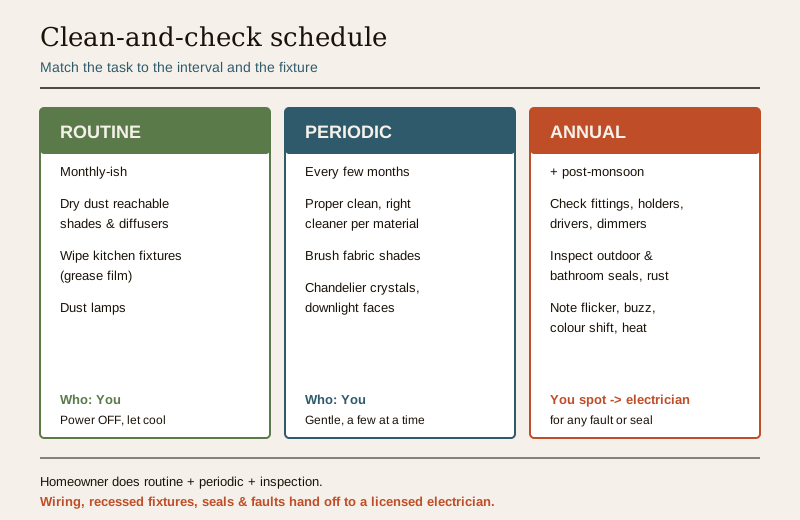
You do not need to do everything all the time. Match the task to the interval and the fixture, and lighting stays bright and safe with very little effort.
| Interval | Task | Which fixtures | Who |
|---|---|---|---|
| Routine (monthly-ish) | Dry dust; wipe kitchen fixtures | Reachable shades, diffusers, kitchen, lamps | You |
| Periodic (every few months) | Proper clean, right cleaner per material; brush fabric shades | Living/bedroom fixtures, chandelier crystals, downlight faces | You |
| Seasonal (post-monsoon) | Clean outdoor lamps; inspect seals, gaskets, rust, misting | Outdoor, garden, facade, bathroom | You inspect; electrician re-seals/replaces |
| Annual | Check fittings, holders, drivers, dimmers; look for flicker, buzz, colour shift, heat, discoloured plastic | All fittings, especially old and concealed | You spot; electrician for any fault |
| As needed | Replace a failing reachable plug-in lamp; log integrated/recessed failures for the electrician | Reachable lamps vs wired/recessed | You (lamps only) / electrician (wired) |
Two habits make this easy: wipe kitchen fixtures whenever you deep-clean the kitchen, and do the "annual check" when you do any pre-festival or Diwali cleaning — a natural point to look up at every fitting, notice what is dim, flickering or discoloured, and book an electrician for anything on the wrong side of the safety line before guests arrive.
A quick lighting output check
Once or twice a year, actually look at your lights instead of past them. Three questions tell you almost everything:
- Is a room dimmer than it used to be? First suspect dirt, not failure — clean the fixtures and diffusers and re-judge. Most "dimming" is grime.
- Has a white gone yellow, or a warm white gone cold/greenish? Cleaning will not fix colour drift; that is an ageing LED or driver, and the fixture or lamp needs replacing.
- Is anything flickering, buzzing, warm to the surface, or showing browned/discoloured plastic? Stop using it and get it checked — those are electrical warning signs, not cosmetic ones.
For a sense of what you are spending to run it all — and how much cleaner, efficient fixtures save — the LED savings calculator and the energy-efficient lighting guide are the companion tools; genuine efficiency starts with clean fixtures actually delivering their rated light.
When to call an electrician
This is the most important section, so it is blunt. A homeowner's lighting maintenance ends at cleaning and swapping a reachable plug-in lamp with the power off. Everything below is safety-critical electrical work — switch off at the board and call a licensed electrician:
- Any wiring — exposed, loose, damaged, discoloured or hot.
- Removing or replacing a recessed, ceiling-mounted or wired-in (integrated) fixture — this is not a lamp swap.
- A flickering circuit, lights dimming across the house, or anything that trips the board.
- Any outdoor or bathroom fixture fault — corroded, misted, cracked seal, or where water has reached the electrics.
- Buzzing, burning smell, browned/melted plastic, warm switches or holders — stop using it now.
- Old fittings, brittle wiring, or a fixture you simply cannot reach safely.
Scheduling replacements, sizing drivers, matching dimmers and re-sealing weatherproof fixtures are all best routed to a professional — cheaper and far safer than a DIY attempt that damages a fixture or, worse, the person doing it. The deeper why-it-matters sits in the electrical hub, and for a fault-free emergency and safety layer, the emergency lighting guide is the reference. When in doubt, the safe default is always: switch off, do not open it, and call an electrician.
Troubleshooting at a glance
| Symptom | Likely cause | Fix / who |
|---|---|---|
| Room feels dimmer over time | Dust and grime on shades/diffusers | Clean fixtures (you) — usually solves it |
| One LED fixture flickering | Failing driver, dimmer mismatch, or loose connection | Electrician (wired) |
| Buzzing or humming | Driver, or incompatible dimmer | Electrician |
| White turned yellow / colour drift | Ageing LED or driver, cheap product | Replace lamp (you, if reachable) or fixture (electrician) |
| One strip section dark | Failed segment or bad connector | Reseat connector if accessible; else electrician |
| Strip fades toward far end | Voltage drop, run too long | Electrician / installer |
| Outdoor light misted inside | Cracked IP seal, water ingress | Electrician — urgent |
| Rust on outdoor/bathroom fixture | Corrosion, failing gasket | Electrician — replace |
| Whole circuit flickers or trips | Wiring / circuit fault | Electrician — safety-critical |
| Browned plastic, warm switch, burning smell | Overheating fault | Stop use, switch off at board, electrician now |
How it connects
- Start at the complete guide to lighting for the whole scheme, and the homeowner's guide to lighting for the buy-and-live-with-it view that favours repairable fixtures.
- Clean and care for the fussiest fittings with the chandeliers guide, and keep cove/under-cabinet runs alive with the strip and profile lighting guide.
- Treat damp seriously via the lighting safety and IP ratings guide and, for wet rooms, bathroom lighting; wipe grease-prone fittings per kitchen lighting.
- Keep output and running cost honest with the energy-efficient lighting guide and the LED savings calculator; avoid the upkeep traps in common lighting mistakes.
- Route wiring, circuits, recessed fixtures and faults to the electrical hub, and keep the safety layer sound with the emergency lighting guide.
Key takeaways
- Dust is the biggest thief. Most "my rooms got dimmer" is grime on shades and diffusers, not failure — clean first, and rooms brighten for free.
- Power off and cool down before any cleaning; dry-dust first, wipe barely-damp, never spray liquid into a fixture, and match the cleaner to the material.
- In the LED era the chip outlives the driver — flicker, buzz, colour shift and dead sections usually mean the driver or a cheap strip/connector, not a "bulb."
- Replaceable lamps beat sealed integrated fixtures for repairability; know which you own, because integrated recessed units mean whole-fixture, electrician-led replacement.
- Damp is a safety matter — inspect outdoor and bathroom seals, gaskets and rust, but leave re-sealing and corroded-fixture replacement to a licensed electrician.
- Follow the schedule — routine dusting, periodic proper cleans, a post-monsoon outdoor inspection, and an annual fittings-and-drivers check (bundle it with Diwali cleaning).
- Know the line: homeowner tasks end at cleaning and a reachable plug-in lamp swap; wiring, recessed/ceiling fixtures, flickering circuits, tripping and all outdoor/bathroom faults are safety-critical electrician work — switch off at the board and call one.
References
- National Building Code of India, NBC (SP 7:2026), Bureau of Indian Standards — general illumination and lighting provisions (named generally).
- IS 3646 — code of practice for interior illumination and recommended lux levels (named generally, for judging adequate light after cleaning or replacement).
- IS 10322 / IEC 60598 — luminaire safety requirements relevant to fixture condition and safe operation (named generally).
- IS 16107 — performance requirements for LED luminaires, relevant to driver and output ageing (named generally).
- IP ratings per IS / IEC 60529 — ingress protection classes governing outdoor and wet-area fixture sealing (named generally).
- Licensed electrician and fixture manufacturer's care/installation instructions — the authority for any wiring, fixture removal, re-sealing or fault, and for material-specific cleaning limits.
Every interval, cleaning note and troubleshooting call here is an indicative planning aid for homeowners, not a repair manual; switch lighting off at the board and have a licensed electrician diagnose, repair or replace anything involving wiring, recessed or ceiling fixtures, flickering or tripping circuits, or any outdoor or bathroom fitting, and confirm cleaning limits against the fixture manufacturer's instructions.
Export this guide
Related Guides — Deep-dive reading
Lighting Safety & IP Ratings: Choose the Right Fixture for the Spot (2026)
The homeowner's safety-literacy guide to lighting — how to read the two-digit IP rating, pick the correctly-rated fixture for bathrooms, gardens and wet zones, and know exactly where selecting a light ends and a licensed electrician's wiring begins.
LightingFurniture Maintenance Guide: Keep Every Piece Lasting in India (2026)
The start-here routing guide to keeping furniture in good condition through Indian heat, humidity, monsoon, dust, hard water and termites — the one enemy and one habit for each material, a routine schedule you can actually follow, and where upkeep hands off to a professional.
FurnitureSecurity Lighting Maintenance in India (2026): Keeping the Whole Scheme Alive, Because a Dark Patch Is a Security Hole
The best-designed security lighting is worthless the day the lamp fuses, the sensor clogs with cobwebs, the solar panel dusts over or the fitting fills with monsoon water. This guide gives a homeowner and a society the simple maintenance routine that keeps every part of the scheme working, so no dark patch quietly opens up on a wall nobody looks at after dark.
SecurityRelated Tools — Try Free
Cross-Ventilation Analyzer
Estimate airflow and air changes per hour (ACH) from room size, window areas, layout, and local wind — with NBC 2016 Part 8 compliance check.
Ventilation CalculatorFull-Room BOQ — Living, Bedroom, Kitchen, Bath
Room-wise BOQ across living, bedrooms, kitchen, utility, and bathrooms with line-item pricing.
Full-Room BOQWindow Cleaning Cost Calculator
Estimate professional window cleaning cost per visit and per year by access and frequency.
Window Calculator