
Common Home Lighting Mistakes in India (and How to Fix Them) (2026)
The most common lighting mistakes in Indian homes — one bright tubelight per room, everything blue-white, glare, no dimming, dark stairs — and the specific, affordable fix for each, plus the one habit that causes half of them: not planning the scheme before the electrician wires.
Most badly lit Indian homes are not badly lit because of money. They are badly lit because of a handful of habits — one tubelight in the middle of every room, the coolest white on the shelf because it "looks brighter", a switchboard with everything on one switch — repeated in house after house. The good news is that almost every one of these mistakes has a cheap, specific fix, and the single most expensive one (bad placement baked into the walls) is completely free to avoid if you plan the scheme before the electrician wires.
This is the shareable, fix-it companion to the complete guide to lighting. It names the twelve mistakes we see most often in Indian homes, explains why each one hurts, and gives you the concrete fix — what to change, buy or ask for. If you want the positive version of all this — how to build a good scheme from scratch — read the layered lighting guide and the lighting design principles alongside this one.
Scope & how to read this. This is design-led advice to help you plan a scheme, choose fixtures and brief a professional — every lux level, kelvin value and rupee band here is indicative, so confirm against IS 3646 (interior illumination), NBC (SP 7:2026) and the actual product specs. The wiring, circuits, load, dimmer installation and any regulatory or emergency-lighting compliance is safety-critical work for a licensed electrician — you decide the scheme, they make it safe. Automation lives in the Smart Home hub; daylight in Healthy Homes; the deep lumens/CRI/LED-buying technicals in the Electrical hub. Costs are relative bands — get local quotes.
Mistake 1 — One central light per room, no layers
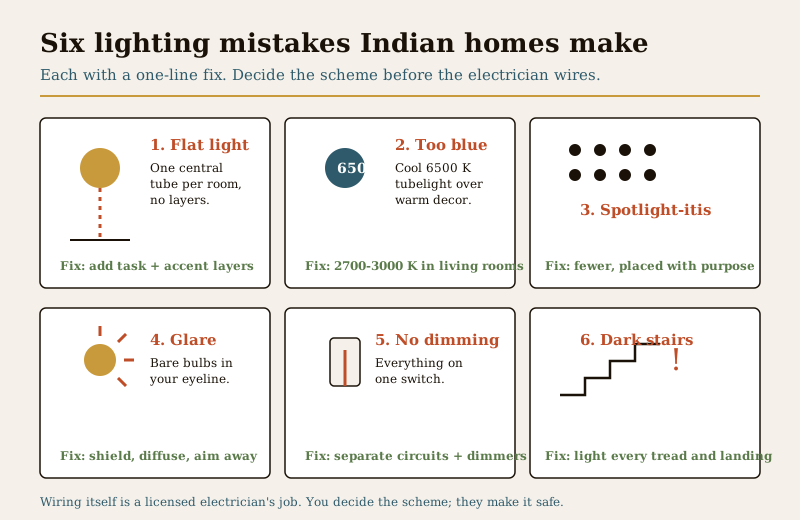
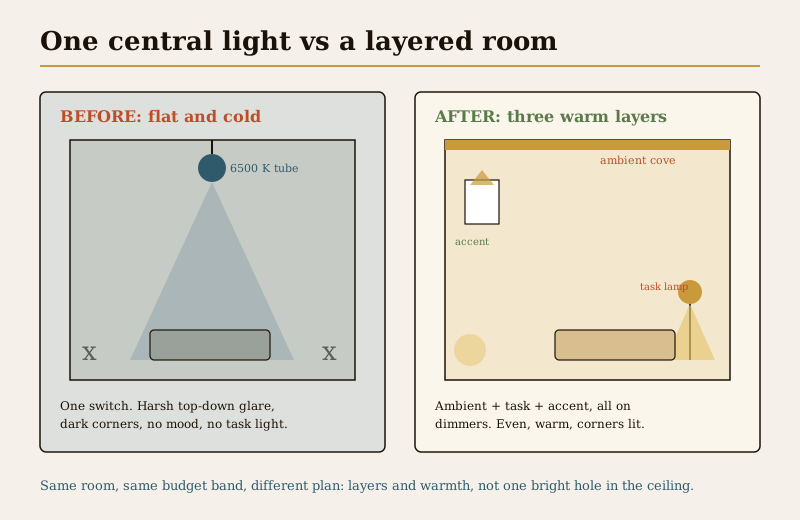
The default Indian ceiling has a single fitting dead-centre. It floods the room from one high point, flattens everything, throws hard shadows down onto faces and leaves the corners gloomy. A room lit this way has exactly one mood: on.
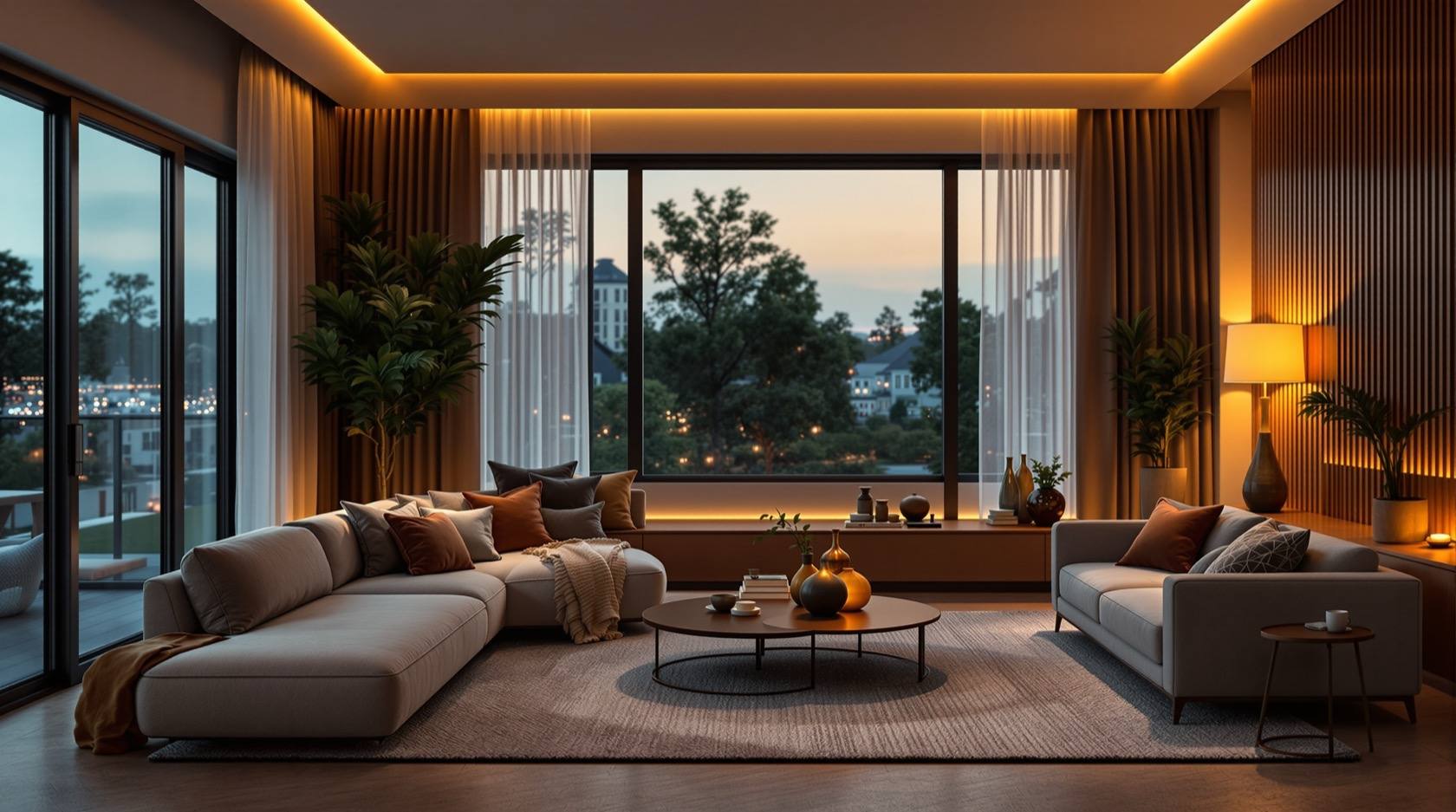
The fix. Think in three layers — ambient (soft general fill), task (bright light exactly where you read, cook or work) and accent (a little drama on art, a plant, a texture). You do not need all three everywhere, but every room wants at least two. A living room might keep a dimmed ceiling light for ambient, add a floor lamp beside the sofa for task, and a small picture light for accent. The whole idea is unpacked in the functional vs ambient vs accent lighting guide and the layered lighting guide.
Mistake 2 — Everything too cool and blue
The 6500 K "cool daylight" tubelight is the reflex choice across India because it reads as bright and feels "clean". In a living room, bedroom or dining space it is the wrong tool: it makes warm wood, brass, terracotta and skin look grey and clinical, and it works against you in the evening when your body wants to wind down.
The fix. Match colour temperature to the room's job. Use warm white, 2700-3000 K, for living rooms, bedrooms, dining and pooja spaces — anywhere you relax or gather. Save cool white, 4000 K and above, for task-heavy zones like the kitchen counter, study desk, bathroom mirror and utility. The full logic — and why warm light suits Indian decor and evenings — is in the colour temperature and CRI guide.
Mistake 3 — Too few, or far too many, recessed downlights
Two failure modes, same fixture. Too few downlights and a false ceiling becomes a set of bright pools with dark gaps between them. Far more common now is the opposite — "spotlight-itis", a ceiling drilled with a grid of twenty identical downlights that turns the room into a showroom and washes out any warmth or shadow. A ceiling of holes is not a lighting design; it is a default.
The fix. Downlights are one tool, not the whole scheme. Use them deliberately — a few to graze a wall, wash a curtain or light a specific zone — and let wall lights, lamps and cove lighting do the rest. If you are working with a false ceiling, plan the light points before the ceiling is boxed in, not after. Fewer, better-placed fittings almost always beat a dense grid.
Mistake 4 — No task light where you actually work
This is the mistake you feel every day. Ceiling lights sit behind you when you stand at the kitchen counter, so you chop vegetables in your own shadow. The bathroom mirror is lit only from a downlight overhead, throwing shadows straight down under the eyes — useless for shaving or make-up. The study has a bright room but a dim desk.
The fix. Put light where the work happens, not just where the room is. Under-cabinet strips light the kitchen counter from in front of you, not behind. Vertical lights on either side of the bathroom mirror (or a well-diffused light around it) light the face evenly. A desk or reading lamp beats any amount of ceiling light for close work. The kitchen version of this has its own guide — kitchen lighting mistakes — and you can sanity-check task brightness with the lux level calculator.
Mistake 5 — Glare from bare bulbs and sources in your eyeline
Glare is light hitting your eye directly instead of the surface it is meant to light. A bare bulb, a naked LED strip, an over-bright downlight aimed at head height, a filament pendant hung right at eye level across the dining table — all of them make you squint, tire your eyes and, ironically, make the room feel darker because your pupils shrink.
The fix. You should see the effect of a light, rarely the source. Use fittings with shades, diffusers, baffles or deep recesses that hide the lamp. Keep bright sources out of the normal sightline — above eye level or tucked behind a cove. For directional fittings, aim the beam at the wall or object, not into the room. The principles behind comfortable, glare-free light are covered in the lighting design principles guide.
Mistake 6 — No dimming, everything on one switch
When every light in a room comes on together at full output, the room has one setting. You cannot soften it for a movie, a dinner, a late night or a festival evening. A bright board of on/off switches is not control — it is an all-or-nothing.
The fix. Two moves. First, split the lights onto separate switches so ambient, task and accent are independent — this is a wiring decision made at the planning stage, so raise it before the electrician starts. Second, put the ambient and accent layers on dimmers (make sure the LEDs and driver are marked dimmable — many are not). Dimming turns one room into several. If you are going further, the smart lighting guide covers scenes and app control, but a simple wall dimmer solves most of it.
Mistake 7 — Mixing colour temperatures at random
Warm bulbs in one fitting, cool in the next, whatever the shop had in stock — the result is a room that looks patchy and slightly "off" without anyone being able to say why. One lamp glows amber, the one beside it glows blue, and the eye reads the mismatch as cheap.
The fix. Pick a consistent colour temperature per room and per zone. Warm (2700-3000 K) across the living-room layers; a cooler, consistent tone across the kitchen work zone. When you replace a failed bulb, match the kelvin value of its neighbours — check the box, not just the wattage. Consistency reads as considered; randomness reads as an afterthought.
Mistake 8 — Ignoring CRI, so everything looks wrong
Colour Rendering Index (CRI) measures how truthfully a light shows colour. Cheap LEDs with low CRI make food look unappetising, skin look sallow, and the clothes you dressed in look a different colour outdoors. Two bulbs can be the same brightness and colour temperature and render colour completely differently.
The fix. For anywhere colour matters — the kitchen, dining, bathroom mirror, wardrobe and any room with art or fabric — buy LEDs rated CRI 90 or above (often printed as Ra 90+). It costs a little more and is worth it every single day. Lower-CRI product is fine for a store room or garage. The metric is explained in the colour temperature and CRI guide.
Mistake 9 — Under-lighting stairs and entries
This one is a safety mistake, not just an aesthetic one. Stairs lit by a single distant bulb throw shadows that hide the edge of each tread — exactly the information your foot needs. Dim entries mean fumbling for the lock and a poor first impression. Older family members and children are most at risk.
The fix. Light every tread and every landing evenly, with no dark gaps and no glare into the eyes of someone climbing. Two-way switching (top and bottom) so no one crosses a dark flight. A lit entry — a wall light beside the door, a well-lit number — is both safer and more welcoming. This is genuinely worth getting a professional eye on; adequate stair and circulation lighting is treated as a safety matter in NBC (SP 7:2026).
Mistake 10 — Forgetting IP rating near water and outdoors
An ordinary indoor fitting put where it meets water or weather is a real hazard and will fail early. A downlight over a shower, a light in a bathroom wet zone, a fitting on an open balcony, terrace or garden — each needs a rating built for moisture, or you risk corrosion, short circuits and shock.
The fix. Match the IP (Ingress Protection) rating to the location: roughly IP20 for dry indoor areas, IP44 or better for bathroom splash zones, and IP65 for outdoor, terrace and wet areas exposed to rain. This is on the product box. Choosing the right rating is your decision; installing anything near water or outdoors is squarely a licensed electrician's job — do not improvise here. For gardens and facades, see outdoor and landscape lighting.
Mistake 11 — All decoration and no function (or all function, no warmth)
Two opposite failures. Some homes chase only the pretty — a statement chandelier, fairy lights, a feature pendant — and then cannot actually read, cook or work because nothing does the useful job. Others are purely utilitarian — bright, even, and about as inviting as an office — with no softness, no focal glow, nothing for the evening.
The fix. A good scheme is decorative and functional at once. Let the beautiful fittings — the chandelier, the decorative lighting — carry the character, but make sure the task and ambient layers underneath actually light the room. Conversely, if your home is all function, add one warm, dimmable, low-level layer for the evening. The two are partners, not a choice.
Mistake 12 — Not planning the lighting until the wiring is done
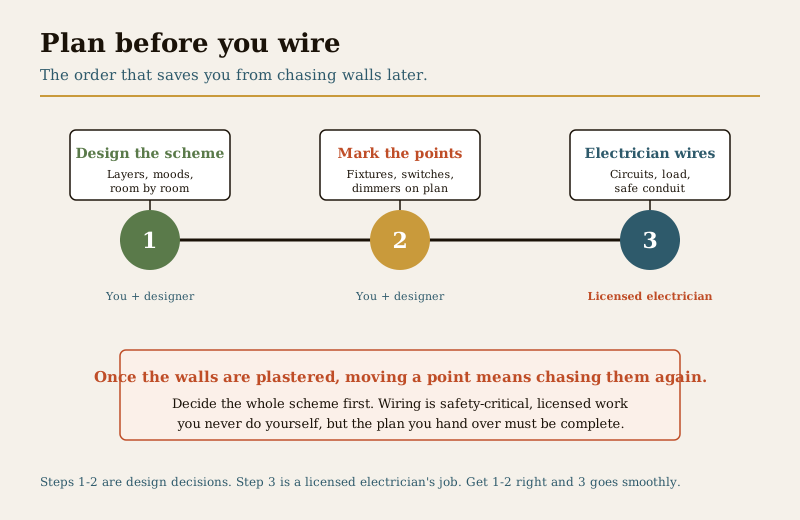
This is the mistake that causes half the others — and the only one that is genuinely expensive to reverse. In most Indian builds the electrician wires to a rough, habitual plan (one point per room, switches by the door) long before anyone thinks about layers, task light or dimming. By the time you want a floor lamp beside the sofa, a strip under the cabinets or three switched circuits instead of one, the walls are plastered and painted. Now every change means chasing the walls open again — dust, cost and delay — so most people simply give up and live with the flat scheme.
The fix. Decide the whole lighting scheme before the electrician wires. Walk each room and picture how you will use it, then mark on a plan where you want fixtures, wall lights, switches, dimmers and separate circuits. Hand that plan over as the brief. The wiring itself — circuits, load, conduit, dimmer install — is the electrician's licensed, safety-critical job that you never do yourself; but the design decisions that plan encodes are entirely yours, and they must be settled first. The home lighting design guide and the residential lighting design guide walk through building that plan, and the home lighting planner helps you lay it out room by room.
The mistakes and their fixes, at a glance
| Mistake | Why it hurts | The fix |
|---|---|---|
| One central light, no layers | Flat, shadowy, single mood | Ambient + task + accent, two layers minimum |
| Everything too cool/blue (6500 K) | Warm decor and skin look grey; poor evening | 2700-3000 K where you relax; cool only for tasks |
| Too few / too many downlights | Dark gaps, or a lifeless "ceiling of holes" | Use a few with purpose; let lamps and coves help |
| No task light where you work | Chopping in your shadow, dark mirror | Under-cabinet strips; light beside the mirror; desk lamp |
| Glare, bare sources in eyeline | Squinting, eye fatigue, room feels darker | Shades, diffusers, baffles; aim beams at surfaces |
| No dimming, one switch | One setting; no mood, no festival evening | Split circuits; dimmable LEDs on dimmers |
| Mixing colour temperatures | Patchy, "off", cheap-looking | One consistent kelvin per room/zone |
| Ignoring CRI | Food, skin, clothes look wrong | CRI 90+ in kitchen, dining, mirror, wardrobe |
| Under-lit stairs and entries | Trip and fall risk; unsafe | Light every tread evenly; two-way switching |
| Forgetting IP rating | Corrosion, short circuits near water | IP20 dry, IP44 splash, IP65 outdoor/wet |
| Decoration only / function only | Pretty but useless, or bright but cold | Marry the two: character plus real light |
| Planning after wiring | Changes mean chasing open walls | Design the scheme before the electrician wires |
Plan before you wire — a pre-wiring checklist
Settle each of these on paper before the electrician starts. This is the single highest-value habit in the whole guide.
| Decide before wiring | What to settle | Who does it |
|---|---|---|
| Room-by-room use | How each room is used, morning and evening | You (with a designer) |
| Layers per room | Which of ambient / task / accent each room needs | You + designer |
| Fixture points | Where every ceiling, wall and cove light sits | You + designer |
| Task locations | Kitchen counter, mirror, desk, reading spots | You |
| Switch grouping | Which lights share a switch, which are separate | You (brief to electrician) |
| Dimming | Which circuits need dimmers (and dimmable LEDs) | You + electrician |
| Colour temperature | Warm vs cool per room, kept consistent | You |
| CRI | Where CRI 90+ is worth the extra | You |
| IP rating | Wet, splash and outdoor zones flagged | You + electrician |
| Circuits, load, conduit | The actual wiring and its compliance | Licensed electrician (mandatory) |
How it connects
- Start with the complete guide to lighting for the big picture, then build the positive scheme with the layered lighting guide, lighting design principles and functional vs ambient vs accent lighting.
- Put it into a room plan with the residential lighting design guide and the home lighting design guide; the kitchen has its own kitchen lighting mistakes list.
- Get colour and quality right with the colour temperature and CRI guide; add control and scenes via the smart lighting guide.
- Check task brightness with the lux level calculator and lay out points room by room with the home lighting planner.
- Hand the wiring, circuits and any compliance to a licensed electrician — the deeper technical side lives in the Electrical hub.
Key takeaways
- Most Indian lighting mistakes come from habit, not budget — one tube per room, the coolest white on the shelf, everything on one switch.
- Layer every room (ambient + task + accent, two minimum), keep living spaces warm (2700-3000 K), and put light where you actually work.
- Kill glare, add dimming, keep colour temperature consistent, and buy CRI 90+ wherever colour matters — each is a cheap, immediate upgrade.
- Light stairs and entries for safety, and match the IP rating to wet and outdoor zones — do not improvise fittings near water.
- The costliest mistake is planning lighting after wiring — decide the whole scheme first; the wiring is a licensed electrician's safety-critical job, but the design is yours.
- Every lux, kelvin and cost figure here is indicative — confirm against IS 3646, NBC (SP 7:2026) and product specs, and get local quotes.
References
- National Building Code of India, NBC (SP 7:2026), Bureau of Indian Standards — general illumination provisions and safety lighting for stairs and circulation.
- IS 3646 — code of practice for interior illumination; recommended lux levels for rooms and tasks (named generally).
- National Lighting Code and IS 16107 / IEC 60598 — LED luminaire performance and safety (named generally).
- IP ratings per IS/IEC 60529 — ingress protection for fittings in dry, splash and wet or outdoor locations (IP20 / IP44 / IP65).
- BEE star rating and ECBC — energy efficiency and lighting power density for LED products and installations (named generally).
- Licensed electrician — circuit design, load, dimmer installation and all wiring and compliance; the design decisions in this guide are the owner's brief to that professional.
Every lux level, colour temperature, IP rating and cost band here is an indicative planning aid; confirm the governing values against IS 3646, NBC (SP 7:2026) and the actual product specifications, get local quotes for cost, and have a licensed electrician design, install and certify all wiring, circuits, dimmers and compliance.
Export this guide
Related Guides — Deep-dive reading
Lighting Controls & Dimming Design: Zones, Scenes & Switches (2026)
How to plan lighting control so an Indian home's light is flexible — split each room's layers onto separate switches, choose dimmers that actually work with LEDs, add two-way switching where you need it, and layer scenes on top. The design decisions you must settle before the electrician wires.
LightingBathroom Mirror Lighting India: Shadow-Free Vanity Light, Colour Temp, CRI & Cost (2026)
Why a single ceiling downlight throws ugly shadows on your face, how vertical sconces either side of the mirror beat a light bar above, when a backlit mirror is glow not task light, plus the colour temperature, CRI, mounting height, IP rating and 2026 rupee costs that actually get make-up and shaving right.
BathroomsLayered Lighting Explained: Ambient, Task & Accent for Indian Homes (2026)
The single most important idea in lighting design, in plain language: why one central light flattens a room, and how three working layers — ambient, task and accent — plus a decorative sparkle layer combine on separate dimmable controls to make an Indian home feel lit, useful and alive.
LightingRelated Tools — Try Free
Circadian Light Meter
Patient-centric circadian lighting visualizer for Indian healthcare design — time-of-day × intensity → CCT, melanopic lux (EML / mEDI), melatonin suppression, and an alertness curve. Calibrated against WELL v2 L03 Circadian Lighting Design, CIE S 026:2018, Brainard 2001, and Lucas et al. 2014.
Circadian ToolBathroom Lighting Calculator
A lux-based bathroom lighting plan — total lumens, number of LED downlights, mirror task lighting and indicative wattage.
Bathroom CalculatorFalse Ceiling Cost Estimator
Live ₹/sqft across 8 ceiling types — POP, gypsum, designer, metal, PVC, wooden — with cove and spot lighting for 20 Indian cities.
Cost Calculator