
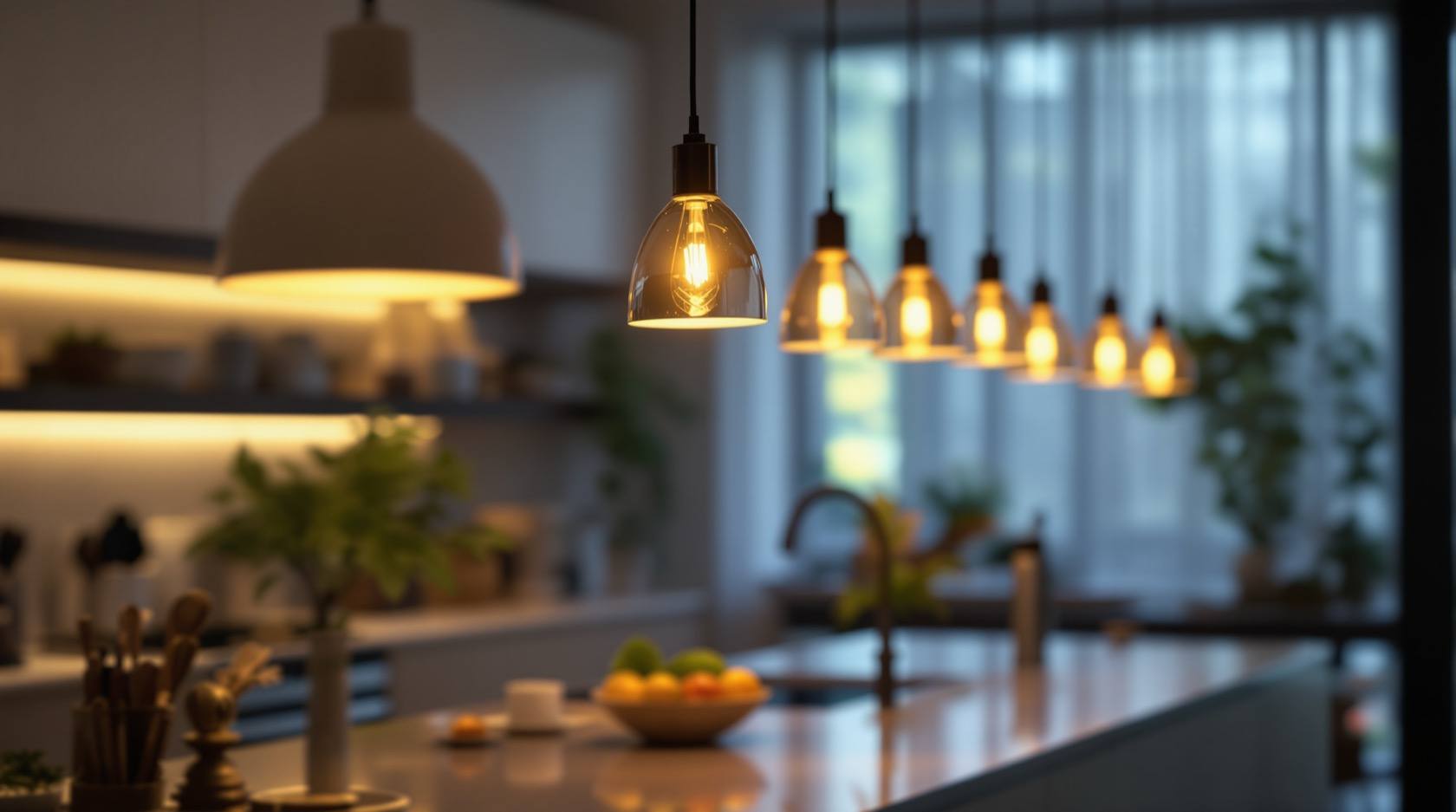
Pendant Lighting Guide: Sizing, Height & Placement for Indian Homes (2026)
The design guide to pendant lights for Indian homes — what pendants are and where they earn their place, the four types, and the two numbers that make or break the look: hanging height and size. Plus dimming, style, scale and the clean hand-off to your electrician.
A pendant is the fixture people notice — the one that hangs in the air over your dining table, your kitchen island, your foyer, and quietly sets the whole mood of the room. Get its height and size right and it looks like it was always meant to be there; get them wrong and it either floats uselessly near the ceiling or hangs so low it becomes a hazard you dodge every day. Pendants are also the single fixture where two plain numbers — how high you hang it and how wide you buy it — matter more than brand, budget or bulb. This guide is about getting those two numbers right, then choosing a type and a look that fits your home.
This is the pendant chapter of the Studio Matrx Lighting hub. It sits beside the other fixture guides — chandeliers, recessed downlights, track and spotlights and wall lights and sconces — and assumes you have already met the idea of a layered scheme. A pendant is rarely the whole answer; it is one considered layer.
Scope & how to read this. Every height, diameter and cost band here is typical and indicative — a planning aid to help you brief a professional and shop with confidence, not a firm figure. Confirm dimensions against your own room and the fixture's own instructions, and treat all prices as relative bands, not quotes — get local quotes. This is a design guide: where to put a pendant, how big, how high, in what style. The ceiling point, wiring, the fan-box or hook rating, the dimmer and the load are electrical work a licensed electrician must design, install and certify — a heavy pendant on an under-rated box or a wrong dimmer is a real safety risk, not a DIY afternoon. You decide the position and the look; they make it safe and live.
What a pendant is — and where it shines
A pendant light is a single fixture suspended from the ceiling on a rod, cable, chain or cord, hanging its shade down into the room at a chosen height. Unlike a recessed downlight that disappears into the ceiling, or a chandelier that spreads wide, a pendant is a deliberate object in the air — decorative to look at and, when hung over a surface, a task light that pools brightness exactly where you work or eat.
Pendants earn their place over a surface or a spot, not over open floor:
- Over the dining table — the classic. A pendant or a run of them pools warm light on the table, frames the meal, and anchors the room. The single most common place a pendant belongs.
- Over a kitchen island or breakfast counter — task light for chopping and homework, plus a strong visual signal that this is the social heart of the kitchen. Pair with under-cabinet strip lighting for the worktops.
- Beside the bed — a small pendant on each side frees the nightstand of a lamp and looks intentional. Hung lower than you would think.
- In a stairwell or double-height void — a long drop or a cluster fills the vertical volume that nothing else reaches, and reads beautifully from both floors.
- In the foyer or entry — the first fixture a guest sees; a statement pendant sets the tone of the whole home. In many Indian homes this is where the pendant does its most theatrical work, often near a traditional jhoola or swing.
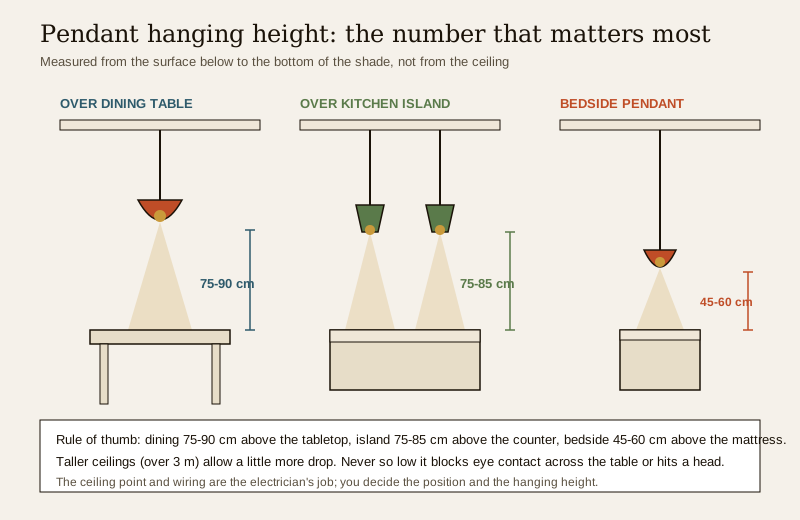
The four pendant types
Choosing the form is really choosing to match the fixture to the surface below and the ceiling above.
| Type | What it is | Where it fits best |
|---|---|---|
| Single pendant | One shade on one drop | Bedside, a reading nook, a small round table, a console |
| Multi-pendant cluster | Several pendants at mixed drops from one or many points | Foyer, stairwell void, double-height hall — fills vertical volume |
| Linear / bar pendant | One long horizontal fixture, often a bar of lights | Long dining tables, kitchen islands, pool or work tables |
| Mini-pendants (in a row) | Small pendants repeated in a line | Breakfast counter, bar, narrow console — a rhythm of little lights |
The rule of thumb: a round or square table wants one central pendant sized to the table, or a tight cluster; a long rectangular table or island wants either a linear bar (treated as one fixture) or a row of two-to-three matching pendants; a tall vertical space wants a cluster or a single long drop.
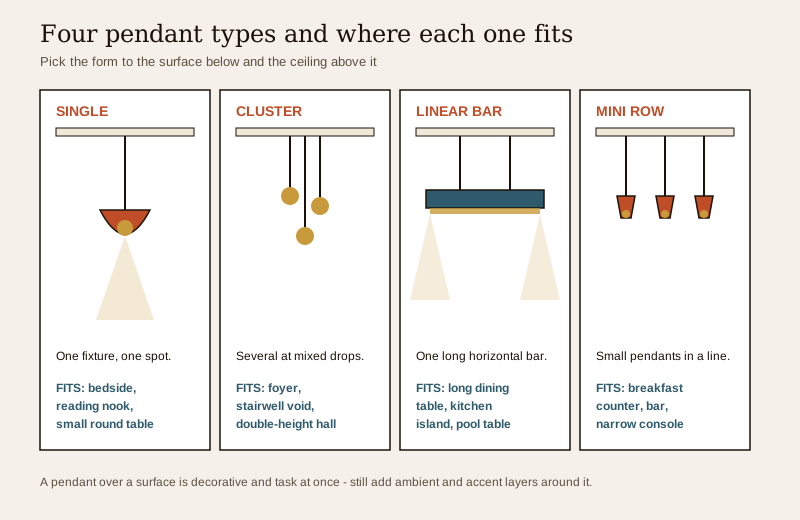
Number one: hanging height
This is the number that separates a pendant that looks designed from one that looks like an afterthought. Height is always measured from the surface below to the bottom of the shade, never from the ceiling — because it is the clearance over the table or counter that your eye and your head care about.
| Situation | Height from surface to bottom of shade | Why |
|---|---|---|
| Over a dining table | 75-90 cm above the tabletop | Low enough to pool light and feel intimate, high enough to see across the table |
| Over a kitchen island / counter | 75-85 cm above the counter | Clears the worktop, lights the task, does not dazzle a standing cook |
| Breakfast / bar counter | 70-85 cm above the counter | Similar to an island; go lower for a cosy, higher for an airy feel |
| Bedside pendant | 45-60 cm above the mattress | Reading height beside a seated head; lower than you expect |
| Stairwell / foyer void | Bottom clears the tallest doorway and any head on the stair | Purely visual — fill the volume without becoming an obstacle |
Two adjustments to the base numbers. Ceiling height: the figures above assume a standard ~2.7-3.0 m Indian ceiling. For every extra ~30 cm of ceiling above 2.4 m, you can drop a dining pendant a few centimetres lower without it feeling oppressive — a taller room carries a lower, more dramatic pendant. Table width and household: over a table where people face each other, err a touch higher so no one is talking through a shade; over a bar where people sit side by side, you can go lower.
The most common mistake in Indian homes is hanging the dining pendant too high — up near a false-ceiling cove where it lights nothing and looks stranded. When in doubt, go lower. You want a warm pool on the table, not a distant dot near the plaster.
Number two: sizing the pendant to the surface
A pendant that is too small looks like a bright pip lost above a big table; one too large crowds the room. There is a simple, reliable starting point for a single pendant over a table: aim for a fixture diameter (or the long dimension of a bar) roughly equal to the table width minus about 30 cm — leaving about 15 cm of clear table on each side. So a 90 cm wide table wants a shade around 55-60 cm; a compact 75 cm table wants around 45 cm.
For multiple pendants over a long table, the surface length drives the count and the spacing:
| Table / island length | Suggested pendant approach | Notes |
|---|---|---|
| Up to ~1.2 m (round or small) | One single pendant, centred | Size to width-minus-30 cm |
| ~1.5-1.8 m (seats 6) | Two matching pendants, or one linear bar | Two pendants: split the length in halves, one over each |
| ~2.0-2.4 m (seats 8) | Three matching pendants, or one long linear bar | Space centre-to-centre in equal gaps |
| Over ~2.4 m or an island | Linear bar, or a run of 3+ mini-pendants | Treat a bar as one fixture centred on the table |
When you run multiple pendants, the discipline is even gaps: space them roughly 60-75 cm centre-to-centre for mini-pendants, keep the end margins to the table edge equal, and — crucially — centre the whole group on the centre of the table, not the centre of the room. The table is the anchor; a pendant run that lines up with the room but sits off-centre over the table always looks wrong. For a longer surface, a single linear bar is the easiest way to get an even wash without fussing over spacing.
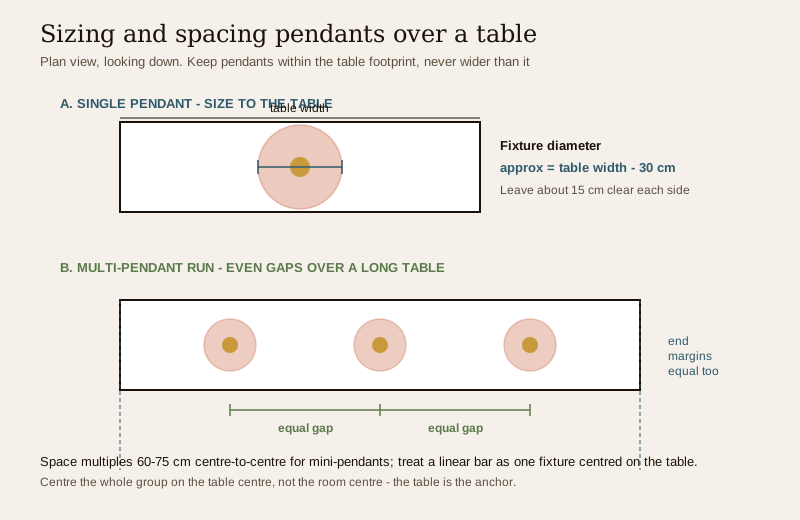
Sizing and count are exactly what the fixture quantity calculator and the lighting spacing calculator are for — feed in your table length and they turn the rules above into a number you can shop with.
The pendant is one layer, not the whole scheme
Here is the trap: a pendant over the table looks so good that people stop there, and the rest of the room stays dark. A pendant is usually decorative and task at the same time — lovely to look at, and a pool of light on the surface below — but it does almost nothing for the walls, the corners, or the general brightness of the room. On its own it makes a bright island in a gloomy sea.
So plan the pendant as one line in a layered scheme: keep an ambient layer (a cove, a few recessed downlights, or a ceiling fixture) to fill the room softly, and add accent where you want it — a spot on art, a wall-wash on a textured wall. The pendant is the jewellery; the ambient layer is the daylight it hangs in. The layered lighting guide and the lighting design principles walk through how the layers share the room, and the common lighting mistakes guide catalogues the pendant-only room as a classic error.
Dimming, warmth and how it feels
Over a dining table, warmth and control matter more than raw brightness. Choose a warm colour temperature — around 2700K, a soft golden-white — so food and faces look their best; a cool, bluish pendant over a dining table makes a meal feel like a clinic. Put the pendant on a dimmer so the same fixture can do bright and practical for homework or a family lunch, then drop to a low, intimate glow for dinner and guests. The colour temperature and CRI guide explains why 2700K and a high CRI (how truthfully a light renders colour) are worth insisting on over the table, and how to read the numbers on the box.
A practical note for India: the dimmer and the bulb must be compatible — many cheap LED bulbs flicker or buzz on a basic dimmer. Tell your electrician you want a dimmable pendant so they specify a matched dimmable LED and dimmer together. Choosing which dimmer, on which circuit, is their call, not yours.
Style, material and scale
Pendants are where personality enters a lighting scheme. The common families in Indian homes:
- Glass — clear, smoked or seeded glass throws sparkle and suits dining and foyer; frosted glass softens glare.
- Metal — brass, black, copper or antique finishes; a metal dome is directional and reads modern or industrial.
- Rattan, cane and jute — warm, textured, casts a patterned shadow; very at home in a tropical, craft-forward Indian interior.
- Brass and traditional — a nod to Indian craft; pairs beautifully with a wooden dining table and a jhoola-adjacent foyer.
Two scale reminders. Scale to the ceiling, not just the table: a tall or double-height room can carry a big, bold pendant or a long cluster that a low flat would swallow; a low 2.4 m ceiling wants a compact, close-hung shade so heads stay clear. And decide early between an over-table pendant (hung low, framing the surface) and a floating statement piece (hung high in a void, purely sculptural) — they are different jobs and different heights. For decorative and statement fixtures, the decorative lighting guide goes deeper into look and mood; for whole-home mood, moodboards help you test a style before you buy.
The electrician hand-off
This is where design stops and licensed electrical work begins — take the line seriously.
- You decide the position (the exact point over the table or counter), the type, the size, the style, and the hanging height.
- The electrician decides and installs the ceiling point and wiring, the hook, canopy or fan-box and whether it is rated for the pendant's weight, the switch and dimmer, and the circuit. A heavy cluster on an under-rated box can pull loose — this is a safety matter, not an aesthetic one.
The most useful thing you can do is fix the pendant's centre point before the wiring is chased, because moving a ceiling point after the false ceiling is closed is expensive and messy. Mark the exact centre of the table, hand the electrician that point and the fixture's weight, and let them make it safe and live. Automation — app or voice control of the pendant — belongs to the Smart Home hub; the deep lumen, wattage and LED-buying technicals live in the Electrical hub.
How it connects
- Start with the complete guide to lighting for the whole scheme, then plan the pendant as one line in a layered lighting design.
- Compare fixture families: a spreading chandelier versus a hanging pendant, plus recessed downlights and wall lights and sconces for the layers around it.
- Get the numbers right with the fixture quantity calculator and the lighting spacing calculator.
- Nail the warmth and control with the colour temperature and CRI guide, and read lighting design principles for how the pendant shares the room.
- For statement pieces see decorative lighting; for a kitchen island pendant, plan it alongside modular kitchen ideas.
Key takeaways
- A pendant belongs over a surface — dining table, island, breakfast counter, bedside, foyer, stairwell — not over open floor.
- Two numbers decide the look: hang a dining pendant 75-90 cm above the tabletop (island 75-85 cm, bedside 45-60 cm), and size a single pendant to about table width minus 30 cm.
- Over a long table, run two or three matching pendants or one linear bar, spaced in equal gaps and centred on the table, not the room.
- A pendant is decorative and task at once — still add an ambient layer and accents, or you get a bright island in a dark room.
- Over dining, choose warm ~2700K light on a dimmer and insist the LED and dimmer are a matched, flicker-free pair.
- Scale to the ceiling: tall rooms carry bold clusters and long drops; low ceilings want compact, close-hung shades.
- You place it; the electrician makes it safe — fix the centre point before wiring, and hand off the box rating, hook, dimmer and circuit to a licensed professional.
References
- National Building Code of India, NBC (SP 7:2026), Bureau of Indian Standards — general illumination and lighting provisions (named generally).
- IS 3646 — code of practice for interior illumination and recommended lux levels for domestic spaces (named generally).
- National Lighting Code and IS 16107 / IEC 60598 — LED luminaire performance and general luminaire safety (named generally).
- IP ratings per IS/IEC 60529 — ingress protection classes relevant where a pendant sits near a splash zone (named generally).
- BEE star rating and ECBC lighting-power-density guidance — energy efficiency for LED fixtures (named generally).
- A licensed electrician and the fixture manufacturer's instructions — ceiling-box weight rating, wiring, dimmer compatibility and safe installation.
All heights, diameters, colour-temperature values and cost bands here are indicative design aids only; confirm dimensions against your own room and the fixture's instructions, get local quotes for cost, and have a licensed electrician design, install and certify the ceiling point, hook, dimmer, load and circuit for any pendant.
Export this guide
Related Guides — Deep-dive reading
Chandeliers Guide: Sizing, Placement & Care for Indian Homes (2026)
How to choose, size and hang a chandelier as the statement fixture of a room — the room length-plus-width sizing rule, the right height over a foyer void or a dining table, the styles that suit Indian homes, and why the fixing and wiring must go to a licensed electrician.
LightingDining Room Lighting Design: The Pendant & the Glow (2026)
How to light a dining area the design way — the pendant or chandelier as the hero over the table, warm and dimmable for the meal, layered with soft ambient fill and a buffet accent, and centred on the table (not the room) before the ceiling point is ever wired.
LightingBathroom Mirror Lighting India: Shadow-Free Vanity Light, Colour Temp, CRI & Cost (2026)
Why a single ceiling downlight throws ugly shadows on your face, how vertical sconces either side of the mirror beat a light bar above, when a backlit mirror is glow not task light, plus the colour temperature, CRI, mounting height, IP rating and 2026 rupee costs that actually get make-up and shaving right.
BathroomsRelated Tools — Try Free
False Ceiling Cost Estimator
Live ₹/sqft across 8 ceiling types — POP, gypsum, designer, metal, PVC, wooden — with cove and spot lighting for 20 Indian cities.
Cost CalculatorHome Lighting Planner
Enter room dimensions and fixture type — required lumens and fixture count calculate instantly.
Live CalculatorBrise-Soleil Visualizer
Interactive horizontal-louvre cut-off angle calculator — sun altitude, louvre depth, and spacing inputs with a live shadow preview. Computes θ = arctan(spacing/depth) for façade shading, ECBC envelope compliance, hospital daylight design, and tropical sun-control detailing.
Sun Shading Tool