
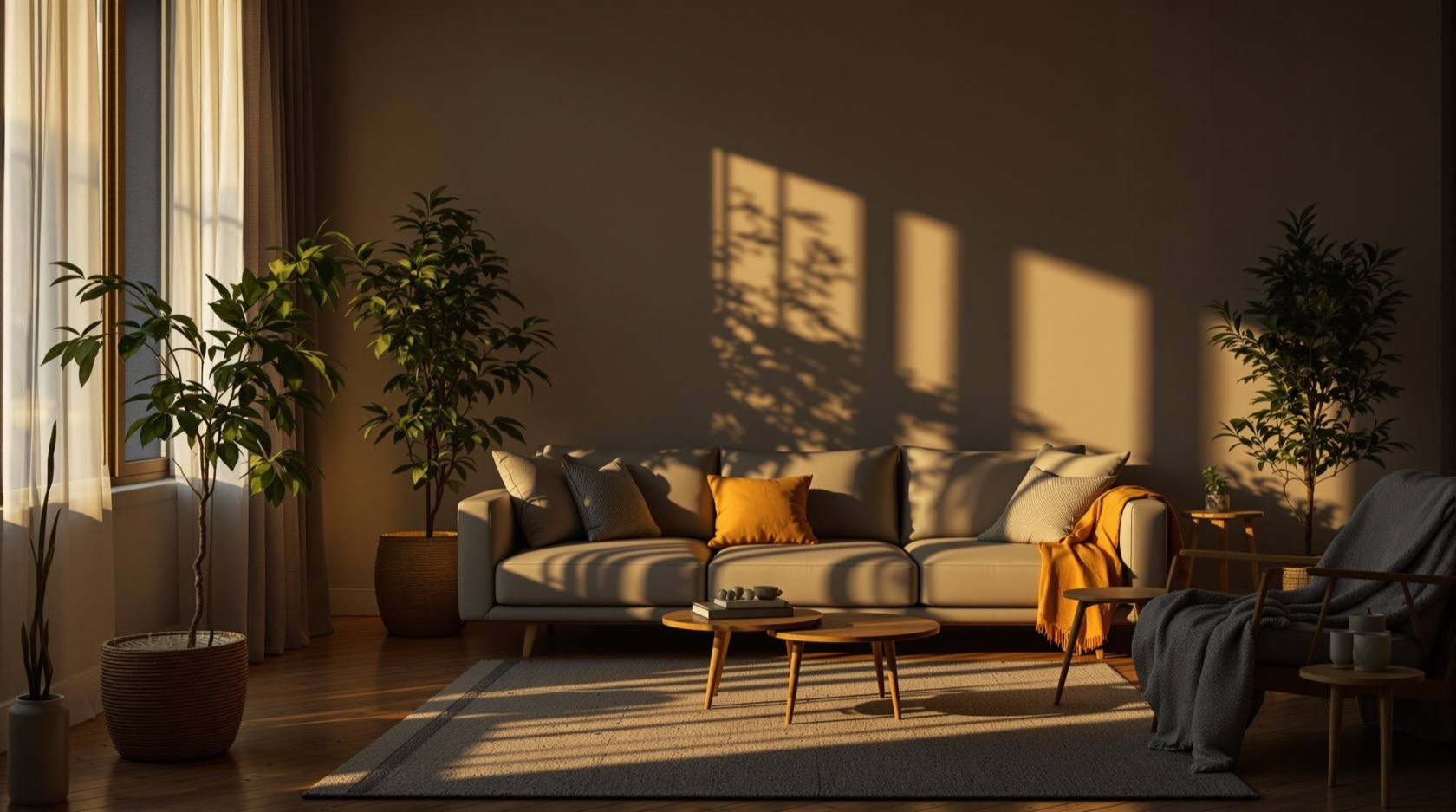
Mood & Scene Lighting: Set the Atmosphere with Dimming & Colour (2026)
How to design mood and use scenes to change a room's feeling on demand — dimming, warm colour, controllable layers and saved 'Relax / Entertain / Dinner / Movie' presets, planned room by room for Indian homes.
A single bright ceiling light does exactly one thing well: it makes a room easy to clean. It cannot make a room feel calm, romantic, festive or cinematic — because mood is not about how much light there is, it is about how the light is arranged. Mood lighting is low, warm, layered light that creates atmosphere: pools of glow with shadow between them, a soft wash on a wall, one bright object against a dim background. The opposite of one flat ceiling switch is a room you can tune — bright and clean when you are tidying, low and golden when guests arrive, a single pendant over the dining table at night. That tuning, saved as presets you can recall in one tap, is what "scenes" are.
This guide is the design side of that skill for Indian homes — how to build mood, and how to plan scenes room by room. It sits inside the Studio Matrx complete guide to lighting and builds directly on layered lighting (mood needs layers you can control separately) and how to choose a lighting style. We cover the tools of mood, how to write scenes, colour and warm-dim used tastefully, and the traps that make a room feel like a showroom or a nightclub.
Scope & how to read this. This is a design guide: it helps you plan the mood, choose dimmable fixtures and warm colour, and write scenes room by room. The two hand-offs are firm. Wiring is safety-critical — putting each layer on its own circuit, installing compatible dimmers, and sizing loads are jobs for a licensed electrician; get this drawn into your electrical plan early. Automation — actually saving and recalling scenes from a switch, app or voice — belongs to the Smart Home hub and the smart lighting guide. Colour-temperature and CRI technicals live in the Electrical hub. All costs here are indicative bands to help you brief — get local quotes.
What mood lighting actually is
Mood is atmosphere you can feel before you can name it. A restaurant you like, a good hotel lobby, a friend's living room that feels warm — none of them are lit by one bright fixture. They share a recipe:
- Low overall level. Less light, not more. The eye relaxes when a room is dimmer than daylight-bright.
- Warm colour. Light that leans golden (roughly 2200–2700K in the evening) reads as calm and intimate; cool white reads as alert and, past a point, clinical.
- Layers, not a single source. Several small light sources at different heights — a table lamp, a cove, an accent — instead of one overhead flood.
- Pools and shadow. Light gathered into pools with darker gaps between them gives a room depth. An evenly lit room has no mood because it has no contrast.
- Contrast and accent. One brighter thing — a painting, a plant, a textured wall — against a dimmer background pulls the eye and makes the space feel composed.
The single most important lever in that list is dimming. Without a dimmer you have only "on" and "off", and "on" is almost always too bright for mood. If you do one thing after reading this, make your main living and bedroom layers dimmable.
The tools of mood
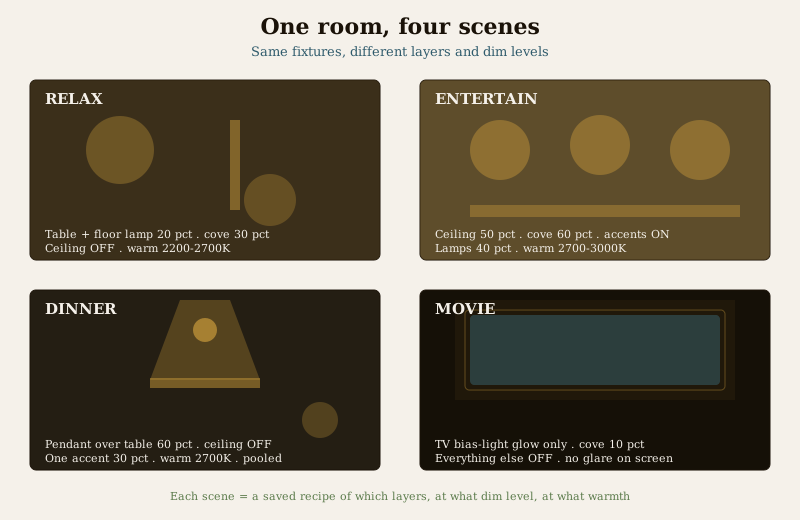
Five levers turn a functional room into an atmospheric one. Learn what each does and you can dial any feeling you want.
| Lever | What it does for mood | How to get it |
|---|---|---|
| Dimming | The biggest lever. Low output = calm, intimate; full = clean, functional | Dimmable LEDs + a compatible dimmer per layer (electrician wires the circuit) |
| Warm colour temperature | Warmer light (2200–2700K) feels soft and relaxed for evenings; cooler is alert but can read clinical | Warm-white LEDs, or tunable-white fittings that shift warmth by time of day |
| Layers on separate controls | Lets you set one layer high and the rest low — the whole basis of scenes | Ambient, task, accent and cove/decorative on their own dimmers/switches |
| Pools of light + shadow | Small pools with dark between them give depth and intimacy | Table/floor lamps, focused downlights, pendants — not one flood |
| Accent contrast | One brighter object against a dim background composes the room | Track and spotlights, picture lights, wall lights |
| Colour (used lightly) | Festive, party, kids' rooms, TV bias — a garnish, not the meal | RGB/RGBW or tunable-white strips and bulbs, restrained |
Two more sources are pure mood by nature. Indirect/cove glow — light bounced off a ceiling or wall so you never see the source — is the softest, most flattering light in the home; see cove and indirect lighting and strip and profile lighting. And candle-like points — a cluster of warm, very low bulbs, real diyas at a pooja or festival, or portable lamps — add flicker and intimacy that flat panels never can.
Scenes: presets you recall in one tap
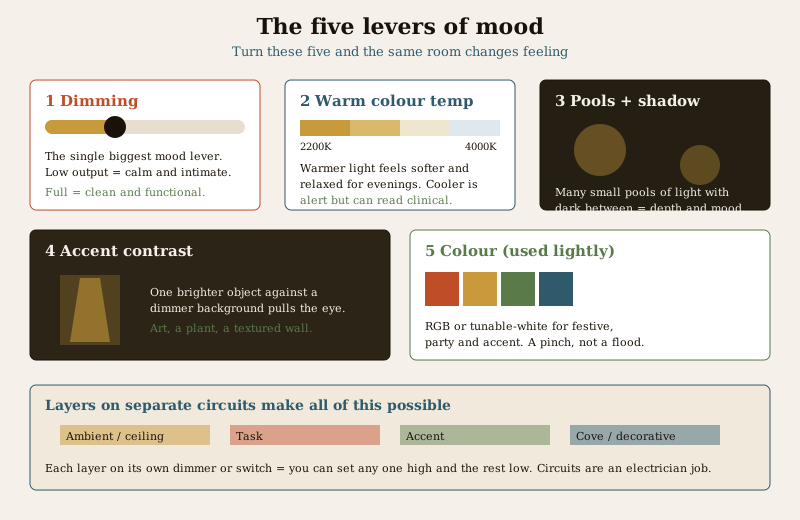
A scene is a saved recipe: which layers are on, at what dim level, at what warmth. Instead of walking round the room touching four switches, you set the combination once and recall it whenever you want that feeling. The classic household set:
| Scene | The feeling | Typical recipe (adapt to your room) |
|---|---|---|
| Relax | Wind-down, TV off, reading or chatting | Lamps 20–30 pct, cove 30 pct, ceiling off, warm 2200–2700K |
| Entertain | Guests over, sociable and lively | Ceiling 50 pct, cove 60 pct, accents on, lamps 40 pct, 2700–3000K |
| Dinner | Focused, intimate table | Pendant over table 60 pct, one accent low, everything else off, pooled |
| Movie | Home theatre, screen is the star | TV bias glow + cove 10 pct, all else off, zero glare on the screen |
| Bright / Clean | Cleaning, finding things, daytime work | Everything up, cooler 3500–4000K, full output |
| Night | Late navigation without waking up | One very low warm layer or a footpath/step light only, 2200K |
Notice that every scene is just the same fixtures at different levels. That is the whole trick — and it only works if your layers are separately controllable. If your entire living room is one circuit on one switch, you can be bright or off and nothing else. So the enabling step is physical: ambient, task, accent and cove each want their own dimmer or switch loop. Deciding which fixture sits on which circuit is a design choice you make now; running those circuits and fitting compatible dimmers is electrician work — settle it in the layered lighting plan and hand the circuit map to your electrician before the walls close.
Once the layers are wired separately, saving and recalling the scenes is where smart control earns its place. A smart dimmer, a scene keypad or an app lets you press "Relax" and have four layers glide to their set levels together — the job of the smart lighting guide and the Smart Home hub. You can absolutely run scenes manually with ordinary rotary dimmers too; automation just makes them one-tap and repeatable.
Colour and dynamic lighting — the tasteful way
Colour is the most abused mood tool in Indian homes, so treat it as a garnish. RGB / RGBW / tunable-white fittings earn their keep in specific spots:
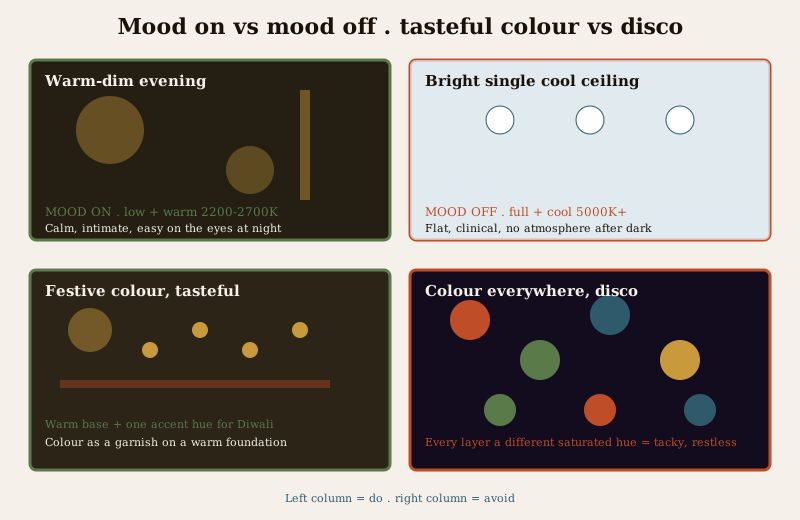
- Festive and Diwali. A warm base scheme with one accent hue — a gentle amber-gold cove, a single coloured wash behind a console — reads rich and celebratory. Diyas and warm string lights do most of the work; let the electric colour support them, not fight them.
- Party / entertaining. A livelier scene with slightly more colour and a touch of movement can be fun for a few hours — saved as its own "Party" scene you switch out of afterwards.
- Kids' rooms. Colour-changing bulbs are genuinely delightful here and low-stakes; let children pick a hue for play, keep a warm neutral scene for winding down.
- TV bias lighting. A warm, low glow behind the screen (a strip on the TV back) cuts eye strain and deepens contrast — one of the best-value colour uses in the house.
- Accent moments. A single coloured graze on a textured wall or plant, at low level, can be elegant — one accent, not ten.
The two related tools worth knowing: tunable-white shifts a fitting's warmth (say 2200K up to 4000K) without full colour — perfect for a room that must be cosy at night and crisp for daytime tasks. And warm-dim LEDs mimic a candle or old incandescent: as you dim them down they get warmer, not just fainter, so a dinner or bedroom scene glows like candlelight at the bottom of the dial. Both are increasingly common in good Indian LED ranges — ask for "tunable white" or "warm dim / dim to warm" by name. For how Kelvin and CRI actually work, cross to colour temperature and CRI and try the colour temperature selector.
Warm-dim and calm evenings
There is a simple, reliable pattern for how a home should feel after dark: warmer and dimmer as the evening goes on. Bright, cool light late at night feels harsh and keeps a room wound-up; low, warm light feels settled and easy on the eyes. You do not need any technology to follow it — just warm-white bulbs on dimmers, turned down in the evening, with cooler/brighter light reserved for daytime tasks and cleaning. If you want it automatic, tunable-white fittings on a schedule (an evening scene that warms and lowers itself) do it for you via the smart lighting guide. Keep this practical: it is about comfort and atmosphere, not a medical claim — think of it as the lighting equivalent of switching from a strong coffee to a cup of chai as the day ends.
Where mood matters most, room by room
Every room can hold a scene, but a few earn the effort most. The room-by-room hub has the full set; here is where mood pays off and the scenes to build.
| Room | Why mood matters | Scenes worth saving |
|---|---|---|
| Living room | The most-used social space; shifts from tidy to cosy to party | Bright/Clean, Relax, Entertain, Movie — see living room lighting |
| Bedroom | Wind-down and sleep; needs the calmest, warmest low light | Relax, Reading (one bright task + low ambient), Night — see bedroom lighting |
| Dining | The pooled pendant scene is the whole point | Dinner (pendant pooled), Entertain, Bright for family meals — see dining room lighting |
| Home theatre | Screen must dominate; light must not glare | Movie (bias only), Interval (low cove), Clean-up bright |
| Balcony / terrace | Evening chai, gatherings, festival dressing | Relax (warm strings), Party, Festive colour accent |
| Pooja / festival | Warm, reverent glow; diyas plus gentle electric warm light | A dedicated warm low scene — see pooja room lighting |
For the statement fixtures that anchor these scenes — a dining pendant, a living-room chandelier — see luxury and statement lighting; a dimmed statement piece is one of the most effective mood anchors in the home.
Avoid the traps
Mood is easy to overdo. Four mistakes turn atmosphere into eyesore — the common lighting mistakes guide covers the full list.
- Colour everywhere = tacky. Saturated colour on every layer reads as a nightclub, not a home. Keep a warm neutral base and use colour as a single accent for festivals or parties.
- No dimming = no mood. Fixed full-output fixtures can only ever be "on". Without dimmers you have no mood lighting, only task lighting. This is the one non-negotiable.
- Too cool = clinical. 5000K+ "daylight" bulbs everywhere make a home feel like a hospital corridor after dark. Reserve cool white for kitchens, bathrooms and utility tasks; keep living and sleeping spaces warm.
- One giant scene that does nothing. If every "scene" is just the whole room at full, you have not made scenes. The value is in the differences — a Relax that is genuinely dim and warm, a Dinner that is genuinely pooled.
How it connects
- Start at the complete guide to lighting, then read layered lighting — mood is impossible without controllable layers — and how to choose a lighting style to set the base look.
- Build the soft sources mood relies on with cove and indirect lighting and strip and profile lighting; anchor scenes with luxury and statement lighting.
- Plan scenes where they pay off: living room lighting and bedroom lighting.
- Hand automation to the smart lighting guide and the Smart Home hub; hand wiring, circuits and dimmer install to a licensed electrician via the Electrical hub.
- Get colour and warmth right with colour temperature and CRI and the colour temperature selector.
Key takeaways
- Mood = low, warm, layered light with pools and shadow — the opposite of one bright ceiling. Atmosphere comes from arrangement, not quantity.
- Dimming is the single biggest lever. No dimmers, no mood — make your living and bedroom layers dimmable first.
- Scenes are saved recipes — which layers, at what level, at what warmth — like Relax, Entertain, Dinner, Movie, Bright/Clean and Night.
- Scenes need separately controllable layers, so decide the circuit-per-layer map now and hand it to a licensed electrician; use smart control to save and recall scenes in one tap.
- Use colour as a garnish — festive, party, kids, TV bias, one accent — never a flood; tunable-white and warm-dim give candle-like evenings tastefully.
- Warmer and dimmer at night feels calm — a practical comfort pattern, not a health claim.
- Avoid the traps: colour everywhere, no dimming, too-cool, and scenes that all look the same.
References
- National Building Code of India, NBC (SP 7:2026), Bureau of Indian Standards — general illumination and lighting provisions (named generally).
- IS 3646 — code of practice for interior illumination and recommended lux levels (named generally).
- IS 16107 / IS 10322 and IEC 60598 — LED luminaire performance and luminaire safety (named generally); confirm dimmable and tunable-white driver compatibility on the product.
- Energy Conservation Building Code (ECBC) and BEE star rating — lighting power density and efficient LED selection (named generally).
- Licensed electrician — circuit-per-layer wiring, dimmer compatibility and load sizing (safety-critical; not covered in detail here).
Every dim level, Kelvin value and cost note here is an indicative planning aid to help you design mood and brief a professional; confirm illumination values against IS codes and NBC (SP 7:2026), get local quotes, and have a licensed electrician design and certify all wiring, circuits and dimmer installation.
Export this guide
Related Guides — Deep-dive reading
Lighting Controls & Dimming Design: Zones, Scenes & Switches (2026)
How to plan lighting control so an Indian home's light is flexible — split each room's layers onto separate switches, choose dimmers that actually work with LEDs, add two-way switching where you need it, and layer scenes on top. The design decisions you must settle before the electrician wires.
LightingHome Office & Study Lighting: Bright, Glare-Free & Focused (2026)
The design guide to lighting a home office or study for long-hour focus and eye comfort in an Indian home — a good ambient base, a proper task lamp, no screen glare or reflections, the right colour temperature through the day, and flattering light for the video call.
LightingDecorative Lighting — A 2026 Guide for Indian Homes
The most powerful decor element · Chandeliers to LED art · Layer light for mood, depth & ambiance
Design StylesRelated Tools — Try Free
Circadian Light Meter
Patient-centric circadian lighting visualizer for Indian healthcare design — time-of-day × intensity → CCT, melanopic lux (EML / mEDI), melatonin suppression, and an alertness curve. Calibrated against WELL v2 L03 Circadian Lighting Design, CIE S 026:2018, Brainard 2001, and Lucas et al. 2014.
Circadian ToolHome Colour Studio
Colour every room — living, bedroom, dining, kitchen, bathroom — surface by surface in any HEX/RGB/CMYK colour, or from 80+ curated Indian shades.
Colour StudioFull-Room BOQ — Living, Bedroom, Kitchen, Bath
Room-wise BOQ across living, bedrooms, kitchen, utility, and bathrooms with line-item pricing.
Full-Room BOQ