
Fire Safety Inspection in India (2026): The Routine Checks That Catch Failures Early
The cheap, frequent in-house walk-round - are exits clear, extinguishers charged, the alarm panel normal, fire doors closing - that catches the drift toward a neglected building before it can matter, and the log that proves you looked.
There are two ways a building finds out its fire safety has quietly failed. The first is when someone walks past a fire extinguisher, glances at the gauge, sees the needle sitting in the red, and gets it recharged that afternoon - a thirty-second catch, a small cost, nobody hurt. The second is when the fire arrives, someone grabs that same extinguisher, squeezes the lever, and nothing comes out. The difference between those two buildings is not the equipment - it is identical. The difference is that one of them does a routine fire safety inspection and the other does not.
This is the inspection chapter of Studio Matrx's fire-safety library, sitting under the complete guide to fire safety in India. It is the governance habit that keeps every other system in this library alive between the big formal checks: the frequent, cheap, in-house walk-round that catches a failure while it is still small. It is written for facility managers, security supervisors, RWA committees, floor wardens and the owners who carry the legal duty - so you can build an inspection routine that actually runs, and never let your building slide into the "installed for the Fire NOC, then neglected" state that this whole section exists to fight.
Scope and safety - read this first. A routine fire-safety inspection is a visual, non-technical walk-round that any trained facility person can do - it is about confirming that things are clear, charged, normal, closing and accessible. It is deliberately NOT the deep technical work: extinguisher refilling, alarm servicing, pump testing, pressurization commissioning and the like are qualified professional tasks governed by the National Building Code (via SP 7 : 2026, Part 4 Fire and Life Safety) and the relevant Indian Standards, and they belong to licensed contractors and the periodic fire-safety audit. This guide is educational, not legal advice, and never a manual for silencing, bypassing or defeating any system. If an inspection finds a fault, the answer is to raise it and fix it - never to work around it. And if a real fire is found at any point, one rule overrides everything below: get everyone out and call the fire brigade on 101 or 112.
Inspection is not audit - say it once, clearly
Because people use the words loosely, the single most useful thing to fix at the start is the difference between an inspection and an audit. They are complementary, and a well-run building does both, but they are not the same activity.
A fire safety inspection is frequent, in-house and shallow-but-wide: a security guard or facility person walks the building - daily for a quick visual, weekly or monthly for a structured pass - and confirms with their eyes that the escape routes are clear, the extinguishers are charged, the panel is normal, the lights and signs work, the fire doors close, the housekeeping is clean and the fire-tender access is open. It costs almost nothing but minutes and a log book, and its job is to catch the daily drift before it accumulates.
A fire safety audit is periodic, in-depth and often third-party: a formal, frequently annual assessment - increasingly a statutory duty under many State Fire Services rules, often by an empanelled independent fire consultant - that tests, measures and verifies the whole system against the code and produces a written report and action list. The fire-safety audit guide covers that in full; this guide is about the frequent walk-round that keeps the building healthy between audits.
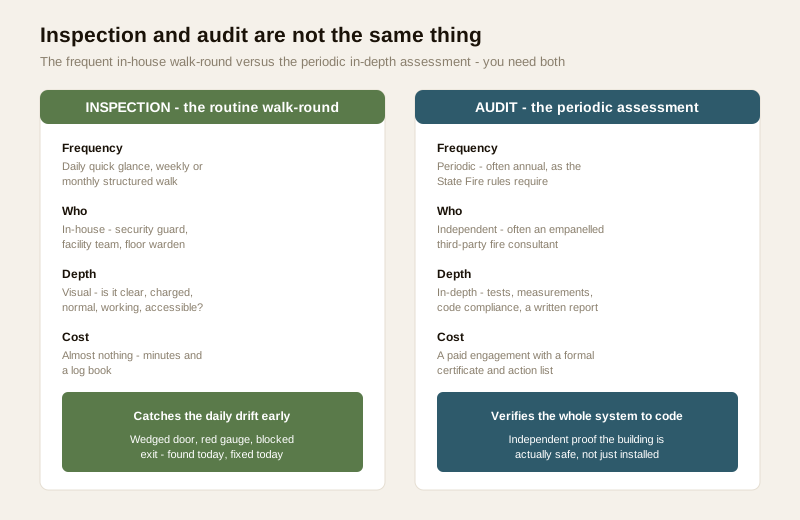
| Inspection | Audit | |
|---|---|---|
| Frequency | Daily glance, weekly or monthly structured | Periodic - often annual, per State Fire rules |
| Who does it | In-house - security, facility team, wardens | Often an independent, empanelled third party |
| Depth | Visual: clear, charged, normal, working, accessible | In-depth: tests, measurements, code compliance |
| Cost | Almost nothing - minutes and a log | A paid engagement with a formal report |
| What it catches | The daily drift, caught early and reset | Systemic and technical gaps, verified to code |
The rest of this guide is about the left-hand column: the routine inspection walk-round, what it covers, who does it, how often, and why the humble log book behind it matters more than it looks.
The walk-round - what a routine inspection covers
A routine fire-safety inspection is best thought of as a fixed walking route through the building with a small set of yes/no questions asked at each point. The value is in doing the same short circuit often, so that anything that has drifted since yesterday or last week jumps out. The list below is the core of it - each item is a thing that ordinary building life quietly breaks, and each is something an untrained eye can check in seconds.
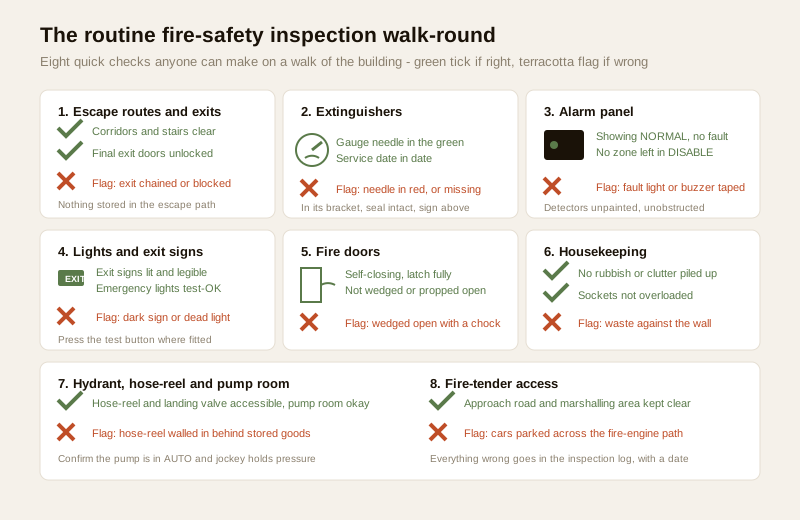
- Escape routes, exits and stairs - clear and unlocked. Walk the escape routes and emergency exits the way an occupant would flee. Corridors and staircases clear of stored goods and parked scooters; final exit doors unlocked and openable from inside; nothing chained. A locked or blocked exit is the deadliest finding on the whole walk.
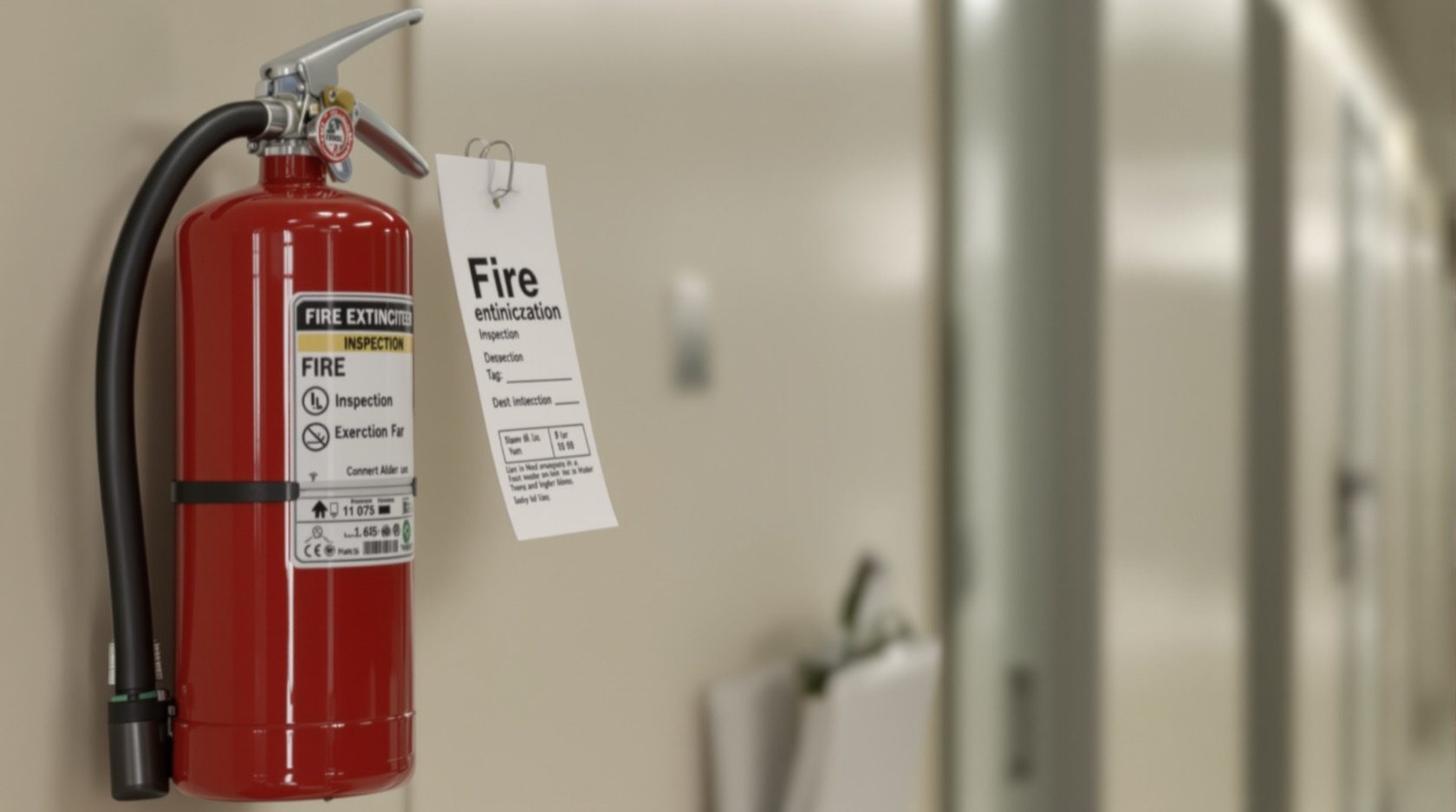
- Extinguishers - gauge in the green, in date, in place. Every portable fire extinguisher present in its bracket, seal intact, pressure-gauge needle sitting in the green band, the service tag in date, and the sign above it visible. A needle in the red means an empty or leaking unit - flag it for recharge.
- Alarm panel - showing normal, nothing disabled. Glance at the fire-alarm panel: is it showing normal status, with no fire, fault or disable indication, and no zone left switched off? A panel sitting in fault, or with the buzzer taped over, is a system already partly dead. Check that detectors are unpainted and unobstructed as you pass them.
- Emergency lights and exit signs - working. Confirm the emergency lighting and exit signage are lit and legible, and press the test button where one is fitted. A dark exit sign or a dead emergency light turns a smoke-filled corridor into a trap.
- Fire doors - self-closing, not wedged. Every fire door should swing shut and latch on its own, and none should be wedged, propped or tied open. A fire door held open does nothing - it lets smoke and fire straight through the compartment line it exists to hold.
- Housekeeping - no rubbish, no overloaded sockets. Look for accumulated waste, combustibles stacked against walls, and the tangle of extension boards and piggy-backed plugs that starts so many electrical fires. Good housekeeping is quietly one of the highest-value fire controls there is.
- Hydrant, hose-reel and pump room - accessible and okay. Confirm the hydrant landing valves and hose-reels are accessible and not walled in behind stored goods, and glance into the pump room to see the pumps are in AUTO and holding pressure.
- Fire-tender access - clear. Walk the fire-tender approach and marshalling area. Is the fire-engine path kept clear, or has it filled up with parked cars, a pandal, or building material? A blocked approach can strand the brigade at the gate.
The fire-safety audit checklist tool and the fire-escape plan builder help you turn this into a fixed route for your own building; the home fire-safety scorecard is the domestic-scale version of the same walk.
Who does it, and how often
Inspection works because it is cheap and repeatable - which only holds if the responsibility is assigned to a named role and split across sensible intervals. The pattern that works in Indian buildings is a layered one: a very quick daily visual by whoever is already on site, a fuller structured walk on a weekly or monthly cadence, and the whole thing feeding into the periodic professional audit above it.
| Interval | Who | What they do |
|---|---|---|
| Daily | Security guard / on-site staff | A quick visual pass on the round they already walk - exits clear, panel normal, nothing obviously wrong; note anything odd in the log |
| Weekly / monthly | Facility team / floor wardens | The full structured walk-round above - every extinguisher gauge, every fire door, lights and signs, housekeeping, hydrant and tender access - recorded item by item |
| Periodic / annual | Independent auditor + licensed contractors | The in-depth audit and technical servicing that inspection feeds into - the deep verification inspection cannot do |
Two points make the difference between a routine that runs and one that exists only on paper. First, name the role, not the person - "the duty security supervisor does the daily glance, the facility manager does the weekly walk" - so it survives staff turnover. Second, give them a fixed route and a simple checklist so the walk is the same every time and nothing is skipped because someone was busy. The daily glance takes a couple of minutes; the weekly walk, twenty. That is the entire cost of catching a failure while it is still cheap to fix.
Crucially, inspection is a layer that sits under the professional work, not a substitute for it. It does not test the pump under load, measure a detector's sensitivity or verify staircase pressurization - those belong to the audit and the maintenance calendar. What inspection does is make sure that between those professional visits, the building has not quietly broken.
The log book - the proof you looked
An inspection that leaves no record is an inspection nobody can trust and nobody can be held to. The instrument that turns the walk-round from a good intention into a governance control is the inspection log - a simple book or app entry, kept where the walk happens, in which every inspection is dated and signed, and every defect found is recorded together with what was done about it and when it was closed out.
The log does three jobs at once. It proves to a fire officer or insurer that the building is actually being watched, not just certified once and forgotten. It creates accountability - a defect that is written down cannot quietly be ignored, because the next entry has to say whether it was fixed. And it reveals patterns: if the same fire door is wedged open every week, or the same corridor keeps filling with stock, the log surfaces a recurring problem to solve at its root rather than re-flagging forever.
| What goes in the log | Why it matters |
|---|---|
| Date, time and who did the inspection | Proves the routine actually ran, and by whom |
| Each item checked and its result | Shows the walk was complete, not a token glance |
| Every defect found - what and where | Turns a fleeting observation into a tracked action |
| Action taken and date closed out | Guards against defects being seen and then ignored |
| Recurring issues flagged for root-cause fix | Stops the same failure being re-logged every week |
The failure mode to fear here is the blank log, or the log filled in retrospectively in one sitting to satisfy an inspector - both are worse than no log, because they manufacture false assurance. A truthful log with defects recorded and closed out is a healthy building; a spotless log with never a defect noted usually means nobody is really looking.
The India reality - the empty log and the drift
The honest picture in most Indian buildings is stark: there is no inspection routine at all. The fire systems were installed to get the Fire NOC, signed off once, and then left. No one walks the building with fire in mind. The extinguisher that was charged at handover slowly loses pressure and nobody notices. A fire door gets a wedge under it on a hot day and stays wedged for two years. The corridor becomes overflow storage. A detector gets painted during a repaint. The alarm panel starts beeping in fault and someone tapes over the buzzer. None of this is caught, because nobody is looking - and the log book, if it exists, is blank or filled in the morning the auditor is due.
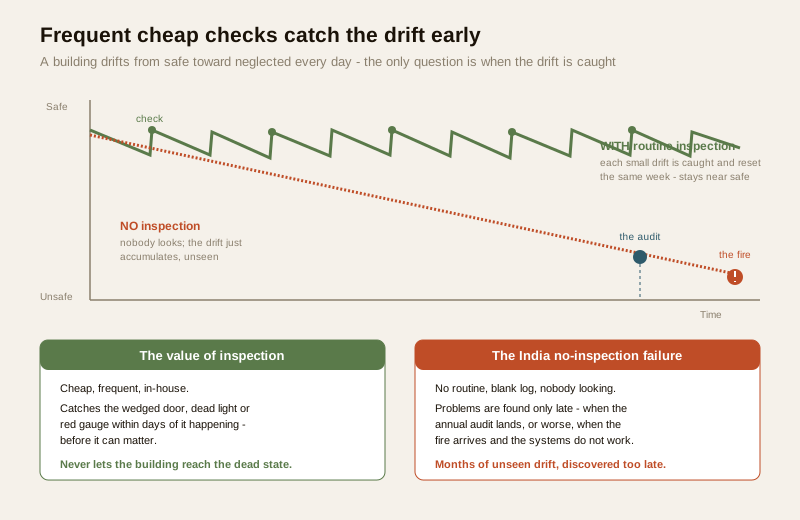
The result is that problems are found only when it is expensive or catastrophic to find them - when the annual audit finally lands and produces a page of failures that took months to accumulate, or, far worse, when the fire arrives and the extinguisher is empty, the exit is chained, the alarm never sounds and the door that should have held the smoke was wedged open all along. Every one of those failures is something a two-minute daily glance or a twenty-minute weekly walk would have caught the week it happened. That is the entire argument for routine inspection: it is the cheapest fire-safety control there is, and it is the one Indian buildings most consistently skip.
The buildings that get this right are not the ones with the most expensive systems - they are the ones where somebody walks the same short route, at the same time, every day and every week, writes down what they see, and fixes what is wrong before it can matter. Inspection is how the fire strategy the complete guide describes stays real long after the ribbon is cut. The same discipline underpins fire safety in every setting, from apartments and offices to hotels, hospitals and schools, and it ties into the building's wider emergency preparedness.
Keep it governed - and know where inspection ends. A routine fire-safety inspection is the frequent, cheap, in-house discipline that keeps a building safe between the big formal checks: walk the fixed route, ask the yes/no questions, log every defect and close it out. But know its limits. It confirms that things look clear, charged, normal and accessible - it does not test, measure or certify anything. The deep verification, the technical servicing, and the statutory sign-off belong to the periodic fire-safety audit, the maintenance calendar, the licensed contractors, and the Fire NOC under your State Fire Services Act and Rules. Never treat an inspection as a substitute for those, and never respond to a found fault by working around it. Run the inspection so the audit finds a healthy building, not a page of surprises.
Key takeaways
- Inspection is not audit - inspection is the frequent, cheap, in-house walk-round that catches the daily drift; the audit is the periodic, in-depth, often third-party assessment that verifies the whole system to code. A well-run building does both, and this guide is about the inspection.
- The walk-round is a fixed route of yes/no questions - escape routes and exits clear and unlocked, extinguisher gauges in the green and in date, the alarm panel normal with nothing disabled, emergency lights and exit signs working, fire doors self-closing and not wedged, housekeeping clean with no overloaded sockets, hydrant and hose-reel accessible, fire-tender access open.
- Assign the role and set the cadence - a quick daily visual by on-site security, a full structured walk weekly or monthly by the facility team, feeding the periodic professional audit; name the role not the person, and give them a checklist so nothing is skipped.
- The log book is the proof you looked - date and sign every inspection, record every defect and close it out, and surface recurring problems for a root-cause fix; a blank log, or one filled in the morning the auditor is due, is worse than none.
- The India failure is no inspection at all - systems installed for the NOC and left to rot, an empty log, and problems found only when the audit lands or the fire arrives; a two-minute daily glance is the single cheapest fire-safety control most Indian buildings skip.
References
- National Building Code of India, SP 7 : 2026 (the NBC), Part 4 "Fire and Life Safety" - the framework for the means of egress, fire-protection systems and their upkeep that a routine inspection walk-round confirms are in serviceable order; the older SP 7 : 2016 edition is withdrawn but still widely quoted. Verify the current edition via the BIS catalogue: https://www.services.bis.gov.in/
- IS 2190 : 2024, Bureau of Indian Standards - Selection, Installation and Maintenance of First-Aid Fire Extinguishers, Code of Practice - the authority for the extinguisher checks (pressure gauge, seal, servicing interval, accessibility) that form part of the inspection. Verify the current edition via the BIS catalogue: https://www.services.bis.gov.in/
- IS 2189 : 2026, Bureau of Indian Standards - Selection, Installation and Maintenance of Automatic Fire Detection and Alarm System, Code of Practice - governs the fire-alarm panel and detector condition an inspection visually confirms (panel normal, no zone disabled, detectors unpainted and unobstructed). Verify the current edition via the BIS catalogue: https://www.services.bis.gov.in/
- The relevant State Fire Services Act and Rules and the Model Building Bye-Laws (MoHUA) - these set the fire-safety obligations, the Fire NOC regime, and in many states the periodic fire-safety audit and self-declaration provisions that a routine inspection regime supports and feeds; confirm your state's current requirements with the local fire department.
This is an educational overview, not legal advice, and not a substitute for a licensed fire-safety consultant, a statutory fire-safety audit, or the State Fire Services. Fire-system servicing, testing and certification are qualified professional tasks - engage licensed fire professionals, run the periodic audit, and verify any standard's current status via the BIS catalogue before relying on it.
Export this guide
Related Guides — Deep-dive reading
Fire Safety Audit in India (2026): The Independent Check That Proves You Are Actually Safe
A periodic, independent audit tests a building's whole fire provision against NBC Part 4 and the Fire NOC - and separates compliant-on-paper from safe-in-reality. This guide sets out what it covers, who does it, and why findings must be fixed, not filed.
SecurityFire Safety Maintenance Calendar for India (2026): The Year-Round Routine That Keeps It All Working
India's core fire-safety disease is installed for the NOC, then neglected. The cure is a written, owned maintenance calendar - who checks what, when - so no fire-safety element ever silently fails.
SecurityParking Security Audit in India: A Walk-the-Park Method
Most parking areas were never audited honestly. This is the capstone method that ties the whole parking-security library together: walk the park by day and after dark, grade every layer Good / Weak / Absent, gate it on life-safety, and turn the gaps into a prioritised action plan before a thief or an incident finds them first.
SecurityRelated Tools — Try Free
Electrical Safety & Load Audit
Home electrical audit — 10 categories, 65+ checkpoints across earthing, RCCB, MCB, wiring, switchboards, appliance circuits, DG/inverter backup.
Safety AuditEmergency-Egress Checker
A life-safety self-check that access-controlled doors on escape routes still let people out in an emergency.
Egress CheckApartment Interior Planning Checklist
51-item checklist across structural, ceiling, lighting, furniture, storage, electrical, kitchen, bathroom.
Checklist