
Electrical Safety & Load Audit
10 categories, 65+ checkpoints — earthing, RCCB, MCB, wiring, switchboards, appliance circuits, DG/inverter backup, and statutory compliance. IS 732 and CEA aligned.
0
Pass
0
Fail
0
N/A
50
Pending
0%
Audited
Audit Details
Incomer & Meter
Sanctioned load
Matches your connected load (add all equipment wattage)
Sufficient margin for future AC / geyser additions
Load enhancement process known if needed
Service cable size
Matches sanctioned load (typically 6mm² for up to 5 kW, 10mm² up to 10 kW)
No visible damage or overheating marks
Proper termination at meter
Energy meter
Smart / digital meter installed where applicable
Seal intact
Reading tallies with bill
Main isolator
DP MCB or main switch at entry
Accessible (not locked away)
Rating matches load
Earthing
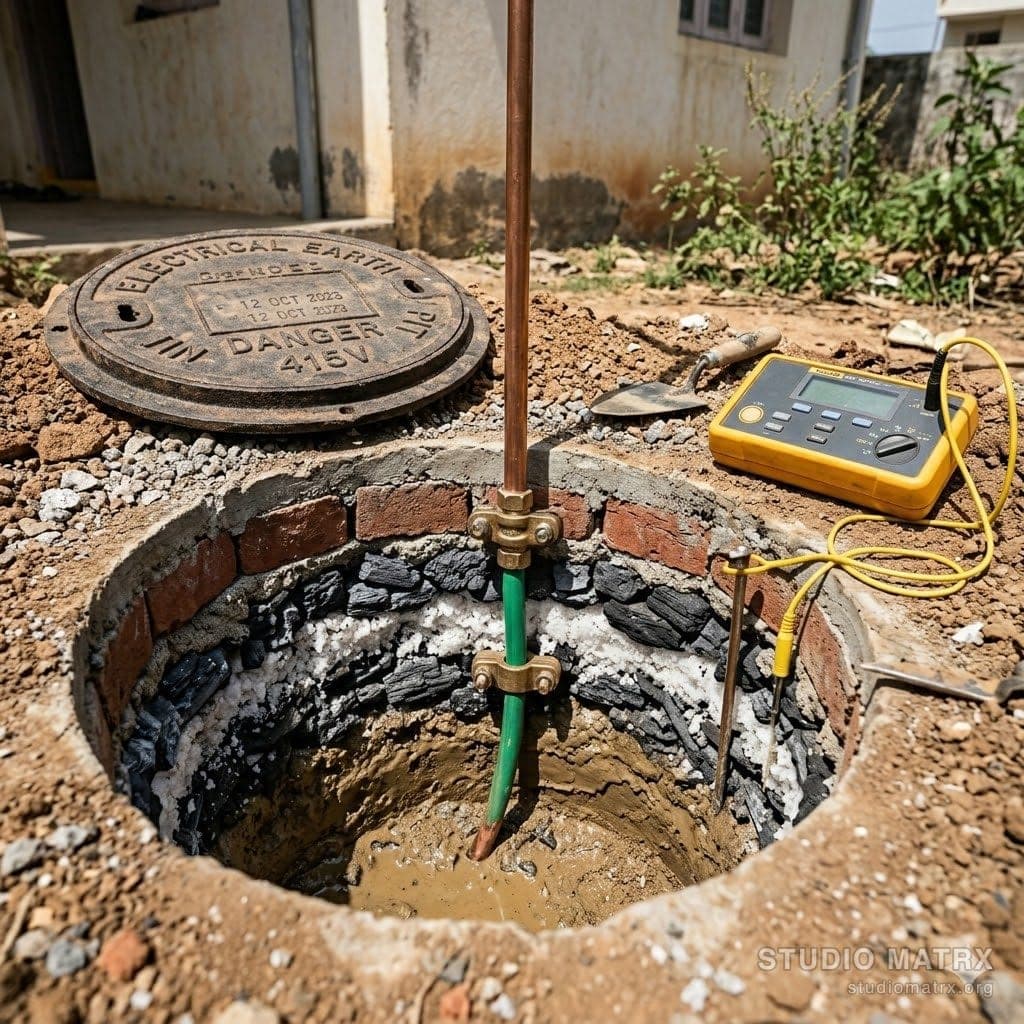
Earth pit
Separate earth pit for electrical (not shared with lightning arrester)
Cover plate accessible for inspection
Location documented
Earth resistance
< 1 ohm (as per IS 3043)
Test certificate from licensed electrician
Re-test annually
Earth continuity
Every socket's earth terminal connected
Tested with earth continuity tester
No loose connections at DB
Pit maintenance
Adequate moisture in pit
Salt + charcoal refreshed if dry
Pit not buried under construction debris
Equipment earthing
Geyser body earthed
All metal switchboards earthed
AC outdoor unit earthed
Washing machine and microwave earthed
RCCB / MCB Panel
RCCB at main DB
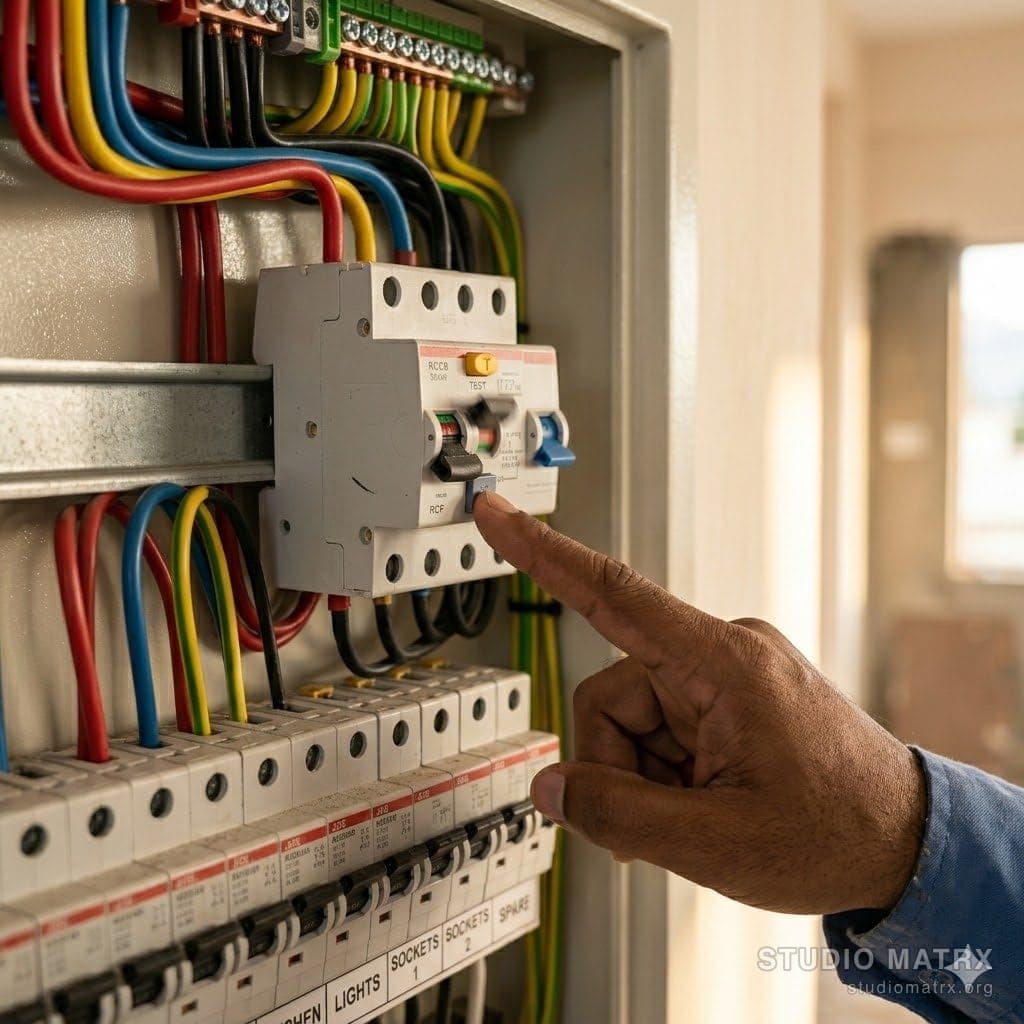
30 mA RCCB for personal protection
Trips when test button pressed
Brand matches specification (Schneider / ABB / Legrand / Siemens / Havells)
Separate RCCB per wet area
Bathroom circuits on dedicated RCCB
Kitchen geyser / appliance RCCB
Reduces nuisance tripping
MCB ratings
Lighting — 6A
Sockets — 16A
Geyser — 20A / 25A
AC — 25A / 32A based on tonnage
Correct curve (B for lights, C for motors)
DB labeling
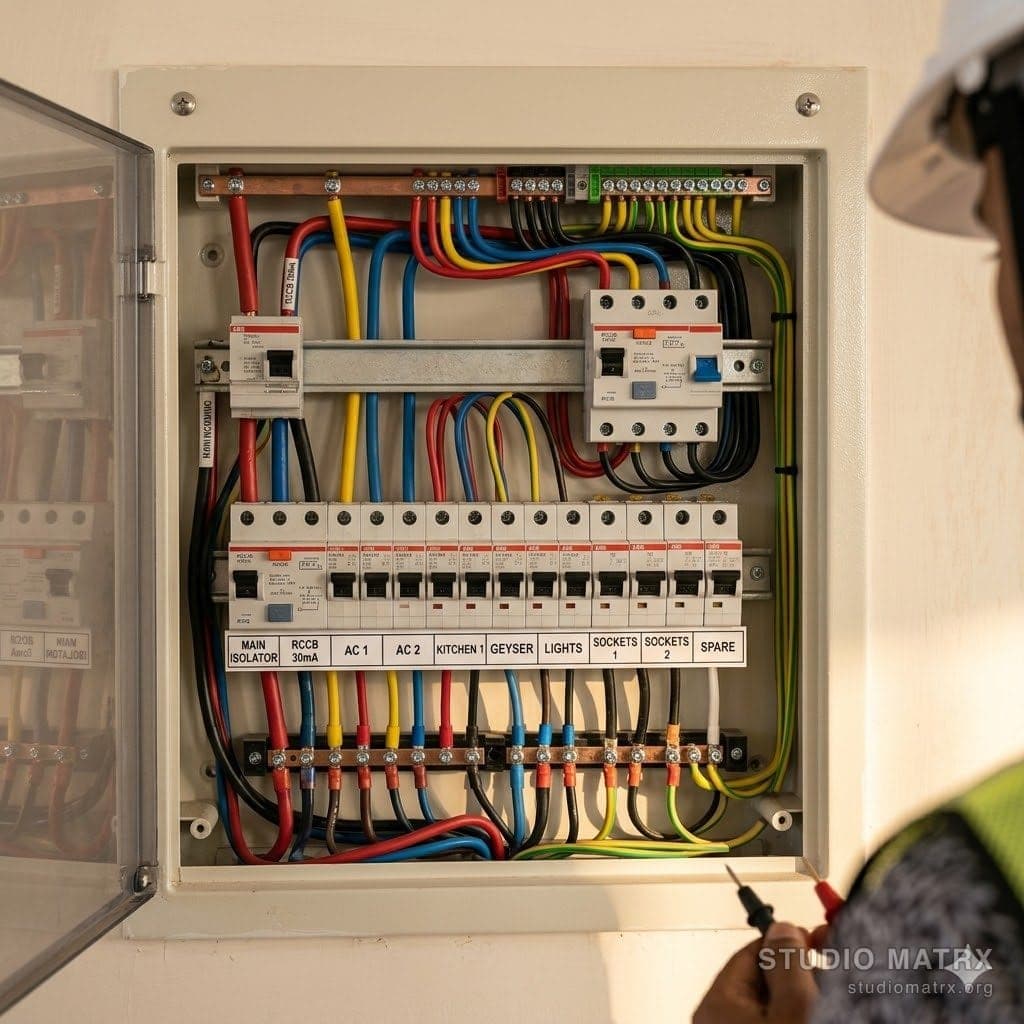
Every MCB labelled with its circuit
Clear, permanent labels
Circuit diagram inside DB door
Spare ways
Minimum 20% spare ways available
Accessible for future additions
Panel enclosure
IP 42 minimum for indoor DB
No exposed live parts
Door closes fully
Not inside bathroom or near water
Surge protection device
SPD (Type 2) installed at main DB
Status indicator normal (not red)
Replace per manufacturer schedule
Wiring
Wire sizes
Lights — 1.5 mm²
Sockets — 2.5 mm²
AC and geyser — 4 mm²
Cooker / heavy appliance — 6 mm²
Matches BOQ
Wire type
FR/FRLS copper (as per IS 694)
Brand matches (Polycab / Havells / Finolex / RR Kabel / KEI)
Not aluminium (reject)
Conduit
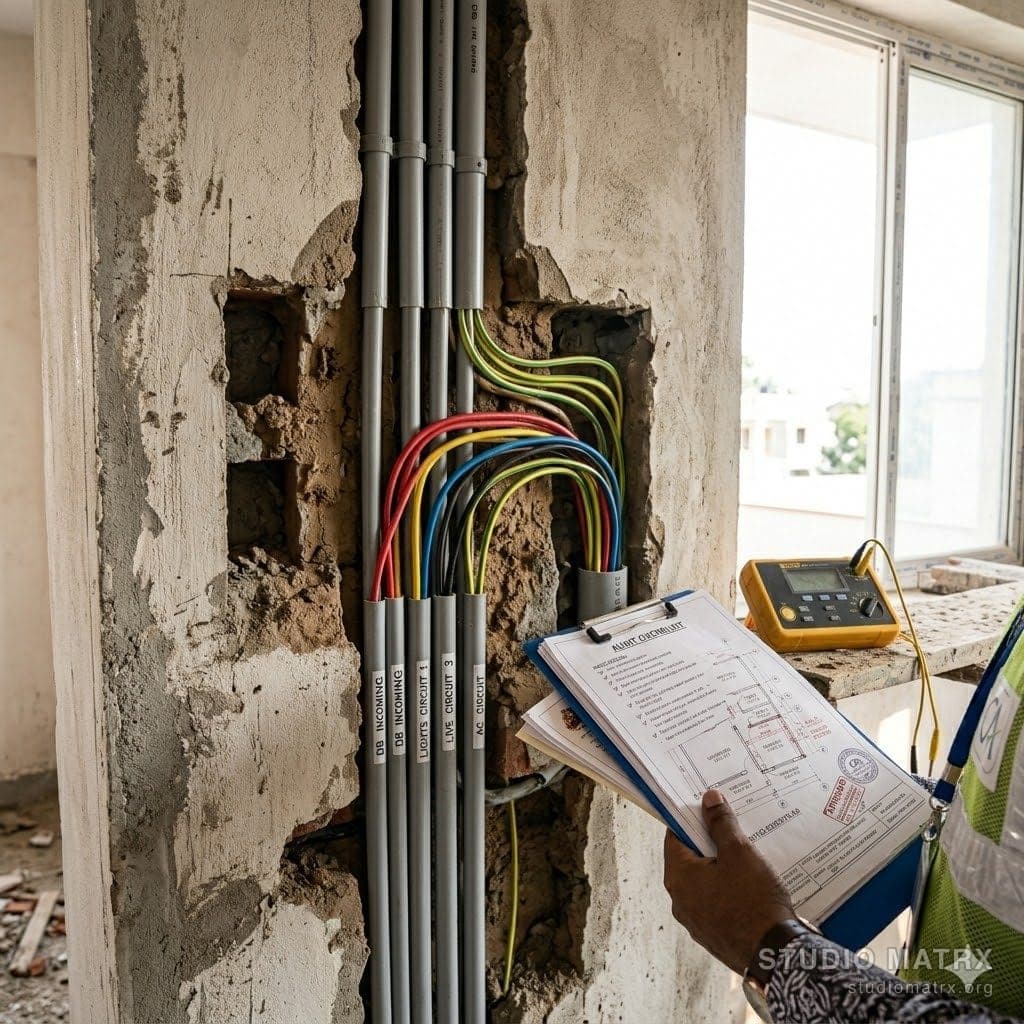
All wiring in conduit — no loose wires
PVC conduit inside walls
Metal conduit where exposed / high temp
No junction boxes hidden behind plaster
Joints
All joints in junction boxes only
Joints by crimping or terminal blocks (not just twisted)
No hidden joints in conduit
Cable routing
Separate conduits for power and data / TV
Minimum bend radius maintained
No sharp bends or kinks
Not shared with plumbing conduit
Switchboards & Sockets
Socket standards
3-pin sockets (2-pin only for shavers etc.)
16A sockets for heavy appliances
USB sockets as specified
Matches BOQ brand
Switch operation
All switches operate their mapped point
Plate flush with wall
Labelled if user-requested
No buzzing / overheating
Socket position
Bedside sockets near bed head
Kitchen counter sockets 150mm above counter
Study table height sockets
TV sockets behind TV unit
Bathroom sockets
Outside splash zone
On dedicated RCCB
Shaver socket with isolating transformer near basin
Polarity check
Socket tester shows correct phase-neutral-earth
No reverse polarity
No open earth or open neutral
Light Fixtures & Fans
LED quality
BIS-certified lights
Lumens per watt — at least 80 lm/W
Colour temperature as specified (3000K warm / 4000K neutral / 5000K cool)
No flicker visible
Ceiling fan points
Hook or mount in RCC slab — not false ceiling
Fan rod length appropriate for clearance
Speed regulator works all levels
25mm gap between fan edge and false ceiling
Exhaust fans
Installed where specified (bathroom, kitchen)
Vent to exterior, not attic
IP rating for wet areas
Outdoor lights
IP 65 or higher
Weather-sealed fittings
Sealed junction boxes
Emergency / night lights
Battery backup if specified
PE cells for auto-on at dusk (if used)
Appliance Circuits (AC, Geyser, Kitchen)
AC circuits
Dedicated circuit per AC
Wire size matches tonnage (4mm² for 1.5T, 6mm² for 2T)
25A or 32A MCB
Isolator near outdoor unit
Geyser circuits
Dedicated circuit
20A/25A MCB
Isolator switch near geyser
On RCCB
Kitchen circuits
Separate circuits for hob / oven / microwave
Dedicated circuit for refrigerator (no shared load)
Adequate socket count per counter
Washing machine / dishwasher
Dedicated circuit
On RCCB
3-pin 16A socket
Home appliance audit
Total connected load calculated
No circuit loaded > 80% of MCB rating
Simultaneous-use test done
Outdoor & Balcony
Balcony sockets
Weatherproof with flap
IP 55 minimum
On RCCB
Dedicated for external use
External cable runs
UV-rated cables
Protected from sun / rodents
No loose hanging wires
Garden lighting (if any)
IP 65 fittings
Separate circuit
Junction boxes sealed against water
AC outdoor connection
Weatherproof socket / isolator
Cable properly clipped
No water entry at wall entry point
DG / Inverter Backup
Backup source
DG / inverter / solar battery identified
Capacity vs connected backup load verified
Automatic changeover operational
Inverter location
Well-ventilated space
Not inside living areas
Battery bank accessible for maintenance
Backup circuits
Clearly marked on DB
Only essential loads (lights, fans, TV, one AC)
No high-starting-current loads (motor pumps)
UPS for electronics
PC / server / CCTV on separate UPS
Battery health checked annually
Solar system (if installed)
Net metering set up
Inverter, battery and panel performance logged
AMC with installer
Compliance & Documents
Licensed electrician
Work done by licensed electrical contractor
Contractor license number on record
Warranty on workmanship
Test certificates
Earthing resistance certificate
IR (insulation resistance) test
Continuity test for all circuits
Wiring drawing
As-built single-line diagram handed over
Circuit schedule
Kept at DB or with homeowner
Statutory compliance
Aligned with IS 732 / CEA safety regulations
Local electrical authority inspection (if required)
Safety certificate from authority
Insurance
Home insurance includes electrical fire cover
Annual electrical check done and documented
Download Electrical Audit PDF
Branded PDF with every item, status, and remark. Keep a copy for insurance claims and annual re-audit.
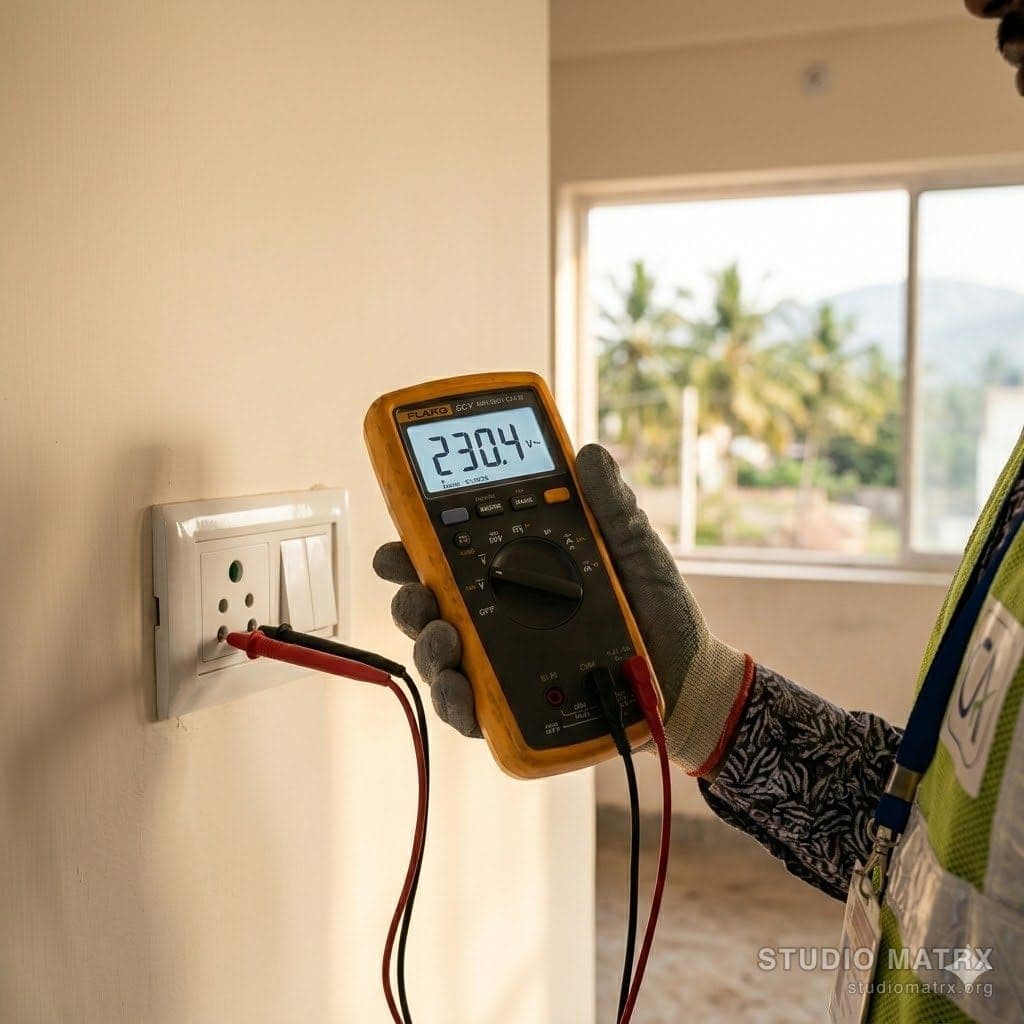
Electrical safety checkpoints in real Indian homes
Audit passed? Plan switchboard layouts with DesignAI
Generate switch and socket layouts room-by-room, with circuit grouping and switchboard placement that respects your sanctioned electrical plan.
Try DesignAI free →Home Electrical Safety — A Working Reference
Indian residential electrical safety has improved dramatically in the last decade — RCCB is now standard in new construction, modular switches have replaced piano switches in most cities, and IS 732 :2019 codifies clear residential wiring practice. But a substantial share of older homes (pre-2010 wiring) still lacks RCCB, has marginal earthing, and uses single-stranded copper that's aged past its safe service life. The audit above gives you a 65-point checklist; this reference covers the three concepts that matter most: the distribution board, the earthing system, and per-room electrical zoning.
Inside the Distribution Board
The distribution board (DB) is the home's electrical command centre. Three layers of protection in sequence: a manual main switch (you can isolate everything), a 30 mA RCCB (the life-saver — trips on earth leakage), and per-circuit MCBs sized to each branch (overload + short-circuit protection). Knowing what each device does means you know which one to suspect when something trips.

Earthing — The Path That Saves You
Earthing is the single safety system most Indian homeowners can't see and don't check. A proper earth pit (per IS 3043) buries a 600 × 600 mm copper plate 2.5-3 m below grade, surrounded by salt and charcoal layers to keep soil resistance low. From the pit, a copper strip rises to the DB's earth bus bar, and from there to every metallic body in the home — geyser tanks, AC chassis, fridge frames, washing machine bodies, even metal window grilles in some specifications.
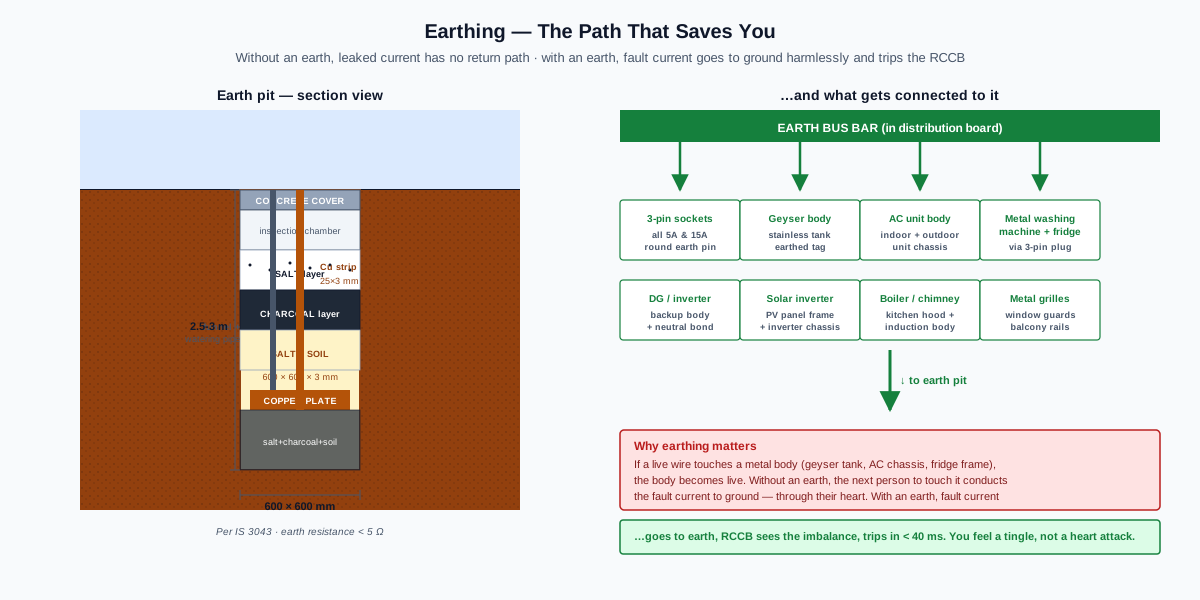
Without earthing, a faulty appliance leaks current into its metal body, and the next person to touch it conducts the fault to ground — through their heart. With earthing, fault current flows harmlessly to the earth pit, the RCCB sees the imbalance, and trips in under 40 ms. Felt tingle, not heart attack.
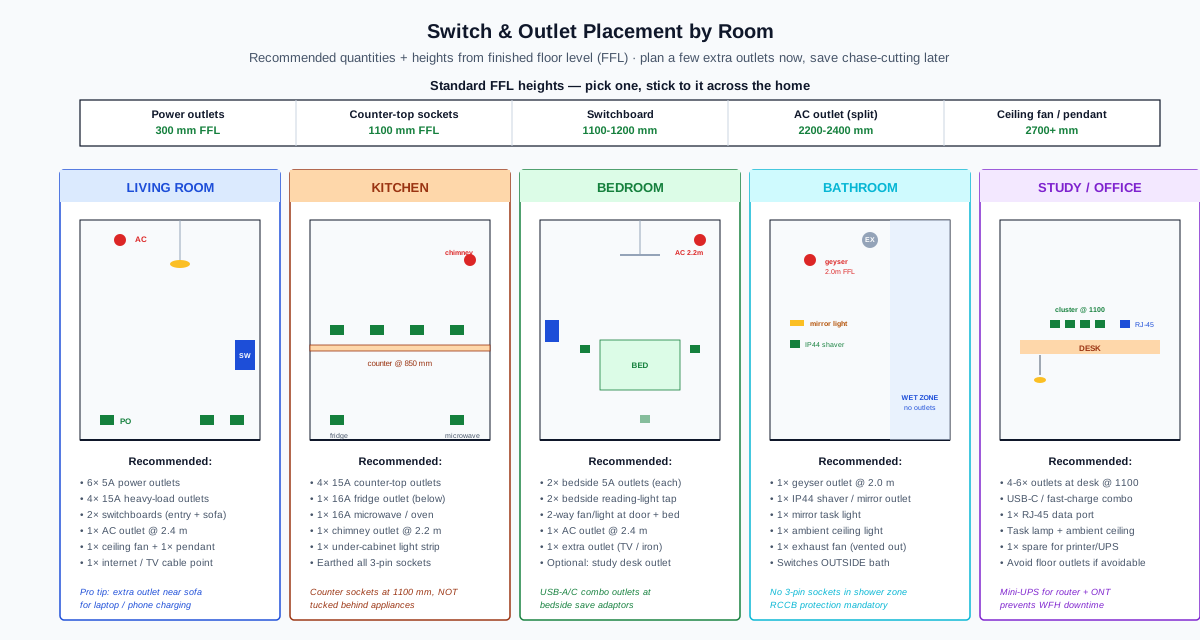
Per-Room Electrical Zoning
Most renovation surprises come from missed or wrongly-positioned electrical points. The card below summarises recommended quantities and heights for the five key rooms — living, kitchen, bedroom, bathroom, study. A few extra outlets planned at the wiring stage save an enormous amount of chase-cutting and re-plastering later.
Working Set of Habits
- Press the RCCB TEST button monthly. Should trip immediately. If it doesn't, replace the RCCB — it has failed silently and won't protect you in a real fault.
- Don't reset a repeatedly-tripping MCB. The MCB is doing its job — there's a real fault on that circuit. Investigate, don't override.
- 3-pin everywhere, 2-pin nowhere. Every socket should have a working earth connection. 2-pin sockets without earth violate IS 732 and the appliance's body is live waiting to happen.
- Water the earth pit before peak summer. Soil resistance rises as it dries. A funnel + watering pipe is built into the pit precisely for this — pour 5-10 L of water through it once a month in dry season.
- Two RCCBs better than one. Split the DB into "general" and "wet/high-risk" (kitchen, bathroom, AC outdoor). A fault on one doesn't dark-out the whole home.
- Keep a spare MCB of each rating. 6 A, 16 A, 20 A — when one fails, the replacement is a 5-minute job for an electrician. Without spares, you wait days.
Cross-References
- Lighting Planner — wattages drive your circuit-load math
- Home Safety Audit — broader audit beyond electrical
- Material Quality Checklist — wire grades and ratings
- Site Inspection — pre-renovation checks
Disclaimer: This checklist follows IS 732 (Code of Practice for Electrical Wiring of Buildings) and IS 3043 (Earthing). It does not replace inspection by a licensed electrician with proper test equipment (megger, earth tester, loop impedance tester). For pre-occupancy certification, retrofitting old wiring, or after any electrical fire / shock incident, always engage a licensed Class-II electrical contractor.
Related Guides — Deep-dive reading
Residential Electrical Systems: The Complete Guide for Indian Homes
How the electricity in an Indian home actually works — from the utility supply and meter through the distribution board, circuits, wiring, earthing and protection, to lighting, safety, energy efficiency, smart controls, solar and backup — written so a homeowner can understand, plan and judge it, and know exactly where a licensed electrician must take over.
Electrical & WiringKitchen Electrical: Wiring, Circuits & Points for an Indian Kitchen
The highest-load, highest-risk room in the home — how to plan a kitchen's electrics: enough 16A socket points at counter height, dedicated circuits for heavy appliances, RCCB protection near water, and the layout that makes a modular kitchen work, all specified before the tiles go up.
Electrical & WiringChoosing the Right MCB Rating for Each Circuit
How the correct MCB is chosen — sized to protect the cable, above the circuit's normal load, with the right trip curve for the appliance. The common ratings for lighting, sockets, geysers, ACs and kitchens, and the golden rule that ties the breaker to the wire.
Electrical & WiringRelated Tools — You may also find these useful
Child & Elder Home-Safety Audit
Room-by-room safety audit for households with children or seniors — 10 categories, 70+ checkpoints tagged by audience.
Safety AuditLift Safety Audit Checklist
Interactive checklist that scores your home lift on safety devices, compliance and upkeep.
ChecklistSnag Checklist
Professional interior snag checklist for handover inspection across 10 work categories.
Snag List