
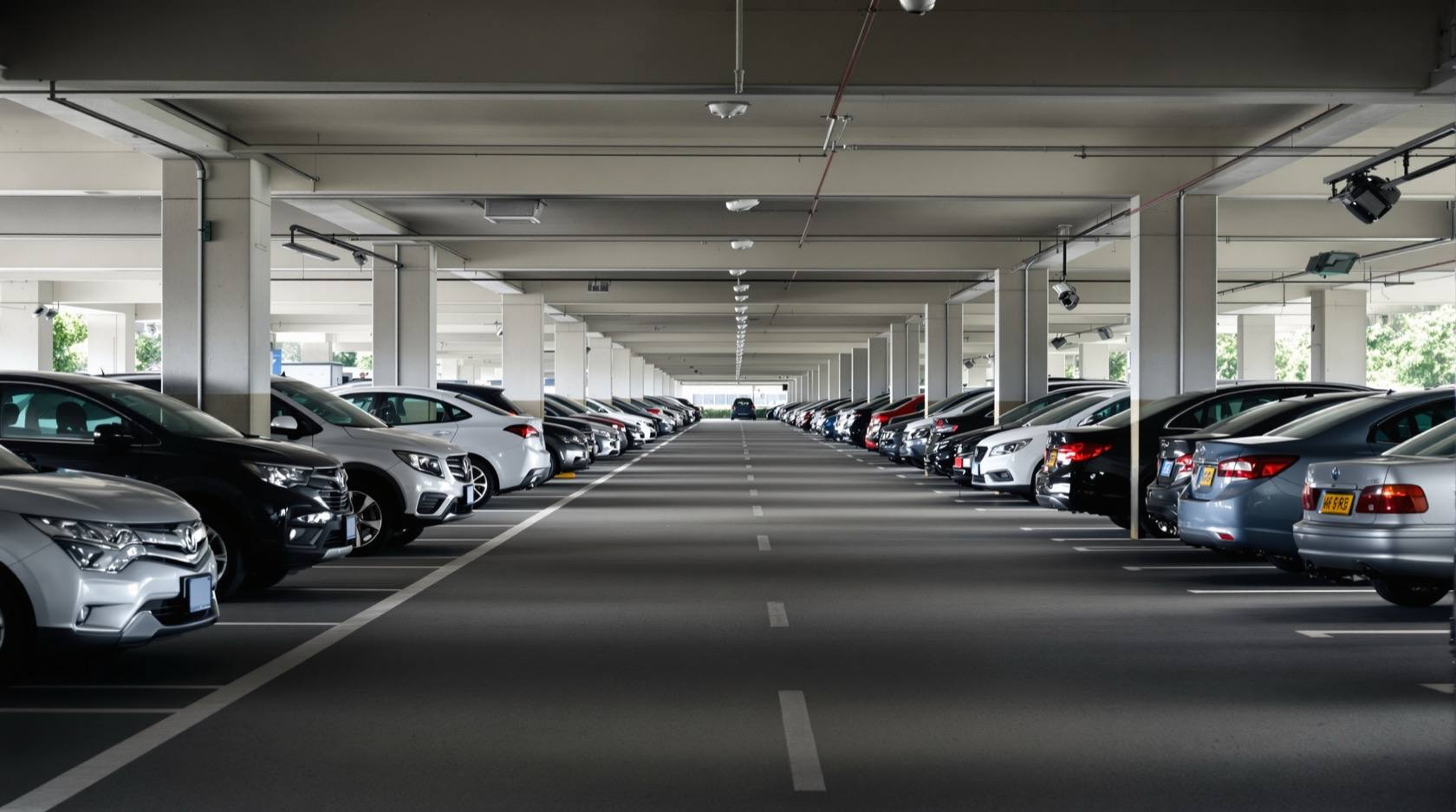
Parking Security Audit in India: A Walk-the-Park Method
Most parking areas were never audited honestly. This is the capstone method that ties the whole parking-security library together: walk the park by day and after dark, grade every layer Good / Weak / Absent, gate it on life-safety, and turn the gaps into a prioritised action plan before a thief or an incident finds them first.
Most parking areas in India were never really audited. They were built to the sanction plan, handed over, and then quietly drifted: a tube light fused and stayed fused, a camera got a spider web and a wall in front of its lens, the boom that was meant to check every car became a boom the guard lifts for everyone, and the fire-tender lane became overflow parking for two-wheelers. Nobody decided any of this. It accumulated. The point of an audit is to catch that drift honestly — to walk the park the way a thief or an incident would read it, find the soft spots first, and turn them into a short, prioritised list of fixes.
This is the capstone of the parking-security library. It does not introduce a new system; it is the method that ties the whole set together — the complete parking and garage security guide and every spoke under the parking sub-hub — into a single, repeatable walk-through you can run on a basement, a stilt park, an open lot or a home garage. It is written for the person who has to sign off on the result: the RWA committee member, the facility manager, or the security consultant they bring in.
Scope & safety. This is educational planning advice. You audit, decide and coordinate; licensed professionals install — electricians for lighting and mains, qualified installers for barriers, cameras and EV chargers, a PSARA-licensed agency for guards. An audit never signs off a security measure that blocks a fire-escape route, obstructs the fire-tender lane, or compromises mandated emergency lighting and exit signage — any such measure fails the audit regardless of how well it works as security. Verify all parking, basement and fire provisions against the National Building Code of India (SP 7:2026, Part 4 — Fire and Life Safety) and your local municipal bye-laws, current editions.
Why the audit, and why after dark
An honest audit exists to find the gap before someone else does. The two people who read a parking area most carefully are the opportunist looking for a quiet, dark, unwatched corner, and — far more importantly — the person who will have to escape it or fight a fire in it one day. A good audit reads the park through both pairs of eyes at once, because in a basement especially, the same space is a security asset, a personal-safety concern, an escape route and a fire risk all at the same time.
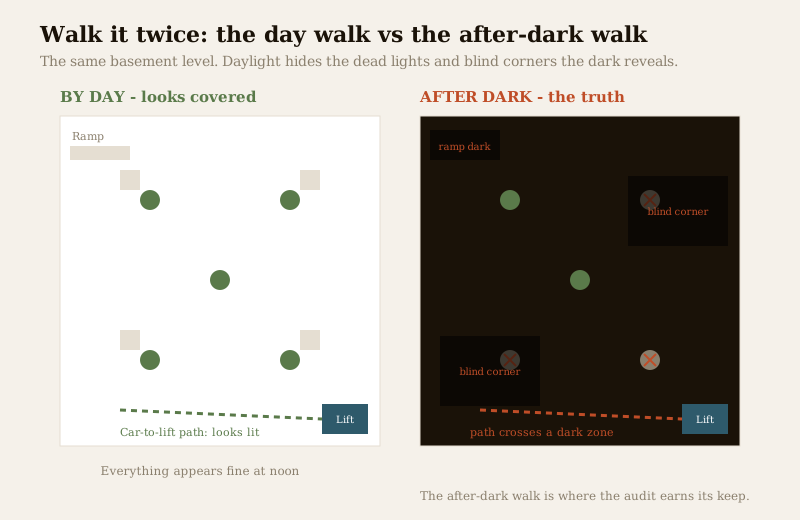
The single most useful discipline is to do the walk twice: once by day, once after dark. The daytime walk shows you the layout, the signage, the state of the barriers and the register. But daylight hides the two things that matter most for real safety: which lights are actually dead, and which corners go black when they are. A pillar that looks fine at noon is a blind pocket at 10 pm. A camera that "covers the ramp" sees nothing when the ramp light has failed. The person walking from a far bay to the lift feels the difference between a lit path and a dark one only after dark. The after-dark walk is not optional — it is where the audit earns its keep.
The method: walk it, layer by layer, grade each
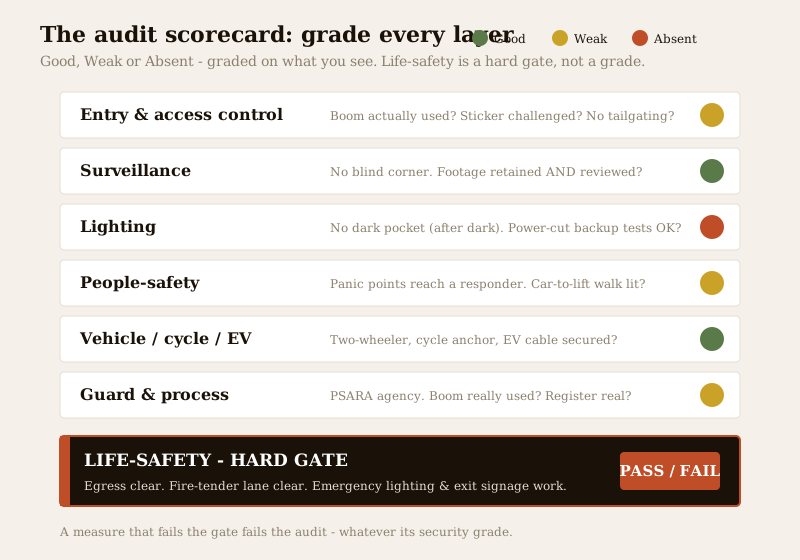
The audit is a structured walk-through, not a desk exercise. You physically move through the park with a checklist, and at each layer you assign one of three honest grades:
- Good — the layer does its job, and you would stake the audit on it. Working, positioned right, actually used.
- Weak — present but compromised: the camera exists but a pillar blocks half its view; the boom is there but lifted for everyone; the light works but leaves a dark pocket; the register exists but nobody checks it.
- Absent — the protection is simply not there, or is so degraded it may as well not be.
Grade what you see, not what the drawing or the AMC promises. A camera is not "Good" because it is on the DVR list — it is Good only when you have stood at its position, confirmed the lens is clean and aimed, and checked on the monitor that its picture is live and its footage is being retained. The whole value of the method is that it replaces "we have CCTV" with "we walked it, and here is exactly where it fails."
Grade the setting first, then go layer by layer.
The setting and its known weakness
Start by naming the type of park, because each has a signature weakness the audit must probe hardest:
- Basement — enclosed, poorly ventilated, a fire and life-safety concern above all, and the place where dark far corners and a long car-to-lift walk hit hardest. Its known weaknesses and a ready-made deep-dive scorecard are in the basement parking security assessment and the basement parking security guide.
- Stilt / covered open — better ventilated but often unmanned at night and open on the sides; natural surveillance and a controlled entry matter most. See open parking security.
- Open lot — weather, lighting and perimeter are the questions; the setting guide is again open parking security.
- Home garage — a different scale but the same logic; the household version is in garage security.
Grade the setting weakness Good / Weak / Absent — for example, "basement: long dark car-to-lift walk = Weak" — and let it sharpen where you push on the layers below.
The layers to grade
Entry and access control
Walk to the ramp and the pedestrian door and read how a stranger would get in.
- Is there real access control on the vehicle entry, or does the gate stand open? The framing is in parking access control.
- Is there a boom barrier, and — the honest test — is it actually used, or lifted for every car? A boom that rises for anyone is Weak, not Good. See boom barriers.
- Run the resident-sticker and tailgating test. How is a resident vehicle recognised? If it is a windscreen sticker any car can copy, or an RFID tag that is never actually challenged, and if a second car can tailgate through on one opening without a check, entry is Weak however impressive the hardware looks.
- How are visitor vehicles handled — logged, verified, directed, time-bound — or waved through? See visitor vehicle management.
Surveillance
Walk the whole level watching for what the cameras cannot see.
- Is there coverage with no blind corner — the ramp, every aisle, the pedestrian door, the lift lobby? Stand where a thief would and ask "what sees me here?" The method is in CCTV placement for parking. An uncovered pillar-shadow is a Weak, a whole dark aisle is Absent.
- Is there ANPR at the ramp to read plates in and out? See ANPR CCTV cameras. Optional, but a genuine strength when present and working.
- The question that fails most systems: is the footage actually retained and reviewed? Confirm on the monitor that cameras are live, that recording goes back a sane number of days, and that someone would actually look. A camera whose feed nobody keeps or watches is theatre — grade it Weak at best. Analytics that cut the review load are covered in human and vehicle detection CCTV.
Lighting
This is the layer the after-dark walk exists to grade.
- Is there even light with no dark pocket across aisles, corners, the ramp and the pedestrian route? Walk it after dark and mark every fused fitting and every shadow. The design and maintenance picture is in parking security lighting.
- Is there power-cut backup so the park does not go pitch black on a mains failure — and does it come on when you test it? A lighting scheme with no backup, or fused fittings nobody replaces, is Weak no matter how bright the working tubes are.
People-safety
Read the park as a lone resident, especially a woman, walking to her car late at night.
- Are there help / panic points where a person in trouble can raise an alarm, and do they reach a guard who will respond? See parking panic buttons.
- Walk the car-to-lift path yourself, after dark. Is it lit, overlooked, short and free of blind corners — or does it cross a dark, unwatched pocket? This is a dignity-and-safety question as much as a theft one, and it is graded honestly, not brushed aside.
Vehicle, cycle and EV protection
The everyday loss in India is rarely a whole car.
- Is there provision against two-wheeler and part theft — the commonest real loss? The owner-and-facility framing is in vehicle theft prevention.
- Is there secure cycle parking — anchors, a defined watched area — rather than cycles left loose? See bicycle parking security.
- Are EV charging bays protected against cable theft and sited safely? See EV charging bay security.
The guard and the process
The best hardware fails through the human layer, so audit the process as hard as the kit.
- Is the guard agency PSARA-licensed, and are guards briefed on this park specifically?
- Is the boom actually used on their watch, or lifted reflexively — you may only learn this by watching, unannounced, after dark.
- Is the register real — filled properly, legible, checked — or a formality signed in advance? A real process turns cameras and barriers into security; a paper one leaves them decorative.
The life-safety hard gate
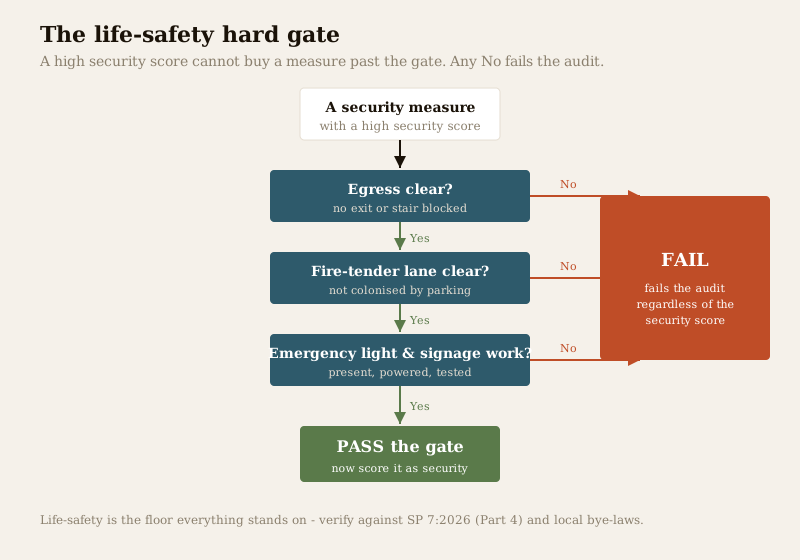
This layer is different from all the others: it is not scored, it is gated. Walk it as a pass/fail check, and if the park fails any part of it, the whole audit fails — no matter how good the security score.
- Is egress clear — every escape route and staircase unobstructed by parked vehicles, stored goods or a security barrier?
- Is the fire-tender lane clear and usable, not colonised by overflow parking? See fire-tender access.
- Are emergency lighting and exit signage present, powered and working when tested? See emergency lighting and exit signage.
A security measure that fails any of these fails the audit. A gate that seals an exit, a bollard that narrows the fire-tender lane, a store-room built into an escape route to "secure" it — each is a failed measure, however well it stops a thief. Life-safety is the floor everything else stands on, and it is checked against SP 7:2026 (Part 4) and the local bye-laws.
DPDP compliance of the data you collect
Parking CCTV, ANPR and visitor registers all capture personal data, so the audit checks their handling under the Digital Personal Data Protection Act, 2023:
- Is a notice posted that the area is under CCTV?
- Is access restricted — footage and registers held securely, not on a shared open PC or a WhatsApp group?
- Is retention sane — kept only as long as security needs, then overwritten — and is recognition not run ad-hoc?
Non-compliant data handling is a real finding, not a footnote — grade it Good / Weak / Absent like any other layer.
The audit checklist table
Run this table as you walk. Each row is a layer; grade it in the middle column against what "Good" looks like, and set a priority in the last. The life-safety row is the gate — mark it PASS or FAIL, not a grade.
| Layer | What "Good" looks like | Grade (Good / Weak / Absent) | Priority |
|---|---|---|---|
| Setting & its weakness | Type named; its signature weakness (dark walk, open sides, ventilation) identified and addressed | ___ | ___ |
| Entry & access control | Real access control; boom present and actually used; sticker/tag challenged; no tailgating; visitors logged and verified | ___ | ___ |
| Surveillance | No blind corner; ramp/aisles/door/lift covered; ANPR at ramp if fitted; footage retained a sane span and reviewed | ___ | ___ |
| Lighting | Even light, no dark pocket (checked after dark); no fused fittings; power-cut backup that tests OK | ___ | ___ |
| People-safety | Help/panic points that reach a responder; car-to-lift path lit, overlooked, no blind corner | ___ | ___ |
| Vehicle / cycle / EV protection | Two-wheeler and part theft addressed; secure anchored cycle parking; EV bays safe and cable-secured | ___ | ___ |
| Guard & process | PSARA-licensed agency; guards briefed on this park; boom genuinely used; register real and checked | ___ | ___ |
| DPDP compliance | CCTV notice posted; footage/register access restricted; retention sane; no ad-hoc recognition | ___ | ___ |
| Life-safety (HARD GATE) | Egress clear; fire-tender lane clear; emergency lighting and exit signage present, powered, tested | PASS / FAIL | Any FAIL = fix first |
Turning the grades into severity, a simple convention keeps the list honest:
| Finding type | What it means | Where it goes in the plan |
|---|---|---|
| Life-safety FAIL | Egress / fire-tender / emergency systems compromised | Top of the list, always — fix before anything else |
| Absent layer, high exposure | A whole protection missing where the risk is real (dark aisle, no access control) | High priority — often the cheapest-biggest-gap wins |
| Weak layer | Present but compromised (boom unused, blind corner, dead light) | Medium — many are near-free fixes (replace a tube, brief the guard) |
| Good layer | Works and is used | Maintain and re-verify next audit |
Prioritise: life-safety, then the cheapest-biggest gap
An audit that ends in a long undifferentiated list changes nothing. The output is a prioritised action plan, ordered by two rules in this sequence:
1. Life-safety first, unconditionally. Any life-safety FAIL is fixed before a single rupee goes on a new camera. Clearing a blocked exit or a colonised fire-tender lane costs little and outranks everything.
2. Then the cheapest-biggest-gap fixes. Among the security findings, favour the changes that close the largest exposure for the least money and effort. Replacing three fused tubes to kill a dark pocket, re-aiming a camera off a wall, or briefing the guard to actually challenge the boom often beats an expensive new system — because the biggest gaps in Indian parks are usually maintenance and process, not missing hardware.
Only after those two passes do you plan the larger capital items (an ANPR upgrade, a new lighting circuit, additional cameras). And an audit is not a one-off: re-audit periodically — after any incident, after a lighting or camera change, and on a regular cycle — because parks drift back. Log the date, the grades and the closed items each time so the trend is visible.
Who does the audit, and how
The audit is owned by the people accountable for the park — typically the RWA committee or the facility-management team — ideally walking it with a security consultant who brings a trained eye and no stake in hiding the gaps. Split the roles honestly: the RWA/FM knows the building's history and can act on the plan; the consultant grades without flinching and points at the awkward findings (the boom nobody uses, the register nobody checks). Do the daytime walk together for layout and process, then the after-dark walk for lighting, blind corners and the human layer as it really runs at night.
Two Studio Matrx tools support the walk and the write-up: use the home security risk scorecard to structure a household-scale or single-owner view, and the site perimeter security assessment to grade the boundary and entry that the parking sits behind. For a basement specifically, the basement parking security assessment gives a ready deep-dive to fold into this audit.
Key takeaways
- Audit to find the soft spot before a thief or an incident does. A parking security audit is a structured walk-through that replaces "we have CCTV" with "we walked it, and here is exactly where it fails."
- Walk it twice — by day and after dark. The dark walk reveals the dead lights, black corners and unlit car-to-lift path that daylight hides; it is where the audit earns its keep.
- Grade every layer Good / Weak / Absent — setting, entry/access, surveillance, lighting, people-safety, vehicle/cycle/EV, guard-and-process, DPDP — on what you see, not what the drawing or AMC promises.
- Life-safety is a hard gate, not a score. Any measure that blocks egress, obstructs the fire-tender lane, or kills emergency lighting or exit signage fails the audit regardless of its security value. Check against SP 7:2026 (Part 4) and local bye-laws.
- Prioritise life-safety first, then the cheapest-biggest gap — usually maintenance and process, not new hardware — and re-audit periodically, RWA/FM together with a security consultant.
Where to go next
- Frame the whole subject with the complete parking and garage security guide and browse the parking sub-hub and the Security Knowledge Hub.
- Read the setting guides you are auditing: basement parking security, open parking security and garage security.
- Deepen a layer as its grade demands: parking access control, boom barriers, RFID vehicle access, visitor vehicle management, CCTV placement for parking, ANPR CCTV cameras, human and vehicle detection CCTV and parking security lighting.
- Grade the people-and-vehicle layers with parking panic buttons, vehicle theft prevention, bicycle parking security and EV charging bay security.
- Hold the life-safety gate with emergency lighting, exit signage and fire-tender access.
- Run the tools: the home security risk scorecard, the site perimeter security assessment, and the basement parking security assessment.
References
- National Building Code of India, SP 7:2026 (Bureau of Indian Standards), Part 4 — Fire and Life Safety, for parking, basement, egress, fire-tender access, emergency lighting and exit-signage provisions. Verify the current edition and your local municipal bye-laws.
- Local municipal building bye-laws and fire-department requirements for parking layout, escape routes and fire-tender access on your specific site.
- Digital Personal Data Protection Act, 2023, for CCTV, ANPR and visitor registers that capture personal data — notice, restricted access, sane retention, no ad-hoc recognition.
- Private Security Agencies (Regulation) Act, 2005 (PSARA), for engaging a licensed security agency and briefed guards.
This is an educational, strictly defensive audit method for owners, RWAs, facility managers and their consultants. It does not describe how to steal a vehicle, defeat a barrier or bypass access control. Installation of lighting, cameras, barriers and EV chargers is qualified professional work — engage licensed installers, and never let any security measure block a fire-escape route, obstruct a fire tender, or violate an applicable National Building Code or municipal bye-law.
Export this guide
Related Guides — Deep-dive reading
Parking Security Lighting in India (2026): Lighting Basement, Stilt and Open Parking So Nothing Hides in the Dark
How to light apartment and commercial parking so vehicles, people and number plates are clearly seen, cameras can actually read the scene, and the space stops being a soft spot for theft and lurking, without ever compromising the emergency lighting on the escape route.
SecurityThe Complete Guide to Parking and Garage Security in India (2026): Access, CCTV, Lighting, People-Safety & Vehicle Protection
The pillar overview of parking and garage security for Indian apartments, offices and homes — how to control who enters, watch every corner, light and de-isolate the space, and protect the vehicles, without ever blocking the escape route or the fire tender.
SecurityVisitor Vehicle Management in India: A Professional Guide
The everyday weak point of every society and office gate is not the resident's car — it is the visitor, the cab, the delivery rider and the contractor who must be let in without opening the whole park to anyone. This is the process, not just the hardware: verify at the gate before the boom lifts, park visitors away from resident bays, and never jam the gate a fire tender needs.
SecurityRelated Tools — Try Free
Home Security Risk Scorecard
Score your home across six security layers — perimeter, entry points, lighting, detection, alarm and habits — and get a prioritised action plan.
Security ScorecardCCTV Camera Coverage & Count Calculator
Estimate how many CCTV cameras you need, the NVR channels, storage in TB for your retention period, and an indicative all-in cost with GST.
CCTV CalculatorCCTV Placement Compliance Checker
A quick DPDP-grounded privacy and safety self-check for where a camera is pointed — flags the items to fix.
Compliance