
Fire Safety Maintenance Calendar for India (2026): The Year-Round Routine That Keeps It All Working
India's core fire-safety disease is installed for the NOC, then neglected. The cure is a written, owned maintenance calendar - who checks what, when - so no fire-safety element ever silently fails.
Every other guide in this library describes a fire-safety element that must be designed, installed and certified: the alarm, the sprinklers, the hydrants, the pumps, the extinguishers, the fire doors and dampers, the pressurised stairs, the smoke extraction, the exit signs and emergency lights. This guide is about the one thing that keeps all of them alive after the Fire NOC is signed - a single, written, owned fire safety maintenance calendar that says exactly who checks what, and when, every week of the year. Because the honest truth of Indian fire safety is not that buildings lack systems. It is that the systems were installed for the NOC and then quietly left to rot, and nobody was ever assigned to notice.
This is the closing chapter of Studio Matrx's fire-safety library, sitting under the complete guide to fire safety in India. It is the capstone that ties the whole Section together: the routine that turns a paper-compliant building into an actually-safe one. It is written for facility managers, RWA committees, security supervisors, developers and the owners who carry the legal duty - so you can build a calendar, assign the owners, keep the log book, and never let a single element slide into the installed-but-dead state that kills people.
Scope and safety - read this first. The frequencies, tasks and standards in this guide are indicative and set the shape of a maintenance regime - they are not a universal legal cadence. Your actual calendar is fixed by the equipment manufacturer's manuals, the National Building Code (via SP 7 : 2026, Part 4 Fire and Life Safety), your Annual Maintenance Contract (AMC), and the State Fire Services Act and Rules for your premises (including any statutory fire-audit and self-declaration duties). The technical servicing - pump overhauls, sprinkler and clean-agent work, battery-autonomy tests, fire-door and damper inspection - is the job of licensed fire contractors and empanelled auditors, not the owner. This guide is educational, not legal advice, and it is never a manual for defeating, bypassing or silencing any system. When there is a fire, one rule overrides everything below: get everyone out and call the fire brigade on 101 or 112.
"Installed for the NOC, then neglected" - the disease this calendar cures
A fire-safety system is not an object you buy once. It is a fleet of living systems, and every one of them degrades on a predictable timetable. Extinguisher pressure bleeds off. Standby batteries lose capacity. Sprinkler valves seize. Diesel pump batteries go flat. Fire-door closers fail and doors get wedged open. Dampers rust into place. Emergency-light batteries die. Hydrant valves corrode shut. Left alone, a fully certified building quietly becomes a non-building - and the tragedy is that it looks fine right up until the fire, because every one of these failures is silent.
The reason this is India's core fire-safety disease is structural. The NOC is a moment - an inspection passed, a certificate issued. Safety is a duration - it has to hold for every day the building is occupied. Nothing in the certificate keeps the systems serviced, so unless a named person owns a written routine, the fleet decays in silence and the building coasts on the memory of a test it passed years ago. The single sentence at the heart of this guide is this: an unmaintained fire-safety system is presumed broken, not presumed working. The calendar below is what closes the gap between "compliant on paper" and "safe in reality".
This calendar does not replace the individual guides - it schedules them. The fire-alarm maintenance and fire-alarm testing guides set out the detection regime; this guide places their tasks on the year. The fire-safety inspection and fire-safety audit guides define the periodic deep checks; this guide fixes when they fall and who commissions them.
The calendar - who checks what, when
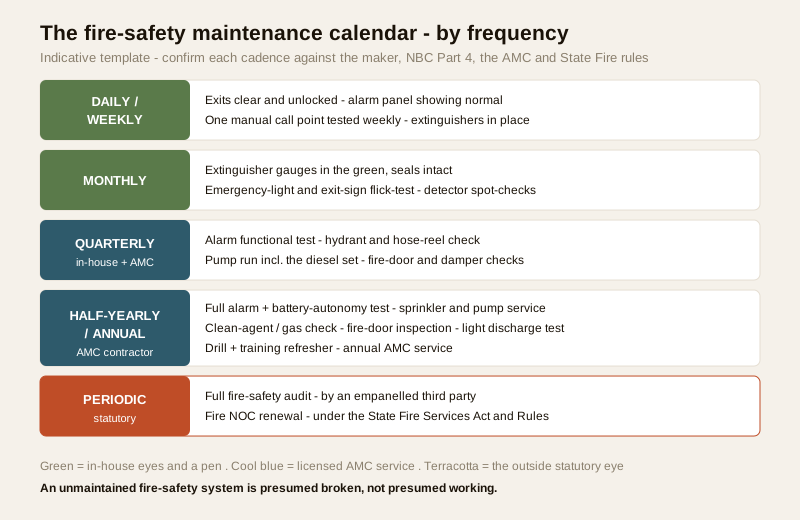
A maintenance calendar works by sorting every task by how often it must happen and who is competent to do it. The bands below are the standard shape - a template you adapt to your building's actual systems and to your equipment makers, NBC Part 4, your AMC and your State Fire rules. Do not read the frequencies as fixed law; read them as the rhythm most Indian buildings settle into, then confirm each one against its own source.
| Frequency | Owner | Indicative tasks (adapt to maker + NBC Part 4 + AMC + State Fire rules) |
|---|---|---|
| Daily / weekly | In-house facility and security | Exits and escape routes clear and unlocked; alarm panel showing normal; a rotating manual call point tested weekly; extinguishers in place; pump-room and hydrant area accessible |
| Monthly | In-house facility | Extinguisher pressure gauges in the green and seals intact; emergency-light and exit-sign flick-test; spot-check a sample of detectors and call points; visual check of sprinkler control valves open |
| Quarterly | In-house with AMC support | Alarm functional test on a rotating sample; hydrant and hose-reel check; fire-pump run including the diesel set; fire-door and fire-damper visual and operational checks; escape lighting sample |
| Half-yearly / annual | AMC contractor | Full alarm test with battery-autonomy check; sprinkler and pump service; clean-agent and gas-suppression inspection; fire-door and damper inspection; emergency-light full-duration discharge test; drill and training refresher; the annual AMC service |
| Periodic (statutory) | Third-party / empanelled auditor | Full fire-safety audit and, on its own cycle, Fire NOC renewal under the State Fire Services Act and Rules |
The daily and weekly work is deliberately simple - it is done with eyes, feet and a pen, and its whole job is to catch the gross, physical failures early: a chained exit, a missing extinguisher, a panel in fault, a blocked hydrant. The monthly and quarterly layers add instruments and functional tests. The half-yearly and annual layer is where the licensed contractor does the deep servicing no in-house team can do. And the periodic layer is the outside eye - the audit and the NOC renewal that the building cannot mark its own homework on.
Daily and weekly - the cheap checks that catch the worst failures
- Exits and escape routes - every escape route, staircase and exit walked and confirmed clear, unlocked and unobstructed; this single check prevents the deadliest failure of all, a locked or blocked way out.
- The alarm panel - a ten-second daily glance that it shows normal, not fire, fault or disable; and a weekly test of one manual call point on rotation, logged.
- Extinguishers and hydrants - every fire extinguisher present, unobstructed and seal intact; the hydrant and pump room clear and accessible.
Monthly - gauges, lights and spot-checks
- Extinguisher gauges - a monthly walk confirming every gauge sits in the green and the tamper seal is unbroken; a discharged or de-pressurised extinguisher is caught here, not at the fire.
- Emergency lights and exit signs - a monthly flick-test that each emergency light and exit sign illuminates on battery; the full-duration discharge test is annual.
- Detector and valve spot-checks - a rotating sample of detectors, and a look that sprinkler control valves are open and locked and not quietly shut.
Quarterly - functional tests and the moving parts
- Alarm functional test - a rotating sample of detectors and call points proven to raise the alarm and drive their outputs, per the fire-alarm testing guide.
- Pumps and hydrants - the fire pumps run - crucially including the diesel standby set, whose flat battery is a classic silent failure - and the hydrants and hose reels checked.
- Fire doors and dampers - the smoke-control doors and fire dampers checked to confirm they still close and hold, the linchpins of the building's compartmentation.
Half-yearly and annual - the licensed deep service
- Full alarm and battery autonomy - the whole detection and alarm system proven, including the standby battery's ability to carry the system through a power cut and still raise a full alarm.
- Suppression service - the sprinkler system, pumps and any clean-agent or gas suppression serviced and inspected by the contractor.
- Governance events - a fire drill and a training refresher run and logged; the emergency-light full-duration discharge test; the annual AMC service certificate that supports your NOC and your insurer.
Who owns what - in-house, AMC and the third-party auditor
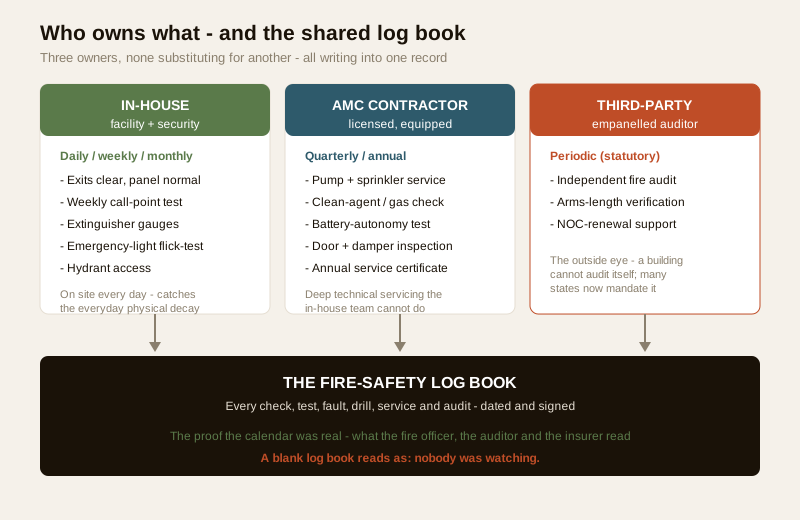
A calendar with no name against each row is a wish, not a plan. Maintenance fails far more often from unassigned ownership than from difficult work, so the calendar must resolve into three clearly separated owners, each with what only they can competently do, and none substituting for another.
| Owner | What only they do | Cadence | Why it must be them |
|---|---|---|---|
| In-house facility and security | Visual and simple functional checks - clear exits, panel status, extinguisher gauges, light flick-tests, hydrant access | Daily, weekly, monthly | They are on site every day; only continuous presence catches the physical, everyday decay |
| AMC contractor | Technical service and deep testing - pumps, sprinklers, clean-agent, battery autonomy, sensitivity, door and damper inspection | Quarterly, half-yearly, annual | Licensed, equipped and competent to service and certify engineered systems the owner cannot |
| Third-party / empanelled auditor | Independent fire-safety audit and NOC-renewal support | Periodic (per State Fire rules) | An outside, arms-length eye; the building cannot audit itself, and many states now mandate it |
The most common ownership mistake is to imagine the AMC covers everything and stand down the in-house team. It does not: an AMC that visits quarterly still lets a system rot between visits, because a chained exit, a discharged extinguisher or a wedged fire door happens on a Tuesday, not on a service date. Equally, the in-house team cannot load-test a battery, overhaul a pump or certify a sprinkler system. And neither the in-house team nor the contractor you pay can be your own independent auditor - that is precisely why State Fire regimes increasingly require a periodic audit by an empanelled third party, covered in the fire-safety audit guide, distinct from the routine fire-safety inspection the building runs on itself.
The log book - the proof the calendar was real
A calendar is only trustworthy if someone can show it was actually followed, and the instrument of that proof is the log book kept in the building. It is both an operating discipline and the evidence a fire officer, an auditor and an insurer will each demand. Every scheduled check, every test and its result, every fault and its clearance, every drill, every AMC visit and every service certificate goes in it, dated and signed. A blank or missing log book tells an inspector one thing: nobody was really watching, whatever the certificate on the wall says.
| What goes in the log book | Recorded by | Why it matters |
|---|---|---|
| Daily and weekly checks - exits, panel, call-point test | In-house facility | Proves the cheap, high-value checks actually happened |
| Monthly checks - extinguisher gauges, light flick-tests | In-house facility | Catches the slow physical decay and dates each finding |
| Quarterly and annual service - pumps, alarm, doors, dampers | AMC contractor | The technical record the NOC renewal and insurer rely on |
| Drills and training refreshers - date, attendance, learnings | In-house / trainer | Shows the human system was exercised, not just the hardware |
| Faults and their clearance - raised, actioned, closed | All owners | Proves failures were fixed, not left to rot |
| Audit reports and Fire NOC renewals | Third-party auditor | The independent, statutory record that closes the loop |
Why the calendar is the cure - a governed year versus a rotting one
Two buildings can be identical on the day the NOC is signed and utterly different a year later, and the only variable is whether anyone owned the calendar. The contrast is worth drawing plainly, because it is the whole argument of this guide.
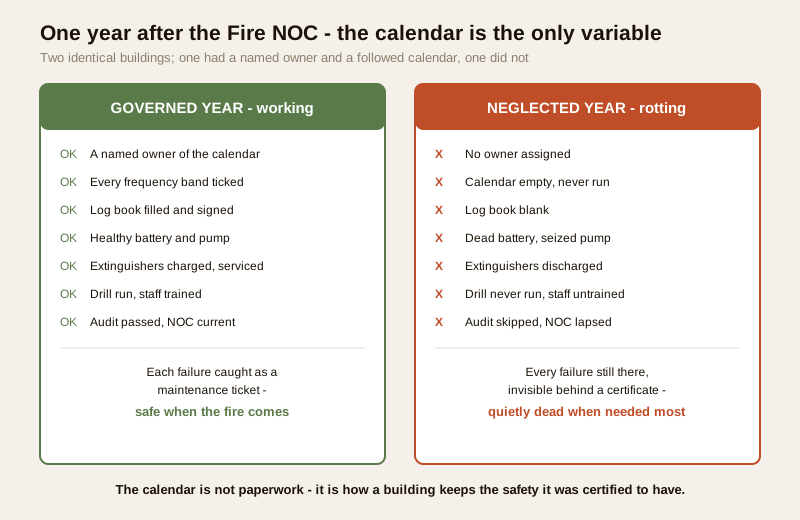
In the governed building, the calendar caught the flat diesel-pump battery in a quarterly run, the discharged extinguisher in a monthly gauge check, the wedged fire door on a daily walk, and the drift in the alarm at the annual service - each while it was a maintenance ticket, not a body count. In the neglected building, every one of those failures was still there on the day of the fire, invisible from the outside, presumed working, actually dead. The calendar is not paperwork. It is the mechanism by which a building keeps the safety it was certified to have.
Two external forces also make the calendar non-optional even for an owner tempted to cut corners. The first is the Fire NOC: its renewal under the State Fire Services Act and Rules depends on the systems being maintained and demonstrably functional, and a fire officer who finds a blank log book, a dead panel or a seized pump can refuse renewal and stall the building's lawful occupation. The second is insurance: a fire-loss claim can turn on whether the systems were maintained and the log book kept, and an insurer who finds a system left to rot has grounds to dispute the claim. Route the whole calendar into your building's broader emergency preparedness, and read it alongside the apartment and commercial-building security guides for how the routine sits within each setting's duties, and the electrical safety guides for the fault sources most maintenance exists to survive.
Keep it governed - and know when the law requires a professional or an audit. The daily, weekly and monthly checks sit squarely on the in-house team: walk the exits, glance at the panel, read the gauges, flick the lights, keep the log. But the technical service - pumps, sprinklers, clean-agent, battery autonomy, fire doors and dampers - is a licensed-contractor task under an AMC to the equipment makers' manuals and NBC Part 4 (SP 7 : 2026), and the periodic fire-safety audit and Fire NOC renewal are statutory duties under your State Fire Services Act and Rules, often requiring an empanelled third party. Route each to its right owner, hold the AMC and the auditor accountable against the log book, and never treat a certificate as a substitute for the routine. A fire-safety system installed for the NOC and then abandoned is not a fire-safety system. It is a decoration that will be quiet on the day it is needed most. When you are ready to turn this calendar into a scored, printable routine, work through the fire-safety audit checklist.
Key takeaways
- The calendar is the cure for India's core fire-safety disease - systems installed for the Fire NOC and then neglected; an unmaintained fire-safety system is presumed broken, not presumed working, and a written, owned year-round routine is the only thing that closes the gap between compliant on paper and safe in reality.
- Sort every task by frequency - daily and weekly visual checks (clear exits, panel normal, a weekly call-point test), monthly gauges and light flick-tests, quarterly functional tests and pump runs, half-yearly and annual deep service and drills, and periodic audit and NOC renewal - as an indicative template, confirmed against the equipment makers, NBC Part 4, your AMC and the State Fire rules.
- Assign three clear owners - in-house facility and security for the frequent simple checks, the AMC contractor for the technical deep service, and a third-party or empanelled auditor for the independent statutory audit - none substituting for another, because an AMC alone lets systems rot between visits and a building cannot audit itself.
- The log book is the proof the calendar was real - every check, test, fault, drill, service and audit dated and signed; a blank log book reads to any inspector as a system nobody was watching, whatever certificate hangs on the wall.
- Maintenance is the condition of lawful occupancy and valid insurance - Fire NOC renewal and a payable fire-loss claim both depend on the systems being maintained and the records kept; route all technical servicing to licensed contractors and the audit to an empanelled professional, and verify every code and duty against BIS and the State Fire Services.
References
- National Building Code of India, SP 7 : 2026 (the NBC), Part 4 "Fire and Life Safety" - the framework governing the fire-protection systems whose upkeep this calendar schedules, by occupancy and height; the older SP 7 : 2016 edition is withdrawn but still widely quoted. Verify the current edition via the BIS catalogue: https://www.services.bis.gov.in/
- IS 2189 : 2026 (fire detection and alarm), IS 15105 : 2021 (sprinklers), IS 2190 : 2024 (fire-extinguisher selection, installation and maintenance) and the hydrant codes - the systems' own Indian Standards that fix each element's inspection, testing and maintenance regime. Confirm the current editions and provisions via the BIS catalogue: https://www.services.bis.gov.in/
- The relevant State Fire Services Act and Rules and the Model Building Bye-Laws (MoHUA) - these set the periodic maintenance and record-keeping obligations, the statutory fire-safety audit and self-declaration provisions where they apply, and the Fire NOC and renewal duties on which lawful occupation depends.
- Manufacturer datasheets and installation-and-maintenance manuals for the specific panels, pumps, sprinklers, clean-agent systems, batteries, doors and dampers installed - the authority for each item's service intervals and methods; always follow the equipment's own documentation and the AMC and audit records.
This is an educational overview, not legal advice, and not a substitute for a licensed fire-safety consultant, a fire contractor or an empanelled fire auditor. The maintenance calendar, its frequencies, the AMC, the fire audit, the Fire NOC and any statutory testing are qualified professional and legal duties - engage licensed fire professionals and the State Fire Services, and verify any standard's current status via the BIS catalogue before relying on it.
Export this guide
Related Guides — Deep-dive reading
Fire Safety Inspection in India (2026): The Routine Checks That Catch Failures Early
The cheap, frequent in-house walk-round - are exits clear, extinguishers charged, the alarm panel normal, fire doors closing - that catches the drift toward a neglected building before it can matter, and the log that proves you looked.
SecurityEmergency Lighting in India (2026): Seeing Your Way Out When the Power Fails
The battery-backed luminaires that keep escape routes, stairs and exit doors visible when a fire or an ordinary power cut kills the mains - how they work, the duration the code demands, and why so many are dead when needed.
SecurityEmergency Lighting Testing in India (2026): The Function Test, the Duration Test and the Battery That Quietly Dies
Emergency lighting is what gets people out of a building in a power cut or a fire — and it is useless if its batteries have silently gone flat. This professional guide covers what emergency lighting is, the two tests that keep it honest (the short frequent function test and the longer periodic duration test that catches dying batteries), what to test across escape routes, stairs and exit signs, the statutory test log, and the safe split of who does what.
SecurityRelated Tools — Try Free
Electrical Safety & Load Audit
Home electrical audit — 10 categories, 65+ checkpoints across earthing, RCCB, MCB, wiring, switchboards, appliance circuits, DG/inverter backup.
Safety AuditAccess-Control Schedule Generator
Build the time schedules that decide when each access group can enter — an editable list for your integrator.
Time SchedulesApartment Interior Planning Checklist
51-item checklist across structural, ceiling, lighting, furniture, storage, electrical, kitchen, bathroom.
Checklist