
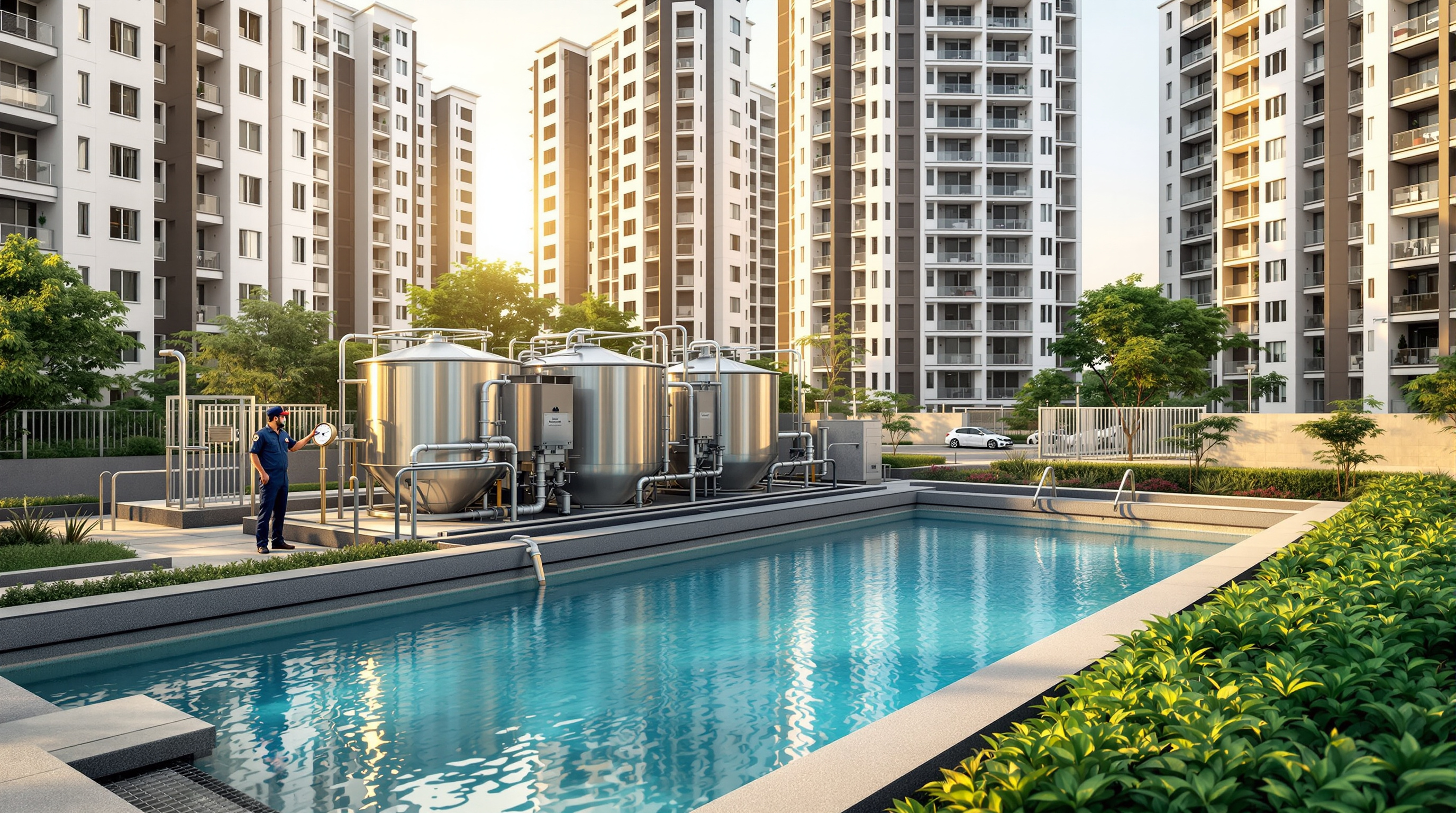
Apartment STP Cost Guide: Capex, Running Cost & Cost Per Flat in India (2026)
What a sewage treatment plant actually costs an apartment complex — capital cost ranges by technology and capacity, the civil-versus-equipment split, and what it works out to as a monthly charge per flat — with honest ranges and the levers that move the number.
For an apartment project, the sewage treatment plant is one of the few pieces of infrastructure that is a legal requirement, a monthly bill, and a source of savings all at once. So the first question every developer, owner and RWA asks is simple: what does an apartment STP actually cost? The honest answer is a range, not a number — because the same 100 KLD plant can be quoted at wildly different prices depending on the technology, the site, the effluent standard and the vendor.
This guide gives you those ranges as they stand in 2025-26, splits the capital cost into its civil and equipment halves, and turns the running cost into the number residents actually feel: rupees per flat, per month. Treat every figure here as a planning benchmark to sanity-check quotes — not a substitute for a costed proposal for your specific building.
Two vendors can quote the same 100 KLD apartment STP a lakh apart and both be "right" — one has priced an MBBR in a basement to reuse-grade norms, the other an MBR to zero-discharge. Always compare quotes on the same technology, footprint and output standard.
The number that drives everything: capacity
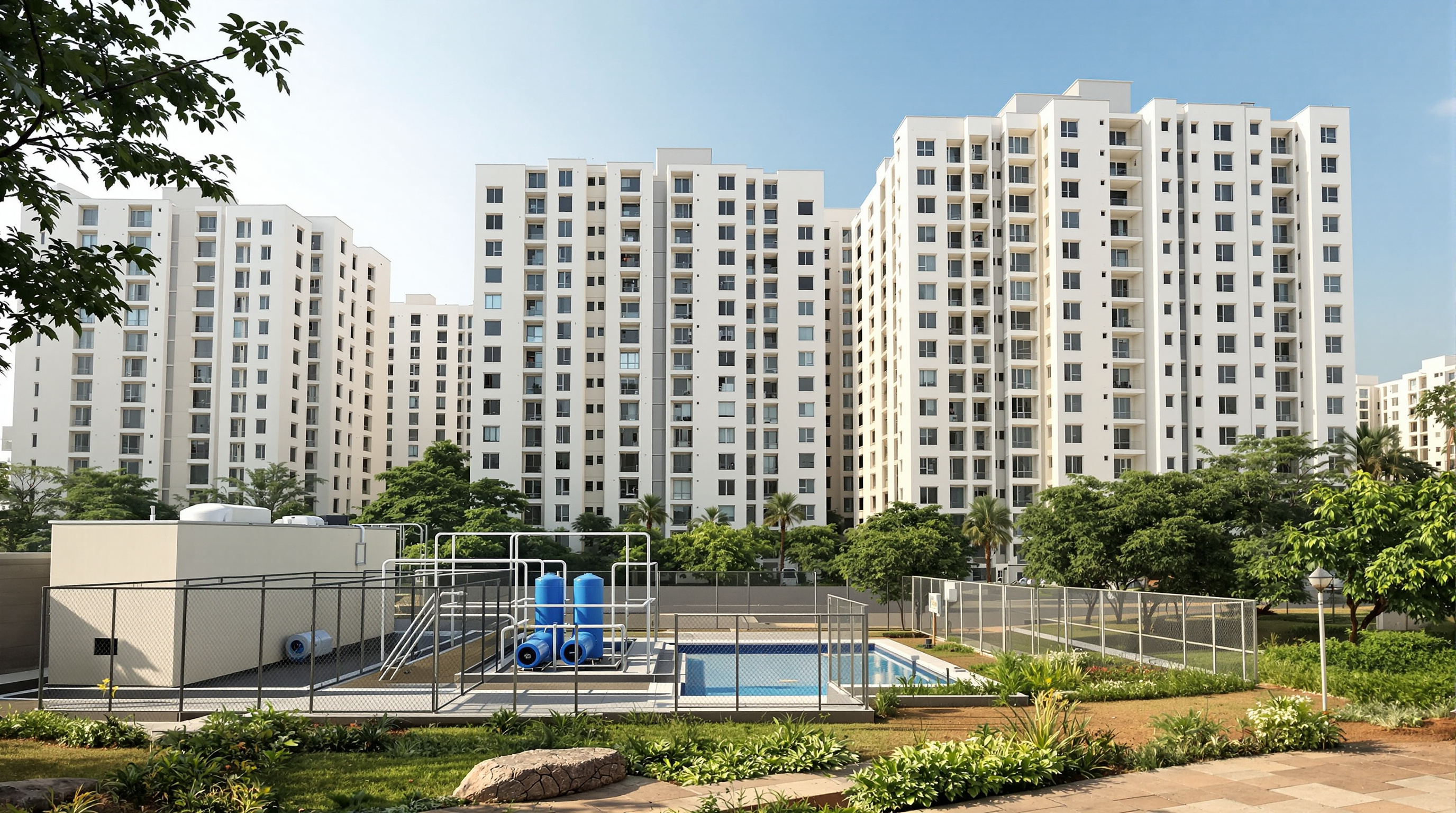
An apartment STP is sized in KLD — kilolitres (thousands of litres) treated per day. A rough thumb rule is that a plant handles the sewage from about 80-85% of the water a building consumes, and Indian design norms assume roughly 100-135 litres per person per day of water use. A 200-flat complex at ~3.5 people per flat lands somewhere around a 100-150 KLD plant; a smaller 60-flat block might need 30-50 KLD.
Get this number right before you look at any price, because cost scales with capacity but cost per KLD falls as capacity rises. Size it yourself in a minute with the STP Capacity Calculator, and see the full method in How to Size an STP.
Capital cost by capacity
Here is where most apartment projects land. These are total installed figures — equipment supply, civil work, piping, electricals and commissioning — for a mainstream MBBR/SBR plant treating to standard reuse norms. Bands overlap heavily because technology, depth and finish move them.
| Capacity | Typical total capex | Indicative cost per KLD |
|---|---|---|
| 20 KLD | ₹10–15 lakh | ₹50,000–75,000 |
| 50 KLD | ₹18–30 lakh | ₹35,000–55,000 |
| 100 KLD | ₹30–50 lakh | ₹28,000–45,000 |
| 200 KLD | ₹55 lakh–1 crore | ₹22,000–40,000 |
| 500 KLD | ₹1.2–2.5 crore | ₹15,000–28,000 |
The pattern is the economy of scale: a 20 KLD plant can cost ₹50,000+ per KLD, while a 500 KLD plant using the same technology can fall below ₹20,000 per KLD, because blowers, controls, the operator and the civil shell are shared across far more litres. Sources put the broad Indian band at roughly ₹15,000–₹95,000 per KLD across all sizes and technologies, and tighten it by capacity band much as the table above does. For a deeper capacity-by-capacity treatment see STP Cost Per KLD in India and Residential STP Cost.
Technology changes the price more than anything
For the same capacity, the technology you choose can double the capital cost. This is the single biggest lever an apartment project controls. The figures below are equipment cost per KLD; civil and installation typically add another 25-40% on top.
| Technology | Equipment ₹/KLD | Footprint | Best for |
|---|---|---|---|
| Extended Aeration | ₹15,000–25,000 | Large | Ample-land, budget projects |
| MBBR | ₹30,000–55,000 | Compact | The default apartment choice |
| SBR | ₹35,000–60,000 | Compact | Automated, variable loads |
| MBR | ₹65,000–1,10,000 | Smallest | Tight sites, highest-grade reuse |
MBBR is the workhorse of Indian apartment STPs — low equipment cost, low power draw, compact, and forgiving to run — which is why most housing societies land here. SBR costs a little more but automates well. MBR delivers the cleanest water in the smallest footprint but carries the highest capex and the highest running cost, because of membranes that need periodic replacement. Compare the three head-to-head in MBBR STP Cost, SBR STP Cost and MBR STP Cost.
Two more choices that move capex: going underground versus above ground (a basement shell adds civil cost — see Underground STP Cost), and the discharge standard you must meet (zero-liquid-discharge or tighter norms push you toward pricier tertiary treatment and membranes).
Where the money goes: civil vs equipment
A useful mental model for any apartment STP quote is that it splits into two big halves plus some trim:
- Mechanical & electrical equipment — roughly 40-55%. Blowers, pumps, diffusers, media, membranes, panels, filters.
- Civil & structural work — roughly 20-35%. The tanks and the shell. This rises steeply for underground plants, poor soil, or tight basements.
- The rest — roughly 15-25%. Electricals and cabling, piping and valves, instrumentation and automation, plus erection, commissioning and design/approvals.
So on a ₹40 lakh, 100 KLD apartment plant, expect very roughly ₹18-22 lakh of equipment, ₹8-14 lakh of civil, and the balance in wiring, piping, controls and commissioning. Model your own split with the STP Cost Estimator.
The running cost — and what it means per flat
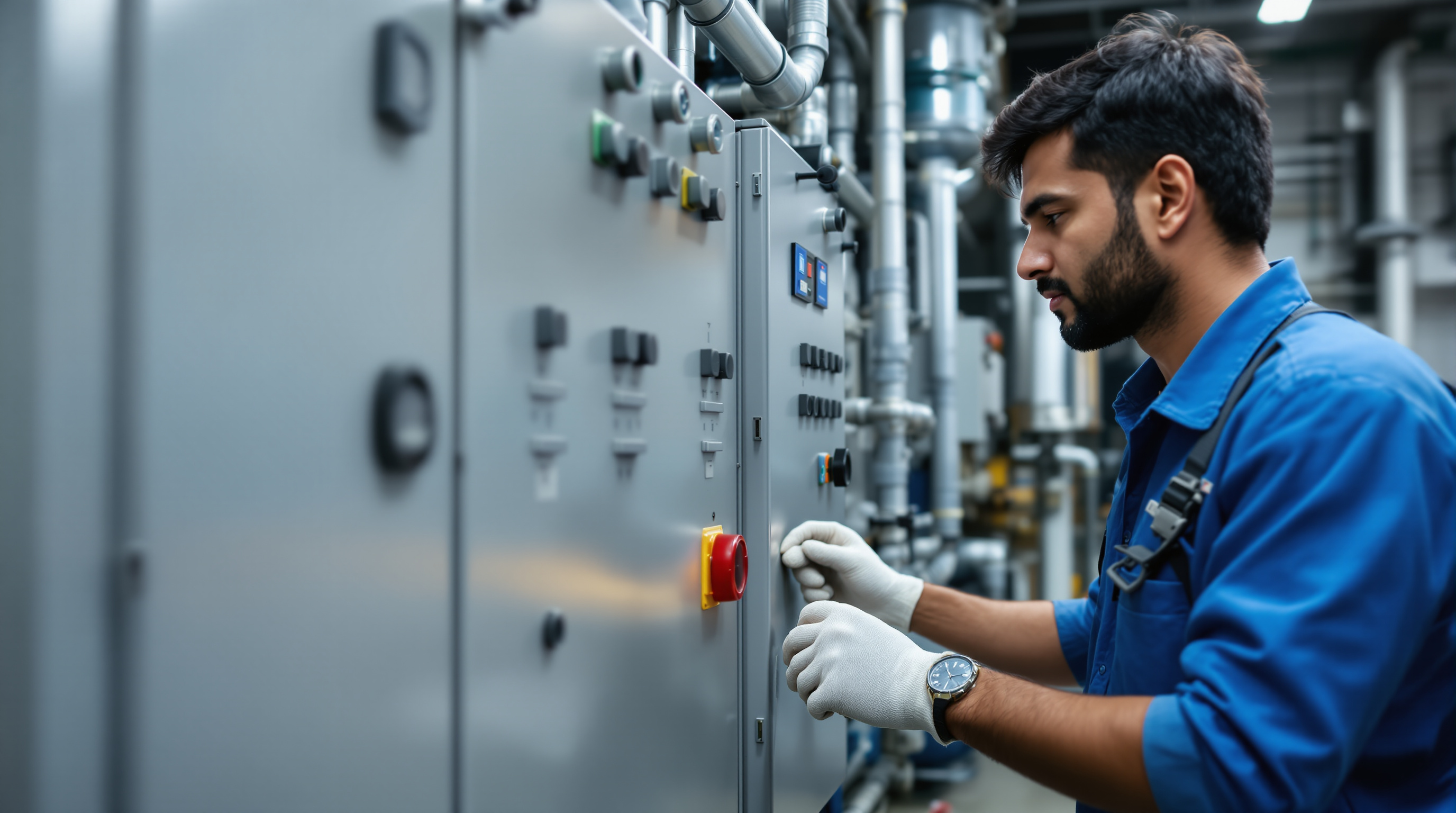
Capital cost is a one-time hit usually folded into the flat price. The number residents live with month after month is the operating cost, and it has four parts: power, chemicals, sludge disposal and the AMC/operator.
| Capacity | Monthly running cost | Approx. flats served | Cost per flat / month |
|---|---|---|---|
| 50 KLD | ₹25,000–40,000 | ~90–120 | ₹220–400 |
| 100 KLD | ₹40,000–70,000 | ~180–250 | ₹180–350 |
| 200 KLD | ₹65,000–1,00,000 | ~350–500 | ₹150–280 |
For most apartment complexes the STP works out to roughly ₹150–400 per flat per month — and it falls per flat as the plant gets bigger, the same economy of scale seen in capex. The cost breaks down roughly as:
- Electricity — the biggest slice, often 40-60% of OPEX. Plants draw about 0.5-1.5 kWh per KLD treated; blowers run almost around the clock. This is the lever with the most headroom — see Reducing STP Electricity Consumption and the Electricity Consumption Calculator.
- AMC / operator — the next big slice. A comprehensive Annual Maintenance Contract typically runs 8-12% of the plant supply cost per year (industry benchmark); a dedicated operator adds ₹12,000-30,000/month where not bundled. Price it in the AMC Cost Calculator.
- Chemicals — chlorine, antiscalant, pH correction — usually a modest ₹1,500-4,000/month for an apartment plant.
- Sludge removal — periodic dewatering and cartage, ₹2,000-8,000/month. See STP Sludge Removal.
Get a full personalised figure from the Annual Operating Cost Calculator, and break out the pieces via STP Electricity Cost, STP Chemical Cost and STP Maintenance Cost.
The saving that offsets it all
An apartment STP is not a pure cost. It recovers 80-85% of consumed water as treated water for flushing, gardening and common-area washing — water the complex would otherwise buy by the tanker. In a tanker-dependent city, that reclaimed water can offset a large share of the running cost, and sometimes more. Put numbers on it with the Water Reuse Savings Calculator and the STP ROI Calculator, and read the case in ROI of Water Recycling and the Urban Water Circular Economy.
How to read a quote without getting burned
- Compare like with like. Same KLD, same technology, same output standard, same footprint (basement vs open). A cheap quote is often a lower effluent grade or a smaller footprint you cannot fit.
- Think in lifecycle, not sticker price. A cheaper MBBR can beat a pricier MBR once you count 15 years of power and membrane replacement — or lose, if land is scarce. Run it through the Lifecycle Cost Comparison Tool and STP Lifecycle Cost Comparison.
- Insist on the split. A credible quote itemises equipment, civil, electricals, piping, instrumentation and commissioning — not one lump sum.
- Budget the running cost from day one, and fold it into the maintenance corpus so it never becomes a nasty surprise at the first AGM.
The bottom line
Costs vary widely by capacity, city, technology, site conditions and vendor — so use these as benchmarks and always get a costed quote for your specific project. As a planning frame: a typical apartment STP runs roughly ₹22,000–55,000 per KLD to build (dropping with size), splits about half equipment, a third civil, and costs residents on the order of ₹150–400 per flat per month to run — much of it recoverable through water reuse. Start with the STP Cost Estimator, then plan the whole project with Apartment STP Planning and the wider Sewage Treatment Plants guide library. And if you are still asking whether it is worth it, Why Every Modern Building Needs an STP makes the case.
Cost benchmarks in this guide are drawn from Indian STP vendor and EPC pricing published for 2025-26, including Susbio and Trity Enviro. Prices move with steel, membrane and power costs — verify against a current quote.
Export this guide
Related Guides — Deep-dive reading
MBR STP Cost Guide: What a Membrane Bioreactor Really Costs in India (2026)
Why MBR carries the highest capital and running cost of any sewage treatment technology in India — membranes, power and replacements — and exactly when that premium pays for itself through water reuse and a smaller footprint.
Sewage Treatment PlantsIndustrial ETP Cost Guide: What an Effluent Treatment Plant Really Costs in India (2026)
Why an industrial ETP costs far more than a domestic STP of the same size — the physico-chemical and ZLD stages that drive the bill, honest capital and running-cost ranges by capacity and technology, and how to read a quote for your own effluent.
Sewage Treatment PlantsSTP Cost per KLD in India (2026): Realistic Price Ranges
What a sewage treatment plant actually costs per KLD in India — capital cost by capacity band and technology (MBBR, SBR, MBR, extended aeration), why the per-litre price falls as plants get bigger, and every factor that swings a quote up or down.
Sewage Treatment PlantsRelated Tools — Try Free
STP Lifecycle Cost Comparison Tool
Compare MBBR, SBR and MBR sewage treatment plants on total lifecycle cost — capex plus lifetime energy — at your capacity, lifespan and power tariff, and see the lowest-cost technology.
STP CalculatorWater Reuse Savings Calculator
Estimate the money you save by reusing STP-treated water instead of buying fresh supply, with daily, monthly and annual savings.
STP CalculatorSTP Cost Estimator
Estimate the capital cost of a sewage treatment plant by capacity in KLD and technology, with an underground option and instant cost per KLD.
STP Calculator