
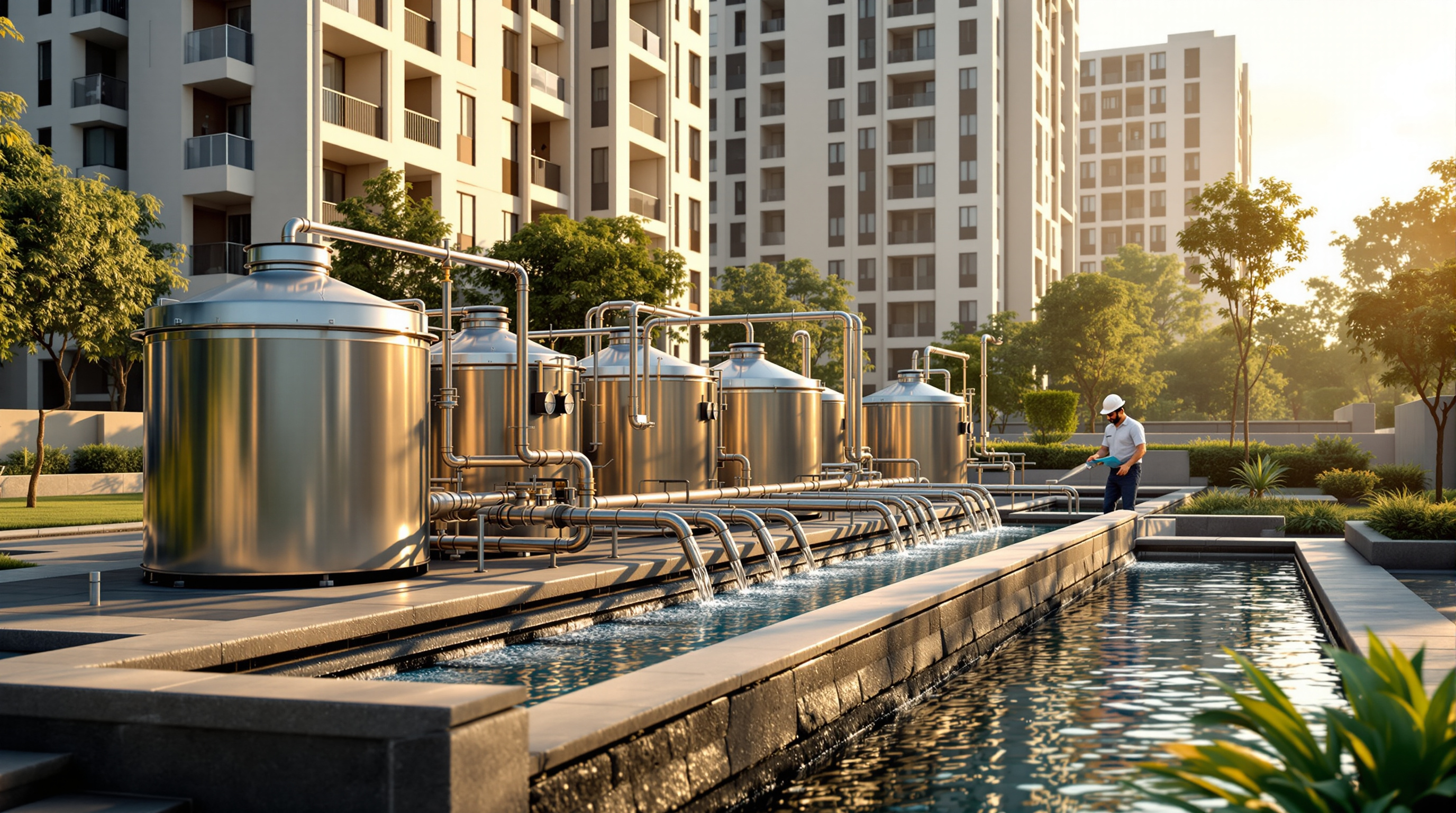
ROI of Water Recycling: Does an STP Actually Pay for Itself?
A numerate, honest look at the payback case for on-site sewage treatment in India — what a recycled kilolitre is really worth, what the plant costs to build and run, and how many years it takes to break even.
Ask a builder why they installed a sewage treatment plant and the honest first answer is usually "because the pollution board made me." An STP is, before anything else, a legal condition of occupancy. But once the plant is in the ground and running, a second question quietly takes over — and it is the one that decides how well the plant is maintained for the next twenty years: is this thing actually saving me money?
The answer is yes, but not automatically, and not overnight. The ROI of water recycling is real, measurable, and often surprisingly good — yet it hinges on a handful of decisions most owners make without realising they are setting the payback clock. This guide runs the numbers the way a facility manager should: what a recycled kilolitre is genuinely worth, what the plant costs to build and to run, and how many years it takes before the water you don't buy pays back the plant you did.
Water recycling ROI is not magic. It is arithmetic: the price of the water you stop buying, minus the cost of running the plant that recycles it, measured against what the plant cost to build. Get those three numbers right for your own site and the payback period stops being a guess.
The three numbers that decide everything
Every water-recycling payback, whether for a 20-flat society or a 500-room hotel, reduces to the same three figures:
1. The value of the water you save — how many kilolitres of treated water you reuse each day, multiplied by what a fresh kilolitre would otherwise cost you.
2. The cost to run the plant — power, chemicals, sludge disposal, labour and the annual maintenance contract (AMC).
3. The cost to build the plant — the capital cost, which you are effectively repaying out of the net saving (number 1 minus number 2).
Payback, in years, is roughly capital cost divided by annual net saving. Everything else in this guide is about pinning those three numbers down honestly — and every one of them varies widely by capacity, city, technology, site conditions and vendor, so treat the ranges below as a starting frame and get a real quote for your specific project.
What a recycled kilolitre is actually worth
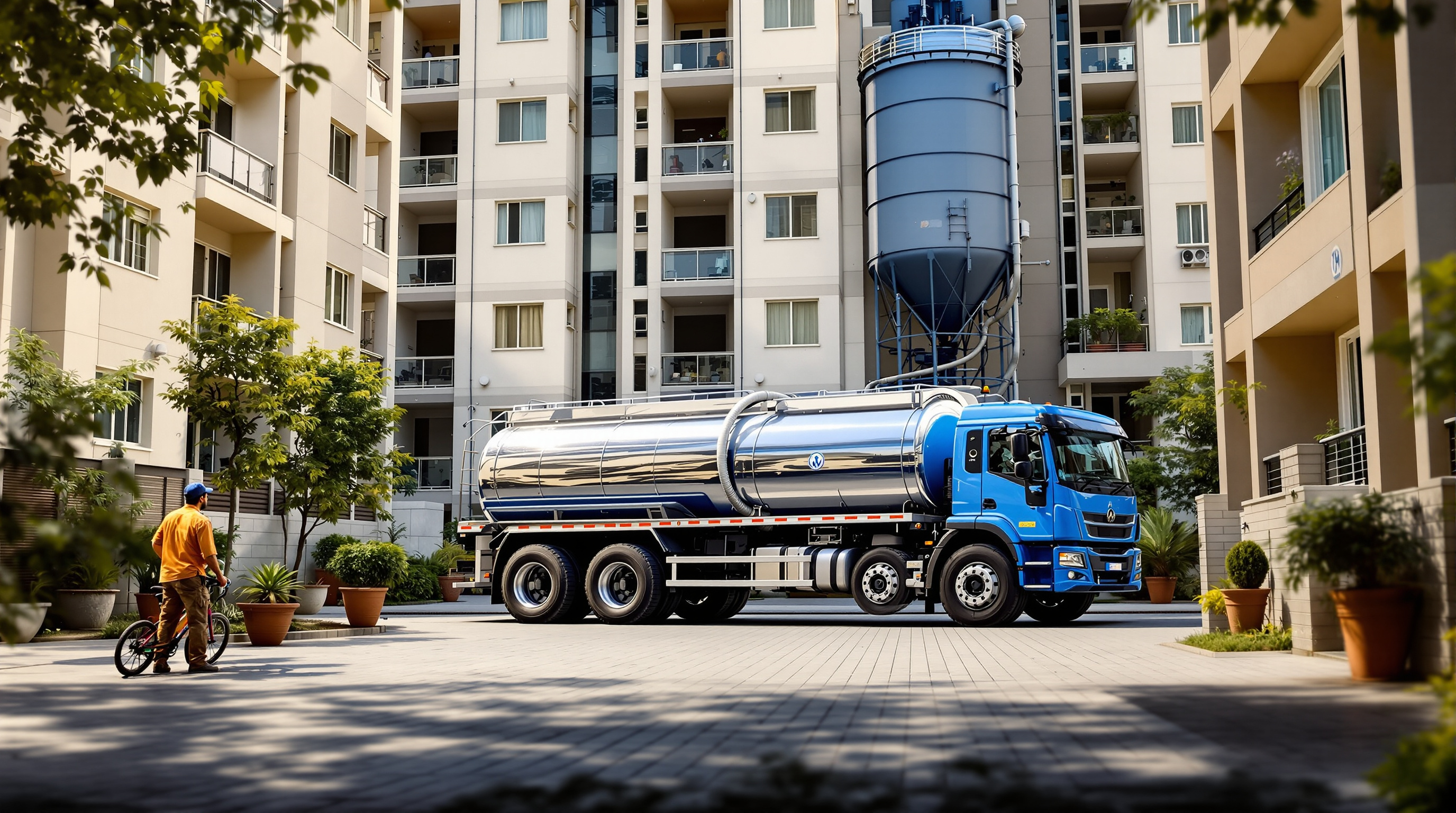
This is the number owners consistently underestimate. An STP typically recovers 80–85% of the water a building consumes, and that treated water directly displaces fresh water you would otherwise pay for — for flushing, gardening, cooling towers and washing.
What is fresh water worth? It depends brutally on where you are and how you source it:
| Water source | Typical cost (₹/KL) | Notes |
|---|---|---|
| Municipal piped supply | ₹15–40 | Cheapest, but rationed and shrinking in many cities |
| Routine tanker water | ₹60–120 | The realistic marginal cost for most large complexes |
| Peak / crisis tanker water | ₹150–200+ | Bengaluru saw tanker rates spike toward ₹200/KL in shortages (WELL Labs) |
The single biggest lever on your ROI is which of these you are actually displacing. A building that relies on tankers at ₹100/KL saves three to five times more per recycled litre than one drawing cheap municipal water — and its STP pays back three to five times faster. Reused treated water is itself valued at roughly ₹10–80/KL depending on quality (WELL Labs), so the arbitrage against tanker supply is large.
A worked feel for it: a 100 KLD plant reusing 40–60 KL/day (Hydromo) at a saved value of ₹60/KL recovers roughly ₹9–13 lakh a year in avoided water purchases. The Water Reuse Savings Calculator will do this for your exact reuse volume and local water rate — it is the single most useful number in the whole exercise.
What the plant costs to build
Capital cost per KLD swings enormously with the treatment technology you choose. As a 2025–2026 frame across Indian vendors (SUSBIO, 3D Aqua):
| Technology | Capex (₹/KLD) | ROI character |
|---|---|---|
| Extended Aeration / ASP | ₹15,000–25,000 | Cheap to build, larger footprint, moderate running cost |
| SBR | ₹30,000–55,000 | Mid capex, good automation, compact |
| MBBR | ₹30,000–55,000 | Popular middle ground for apartments |
| MBR | ₹65,000–1,10,000 | Highest capex, best water quality, smallest footprint |
So a 100 KLD MBBR plant lands roughly in the ₹30–55 lakh band including standard civil work, while the same capacity in MBR can approach or exceed ₹1 crore. Higher capex does not automatically mean worse ROI — an MBR's superior effluent may unlock reuse (cooling towers, high-value applications) that a cheaper plant cannot serve, and its small footprint frees saleable or usable space. Use the STP Cost Estimator and the deeper STP cost per KLD guide to bracket your own capacity and technology before you compare quotes.
What the plant costs to run
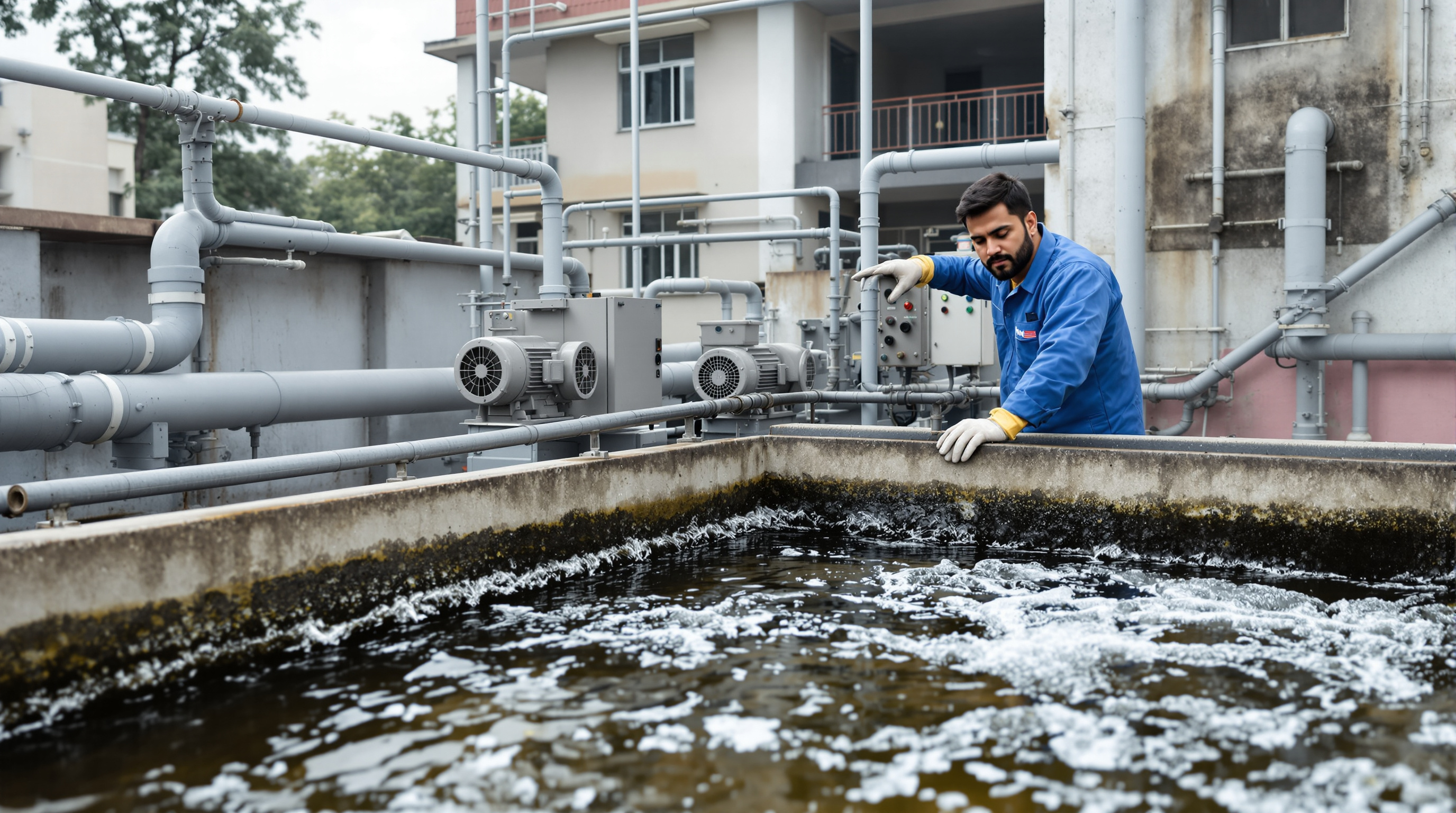
Running cost is the silent ROI killer, because it comes off your savings every single month. For a standard 100 KLD MBBR plant, expect roughly ₹40,000–70,000 per month — about ₹5–8.5 lakh a year (SUSBIO). A 50 KLD plant serving ~200 flats runs closer to ₹15,000–30,000 a month. The breakdown:
- Electricity — the dominant line, typically ₹8–15 per KL treated, driven by aeration. An STP draws roughly 0.5–1.5 kWh per KLD depending on technology. This is where MBR bites: its membranes and higher aeration push power use up. See reducing STP electricity consumption and the Electricity Consumption Calculator.
- AMC — ₹60,000–1.2 lakh/year for a 10–50 KLD plant; ₹1.5–3 lakh/year for 100–200 KLD (SUSBIO). The AMC Cost Calculator sizes this.
- Chemicals — chlorine, alum, polymer — roughly ₹1,500–4,000/month.
- Sludge disposal — ₹2,000–8,000/month depending on capacity and load.
- Labour — an operator's time, shared or dedicated by plant size.
Model the full picture with the Annual Operating Cost Calculator, and read the annual operating cost guide for how each line behaves as capacity grows.
Putting it together: the payback
Take that 100 KLD MBBR example end to end, with realistic mid-range assumptions:
- Capex: ~₹40 lakh
- Gross water saving: 50 KL/day reused at ₹60/KL ≈ ₹11 lakh/year
- Operating cost: ~₹6.5 lakh/year
- Net annual saving: ~₹4.5 lakh/year
- Simple payback: ~9 years
Now change one assumption — the building is on ₹120/KL tanker water instead of ₹60. Gross saving doubles to ~₹22 lakh, net saving jumps to ~₹15.5 lakh, and payback collapses to under 3 years. That single sensitivity is why published payback figures scatter so widely: reuse-ready plants are commonly quoted at 18–30 months for large sites with tanker-priced water (Hydromo), 2–3 years for commercial and hospitality, and 4–6 years for residential projects on cheaper water (SUSBIO). Run your own numbers in the STP ROI Calculator — it is built for exactly this sensitivity.
What speeds ROI up
- Expensive marginal water. Every rupee per KL on tanker supply goes straight into faster payback.
- Reuse plumbing built in from day one. A dual-piping network for flushing and irrigation, laid during construction, is what converts treated water into actual savings. Retrofitting it later is costly and often the reason a plant "doesn't pay."
- High occupancy and steady load. A plant running near design capacity spreads its fixed costs over more recycled water.
- Right-sized capacity. Over-sizing inflates capex and leaves you paying to aerate half-empty tanks. Get this right first with the STP Capacity Calculator and the sizing guide.
- Energy discipline. VFDs, right-sized blowers and good operation trim the biggest opex line.
What slows ROI down
- Cheap municipal water. If you displace ₹20/KL supply, the arithmetic is simply slower — be honest about it.
- Poor reuse uptake. A perfect plant whose treated water is dumped to drain saves nothing. Reuse fraction is everything.
- Neglected maintenance. A poorly run plant fails compliance, corrodes, and needs early replacement — turning opex into unplanned capex.
- Over-specified technology. Buying MBR where MBBR would meet the reuse standard adds capex and power you may never recover.
Beyond the payback line
Simple payback undersells the case. A properly run STP is an asset for 15–20+ years, so most of its economic life is pure net saving after break-even. It also hedges you against water price inflation — and tanker rates only go one way. There is the regulatory value of staying compliant and open, the resilience of not depending on tankers during a shortage, and the circular-economy contribution covered in urban water and the circular economy. For the fullest financial picture across a plant's whole life — not just to break-even — use the Lifecycle Cost Comparison Tool and its companion guide.
The bottom line
Does an STP pay for itself? For most Indian buildings, yes — typically in 2–3 years for commercial and hospitality sites and 4–6 years for residential ones, and considerably faster wherever tanker water is expensive. The ROI of water recycling is not automatic, though: it is earned by building the reuse plumbing in early, sizing the plant honestly, running it efficiently, and choosing technology to match your actual water quality needs rather than the brochure. Start with the Water Reuse Savings Calculator and the STP ROI Calculator for your own site, then explore the wider STP guide library — the difference between a plant that pays back in three years and one that never quite does is almost always in these decisions, not in the machine itself.
Export this guide
Related Guides — Deep-dive reading
MBR STP Cost Guide: What a Membrane Bioreactor Really Costs in India (2026)
Why MBR carries the highest capital and running cost of any sewage treatment technology in India — membranes, power and replacements — and exactly when that premium pays for itself through water reuse and a smaller footprint.
Sewage Treatment PlantsSTP Annual Operating Cost Breakdown: What It Really Costs to Run a Plant in India
Power, chemicals, manpower, AMC and sludge disposal — the five buckets that make up your STP's yearly running cost, with realistic 2025–26 per-KLD ranges for Indian apartments, offices and townships, and where each rupee actually goes.
Sewage Treatment PlantsApartment STP Planning Guide: Sizing, Space & Compliance
How to plan a sewage treatment plant for an apartment complex — sizing it from occupancy, choosing the right technology, finding space for it, plumbing it for reuse, and keeping it compliant and running for years.
Sewage Treatment PlantsRelated Tools — Try Free
Water Reuse Savings Calculator
Estimate the money you save by reusing STP-treated water instead of buying fresh supply, with daily, monthly and annual savings.
STP CalculatorSTP Cost Estimator
Estimate the capital cost of a sewage treatment plant by capacity in KLD and technology, with an underground option and instant cost per KLD.
STP CalculatorSTP Payback Period Calculator
Work out how many years a sewage treatment plant takes to pay for itself from water-reuse savings, net of operating cost.
STP Calculator