
STP Lifecycle Cost Comparison: MBBR vs SBR vs MBR (2026 India Guide)
The cheapest STP to buy is rarely the cheapest to own. This guide compares whole-life cost — capital plus fifteen years of running cost — across MBBR, SBR and MBR, with realistic 2026 Indian rupee ranges for developers, owners and RWAs.
Ask three vendors to quote an STP for the same building and you will get three very different numbers — sometimes a two-to-three-times spread — for plants that all promise to treat the same sewage. The temptation is to sign with the lowest quote and move on. It is also, more often than not, a mistake. The price on that quotation is only the first cheque you will write for the plant. Over the fifteen-to-twenty years it runs, you will spend far more on electricity, chemicals, manpower, maintenance and — for some technologies — replacement parts than you ever spent buying it.
This guide is about whole-life cost: capital cost plus every rupee of running cost, added up across the life of the plant. It compares the three technologies that dominate Indian building STPs today — MBBR, SBR and MBR — and shows why the cheapest plant to buy is frequently the most expensive to own, and occasionally the other way round.
An STP is not a purchase, it is a fifteen-year commitment. The install cost is the tip of the iceberg; the running cost is the nine-tenths under the water.
The two numbers that matter: capex and opex
Every STP has two cost lives.
- Capex (capital expenditure) — the one-time cost of building the plant: equipment, tanks, blowers, pumps, filters, membranes, civil work, piping and commissioning. This is the number on the quote.
- Opex (operating expenditure) — the recurring cost of running it, year after year: electricity, chemicals, operator manpower, sludge disposal, the annual maintenance contract (AMC), and periodic part replacement.
For most Indian building STPs, opex over the plant's life exceeds capex — often by two to four times. A plant that costs ₹40 lakh to build can quietly spend ₹1 crore or more keeping itself alive over fifteen years. That is why a decision made on capex alone is a decision made on roughly a quarter of the real cost. To see how these two numbers stack up for your own project, the STP Lifecycle Cost Comparison Tool does the arithmetic technology-by-technology in a couple of minutes.
Capital cost: what each technology costs to build
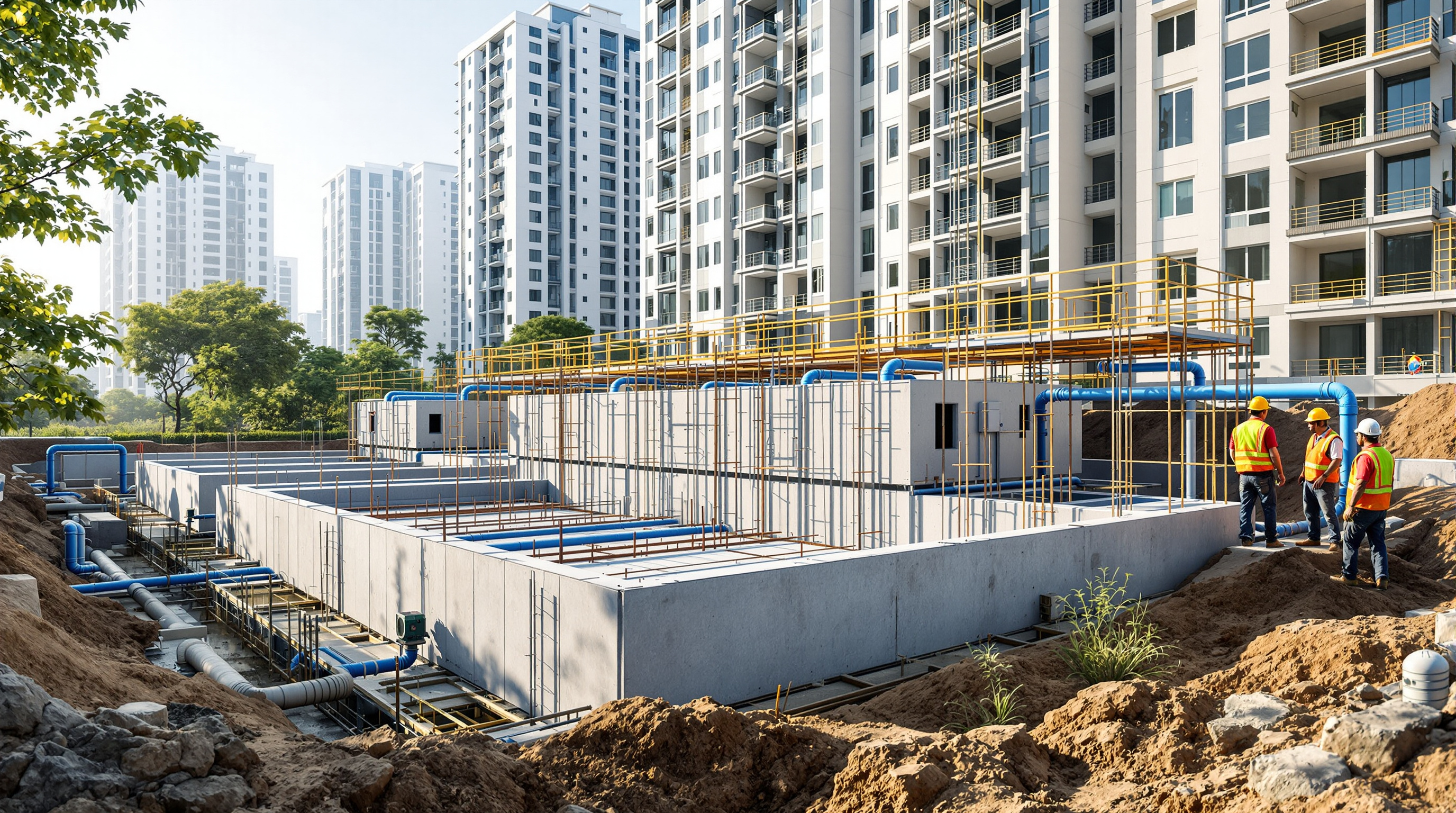
Capital cost per KLD (kilolitre per day of treatment capacity) varies with capacity, city, effluent standard, automation level and site conditions — but the ordering of the three technologies is consistent. The ranges below reflect 2026 Indian benchmarks from vendor and EPC pricing guides (Susbio, Green Planet Solutions, 3D Aqua). Treat them as directional, not as a quote.
| Technology | Typical capex (₹/KLD) | Effluent quality | Footprint | Best-known for |
|---|---|---|---|---|
| MBBR | ₹30,000–55,000 | BOD < 20 mg/L | Moderate | Balanced cost and stability — India's default |
| SBR | ₹35,000–60,000 | BOD < 10 mg/L | Compact | Tight control, good quality, one tank |
| MBR | ₹65,000–1,10,000+ | BOD < 5 mg/L | Smallest | Best water, smallest land, premium price |
A few things fall out of this table immediately:
- MBBR is usually the cheapest to build and remains the workhorse for Indian apartments and commercial buildings. See the MBBR cost guide.
- SBR sits a notch above MBBR on capex but earns it back with better effluent and a smaller tank count. See the SBR cost guide.
- MBR costs roughly two to three times MBBR to build — the membranes are expensive — but delivers near-reuse-grade water in the smallest possible footprint. See the MBR cost guide.
Capacity matters enormously too. Small plants cost far more per KLD than large ones: a 5–10 KLD unit can run ₹60,000–1,20,000/KLD, while a 100–200 KLD plant drops to ₹30,000–50,000/KLD as fixed costs spread over more capacity. The STP Cost Estimator and the broader STP cost per KLD guide break this economies-of-scale curve down by band.
Operating cost: where the money actually goes
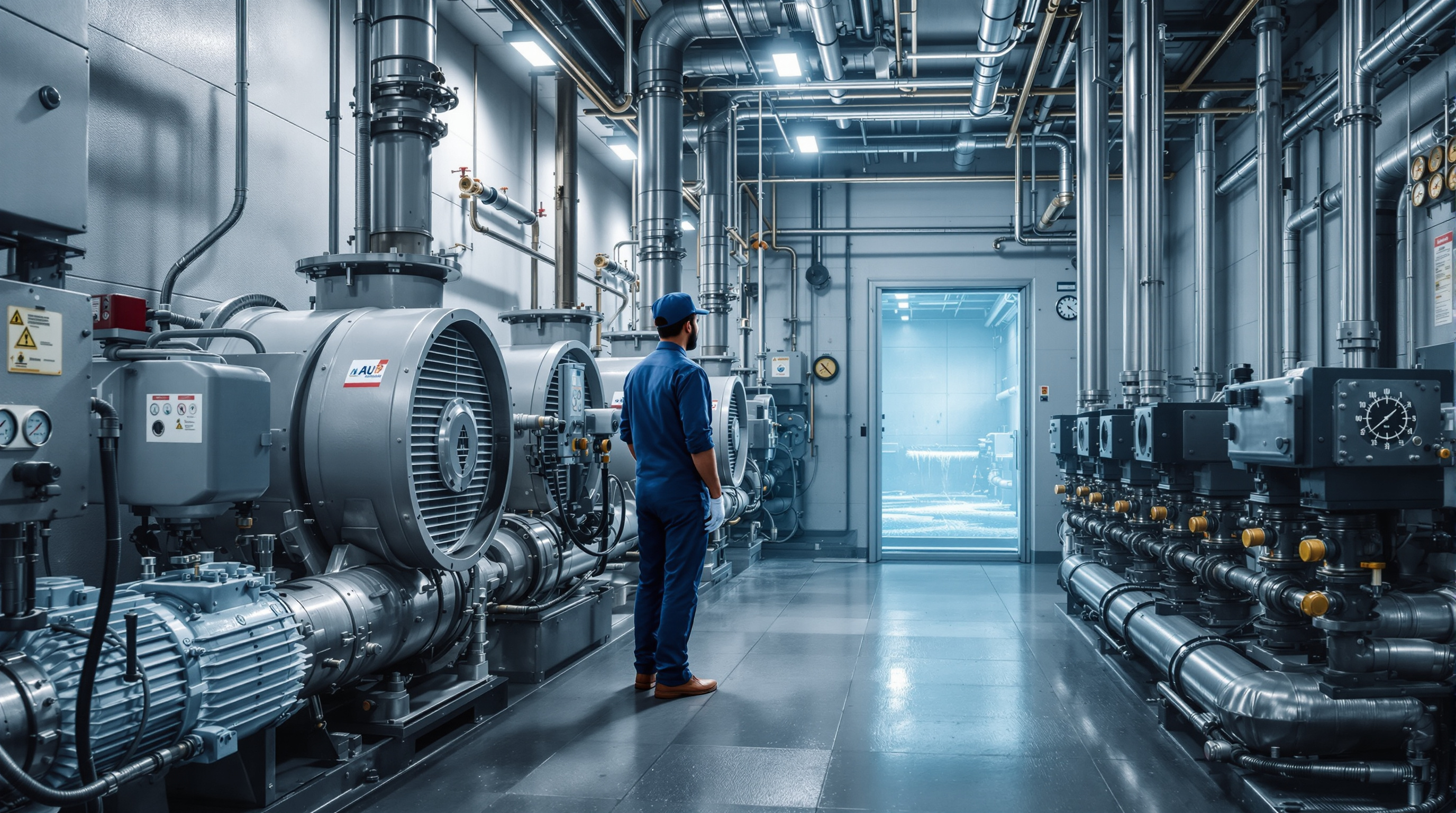
Now the part the quote does not show you. For a 100 KLD plant, typical monthly running cost falls roughly like this:
| Technology | Monthly opex (100 KLD) | Annual opex | Main cost driver |
|---|---|---|---|
| MBBR | ₹25,000–40,000 | ₹3.0–4.8 lakh | Aeration electricity |
| SBR | ₹35,000–55,000 | ₹4.2–6.6 lakh | Aeration + automation |
| MBR | ₹60,000–1,20,000 | ₹7.2–14.4 lakh | Electricity + membrane care |
Across technologies the opex splits into four buckets in roughly these proportions:
- Electricity — 35–50%. The single biggest running cost, driven by blowers and pumps. STPs draw around 0.5–1.5 kWh per KLD treated; MBR sits at the high end (0.8–1.2 kWh/m³) because pushing water through membranes takes energy. This is why cutting STP electricity is the highest-leverage saving available. Model yours with the STP Electricity Consumption Calculator.
- Manpower — 25–35%. An operator's salary (₹12,000–20,000/month) is a fixed cost whether the plant is MBBR or MBR.
- Chemicals & consumables — 10–20%. Disinfectant, pH correction, antiscalants. MBR uses more cleaning chemicals for the membranes but less elsewhere.
- AMC & maintenance — 10–15%. Usually 8–12% of the plant's supply cost per year — so a ₹40 lakh plant carries ₹3.2–4.8 lakh of AMC annually. Size yours with the AMC Cost Calculator.
For a full teardown of these buckets, see the STP annual operating cost guide, the electricity cost guide and the maintenance cost guide, or run the Annual Operating Cost Calculator.
The MBR asterisk: membrane replacement
There is one lifecycle cost unique to MBR that no capex quote shows and no monthly bill captures: the membranes wear out. They typically need replacing every 5–7 years (some last up to 10 with careful cleaning), and for a mid-size plant that is a lump-sum cost running into several lakh each time. Over a fifteen-year life, budget for two to three membrane replacements — a genuine, recurring capital expense that MBBR and SBR simply do not have. Ignore it and your MBR lifecycle maths is wrong by a wide margin.
Whole-life cost: adding it all up
Here is the payoff — a rough fifteen-year total cost of ownership for a 100 KLD plant, combining capital cost with running cost (and, for MBR, membrane replacements). These are wide, directional ranges, not quotes.
| Technology | Capex | 15-yr opex | Membrane renewals | Rough 15-yr whole-life cost |
|---|---|---|---|---|
| MBBR | ₹30–55 lakh | ₹45–72 lakh | — | ₹0.75–1.3 crore |
| SBR | ₹40–60 lakh | ₹63–99 lakh | — | ₹1.0–1.6 crore |
| MBR | ₹65 lakh–1.1 crore | ₹1.1–2.2 crore | ₹20–50 lakh | ₹2.0–3.6 crore |
Two lessons jump out:
- Opex dwarfs capex. For every technology, the fifteen-year running cost is larger than the build cost. Choosing on the sticker price optimises the smallest slice of the total.
- The gap widens over time. MBR starts about 2–3× MBBR on capex but, once membranes and higher energy are counted, can end up 2.5–3× MBBR on whole-life cost. The cheapest plant to buy stays the cheapest to own — in this scenario.
So when does the pricier plant win?
If MBBR wins on lifecycle cost almost every time, why does anyone buy MBR? Because whole-life cost is not the only axis, and sometimes the pricier plant is genuinely the right — even the cheaper — choice:
- Land is the constraint. In a dense urban plot where every square metre is saleable at lakhs, MBR's tiny footprint can save more in built-up area than it costs in membranes. The land you don't build the plant on has a value.
- The water must be reuse-grade. If you are recycling to cooling towers, a water feature, or high-spec flushing, MBR's cleaner output may avoid a separate tertiary/RO stage — folding a cost you would otherwise pay anyway.
- Reuse savings flip the maths. Treated water reuse can save a large complex ₹50,000–3,00,000 a month in tanker and freshwater bills. A plant that reliably hits reuse quality pays part of its own opex back. Model this with the Water Reuse Savings Calculator and the ROI of water recycling guide.
- A cheap plant that fails is the most expensive of all. An underbuilt or badly-run MBBR that misses discharge norms invites penalties, retrofits and reputational cost. Reliability is a lifecycle cost too.
The honest summary: for the majority of Indian residential and commercial buildings, MBBR offers the lowest whole-life cost, SBR is the step up when effluent quality or footprint matters, and MBR earns its premium only where land is scarce, reuse standards are high, or reuse savings are large. Match the technology to the actual constraint, not to the brochure.
The bottom line
Compare STPs the way you would compare cars: not on the showroom price, but on what they cost to keep — fuel, service, parts — over the years you will own them. In STP terms that means capital cost plus fifteen-plus years of electricity, manpower, chemicals, AMC and, for MBR, membrane renewals. Do that arithmetic and the ranking often reverses: the quote that looked expensive may be the cheapest to live with, and the bargain may bleed you slowly.
Before you sign anything, put your own numbers through the STP Lifecycle Cost Comparison Tool to see capex-plus-opex side by side, and the STP ROI Calculator to fold in your reuse savings. Then read the deep-dives on MBBR, SBR and MBR, and — if you have not sized your plant yet — start with how to size an STP. For everything else, the Sewage Treatment Plants guide library is the map.
All figures are 2026 directional ranges. STP costs vary widely by capacity, city, effluent standard, site conditions and vendor — always take specific quotes for your own project.
Export this guide
Related Guides — Deep-dive reading
MBR STP Cost Guide: What a Membrane Bioreactor Really Costs in India (2026)
Why MBR carries the highest capital and running cost of any sewage treatment technology in India — membranes, power and replacements — and exactly when that premium pays for itself through water reuse and a smaller footprint.
Sewage Treatment PlantsCommercial STP Cost Guide: Pricing for Hotels, Malls & Offices in India (2026)
What a commercial sewage treatment plant really costs to build and run — capacity bands, why higher reuse and tertiary polishing push the price up, and how cooling-tower and flushing reuse pays it back. Honest ranges, not false precision.
Sewage Treatment PlantsROI of Water Recycling: Does an STP Actually Pay for Itself?
A numerate, honest look at the payback case for on-site sewage treatment in India — what a recycled kilolitre is really worth, what the plant costs to build and run, and how many years it takes to break even.
Sewage Treatment PlantsRelated Tools — Try Free
STP Lifecycle Cost Comparison Tool
Compare MBBR, SBR and MBR sewage treatment plants on total lifecycle cost — capex plus lifetime energy — at your capacity, lifespan and power tariff, and see the lowest-cost technology.
STP CalculatorWater Reuse Savings Calculator
Estimate the money you save by reusing STP-treated water instead of buying fresh supply, with daily, monthly and annual savings.
STP CalculatorSTP Cost Estimator
Estimate the capital cost of a sewage treatment plant by capacity in KLD and technology, with an underground option and instant cost per KLD.
STP Calculator