
STP Electricity Cost Analysis: What Powering a Sewage Treatment Plant Really Costs in India
Electricity is the single largest running cost of an STP — and aeration eats most of it. Here is what your plant's specific energy use (kWh/m³) really is, what the monthly bill looks like by capacity, and how to keep it in check, with honest India ranges for 2025–26.
When people budget for a sewage treatment plant, almost all the anxiety goes into the capital cost — the one big cheque to buy and build it. But an STP is not a machine you switch on once. It runs every hour of every day for fifteen or twenty years, and the meter never stops turning. Over a plant's life, the electricity it drinks usually costs more than the plant itself. Yet it is the number owners understand least, because it hides inside the building's common-area power bill.
This guide pulls that number into the open. It explains how much electricity an STP actually consumes, what your monthly bill looks like by plant size, why one component — aeration — swallows most of it, and how to bring the figure down. Every number here is a range, because real power use swings widely with technology, load, tariff and how well the plant is run. Treat these as planning bands, then get a quote for your specific site.
An STP's electricity bill is the one cost that compounds. A poor design decision made once — an oversized blower, the wrong technology — quietly overcharges you every single month for two decades.
Why electricity is the biggest running cost
Break an STP's monthly running cost into its parts — power, chemicals, manpower, sludge disposal, membrane or media replacement, and the annual maintenance contract (AMC) — and one line item towers over the rest. Electricity typically accounts for 40–60% of an STP's total operating cost, more than chemicals and manpower combined for most mid-sized plants. Everything else is intermittent; power is relentless.
The reason is physical. Cleaning sewage biologically means keeping billions of microbes alive and fed with oxygen, and pushing oxygen into water is energy-hungry work. Add the pumps that lift sewage through the plant and the treated water back up to the building, and you have a system that draws power continuously, day and night, whether the building is full or half-empty.
To see how the whole running cost stacks up, the STP annual operating cost guide walks through every line; this one zooms in on the biggest one.
How much power an STP actually uses
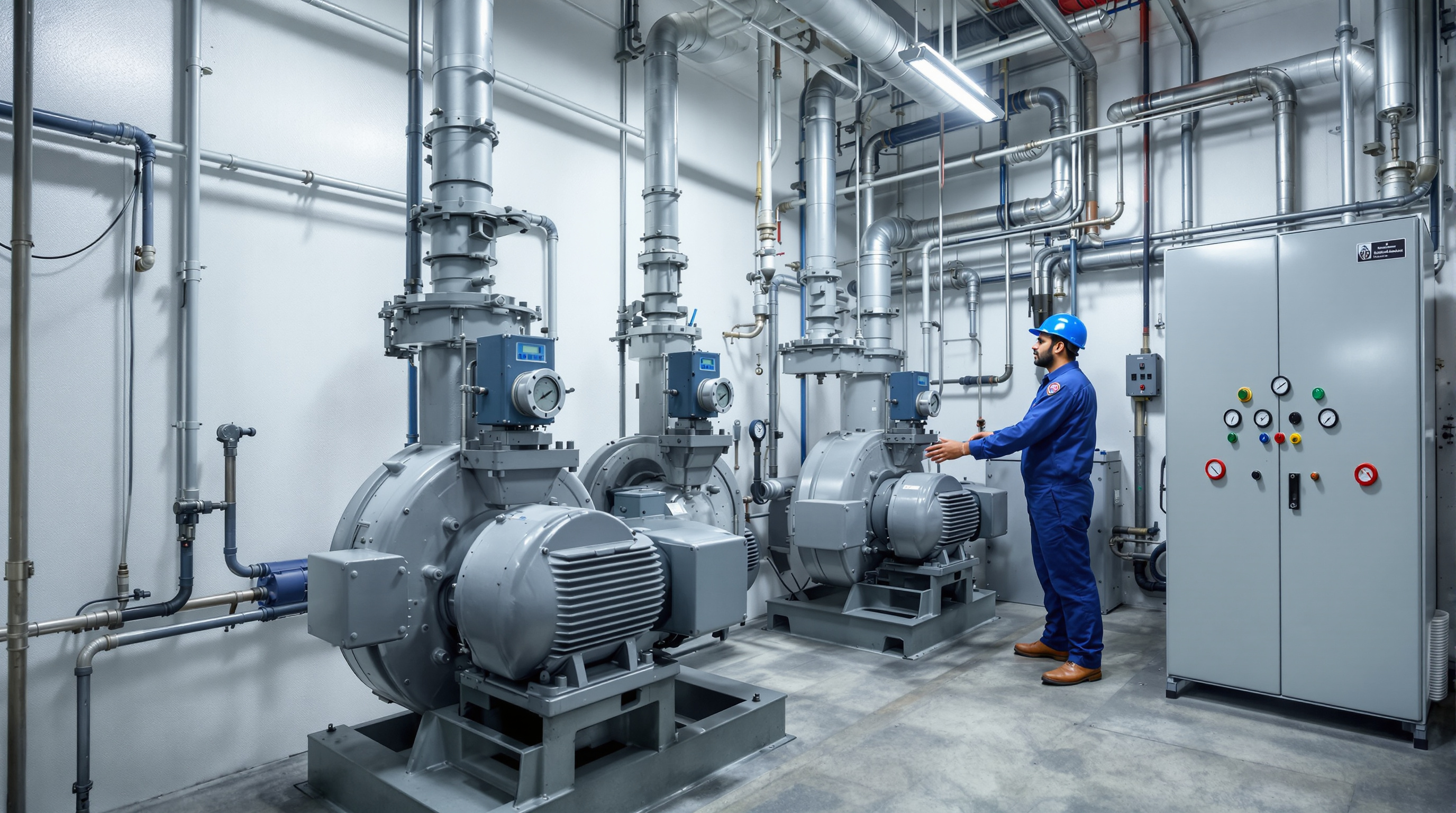
The honest headline metric is specific energy consumption — the units of electricity (kWh) needed to treat one cubic metre (1,000 litres, or one KLD of daily capacity) of sewage. For Indian STPs this typically lands between 0.6 and 1.5 kWh per m³, with older or badly-run plants pushing above 2.0 and modern, well-tuned systems dipping below 0.5 (Susbio, 2025).
Technology is the biggest lever. As a rough guide:
| Technology | Typical specific energy (kWh/m³) | Why |
|---|---|---|
| Extended Aeration / ASP | ~1.0–1.8 | Aerates the whole flow continuously; simple but power-hungry |
| SBR | ~0.7–1.2 | Timed aeration cycles can cut air use versus continuous systems |
| MBBR | ~0.8–1.4 | Media needs steady aeration to keep the biofilm active and moving |
| MBR | ~1.0–1.8+ | Adds membrane air-scour and permeate pumping on top of biological aeration |
These bands overlap deliberately — a well-designed MBBR can beat a sloppy SBR. Research comparing the two has found SBR drawing on the order of 150 kWh per day per MLD against MBBR nearer 220, but real plants vary far more than any lab figure (Susbio, 2025). The lesson is not "pick the lowest row" but "the technology decision you make on day one sets your power bill for twenty years." The extended aeration guide is candid about that process's simplicity-versus-energy trade-off.
Want your own figure rather than a band? The electricity consumption calculator turns your capacity, running hours and tariff into an estimated monthly bill in kWh and rupees.
Your monthly electricity bill, by capacity
Multiply specific energy by daily flow and by your electricity tariff and you get the number that lands on the bill. Indian commercial and apartment common-area tariffs generally run ₹7–10 per unit (kWh), varying by state and slab. On that basis, typical monthly power-only costs look roughly like this:
| Plant capacity | Approx. daily units (kWh) | Typical monthly power cost |
|---|---|---|
| 10 KLD | ~10–20 | ₹3,000–6,000 |
| 50 KLD | ~40–75 | ₹10,000–18,000 |
| 100 KLD | ~70–130 | ₹20,000–35,000 |
| 200 KLD | ~140–250 | ₹35,000–55,000 |
| 500 KLD | ~350–600 | ₹85,000–1,50,000 |
Ranges adapted from Indian STP operating-cost data (Susbio, 2026). Two caveats worth internalising:
- Small plants are less efficient per litre. A 10 KLD unit's blower and pumps are sized in whole steps, so it often runs at 1.5–2.0 kWh/m³ where a 500 KLD plant achieves under 1.0. Bigger plants enjoy real economies of scale on power.
- These are power alone. Add chemicals, manpower, sludge disposal and AMC and the total monthly OPEX is often roughly double the power line — e.g. a 100 KLD plant's power of ₹20,000–35,000 sits inside a total of ₹40,000–70,000.
For the full running-cost picture rather than just electricity, run the annual operating cost calculator or, if you are still at the buying stage, the STP cost estimator.
Why aeration dominates
If you want to understand your STP's power bill, look at the blowers. Aeration typically consumes 50–70% of an STP's total electricity — comfortably the largest single draw in almost every plant (Susbio, 2025). Everything else — inlet and transfer pumps, the treated-water pump, dosing, filtration, controls — shares the remaining third.
The physics is unforgiving. The biological stage needs dissolved oxygen so the microbes can respire and eat the waste, and the only way to get oxygen into water fast enough is to blow air through it against the water's back-pressure. That air compressor — the blower — runs almost continuously, and a large fraction of the energy is lost simply overcoming the depth of the tank. In an MBR the burden is even heavier, because membranes need a second stream of scouring air to keep them from clogging, which is why MBR power runs 20–30% above comparable conventional plants.
Because aeration is so dominant, it is also where almost all the savings live. Get the blower sizing, control and diffusers right and the whole bill moves; fiddle with anything else and you are trimming the small third.
What drives your kWh/m³ up — or down
Two identical plants on paper can post very different bills. The main swing factors:
- Oversizing. The most common and most expensive mistake. A blower sized for a load that never arrives runs throttled and inefficient forever. Correct sizing is the single biggest energy decision.
- Diffuser type and condition. Fine-bubble diffusers transfer oxygen far more efficiently than coarse-bubble; clogged or torn diffusers quietly waste power for months.
- No dissolved-oxygen control. Running blowers flat-out instead of matching air to the actual oxygen demand wastes energy round the clock. DO probes with variable-frequency drives (VFDs) can cut aeration energy by 15–30%.
- Load pattern. A half-occupied apartment block whose plant runs full-time carries a punishing cost per litre. Timers and automation matched to real inflow help enormously.
- Tariff. The same kWh costs very different money in different states and slabs — worth checking before you assume a plant is "inefficient."
Cutting the electricity bill
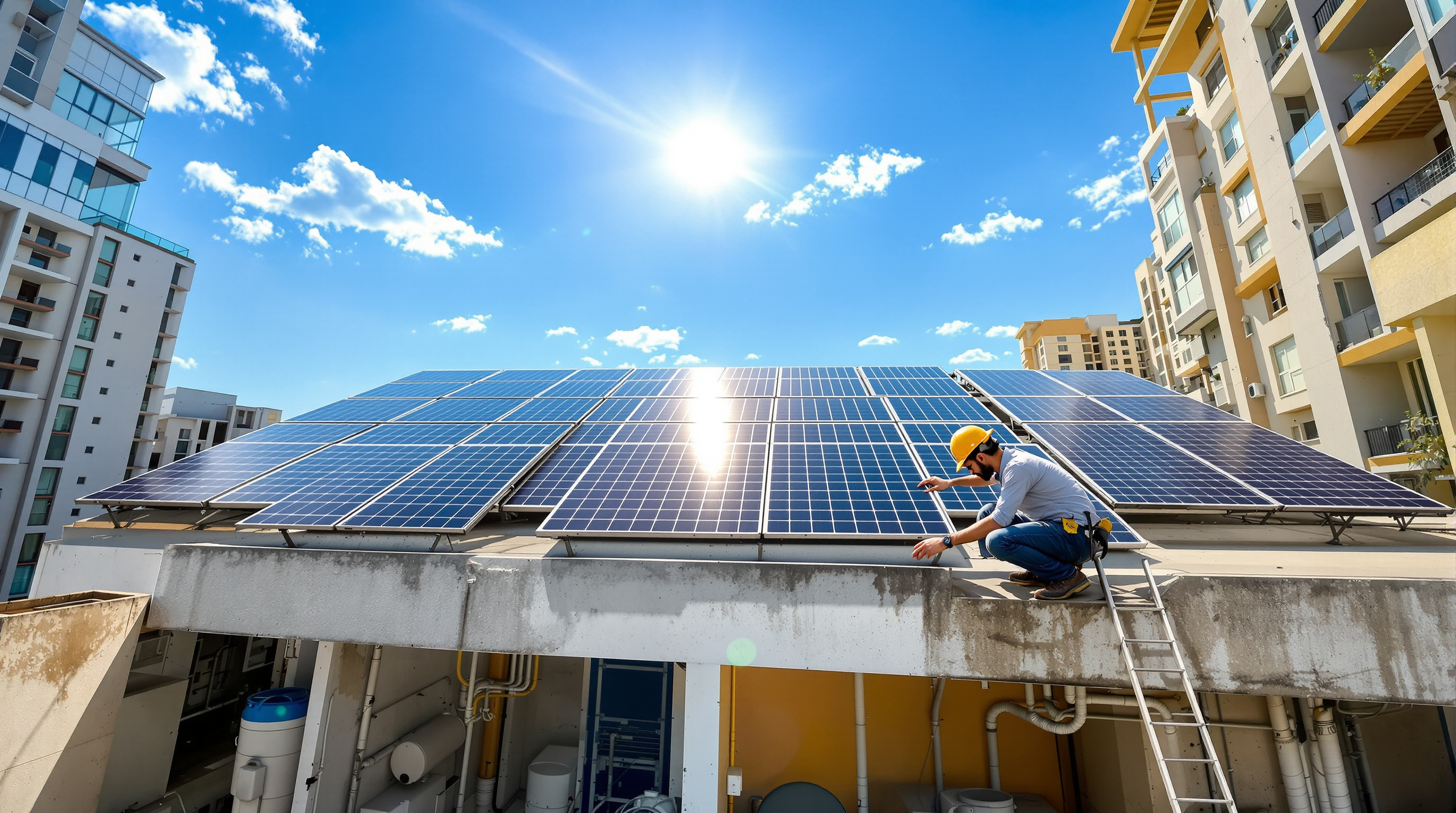
The good news: aeration-dominated bills are highly reduceable. Well-documented measures — right-sized high-efficiency motors, VFDs, DO-based blower control, fine-bubble diffusers and disciplined off-peak scheduling — can trim total energy by anywhere from 15% to over 40% without touching treated-water quality (Susbio, 2025). Larger plants are increasingly pairing this with rooftop solar to offset the daytime blower load.
Our dedicated guide on reducing STP electricity consumption works through each of these measures with the practical order to attack them.
The bottom line
Electricity is the quiet giant of STP economics: 40–60% of running cost, dominated by aeration, and paid every month for the life of the plant. Expect a specific energy use of roughly 0.6–1.5 kWh per m³ for a typical Indian STP, translating into monthly power bills from a few thousand rupees for a 10 KLD unit to well over a lakh for 500 KLD — always subject to technology, load, tariff and how well the plant is tuned. Because the number compounds over twenty years, the cheapest kilowatt-hour is the one you design out at the start: right-size the plant, choose the technology with your load in mind, and control the blowers.
To put real numbers against your own plant, start with the electricity consumption calculator for the power bill and the annual operating cost calculator for the whole running cost. To understand where this fits in the bigger picture, the STP cost per KLD guide covers capital cost, and the full Sewage Treatment Plants library connects the rest.
Export this guide
Related Guides — Deep-dive reading
Aeration Design Principles for STPs: Oxygen Demand, Diffusers & Blower Sizing
How engineers actually size the aeration system at the heart of a sewage treatment plant — from oxygen demand and alpha/beta factors to SOTE, fine versus coarse bubble diffusers, blower selection and the energy bill that follows for decades.
Sewage Treatment PlantsEnergy-Efficient STP Design: How to Build a Plant That Sips Power
Aeration eats 50-70% of an STP's electricity bill. This guide shows how right-sized blowers, fine-bubble diffusers, DO control with VFDs, gravity flow and the right technology cut running cost for the life of the plant.
Sewage Treatment PlantsReducing STP Electricity Consumption: The O&M Guide to Cutting Your Biggest Running Cost
Aeration eats 50–70% of an STP's power bill. This practical guide shows facility managers and operators how to right-size air, add DO control and VFDs, fix leaks, run off-peak, and cut the monthly electricity spend without ever breaking discharge norms.
Sewage Treatment PlantsRelated Tools — Try Free
STP Cost Estimator
Estimate the capital cost of a sewage treatment plant by capacity in KLD and technology, with an underground option and instant cost per KLD.
STP CalculatorRainwater Tank Sizer
How big should your rainwater tank be? Computes annual harvest, recommended tank capacity in litres, water-bill savings, and payback — for 10 Indian cities.
RWH CalculatorApartment STP Planner
Plan an apartment complex sewage treatment plant from flats and occupancy — get population load, sewage flow, recommended STP capacity in KLD, treatment technology and approximate space.
Planner