
STP Maintenance & AMC Cost in India (2025–26): What You Actually Pay Per Year
What a sewage treatment plant costs to keep running after it is built — what an AMC covers, typical Rs per KLD per year, the spares that quietly drain budgets, and how comprehensive contracts differ from basic ones.
Buying a sewage treatment plant is the easy decision. Keeping it running — cleanly, legally, for fifteen years — is the one that quietly shapes your building's budget. Many apartment associations and facility managers discover this the hard way: the plant was commissioned, the builder walked away, and eighteen months later the blowers are noisy, the treated water smells, and nobody signed a maintenance contract. The STP maintenance cost is not a footnote to the capital cost. Over the life of the plant it typically exceeds what you paid to build it.
This guide is the honest, numerate version of that conversation. What does an Annual Maintenance Contract (AMC) actually cover? What should you expect to pay, per KLD, per year? Where do "comprehensive" and "basic" contracts differ — and where do the surprise bills hide?
An STP is a living system, not an appliance. It runs on microbes, air and moving parts that wear out. Skip the maintenance and you do not save money — you simply defer a much larger bill, and risk a pollution-board notice in the meantime.
A quick, honest caveat before any numbers: maintenance costs vary widely with plant capacity, city, technology (MBBR, SBR, MBR), automation level, water quality and vendor. Every figure below is a realistic range for 2025–26, not a quote. Treat them as a sanity-check against proposals you receive, and get a written quote for your specific plant.
Maintenance vs O&M vs AMC — three words people confuse
These terms get used interchangeably and cost very different amounts, so it is worth separating them:
- Maintenance is the physical upkeep — servicing blowers and pumps, replacing diffusers, cleaning tanks, changing filter media.
- O&M (Operation & Maintenance) is the whole running of the plant: a trained operator on site plus maintenance plus chemicals, power management, sludge handling and compliance testing. This is the full cost of keeping the plant alive.
- AMC (Annual Maintenance Contract) is a contract with a vendor, usually covering scheduled servicing and breakdown support — and, in comprehensive form, spare parts too. It may or may not include a full-time operator.
The distinction matters because a headline "AMC of Rs 1.2 lakh a year" and a "fully manned O&M at Rs 4 lakh a year" are answering different questions. Know which one a proposal is quoting.
What an AMC actually covers
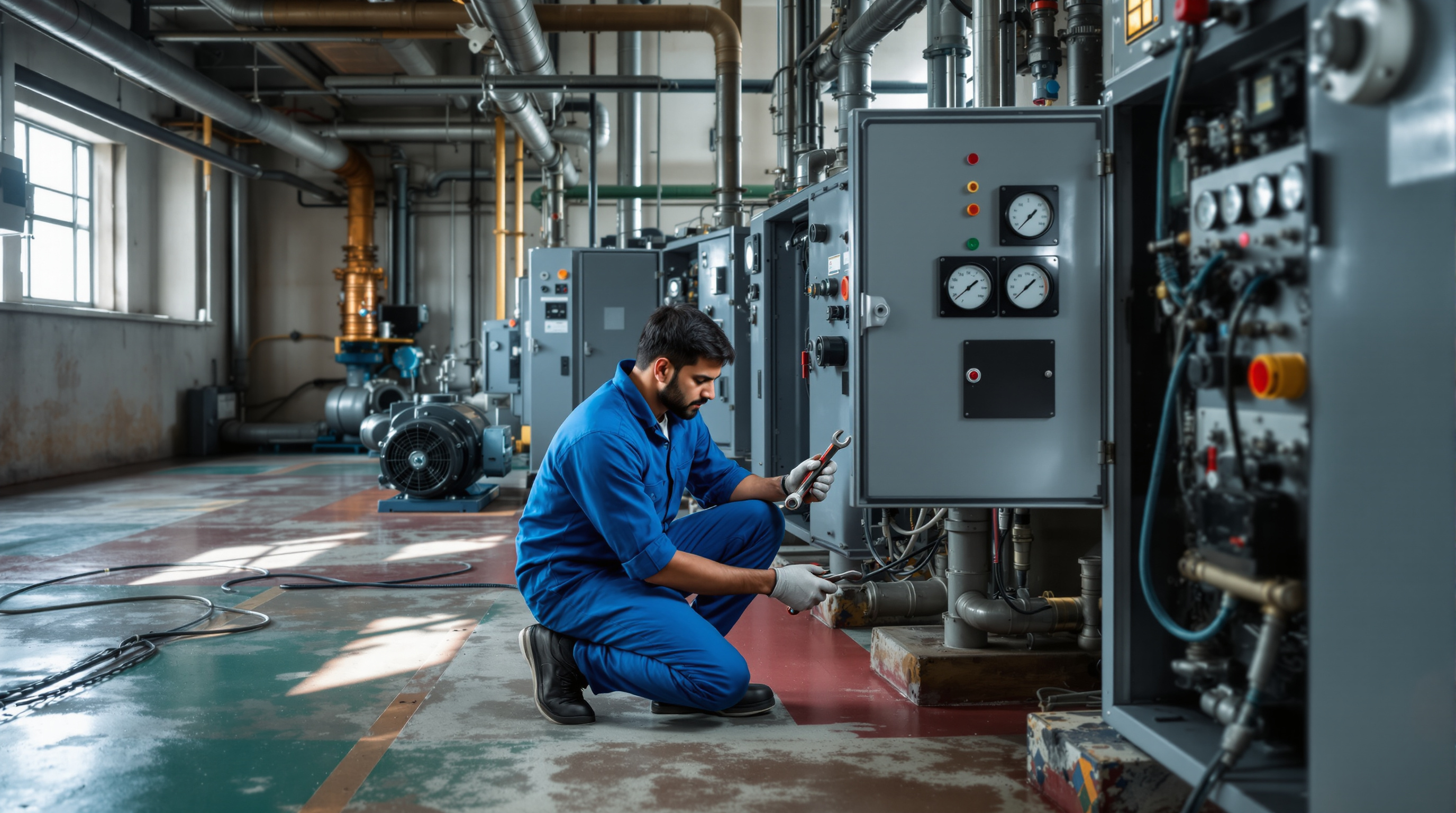
A well-written STP AMC should spell out, in the scope of work, most of the following. According to O&M service providers such as HECS, a typical scope includes:
- Scheduled preventive servicing of blowers, air compressors, pumps, motors, valves and the control panel — usually monthly or fortnightly visits.
- Consumables and spares — diffuser membranes, filter media (sand/carbon), oil and grease trap cleaning, gland packing, bearings.
- Chemical management — dosing and supply of chlorine, alum/PAC and polymer (sometimes billed separately).
- Biological health — monitoring MLSS, sludge age and dissolved oxygen so the microbial culture stays healthy.
- Sludge handling — de-watering and arranging periodic sludge removal (tanker disposal often extra).
- Compliance support — periodic effluent testing against CPCB/SPCB norms and help with online-monitoring uploads for larger plants.
- Breakdown / emergency call-outs — response within a defined SLA when something fails.
The single biggest variable is manpower: whether a trained operator sits at your plant daily (one shift, two shifts, or 24×7) or whether the vendor merely visits. Manpower is the reason two "AMCs" for the same plant can differ 3–4×.
Typical STP maintenance cost: the numbers
Two useful rules of thumb circulate in the industry, and both are worth carrying in your head:
1. AMC is roughly 8–12% of the plant's supply/equipment cost per year. A plant that cost Rs 20 lakh to supply will typically need Rs 1.6–2.4 lakh a year in AMC — a figure echoed by vendors like 3D Aqua and Trity Enviro.
2. Full O&M, over the plant's life, often costs more than the plant itself. Energy alone is 40–50% of the running cost.
Here is a realistic capacity-wise picture for 2025–26, drawing on published ranges from Susbio and others. "AMC only" assumes scheduled servicing + spares with vendor visits; "Full O&M" adds a resident operator, chemicals and power management.
| Plant capacity | AMC only (Rs/year) | Full O&M incl. operator (Rs/year) | Rough AMC Rs/KLD/year |
|---|---|---|---|
| 10–15 KLD (small residential) | 60,000 – 1,00,000 | 2.0 – 3.5 lakh | ~4,000–7,000 |
| 30–50 KLD (mid apartment) | 1.0 – 1.6 lakh | 3.5 – 6.0 lakh | ~2,000–3,500 |
| 100 KLD (large complex) | 1.5 – 3.0 lakh | 6.0 – 12 lakh | ~1,500–3,000 |
| 200+ KLD (township / commercial) | 3.0 – 6.0 lakh | 12 – 24 lakh | ~1,000–2,000 |
The pattern is the economy of scale: a 10 KLD plant might cost Rs 5,000+ per KLD per year to maintain, while a 200 KLD plant drops toward Rs 1,000–1,500. Small plants pay a premium because a blower, an operator visit and a testing run cost roughly the same regardless of size.
For a personalised figure rather than a range, run your plant through the AMC Cost Calculator, and cross-check the full running bill with the Annual Operating Cost Calculator.
Comprehensive vs basic AMC — where the risk sits
This is the most important choice in the contract, and it is fundamentally about who owns the risk of a big spare part failing.
Basic (non-comprehensive) AMC — the vendor provides labour, scheduled servicing and breakdown attendance, but spare parts are billed separately as and when they fail. It is cheaper on paper — often 30–50% less than comprehensive — and attractive when your plant is new and under warranty. The catch: when a blower motor or a set of MBR membranes fails, you get a surprise invoice, and there is a mild incentive for the vendor to replace rather than repair.
Comprehensive AMC — the vendor covers labour and spares (usually excluding a named list like major civil work, membrane modules beyond a cap, or damage from misuse). You pay more predictably each year and the vendor carries the failure risk, which aligns their incentive toward preventive care. For an ageing plant, or an association that wants a fixed line-item in its budget, comprehensive usually wins.
A few honest cautions on comprehensive contracts:
- Read the exclusions. MBR membrane replacement, submersible pumps, and diffuser overhauls are the items most often carved out — precisely because they are expensive.
- Bundled is cheaper. Vendors report bundled AMCs (signed with the original supplier, or covering STP + WTP + pumps together) run 15–20% cheaper than standalone contracts.
- Match the term to the plant's age. Basic for the warranty years, comprehensive once components start ageing (typically year 3+).
The spares that quietly drain budgets
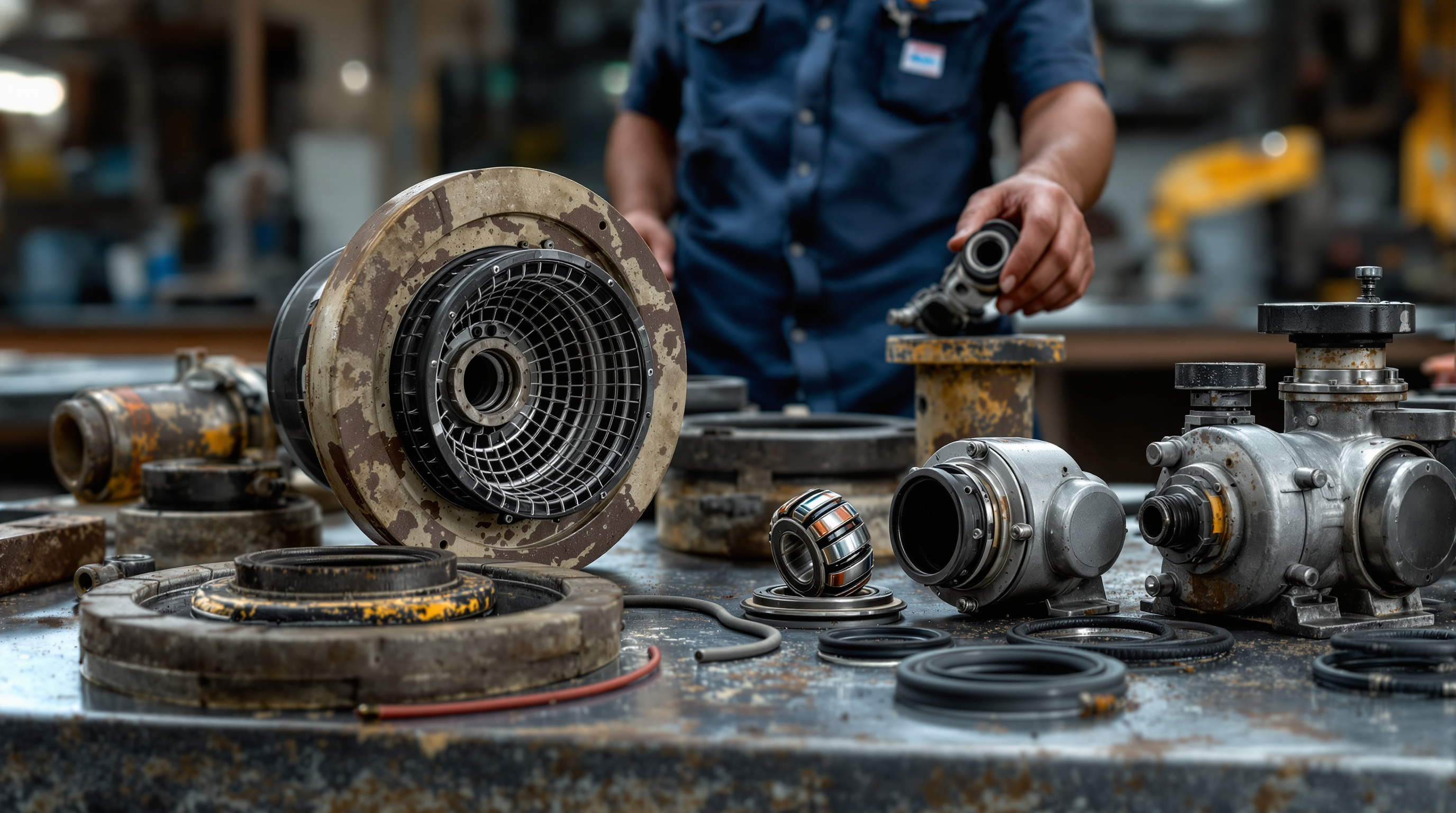
Whatever contract you sign, know where the big-ticket wear items are — because these define whether "comprehensive" is worth it:
- MBR membranes — the dominant lifecycle cost of any MBR plant. Modules need replacement every ~5–8 years and can cost lakhs; this alone often justifies comprehensive cover for MBR systems.
- Diffuser membranes — the fine-bubble diffusers in the aeration tank perish and clog; a full changeout every 3–5 years is normal and directly affects power efficiency.
- Air blowers & pumps — the workhorses. Bearings, seals and motors wear; a failed blower stops treatment entirely.
- Filter media — pressure sand and activated carbon media are periodically topped up or replaced.
- Instruments & dosing pumps — pH/DO probes and chemical dosing pumps drift and fail, quietly degrading output quality.
Because blowers run continuously, electricity is the largest single running cost — 40–50% of O&M. Maintenance and energy are linked: worn diffusers and dirty blowers force the plant to work harder and consume more power, so good maintenance pays for itself in the electricity bill. See reducing STP electricity consumption and estimate your load with the Electricity Consumption Calculator.
Budgeting honestly: putting it together
A realistic annual maintenance budget for an Indian building's STP is the sum of five buckets:
1. AMC or O&M contract — the ranges in the table above.
2. Electricity — often the biggest line; scales with running hours and technology.
3. Chemicals — chlorine, alum/PAC, polymer, roughly Rs 1,500–4,000/month for mid-size plants.
4. Sludge disposal — tanker removal, Rs 2,000–8,000/month depending on capacity and frequency.
5. Compliance & testing — periodic lab analysis and pollution-board reporting, Rs 3,000–6,000/month.
For the full lifecycle picture — capital plus every year of running cost, compared across technologies — the STP Lifecycle Cost Comparison Tool is the right instrument, and the companion guide on STP lifecycle cost explains why the cheapest plant to build is rarely the cheapest to own.
The bottom line
STP maintenance is not where you should cut corners. A neglected plant fails its discharge norms, invites a pollution-board notice, corrodes into a far larger repair bill, and stops recovering the water your building paid to treat. Budget realistically — roughly Rs 1,000–3,000 per KLD per year for an AMC, more with a resident operator and full O&M — choose comprehensive cover once the plant is past its warranty, read the exclusions, and treat maintenance as an investment that protects both the asset and your right to operate.
From here, size the running cost precisely with the AMC Cost Calculator and the Annual Operating Cost Calculator, understand the recurring bills in the STP annual operating cost guide, and see where maintenance fits in the full picture in the Sewage Treatment Plants guide library.
Export this guide
Related Guides — Deep-dive reading
Annual STP Maintenance & Overhaul: The Complete Yearly Shutdown Checklist
Once a year your STP needs a full stop, a drain-down, and an honest look at everything the daily rounds never reach — tanks, blowers, membranes, instruments, concrete and the AMC. Here is the complete annual overhaul, in the right order.
Sewage Treatment PlantsSTP Annual Operating Cost Breakdown: What It Really Costs to Run a Plant in India
Power, chemicals, manpower, AMC and sludge disposal — the five buckets that make up your STP's yearly running cost, with realistic 2025–26 per-KLD ranges for Indian apartments, offices and townships, and where each rupee actually goes.
Sewage Treatment PlantsSTP Electricity Cost Analysis: What Powering a Sewage Treatment Plant Really Costs in India
Electricity is the single largest running cost of an STP — and aeration eats most of it. Here is what your plant's specific energy use (kWh/m³) really is, what the monthly bill looks like by capacity, and how to keep it in check, with honest India ranges for 2025–26.
Sewage Treatment PlantsRelated Tools — Try Free
STP Lifecycle Cost Comparison Tool
Compare MBBR, SBR and MBR sewage treatment plants on total lifecycle cost — capex plus lifetime energy — at your capacity, lifespan and power tariff, and see the lowest-cost technology.
STP CalculatorApartment STP Planner
Plan an apartment complex sewage treatment plant from flats and occupancy — get population load, sewage flow, recommended STP capacity in KLD, treatment technology and approximate space.
PlannerPool Maintenance Cost Calculator
Monthly and yearly running cost of a home pool — chemicals, electricity, water and service, DIY vs AMC.
Pool Calculator