
Underground STP Cost: The Premium Explained (India 2026 Guide)
Building a sewage treatment plant below ground buys you a silent basement and a free courtyard — but it costs more. Here is exactly where the money goes in excavation, waterproofing, structure and ventilation, in realistic 2026 Indian ranges, and when that premium is worth paying.
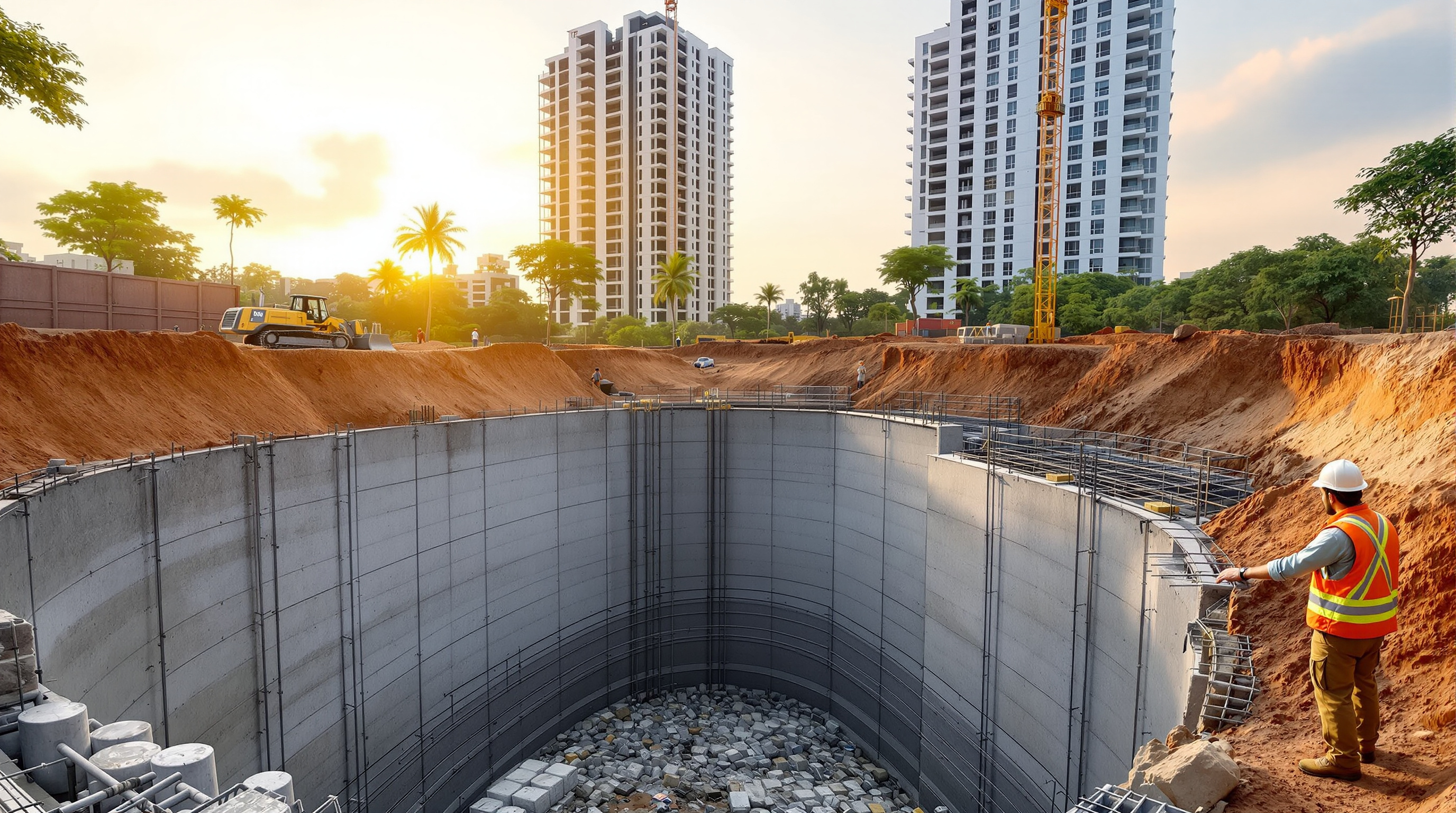
Walk into most new apartment complexes, malls or IT parks in urban India and you will never see the sewage treatment plant. It is buried — under the podium, the driveway or the landscaped courtyard — so that the surface can be used for parking, gardens and amenities, and so that residents are not looking at (or smelling) aeration tanks from their balconies. Putting the STP below ground buys that silence and that real estate. But it is not free. An identical plant costs meaningfully more to build underground than above it, and almost every owner asks the same question: how much more, and is it worth it?
This guide answers that in plain, numerate terms. It is a companion to the head-to-head underground vs above-ground STP comparison — here we focus narrowly on the money: where the underground premium comes from, how large it typically is in 2026 rupees, and when it earns its keep.
The treatment technology inside the tanks costs the same whether the plant sits on the roof or in the basement. The premium is almost entirely a civil and structural story — you are paying to dig a hole, hold back earth and water, and keep the air breathable.
What actually costs more underground
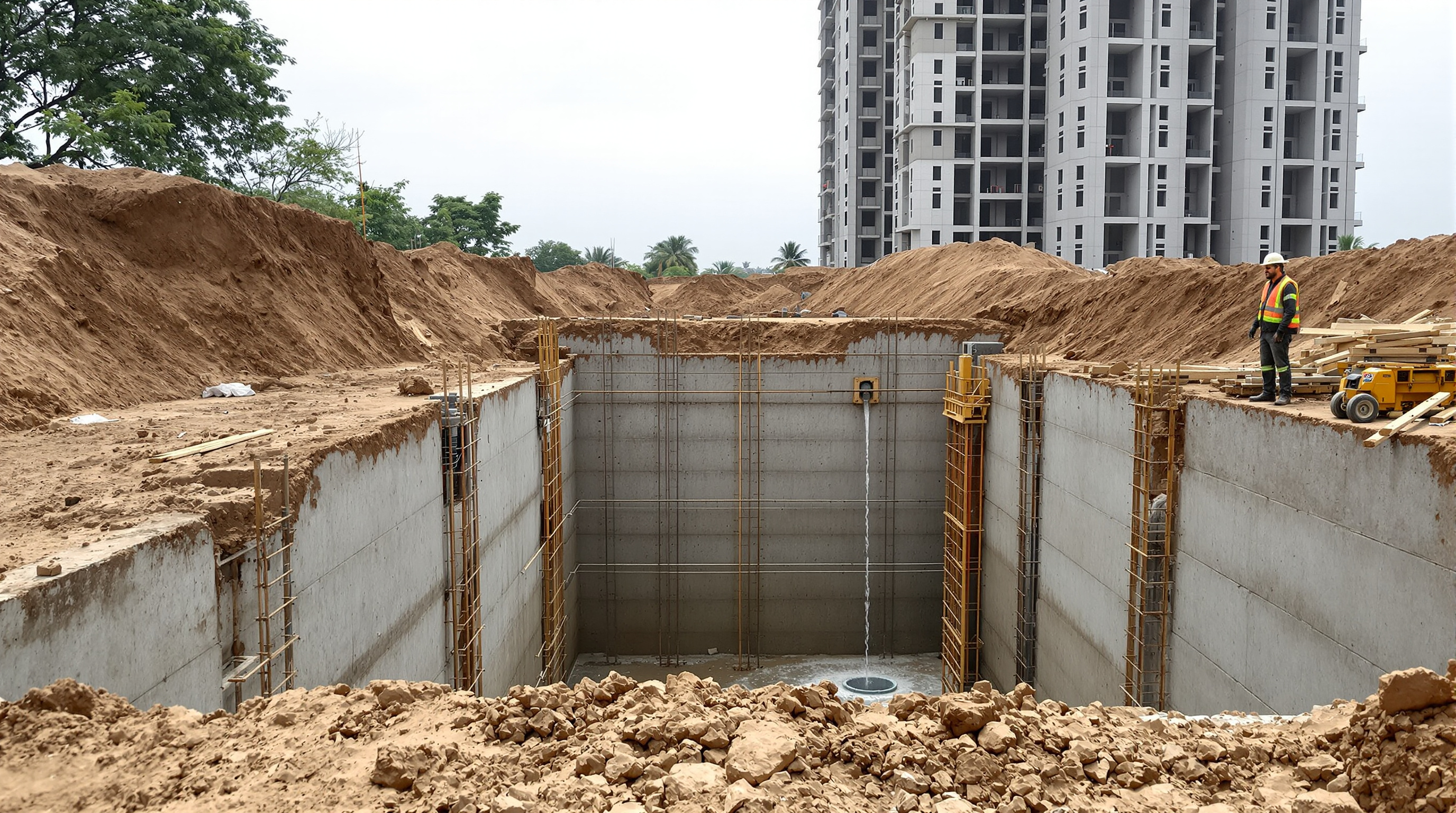
It helps to first separate an STP's budget into two halves. The process package — blowers, pumps, diffusers, MBBR media or MBR membranes, panels, filters — is priced per KLD by technology and barely cares about elevation. The civil works — the tanks, walls, foundations and the building around them — is where "underground" changes everything.
Across the industry the civil and structural portion is typically 20–35% of a turnkey STP budget for a conventional above-ground plant (SUSBIO, 2026). Going underground pushes that share up, because five things get more expensive at once:
- Excavation and shoring. You are removing hundreds of cubic metres of earth and holding the sides back with shoring or sheet piling while you work. Deeper tanks and tight urban plots make this worse.
- Water-retaining structure. A buried tank is a submarine in reverse — it must resist earth pressure pushing in and, below the water table, buoyancy pushing up. That means thicker RCC walls, heavier reinforcement and a robust raft, designed to water-retaining code rather than ordinary structural code.
- Waterproofing. Above ground a tank leaking outward is a nuisance; below ground, groundwater leaking inward is a failure. Crystalline admixtures, external membranes and construction-joint water-stops add a real, recurring line item.
- Dewatering. On sites with a high water table — much of coastal and low-lying India — you must pump the pit dry throughout construction, and sometimes permanently. This is one of the biggest unpredictable cost swings.
- Ventilation and odour control. An enclosed basement plant cannot breathe on its own. It needs forced mechanical ventilation, exhaust ducting and usually a carbon or biofilter/ozone odour-control unit, or the basement becomes a health hazard (Hydroflux). Above-ground plants get this for free from the open air.
There is a sixth, quieter cost: pumping. A below-grade plant usually cannot discharge treated water or storm ingress by gravity, so it needs lift pumps that run for the life of the plant — a small but permanent addition to the operating bill.
The numbers: capital cost and the premium
Start from the baseline. Here are typical 2026 Indian equipment-only capital ranges by technology; civil and installation add on top of these.
| Technology | Equipment cost per KLD | Typical use |
|---|---|---|
| ASP (activated sludge) | Rs 15,000–25,000 | Large, space-rich sites |
| MBBR | Rs 30,000–55,000 | The apartment/commercial default |
| SBR | Rs 35,000–60,000 | Compact, tight footprints |
| MBR | Rs 65,000–1,10,000 | Highest reuse quality, smallest footprint |
Ranges from SUSBIO and 3D Aqua, 2025–26. Costs fall per KLD as capacity rises.
Now layer on civil. For an above-ground plant, civil works commonly land around Rs 8,000–18,000 per KLD. Going underground typically raises the civil bill by roughly 15–40%, and on difficult sites more. Translated into money, the extra you pay specifically for going underground usually falls in this band:
| Premium component | Indicative extra cost | Notes |
|---|---|---|
| Deep excavation + shoring | Rs 1,500–5,000 / KLD | Rises sharply with depth and poor soil |
| Heavier water-retaining RCC | Rs 2,000–6,000 / KLD | Thicker walls, more steel, stronger raft |
| Waterproofing | Rs 800–2,500 / KLD | Admixtures + membrane + water-stops |
| Dewatering (high water table) | Rs 500–4,000 / KLD | Highly site-dependent; can dominate |
| Ventilation + odour control | Rs 1,000–3,500 / KLD | Fans, ducts, carbon/biofilter unit |
| Total underground premium | ≈ Rs 5,000–15,000 / KLD | Roughly a 10–25% uplift on total project cost |
Read the totals honestly: on a straightforward site with a low water table, the premium may sit near the bottom of that band; on a coastal plot with sandy soil and groundwater a metre down, it can blow past the top. As a rough feel, a 100 KLD plant that costs around Rs 30–50 lakh turnkey above ground (SUSBIO) will commonly carry an additional Rs 5–15 lakh to build it properly underground.
Because so much rides on your specific soil, depth, water table and technology, treat every figure here as a starting point, not a quote. Run your actual capacity, technology and site through the STP Cost Estimator for a personalised capital figure, and read the wider STP cost per KLD in India benchmark to sanity-check any vendor number.
Don't forget the operating side
The underground decision also nudges running costs, though less dramatically than capital. An STP consumes roughly 0.5–1.5 kWh per KLD treated (SUSBIO); a buried plant adds a little on top of that for continuous ventilation fans and lift pumps that an open-air plant does not need. Over a 15–20 year life that is a modest but permanent line.
Maintenance is where underground quietly bites. Sludge, spares and worn pumps all have to be hauled up and out of a confined basement, which is slower, needs confined-space safety protocol, and can push AMC quotes toward the higher end. Typical maintenance and AMC benchmarks:
- AMC: roughly 8–12% of the plant supply cost per year, or about Rs 60,000–1.2 lakh/year for a 10–50 KLD plant and Rs 1.5–3 lakh/year for 100–200 KLD (SUSBIO).
- All-in monthly O&M (power + chemicals + sludge + AMC) for a 100 KLD plant: about Rs 40,000–70,000, i.e. Rs 5–8.5 lakh a year.
Because the underground premium is front-loaded into capital while the savings (usable land, no visual/odour nuisance) accrue over decades, the honest way to compare is over the whole life. Put both options side by side in the Lifecycle Cost Comparison Tool and pin down the ongoing figure with the Annual Operating Cost Calculator and AMC Cost Calculator.
When the premium is worth paying
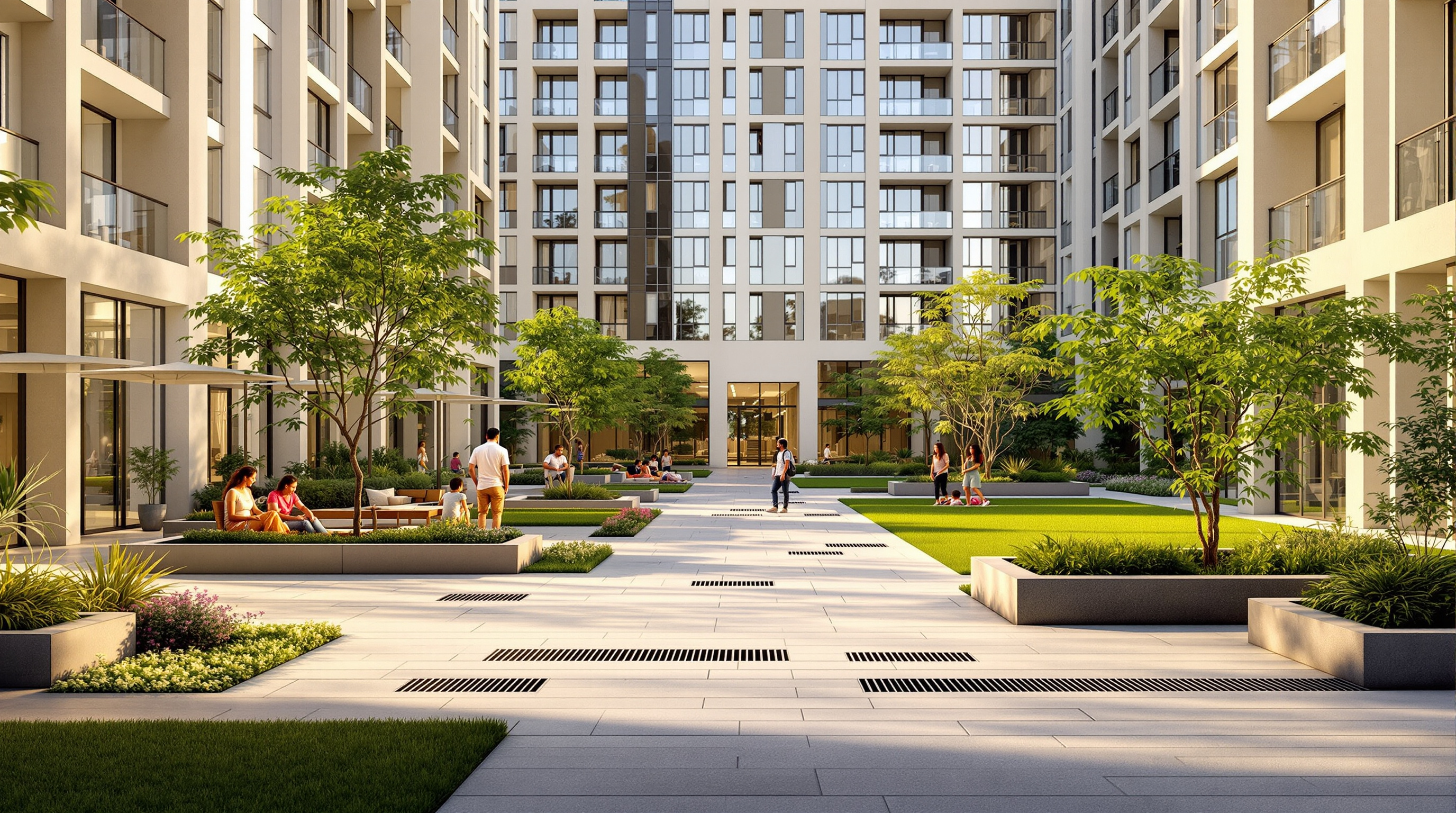
Underground is not automatically the right answer — it is a trade of money now for land and amenity forever. It usually pays off when:
- Land is scarce or expensive. If the STP footprint would otherwise consume sellable, parkable or landscapable area, the value of that recovered surface can dwarf a Rs 5–15 lakh premium — especially in metro apartment and commercial projects.
- Proximity to living space is unavoidable. Basements let you push the plant away from balconies and windows, provided ventilation and odour control are done right.
- The master plan demands a clean surface — podium gardens, clubhouse, parking decks.
It is harder to justify when land is cheap and plentiful (many industrial, institutional and peri-urban sites), or where a high water table and poor soil make the buried option both dearer and riskier to maintain. In those cases a well-screened above-ground or semi-underground plant often wins on total cost. The full trade-off, with layout and access considerations, lives in the underground vs above-ground guide; if you are still fixing plant size, start with how to size an STP.
The bottom line
Going underground does not change the biology of sewage treatment — it changes the civil engineering around it. Expect a premium of roughly Rs 5,000–15,000 per KLD, or a 10–25% uplift on total project cost, driven overwhelmingly by excavation, water-retaining structure, waterproofing, dewatering and forced ventilation, plus a modest lifelong add for pumping and harder maintenance. On land-constrained urban sites with reasonable soil, that premium buys back valuable surface area and a nuisance-free building, and is usually money well spent. On cheap land or a waterlogged plot, think twice.
Whatever you are planning, do not price it from a table — price it from your site. Model your capacity and technology in the STP Cost Estimator, then compare the underground and above-ground lifetimes in the Lifecycle Cost Comparison Tool. For the fundamentals underneath all of this, the complete guide library and what an STP actually is are the place to start.
Export this guide
Related Guides — Deep-dive reading
Underground vs Above-Ground STPs: The Complete Comparison Guide
Space, cost, maintenance, odour, aesthetics, ventilation and flood risk — a plain, honest comparison of underground and above-ground sewage treatment plants, and how to choose the right one for your Indian project.
Sewage Treatment PlantsMBR STP Cost Guide: What a Membrane Bioreactor Really Costs in India (2026)
Why MBR carries the highest capital and running cost of any sewage treatment technology in India — membranes, power and replacements — and exactly when that premium pays for itself through water reuse and a smaller footprint.
Sewage Treatment PlantsCommercial STP Cost Guide: Pricing for Hotels, Malls & Offices in India (2026)
What a commercial sewage treatment plant really costs to build and run — capacity bands, why higher reuse and tertiary polishing push the price up, and how cooling-tower and flushing reuse pays it back. Honest ranges, not false precision.
Sewage Treatment PlantsRelated Tools — Try Free
STP Cost Estimator
Estimate the capital cost of a sewage treatment plant by capacity in KLD and technology, with an underground option and instant cost per KLD.
STP CalculatorLandscape Cost Calculator
Estimate a garden's cost — hardscape, softscape, lawn, irrigation, lighting and annual upkeep — by area, tier and city.
Budget CalculatorSTP Lifecycle Cost Comparison Tool
Compare MBBR, SBR and MBR sewage treatment plants on total lifecycle cost — capex plus lifetime energy — at your capacity, lifespan and power tariff, and see the lowest-cost technology.
STP Calculator