
MBBR STP Cost Guide: Capex per KLD, Media Cost & Running Cost in India
What an MBBR-based sewage treatment plant really costs in India — the capital cost per KLD by capacity, what the biofilm media adds, why MBBR sits in the affordable middle of the market, and the monthly running cost you should budget for.
Ask any consultant, builder or apartment association in India which sewage treatment technology they end up choosing, and the answer, more often than not, is MBBR — the Moving Bed Biofilm Reactor. It is not the cheapest option on the market, and it is nowhere near the most expensive. That is precisely why it wins. MBBR sits in the affordable middle: compact enough for a basement, robust enough to survive real-world neglect, and priced within reach of a mid-sized society or commercial building.
This guide puts honest numbers on that reputation. What does an MBBR STP actually cost to build, what does the famous plastic media add to the bill, and — the number people forget until the first electricity meter reading — what does it cost to run every month? If you have not yet met the technology itself, start with the MBBR technology guide; this article is about the money.
Costs in this guide are ranges, not quotes. STP pricing swings widely with capacity, city, effluent standard, site conditions and vendor. Treat every figure here as a planning benchmark, then get a written quote for your specific project before you budget.
Why MBBR is the mid-priced favourite
Every STP technology trades cost against three things: how much land it needs, how good the treated water is, and how forgiving it is when flow or load spikes. MBBR wins the popularity contest because it makes a genuinely balanced trade.
- It is compact. Thousands of plastic biofilm carriers float in the aeration tank, each one a home for treatment bacteria. That gives an enormous biological surface area in a small tank — far less footprint than the older Activated Sludge Process (ASP) or Extended Aeration.
- It is stable and forgiving. Because the microbes live attached to media rather than floating freely, the plant shrugs off shock loads and irregular flow better than suspended-growth systems. For an apartment block where usage swings between morning and midnight, that resilience is worth a lot.
- It is mid-priced. It costs more than a bare ASP tank but a fraction of a membrane plant, and it hits the reuse quality most Indian buildings actually need.
Here is where MBBR lands against the alternatives, on an equipment-cost-per-KLD basis:
| Technology | Typical cost (₹/KLD) | Footprint | Treated-water quality |
|---|---|---|---|
| ASP / Extended Aeration | 15,000 – 25,000 | High | Moderate (BOD ~30) |
| MBBR | 30,000 – 55,000 | Low | Good (BOD <20) |
| SBR | 35,000 – 60,000 | Moderate | Good (BOD <10) |
| MBR | 65,000 – 1,10,000 | Very low | Excellent (BOD <5) |
Sources: Susbio STP cost 2026, Cleantech Water MBBR guide. Those per-KLD figures are for the mechanical package; civil work and installation typically add another 25–40% on top.
MBBR capital cost per KLD, by capacity
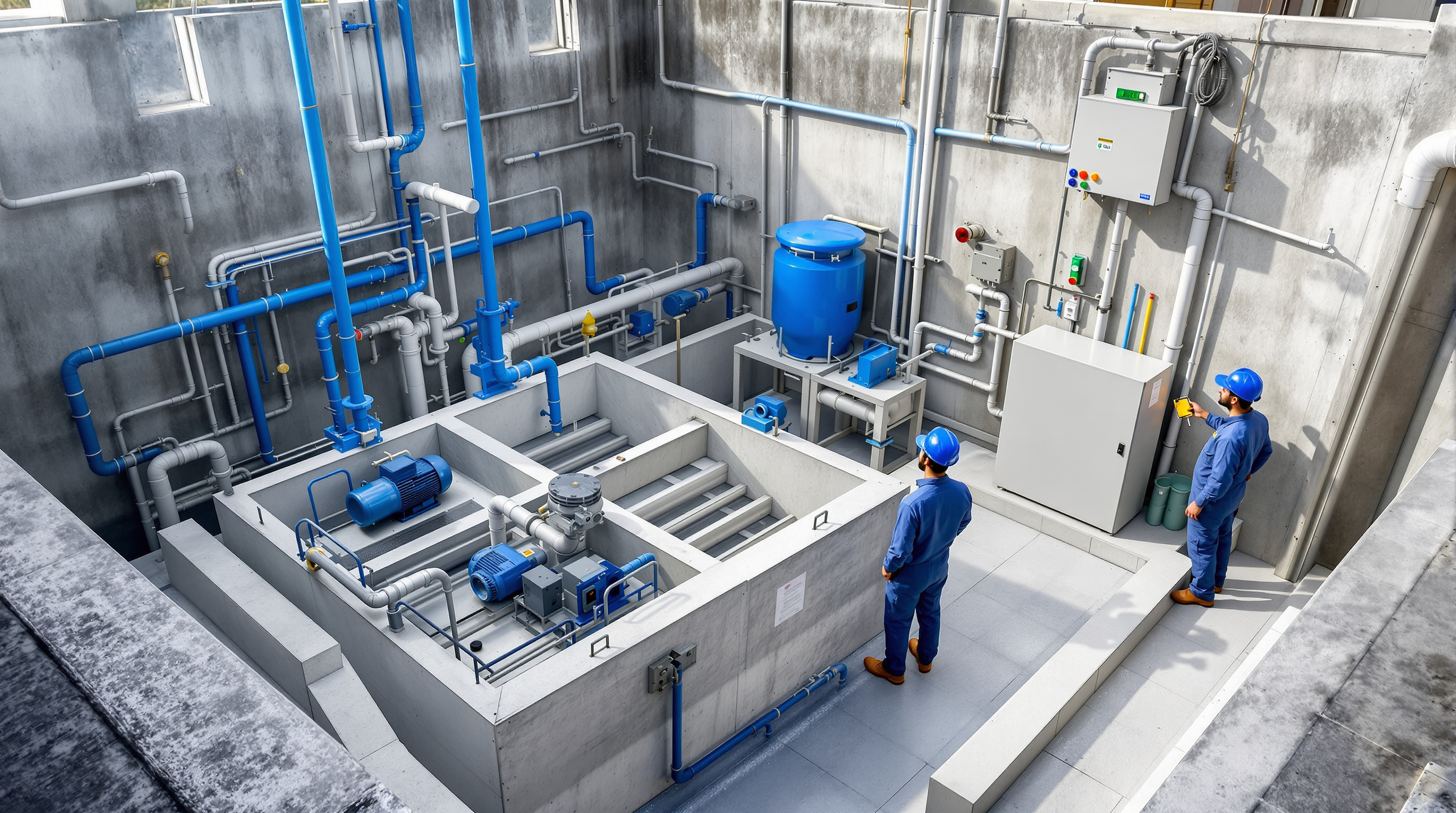
The single most important thing to understand about STP pricing is economies of scale. A plant is not priced like a bag of cement — you do not pay twice as much for twice the capacity. Fixed elements (a control panel, a set of blowers, the operator's time) are shared across every kilolitre, so the cost per KLD falls sharply as the plant grows.
A 5 KLD villa plant can work out to ₹80,000–1,00,000 per KLD, while a 200 KLD township plant on the same MBBR technology can drop to ₹35,000–45,000 per KLD. That is not a discount for haggling — it is arithmetic, and it is why bundling neighbouring blocks into one shared STP almost always beats several tiny ones.
Here are realistic total installed cost ranges (mechanical + civil + electrical) for MBBR-based plants across common capacity bands:
| Capacity | Typical use | Total installed cost | Effective ₹/KLD |
|---|---|---|---|
| 10 KLD | Small hotel, clinic, villa cluster | ₹6 – 10 lakh | ₹60,000 – 1,00,000 |
| 20 KLD | Mid-size society | ₹10 – 15 lakh | ₹50,000 – 75,000 |
| 50 KLD | Large community | ₹18 – 30 lakh | ₹36,000 – 60,000 |
| 100 KLD | Township, IT park | ₹30 – 50 lakh | ₹30,000 – 50,000 |
| 200 KLD | Mega complex | ₹55 – 90 lakh | ₹28,000 – 45,000 |
Ranges synthesised from Susbio 2026, Cleantech Water and V Aqua.
Where does the money actually go? For a typical 100 KLD MBBR plant, the split runs roughly: civil work and tanks 25–30%, mechanical equipment (blowers, pumps, diffusers, media) 45–55%, and electrical, panels and automation 10–15%, with the balance in piping, filtration and commissioning. Add SCADA, IoT sensors and remote monitoring and you will pay 15–25% more up front — but you claw a good part of that back in lower manpower and better compliance.
To turn these bands into a figure for your own headcount and capacity, run the numbers through the STP Cost Estimator. If you are not yet sure how many KLD you need, size it first with the STP Capacity Calculator.
What the MBBR media actually costs
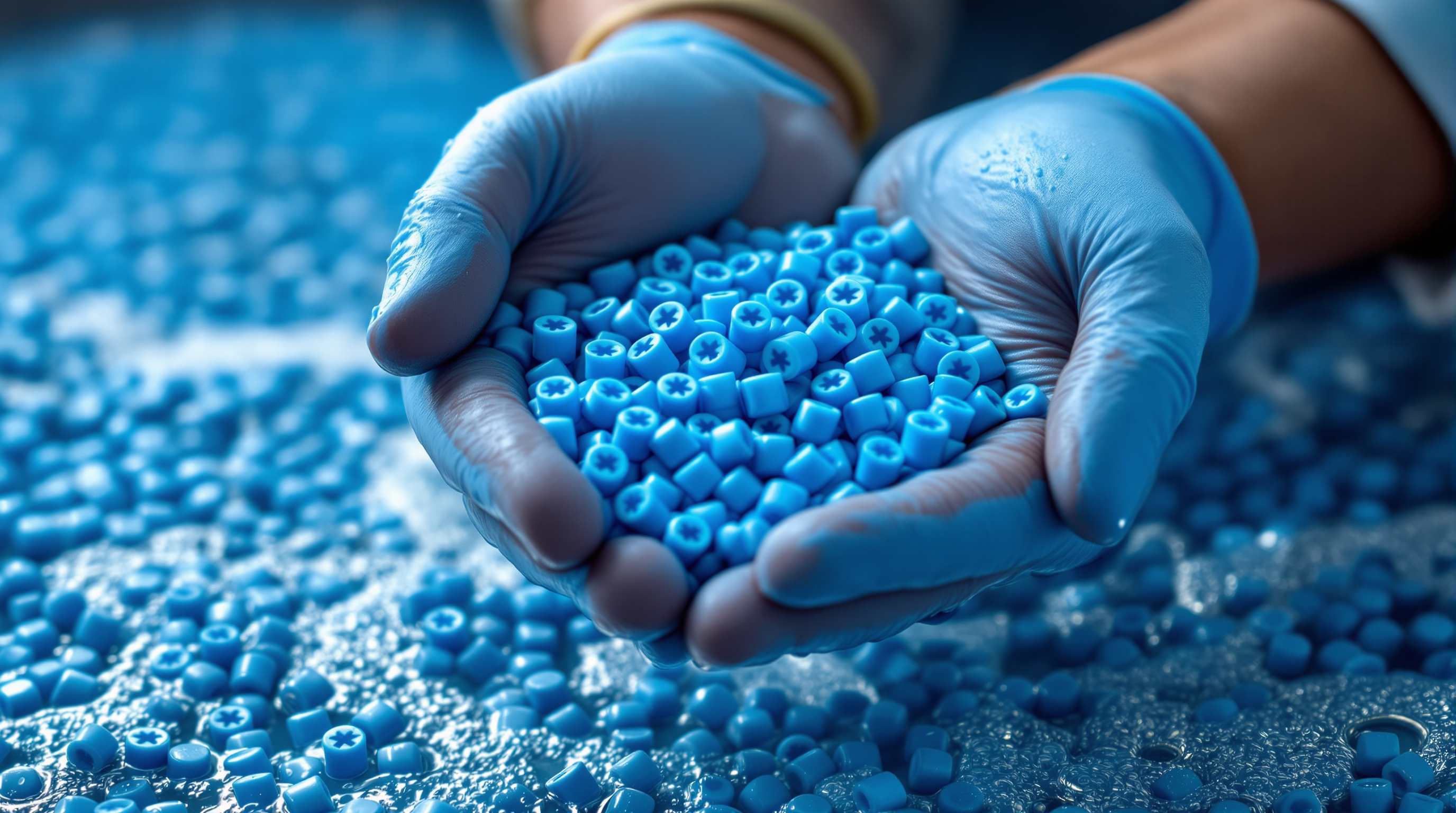
The plastic biofilm carriers — the "moving bed" that gives the technology its name — are the one line item unique to MBBR, and the one buyers ask about most. The good news: on a whole-plant basis, media is a modest slice of the bill, not the headline.
Indian MBBR media (K1, K3 and similar carriers, offering 500–800 m² of surface area per cubic metre) typically sells for:
- Standard cylindrical media (~22 mm): roughly ₹7,000 – 9,000 per cubic metre — the most common pick.
- Full range across grades: from about ₹3,000 for basic media up to ₹15,000+ per cubic metre for high-surface-area premium carriers.
Pricing per IndiaMART MBBR media listings. A plant is filled to roughly 40–60% of the aeration tank volume with media, so a mid-sized STP might use a few cubic metres — a media bill running from tens of thousands to a couple of lakh rupees, generally 5–12% of the mechanical cost. Two practical cautions: cheap, thin-walled media abrades and floats away faster, and honest fill ratios matter — a vendor who under-fills to shave cost is quietly cutting your treatment capacity. This is the one spec worth checking line by line in a quote.
Running cost — the number people forget
An STP is not a one-time purchase; it is a machine you feed electricity, chemicals, labour and maintenance every single month for 15+ years. Over a plant's life, operating cost usually exceeds the original capital cost — so budgeting only for capex is the classic, expensive mistake.
Four things drive MBBR running cost:
- Electricity — the blowers run almost continuously to keep the media moving and the bugs fed. This is the biggest single OPEX item, often 40–60% of the monthly bill. See reducing STP electricity consumption for how to trim it.
- Manpower — an operator, part- or full-time depending on size.
- Chemicals — mainly for disinfection and occasional pH correction; MBBR is relatively light on chemicals.
- Sludge disposal and AMC — periodic sludge removal and the annual maintenance contract.
Indicative monthly operating cost for MBBR plants:
| Capacity | Electricity | O&M + AMC share | Total monthly OPEX |
|---|---|---|---|
| 10 KLD | ₹3,000 – 6,000 | ₹5,000 – 8,000 | ₹8,000 – 15,000 |
| 50 KLD | ₹10,000 – 18,000 | ₹12,000 – 20,000 | ₹25,000 – 40,000 |
| 100 KLD | ₹20,000 – 35,000 | ₹18,000 – 30,000 | ₹40,000 – 70,000 |
Source: Susbio 2026. On a per-kilolitre basis that lands at roughly ₹8–20 per KL treated, again falling as the plant gets larger. Annual maintenance contracts typically run ₹60,000–1,20,000/year for 10–50 KLD plants and ₹1.5–3 lakh/year for 100–200 KLD plants.
Set your own monthly and lifetime numbers with the Annual Operating Cost Calculator, pin down the power line with the Electricity Consumption Calculator, and pressure-test a vendor's service quote with the AMC Cost Calculator.
Is MBBR the right spend for you?
MBBR earns its popularity by being the sensible default — but "sensible default" is not the same as "always right".
- Choose MBBR when you want a compact, forgiving plant at a fair price and standard reuse quality (flushing, gardening, cooling) is enough. This covers most apartments, hotels and commercial buildings.
- Consider MBR if space is desperately tight or you need near-potable reuse water — you will pay roughly double, but the footprint and effluent quality are unmatched.
- Consider SBR for larger, highly variable flows where automation-heavy batch control pays off.
Whatever you shortlist, compare them on total cost of ownership — capex plus 15 years of running cost — not sticker price alone, using the STP Lifecycle Cost Comparison tool. And remember the offset: a well-run STP recovers 80–85% of a building's water, so factor the tanker-water it saves with the Water Reuse Savings Calculator and STP ROI Calculator.
The bottom line
An MBBR STP in India typically costs ₹30,000–70,000 per KLD installed — dropping toward the lower end as capacity rises — with biofilm media adding a modest, checkable slice and a monthly running cost of roughly ₹8–20 per KL treated. It is mid-priced for a reason: it buys you a compact, resilient, reuse-grade plant without the premium of membranes. Just budget for the whole life of the machine, not only the day you switch it on.
For the wider picture, browse the Sewage Treatment Plants guide library and the benchmark STP cost per KLD in India guide — then get a written, site-specific quote before you commit a rupee.
Export this guide
Related Guides — Deep-dive reading
MBR STP Cost Guide: What a Membrane Bioreactor Really Costs in India (2026)
Why MBR carries the highest capital and running cost of any sewage treatment technology in India — membranes, power and replacements — and exactly when that premium pays for itself through water reuse and a smaller footprint.
Sewage Treatment PlantsCommercial STP Cost Guide: Pricing for Hotels, Malls & Offices in India (2026)
What a commercial sewage treatment plant really costs to build and run — capacity bands, why higher reuse and tertiary polishing push the price up, and how cooling-tower and flushing reuse pays it back. Honest ranges, not false precision.
Sewage Treatment PlantsResidential STP Cost Guide for Villas & Small Homes (2026 India Prices)
What a small 1–10 KLD packaged sewage treatment plant really costs to buy, install and run in India — honest capex ranges by technology, monthly running costs, and AMC rates, written for owners, developers and RWAs who want numbers they can plan around.
Sewage Treatment PlantsRelated Tools — Try Free
STP Lifecycle Cost Comparison Tool
Compare MBBR, SBR and MBR sewage treatment plants on total lifecycle cost — capex plus lifetime energy — at your capacity, lifespan and power tariff, and see the lowest-cost technology.
STP CalculatorSTP Cost Estimator
Estimate the capital cost of a sewage treatment plant by capacity in KLD and technology, with an underground option and instant cost per KLD.
STP CalculatorSTP Lifecycle Cost Calculator
Add an STP's years of operating cost to its upfront capex, then subtract water-reuse savings, to reveal the real gross and net lifecycle cost over the plant's whole life.
STP Calculator