
Underground vs Above-Ground STPs: The Complete Comparison Guide
Space, cost, maintenance, odour, aesthetics, ventilation and flood risk — a plain, honest comparison of underground and above-ground sewage treatment plants, and how to choose the right one for your Indian project.
Once you have decided that a building needs a sewage treatment plant, the very next question the design team argues over is not which technology — it is where the plant goes. Underground, tucked out of sight below the podium or basement, or above ground, sitting in the open at natural grade? It sounds like a simple placement choice. In practice it shapes the plant's cost, its running life, how it smells, how safely a technician can work on it, and whether it survives the monsoon.
This guide lays out the full comparison of underground vs above-ground STPs the way an experienced designer weighs it — honestly, with the trade-offs named, and with the Indian realities of land price, flooding and lax O&M built in.
The cheapest STP to build is rarely the cheapest to own. Where you put the plant decides which of the two you are optimising for — and the decision is almost impossible to reverse once the raft is cast.
What "underground" and "above-ground" actually mean
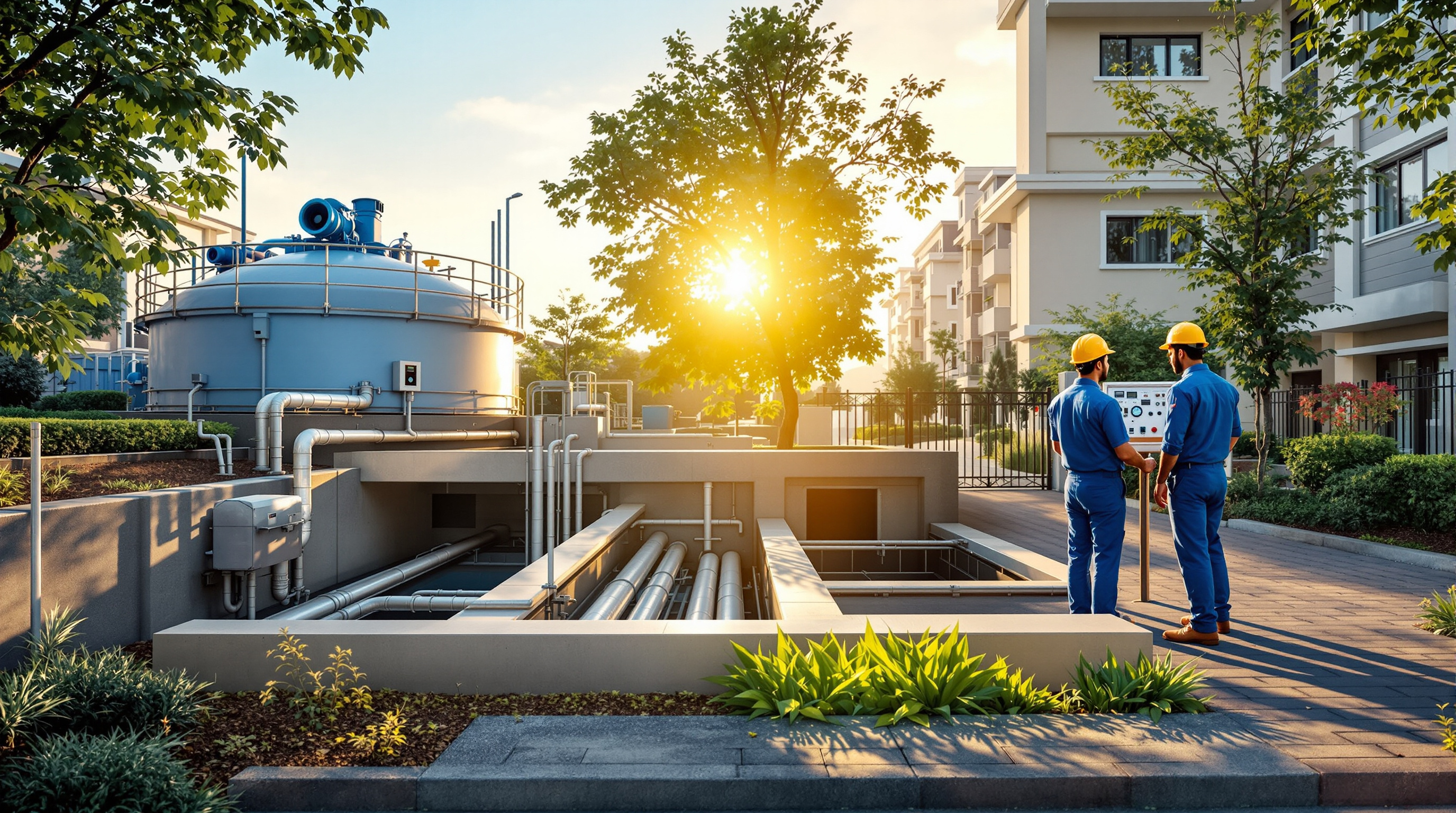
An above-ground STP sits on the natural ground level (or on a podium), with its tanks either fully exposed or partly recessed. You walk up to it, look down into the tanks, and every pump, blower and valve is in daylight. It is the default for plots with spare open land — factories, campuses, gated layouts, sewage treatment works with room to breathe.
An underground STP is built below grade — most commonly under a basement, a driveway, a lawn or a podium slab — with a walk-in access hatch or a small pump room as the only visible sign it exists. In dense urban India, where a corner of open plot can cost more than the plant itself, burying the STP to reclaim that land for parking or landscape is often the whole point.
Everything downstream of that choice — ventilation, drainage, headroom, cost — flows from this one fact: above-ground works with gravity and air; underground works against both.
The head-to-head comparison
| Factor | Above-ground STP | Underground STP |
|---|---|---|
| Land / space | Consumes valuable open plot area | Frees the surface for parking, lawn or driveway |
| Civil cost | Lower — shallow tanks, less excavation | Higher — deep excavation, waterproofing, RCC |
| Odour control | Disperses naturally in open air | Traps foul air; needs forced extraction |
| Ventilation | Passive, free | Mechanical exhaust is mandatory, always running |
| Maintenance access | Easy, direct, well-lit | Confined-space entry, harder and riskier |
| Aesthetics | Visible; must be screened or landscaped | Invisible — the strongest selling point |
| Flood / water table | Safe from ingress | Vulnerable to groundwater and monsoon flooding |
| Pumping / energy | Can use gravity flow | Needs lift pumps to raise treated water out |
No column wins outright. The right answer depends on which of these constraints binds hardest on your specific plot.
Space and cost: the reason underground exists
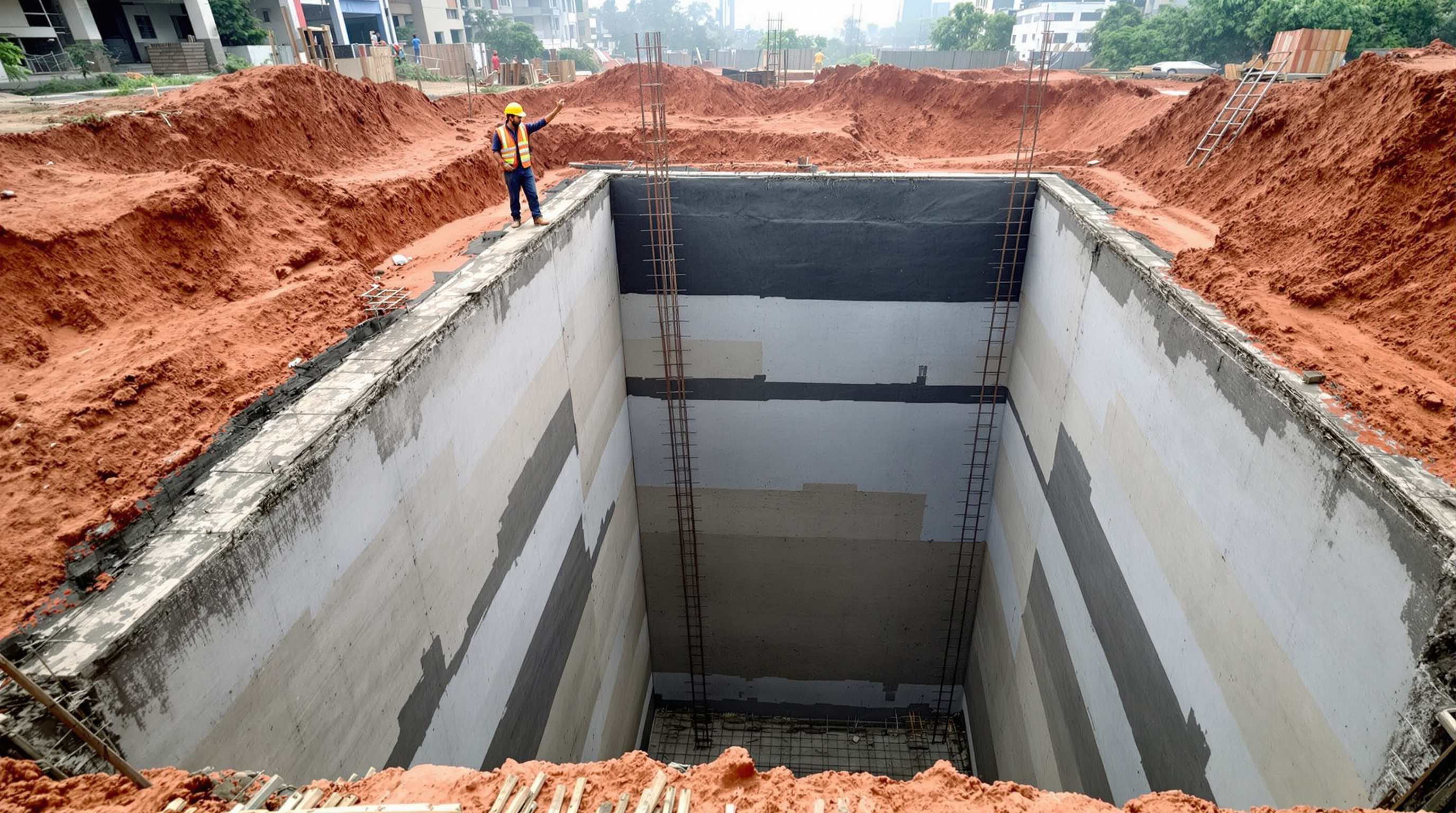
The case for going underground is almost always land. On a tight urban site, the footprint an above-ground plant would eat is worth far more as car parking or a green lawn than as an open tank farm. Burying the STP under the basement or driveway reclaims that surface entirely.
But that reclaimed land is not free. An underground STP carries a civil cost premium that catches first-time developers off guard:
- Deep excavation and shoring, often into rock or a high water table.
- Structural RCC tanks designed to resist both the sewage inside and the soil and groundwater pushing in.
- Waterproofing — the single most under-budgeted item, and the one that fails first when skimped.
- Lift pumps to raise treated water back up to grade for reuse, adding equipment and a permanent energy bill.
An above-ground plant, by contrast, is mostly shallow tanks and shorter pipe runs. Its civil works are cheaper, its gravity flow needs fewer pumps, and its blowers and panels sit in the open where they are trivial to reach. If your dedicated guide is Underground STP cost, the short version is: you pay more to build below grade, and you keep paying — in pumping energy and in ventilation that never switches off.
To sanity-check the operating side of that bill, the Energy Benchmark Calculator will show how lift pumping and continuous exhaust push an underground plant's kWh per kilolitre above its above-ground twin.
Odour and ventilation: air behaves differently below grade
This is where the two options genuinely diverge in physics. Sewage releases hydrogen sulphide and other foul, corrosive gases at every screening, equalisation and aeration point. Above ground, those gases disperse into open air and largely take care of themselves — a light odour-control scheme and sensible layout usually suffice.
Underground, there is nowhere for that air to go. A buried plant must run forced mechanical ventilation — extraction fans sized for continuous air changes, ducted to release well away from occupied areas, often with an activated-carbon or biofilter scrubber on the exhaust. If those fans fail, two things happen fast: the basement fills with a stench that reaches the apartments above, and the trapped H₂S turns into an acid that corrodes the very concrete and steel holding the plant up. Ventilation is not a comfort feature underground; it is a life-safety and structural necessity.
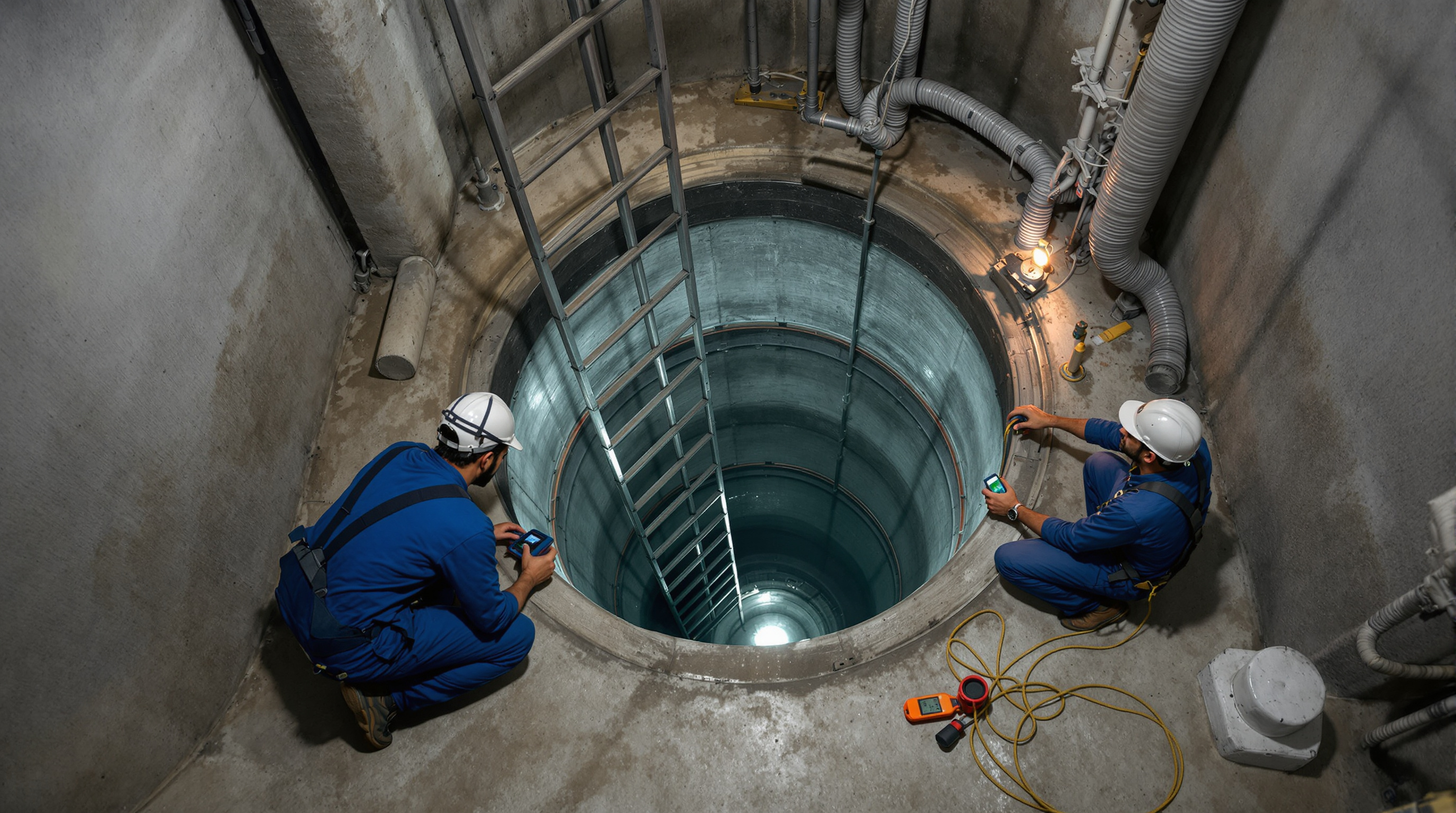
That same trapped, low-oxygen, toxic-gas atmosphere is what makes underground maintenance genuinely hazardous. Any entry into a below-grade wet well or tank is a confined-space entry — it needs gas testing, forced-air purging and a trained crew, not one operator with a torch. Above ground, the same tank is an open, ventilated, well-lit workspace where routine work on a clarifier or aeration tank is quick and safe.
Maintenance, aesthetics and the honest trade-off
The aesthetic argument is where underground wins hands down: the plant simply disappears. No visible tanks, no screening walls, no compromise to the landscape or the building elevation. For a premium residential or hospitality project, that invisibility is often worth the cost premium on its own.
But invisibility has an operational cost. What is out of sight tends to go out of mind. Underground plants are notoriously neglected because nobody walks past them daily; problems are discovered late, access is awkward, and technicians dislike the confined descent. An above-ground plant sits in plain view where a manager notices a foaming tank or a tripped blower on the morning round. If your site skimps on O&M — as many Indian associations do once the builder hands over — an above-ground plant is far more forgiving of that neglect.
Flood risk and the water table
The factor that quietly decides many projects is water. An underground STP is a deep concrete box sitting below the surface, which means:
- Groundwater ingress — a high or seasonal water table pushes against the tanks and seeks out every waterproofing flaw.
- Monsoon flooding — if surface water finds the access hatch or ramp, it can drown pumps and panels in minutes.
- Buoyancy uplift — an emptied underground tank in saturated soil can literally float and crack if it is not anchored against uplift.
Above ground, none of these apply — the plant is safely above the flood line by definition. On a low-lying plot, near a lake, or anywhere the water table is shallow, this single factor can rule out an underground plant regardless of how much the land is worth. Sound STP site selection treats flood level and water table as a hard constraint, not an afterthought.
How to choose
There is no universal winner — only the right fit for your plot. As a working rule:
- Choose above-ground when you have spare open land, a shallow or seasonal water table, a flood-prone site, or a client who will under-invest in O&M and needs a forgiving, visible plant.
- Choose underground when urban land is scarce and valuable, the surface is needed for parking or landscape, aesthetics are non-negotiable, the water table is deep — and the budget genuinely covers waterproofing, ventilation and lifelong lift pumping.
Whichever way you lean, size the plant first: the number of tanks and their footprint drive both the excavation depth below grade and the land take above it. The STP Capacity Calculator turns your occupancy into a design flow in KLD, and the Underground vs Above-Ground STP Comparator puts the two options side by side on space, cost and running impact for your specific numbers — the fastest way to turn this trade-off into a decision.
The bottom line
Underground and above-ground STPs treat sewage identically — the microbes neither know nor care where the tank sits. The choice is entirely about land, money, air and water: underground buys you invisible, land-saving elegance at the price of higher civil cost, mandatory ventilation, harder maintenance and real flood exposure; above-ground trades visibility for lower cost, free ventilation, easy access and flood safety. Decide it deliberately, before the raft is poured — and continue through the Sewage Treatment Plants guide library to work through the technology and layout decisions that follow.
Export this guide
Related Guides — Deep-dive reading
Civil Construction of STPs: What Goes Into Building One
Before a single blower runs, an STP is a piece of civil engineering — excavation, watertight RCC tanks, baffle walls, a plant room and drainage, built in a sequence that decides whether the plant ever works. Here is what that construction actually involves.
Sewage Treatment PlantsUnderground STP Cost: The Premium Explained (India 2026 Guide)
Building a sewage treatment plant below ground buys you a silent basement and a free courtyard — but it costs more. Here is exactly where the money goes in excavation, waterproofing, structure and ventilation, in realistic 2026 Indian ranges, and when that premium is worth paying.
Sewage Treatment PlantsAnnual STP Maintenance & Overhaul: The Complete Yearly Shutdown Checklist
Once a year your STP needs a full stop, a drain-down, and an honest look at everything the daily rounds never reach — tanks, blowers, membranes, instruments, concrete and the AMC. Here is the complete annual overhaul, in the right order.
Sewage Treatment PlantsRelated Tools — Try Free
Underground vs Above-Ground STP Comparator
Weight seven site factors — space, cost, maintenance, odour, aesthetics, ventilation and flood safety — to get an instant recommendation on whether to build your sewage treatment plant underground or above grade.
ComparatorApartment STP Planner
Plan an apartment complex sewage treatment plant from flats and occupancy — get population load, sewage flow, recommended STP capacity in KLD, treatment technology and approximate space.
PlannerMonsoon-Readiness Checklist
Pre-rain home audit across 9 categories — terrace, drains, waterproofing, electrical, HVAC, pest, vehicles, documents.
Seasonal Audit