
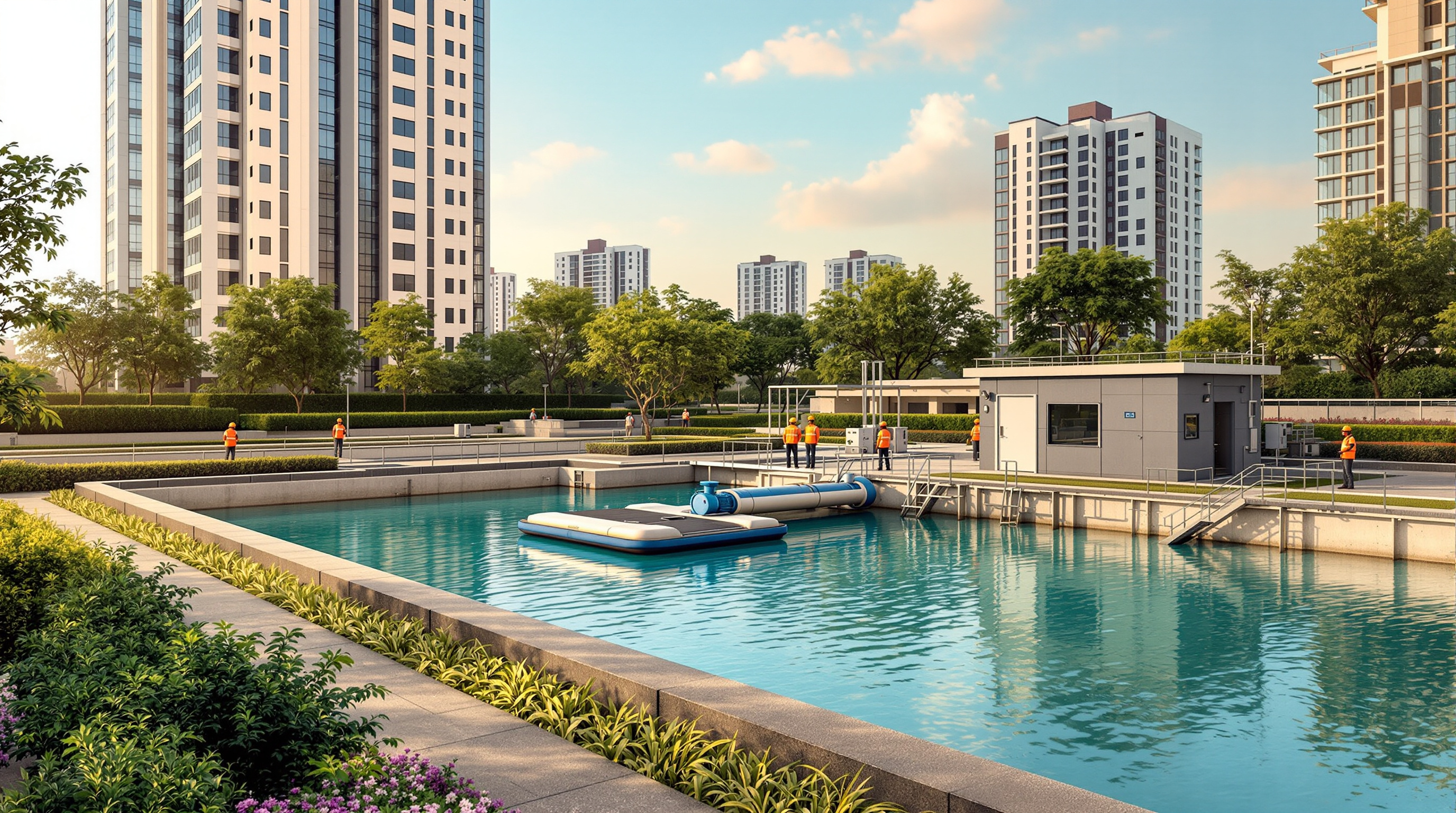
SBR STP Cost Guide (2026): Capex, Automation & Where SBR Economics Work
What a Sequencing Batch Reactor STP really costs in India — capital cost per KLD, the price of the controls and automation SBR depends on, running costs, and the capacity band where SBR economics genuinely make sense.
The Sequencing Batch Reactor, or SBR, is the technology most large Indian STP tenders quietly default to. It does the entire biological job — aeration, settling and decanting — inside one tank, on a timed cycle, instead of pushing water continuously through a chain of separate tanks. That single-tank elegance is exactly why SBR is loved by municipal engineers and increasingly specified for big campuses and townships. But it also reshapes the cost: less civil concrete, more brains. Where you save on tanks, you spend on controls, valves, decanters and automation — because an SBR without a reliable brain is just an expensive tank.
This guide sets out what an SBR STP realistically costs in India in 2026 — the capital range per KLD, what the automation actually adds, what it costs to run, and the honest answer to the question owners keep asking: at what size does SBR economics actually work? If you want the process explained first, start with our Sequencing Batch Reactor (SBR) guide; this is its money companion.
Costs below are ranges, not quotes. SBR pricing swings hugely with capacity, city, effluent target, automation depth, civil conditions and vendor. Treat these as planning brackets and get a written, capacity-specific quote before you budget.
The headline: what an SBR STP costs per KLD
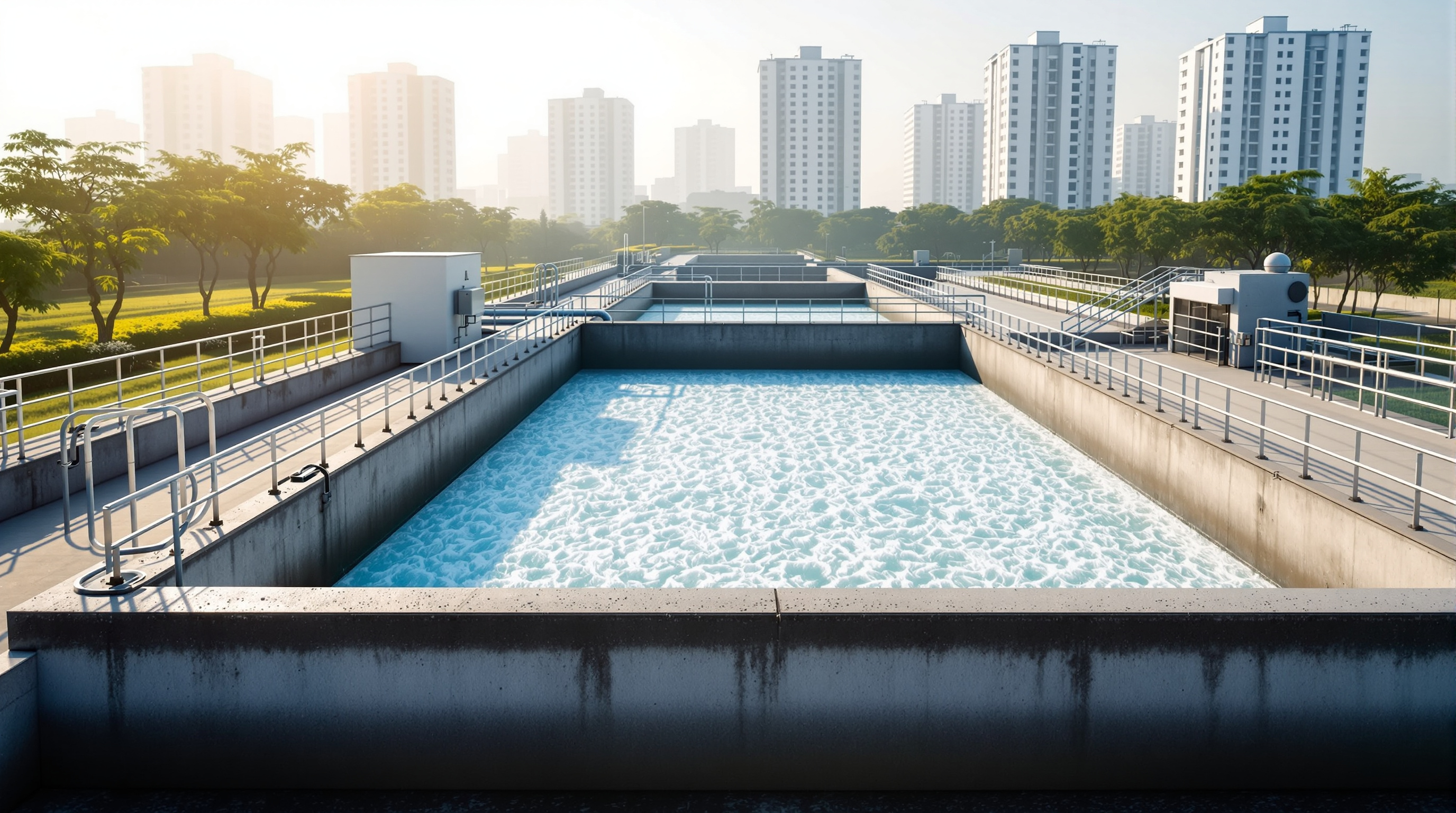
For package and mid-scale SBR plants (roughly 25 KLD to a few hundred KLD), the turnkey capital cost lands broadly in the range of ₹40,000–60,000 per KLD — a little above simple extended-aeration or MBBR systems, and well below MBR. The premium buys the decanters, motorised valves and the control system that make the batch cycle work.
But SBR is a technology that rewards scale, and the per-KLD number falls sharply as you go up. At municipal MLD scale, a 1 MLD (1,000 KLD) SBR plant typically runs about ₹1–1.5 crore, and a 10 MLD plant roughly ₹10–15 crore — i.e. closer to ₹10,000–20,000 per KLD. This is the single most important cost fact about SBR: the same technology is expensive per litre when small and genuinely cheap per litre when large.
| Capacity band | Indicative SBR capex | Rough per-KLD | Typical setting |
|---|---|---|---|
| 25–50 KLD | ₹15–30 lakh | ₹45,000–60,000 | Small apartment / boutique hotel |
| 50–100 KLD | ₹30–55 lakh | ₹40,000–55,000 | Mid apartment / commercial |
| 100–250 KLD | ₹50 lakh–1.2 cr | ₹35,000–50,000 | Large township / campus |
| 500 KLD (0.5 MLD) | ₹0.6–1 cr | ₹18,000–30,000 | Big township / cluster |
| 1 MLD | ₹1–1.5 cr | ₹12,000–18,000 | Municipal / industrial estate |
| 10 MLD | ₹10–15 cr | ₹10,000–15,000 | City-scale municipal |
Sources broadly agree SBR sits in the upper-mid band of technologies — see the capacity breakdowns from Trity Enviro (2026) and Susbio, and the general per-KLD context in 3D Aqua's 2025 guide. For where SBR sits against every other technology, our STP cost per KLD in India guide lays out the full spread.
Where the money goes — and why SBR is "controls-heavy"
A useful way to read any STP quote is to split it into three buckets. In a continuous-flow plant they sit in familiar proportions; in an SBR the balance tilts toward the controls.
- Civil works (~25–40%) — the basins, decant chamber and foundations. SBR often saves here versus multi-tank designs because clarifier and separate reaction tanks collapse into one basin. This is where SBR earns its footprint advantage.
- Mechanical & electrical equipment (~40–55%) — blowers, diffusers, decanters, pumps, and the motorised valves that sequence the cycle. Equipment is typically the largest single slice of any STP cost.
- Controls, automation & instrumentation (the SBR premium) — the PLC, level and DO sensors, timers, and optional SCADA. In a simple plant this is a rounding error; in an SBR it is load-bearing, because the whole process is a timed fill-react-settle-decant-idle sequence that must be automated to run at all.
That last bucket is the defining SBR cost line. A basic timer-and-PLC control set is included in the base price, but a fully automated plant — SCADA, remote monitoring, alarms, DO-based aeration and auto-dosing — carries roughly a 15–25% premium on the capital cost, per vendor estimates compiled by Susbio. For SBR this is rarely optional gold-plating: precise cycle timing and level control are what deliver its trademark low BOD/TSS (often below 10 mg/l). Skimp on the brain and you lose the very performance you paid SBR to get.
The upside: good automation cuts operator dependency and improves compliance, so part of that capex premium comes back as lower running cost and fewer regulatory headaches over the plant's life.
What it costs to run an SBR STP
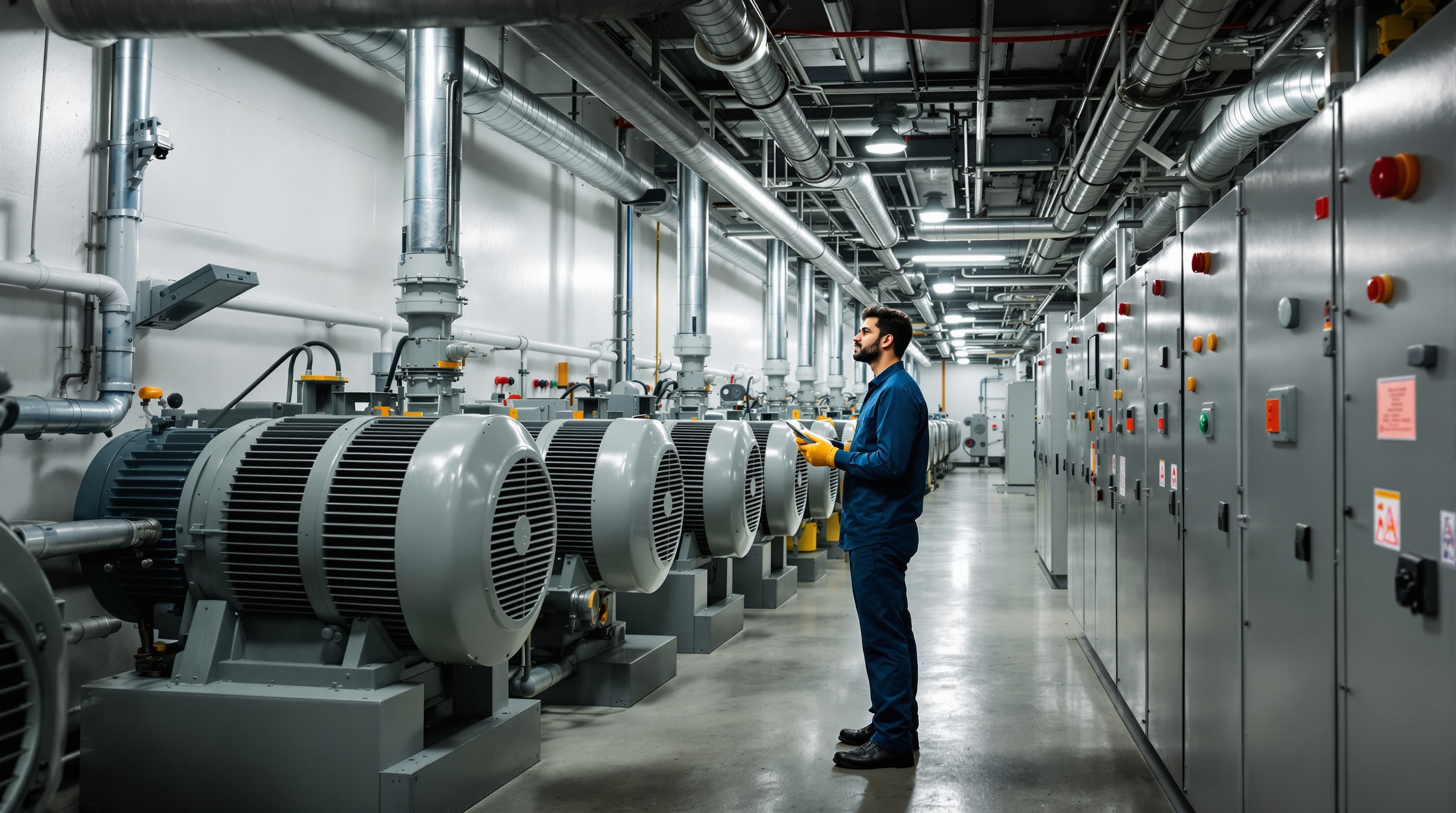
Capex is only the down payment. Over a 15-year life, operating cost usually exceeds the original capital outlay, so budget both. Running cost is dominated by power, then labour, then chemicals and maintenance.
- Electricity — the single biggest line, typically 0.8–1.5 kWh per KLD treated for mid-to-large plants (higher, ~1.5–2.5, for very small ones). SBR's aeration is cyclic rather than constant, and at scale it is competitive on energy per litre — one comparison cites ~152 kWh/day/MLD for SBR versus ~222 for MBBR. Our reducing STP electricity consumption guide covers how DO-controlled blowers shrink this bill.
- Operator labour — from a part-time visit for a small plant to a dedicated operator for larger ones.
- Chemicals — chlorine/hypo for disinfection, plus occasional pH and nutrient correction.
- AMC (Annual Maintenance Contract) — indicatively ₹12,000–30,000/year for a ~10 KLD plant, scaling into lakhs for MLD-scale systems, and often quoted as a small percentage of capex per year.
As a rule of thumb, all-in OPEX runs roughly ₹14–28 per KL treated at 50–100 KLD scale, and higher (₹30–50+/KL) for small package plants — the same economies-of-scale curve as capex. Vendor OPEX and AMC bands are set out by Trity Enviro. For a structured build-up, our STP annual operating cost and STP maintenance cost guides break each line down.
Where SBR economics actually work
SBR is not automatically the cheapest choice — it is the right choice in specific situations. Based on the cost structure above:
- Large and municipal scale (500 KLD and up). This is SBR's home turf. The per-KLD cost tumbles, the single-tank footprint saving is real, and the automation cost — fixed-ish regardless of size — is spread thin. Most city STP tenders default to SBR for exactly these reasons.
- Tight sites where footprint is money. Doing everything in one basin saves land, which in a dense Indian city can outweigh the controls premium. Compare with an underground STP if space is the binding constraint.
- Stringent, variable-flow effluent targets. SBR's precise cycle control handles fluctuating inflow and hits low BOD/TSS reliably — valuable where reuse standards are strict.
Where SBR is harder to justify: very small residential plants (say under 25–30 KLD), where the fixed cost of decanters and automation is spread over too few litres and a simpler MBBR or extended-aeration plant is usually cheaper both to buy and to babysit. For an apartment STP at typical residential sizes, SBR often loses on total cost of ownership.
The honest decision rule: SBR wins on scale and site constraints, not on small-plant sticker price. Run the numbers before committing.
Get a number for your project
The ranges here are for budgeting, not procurement. To convert them into a figure for your specific capacity, effluent target and site:
- STP Cost Estimator — a capacity-based capital estimate across technologies.
- STP Capacity Calculator — turn headcount into the KLD you actually need first (get this right before pricing).
- Annual Operating Cost Calculator and AMC Cost Calculator — build the running-cost side.
- STP Lifecycle Cost Comparison Tool — the one that matters most for an SBR-vs-MBBR-vs-MBR decision, because it weighs capex, automation and 15 years of OPEX together.
The bottom line
An SBR STP in India costs roughly ₹40,000–60,000 per KLD at package scale, falling to ₹10,000–20,000 per KLD at MLD municipal scale — with a distinctive 15–25% automation premium that is not optional but foundational, because the batch cycle is the plant. It runs efficiently, hits strict effluent norms, and shines when it is large or space-constrained. Below about 25–30 KLD, a simpler technology usually wins on total cost. Decide with the lifecycle comparison, get a written capacity-specific quote, and read the SBR process guide alongside the full STP guide library before you sign.
Export this guide
Related Guides — Deep-dive reading
MBR STP Cost Guide: What a Membrane Bioreactor Really Costs in India (2026)
Why MBR carries the highest capital and running cost of any sewage treatment technology in India — membranes, power and replacements — and exactly when that premium pays for itself through water reuse and a smaller footprint.
Sewage Treatment PlantsCommercial STP Cost Guide: Pricing for Hotels, Malls & Offices in India (2026)
What a commercial sewage treatment plant really costs to build and run — capacity bands, why higher reuse and tertiary polishing push the price up, and how cooling-tower and flushing reuse pays it back. Honest ranges, not false precision.
Sewage Treatment PlantsSTP Maintenance & AMC Cost in India (2025–26): What You Actually Pay Per Year
What a sewage treatment plant costs to keep running after it is built — what an AMC covers, typical Rs per KLD per year, the spares that quietly drain budgets, and how comprehensive contracts differ from basic ones.
Sewage Treatment PlantsRelated Tools — Try Free
STP Lifecycle Cost Comparison Tool
Compare MBBR, SBR and MBR sewage treatment plants on total lifecycle cost — capex plus lifetime energy — at your capacity, lifespan and power tariff, and see the lowest-cost technology.
STP CalculatorSTP Cost Estimator
Estimate the capital cost of a sewage treatment plant by capacity in KLD and technology, with an underground option and instant cost per KLD.
STP CalculatorApartment STP Planner
Plan an apartment complex sewage treatment plant from flats and occupancy — get population load, sewage flow, recommended STP capacity in KLD, treatment technology and approximate space.
Planner