
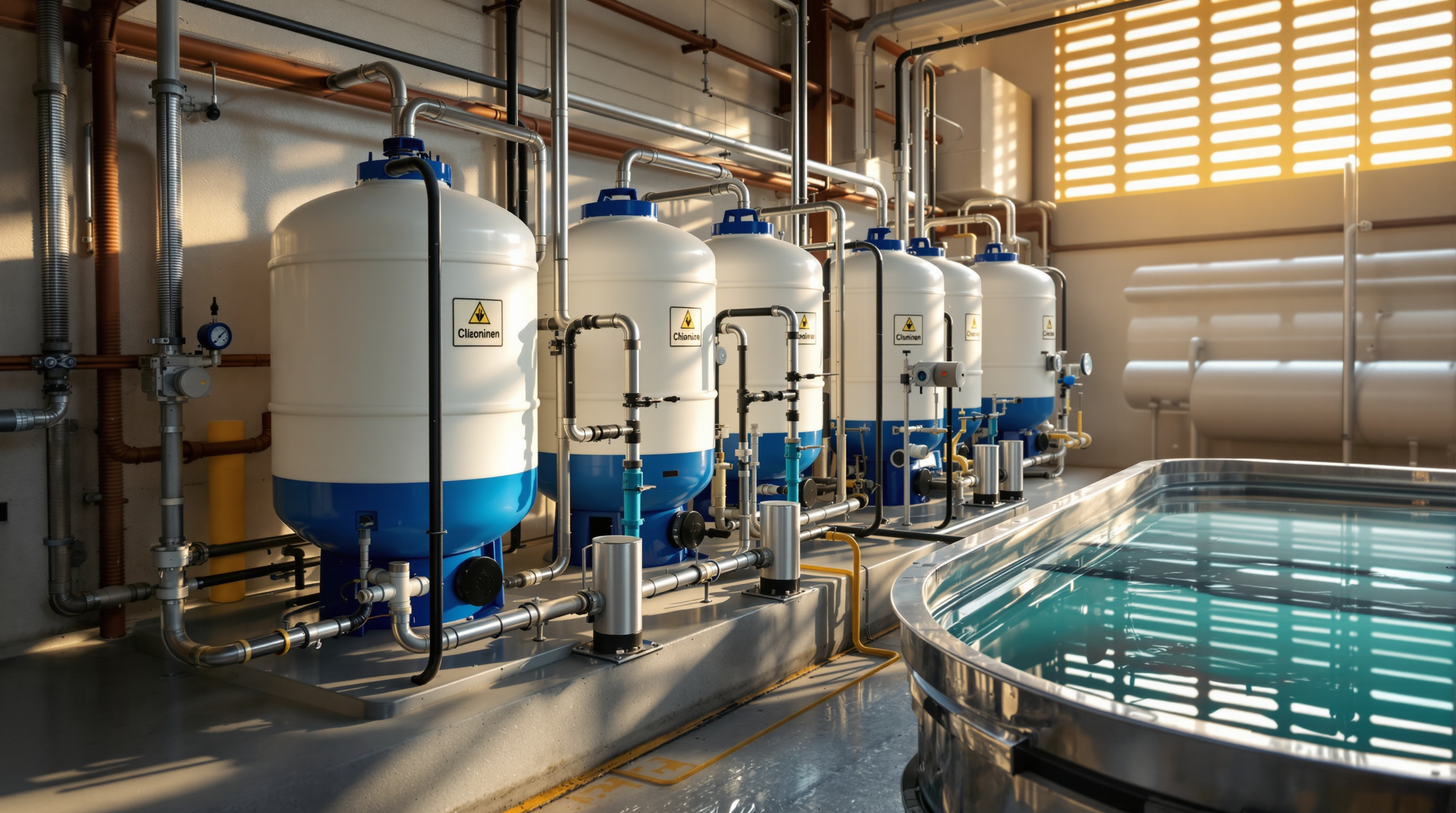
STP Chemical Cost Analysis: Chlorine, Coagulants, Antiscalants & pH Correction (India 2026)
What the chemicals in a sewage treatment plant actually cost each month in India — chlorine, coagulants, polyelectrolyte, antiscalant and pH correction — with realistic dose rates, rupee ranges by capacity, and the practical levers that keep the bill down.
Ask an apartment association what their sewage treatment plant costs to run and the answer almost always starts with electricity. Power is the loud, visible expense. But there is a quieter line item that surprises people when they finally read the AMC breakdown: chemicals. They are cheap per litre and easy to ignore — until a dosing pump is left running wide open, or an operator switches to a pricier flocculant, and the monthly bill quietly doubles.
This guide is a plain-language, numerate look at STP chemical cost in India: what each chemical does, how much of it a plant actually consumes, what that works out to per month by capacity, and — most usefully — the handful of levers that decide whether your chemical spend is lean or wasteful.
Chemicals are rarely the biggest slice of an STP's running cost, but they are the slice you have the most day-to-day control over. Dose right and the bill is a rounding error; dose blind and it becomes real money.
The four chemicals that actually cost you money
A conventional biological STP — activated sludge, MBBR, SBR or extended aeration — runs on microbes, not chemistry. The bugs do the heavy lifting for free. Chemicals play four supporting roles, and it is worth knowing which is which because their costs behave very differently.
- Chlorine (disinfection). The final step before reuse. Almost every Indian STP disinfects treated water with sodium hypochlorite (liquid chlorine, 10–15% available chlorine) dosed into a contact tank. This is the one chemical practically every plant buys, every month.
- Coagulants (solids removal). Alum or poly-aluminium chloride (PAC) are dosed to clump fine suspended solids so they settle or filter out. Domestic sewage is not very "dirty" chemically, so many biological STPs use little or no coagulant in normal operation — it becomes important in tertiary polishing or when inlet quality is poor.
- Polyelectrolyte (sludge dewatering). A flocculant dosed at the filter press or centrifuge to squeeze water out of sludge before disposal. Small quantity, but the powder itself is expensive per kilo, so it matters.
- pH correction. Lime, caustic soda or (occasionally) acid to keep the water in the near-neutral band the microbes and any downstream membranes need. Usually intermittent, not continuous.
There is a fifth chemical — antiscalant — but only on plants with an RO or membrane (MBR) polishing stage. On a plain biological STP with sand-and-carbon filters, you will not buy it at all.
Typical dose rates and unit prices (2026)
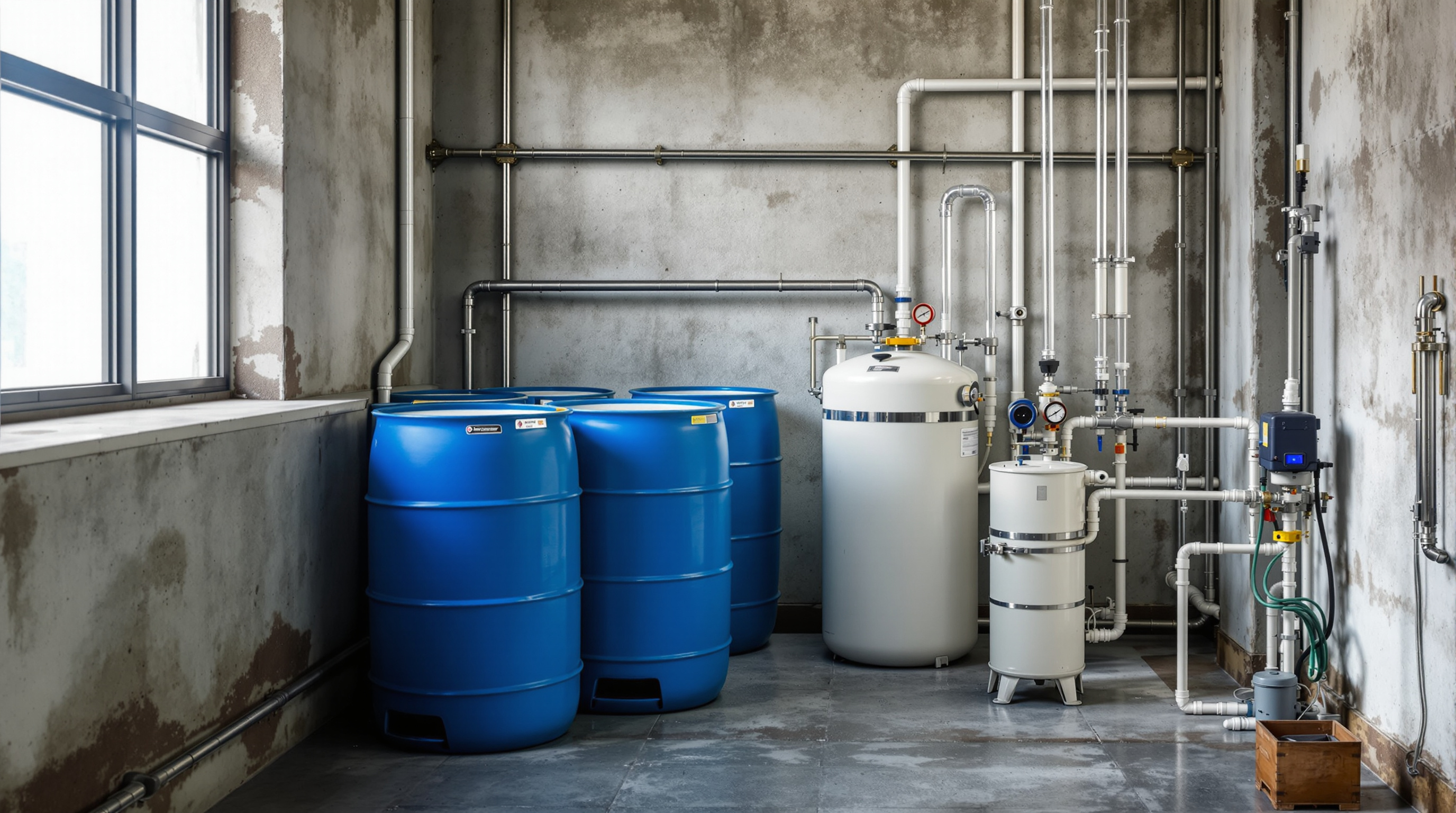
Here is where the false precision usually creeps in, so treat these as working ranges, not quotes. Indian market prices in mid-2026 sit roughly at: sodium hypochlorite ₹10–25 per kg in bulk (IndiaMART listings), PAC/alum ₹15–40 per kg, polyelectrolyte ₹90–300 per kg depending on anionic vs cationic grade (IndiaMART), caustic soda ₹35–60 per kg, hydrated lime ₹15–25 per kg, and RO antiscalant ₹70–150 per kg (IndiaMART).
| Chemical | Typical dose | Unit price (2026) | What it's for |
|---|---|---|---|
| Sodium hypochlorite | 2–5 mg/L as Cl₂ | ₹10–25 / kg | Final disinfection |
| PAC / alum (coagulant) | 20–80 mg/L (when used) | ₹15–40 / kg | Suspended-solids removal |
| Polyelectrolyte | 1–5 mg/L of sludge | ₹90–300 / kg | Sludge dewatering |
| Lime / caustic soda | As needed, intermittent | ₹15–60 / kg | pH correction |
| RO antiscalant | 3–6 mg/L (RO/MBR only) | ₹70–150 / kg | Membrane scale control |
A worked chlorine example, because it is the one everyone pays. A 100 KLD plant treats 100,000 litres a day. At a 3 mg/L chlorine dose that is 300 grams of available chlorine daily. Hypochlorite is only ~12% chlorine, so you actually feed about 2.5 kg of hypochlorite solution a day — call it ₹40–60 a day, or roughly ₹1,200–1,800 a month just for disinfection. Scale that down linearly and a 20 KLD society is spending a few hundred rupees a month on chlorine. That is the honest order of magnitude — small, but real, and entirely dose-driven.
What chemicals cost per month, by capacity
Vendor and operator breakdowns converge on chemicals being a modest slice of total OPEX — typically 5–12% — well behind power and manpower. Pulling together published Indian operating-cost breakdowns, the consumables and chemicals line looks roughly like this (SusBio operating-cost analysis, STP cost per KLD guide):
| Plant capacity | Chemicals & consumables / month | As cost per KL treated |
|---|---|---|
| 10 KLD | ₹500 – ₹1,500 | ~₹1.5 – ₹5 / KL |
| 25 KLD | ₹1,000 – ₹2,500 | ~₹1.3 – ₹3.5 / KL |
| 50 KLD | ₹2,000 – ₹4,000 | ~₹1.3 – ₹2.5 / KL |
| 100 KLD | ₹3,500 – ₹7,000 | ~₹1.2 – ₹2.3 / KL |
Two honest caveats. First, these figures assume a conventional biological plant disinfecting to reuse standard. Add an RO or MBR stage and chemical cost climbs — antiscalant plus periodic membrane cleaning (CIP) chemicals can add 30–60% to the chemical line and push cost-per-KL toward ₹3–5. Second, costs vary widely by capacity, city, technology, inlet quality, site conditions and vendor. A plant taking in high-strength kitchen-heavy sewage, or one chasing a very tight discharge norm, will dose more of everything. Take these as a planning range and get a quote for your project.
For the full picture — where chemicals sit alongside power, manpower and AMC — see the STP annual operating cost guide and the broader maintenance cost breakdown.
The levers that control your chemical bill
The good news about STP chemical cost is that it is one of the few OPEX lines an operator can genuinely move without capital spend. The waste is almost always in how chemicals are dosed, not in their price.
- Meter, don't guess. The single biggest source of waste is manual, "open the valve till it looks right" dosing. A calibrated metering pump matched to actual flow can cut chlorine and coagulant consumption 20–40%. Set the dose from the flow and a residual-chlorine test, not from habit.
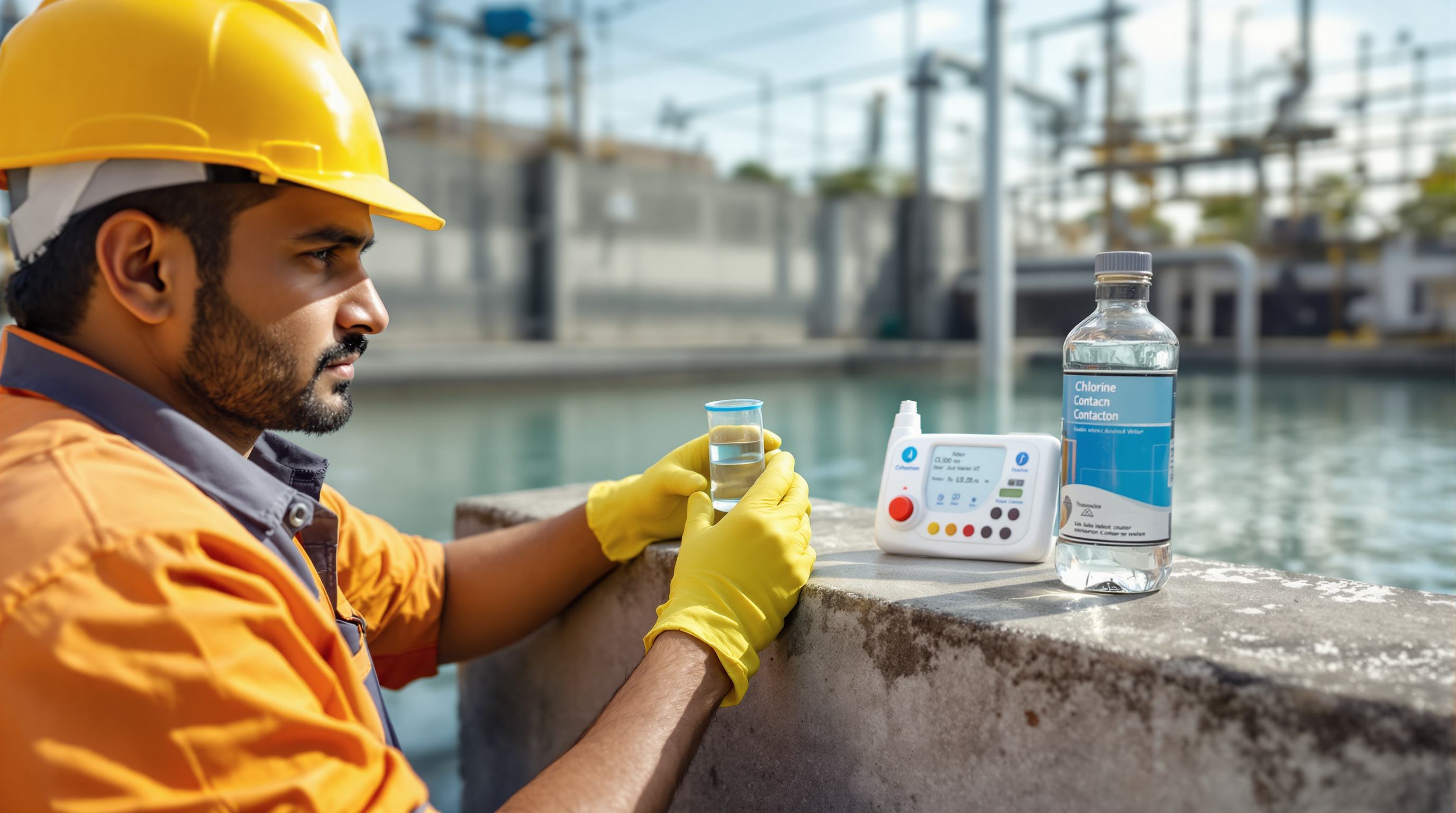
- Test residual chlorine. Aim for a small free-chlorine residual (roughly 0.2–0.5 mg/L) at the contact-tank outlet. If you are measuring 2 mg/L residual, you are literally pouring money down the reuse line. A ₹500 test kit pays for itself in weeks.
- Right-size coagulant — or skip it. A healthy biological plant with a working clarifier often needs little coagulant. Run a quick jar test before assuming you need PAC at all; over-coagulating also creates more chemical sludge to dewater and cart away.
- Keep the biology healthy. This is the counter-intuitive one. Well-fed, well-aerated microbes clean the water so thoroughly that downstream chemicals have little left to do. Starve or shock the biology and you end up chemically patching a biological problem — the most expensive way to run a plant.
- Buy in bulk, store safely. Hypochlorite loses strength over time and in heat, so balance bulk-buy discounts against decay. Buy a month or two at a time, store cool and dark, and you avoid both price gouging and dosing a weakened, ineffective solution.
- Match the flocculant to the sludge. Anionic and cationic polyelectrolytes differ several-fold in price. The wrong grade means you dose more for the same result. Let your dewatering equipment supplier confirm the grade rather than defaulting to whatever the previous operator used.
Where chemical cost fits in the bigger picture
Keep the perspective honest: for most Indian STPs, chemicals are the third or fourth largest running cost, behind electricity and manpower. If you are hunting for real OPEX savings, electricity is usually the bigger prize — but chemicals are the easier, faster win because a good operator can trim them this month, with no investment.
They also compound. Over-dosing chlorine or coagulant does not just cost you the chemical; it can foul membranes, corrode fittings, and — through extra chemical sludge — raise your disposal cost too. Lean, measured dosing is cheaper on every one of those fronts at once.
Get a number for your own plant
The ranges above are for orientation. To turn them into a figure for your specific capacity, technology and reuse target, put your numbers into the Annual Operating Cost Calculator, which folds chemicals in alongside power, manpower and consumables. If you are budgeting an AMC, the AMC Cost Calculator shows how chemicals typically sit inside a comprehensive maintenance contract, and the STP Cost Estimator ties running cost back to the plant size you actually need.
For the wider cost picture — capital cost per KLD, technology comparisons and lifecycle economics — start from the Sewage Treatment Plants guide library and the STP cost per KLD benchmark. Chemicals are a small line on that ledger — but the one you can shrink fastest, starting with the next dosing-pump setting you touch.
Export this guide
Related Guides — Deep-dive reading
Chemical Dosing in STPs: Chlorine, Coagulants, Antiscalants and pH Correction
How to dose the four chemicals every building STP relies on — with the right pumps, the right dose, safe storage, and no guesswork — so your treated water stays compliant without wasting money or damaging the plant.
Sewage Treatment PlantsIndustrial ETP Cost Guide: What an Effluent Treatment Plant Really Costs in India (2026)
Why an industrial ETP costs far more than a domestic STP of the same size — the physico-chemical and ZLD stages that drive the bill, honest capital and running-cost ranges by capacity and technology, and how to read a quote for your own effluent.
Sewage Treatment PlantsMBR STP Cost Guide: What a Membrane Bioreactor Really Costs in India (2026)
Why MBR carries the highest capital and running cost of any sewage treatment technology in India — membranes, power and replacements — and exactly when that premium pays for itself through water reuse and a smaller footprint.
Sewage Treatment PlantsRelated Tools — Try Free
STP Cost Estimator
Estimate the capital cost of a sewage treatment plant by capacity in KLD and technology, with an underground option and instant cost per KLD.
STP CalculatorApartment STP Planner
Plan an apartment complex sewage treatment plant from flats and occupancy — get population load, sewage flow, recommended STP capacity in KLD, treatment technology and approximate space.
PlannerSTP Annual Operating Cost Calculator
Total up a sewage treatment plant's yearly running cost from monthly electricity, chemical, manpower and annual AMC spend, with the monthly total and biggest cost driver.
STP Calculator