
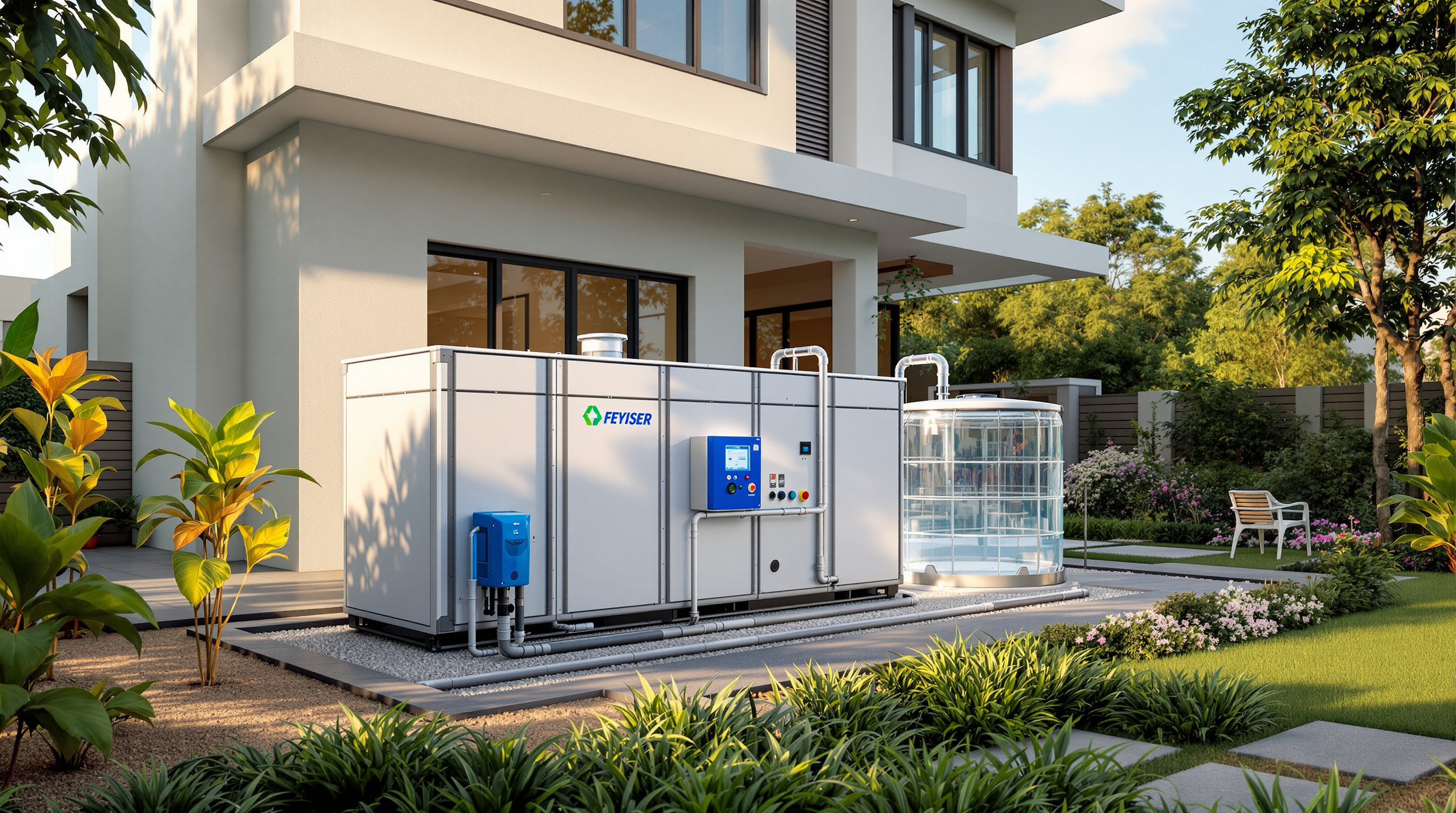
Residential STP Cost Guide for Villas & Small Homes (2026 India Prices)
What a small 1–10 KLD packaged sewage treatment plant really costs to buy, install and run in India — honest capex ranges by technology, monthly running costs, and AMC rates, written for owners, developers and RWAs who want numbers they can plan around.
If you are building a villa, running a small apartment block, or sitting on an RWA that has just been told its old system will not pass inspection, the first question is always the same: what will a sewage treatment plant actually cost me? It is a fair question and a frustrating one, because the honest answer is a range, not a number. A small residential STP is a made-to-order piece of civil-and-mechanical engineering, and the price swings with capacity, technology, site conditions, city and vendor.
This guide gives you those ranges — realistic 2026 figures for the small end of the market, the 1–10 KLD packaged plants that serve villas, small buildings and clusters — and shows you how the money splits between the one-time cost of buying and installing the plant and the recurring cost of keeping it alive.
A residential STP is not an appliance you buy off a shelf at a fixed MRP. It is closer to a modular kitchen: the same 5 KLD "size" can cost twice as much depending on the technology, the tank material, how much civil work your site needs, and how automated you want it. Always get a written quote for your plot before you budget.
The two costs that matter
Every STP decision comes down to two very different numbers, and confusing them is the single most common budgeting mistake:
- Capex (capital cost) — the one-time cost to design, supply, install and commission the plant. This is the big headline figure.
- Opex (operating cost) — the recurring monthly cost of running it: electricity, chemicals, sludge removal, and the annual maintenance contract (AMC).
A plant that looks cheap to buy can be expensive to run, and vice versa. Judging an STP on capex alone is like buying a car on sticker price and ignoring the fuel bill. For the small plants in this guide, opex is modest in absolute rupees but it never stops — so both numbers deserve a place in your plan.
What a small residential STP costs to install (capex)
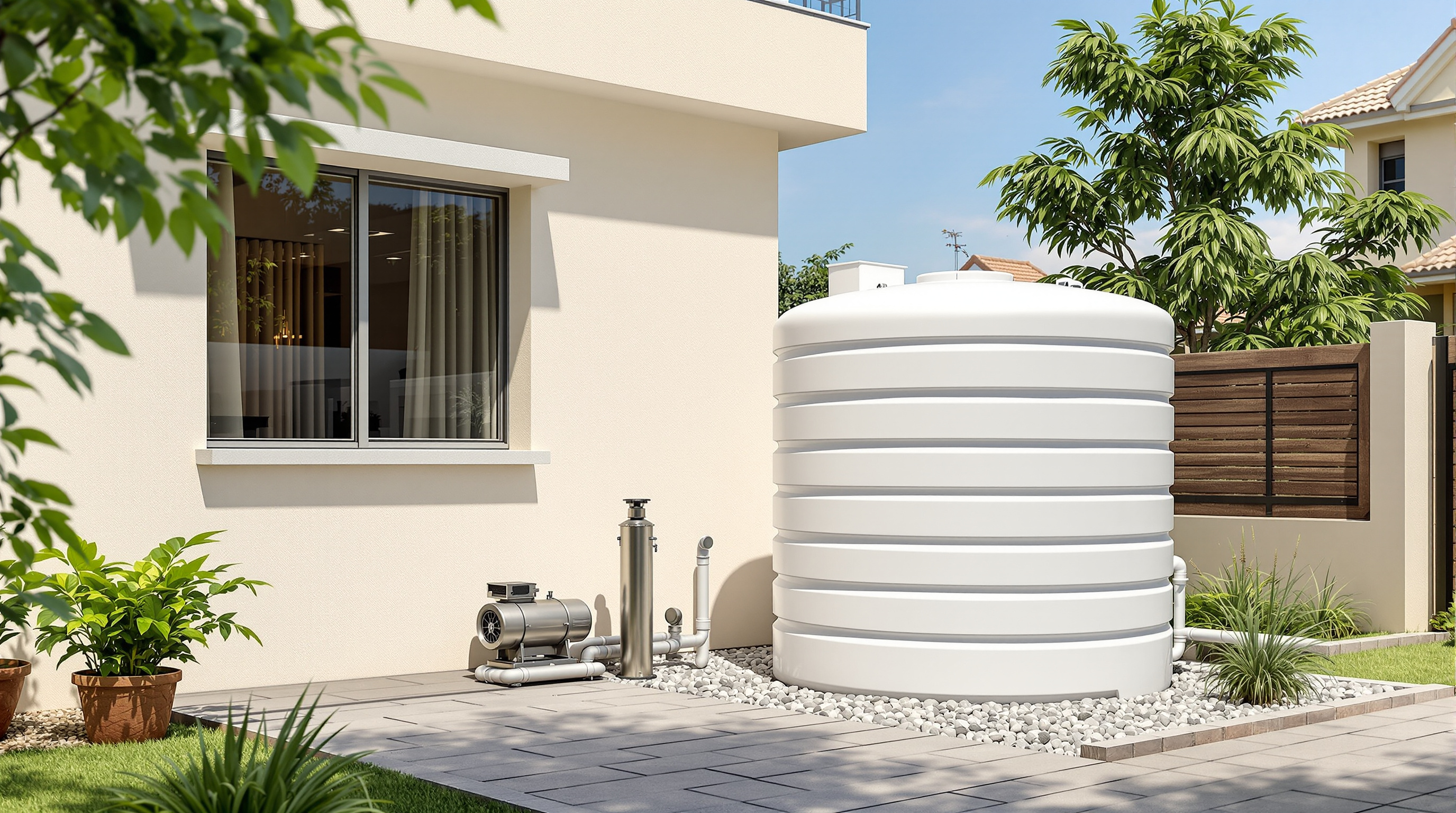
For the small capacities that villas and small buildings need, the price per unit of capacity is high, because there is no economy of scale — the control panel, blower, pumps and instrumentation cost roughly the same whether they serve 5 KLD or 15. As a rule, cost per KLD falls sharply as the plant gets bigger (SUSBIO, 2026).
Here are realistic 2026 all-in ranges for packaged residential plants (equipment plus basic civil and installation). Treat them as planning brackets, not quotes.
| Capacity | Typical served size | Cost per KLD | Approx. total capex |
|---|---|---|---|
| 1–3 KLD | Large individual villa | ₹90,000–1,20,000 | ₹1.5–4 lakh |
| 5 KLD | Small building / few homes | ₹80,000–1,00,000 | ₹3–6 lakh |
| 10 KLD | Medium residential cluster | ₹60,000–1,00,000 | ₹6–12 lakh |
| 20 KLD | Small apartment block | ₹50,000–75,000 | ₹10–15 lakh |
Sources broadly agree on this shape: a 5 KLD plant commonly lands around ₹3–6 lakh and a 10 KLD around ₹6–10 lakh, with premium technology or difficult sites pushing the top end higher (3D Aqua; Cleantech Water). Notice how the per-KLD rate roughly halves between a 5 KLD unit and a 20 KLD one — the reason small clusters often pool into one shared plant rather than each villa building its own. For a fuller treatment of this scaling, see our STP cost per KLD in India guide.
Technology changes the price a lot
The biggest single lever on capex is the treatment technology. For small residential plants three families dominate:
- MBBR (Moving Bed Biofilm Reactor) — the default for villas and small buildings. Compact, forgiving, low-maintenance, and the most affordable. Equipment cost roughly ₹30,000–55,000 per KLD (SUSBIO). See our MBBR STP cost guide.
- SBR (Sequencing Batch Reactor) — a step up in effluent quality and automation, at a modestly higher ₹35,000–60,000 per KLD (SBR STP cost).
- MBR (Membrane Bioreactor) — premium. It produces the cleanest, most reuse-ready water in the smallest footprint, but membranes are expensive to buy and replace, so it runs ₹65,000–1,10,000 per KLD (MBR STP cost). Usually overkill for a plain villa unless you are tight on space or want very high reuse quality.
The other capex lever is tank material. A prefabricated FRP (fibre-reinforced plastic) or HDPE packaged plant costs more up front than a site-built RCC tank, but installs in days, needs almost no civil work, and can even be relocated — which is why FRP dominates the villa and small-building segment. Whether you go above-ground or underground also matters: burying the plant to reclaim the space above it adds excavation, waterproofing and structural cost — see underground STP cost.
Because these variables interact, the fastest way to a realistic figure for your project is the STP Cost Estimator, which turns capacity and technology into a capex band in under a minute. First confirm the capacity you actually need with the STP Capacity Calculator — oversizing is the most expensive mistake in this whole exercise, and our how to size an STP guide explains why.
What it costs to run (opex)
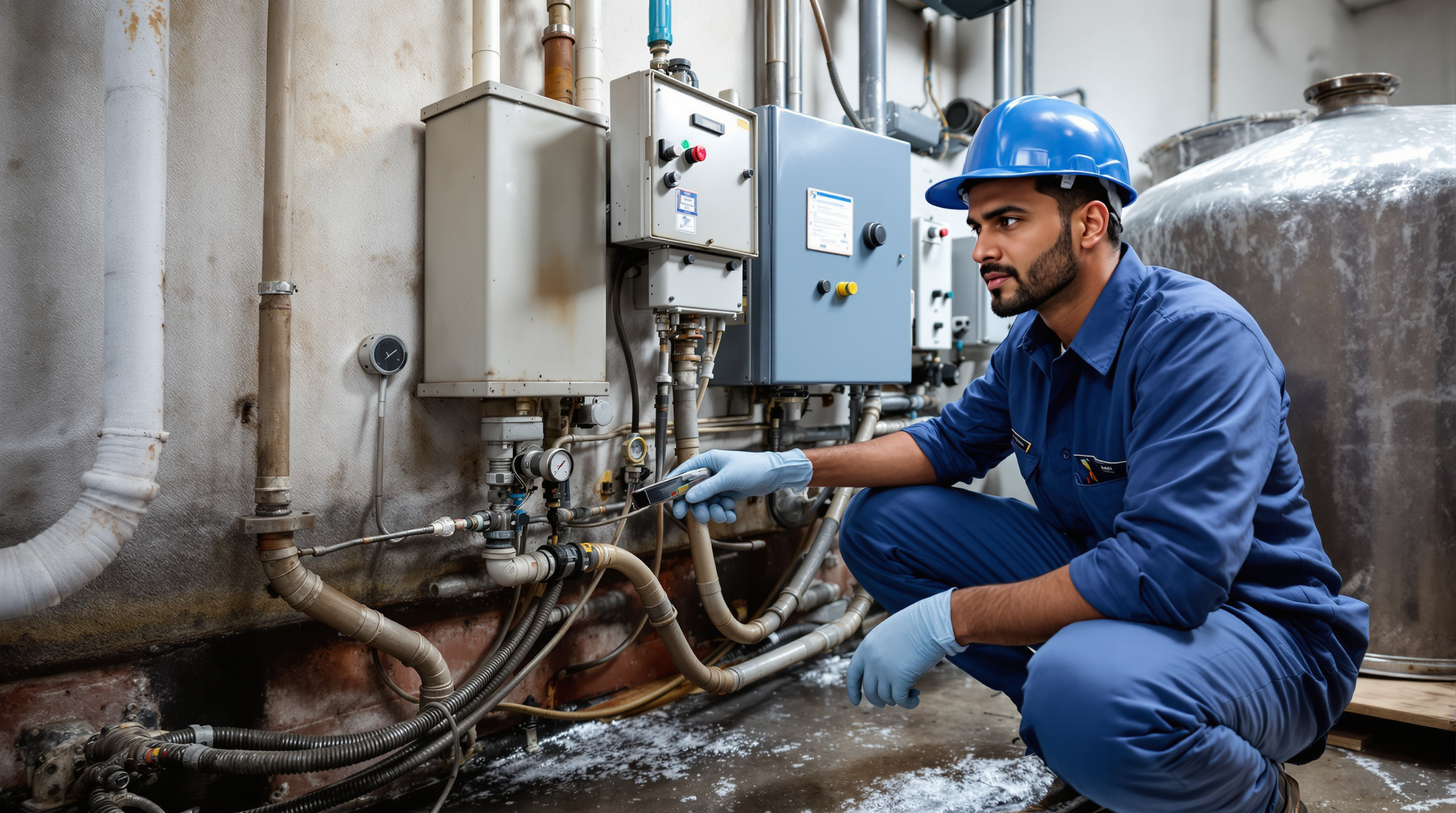
Here is the reassuring part for small plants: the monthly running cost is measured in thousands, not lakhs. For a 10 KLD residential STP, total monthly opex — electricity, chemicals, sludge and maintenance combined — typically lands around ₹8,000–15,000, or roughly ₹800–1,500 per KLD per month (SUSBIO). A 5 KLD villa plant sits proportionally lower. Where that money goes:
- Electricity — the biggest slice, usually ₹3,000–6,000/month for a 10 KLD plant. STPs draw roughly 0.5–1.5 kWh per KLD treated, and aeration (the blowers pushing air to the microbes) eats 60–70% of that power. Efficient blowers and timers are the main way to cut this bill — our reducing STP electricity consumption guide covers the tactics, and the Electricity Consumption Calculator estimates your draw.
- Chemicals — chlorine for disinfection plus occasional dosing: about ₹1,500–4,000/month (STP chemical cost).
- Sludge removal — periodic de-sludging and disposal, ₹2,000–8,000/month depending on load and frequency.
- Operator / labour — small plants rarely need a full-time operator; a part-time visit is often bundled into the AMC.
Add it up across a year and you can model it directly with the Annual Operating Cost Calculator; see also our STP annual operating cost and STP electricity cost guides for the underlying breakdowns.
The AMC — the cost people forget
Small residential plants almost always run on an Annual Maintenance Contract, where a vendor handles servicing, minor spares and compliance for a fixed yearly fee. For plants in the 10–50 KLD band, AMCs commonly run ₹60,000–1,20,000 per year (SUSBIO); a small villa plant sits at the lower end. It is the least glamorous line in the budget and the one that most protects your capex — a neglected STP fails inspection and corrodes fast. Price it properly with the AMC Cost Calculator and read STP maintenance cost before you sign.
Installation: timeline and what drives the extras
A packaged FRP/MBBR residential plant is quick to deploy — 3 to 6 weeks from order to commissioning is typical (Cleantech Water). The variable that blows up small-plant budgets is rarely the equipment; it is the site:
- Civil work — excavation depth, a high water table needing waterproofing, or an RCC tank instead of FRP.
- Location — an underground or basement install costs more than an open-yard one.
- Effluent standard — if you want reuse-grade water for a garden or borewell recharge, add tertiary filtration and disinfection.
- Automation — PLC controls and IoT monitoring add convenience and cost.
Is it worth it? Reading the whole-life number
Do not judge a residential STP on capex alone. The cheapest plant to buy is often the most expensive to own once you count power-hungry blowers, frequent membrane changes or a stingy AMC that skips servicing. The honest way to compare two quotes is lifecycle cost — capex plus roughly 15 years of opex — which the Lifecycle Cost Comparison Tool and our STP lifecycle cost comparison guide are built for.
The offsetting benefit is real: a residential STP recovers most of the water your homes use, which you then reuse for flushing and gardening instead of buying tankers. Over a few years that saved water, plus avoided municipal charges, materially softens the cost — model it with the Water Reuse Savings Calculator and the STP ROI Calculator, and see ROI of water recycling.
The bottom line
For a villa or small building in India in 2026, budget roughly ₹3–6 lakh for a 5 KLD plant and ₹6–12 lakh for a 10 KLD one, with MBBR the sensible default technology and FRP the sensible default tank. Expect to run it for a few thousand rupees a month plus a ₹60,000–1.2 lakh annual AMC. Every one of those figures is a range for a reason — get a written, site-specific quote, and sanity-check it against the STP Cost Estimator so you know whether the number in front of you is fair.
From here, three natural next steps: understand the machine itself in what is a sewage treatment plant; if your project is larger, read apartment STP cost and apartment STP planning; and browse the full Sewage Treatment Plants guide library for the technology and running-cost deep dives.
Export this guide
Related Guides — Deep-dive reading
STP Cost per KLD in India (2026): Realistic Price Ranges
What a sewage treatment plant actually costs per KLD in India — capital cost by capacity band and technology (MBBR, SBR, MBR, extended aeration), why the per-litre price falls as plants get bigger, and every factor that swings a quote up or down.
Sewage Treatment PlantsSTP Electricity Cost Analysis: What Powering a Sewage Treatment Plant Really Costs in India
Electricity is the single largest running cost of an STP — and aeration eats most of it. Here is what your plant's specific energy use (kWh/m³) really is, what the monthly bill looks like by capacity, and how to keep it in check, with honest India ranges for 2025–26.
Sewage Treatment PlantsMBR STP Cost Guide: What a Membrane Bioreactor Really Costs in India (2026)
Why MBR carries the highest capital and running cost of any sewage treatment technology in India — membranes, power and replacements — and exactly when that premium pays for itself through water reuse and a smaller footprint.
Sewage Treatment PlantsRelated Tools — Try Free
Rainwater Tank Sizer
How big should your rainwater tank be? Computes annual harvest, recommended tank capacity in litres, water-bill savings, and payback — for 10 Indian cities.
RWH CalculatorSTP Lifecycle Cost Comparison Tool
Compare MBBR, SBR and MBR sewage treatment plants on total lifecycle cost — capex plus lifetime energy — at your capacity, lifespan and power tariff, and see the lowest-cost technology.
STP CalculatorWater Reuse Savings Calculator
Estimate the money you save by reusing STP-treated water instead of buying fresh supply, with daily, monthly and annual savings.
STP Calculator