

STPs and Net-Zero Buildings: How On-Site Water Reuse Powers (and Tests) Net-Zero Goals
Why a sewage treatment plant is central to a net-zero water building, why its power draw quietly works against a net-zero energy target, and the practical strategies that turn an STP from an energy liability into an energy-neutral asset.
"Net-zero" has quietly become the headline ambition of every serious development in India — the IT campus chasing an IGBC Net Zero rating, the housing society that wants to stop buying tanker water, the hospital that has put a carbon target in its board report. But net-zero is not one goal; it is at least two, and they do not always pull in the same direction. A building can aim to be net-zero water (it draws no more fresh water than it returns) and net-zero energy (it generates as much energy as it consumes over a year). The sewage treatment plant sits precisely at the fault line between these two ambitions — indispensable to one, quietly hostile to the other.
This guide is for the people who have to reconcile that tension: developers writing the sustainability brief, owners signing the power bill, RWAs defending the maintenance charge, and consultants who have to make the numbers actually close.
An STP is the single piece of equipment that makes net-zero water possible and net-zero energy harder. Resolving that contradiction — not ignoring it — is what separates a green brochure from a green building.
Why net-zero water needs an STP

You cannot be net-zero on water without treating and reusing your own wastewater. There is no other route. A building consumes fresh water for flushing, gardening, cooling and cleaning, and roughly 80–85% of that leaves as sewage. Capture and treat that stream, and you can recover the bulk of it for non-potable reuse — displacing an equal quantity of fresh water you would otherwise pump, buy or draw from a stressed aquifer.
This is the mechanism behind a water-positive building and the reason on-site treatment is the anchor of an urban water circular economy. In the reuse hierarchy, treated STP water typically goes to:
- Toilet flushing — the biggest and most reliable non-potable demand (see treated water for toilet flushing).
- Landscape irrigation and water features.
- Cooling-tower make-up in air-conditioned commercial buildings — often the largest single reuse in an IT park.
- Groundwater recharge for the surplus.
Green-rating systems reward exactly this. Under IGBC and GRIHA, on-site treatment plus reuse earns water-efficiency and wastewater-management credits, and combined with rainwater harvesting it is how projects push toward net-zero water. Our green building water credits guide maps which reuse strategies score, and the Green Building Water Score Calculator gives you a quick read on where a design currently stands.
The catch: an STP is an energy consumer
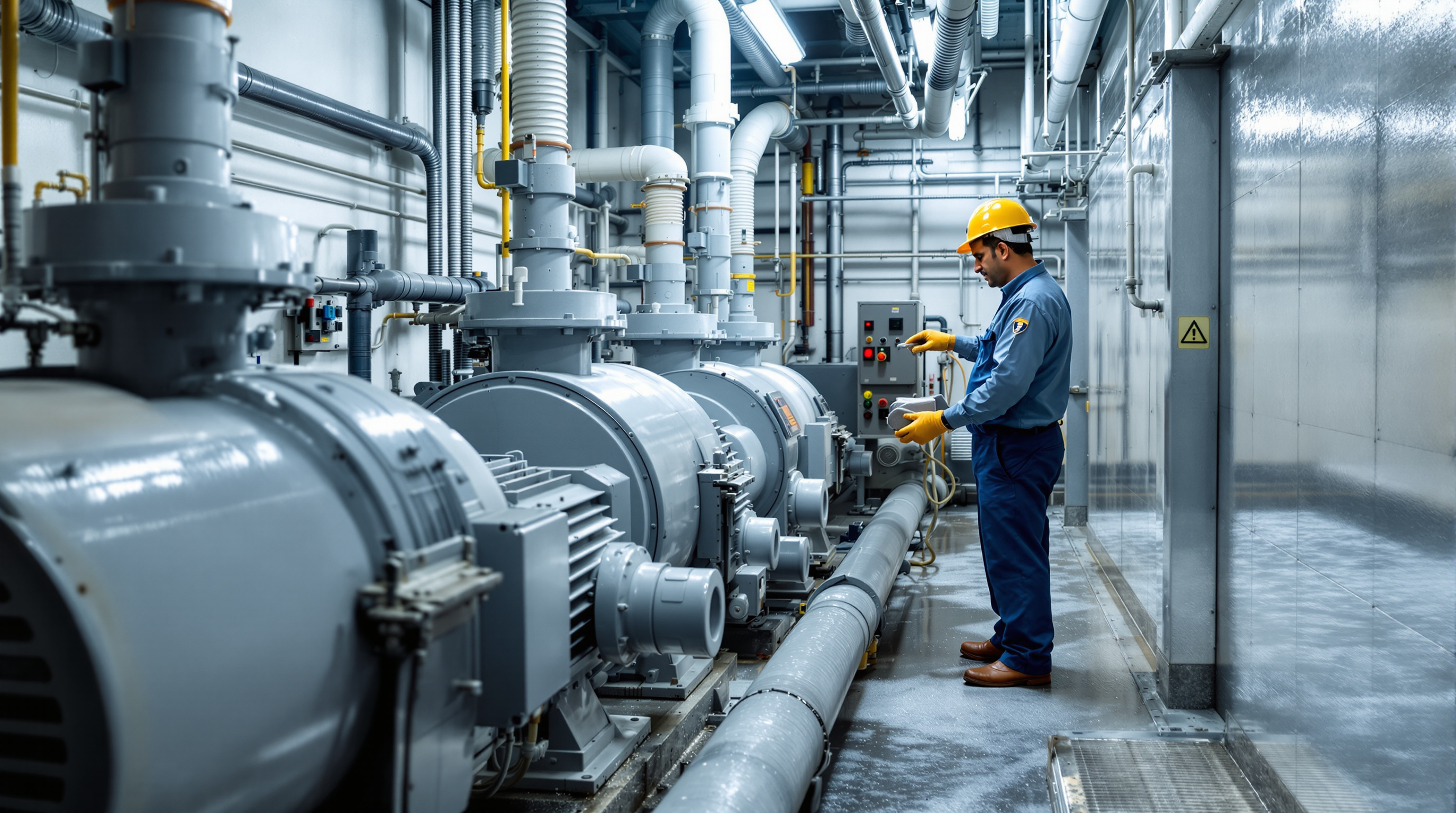
Here is the uncomfortable part. An STP is not a passive tank — it is a piece of live process plant that runs 24×7, and it eats electricity. Blowers push air into aeration tanks around the clock; pumps lift raw sewage, transfer effluent, and dose chemicals; filtration and UV or chlorination systems draw their own load. For most conventional plants the aeration blowers alone account for 50–65% of total power.
Typical specific energy consumption in Indian practice lands in a broad band, driven heavily by technology choice:
| STP technology | Typical energy use (kWh per m³ treated) | Net-zero relevance |
|---|---|---|
| Conventional ASP / extended aeration | ~0.6 – 1.2 | Highest draw; hardest to offset |
| MBBR | ~0.5 – 0.9 | Moderate; robust and common |
| SBR | ~0.6 – 1.0 | Moderate; cyclic aeration helps |
| MBR | ~0.8 – 1.5+ | Best effluent, highest energy |
Treat these as planning ranges, not guarantees — actual figures depend on load, sizing, aeration design and how well the plant is run.
The lesson is blunt: the very plant that lets you claim net-zero water adds a permanent, round-the-clock load to your energy account. An oversized or badly run STP can consume a startling share of a building's common-area power — the kind of number that can single-handedly break a net-zero energy model that assumed a modest rooftop solar array would cover everything.
Energy-neutral STP strategies
The goal is not to remove the STP but to shrink its energy footprint and then cover what remains with on-site generation — an energy-neutral STP. In order of impact:
1. Right-size it. Oversizing is the most common and most expensive mistake, because a half-loaded plant still runs its blowers. Size to realistic occupancy and diurnal flow, not a padded peak. Start with how to size an STP and pressure-test the number with the Water Balance Calculator.
2. Choose an efficient technology and control the blowers. Aeration is the prize. Fine-bubble diffusers, energy-efficient blowers, and — crucially — dissolved-oxygen-based control with variable-frequency drives let the plant match air supply to actual load instead of blasting air at a fixed rate. Our reducing STP electricity consumption guide details the retrofit list; the pumps and instrumentation guide covers the hardware.
3. Run it well. A plant kept in good biological health treats more water per unit of energy. Poor maintenance, clogged diffusers and firefighting mode all raise consumption — see STP troubleshooting.
4. Offset the residual with solar. Once demand is minimised, cover the remaining kWh with a dedicated rooftop or podium PV allocation. Because STP load is steady and largely daytime-shiftable (equalisation tanks buffer flow), it pairs unusually well with solar generation. The residual carbon avoided can be quantified with the Carbon Savings Calculator, and the water-plus-energy saving folds into the case for STP carbon footprint reduction.
5. Recover what you can. Larger plants can capture heat or, where organic load justifies it, explore biogas from sludge digestion — still niche at building scale in India, but part of the direction of travel.
Where AI, IoT and digital twins actually fit
Vendors increasingly pitch smart water infrastructure — IoT monitoring, AI-driven operations, digital twins and predictive maintenance — as the path to an energy-neutral plant. Be measured here. The genuinely proven, available-today wins are unglamorous: DO-based aeration control, VFDs, remote metering and alarms that catch a failing blower before it wastes a week of power.
The higher-order layers — a digital twin that continuously optimises aeration, AI that predicts load and pre-empts faults — are real and improving, but at building scale in India they remain emerging rather than mature. They deliver most where a competent operator and good instrumentation already exist; they are not a substitute for either. Treat them as an accelerant on a well-run plant, not a rescue for a badly designed one, and ask hard questions in your vendor evaluation.
Making the numbers close
For a developer or RWA, net-zero is ultimately a spreadsheet that has to balance. Three moves keep it honest:
- Budget the STP's energy explicitly in the net-zero energy model from day one — do not let it hide inside "common area load".
- Size the solar to cover the minimised STP demand, not an aspirational one.
- Account for the lifecycle cost, since an efficient plant costs less to run for 15 years. Sanity-check capex and opex with the STP Cost Estimator and the AMC Cost Calculator.
Done well, the STP stops being the awkward line item that undermines your energy claim and becomes what it should be: the engine of your net-zero water story, running on power you generate yourself. That is the reconciliation — net-zero water and net-zero energy in the same building, with the sewage treatment plant sitting confidently at the centre of both.
To go deeper on any piece of this, browse the full Sewage Treatment Plants guide library, or start upstream with why every modern building needs an STP.
Export this guide
Related Guides — Deep-dive reading
Reducing an STP's Carbon Footprint: The Net-Emissions Guide
An STP burns power around the clock — but the treated water it produces displaces tankered and pumped freshwater. This guide shows how to weigh the two, then shrink the net carbon footprint with efficient aeration, solar and biogas.
Sewage Treatment PlantsCircular Water Management for Buildings & Cities: The Closed-Loop Guide
How to stop treating water as a one-way flow and design a closed loop — treat, reuse, recharge, repeat — with a sewage treatment plant at its core, for Indian buildings, campuses and cities.
Sewage Treatment PlantsEnergy-Efficient STP Design: How to Build a Plant That Sips Power
Aeration eats 50-70% of an STP's electricity bill. This guide shows how right-sized blowers, fine-bubble diffusers, DO control with VFDs, gravity flow and the right technology cut running cost for the life of the plant.
Sewage Treatment PlantsRelated Tools — Try Free
Rainwater Tank Sizer
How big should your rainwater tank be? Computes annual harvest, recommended tank capacity in litres, water-bill savings, and payback — for 10 Indian cities.
RWH CalculatorGreen Building Water Score Calculator
Score a building's water efficiency 0–100 from treated-water reuse, rainwater harvesting, low-flow fixtures and metering, with an IGBC/GRIHA-style rating and your biggest improvement lever.
SustainabilityAcoustic Privacy (STC) Visualizer
Indian healthcare acoustic visualizer — compare wall assemblies and noise sources, see received SPL after STC attenuation, and check FGI 2018 / IS 1950 / NABH speech-privacy compliance with live dual-canvas waveform.
Acoustic Tool