

Predictive Maintenance for STPs: Fixing Equipment Before It Fails
How sensor data and analytics let you catch a failing pump or blower weeks before it dies — the shift from calendar-based servicing to condition-based, predictive STP maintenance, and how an Indian building can actually start.
Most sewage treatment plants in India are still maintained by the calendar. The AMC contract says grease the blower every quarter, change the pump seal every six months, clean the diffusers once a year — and so the operator does, whether the equipment needs it or not. It is orderly, it is auditable, and it is quietly wasteful. Some parts get serviced long before they are worn; others fail three weeks after their last "healthy" inspection, flooding a sump or tripping discharge norms at the worst possible moment.
Predictive maintenance flips that logic. Instead of servicing on a fixed schedule, you watch what the machinery is actually doing — its vibration, temperature, current draw, pressure — and act only when the data says a failure is coming. Done well, it means you replace a bearing the week before it seizes, not the month after. This guide explains what predictive maintenance for an STP really involves, where it genuinely helps and where it is still hype, and how a building or RWA can start without buying a spaceship.
Preventive maintenance asks "has it been six months?" Predictive maintenance asks "is this pump telling me it is about to fail?" The second question saves the emergency, the fine, and the tanker bill that follows an unplanned STP outage.
Three ways to maintain an STP
Every maintenance strategy is one of three kinds, and most plants use a blend. Understanding the ladder makes the case for climbing it.
| Approach | Trigger | Typical cost of failure | Where it fits |
|---|---|---|---|
| Reactive ("run to failure") | The equipment breaks | Highest — emergency call-outs, downtime, norm breaches | Cheap, non-critical parts only |
| Preventive (scheduled) | A fixed time or run-hour interval | Moderate — but you over-service and still get surprises | The default AMC model in India today |
| Predictive (condition-based) | Sensor data crosses a warning threshold | Lowest — you intervene before the break | Critical rotating equipment: pumps, blowers, motors |
The point is not that predictive maintenance replaces the others. It is that your critical machines — the blowers that keep the biology alive and the pumps that move every drop — deserve to be watched, not just serviced on a diary date. Those are exactly the assets whose sudden death causes the expensive problems covered in STP troubleshooting: common problems.
What you are actually measuring

Predictive maintenance is only as good as its signals. The good news is that the failure modes of STP equipment announce themselves early, if you are listening. The core parameters:
- Vibration — the single most powerful early-warning sign for any rotating machine. A blower bearing starting to fail, a pump impeller going out of balance, a misaligned coupling — all show up as a changing vibration signature weeks before catastrophic failure.
- Motor current — a pump drawing more amps than usual is fighting a blockage, a worn impeller, or a clogging line. Current is cheap to measure and tells you about the whole hydraulic circuit, not just the motor.
- Temperature — bearings and windings that run hotter than their baseline are wearing or under-lubricated. A clip-on sensor or even periodic thermal imaging catches this.
- Pressure and flow — a slow rise in blower discharge pressure means the diffusers are fouling; a falling pump flow at the same speed means wear or blockage.
- Process signals you already have — dissolved oxygen (DO), pH, and level sensors. If DO keeps dropping despite the blower running "fine," the blower is not fine. Many plants already log these for pumps and instrumentation — predictive maintenance simply reads them as health data, not just process data.
You do not need all of these on day one. Vibration and current on the two or three most critical machines deliver most of the value.
From data to decision: the four steps
Sensors alone are not predictive maintenance — a wall of gauges nobody reads is just decoration. The value comes from a simple chain:
1. Sense. Fit sensors to the critical assets and log continuously, not once a quarter.
2. Baseline. Record what "healthy" looks like for each machine over a few weeks. Every prediction is a deviation from this normal.
3. Detect. Set thresholds and trend alerts — a rising vibration curve, a current creeping up 15% over its baseline — that fire a warning while there is still time to plan.
4. Act. Schedule the fix into a planned window, order the part in advance, and avoid the 2 a.m. emergency.
Note that steps 2 to 4 are mostly discipline, not technology. A competent operator with a handheld vibration meter and a logbook is already doing lightweight predictive maintenance. The sensors and software just make it continuous, objective, and hard to skip.
The honest state of the technology
There is a lot of noise about AI, IoT and digital twins in water infrastructure, and it is worth being clear-eyed. The building blocks are real and increasingly affordable — wireless vibration sensors, edge gateways, and cloud dashboards now cost a fraction of what they did five years ago, and CPCB's push for online continuous monitoring on larger plants has already put SCADA and remote telemetry into many Indian STPs.
What is still maturing is the intelligence layer. Genuine machine-learning failure prediction needs months of good data and enough failure examples to learn from — something most single buildings will never accumulate on their own. Full digital twins for STPs and AI in STP operations are promising but early; treat vendor claims of "AI predicts failures" with healthy scepticism and ask what data the model was actually trained on. The reliable wins today come from good sensing plus clear thresholds plus a human who acts — not from a black box. The trajectory is covered in IoT STP monitoring and the broader smart water infrastructure picture.
Why it pays: the benefits
For an owner or RWA weighing the spend, the returns are concrete:
- Fewer catastrophic failures. Catching a blower before it seizes avoids the domino effect — a dead blower starves the biology, the culture crashes, effluent quality collapses, and you risk a CPCB notice. Prevention here is worth many times its cost.
- Lower AMC and spares cost. You stop replacing parts that still had life, and you buy spares on a plan instead of at panic prices. This reshapes the numbers in STP maintenance cost and should be a talking point in your STP AMC selection.
- Energy savings. Fouling diffusers and worn impellers quietly bleed electricity. Watching pressure and current catches efficiency loss early — directly supporting the goals in reducing STP electricity consumption.
- Compliance confidence. Continuous data is also your evidence trail that the plant was running to spec, useful under STP regulations in India.
- Longer asset life. Machines that are serviced when they need it, and never run to destruction, simply last longer.
How to start — small and pragmatic
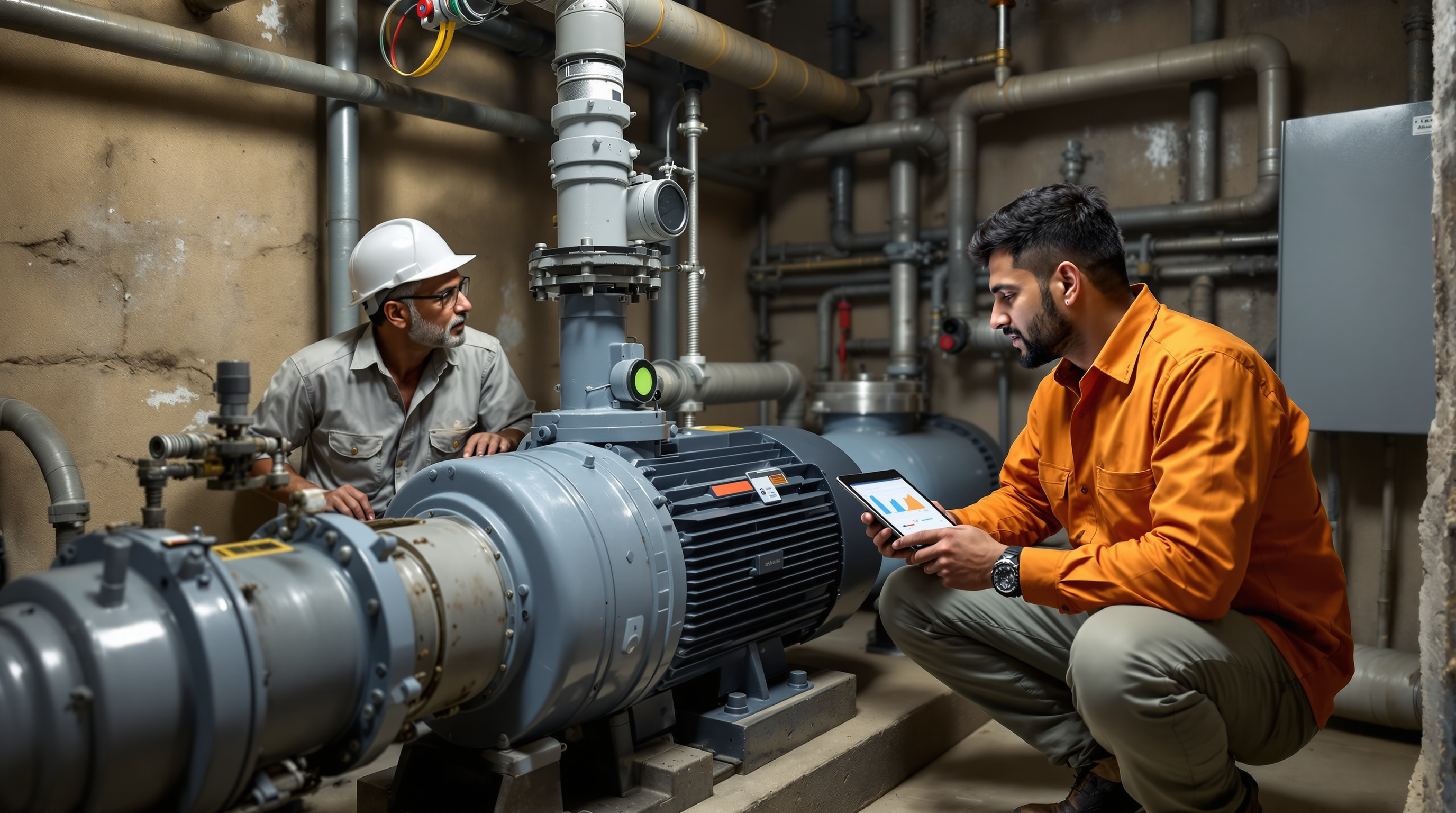
You do not need a six-figure system. A sensible first year:
- Rank your assets. List the equipment whose failure hurts most — usually the raw sewage pumps and the air blowers — and focus only there. The STP technology selector and your O&M manual will tell you what is critical for your process.
- Instrument the critical few. Add wireless vibration-plus-temperature sensors and a simple current logger to two or three machines. Keep the rest on preventive schedules for now.
- Log a baseline for four to six weeks before you trust any alert.
- Write down the response. For each alert threshold, define who is called and what they do. A prediction nobody acts on is worthless.
- Fold it into the AMC. Make condition monitoring a contractual deliverable, so the data is reviewed monthly, not filed. Set expectations early using the STP warranty checklist.
Model the payback against your current numbers with the AMC cost calculator, and see the whole operations picture in the Sewage Treatment Plants guide library.
The bottom line
Predictive maintenance is not about buying artificial intelligence. It is about a simple, disciplined shift: stop trusting the calendar for your most important machines, and start listening to what they are telling you through their vibration, current and heat. Begin with a handful of sensors on the pumps and blowers that matter, learn what healthy looks like, and act on the early warnings. The AI and digital-twin future will arrive — but the savings and the peace of mind are available now, to any building willing to watch its plant instead of merely servicing it.
Export this guide
Related Guides — Deep-dive reading
IoT Monitoring for STPs: Real-Time Sensors, Dashboards & OCEMS Compliance
How IoT sensors, connectivity and dashboards turn a blind, manually-logged sewage plant into a plant you can watch, alarm and prove compliant in real time — what to install, what it costs, and where the technology is genuinely ready.
Sewage Treatment PlantsAI in STP Operations: What Actually Works Today (and What Doesn't)
A practical, honest look at how AI and machine learning are used to run sewage treatment plants — optimising aeration and energy, predicting effluent quality, catching faults early, and easing operator dependence — with a clear-eyed view of what is mature and what is still marketing.
Sewage Treatment PlantsDigital Twins for STPs: A Live Simulation of Your Sewage Treatment Plant
What a digital twin of an STP actually is, how a live virtual model helps you operate, optimise and train without risk, and an honest read on where the technology stands for building-scale plants in India.
Sewage Treatment PlantsRelated Tools — Try Free
STP Compliance Checklist Tool
Interactive self-audit that ticks off STP consents, discharge norms, reuse metering, online monitoring and O&M records to give a live compliance readiness score.
ChecklistDaily STP O&M Checklist Tool
An interactive daily operator round for a sewage treatment plant — tick off biology, flows, equipment and output checks and see a live completion score, per-section progress and shift readiness.
ChecklistSTP Preventive Maintenance Checklist
An interactive checklist of weekly, monthly, quarterly and annual sewage treatment plant maintenance tasks that scores your completion as you tick each item off.
Checklist