
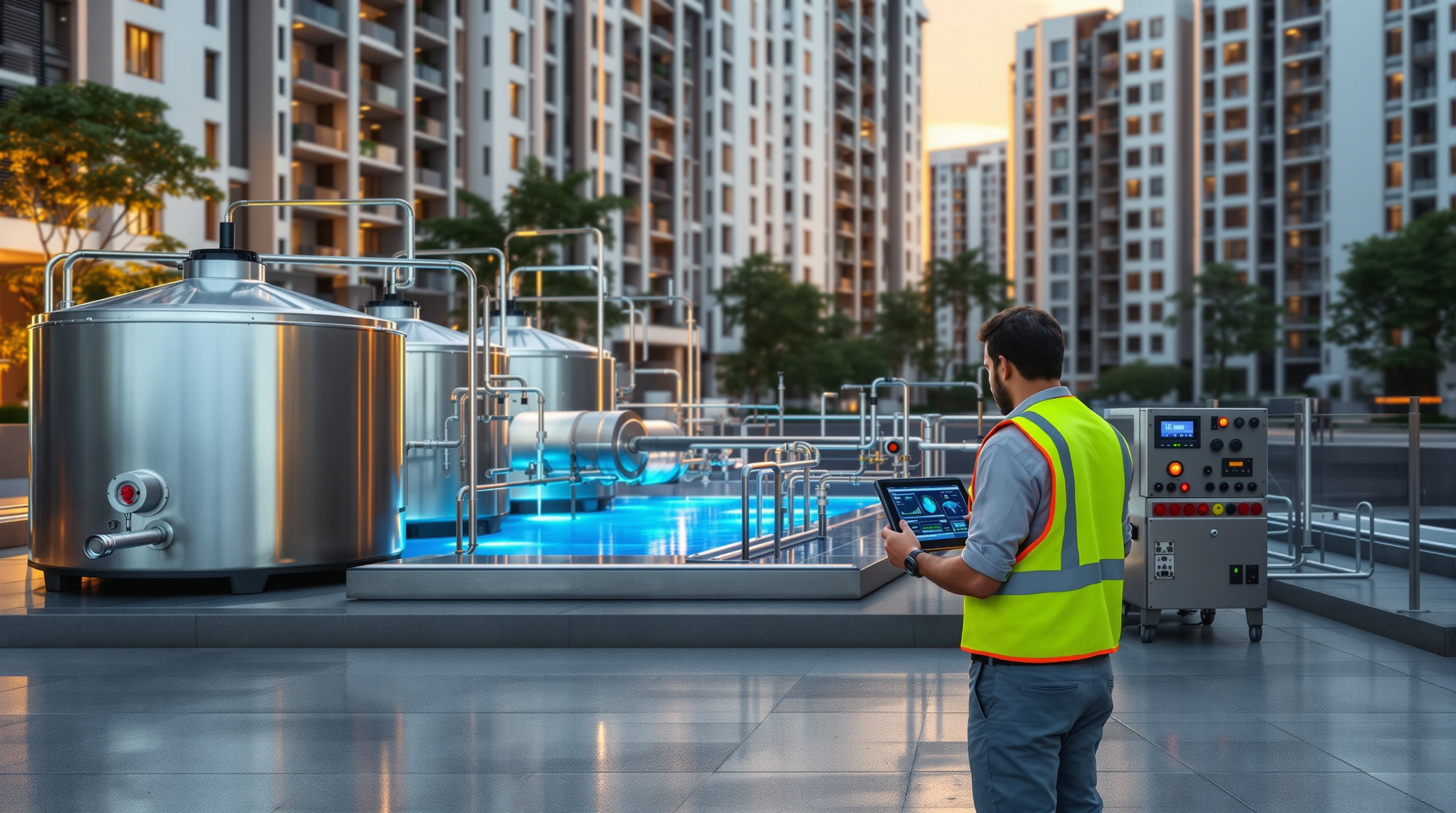
Smart Water Infrastructure & the Modern STP: A Practical Guide
How sensors, smart metering and automated control are turning the sewage treatment plant from a noisy basement box into a data-driven asset — and what that actually means for developers, owners and RWAs in India today.
For most of its history the sewage treatment plant has been a blind machine. It sat in a basement, ran on a timer, and told you almost nothing about itself. You learned it had failed when the treated-water tank ran dry, the flush lines went to municipal water, or a resident complained about the smell. Diagnosis meant sending an operator down with a torch and a hunch. Compliance meant a lab report once a month that described a plant as it was three weeks ago.
Smart water infrastructure is the correction to that blindness. It is the layer of sensors, meters, controllers and software that lets an STP measure what it is doing, adjust itself, and report the truth in real time — to an operator, to a facility manager sitting in another city, and increasingly to the pollution-control board directly.
A conventional STP produces clean water and no information. A smart STP produces clean water and a continuous stream of evidence — flow, quality, energy and equipment health — that you can act on before a problem becomes an outage.
This guide is the on-ramp to that shift. It explains what "smart" actually means in practical terms, what it delivers, what it costs to attempt, and where the marketing runs ahead of the maturity. It also sets up the deeper guides on AI in STP operations, IoT-based STP monitoring and digital twins for STPs — the technologies this foundation makes possible.
What "smart" actually means here
"Smart" is one of the most abused words in the water industry, so let us be concrete. A smart STP is not a different kind of plant — the biology of an MBBR, MBR or SBR is unchanged. What changes is the nervous system wrapped around it. Smartness is added in three stacked layers, and you can stop at any one of them:
- Instrumentation (sense). Probes and meters that continuously measure the plant instead of sampling it occasionally — dissolved oxygen, pH, turbidity, flow, level, and increasingly BOD/COD surrogates.
- Automation (act). Controllers (a PLC or SCADA system) that use those readings to run the plant — throttling blowers to hold a dissolved-oxygen setpoint, starting pumps on level, sequencing an SBR cycle — without an operator turning a valve.
- Connectivity (know). A gateway that pushes the data to a cloud dashboard, so the plant's state and history are visible remotely, with alerts, trends and reports generated automatically.
Most Indian buildings that call their STP "smart" have really only bought layer one or two. That is fine — instrumentation alone is transformative — but it is worth knowing which layer you are actually paying for.
The instruments that make a plant legible
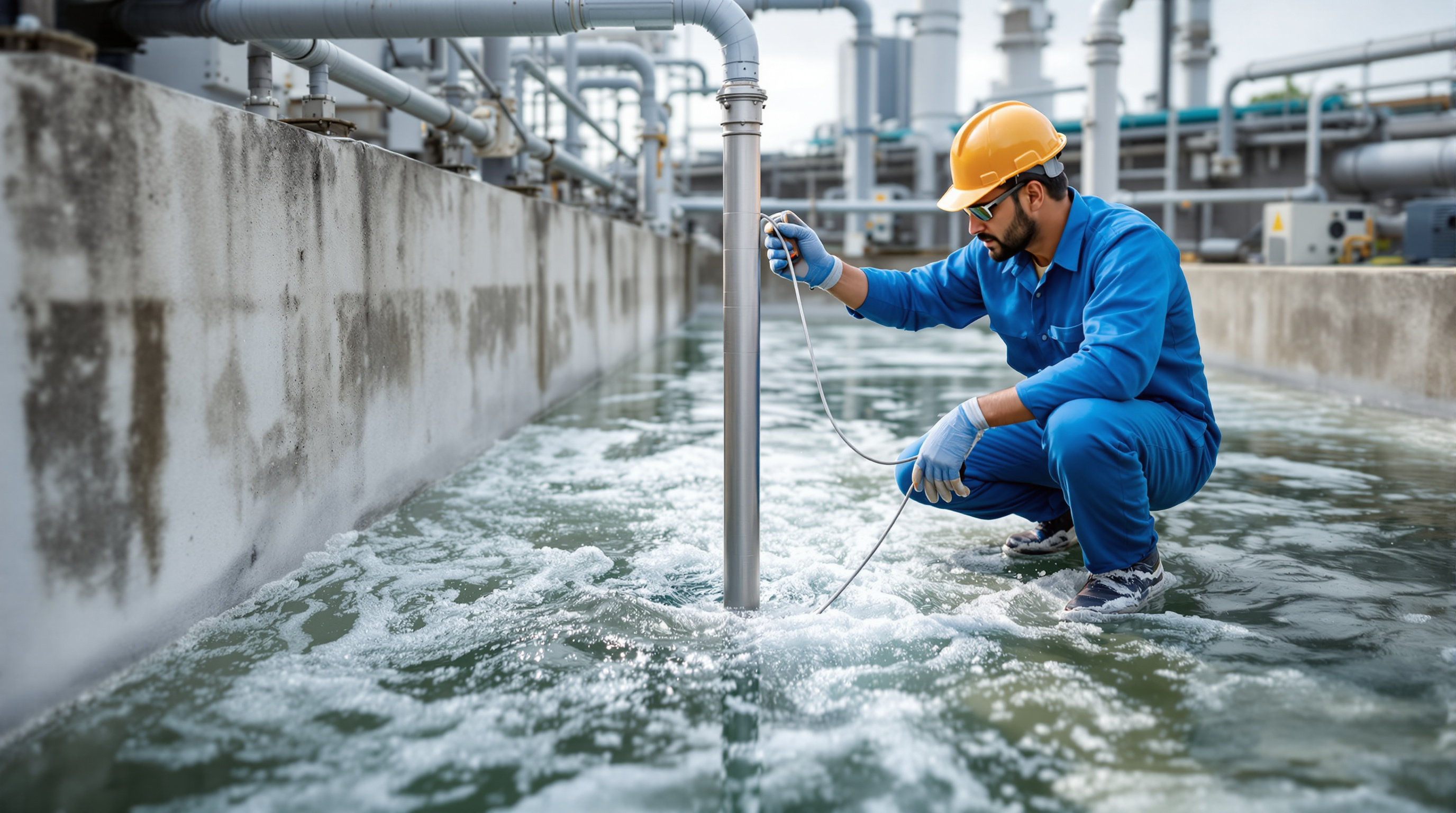
The heart of smart water infrastructure is measurement. These are the sensors that turn a guessing game into a data feed, and the decisions each one unlocks:
| Sensor / meter | What it reads | What it lets you do |
|---|---|---|
| Flow meter (inlet & recycle) | Litres per hour in and reused | Bill reuse honestly, verify you are inside your sanctioned KLD, spot infiltration |
| Level sensors | Depth in equalisation/treated tanks | Auto-start pumps, prevent overflow and dry-running |
| Dissolved Oxygen (DO) probe | Oxygen in the aeration tank | Modulate blowers — the single biggest energy saving available |
| pH & turbidity | Acidity and cloudiness of effluent | Catch a crashing biology or a filter breakthrough early |
| Energy meter | kWh drawn by blowers & pumps | See cost per kilolitre, target the operating bill |
| Online BOD/COD analyser | Effluent organic load | Continuous compliance evidence for CPCB |
The DO probe deserves special mention. Aeration blowers are typically 50–65% of an STP's electricity bill, and most plants over-aerate blindly because it is the safe default. A DO sensor feeding a variable-frequency drive lets the plant supply exactly the oxygen the microbes need and no more. This one loop often pays for a large slice of the whole smart upgrade — model the saving in the reducing STP electricity consumption guide before you buy.
From data to control: closing the loop
Sensing becomes valuable when it drives action. In a manually run plant, an operator reads a value and decides; in a smart plant, a controller reads the value and acts within seconds, consistently, at 3 a.m. as reliably as at noon. Practical control loops on a modern STP include:
- DO-based aeration control — blower speed follows the oxygen setpoint, saving energy on low-load nights.
- Level-based pumping — transfer and reuse pumps start and stop on tank level, ending both overflows and dry-run burnouts (see STP pumps and instrumentation).
- Automated dosing — chlorine or coagulant dosed in proportion to measured flow, not a fixed guess.
- Cycle sequencing — SBR fill/react/settle/decant phases run to a controlled recipe.
The payoff is consistency. A plant that holds its setpoints automatically drifts less, recovers from shock loads faster, and depends far less on the skill and attendance of one operator — a real fragility in Indian O&M where operator turnover is high.
Why this matters now: regulation and remote operation
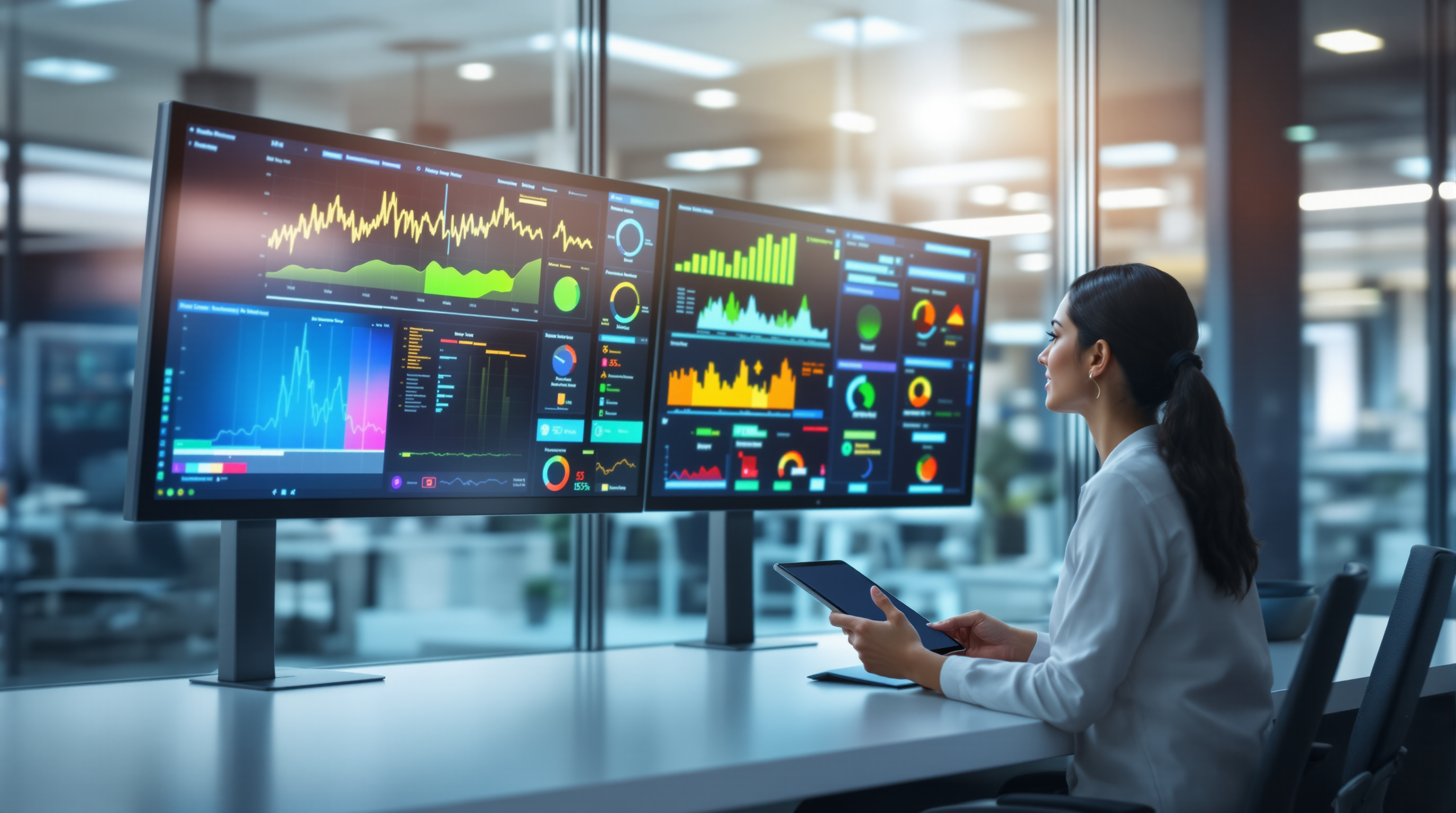
Two forces are pushing smart water infrastructure from luxury to baseline in India.
Regulatory transparency. Pollution-control boards increasingly expect online, continuous emission and effluent monitoring for larger plants, with data telemetered to a server rather than trusted to a monthly grab sample. Continuous monitoring changes the compliance posture from periodic and defensible to constant and verifiable — the direction of travel is clear even where it is not yet mandated for your project size. The broader rules are covered in STP regulations in India.
Remote and portfolio operation. A developer with fifteen towers, or a facility-management firm running plants across a city, cannot station a skilled operator at each one. A cloud dashboard lets one expert supervise many plants, triage alarms by severity, and dispatch a technician only when the data warrants it. This is also the foundation for predictive maintenance — you cannot predict a pump failure you cannot measure.
An honest word on maturity
Here the specialist must be candid, because the vendor slide decks will not be. Smart water infrastructure in Indian STPs is real and worthwhile at the sensing-and-automation layer. It is genuinely maturing — not fully mature — at the intelligence layer.
- Solid and available today: flow, level and DO instrumentation; PLC/SCADA control; cloud dashboards and SMS/app alerts; energy metering. These are proven, priced and worth specifying now.
- Real but requires discipline: online BOD/COD analysers and turbidity probes deliver only if they are calibrated and cleaned on schedule. A fouled probe lies confidently, and a plant that trusts a lying probe is worse off than one with none. Sensors add a maintenance burden — budget for it in your AMC.
- Emerging, treat with caution: AI-driven optimisation and digital twins are promising and progressing quickly, but they depend entirely on months of clean, reliable data from the layers below. Buying an "AI STP" before you have trustworthy sensors is buying the roof before the walls.
The sequencing lesson is simple: instrument first, automate second, connect third, and only then reach for intelligence. Each layer is worth having on its own, and each is the prerequisite for the next.
What to do about it
For a new project, the smart move is to write instrumentation and control into the specification from the start rather than retrofitting later. Insist on flow meters, level sensors, a DO probe with VFD blower control, energy metering and a data gateway as standard scope — and check they appear line-by-line in your technical specifications and BOQ. For an existing plant, a targeted retrofit of DO control plus remote monitoring usually pays back fastest.
Two tools help you frame the numbers: run the STP cost estimator to see where instrumentation sits in the capital picture, and the AMC cost calculator to budget the added upkeep sensors demand. When you are ready to go deeper, continue through the Sewage Treatment Plants guide library — the IoT monitoring and predictive maintenance guides pick up exactly where this one leaves off.
Smart water infrastructure will not clean the water for you — the microbes still do that. What it does is end the blindness: it makes the plant measurable, controllable and honest, so that the water leaving your building is clean not by luck and inspection, but by evidence.
Export this guide
Related Guides — Deep-dive reading
IoT Monitoring for STPs: Real-Time Sensors, Dashboards & OCEMS Compliance
How IoT sensors, connectivity and dashboards turn a blind, manually-logged sewage plant into a plant you can watch, alarm and prove compliant in real time — what to install, what it costs, and where the technology is genuinely ready.
Sewage Treatment PlantsSmart Sensors in STPs: Online DO, Ammonia, Turbidity, Flow & TSS for Automated Control
How online DO, ammonia, turbidity, flow and TSS sensors turn a sewage treatment plant from a hand-tuned machine into a self-regulating one — cutting energy, catching upsets early, and proving compliance in real time.
Sewage Treatment PlantsAI in STP Operations: What Actually Works Today (and What Doesn't)
A practical, honest look at how AI and machine learning are used to run sewage treatment plants — optimising aeration and energy, predicting effluent quality, catching faults early, and easing operator dependence — with a clear-eyed view of what is mature and what is still marketing.
Sewage Treatment PlantsRelated Tools — Try Free
Rainwater Tank Sizer
How big should your rainwater tank be? Computes annual harvest, recommended tank capacity in litres, water-bill savings, and payback — for 10 Indian cities.
RWH CalculatorSTP Compliance Checklist Tool
Interactive self-audit that ticks off STP consents, discharge norms, reuse metering, online monitoring and O&M records to give a live compliance readiness score.
ChecklistSTP Cost Estimator
Estimate the capital cost of a sewage treatment plant by capacity in KLD and technology, with an underground option and instant cost per KLD.
STP Calculator