
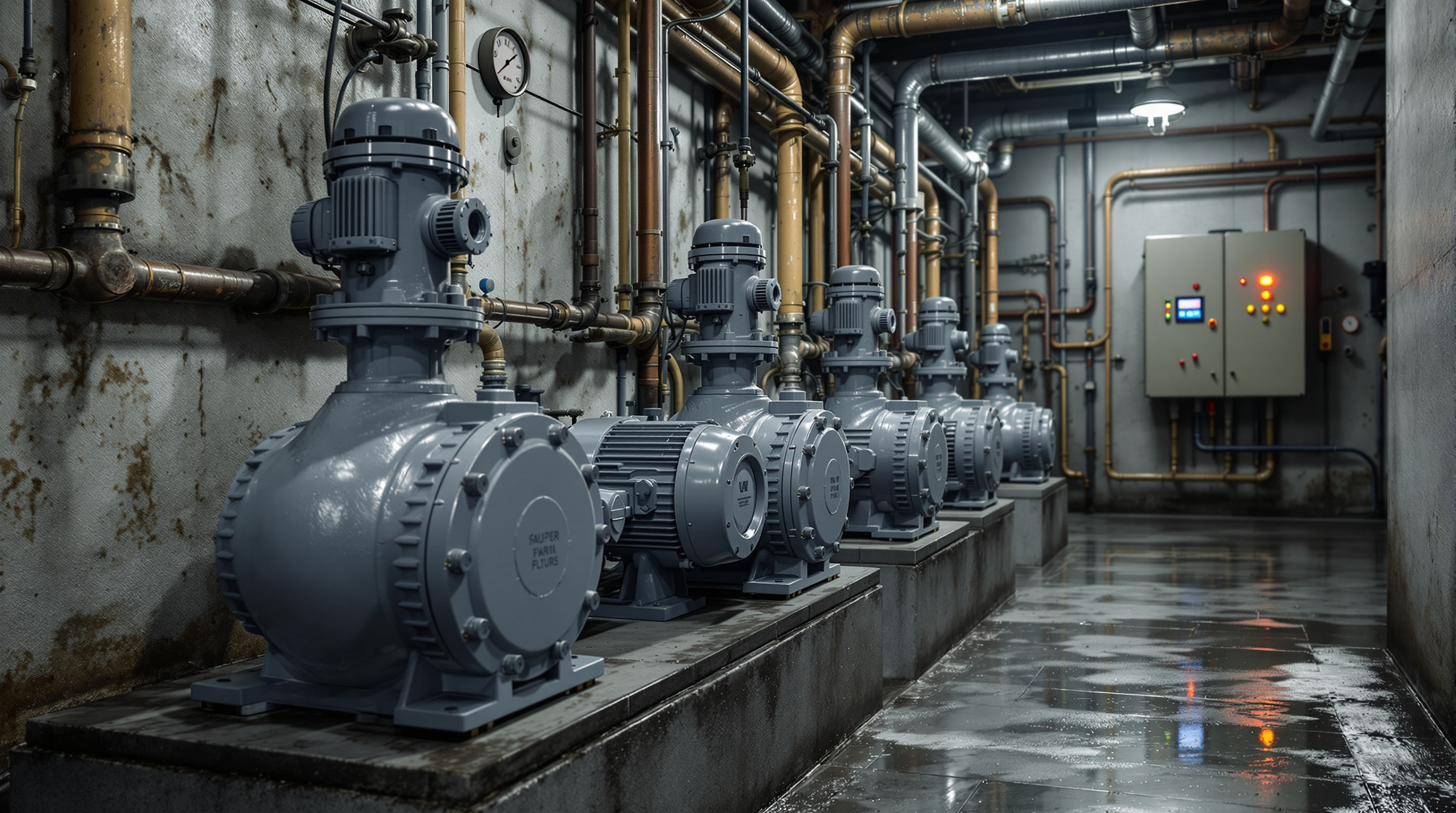
STP Pumps, Sensors & PLC Automation: How an STP Runs Itself
The pumps that move sewage through every stage, and the sensors, timers and PLC/SCADA brain that automate the plant — how the right instrumentation cuts operator error, saves power, and keeps your STP running when nobody is watching.
An STP is often described by its tanks — the aeration tank where microbes eat, the clarifier where solids settle, the filters that polish. But tanks do nothing on their own. Water has to be moved from one to the next, at the right time, in the right quantity, and something has to decide when. That job belongs to the two least glamorous parts of the plant: the pumps that push sewage through the process, and the instrumentation and controls — sensors, timers and a small industrial computer — that tell those pumps and blowers what to do.
Get this layer right and an STP runs itself for weeks, quietly, on minimum power. Get it wrong and you have a plant that either floods, runs dry, or burns electricity around the clock while an operator guesses. This guide explains what the pumps do, what the sensors watch, and how a PLC stitches them into an automated plant.
Pumps are the muscles of an STP and instrumentation is its nervous system. The biology gets the credit, but it is the pumps and sensors that decide whether the plant actually works at 3 a.m. when nobody is in the basement.
The pumps: what moves through an STP, and how
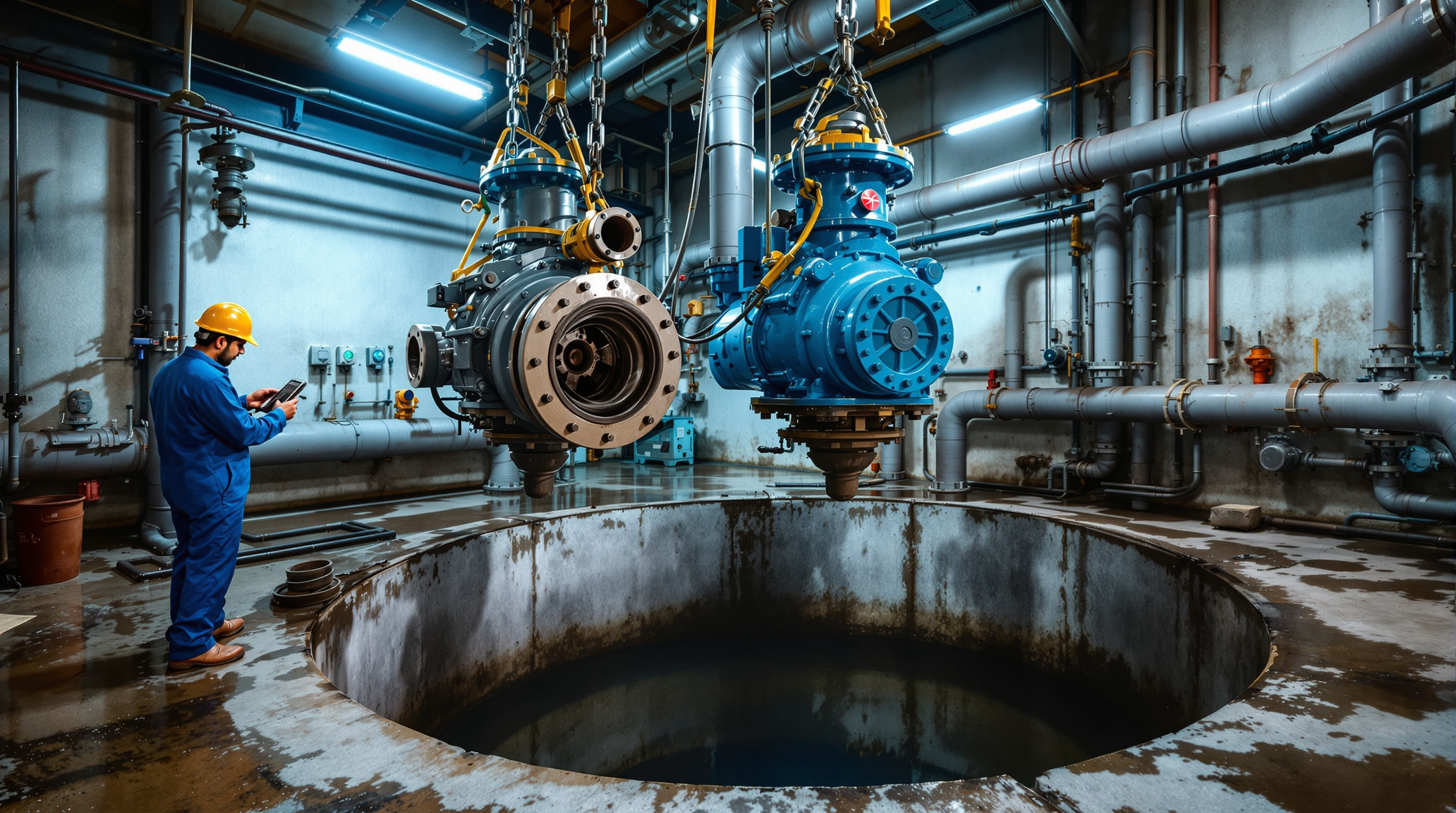
Sewage does not flow uphill, and an STP is a sequence of tanks at different levels. Pumps bridge those gaps. A typical plant has four families of pump, each with a distinct job — see the process-flow guide for exactly where each sits.
Raw sewage pumps
The first and hardest-working pumps. Raw sewage from the collection tank is full of rags, grit and solids, so these are usually submersible non-clog pumps — heavy cast-iron units that sit in the wet well and can pass solids without jamming. They lift the incoming sewage into the bar screen chamber and on to the equalization tank. Because inflow is surging and dirty, these pumps face the toughest duty in the plant and are always installed in a duty + standby pair so one can rest or fail without stopping the plant.
Transfer pumps
Once the sewage is screened and equalised, cleaner transfer pumps move it at a steady, controlled rate into the biological stage — the aeration tank or an SBR/MBBR reactor. This is the single most important flow in the plant: feeding the microbes evenly, rather than in slugs, is what keeps treatment stable. The transfer pump is usually the one paired with a flow meter and controlled by the PLC.
Filter feed pumps
After the clarifier or tube settler, water still has to be pushed through the tertiary pressure sand filter and activated carbon filter. These beds need real pressure to work, so filter feed pumps are higher-head centrifugal pumps that force clear water through the media before it reaches disinfection and the treated-water tank.
Dosing pumps
The smallest but most precise pumps in the plant. Dosing (metering) pumps inject tiny, exact volumes of chemicals — sodium hypochlorite at the chlorination system, sometimes an acid or alkali to correct pH, or a coagulant before filtration. They are calibrated in millilitres per stroke and are almost always tied to a timer or a sensor so the dose matches the flow, never over- or under-dosing.
| Pump type | Typical kind | Job in the STP | Runs when |
|---|---|---|---|
| Raw sewage | Submersible non-clog | Lift dirty inflow into the plant | Level sensor calls it |
| Transfer | Submersible / centrifugal | Feed biology at a steady rate | PLC timer / flow control |
| Filter feed | High-head centrifugal | Push water through PSF/ACF | During filtration cycle |
| Dosing | Metering / diaphragm | Inject chlorine, acid, coagulant | Proportional to flow |
Sizing any of these starts from the plant's flow. A pump has to deliver the design flow (litres per day converted to litres per hour) against the total head — the vertical lift plus friction in the pipes. That is why every pump selection begins with the plant capacity; if you are still fixing that number, the STP Capacity Calculator and the Sewage Generation Calculator turn occupancy into the flow every pump is then sized around.
The instrumentation: what the plant senses
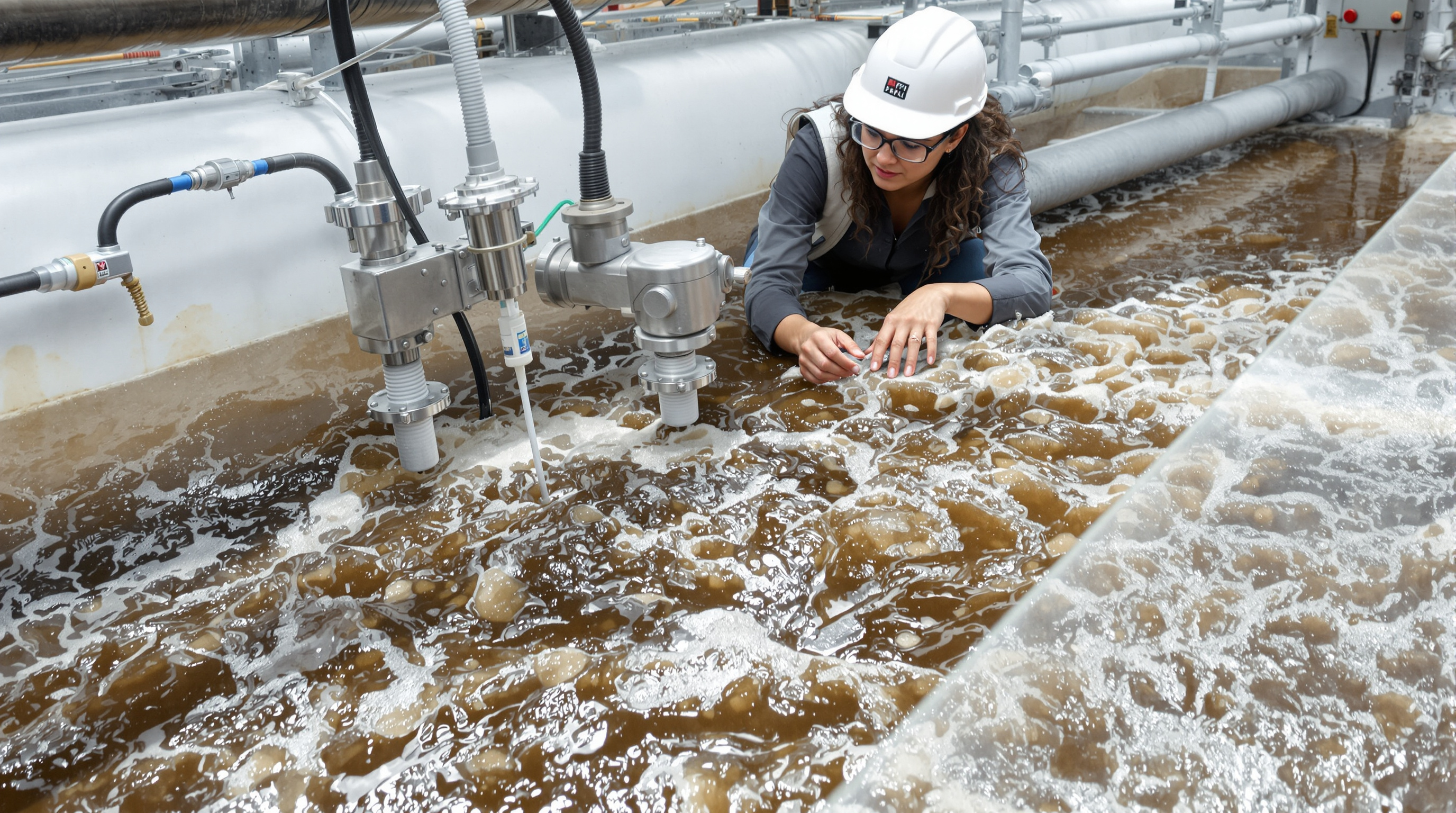
Pumps supply the muscle; sensors supply the awareness. A handful of instruments let the plant "see" its own condition and react.
- Level sensors — the most important instrument in any STP. Float switches or ultrasonic level probes in the collection and equalisation tanks start and stop the raw and transfer pumps automatically. A low-level cut-off stops a pump running dry (which burns out the seal in minutes); a high-level alarm warns of an overflow before sewage backs up.
- Flow meters — usually electromagnetic (mag) flow meters on the transfer and treated-water lines. They tell you exactly how many KLD the plant is actually treating — the single number regulators and your own records care about — and let the PLC hold a steady feed rate.
- Dissolved Oxygen (DO) probes — sit in the aeration tank and read how much oxygen the water holds. Microbes need roughly 1.5–2 mg/L to thrive; below that they starve, above that you are wasting blower power. The DO probe is the key to the biggest energy saving in the whole plant.
- pH sensors — track whether the water is drifting acidic or alkaline. Microbes only work in a narrow near-neutral band, so a pH probe can trigger a dosing pump to correct it. (See BOD, COD, TSS & pH for why these numbers matter.)
- Pressure gauges and switches — across the filters, they show when a sand or carbon bed is clogged and due for backwash.
The brain: PLC and SCADA
On its own, a sensor just displays a number. The value comes from wiring every sensor and pump into a PLC — a Programmable Logic Controller, the small ruggedised industrial computer inside the plant's control panel. The PLC runs a simple set of rules continuously:
- If the equalisation tank rises above its high float, start the transfer pump; if it drops to the low float, stop it.
- Run the blowers on the schedule (or on DO reading) that keeps oxygen in the target band, then idle them to save power.
- Dose chlorine in proportion to the measured flow.
- If any pump trips, a level goes critical, or a motor overloads, raise an alarm and auto-start the standby pump.
Larger plants add SCADA — a screen (on a panel or a phone) that shows the whole plant live: every tank level, every pump status, flow totals and trends, with the ability to log data and flag faults remotely. On a well-set-up plant an operator can see a problem from home before it becomes a spill.
This automation is not a luxury; it is where the real savings live:
1. It cuts operator error. The commonest STP failures — a pump left running dry, a tank overflowing, chlorine over-dosed, blowers left on all night — are human timing mistakes. Sensors and a PLC remove the guesswork and the 3 a.m. dependence on somebody remembering.
2. It cuts power. Blowers and pumps are the plant's electricity bill. DO-linked blower control and level-linked pumping mean motors run only when the process actually needs them, often trimming energy use by a fifth or more.
3. It protects the biology. Steady, sensor-controlled feeding keeps the microbial culture stable, which is what actually holds your treated-water quality inside norms.
Typical problems and O&M
Pumps and instruments are the parts of an STP that most often fail — and the easiest to maintain if you know what to watch.
- Clogged raw pumps — rags and wipes jam impellers. A working bar screen upstream is the real fix; keep the standby pump serviced.
- Dry running — a failed level float lets a pump run empty and cook its seal. Test floats periodically.
- Fouled DO and pH probes — biofilm coats the sensor and it reads wrong, so the PLC makes bad decisions. Probes need wiping and recalibration on a schedule.
- Drifting dosing pumps — diaphragms wear and the dose creeps off. Recalibrate against a measuring cylinder.
- Ignored alarms — the most common failure of all is a working alarm nobody acts on. Automation only helps if someone responds.
The bottom line
The tanks give an STP its capacity, but the pumps and instrumentation give it a heartbeat. Four families of pump move sewage from stage to stage; a handful of level, flow, DO and pH sensors let the plant sense itself; and a PLC — with SCADA on bigger plants — ties them together so the STP runs on rules instead of on an operator's memory. That is what turns a set of concrete tanks into a plant that treats water reliably, cheaply, and around the clock.
To see how the stages these pumps connect actually fit together, walk through how an STP works and the full Sewage Treatment Plants guide library. And before you size a single pump, fix your flow with the STP Capacity Calculator — every pump and instrument in the plant is ultimately sized around that one number.
Export this guide
Related Guides — Deep-dive reading
Collection Tank (Raw Sewage Sump) in an STP: The First Sump Explained
The raw sewage sump is where a building's drains empty and treatment begins. Here is what the collection tank does, how its float switches and submersible transfer pumps work, and why it is not the same thing as the equalisation tank.
Sewage Treatment PlantsThe Sewage Treatment Process Flow, Explained: Every Stage From Inlet to Reuse
Follow a drop of sewage through a typical STP — inlet, screening, aeration, clarifier, filtration, disinfection and reuse — as one connected flow, with a block diagram and a unit-by-unit table, in plain language.
Sewage Treatment PlantsAeration Tank: The Biological Heart of an STP
The tank where blowers push oxygen into billions of microbes that eat the sewage's organic load — how it works, what DO, MLSS, F/M and HRT mean, and why it quietly runs up the biggest electricity bill in the plant.
Sewage Treatment PlantsRelated Tools — Try Free
Sewage Generation Calculator
Estimate the daily sewage a building generates and its peak flow in KLD from occupancy, LPCD, sewage return factor and peak factor.
STP CalculatorSTP Capacity Calculator
Size a sewage treatment plant in KLD from your building's occupancy — water demand, sewage generated and recommended STP capacity.
STP CalculatorFilter Sizing Calculator (PSF/ACF)
Size a pressure sand or activated carbon filter from flow and filtration rate to get vessel diameter, filter area and hourly design flow.
STP Calculator