

Green Building Water Credits: How STPs Earn Points Under IGBC, GRIHA & LEED
How on-site sewage treatment and water reuse convert into rating-system points — the water-efficiency credit categories under IGBC, GRIHA and LEED, the evidence assessors ask for, and exactly where an STP moves the needle.
Every green-building rating system in India asks the same blunt question of a project: how little fresh water can you get away with using, and how much of the water you do use can you use twice? An on-site Sewage Treatment Plant is the single most powerful answer to both. It is also, quietly, one of the easiest sources of points on the scorecard — because the STP a project is already legally required to build can be documented for credit at almost no extra cost.
This guide maps how green building water credits work across the three ratings you will actually meet — IGBC, GRIHA and LEED — which credit categories an STP feeds, and the evidence an assessor will ask you to produce.
The cheapest green-building points are the ones you were going to earn anyway. If your building has an STP, a dual-plumbing line and a few water meters, you are already sitting on water credits — you just have to document them.
Why water is worth so much on the scorecard
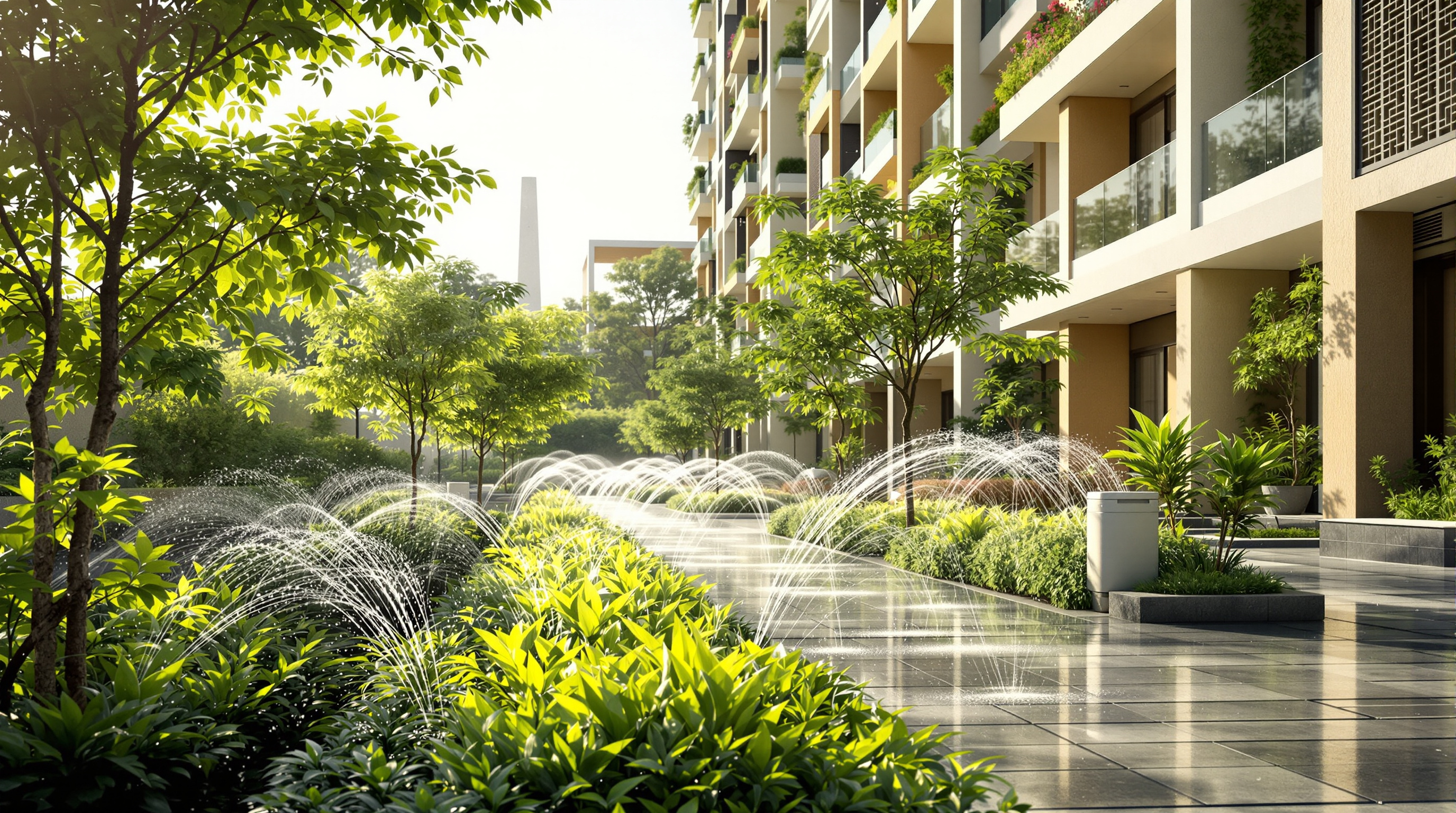
Water-efficiency credits carry heavy weight in Indian ratings for a simple reason: the country is water-stressed, and the rating bodies price that scarcity into the points. Across IGBC, GRIHA and LEED, water-related credits typically account for roughly 15–20% of the total available points — second only to energy, and often the fastest category to secure because the interventions are physical and permanent rather than behavioural.
Three levers move almost all of those points:
- Reducing demand — low-flow fixtures, efficient irrigation, metering.
- Substituting fresh water with reused water — this is where the STP lives.
- Managing rainwater — harvesting and groundwater recharge so the site draws less from the municipal supply.
An STP touches the second lever directly and the third indirectly, which is why understanding what an STP actually is and why every modern building needs one is the foundation for the whole water score.
The three rating systems at a glance
Each system organises water differently, but the underlying logic is identical: prove you reduced fresh-water use and reused treated water.
| Rating system | Water credit category | What the STP earns points for | Typical evidence |
|---|---|---|---|
| IGBC (Green Homes / Green New Buildings) | Water Efficiency | On-site wastewater treatment + reuse; reduction in municipal/fresh-water demand | STP design capacity, water balance, reuse plumbing drawings |
| GRIHA | Sustainable Site & Water criteria | Wastewater treatment to reuse standard; reduction in freshwater base case; recycle for flushing/landscape | Treated-water quality reports, metered reuse quantities |
| LEED (BD+C / O+M) | Water Efficiency | Indoor/outdoor water-use reduction; alternative (non-potable) water source | Water-use calculations, meter data, effluent quality logs |
The common thread is unmistakable: every system rewards the same STP-and-reuse loop, just with different paperwork.
How an STP earns each credit
1. Wastewater treatment and reuse
This is the headline. All three systems award points for treating 100% of a building's wastewater on site and reusing it. An STP that recovers 80–85% of consumed water — piped back for toilet flushing, landscape irrigation and cooling towers — directly satisfies the "treat and reuse" credit in IGBC, the wastewater-recycle criterion in GRIHA, and contributes to LEED's alternative-water and water-use-reduction credits at once.
The technology you choose matters for footprint and effluent quality, not for eligibility — an MBBR, SBR or MBR plant all qualify, though MBR's superior effluent makes the reuse case (and the flushing line) easiest to defend.
2. Reduction in fresh-water demand
Ratings score the percentage of fresh water you avoid versus a conventional baseline building. Reused STP water is the biggest single contributor here because flushing and irrigation — the two largest non-potable demands — are switched entirely off the municipal supply. Model this before you commit: the water-balance calculator shows exactly how much fresh water your reuse loop displaces, which is the number every water credit is scored against.
3. Rainwater integration and recharge
Rainwater harvesting earns its own points, but the smart move is to plan it alongside the STP so that treated water and harvested rainwater together cover the building's non-potable needs. The rainwater–STP integration calculator helps size that combined loop.
4. Metering and measurement
Every rating now insists you prove the reuse with sub-meters on the STP outlet, the flushing line and irrigation. This is where projects lose easy points — the plant reuses the water, but nobody installed the meter to document it. Specify meters at design stage; retrofitting them is painful. Good pumps and instrumentation design bakes this in from the start.
What assessors actually ask for
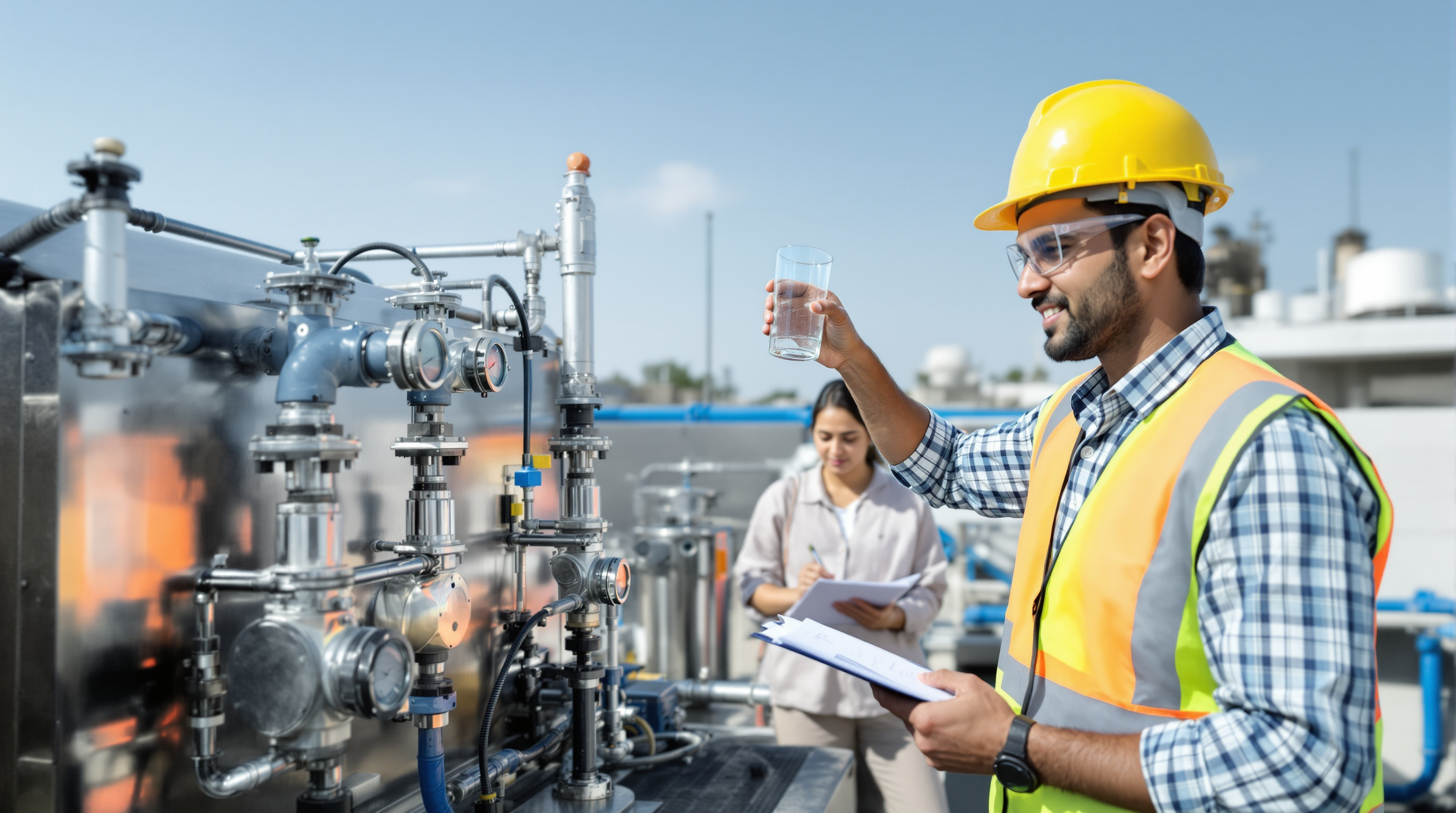
The credit is only as good as the evidence. Across all three systems, an assessor will expect some combination of:
- STP design basis and capacity in KLD, with the water balance showing inflow, treated output and reuse allocation.
- Effluent quality test reports proving the treated water meets CPCB reuse norms (BOD, COD, TSS, pH) — ideally a run of monthly reports, not a single sample.
- As-built dual-plumbing drawings showing the separate treated-water reticulation to WCs, urinals and landscape.
- Meter readings demonstrating actual reuse volumes over the performance period (critical for LEED O+M and GRIHA's post-occupancy stage).
- Photographs and a commissioning certificate for the plant.
Two honest cautions. First, GRIHA and LEED O+M ratings verify operational performance, so a plant that is commissioned but poorly run will fail the audit — assessors read the effluent logs, not the brochure. Second, the newer digital claims — IoT monitoring, AI-assisted operations and digital twins — genuinely make evidence-gathering easier by logging flow and quality automatically, but the rating systems do not yet award dedicated credits for them. Treat them as tools that make your documentation bulletproof, not as point-earners in their own right.
Putting a number on it
Before you chase the certificate, quantify the prize. The green-building water-score calculator estimates how many water-efficiency points your STP-and-reuse strategy is likely to earn across IGBC, GRIHA and LEED, given your capacity and reuse plan — the single most useful number when you are deciding how ambitious to be.
From there, the STP cost estimator tells you what the plant behind those points will cost to build, and the carbon-savings calculator captures the emissions story that increasingly rides alongside the water one in net-zero and water-positive buildings.
The bottom line
Water credits are the most reliable points in any Indian green rating because they reward physical infrastructure a modern building already needs. An STP that treats 100% of wastewater, a dual-plumbing line that reuses it, harvested rainwater to top up the loop, and meters to prove every drop — that package earns points under IGBC, GRIHA and LEED simultaneously. The certification is not an extra project bolted on; it is documentation of good engineering you were going to do anyway.
Start by sizing the reuse loop with the water-balance calculator, model the score with the green-building water-score calculator, and read the rest of the Sewage Treatment Plants guide library to specify the plant that carries those credits.
Export this guide
Related Guides — Deep-dive reading
Circular Water Management for Buildings & Cities: The Closed-Loop Guide
How to stop treating water as a one-way flow and design a closed loop — treat, reuse, recharge, repeat — with a sewage treatment plant at its core, for Indian buildings, campuses and cities.
Sewage Treatment PlantsSTP for IT Parks & Campuses: Central-Plant Design, Reuse & Redundancy Guide
How to plan a campus-scale sewage treatment plant for a multi-building IT park in India — the daytime flow pattern, the right technology, sizing for a central plant, and a reuse network feeding landscape, flushing and cooling towers.
Sewage Treatment PlantsSTPs and the Urban Water Circular Economy: How Reuse Closes the City Water Loop
How decentralised sewage treatment and treated-water reuse turn a building's wastewater into a resource — cutting freshwater demand, ending pollution at source, and pointing the way to a genuinely water-circular Indian city.
Sewage Treatment PlantsRelated Tools — Try Free
Rainwater Tank Sizer
How big should your rainwater tank be? Computes annual harvest, recommended tank capacity in litres, water-bill savings, and payback — for 10 Indian cities.
RWH CalculatorGreen Building Water Score Calculator
Score a building's water efficiency 0–100 from treated-water reuse, rainwater harvesting, low-flow fixtures and metering, with an IGBC/GRIHA-style rating and your biggest improvement lever.
SustainabilitySTP Cost Estimator
Estimate the capital cost of a sewage treatment plant by capacity in KLD and technology, with an underground option and instant cost per KLD.
STP Calculator