
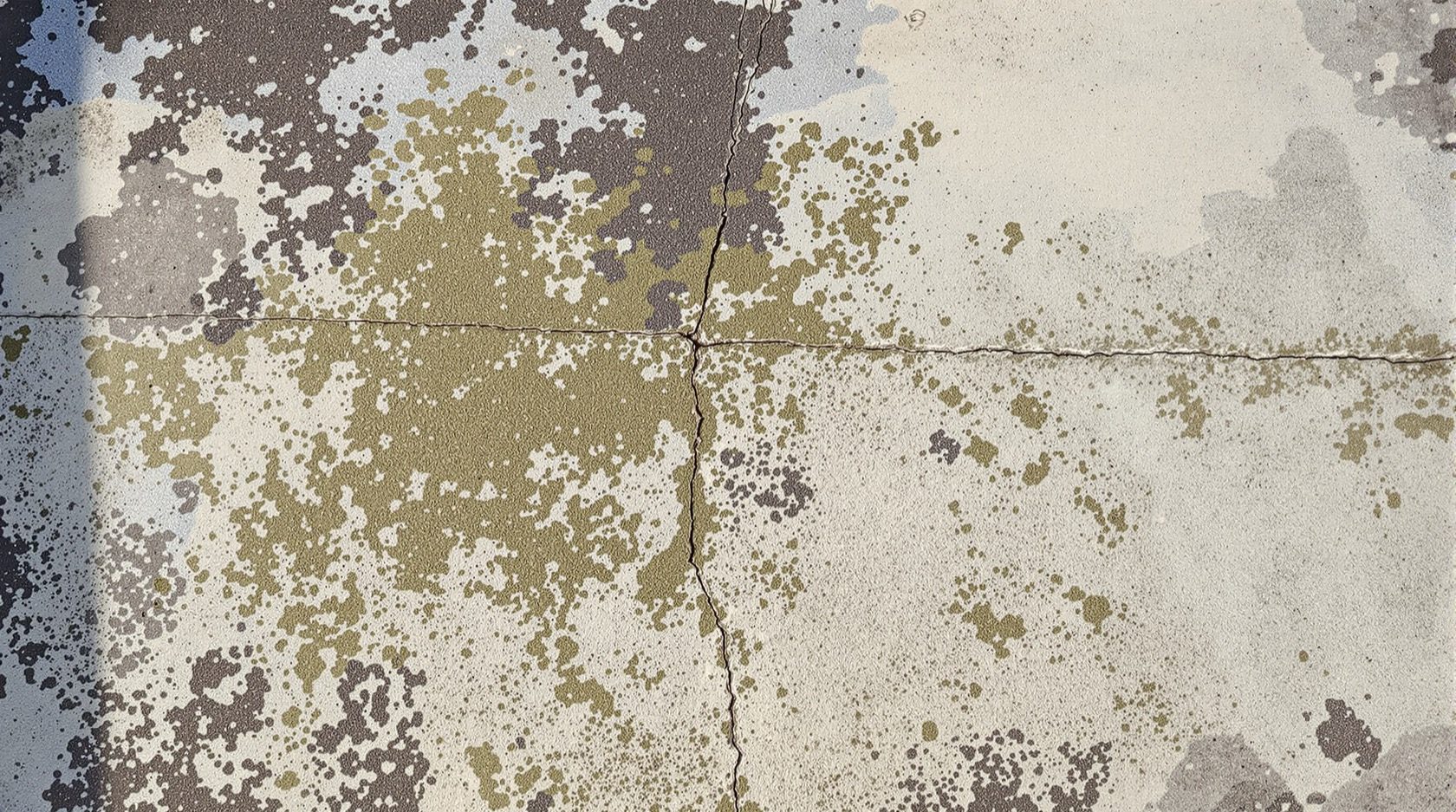
Roof Defects: A Homeowner's Field Guide (India)
The diagnostic catalog that anchors the whole subject — every common roof defect on Indian homes, pictured and named: cracks, damp and efflorescence, ponding, waterproofing blisters, sagging, spalling and rusting rebar, corrosion, algae and moss, parapet and drain-junction failures, slipped tiles and perished fasteners. For each: what it looks like, what it usually means, how serious it is, and exactly who to call.
Every roof ages, and every roof eventually tells you so. The message arrives as a hairline on the terrace, a chalky white bloom creeping across a ceiling, a puddle that never quite dries in one corner, a patch of paint lifting like a blister, a stubborn green stain on a north wall. Read alone, each of these can feel alarming or trivial in the wrong proportion — homeowners routinely panic over a cosmetic map-crack while ignoring a slow, serious sag. The purpose of this guide is to put every common defect in its place: to name it, picture it, explain what it usually means, tell you how serious it is, and point you to exactly who fixes it.
This is the diagnostic catalog of the Roofing Knowledge Hub — the map that anchors the whole subject of roof defects and sits alongside The Ultimate Guide to Roofing Systems. Think of it as a triage desk. You arrive with a symptom; you leave knowing whether it is something to simply watch, something to plan a fix for before the next monsoon, something to call a professional about, or a structural red flag that is urgent — and which spoke guide takes the story further. It is deliberately broad rather than deep: each defect below has, or will have, its own detailed guide, and this catalog sends you there.
Scope & safety. This guide helps you recognise, describe and judge roof defects so you can brief the right professional and make good decisions. Spotting and photographing defects from inside the house, from the ground, and from a safe standing point on your own terrace is homeowner work. Everything else — walking a wet, sloping, sheeted or fragile roof, any work at height, crack injection, waterproofing application, concrete repair, and all structural assessment — is qualified professional work for a licensed roofing/waterproofing contractor and, where the structure is involved, a structural engineer. Never climb onto or walk a roof to fix a defect. Falls from roofs are among the commonest serious home-repair injuries. Nothing here replaces an on-site inspection.
How to use this catalog
A defect is only frightening when you cannot size it up. So this guide gives you two things: a vocabulary (so you can describe what you see precisely instead of "there is a problem on the roof") and a severity scale (so you know how fast to act). We use four severity bands throughout, and they map directly onto what you should do:
- Watch — cosmetic or early-stage. Note it, photograph it, keep an eye on it, and mention it at your next pre-monsoon inspection. No emergency.
- Plan a fix — real but not urgent. Book the repair for the next dry spell before it worsens or lets water in.
- Call a pro — needs a professional to diagnose or repair now; beyond safe homeowner scope.
- Urgent — structural. A sign the structure itself may be compromised. Keep people clear and get a structural engineer promptly.
The single most useful skill is telling these bands apart — especially separating a harmless surface crack from a structural one, and a cosmetic stain from an active, growing leak. The figures and tables below are built to help you do exactly that.
The master triage table — every common defect at a glance
This is the heart of the guide: the full catalog of common roof defects on Indian homes, each with what it looks like, what it usually means, how serious it typically is, and who to call. Use it as a lookup. Then follow the link to the spoke guide for the full diagnosis.
| Defect | What it looks like | Usual cause | Severity | Who to call |
|---|---|---|---|---|
| Hairline / surface cracks | Fine lines, sometimes a random "map" pattern, on plaster or screed | Shrinkage & thermal movement of plaster or the top screed | Watch | Monitor; painter/waterproofer at repaint |
| Wider / through cracks | Cracks you can fit a coin edge into, or that run right through | Thermal cycling, settlement, or structural movement | Call a pro | Waterproofer; engineer if structural |
| Diagonal / stepped cracks at corners | Cracks fanning from slab corners or above openings | Possible structural movement / overload / settlement | Urgent — structural | Structural engineer now |
| Damp patch | A cool, darker area that spreads or deepens after rain | Active leak or ongoing seepage from above | Call a pro | Leak diagnosis & waterproofer |
| Efflorescence | White, chalky, powdery salt bloom on concrete or plaster | Water moving through concrete, depositing salts as it dries | Plan a fix | Damp & efflorescence spoke |
| Mould / musty smell | Black or green speckling in a corner; damp, earthy odour | Persistent hidden moisture, poor drying & ventilation | Plan a fix | Fix source + ventilation |
| Ponding water | A puddle or tide-line that stands for >48 h after rain | Insufficient fall / blocked drainage on a flat roof | Call a pro | Ponding water + drainage |
| Waterproofing blistering | Bubbles or raised welts in the membrane / coating | Trapped moisture or vapour under the waterproofing | Plan a fix | Blistering & peeling spoke |
| Waterproofing peeling / lifting | Coating or membrane flaking, curling or debonding at edges | Aged, poorly-bonded or end-of-life waterproofing | Call a pro | Waterproofing contractor |
| Sagging / deflection | A visible dip, bulge or bounce in slab, sheet or ceiling | Overload, water-logged ceiling, or structural weakness | Urgent — structural | Sagging signs; engineer |
| Concrete spalling | Concrete flaking off, exposing brown, rusting steel below | Water + carbonation corroding rebar, which expands & bursts cover | Urgent — structural | Structural engineer + repair specialist |
| Rust stains from soffit | Brown streaks bleeding from the underside of a slab or beam | Reinforcement corroding inside; often precedes spalling | Call a pro | Engineer to assess cover & corrosion |
| Metal / fastener corrosion | Rust on sheets, screws, flashing; perished washers | Moisture, salt air, dissimilar metals, tired coatings | Plan a fix | Sheet/metal contractor |
| Algae / moss / lichen | Green, black or grey biological staining, thickest on shade | Damp + shade + retained moisture on the surface | Watch | Homeowner-safe from ground; else cleaner |
| Parapet & coping cracks | Cracks along the parapet, loose or open coping joints | Thermal movement of an exposed wall; failed coping seal | Call a pro | Parapets + waterproofer |
| Drain / outlet junction failure | Pooling, staining or cracking around a rainwater outlet | Blocked, undersized or poorly-sealed drain mouth | Call a pro | Drainage + waterproofer |
| Pipe / penetration leaks | Damp or stains around vents, conduits, tank feet | Anything piercing the roof breaks the waterproofing | Call a pro | Waterproofer (re-flashing) |
| Slipped / cracked / missing tiles | Displaced, broken or absent tiles on a sloping roof | Wind, foot traffic, perished battens/fixings, age | Call a pro | Tile/roofing contractor |
| Perished fasteners / laps | Loose, backed-out screws; open or wrong-side sheet laps | Thermal cycling, corrosion, poor original fixing | Plan a fix | Sheet-roofing contractor |
A word on reading this table. Most defects that look dramatic — a green wall, a map of hairlines, a chalky bloom — sit in the gentler bands. The genuinely serious ones are quieter: a slab that has begun to sag, concrete that is spalling because the steel inside is rusting, or a diagonal crack fanning from a corner. Those are the ones that earn the word urgent, because they speak about the structure, not just the surface. When your symptom lands in an "Urgent — structural" row, stop reading and call a structural engineer; everything else can be planned calmly.
Where each defect lives — the roof anatomy map
Defects are not scattered at random. Each one has favourite haunts, and knowing the anatomy of your roof tells you where to look and helps you describe a defect's location precisely. Indian homes are dominated by two forms — the flat / terrace RCC roof and the sloping tiled or sheeted roof — and each has its own defect geography.
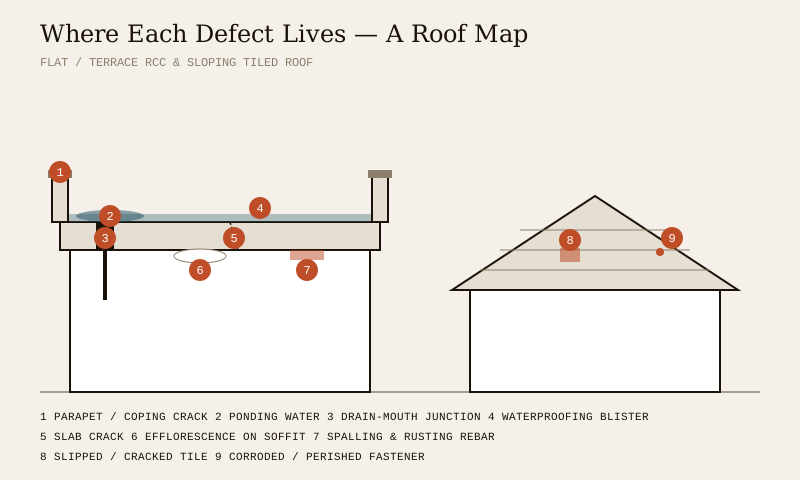
On a flat or terrace roof, water is the enemy and it collects at edges and holes. The top surface shows shrinkage and thermal cracks in the screed, waterproofing blisters and peeling, and the tell-tale tide-line of ponding in any low spot. The parapet-to-slab junction and the drain mouth are the two most common entry points for leaks. Underneath, on the soffit (ceiling), you read the consequences: efflorescence, damp patches, and — most seriously — rust streaks and spalling where reinforcement is corroding. See the RCC roof guide and flat roof design for how these slabs are built.
On a sloping roof, the defects shift to the covering and its fixings: slipped, cracked or missing tiles, perished battens beneath them, corroded or backed-out fasteners on metal and fibre-cement sheets, open or wrong-side laps, and rust on flashing at ridges, valleys and abutments. The valley and the eave are the leak-prone edges here, just as the parapet and drain are on the flat roof. The sloping roof design guide and the roofing sheets guide cover the anatomy in full.
The practical value of this map is precision. "There is damp on the ceiling" invites a vague, expensive quote. "There is efflorescence on the soffit directly below where the terrace ponds near the north-west drain" tells a contractor almost exactly where to look — because, as the leak diagnosis guide explains, water enters at a weak point and travels before it emerges, so the stain is rarely straight below the entry.
The severity triage — turning a symptom into an action
Naming a defect is half the job; knowing how fast to act is the other half. The decision tree below turns any symptom into one of the four action bands. It leads with the two questions that most change the answer: is anything sagging or bulging? (an immediate structural concern), and is the damp or crack active and growing? (the difference between an old dry scar and a live problem).
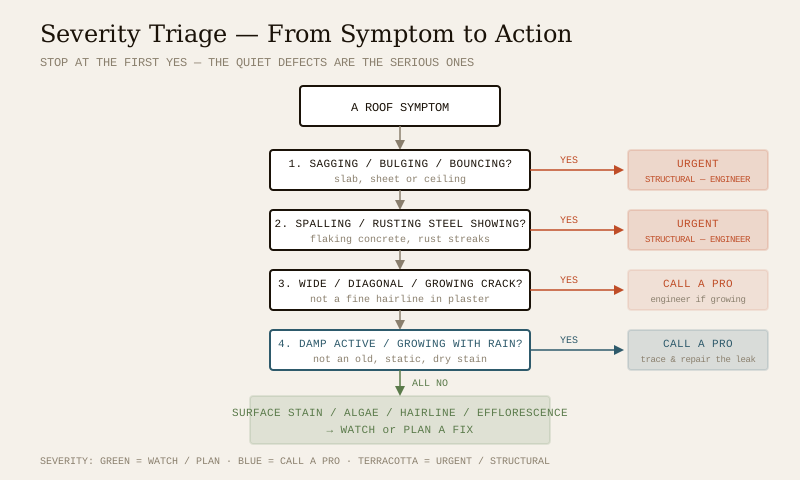
Work down the questions in order and stop at the first "yes":
1. Is anything sagging, bulging or bouncing? A dip in a slab, a bulge in a false ceiling heavy with trapped water, a sheet roof that flexes underfoot — treat as Urgent — structural. Keep people and furniture clear of a bulging ceiling; it can fall. Call an engineer. See sagging & deflection signs.
2. Is concrete flaking off with brown, rusting steel showing? That is spalling — the steel is corroding and bursting its cover. Urgent — structural; a structural engineer must assess the reinforcement.
3. Are cracks diagonal at corners, or wide/through the slab? These can signal movement or overload — Call a pro, escalating to Urgent if they are growing. Hairline surface cracks in plaster or screed do not count here (see the crack comparison below).
4. Is damp active — growing, or darkening with each rain? An active leak is Call a pro: it needs tracing and a proper repair. An old stain that has not changed in years is dry history — Watch.
5. Is it surface staining, algae, efflorescence or a hairline? Cosmetic or early-stage — Watch or Plan a fix. Real, but not an emergency.
The tree encodes the guide's core message: the loud defects are usually the mild ones, and the mild-looking ones can be the serious ones. A wall furred green with algae is almost always a Watch; a barely-visible dip in a slab is an Urgent. Let the questions, not the drama, set your pace.
Hairline or structural? The crack question that trips everyone
More homeowners misjudge cracks than any other defect — either panicking over cosmetic ones or ignoring dangerous ones. Because cracks span the full severity range, they deserve their own comparison. The matrix below sets the harmless kinds against the serious kinds on the signals that actually distinguish them: width, pattern, location, and whether they move.
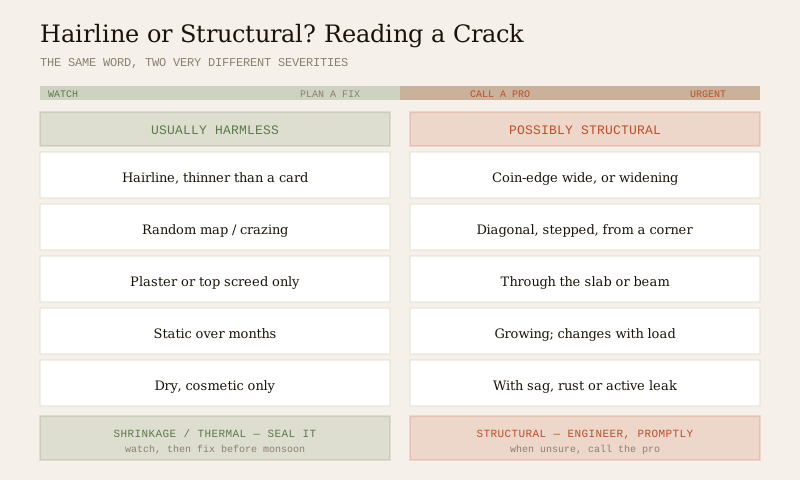
| Signal | Usually harmless (Watch / Plan) | Possibly structural (Call a pro / Urgent) |
|---|---|---|
| Width | Hairline, thinner than a visiting card | Wide enough for a coin edge; or clearly widening |
| Pattern | Random "map" / crazing; fine straight shrinkage lines | Diagonal, stepped, or fanning from a corner or opening |
| Location | In plaster or the top screed only | Running through the structural slab or beam |
| Movement | Static — unchanged over months | Growing in length or width; changes with load/season |
| Company it keeps | Dry; cosmetic only | With sagging, rust staining, spalling, or an active leak |
| What it usually is | Shrinkage & thermal movement of finishes | Structural movement, settlement or overload |
| Severity | Watch → Plan a fix (seal before it lets water in) | Call a pro → Urgent — structural |
The honest rule of thumb: a fine, static, map-like crack in plaster or screed is almost always harmless shrinkage — worth sealing before the monsoon so it does not become a leak path, but not a structural alarm. A crack that is wide, diagonal, growing, running through the slab, or keeping company with a sag or rust stain is a job for a structural engineer, promptly. When you genuinely cannot tell — and it is often hard from the ground — err toward calling a professional. A single inspection fee is trivial against the cost of ignoring a real one. The full treatment lives in the roof cracks spoke guide.
Indicative repair ranges (2026)
Costs vary enormously with city, access, extent and specification, so treat these as indicative 2026 ₹ ranges to frame a conversation, not quotes. Always get two or three local quotes, and be wary of anyone who prices a repair before diagnosing the cause. Many of these have detailed estimators — see the roof cost calculator and waterproofing material calculator.
| Defect / work | Indicative 2026 range | Notes |
|---|---|---|
| Sealing hairline / shrinkage cracks | ₹25–80 per running ft | Crack-fill + flexible coating; often bundled with a repaint |
| Clearing & re-forming a blocked drain mouth | ₹1,500–6,000 per outlet | More if the collar seal must be rebuilt |
| Localised waterproofing patch (junction / crack) | ₹150–400 per sq ft of zone | Depends on system; a targeted repair, not a re-do |
| Full terrace re-waterproofing | ₹60–180 per sq ft | Wide range by system (coating vs membrane vs box-type) |
| Correcting fall to cure ponding | ₹80–200 per sq ft | Re-screeding to a fresh slope + fresh waterproofing |
| Concrete spalling / rebar repair | Engineer-assessed; quote per site | Structural — polymer-modified repair after treating steel |
| Re-fixing / re-sealing sheet fasteners | ₹30–120 per fastener zone | Replace perished washers; correct laps |
| Replacing slipped / broken tiles | ₹40–150 per tile + labour | Plus battens/underlay if perished |
| Structural engineer inspection & report | ₹5,000–25,000+ | Cheap insurance against misreading a serious defect |
The pattern worth absorbing: catching a defect in the Watch or Plan band is cheap; letting it slide into the structural band is expensive. A ₹40-a-foot crack seal today is a fraction of a re-waterproofing next year, which is itself a fraction of a spalling repair the year after. Early triage is not fussiness; it is the cheapest roofing decision you will make. Plan it through the roof maintenance guide.
When to call a professional — the red flags
Most defects can be planned calmly, but a short list of signs means stop, keep clear, and get a qualified professional now. If you see any of these, do not wait for the next inspection:
- Any sagging, dipping or bulging in a slab, sheet roof or ceiling — especially a false ceiling swollen with water, which can fall. Keep the space below it clear. Structural engineer.
- Concrete spalling with exposed, rusting steel, or brown rust streaks bleeding from a soffit or beam. The reinforcement is corroding. Structural engineer.
- Wide, diagonal, stepped or through-cracks, particularly at corners or above openings, and especially if they are growing. Structural engineer.
- An active leak near electrical fittings or wiring. Switch off that circuit, keep clear, and get an electrician plus a waterproofer.
- Multiple leaks or blisters appearing across a roof at once, or ponding that will not clear — the waterproofing system, not a single spot, has failed. Waterproofing contractor.
- Anything that would require you to walk or work on the roof to investigate. That is at-height work — a roofing contractor's job, never a homeowner's.
The dividing principle is simple: surface and cosmetic defects can be planned; anything speaking about the structure, the electrics, or that requires height is a professional's call. When a defect sits on the line, choose the professional. See the roof safety guide for why the at-height line is non-negotiable.
A homeowner-safe defect walk-through (ground & terrace level only)
You can do a genuinely useful defect survey without ever putting yourself at risk, and a good one makes any professional visit faster and cheaper. Keep entirely to safe vantage points: inside the house, from the ground, from windows, and from a stable standing position on your own terrace well away from the parapet edge.
1. Walk every ceiling inside. Note stains, damp patches, efflorescence, mould, peeling paint, and any dip or bulge. Photograph each and note whether it changes after rain.
2. From the terrace (if flat and safely accessible), stay central. Look for standing water and tide-lines, cracks in the screed, blistered or lifting waterproofing, and cracks or loose coping on the parapet — without leaning over the edge.
3. Look at the underside of the slab and beams for rust streaks or flaking concrete — the early signs of spalling.
4. From the ground, study the sloping roof for slipped, cracked or missing tiles, rusted sheets or flashing, and green algae on shaded slopes. Binoculars beat climbing.
5. Check the drains and their mouths for blockage and pooling around them, from a safe reach only.
6. Map and date everything. A simple sketch with photos and dates turns "the roof has problems" into a brief a contractor can act on — and lets you see next season whether a crack or stain is growing.
That is the whole of the safe homeowner job: observe, photograph, describe, and monitor. The moment a task needs a ladder onto the roof, a wet or sloping surface, a tool against a crack, or a judgement about the structure, it stops being yours and becomes a professional's. Pair this walk with the seasonal pre-monsoon inspection.
The one-line answer
Roof defects on Indian homes come from a short, knowable list — cracks, damp and efflorescence, ponding, waterproofing blisters and peeling, sagging, spalling with rusting rebar, corrosion, algae, and junction, drain, tile and fastener failures — and the skill is not fixing them but triaging them. Most loud-looking defects (algae, hairline map-cracks, a chalky bloom) are Watch or Plan-a-fix cosmetics; the quiet ones (a slab beginning to sag, concrete spalling, a diagonal growing crack) are the urgent, structural ones. So name what you see, judge its severity band, do the safe homeowner part — observe, photograph, describe from the ground and terrace — and hand the rest to a licensed waterproofing/roofing contractor or, for anything structural, a structural engineer. Catch defects early and cheaply; never climb a roof to fix one.
Where to go next — the defect spoke guides
- Trace an actual leak to its source: Roof Leak Diagnosis & Repair.
- Judge a crack properly: Roof Cracks: Hairline vs Structural.
- Damp, salt bloom and mould on ceilings: Ceiling Damp, Efflorescence & Mould.
- Water that will not drain: Flat Roof Ponding Water.
- The structural red flag: Roof Sagging & Deflection Signs.
- Bubbles and peeling in the waterproofing: Roof Blistering & Peeling Waterproofing.
- The fixes behind the defects: Roof Waterproofing · Drainage · Maintenance · Renovation & Replacement.
- Get help fast: AI Roofing Assistant · Roofing Homeowner Toolkit · Find a Contractor.
- The whole library: Roofing Knowledge Hub.
References
- IS 456: Plain and Reinforced Concrete — Code of Practice (crack width limits, cover to reinforcement, and durability of RCC slabs — central to reading cracks, spalling and rebar corrosion) — Bureau of Indian Standards.
- IS 3067: Code of Practice for General Design Details and Preparatory Work for Damp-Proofing and Waterproofing of Buildings — Bureau of Indian Standards.
- IS 13182 / IS 1346 / IS 2645: Waterproofing of roofs and integral waterproofing compounds — Bureau of Indian Standards (verify current status and edition).
- National Building Code of India (SP 7), Bureau of Indian Standards — structural safety, and Part 9 (Plumbing Services, including roof drainage); verify the current edition via the BIS catalogue.
- Bureau of Indian Standards catalogue — confirm the current status of any standard before relying on it: https://www.services.bis.gov.in/
This is an educational overview to help you recognise, describe and triage roof defects, not a repair or structural manual. Working at height, walking a roof, crack injection, waterproofing application, concrete repair and any structural assessment are qualified professional work — engage a licensed waterproofing/roofing contractor and, where the structure is involved, a structural engineer, and verify any standard's current status via the BIS catalogue before relying on it.
Export this guide
Related Guides — Deep-dive reading
Roof Leak Diagnosis & Repair
The homeowner's most common roofing crisis, calmly explained — how to read the signs (stains, damp, efflorescence, peeling paint, drips, a musty smell), why the leak is almost never right above the stain, where roofs actually leak, how leaks are traced, and the honest line between what you can safely check yourself and what needs a professional. India-grounded, monsoon-tested.
RoofingCracks in Your Roof & Slab: What They Mean and When to Worry
Not every crack is a crisis, and not every crack is harmless. A calm, India-grounded field guide to reading cracks on RCC roofs, terraces, parapets and ceiling plaster — hairline vs map vs structural, what each type means for leaks and for the structure, the safe homeowner job of observe-photograph-measure-monitor, and the exact patterns that mean call a structural engineer today.
RoofingCompound Wall Repair and Maintenance in India: Cracks, Rust and Structural Fixes (2026)
A plain, India-grounded guide to keeping an existing boundary wall safe and good-looking — a routine, periodic and annual maintenance calendar, how to tell a harmless shrinkage crack from a dangerous structural one, how to treat rust on gates, railings and reinforcement, and exactly when a leaning or badly-cracked wall stops being a homeowner job and becomes an engineer's emergency.
Compound WallsRelated Tools — Try Free
Monsoon-Readiness Checklist
Pre-rain home audit across 9 categories — terrace, drains, waterproofing, electrical, HVAC, pest, vehicles, documents.
Seasonal AuditRainwater Tank Sizer
How big should your rainwater tank be? Computes annual harvest, recommended tank capacity in litres, water-bill savings, and payback — for 10 Indian cities.
RWH CalculatorFalse Ceiling Cost Estimator
Live ₹/sqft across 8 ceiling types — POP, gypsum, designer, metal, PVC, wooden — with cove and spot lighting for 20 Indian cities.
Cost Calculator