
Compound Wall Repair and Maintenance in India: Cracks, Rust and Structural Fixes (2026)
A plain, India-grounded guide to keeping an existing boundary wall safe and good-looking — a routine, periodic and annual maintenance calendar, how to tell a harmless shrinkage crack from a dangerous structural one, how to treat rust on gates, railings and reinforcement, and exactly when a leaning or badly-cracked wall stops being a homeowner job and becomes an engineer's emergency.
A compound wall is the one part of a house that nobody thinks about until it stains, cracks or leans — and by the time it leans, the cheap fix is long gone. Most walls do not fail suddenly; they fail slowly, sending warning signs for months or years, and a wall that is cleaned, drained and repainted on a sensible rhythm can outlast the house behind it. This guide is about keeping an existing wall safe and good-looking, and — just as important — reading the signs that tell you a crack is harmless cosmetic ageing versus the first move of a wall that is coming down.
This is the repair-and-maintenance guide for the Compound Walls and Gates hub. It assumes the wall is already built and standing, and it works alongside the waterproofing guide (coping, DPC and keeping water out), the drainage guide (weep holes and channels that stop water building up behind the wall), and the foundation guide (what is under the wall, and why movement there shows up as cracks above). The single most useful skill here is triage: knowing which jobs you can safely do yourself, and which mean stop, cordon off and call a licensed structural engineer.
Scope & how to read this. This guide helps you maintain, inspect and triage an existing wall, and it is deliberately conservative because a compound wall is life-safety: a tall, leaning or retaining wall that lets go can collapse onto a person, a car or the road. Cosmetic upkeep is homeowner-scope — cleaning, clearing weep holes, touch-up paint, treating surface rust, sealing hairline plaster cracks. Anything about stability is engineer-led — a wall that leans, bulges, has wide or stepped or growing cracks, or is a retaining wall is designed, diagnosed and certified by a licensed structural engineer, never eyeballed or patched over. Every interval and figure below is typical and indicative to help you plan — confirm the specifics against the relevant IS codes (IS 1905 masonry, IS 456 RCC, IS 1904 foundations) and a qualified professional. Security fittings, toppings and automation live in the Perimeter Security library, not here.
A maintenance programme that actually gets done
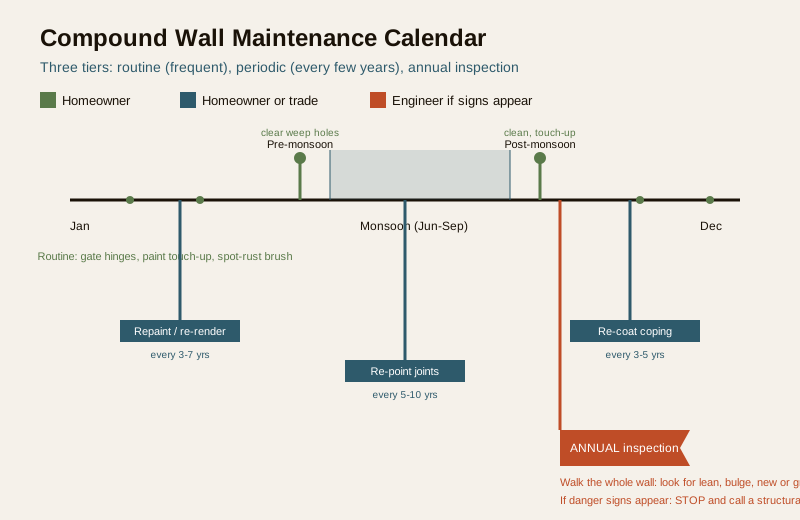
The walls that last are not the expensive ones — they are the looked-after ones. Maintenance works best as a rhythm with three tiers: quick routine jobs you barely notice, heavier periodic jobs every few years, and a proper annual inspection that catches movement early. The trick is to make the routine tier so small it always happens, because most serious wall damage starts as a blocked weep hole or a hairline crack that let water in and was ignored.
Routine: the small, frequent jobs
These are the ten-minute jobs, done a few times a year and especially at the start and end of the monsoon. Clean the wall face of dirt, algae and the green-black biofilm that grows on damp shaded plaster. Clear the weep holes and any drainage channel at the base so water never ponds against the wall — this one job prevents more damage than any other, and the drainage guide explains why trapped water is a wall's worst enemy. Touch up chipped or flaking paint before bare plaster starts drinking rainwater. Oil the gate hinges, check the gate is swinging true and its posts are firm, and wire-brush the first specks of rust off gate and railing before they spread.
Periodic: the every-few-years jobs
Every three to seven years, depending on exposure and finish, the wall wants heavier care. Repaint or re-render the face — exterior paint is a wearing surface, and a repaint on schedule is far cheaper than repairing the water-damaged plaster you get by skipping it; the exterior wall paint guide covers system choice and timing. Re-point the mortar joints on exposed brick or stone where the pointing has eroded or fallen out, so the joints keep shedding water rather than channelling it in. Check the coping and re-coat any waterproofing on the top and any retaining face — the coping is the wall's umbrella, and a cracked or lifted coping quietly soaks the whole wall; the waterproofing guide walks through coping, DPC and re-coating.
Annual: the inspection that catches the big one
Once a year — ideally just after the monsoon, when ground movement and water damage are freshest — walk the whole wall slowly and look for movement, not just dirt. Sight along the top and the face for any lean, bow or bulge. Look at the base for new cracks, at the piers for separation, and at any retaining section for signs it is being pushed. Note whether last year's hairline cracks have grown or multiplied. This is the inspection that turns a future collapse into a cheap early fix — and the one where, if you see the danger signs in the next section, you stop and call an engineer rather than reaching for filler.
| Maintenance task | Typical interval | Who does it |
|---|---|---|
| Wash off dirt, algae and biofilm from the wall face | 2-3 times a year, and after monsoon | Homeowner |
| Clear weep holes and base drainage channels | Before and after monsoon | Homeowner |
| Touch up chipped or flaking paint | As needed, few times a year | Homeowner |
| Oil gate hinges, check gate swing and posts | Every few months | Homeowner |
| Wire-brush and spot-treat early surface rust | On sight, few times a year | Homeowner |
| Repaint / re-render the wall face | Every 3-7 years (exposure-dependent) | Homeowner or painter |
| Re-point eroded mortar joints (exposed brick/stone) | Every 5-10 years | Mason |
| Check coping and re-coat waterproofing | Every 3-5 years, or on any leak | Homeowner or applicator |
| Full walk-round inspection for movement (lean, bulge, cracks) | Annually, after monsoon | Homeowner; engineer if signs appear |
| Diagnose any structural crack, lean, bulge or retaining-wall distress | On appearance — do not wait | Licensed structural engineer |
Reading cracks: harmless versus dangerous
Every masonry and plastered wall cracks a little — it is a rigid thing sitting outdoors through heat, cold and monsoon, and some cracking is simply the material breathing. The skill is not being alarmed by every line, but knowing the handful of patterns that mean the structure, not just the surface, is in trouble. Get this one distinction right and you will neither panic over a cosmetic hairline nor ignore the crack that matters.
Cracks that are usually harmless
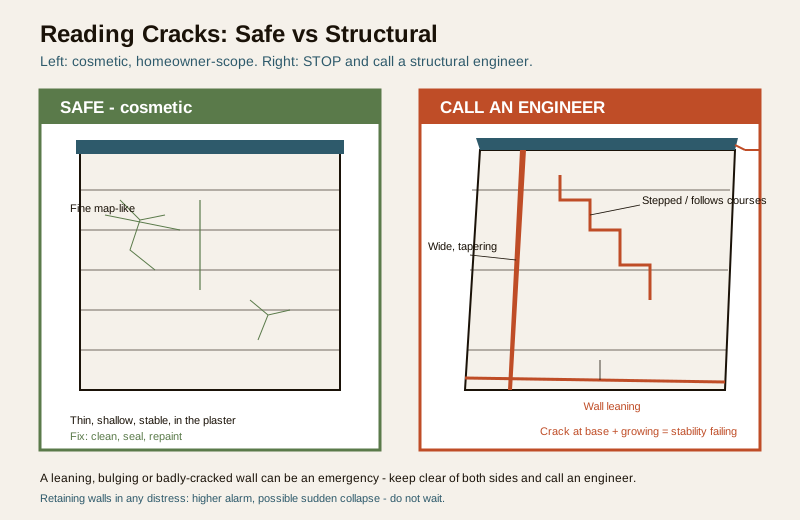
Most cracks you see are in the plaster or render, not the wall body, and are cosmetic. Shrinkage cracks are fine, shallow, often map-like or randomly branching hairlines that appear as new plaster or a fresh coat cures and dries; they are thin, stable and do not move once settled. Thermal and surface crazing — a network of fine lines from the wall heating and cooling — is the same story. These do not gape, do not step down along the brick courses, and do not grow year on year. The fix is cosmetic: clean out the crack, seal it, and repaint — homeowner-scope, and the exterior paint guide covers filling and finishing.
Cracks that mean stop and call an engineer
A crack is a structural warning when it is telling you the wall or its foundation is moving. Treat any of these as a reason to stop patching and get a licensed structural engineer: a crack that is wide (you can slip a coin or your fingernail deep into it) or clearly tapering wider at one end; a stepped, diagonal crack that follows the mortar courses in a staircase pattern, the classic signature of foundation movement or settlement; a crack at or near the base of the wall, or one running along a course as if the wall is hinging; a crack that is growing, lengthening or multiplying between inspections; and any crack that comes with a lean, bow or bulge in the wall. These say the foundation or stability is failing — the wall is telling you it may come down. Filling such a crack does nothing but hide the evidence; the foundation guide explains why movement below shows up as cracks above.
Retaining walls are a special, higher alarm
If the wall holds back earth — a level difference, a slope, a cut-and-fill plot — the bar is higher still. Any bulge, forward lean, cracking, or water and soil pushing through means the earth pressure is winning, and a retaining-wall failure can be sudden and catastrophic. Do not wait, do not load the top, keep people away from both sides, and call an engineer immediately; the retaining walls guide explains why these walls are strictly engineer territory from design through repair.
| Warning sign | What it usually means | Homeowner action |
|---|---|---|
| Fine, shallow, map-like hairline in plaster; stable | Shrinkage / thermal crazing (cosmetic) | Safe: clean, seal, repaint |
| Single thin vertical crack, not moving, not at base | Minor surface or settlement, matured | Safe: monitor, then seal and paint |
| Stepped / diagonal crack following the mortar courses | Foundation movement or settlement | STOP: call a structural engineer |
| Wide or tapering crack (coin or fingernail slips in) | Active structural movement | STOP: call a structural engineer |
| Crack at the base, or wall hinging along a course | Foundation or stability failing | STOP: cordon off, call an engineer |
| Crack that has grown, lengthened or multiplied since last check | Ongoing, active movement | STOP: call a structural engineer |
| Any lean, bow or bulge in the wall | Overturning or stability failure | Emergency: keep clear, call an engineer |
| Bulge, lean or cracking in a retaining wall | Earth pressure winning; possible sudden collapse | Emergency: keep both sides clear, call an engineer now |
Rust: gates, railings and reinforcement
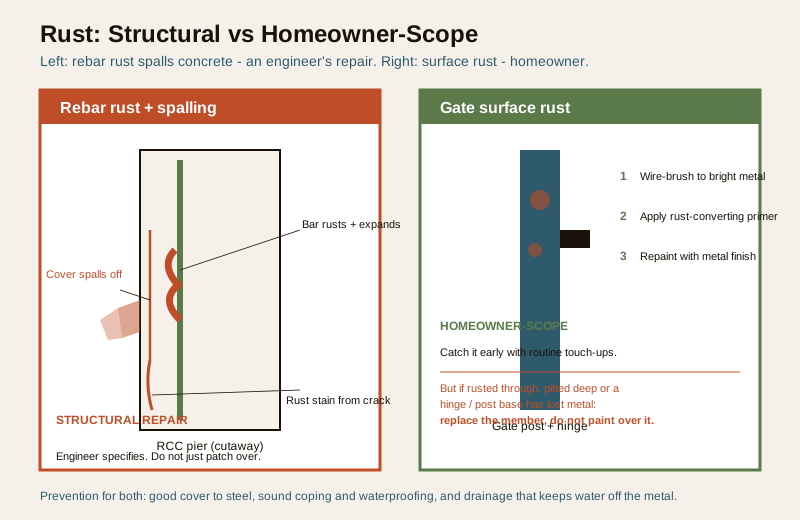
Steel and water do not mix, and a compound wall has steel in three places: the gate and railings you can see, and the reinforcement bars (rebar) hidden inside piers, copings and any RCC. Rust on the first two is a cosmetic and maintenance job you can stay on top of; rust in the third is a structural problem that shows itself, tellingly, as cracking and spalling concrete.
Surface rust on gates and railings
Caught early, gate and railing rust is homeowner-scope. Surface rust is the light orange film and flaking on otherwise sound metal — wire-brush or sand it back to bright metal, apply a rust-converting primer, and repaint with a suitable metal finish, and the item is good for years. The judgement call is how deep it has gone: if the steel is only surface-rusted it cleans up and re-coats fine, but if a section is rusted through, pitted deep, flaking in thick scales, or a hinge, post base or bracket has lost real metal, it is no longer surface rust — that member needs a fabricator to cut out and replace the wasted steel, because a rusted-through gate post can drop a heavy gate. Keep on top of it with the routine wire-brush-and-touch-up habit and it rarely reaches that stage.
Rebar rust and spalling: when rust turns structural
The dangerous rust is the kind you cannot see directly — the reinforcement inside the concrete. When water and salts reach the steel (through cracks, thin cover, or a porous coastal-air wall), the rebar rusts, and rusting steel expands to several times its original volume. That expansion pushes the concrete cover off from the inside: first a crack along the line of the bar, then a stain, then the cover spalls — flakes and falls away — exposing the rusted, thinned bar beneath. Rust stains weeping from a crack, cracks running in straight lines along where a bar sits, and lumps of concrete cover breaking off are the signature of rebar corrosion, and they mean the reinforcement is losing section and the concrete is failing to protect it. This is not a filler job. Patching over spalling without treating the steel and finding why water got in just delays and hides the problem — it is a structural repair that an engineer specifies, especially on any pier, coping or RCC or retaining element. The prevention is upstream: good cover, sound coping and waterproofing, and drainage that keeps water off the steel.
Repainting and refinishing the wall
Repainting is the most visible maintenance job and the one most worth doing on schedule, because paint is the wall's weather coat as much as its looks. The rhythm is simple: repaint before the old coat has failed, not after, so bare plaster never gets a chance to soak up rain. Wash the wall down, let it dry fully, seal any cosmetic hairline cracks, spot-prime bare or repaired patches, and re-coat with an exterior-grade system suited to the exposure — the exterior wall paint guide covers choosing between the options and how many coats. If you are changing the look rather than just refreshing it, the broader menu of renders, textures and finishes is in the wall finishes library. One rule holds throughout: paint is a finish, not a repair. A fresh coat over a moving structural crack, spalling concrete or a damp patch simply hides the fault and buys the problem more time to get worse — fix the cause first, finish last.
When it is a homeowner job and when it is an emergency
The whole guide comes down to one line you should hold onto: cosmetic fixes are yours; stability is an engineer's. Cleaning, clearing drains, touch-up paint, sealing hairline plaster cracks, treating surface rust and repainting are all safe homeowner jobs, and doing them faithfully is what keeps a wall out of trouble. But the moment a wall leans, bulges, shows a wide or stepped or growing crack, cracks at the base, spalls concrete around rusting steel, or is a retaining wall in any distress, it has crossed out of maintenance into structure — and structure is designed, diagnosed and certified by a licensed structural engineer. A leaning or badly-cracked wall is not a weekend project to defer; it can be an emergency, because a collapsing compound wall falls on whatever is beside it. When in doubt, keep people and vehicles clear of both sides, and get it looked at — the structural-safety library and the foundation problems guide explain what the engineer will be assessing.
How it connects
- Sits under the Compound Walls and Gates hub and pairs with the waterproofing guide (keeping water out), the drainage guide (weep holes and channels) and the foundation guide (what movement below does to the wall above).
- For the danger signs and structural side: foundation problems for homeowners, the retaining walls guide (higher alarm, always engineer-led) and the Structural Safety library.
- For rust and materials: TMT steel and concrete strength explain why rebar corrosion spalls concrete.
- For refinishing: the exterior wall paint guide and the wall finishes library; security fittings live in the Perimeter Security library.
- Planning a bigger repair or rebuild? The compound wall cost calculator puts an indicative band on the work.
Key takeaways
- Walls fail slowly and send warnings for months — a cleaned, drained and repainted wall on a sensible rhythm outlasts a neglected one, and the smallest routine job (clearing weep holes) prevents the most damage.
- Run maintenance in three tiers: routine (clean, clear drains, touch-up, gate check), periodic (repaint, re-point, re-coat coping every few years) and an annual post-monsoon inspection for movement.
- Harmless cracks are fine, shallow, stable hairlines in the plaster; dangerous cracks are wide, tapering, stepped along the courses, at the base, growing, or paired with a lean or bulge — those mean STOP and call a structural engineer.
- Surface rust on gates and railings is homeowner-scope (wire-brush, prime, repaint); rebar rust that cracks and spalls the concrete is a structural repair an engineer specifies, and rusted-through metal must be replaced, not painted.
- Paint is a finish, not a repair — never coat over a moving crack, spalling or damp; fix the cause first.
- Cosmetic fixes are homeowner-scope; a leaning, bulging, badly-cracked or retaining wall is an engineer's job and can be an emergency. Every interval here is indicative — confirm against IS 1905, IS 456 and IS 1904 and a licensed engineer.
References
- IS 1905, Bureau of Indian Standards — code of practice for structural use of unreinforced masonry (brick, stone and block walls; named generally).
- IS 456, Bureau of Indian Standards — code of practice for plain and reinforced concrete (RCC piers, coping and cover to reinforcement; named generally).
- IS 1904, Bureau of Indian Standards — code of practice for design and construction of foundations in soils (settlement and foundation movement; named generally).
- National Building Code of India, NBC (SP 7:2026), Bureau of Indian Standards — general building, maintenance and structural-safety provisions.
- Local municipal bye-laws and development-control regulations — boundary-wall safety, repair and maintenance obligations (city-specific).
- A licensed structural engineer's inspection report — the authoritative source for diagnosing any lean, bulge, structural crack or retaining-wall distress on your specific wall.
All maintenance intervals, crack descriptions and repair notes here are indicative planning and literacy aids only; confirm the governing specification against the relevant IS codes and NBC (SP 7:2026), follow your local municipal bye-laws, and have a licensed structural engineer diagnose, design and certify any repair to a leaning, bulging, structurally-cracked, spalling or retaining wall.
Export this guide
Related Guides — Deep-dive reading
The Homeowner's Guide to Compound Walls and Gates in India (2026)
A plain-language, start-to-finish walkthrough of building a boundary wall and gate in India — plan and permit first, then material and height, foundation and structure, building and supervision, the gate, finishes, lighting and greenery, budget and long-term upkeep — with a stage-by-stage roadmap, a full planning checklist and answers to the questions every homeowner asks.
Compound WallsCompound Wall Piers and Columns in India: Spacing, Reinforcement and Stability (2026)
Why a long, free-standing boundary wall needs intermediate piers or RCC columns to stay up — the physics of overturning in plain terms, thickened masonry piers vs reinforced-concrete columns on footings, indicative spacing that an engineer sets to your height and wind zone, the coping or tie beam that braces the top, and where to break a long run with movement joints.
Compound WallsCompound Wall Waterproofing in India: Coping, DPC and Damp Protection (2026)
A plain, India-grounded guide to keeping water out of your boundary wall — the three ways rain and ground damp get in, and the three defences that stop them: a proper overhanging coping with a drip on top, a damp-proof course and plinth-protection band at the base, and a breathable rain-resistant render and paint on the face. Plus efflorescence, drainage and coastal care.
Compound WallsRelated Tools — Try Free
Monsoon-Readiness Checklist
Pre-rain home audit across 9 categories — terrace, drains, waterproofing, electrical, HVAC, pest, vehicles, documents.
Seasonal AuditDoor Paint Calculator
Estimate paint and primer litres and cost to paint your doors by size, number of doors, coats and paint type.
Door CalculatorRainwater Tank Sizer
How big should your rainwater tank be? Computes annual harvest, recommended tank capacity in litres, water-bill savings, and payback — for 10 Indian cities.
RWH Calculator