
Ceiling Damp, White Salts & Black Mould: Reading the Stains (India)
The brown patch, the white powdery bloom and the black speckle on a top-floor ceiling are three different messages from the same enemy — moisture. Learn to decode each, tell a leak from condensation, and know exactly who to call. India-grounded, monsoon-tested.
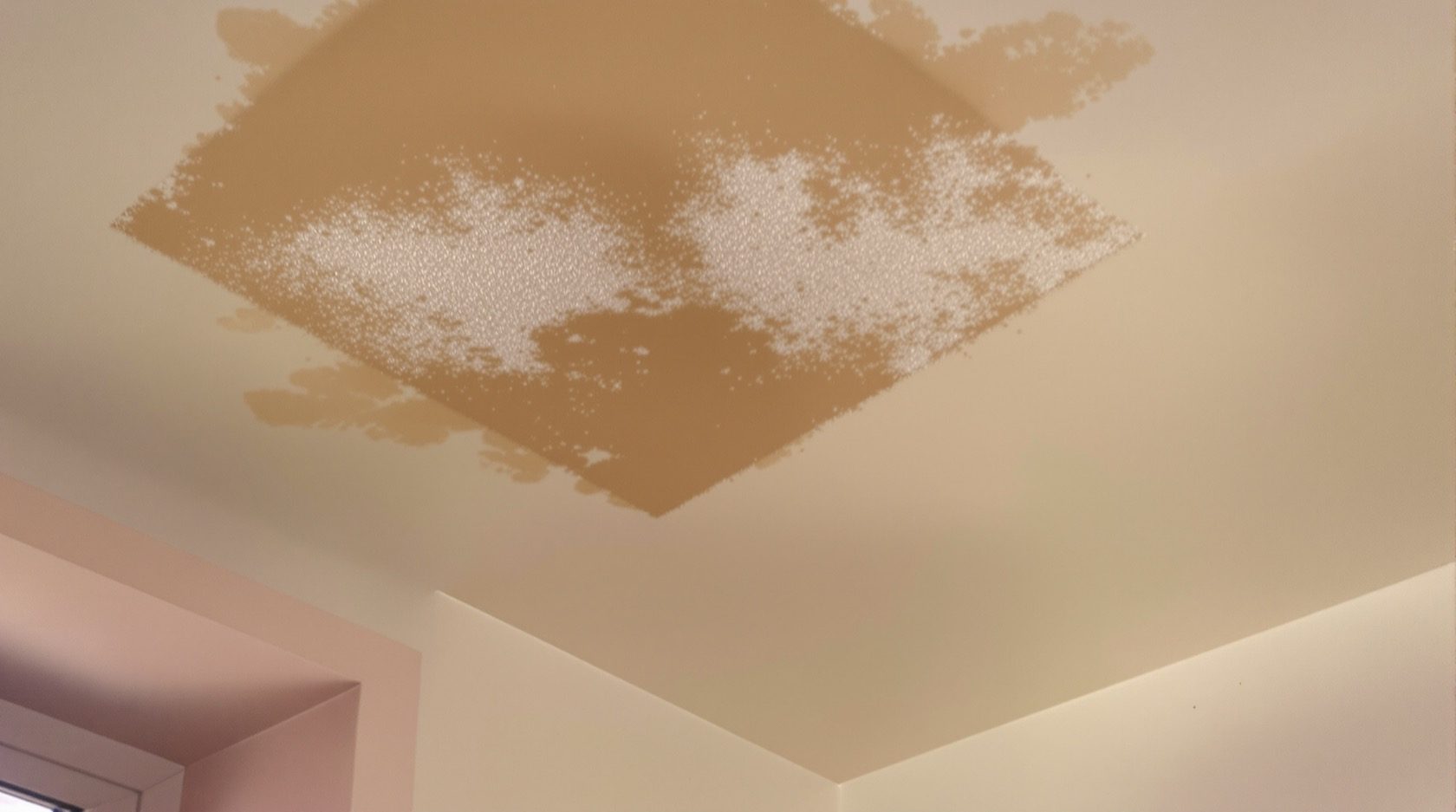
Look up at a top-floor ceiling in the third week of an Indian monsoon and it will often be telling you something. A brown ring or spreading damp patch. A crust of white, powdery salt that wipes off on your finger. A creeping speckle of black or green in the corner above the almirah. These are not three unrelated problems — they are three different signs of the same enemy, moisture, each written in a different hand. Learn to read them and a ceiling stops being a source of dread and becomes a diagnostic panel.
This is a defects-and-diagnosis guide in the Roofing Knowledge Hub, a companion to The Ultimate Guide to Roofing Systems and a close sibling of the roof leak diagnosis guide. Here the question is narrow and practical: my ceiling has damp / white salt / black mould — what does it mean, how serious is it, and who do I call? The single most valuable skill this guide teaches is the one homeowners most often get wrong — telling a leak from condensation, because they look alike on the ceiling but need completely opposite cures.
Scope & safety. Everything here is about reading and describing what appears on your ceiling from inside the house — that is genuinely safe and useful, and it lets you brief a professional precisely. Tracing the leak at roof level, any work at height, waterproofing application, crack repair and re-plastering are qualified work for a licensed waterproofing/roofing contractor and, where a slab or crack is involved, a structural engineer. Do not climb onto a wet or parapet-edged roof to investigate. If mould is extensive or anyone in the home has a persistent cough, breathlessness or allergy that worsens indoors, treat that as a medical question and speak to a doctor — this guide does not give health advice.
What's actually going on — the sign is the symptom, not the cause
Every one of these three signs is moisture telling on itself. Water is either arriving at the underside of your slab or moving through it, and the stain, the salt and the mould are just three ways that moisture becomes visible. The crucial mental shift is this: the mark on the ceiling is the symptom; the water path is the cause. Wiping the salt off, or bleaching the mould, clears the symptom and changes nothing about the water. It comes back — usually next monsoon, often worse — because the moisture path is still open.
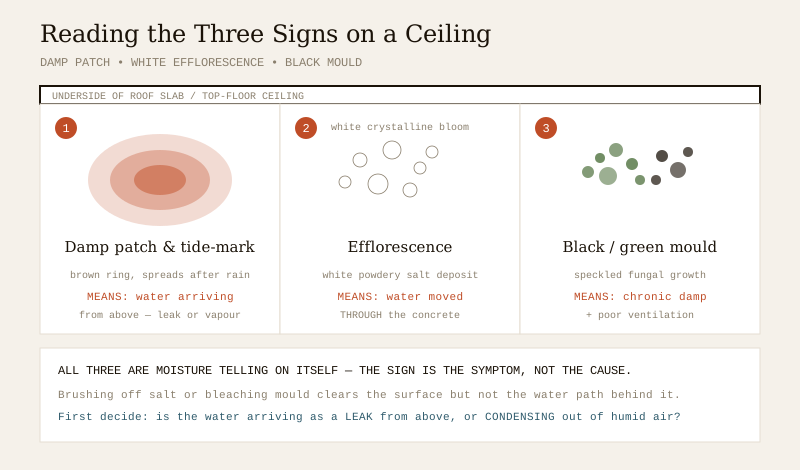
So the diagnostic order is always the same. First, identify which sign (or combination) you have. Then ask the one question that decides everything: is the water arriving as a leak from above, or condensing out of humid air onto a cold surface? Those two answers lead to two entirely different cures — waterproofing and drainage on one side, insulation and ventilation on the other — and the commonest, most expensive mistake in Indian homes is spending on one when you needed the other.
Sign 1 — damp patches, brown tide-marks and active wet spots
A damp patch is the most familiar sign: a darker, cooler area on the ceiling, sometimes ringed with a brown or yellowish tide-mark where water has repeatedly soaked out and dried, leaving dissolved dirt and salts at the edge. A patch that grows, darkens or reappears with each rain is active; one that has stayed exactly the same size and colour for years is old and dry. The tide-mark itself is a useful clock — concentric brown rings are the fingerprints of many wet-and-dry cycles.
What a damp patch tells you is simply that water is reaching the ceiling. It does not by itself tell you whether that water is a leak or condensation — that is Sign 1's limitation and exactly why the leak-vs-condensation test below matters. What it does tell you, if it is localised and worst right after rain, is that you are probably looking at a leak; if it is a broad, even film that appears in humid weather without rain, condensation moves up the list.
One fact worth internalising from the leak diagnosis guide: with a real leak, the wet spot is rarely directly below where water got in. Water enters at a weak point up on the roof — a failed waterproofing membrane, a ponding low spot, a parapet junction, a crack, a drain mouth — then travels along the top of the slab and down through the concrete before emerging. So a damp patch is a pointer to the roof, not a map of the entry point.
Sign 2 — efflorescence, the white salt bloom
Efflorescence is the white, powdery or lightly crystalline deposit that blooms on concrete or plaster — a chalky crust that brushes off as a fine powder. It is not mould, it is not "the wall breathing", and it is not harmless decoration. Efflorescence is physical proof that liquid water has moved through the concrete or plaster. Water dissolves soluble salts inside the cement, mortar and any masonry; it carries them to the surface; and when the water evaporates at the ceiling face, the salts are left behind as the white bloom. No moving water, no efflorescence.
That is why brushing it off is purely cosmetic. You remove this season's salt, but the water path that delivered it is untouched, so it returns. Worse, in some cases salts crystallising just under a painted or plastered surface (sometimes called sub-florescence) push the finish off from behind — which is one reason paint blisters and plaster spalls near chronically damp patches. So efflorescence is best read as a moisture-path alarm: it is telling you, unambiguously, that water is travelling through the slab or plaster to reach that spot.
Because efflorescence proves through-movement of liquid water, it points more strongly toward a leak / seepage cause than toward pure surface condensation — though a slab that stays chronically damp for any reason can bloom. Treating it means treating the water: fixing the source above and, only after the concrete has been allowed to dry and the salts neutralised or removed by a professional, re-plastering and repainting. Painting over live efflorescence simply feeds the next bloom.
Sign 3 — black and green mould
Mould — the black, green or grey speckle that creeps across a ceiling, often starting in a still corner — is a living thing, and it needs three simultaneous ingredients: moisture, a surface to grow on, and stagnant, poorly ventilated air. It is the classic signature of chronic damp plus poor ventilation, which is why it thrives in shut-up top-floor rooms, behind wardrobes pushed against an outside wall, and in bathrooms and kitchens where humid air lingers.
A brief, neutral health note: mould in living spaces is generally undesirable, and some people — particularly those with asthma, allergies or reduced immunity — are more sensitive to it than others. This guide is not a medical resource. If mould is widespread, or if anyone in the home has a persistent cough, wheeze, breathlessness or allergy that is clearly worse indoors, please raise it with a doctor. Our lane is the building cause.
And here is the building point that saves money: bleaching mould off is not the cure. Wiping it with a bleach or a proprietary anti-fungal wash removes what you can see and can be a reasonable interim clean-up on a small patch in a well-ventilated room — but if the moisture source and the poor ventilation remain, the mould simply regrows. The durable cure is always two-part: eliminate the moisture source (fix the leak, or stop the condensation) and improve ventilation so the surface no longer stays wet. Bleach treats the bloom; drying the surface treats the cause. For a room that is chronically humid rather than leaking, the answers live in the roof ventilation guide and the roof insulation guide.
The decisive question: is it a leak or condensation?
This is the fork the whole guide turns on, because a leak and condensation can produce an identical-looking damp patch and yet demand opposite cures. Get this wrong and you will waterproof a roof that needed insulation, or insulate a slab that needed waterproofing — and the ceiling will stay wet while your money is gone.
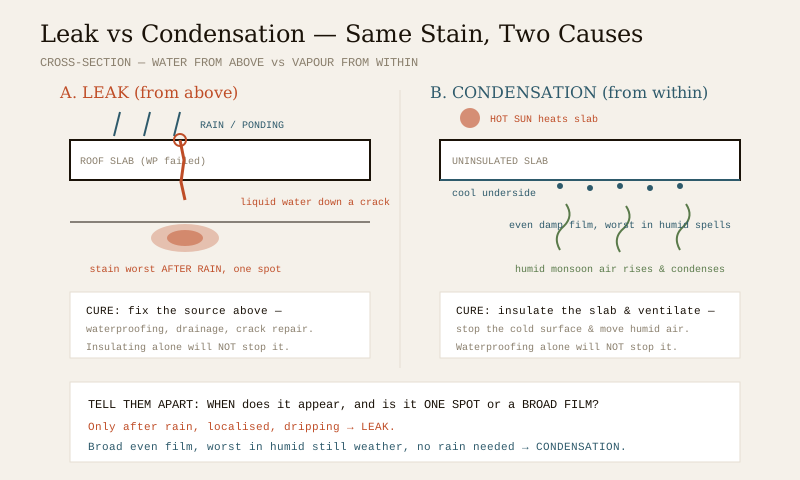
A leak is liquid water arriving from above — through failed waterproofing, a crack, a ponding low spot, a parapet junction or a penetration. Condensation is water vapour from the humid air inside the room turning to liquid when it touches a cold surface — classically the cool underside of an uninsulated RCC slab. In the Indian monsoon the setup is perfect: the sun bakes the top of the slab by day, the room below is comparatively cool, the air is saturated with humidity, and moisture condenses on the ceiling much as it beads on a cold water bottle. That is not a hole in your roof; it is physics.
Here is how to tell them apart from the ground, safely:
| Clue | Points to a LEAK | Points to CONDENSATION |
|---|---|---|
| When it appears | During or right after rain; dries between spells | In humid, still weather; no rain needed |
| Pattern | Localised, often one spot; may drip | Broad, even film or beading over a wide area |
| Worst location | Below a specific roof feature (drain, parapet, crack) | Coldest surfaces — corners, under an uninsulated slab, near a bathroom |
| Tide-marks | Concentric brown rings from wet-and-dry cycles | Diffuse dampness, less ringed |
| Season logic | Tracks the rain | Tracks humidity & temperature difference |
| Dripping | Can drip actively | Rarely drips; more of a persistent surface wetness |
| The cure | Waterproofing / drainage / crack repair | Insulation / ventilation / cool roof |
The tie-breaker most homeowners can apply themselves: note exactly when the damp appears. If it is faithfully tied to rain and sits in one spot, you are chasing a leak — hand it to the leak diagnosis and waterproofing route. If it is a broad film that blooms in muggy, rain-free weather, especially on a top floor under a bare slab, you are fighting condensation — and the fix is to stop the cold surface and move the air, via insulation and ventilation. Some ceilings suffer both; a professional inspection settles it.
Sign → source → leak or condensation → cure → who to call
Put the three signs and the leak/condensation split together and you get a single triage table. Use it to name what you are seeing before you call anyone.
| Sign on ceiling | Likely source | Leak or condensation? | Real cure | Who to call |
|---|---|---|---|---|
| Brown patch, worst after rain, one spot | Failed WP, crack, ponding, parapet/drain junction above | Leak | Trace & fix source, re-waterproof, correct drainage | Waterproofing / roofing contractor |
| Broad damp film, humid weather, top floor | Vapour condensing on a cold uninsulated slab | Condensation | Insulate slab; ventilate; cool-roof to lower slab temp | Insulation / ventilation contractor |
| White powdery / crystalline bloom | Liquid water moving through concrete/plaster, carrying salts | Usually leak / seepage | Fix water source, dry the slab, neutralise salts, then re-plaster | Waterproofing contractor + plasterer |
| Peeling / blistering paint near damp | Trapped moisture & sub-surface salts behind the film | Either | Cure moisture first, let dry fully, then re-finish | Waterproofing + painter |
| Black / green mould speckle | Chronic damp + stagnant air | Either (find which) | Remove moisture source and ventilate; clean surface | Diagnose source first, then contractor |
| Sagging / bulging false ceiling | Water pooling above a gypsum/POP ceiling | Leak (urgent) | Keep clear; professional releases & traces it | Contractor NOW; do not stand under it |
| Musty smell, no visible mark yet | Hidden persistent moisture, poor drying | Either | Ventilate; investigate before it becomes a stain | Inspection |
Two rules ride along with this table. First, an efflorescence bloom or a musty smell can precede a visible stain — they are early warnings, worth acting on before the monsoon. Second, treat any sagging or bulging false ceiling as urgent: a waterlogged gypsum or POP ceiling is heavy and can come down without warning, so keep people and furniture clear and get a professional to release it safely.
The decision tree — from stain to the right cure
If you remember one thing, make it this flow: identify the sign, decide leak-or-condensation by when and how it appears, and route to the matching spoke.
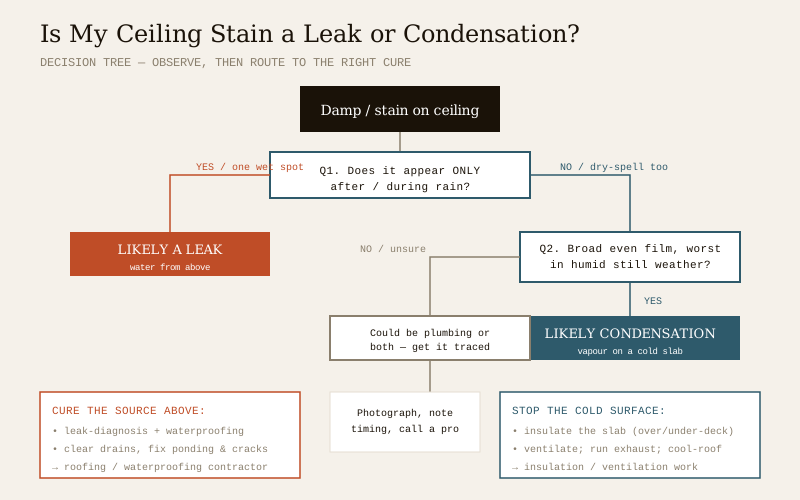
The tree is deliberately blunt because the two big cures are genuinely different trades. A leak branch ends at leak-tracing, waterproofing, drainage and crack repair — roofing and waterproofing work. A condensation branch ends at insulation, ventilation and cool-roof measures. And the middle branch — unsure, or appears in dry spells too — is a reminder that not every ceiling damp is the roof: a plumbing leak (an overhead tank, a bathroom above, a chased water line) can mimic all three signs and appears regardless of rain. When the pattern does not fit rain or humidity, ask a professional to check the plumbing before you touch the roof.
Indicative cost of the real fixes (2026 ₹, get local quotes)
Costs vary enormously with city, access, roof area, the extent of damage and the system chosen. Treat these as rough planning ranges to sanity-check quotes, not prices — always get two or three local quotes. Diagnosis-only visits are cheap and worth it; they stop you buying the wrong cure.
| Work | Indicative range (2026 ₹) | Notes |
|---|---|---|
| Professional damp / leak diagnosis visit | ₹500–3,000 per visit | Often adjusted against the repair; flood/hose test may add cost |
| Localised crack / junction repair + local WP | ₹3,000–15,000 per spot | Single defined fault; depends on access & height |
| Full terrace re-waterproofing | ₹60–180 per sq ft | Wide band by system (acrylic, PU, APP membrane, brickbat coba); see waterproofing |
| Over-deck roof insulation (condensation cure) | ₹40–150 per sq ft | Board / screed system; see insulation & over-deck vs under-deck |
| Cool-roof reflective coating | ₹15–60 per sq ft | Lowers slab temperature; helps condensation & heat; see cool roof |
| Mould remediation + re-plaster + repaint (per room) | ₹5,000–30,000+ | After the moisture source is fixed and the slab has dried |
| Improving ventilation (exhaust fan / vent) | ₹1,500–10,000 | Simple, high-value for condensation & mould |
Use the roof cost calculator and roof area calculator to scope a re-waterproofing or insulation job, and the waterproofing material calculator to estimate materials before you brief a contractor.
When to call a professional — and the red flags
Reading your ceiling is the safe, useful part you do yourself. Acting on the roof is not. Call a licensed roofing / waterproofing contractor for any at-height inspection, leak trace, waterproofing, crack repair or re-plaster, and a structural engineer for anything that suggests the slab itself is in trouble. These are the red flags that mean stop reading and call now:
- A ceiling that is sagging, bulging or soft, or a false ceiling holding water — keep clear; it can fall.
- A crack that is growing, wide, diagonal, or leaking with rust-stained water (a sign water is reaching the reinforcement) — possible structural issue, engineer first. See roof cracks.
- Damp near light fittings, fans or wiring — switch off that circuit and keep clear; water and electricity do not mix.
- Efflorescence or damp that keeps returning after two or three monsoons of patching — the system, not the spot, has failed; think re-waterproofing or, with condensation, a proper insulation solution.
- Mould spreading fast or over a large area, especially with anyone in the home reporting worsening respiratory symptoms — fix the building cause and consult a doctor on the health side.
- Any temptation to climb onto the roof to look — that is exactly the moment to stay on the ground and call someone. Falls from roofs are among the commonest serious home-repair injuries; see roof safety.
A homeowner-safe checklist (inside & ground level only)
You can do all of this without leaving the safety of your rooms or the ground — and doing it well makes any contractor's job faster and cheaper.
1. Identify the sign(s): damp patch, white efflorescence, black mould, peeling paint, musty smell — note each one.
2. Photograph everything, with a phone date-stamp, over several days — a growing stain is the single most useful evidence.
3. Note the timing precisely: does it appear only after rain (leak), all through humid spells without rain (condensation), or regardless of weather (suspect plumbing)?
4. Note the pattern: one localised spot, or a broad even film? Worst in one corner, or under a bare slab?
5. Keep rooms ventilated: open windows on dry days, run exhaust fans, pull furniture a little off chronically damp walls so air can move — this alone slows mould.
6. Keep the roof drains clear from a safe, reachable position at ground or terrace level — a choked outlet causes ponding, a leading leak cause. Do not lean over a parapet or climb to reach one.
7. Keep clear of any sagging ceiling and switch off circuits near wet fittings.
8. Brief the contractor with your notes and photos — describe the sign, the timing and the pattern, and let them do the at-height tracing.
Never do on the roof: climb onto or walk a wet, sloping, sheeted or parapet-edged roof; cut into a slab, screed or ceiling; apply waterproofing; inject a crack; or run a flood test. All of that is professional work.
The one-line answer
Ceiling damp speaks in three signs — a brown patch (water is arriving), white efflorescence (water is moving through the concrete, carrying salts), and black mould (chronic damp plus poor ventilation) — and every one of them is a symptom, not a cause. Wiping salt, painting over a stain or bleaching mould only clears the surface; the water path stays open and it returns. So identify the sign, then answer the one question that decides the cure: is it a leak (localised, worst after rain → waterproofing, drainage, crack repair) or condensation (a broad film in humid weather on a cold uninsulated slab → insulation and ventilation)? Read and describe it safely from inside and the ground, keep rooms ventilated and drains clear, and route the at-height tracing, waterproofing and any re-plaster to a licensed contractor — and a structural engineer if a crack or sag suggests the slab itself is in trouble.
Where to go next
- The homeowner's most common crisis: Roof Leak Diagnosis & Repair.
- The wider family of faults: Roof Defects Guide · Roof Cracks Guide · Flat-Roof Ponding Water · Roof Blistering & Peeling Waterproofing.
- The cure when it is a leak: Roof Waterproofing Guide · Roof Drainage Guide.
- The cure when it is condensation: Roof Insulation Guide · Roof Ventilation Guide · Cool Roof Guide.
- The slab most of this lives on: The RCC Roof Guide.
- Catch it before it starts: Pre-Monsoon Roof Inspection · Roof Maintenance Guide.
- Plan the fix: Roof Cost Calculator · Waterproofing Material Calculator · AI Roofing Assistant.
- The whole library: Roofing Knowledge Hub.
References
- IS 3067: Code of Practice for General Design Details and Preparatory Work for Damp-Proofing and Waterproofing of Buildings — Bureau of Indian Standards (the core reference for damp-proofing and waterproofing detailing).
- IS 456: Plain and Reinforced Concrete — Code of Practice (cracks, cover and durability of RCC slabs) — verify current status via the BIS catalogue.
- IS 13182 / IS 1346 / IS 2645: waterproofing and integral-waterproofing standards — Bureau of Indian Standards.
- National Building Code of India (SP 7), Bureau of Indian Standards — roof drainage and moisture management; verify the current edition via the BIS catalogue: https://www.services.bis.gov.in/
This is an educational overview to help you read and describe ceiling damp, efflorescence and mould, not a repair or medical manual. Working at height, leak tracing, waterproofing application, crack repair, re-plastering and any structural assessment are qualified professional work — engage a licensed waterproofing/roofing contractor and, where the structure is involved, a structural engineer; route health concerns to a doctor; and verify any standard's current status via the BIS catalogue before relying on it.
Export this guide
Related Guides — Deep-dive reading
Roof Leak Diagnosis & Repair
The homeowner's most common roofing crisis, calmly explained — how to read the signs (stains, damp, efflorescence, peeling paint, drips, a musty smell), why the leak is almost never right above the stain, where roofs actually leak, how leaks are traced, and the honest line between what you can safely check yourself and what needs a professional. India-grounded, monsoon-tested.
RoofingBathroom Waterproofing Failure in India: Causes, Diagnosis & Fixes (2026)
Why bathroom waterproofing fails in Indian homes — poor surface prep, thin coats, missed junctions, no membrane turn-up, damage during tiling — how to read the symptoms, and whether a surface fix or a full redo is the right remedy.
BathroomsRoof Defects: A Homeowner's Field Guide (India)
The diagnostic catalog that anchors the whole subject — every common roof defect on Indian homes, pictured and named: cracks, damp and efflorescence, ponding, waterproofing blisters, sagging, spalling and rusting rebar, corrosion, algae and moss, parapet and drain-junction failures, slipped tiles and perished fasteners. For each: what it looks like, what it usually means, how serious it is, and exactly who to call.
RoofingRelated Tools — Try Free
Monsoon-Readiness Checklist
Pre-rain home audit across 9 categories — terrace, drains, waterproofing, electrical, HVAC, pest, vehicles, documents.
Seasonal AuditFalse Ceiling Cost Estimator
Live ₹/sqft across 8 ceiling types — POP, gypsum, designer, metal, PVC, wooden — with cove and spot lighting for 20 Indian cities.
Cost CalculatorPlumbing Pressure-Test & Leak Checklist
Pre-closure pressure and leak test — 9 categories, 60+ checkpoints across water supply, drainage, fixtures, waterproofing, hot water, tanks.
Pre-Closure Test