
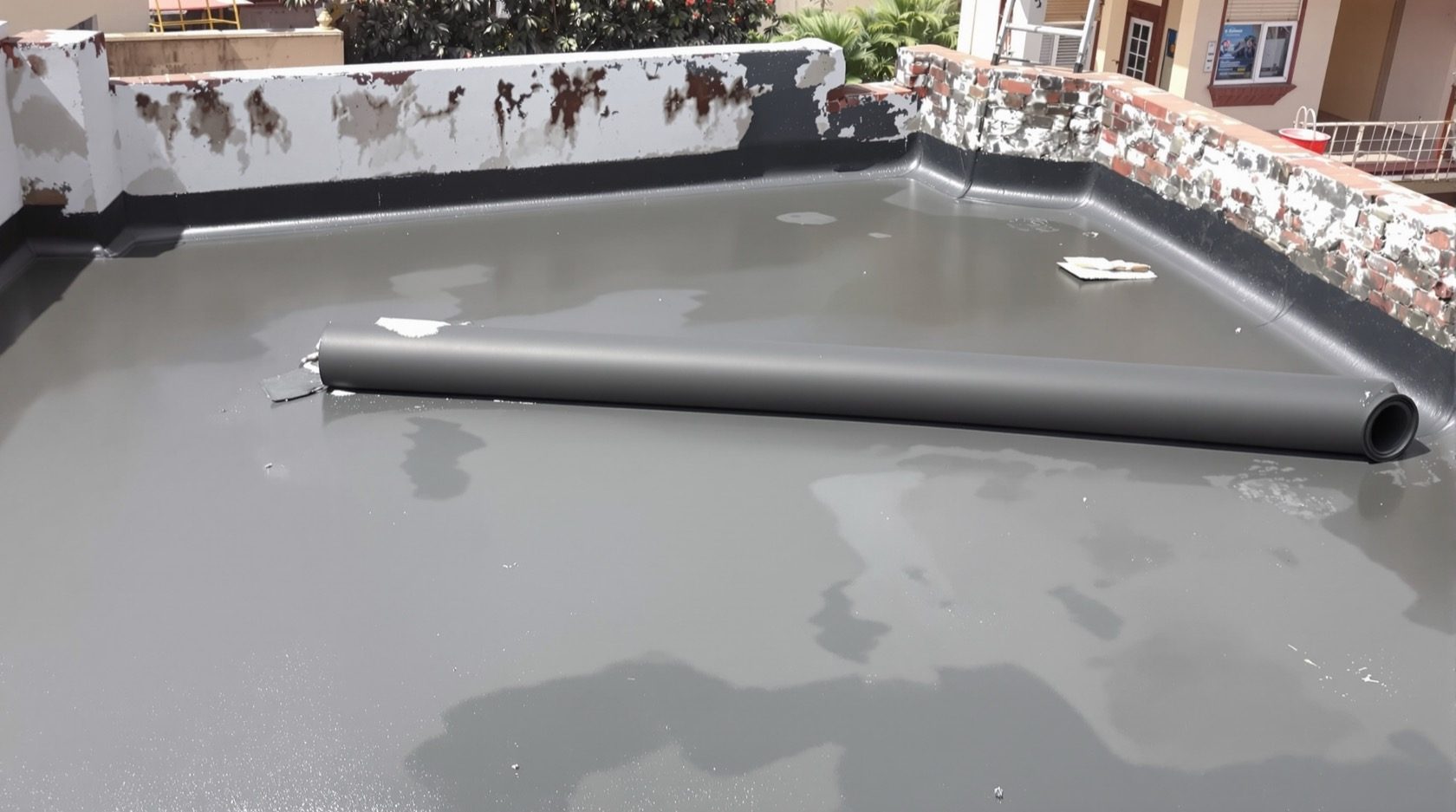
The Roof Renovation & Replacement Guide
When to fix, when to re-do and when to tear off — reading the warning signs on an ageing Indian roof, making the repair-vs-replace call, re-waterproofing a tired RCC terrace, re-roofing a sloping roof, and hiring a contractor you can trust. Plain language, India-grounded.
Every roof ages. The waterproofing that was fresh a decade ago goes brittle, the terrace that never quite drained starts to pond, a hairline becomes a damp patch on the bedroom ceiling, and one monsoon morning you are standing under a bucket. Renovating or replacing a roof is one of the biggest, most disruptive and most misunderstood jobs a homeowner faces — and the one where a confident contractor is most likely to sell you either far too little (a patch that fails next year) or far too much (a full tear-off you did not need).
This is the fix-it guide of the Roofing Knowledge Hub, and the practical companion to the Ultimate Guide to Roofing Systems. It will not turn you into a structural engineer or a waterproofing applicator — but it will let you read the warning signs, make the repair-vs-replace call, understand what a proper renovation involves, budget it honestly, and judge the contractor who quotes for it. In other words: know which decisions are yours and which to hand to a specialist.
Scope & safety. This guide helps you understand, plan, choose and judge a roof renovation. Structural assessment, load calculation, waterproofing application and any working-at-height are qualified professional work for a structural engineer and a licensed roofing contractor. A roof that sags, cracks or spalls is a possible structural warning — do not walk on it or load it, and get an engineer before anyone works on it. Nothing here replaces a site-specific inspection.
Read the warning signs first
A roof rarely fails without warning. It gives you months, sometimes years, of hints — if you know where to look. Most are visible from inside the house or from a safe vantage; a few need a professional on the roof. Learn to tell a cosmetic niggle from a structural alarm.
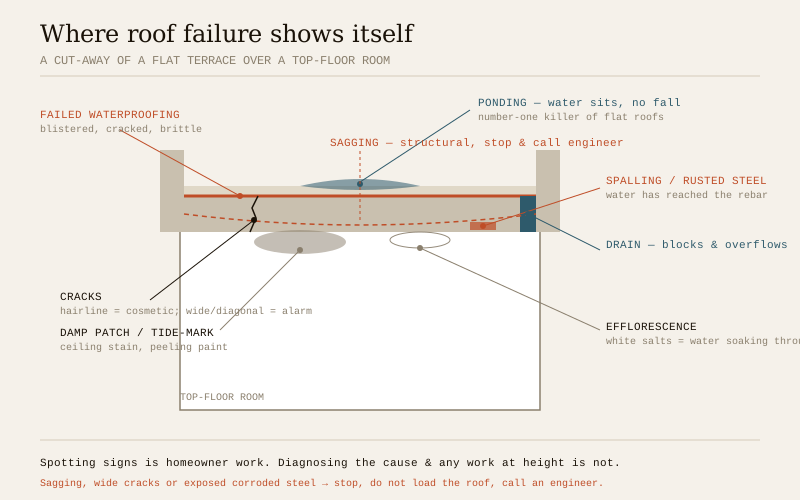
- Leaks and damp patches. Brown rings or tide-marks on the ceiling, peeling paint, a musty smell. A leak almost always means the waterproofing layer has failed somewhere — often at a joint, drain or parapet, not in the middle.
- Efflorescence and dampness. White salty deposits or persistent damp on the underside of the slab mean water is soaking through the concrete over a wide area — a sign the whole membrane, not one spot, is tired.
- Cracks. Fine hairline cracks in plaster are common and usually cosmetic. Wide, lengthening, or diagonal cracks — especially with rust stains — are a structural warning and an engineer's job, not a painter's.
- Sagging or a springy floor. A roof that visibly dips, or a terrace that feels bouncy underfoot, points to a structural problem in the slab, beam or (on sloping roofs) the truss and rafters. Stop loading it and call an engineer.
- Ponding. Water that sits on a flat roof for more than a day or two after rain — because the slope (the fall) is too flat or a drain is blocked — is the number-one killer of flat roofs. It works water through the membrane and adds dead load.
- Failed waterproofing you can see. Blistering, cracking, peeling, chalky brittleness or plants growing in the surface all say the membrane is at or past the end of its life.
- Rust, spalling and exposed steel. Rust streaks and concrete flaking off to reveal reinforcement (spalling) mean water has reached the steel — serious, and structural. On RCC roofs this needs prompt professional repair.
- Sloping-roof tells. Slipped, cracked or missing tiles; rusted or loose metal sheets; daylight through the roof; sagging ridge lines; and blocked or overflowing gutters.
The honest line between what you can do and what you cannot: spotting the signs is homeowner work; diagnosing the cause and fixing anything at height is not. Never walk a wet, mossy, fragile or sagging roof to investigate — that is exactly the roof most likely to give way.
The repair-vs-replace decision
This is the decision the whole guide turns on, and the one where money is won or lost. Patch too eagerly and you pay again and again; replace too eagerly and you spend lakhs you did not need to. The honest way to decide balances four things: how old the roof is, how widespread the damage is, whether the structure is sound, and how the numbers compare.
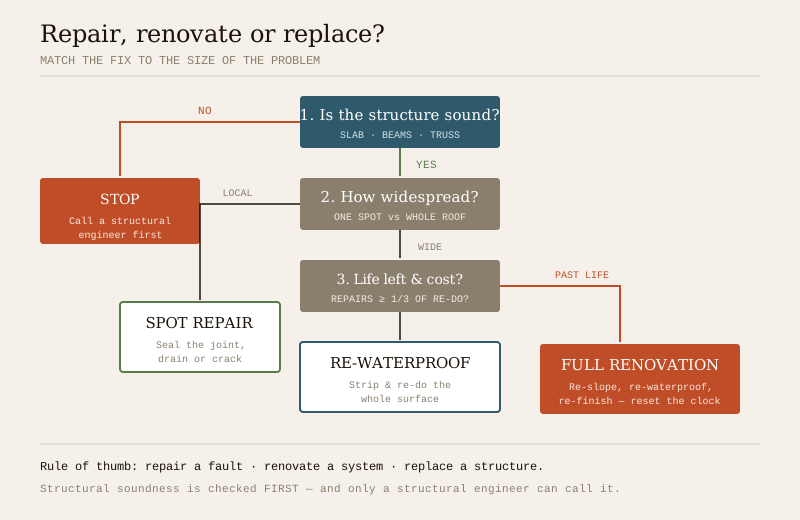
Work through it in this order:
1. Is the structure sound? If the slab, beams, truss or rafters are compromised — deep spalling with corroded steel, structural cracks, real sagging — no surface repair is safe or lasting. This decides everything, and only a structural engineer can call it.
2. How widespread is the damage? One leak at a known joint is a spot repair. Water soaking through over large areas, brittle membrane everywhere, chronic ponding — that is a whole-system problem, and patching it is throwing good money after bad.
3. How much life is left? A membrane near the end of its rated life (see the table below) that is failing in one place is usually failing everywhere; re-doing the whole surface once is cheaper than five annual patches.
4. What do the numbers say? As a rough rule, when the cumulative cost of repairs over a few years starts to approach a third to a half of a full re-do, replacement is the better value — and it resets the clock with a warranty.
| Situation | Sensible response |
|---|---|
| Single leak at a known joint, drain or crack; rest of roof sound | Spot repair — seal the detail, watch it |
| Waterproofing brittle / blistered across the whole terrace; structure sound | Re-waterproof the whole surface (strip & re-do) |
| Widespread damp through the slab; ponding; membrane long past its life | Full renovation — re-slope, re-waterproof, re-finish |
| Sagging, structural cracks, corroded exposed steel | Stop, call a structural engineer before anything else |
| Sloping roof: a few slipped or broken tiles | Spot repair — replace tiles, check battens |
| Sloping roof: widespread rust / rot / repeated leaks | Re-roof — new covering, likely new underlay |
A useful mindset: repair a fault, renovate a system, replace a structure. Match the size of the intervention to the size of the problem.
Re-waterproofing an old RCC terrace
The single most common roof renovation in urban India is re-waterproofing a tired flat RCC terrace. The old surface — often a decades-old brick-bat coba or a cracked cement screed — has given up, and water is finding its way in. Done properly, a re-waterproofing is not a coat of paint slapped over the problem; it is a sequence, and skipping steps is why so many jobs fail within a year.
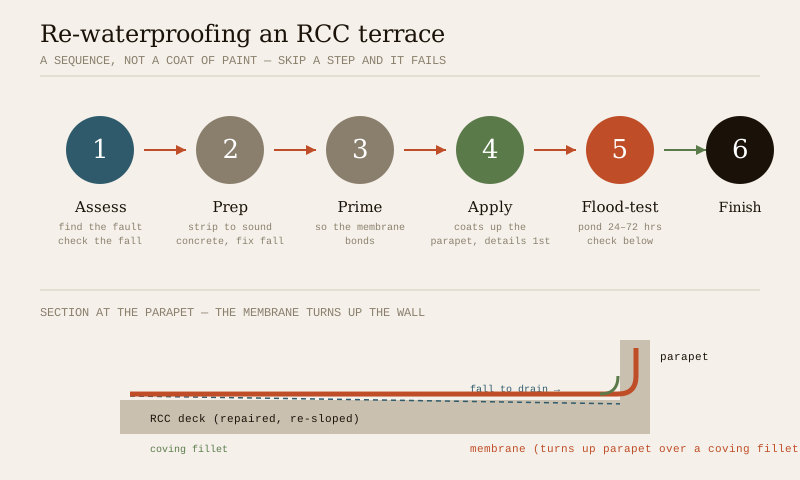
The proper sequence a good contractor follows:
1. Assess & diagnose. Find where water actually enters — usually joints, drains, parapet junctions and cracks, not the open field. Check the slope (fall) toward the drains.
2. Strip & prepare the surface. Remove failed old waterproofing and loose material down to sound concrete. Clean, repair cracks, and — critically — fix the fall so water runs to the drains and never ponds. Round off the wall-to-floor junctions with a coving fillet so the membrane can turn up the parapet.
3. Prime. Apply the primer the chosen system needs so the membrane bonds to the deck. Skipping the primer is a classic cause of peeling.
4. Apply the membrane. Lay the chosen system in the correct number of coats or layers, turning it up the parapet and dressing it carefully around every drain and pipe. Details fail before fields do, so the details get the most care.
5. Flood-test. Plug the drains, pond the terrace with water for 24 to 72 hours, and check the ceilings below for any ingress before the protective finish goes on. This is the step most often skipped and the one that proves the job.
6. Protect & finish. Lay the wearing course — tiles, a reflective screed or china-mosaic — that shields the membrane from sun and foot traffic and, ideally, reflects heat (see the cool-roof upgrade below).
Choosing the system is its own decision — liquid-applied acrylic and polyurethane coatings, torch-applied APP/SBS bitumen membranes, or newer crystalline treatments each suit different budgets, exposures and terrace uses. The full comparison lives in the roof waterproofing guide; the golden rule for a renovation is that the best system laid on a badly prepared, badly sloped surface will still fail — preparation and fall matter more than the brand on the bucket.
Re-roofing a sloping or tiled roof
A pitched roof ages differently. Because it sheds water by gravity, it forgives more than a flat roof — but tiles slip and crack, metal sheets rust and work their fixings loose, timber battens and rafters rot or get eaten, and the underlay perishes. Re-roofing runs on a spectrum:
- Spot repair — replace a handful of slipped or broken tiles, re-fix loose sheets, clear the gutters. The cheapest, and right when the covering is broadly sound.
- Re-cover — strip the old tiles or sheets and lay new covering on the existing structure, usually with a fresh underlay and often new battens. Right when the covering is widely failed but the truss and rafters are sound.
- Full re-roof — new covering and repairs or renewal of the timber or steel structure beneath. Needed when rot, corrosion or sagging has reached the frame — an engineer decides.
Renovation is also the natural moment to reconsider the covering itself: a leaking, heavy old tile roof can become a lighter, faster metal roof — but changing the covering changes the load, the slope needs and the look, so it is a design decision, not just a swap. Always inspect and treat the structure and underlay while it is exposed; re-covering over rotten battens is a false economy you will pay for again.
Assess the structure before you add load
A special, high-stakes case: using a renovation to add a floor, a heavy terrace garden, a large water tank, or solar array to an existing roof. An older slab or foundation was designed for the loads of its day — piling a new storey or a saturated roof garden on top can overload it dangerously.
This is non-negotiable engineering work. Before any added load, a structural engineer must assess the existing slab, beams, columns and foundation — and may specify strengthening, or rule the addition out. No contractor's reassurance substitutes for this assessment. The loads themselves are governed by IS 875 and the design by IS 456; both are the engineer's domain, not the homeowner's, but knowing they exist tells you what a proper assessment rests on. If you are contemplating this, treat it as new construction on an old base and read the roof planning guide for new homes alongside an engineer's report.
Upgrade while the roof is open
A renovation is the cheapest chance you will ever get to make an old roof perform like a modern one — because the surface is already stripped and the labour is already on site. Two upgrades pay for themselves:
- Insulation. If the top-floor rooms bake, add an over-deck insulation layer during a flat-roof renovation, or insulate the rafter/ceiling plane during a re-roof. Retrofitting insulation later, as a standalone job, costs far more than adding it now (see over-deck vs under-deck insulation).
- A cool roof. Finish the terrace with a high-reflectance, light-coloured surface — a cool-roof coating, reflective tiles or china-mosaic — instead of a heat-absorbing dark screed. A flat terrace can hit 65°C in summer; a reflective finish can drop the surface and the rooms below by several degrees for little extra cost.
Renovation is also the moment to make a roof solar-ready or fix long-standing drainage problems, since the surface and details are already open. Do the boring upgrades now; retrofitting them later means opening the roof all over again.
The typical sequence of a roof renovation
Whatever the scale, a renovation runs in a predictable order. Knowing it lets you follow the job and spot a contractor cutting corners:
1. Inspect & diagnose — find the real cause, not just the symptom (engineer involved if structure is in question).
2. Decide — repair, renovate or replace, using the logic above.
3. Specify & quote — agree the exact system, scope, sequence and finish in writing before work starts.
4. Strip & prepare — remove failed layers, expose and repair the deck or structure, fix the fall.
5. Structural repair (if needed) — crack repair, spalling treatment, strengthening — before anything is covered up.
6. Waterproof / re-cover — apply the membrane or lay the new covering, details first.
7. Test — flood-test a flat roof; check a sloping roof in the first heavy rain.
8. Finish & protect — wearing course, insulation, cool finish, drainage.
9. Warranty & handover — get the written warranty, the product details and a maintenance note.
The rule that runs through all nine: never cover up a layer until the one beneath it is proven. Water tests before finishes; structural repair before waterproofing; sound battens before new tiles.
Budgeting — what drives the cost
Roof renovation costs swing enormously, so treat any single per-square-foot number with suspicion. What actually drives the bill:
- Scope — a spot repair, a full re-waterproofing and a structural strengthening are different orders of magnitude.
- The system chosen — a basic acrylic coating, a torch-applied membrane and a premium polyurethane system sit at very different price points and lifespans.
- Surface preparation — the more stripping, crack repair and re-sloping needed, the higher the labour.
- Access and height — a difficult or tall roof needs scaffolding and safety measures that add real cost.
- Structural work — any engineer-specified repair or strengthening is a separate, and often the largest, line.
- The finish — plain screed versus reflective tiles, china-mosaic or a terrace garden.
Two budgeting principles save homeowners the most money over time. First, buy lifespan, not just price: a system that lasts 15 years at a higher upfront cost usually beats a cheap coating redone every three. Second, insist on line-item quotes — surface preparation, system, coats, finish, warranty — so you can compare like with like and see where a cheap quote has quietly dropped the preparation or the flood-test. A terrace waterproofing cost calculator can sanity-check a quote, but the written scope matters more than the headline figure.
How to hire and judge a roofing contractor
The roof is only as good as the hands that lay it, and waterproofing especially is a craft where the same materials can last fifteen years or fail in one depending on the applicator. How to choose well:
- Ask for the diagnosis, not just a price. A good contractor inspects, explains why the roof is failing and what they will do about it. One who quotes a number without finding the cause is guessing.
- Get a written, itemised scope. System, number of coats, surface preparation, detailing at drains and parapets, the flood-test, the finish, and the timeline — in writing.
- Insist on the flood-test. A contractor who resists water-testing a flat roof before finishing is telling you something. Make it a written condition of payment.
- Check references and past work. Ask to see terraces they did three or more monsoons ago — that is the real test, not a fresh job.
- Get a real warranty. A meaningful written warranty (commonly 5 to 10 years on a good system), naming the products used and what it covers, from a contractor who will still exist to honour it.
- Be wary of the extremes. A quote far below the others usually drops the preparation, the coats or the test; a scare-tactic push for a full tear-off when a re-waterproofing would do is the opposite trap.
- Match the warranty to the payment. Hold a retention until the first monsoon proves the job — the cheapest quality control there is.
The Ultimate Guide to Roofing Systems explains the assemblies a contractor is quoting on, so you can read a quote with understanding rather than trust alone.
The one-line answer
Every roof ages, and renovating it well starts with reading the warning signs — leaks and damp patches, cracks, sagging, ponding, blistered waterproofing, rust and spalling — and telling a cosmetic niggle from a structural alarm (sagging, wide cracks and exposed corroded steel stop the job and summon an engineer). The pivotal call is repair vs replace: check the structure first, then the extent of damage, then the remaining life and the numbers — repair a fault, renovate a system, replace a structure. Re-waterproofing a tired RCC terrace is a sequence — assess, strip and prepare, fix the fall, prime, apply the membrane up the parapet, flood-test, then finish — where preparation and slope matter more than the brand. Re-roofing a sloping roof runs from spot repair through re-cover to a full re-roof, always treating the structure and underlay while they are open. Any added load — a new floor, a roof garden, solar — is non-negotiable engineering work. Use the open roof to add insulation and a cool finish cheaply, budget by lifespan not headline price with itemised quotes, and hire the contractor who diagnoses, itemises, flood-tests and warranties. Match the size of the fix to the size of the problem, hand the structure and the application to professionals, and a renovated roof buys you decades of quiet.
Where to go next
- Start with the whole subject: Ultimate Guide to Roofing Systems.
- The hub map: Roofing Knowledge Hub.
- Design one for a home: Complete Guide to Residential Roof Design.
- Match it to your weather: Roof Selection Guide for Indian Climates.
- Plan one from scratch: Roof Planning Guide for New Homes.
- The waterproofing craft in depth: Roof Waterproofing Guide.
References
- National Building Code of India (SP 7), Bureau of Indian Standards — Part 6 (Structural Design) & Part 3 (Development Control, Building Services); verify the current edition via the BIS catalogue.
- IS 875 (Part 2): Design Loads (imposed loads) for Buildings and Structures — relevant when assessing an existing roof before adding load — Bureau of Indian Standards.
- IS 456: Plain and Reinforced Concrete — Code of Practice (RCC slabs, crack and spalling repair), Bureau of Indian Standards.
- IS 2645: Integral Cement Water-proofing Compounds — Specification; and related waterproofing standards — verify current status via the BIS catalogue.
- IS 654 (clay roofing tiles) and IS 3007 (code of practice for laying asbestos-cement / sheet roofing) — relevant to re-roofing a sloping roof; verify current status via the BIS catalogue: https://www.services.bis.gov.in/
This is an educational overview. Structural assessment, load calculation, waterproofing application and any work at height are qualified professional work — engage a structural engineer and a licensed roofing contractor for your project, and verify any standard's current status via the BIS catalogue before relying on it.
Export this guide
Related Guides — Deep-dive reading
Roof Leak Diagnosis & Repair
The homeowner's most common roofing crisis, calmly explained — how to read the signs (stains, damp, efflorescence, peeling paint, drips, a musty smell), why the leak is almost never right above the stain, where roofs actually leak, how leaks are traced, and the honest line between what you can safely check yourself and what needs a professional. India-grounded, monsoon-tested.
RoofingBathroom Waterproofing Failure in India: Causes, Diagnosis & Fixes (2026)
Why bathroom waterproofing fails in Indian homes — poor surface prep, thin coats, missed junctions, no membrane turn-up, damage during tiling — how to read the symptoms, and whether a surface fix or a full redo is the right remedy.
BathroomsWhen Waterproofing Blisters, Peels or Cracks: Reading a Failing Roof Coating
How to recognise the ways a terrace waterproofing layer fails — blisters and bubbles, alligatoring and surface crazing, peeling and de-bonding, pinholes, open membrane laps — what each one reveals about the root cause, and the honest recoat-versus-full-re-waterproof decision. Read it from a safe vantage; the assessment and every bit of the work belong to a licensed waterproofing contractor.
RoofingRelated Tools — Try Free
Monsoon-Readiness Checklist
Pre-rain home audit across 9 categories — terrace, drains, waterproofing, electrical, HVAC, pest, vehicles, documents.
Seasonal AuditBefore vs After — Cost Reality Check
Compare what you expected to pay vs what you actually paid, category by category.
Reality CheckCross-Ventilation Analyzer
Estimate airflow and air changes per hour (ACH) from room size, window areas, layout, and local wind — with NBC 2016 Part 8 compliance check.
Ventilation Calculator