
STP Annual Operating Cost Breakdown: What It Really Costs to Run a Plant in India
Power, chemicals, manpower, AMC and sludge disposal — the five buckets that make up your STP's yearly running cost, with realistic 2025–26 per-KLD ranges for Indian apartments, offices and townships, and where each rupee actually goes.
The day an STP is commissioned, the capital bill stops and a quieter, permanent bill begins. Every year — whether the plant is fashionable or forgotten — it draws power, consumes chemicals, needs hands to run it, wears out parts, and produces sludge that has to be carted away. This is the STP annual operating cost, and for most buildings it is the number that decides whether the plant is treated as living infrastructure or left to rot until the pollution board sends a notice.
Owners obsess over the capital cost and barely glance at the running cost — which is backwards. Over a 15-year life, the money spent operating an STP typically dwarfs the money spent building it. This guide breaks that yearly cost into its five real buckets, gives honest India-specific ranges for 2025–26, and shows you where each rupee goes.
A rough rule for Indian STPs: what you pay to run the plant over its lifetime is two to three times what you paid to build it. The purchase price is the deposit; the operating cost is the mortgage.
First, a warning about numbers
Every figure below is a range, not a quote. STP running costs swing wildly with capacity, city power tariffs, the treatment technology, how automated the plant is, how hard the incoming sewage is, and — bluntly — how honest your operator or AMC vendor is. A 10 KLD apartment plant and a 500 KLD township plant live in different worlds, and per-KLD costs fall sharply as capacity rises because fixed overheads spread over more water.
Treat the ranges here as a sanity-check band. For a personalised figure, run your own inputs through the Annual Operating Cost Calculator — it converts your capacity, tariff and technology into a monthly and yearly estimate in about a minute. And always take a written O&M quote for your specific plant before you budget.
The five buckets of annual operating cost
Almost every rupee an STP spends in a year falls into one of five categories. Their typical shares of the total operating cost look like this:
| Cost bucket | Typical share of annual OPEX | What it pays for |
|---|---|---|
| Power / electricity | 35–50% | Blowers, pumps, filter feed, UV/dosing — the single largest line |
| Manpower / operator | 25–35% | Trained operator(s), housekeeping, supervision |
| Chemicals & consumables | 10–20% | Chlorine, alum, polyelectrolyte, antiscalant, media top-up |
| AMC & maintenance | 10–15% | Service contract, spares, blower/pump overhaul |
| Sludge disposal | 3–10% | Dewatering, bagging, cartage to a landfill/authorised site |
The exact split shifts with technology. A membrane plant (MBR) tilts heavily toward power and chemicals; a simple extended-aeration or MBBR plant leans more on manpower and less on consumables. But the order is remarkably stable: power and people almost always make up 60–80% of the bill.
1. Power — the biggest and most controllable line
Electricity is the heartbeat cost. An STP typically draws 0.5–1.5 kWh for every kilolitre it treats, and older or heavily aerated designs can push toward 2.0 kWh/KLD. Aeration blowers alone account for the majority of that draw, because forcing oxygen into the tanks to feed the microbes is energy-hungry work.
Put numbers to it. A 100 KLD plant treating near capacity might consume 60–120 kWh a day; at a commercial tariff of ₹8–12 per unit that is roughly ₹20,000–35,000 a month, or ₹2.4–4.2 lakh a year — from power alone. Technology matters here: SBR designs often run leaner on energy than MBBR, and MBR (with its membrane-scour blowers) runs the hottest.
Because it is the largest and most controllable bucket, power is where savings live — right-sized blowers, VFDs, timers and good aeration control can shave 20–30%. See reducing STP electricity consumption and the deeper STP electricity cost guide, or model your draw with the Electricity Consumption Calculator.
2. Manpower — the line everyone underestimates
Someone has to run the plant every day: check dissolved oxygen, dose chemicals, backwash filters, log readings for the pollution board, and clear the inevitable choke. A trained STP operator in an Indian metro costs roughly ₹12,000–25,000 a month, and larger plants need more than one shift.
Two structures exist. Either you employ the operator directly (salary sits in this bucket), or the operator comes bundled into a full O&M contract (then it shows up under AMC). Either way it is real money — often the second-largest line — and cutting it is a false economy: an unmanned STP is the single most common reason plants fail their consent conditions.
3. Chemicals & consumables — small but relentless
Day to day, an STP eats a steady diet of dosing chemicals: chlorine or hypochlorite for disinfection, alum/PAC and polyelectrolyte to help solids settle and dewater, plus antiscalants and pH correctors where needed. Typical spend runs ₹1,500–4,000 a month for a small plant and scales up with capacity and effluent standard.
Membrane plants add membrane-cleaning chemicals; MBBR and SBR plants occasionally top up media or diffusers. It is rarely the biggest line, but it is unavoidable and it creeps upward when incoming sewage is strong. The STP chemical cost guide breaks the dosing down chemical by chemical.
4. Maintenance & AMC — planned versus painful
Blowers, pumps, diffusers, dosing units and instruments wear out. You either pay for this in a planned way — an Annual Maintenance Contract — or in an unplanned, painful way when something seizes and the plant stops. Indicative AMC pricing in 2025–26:
- 10–50 KLD plant: roughly ₹60,000–1,20,000 per year
- 100–200 KLD plant: roughly ₹1.5–3 lakh per year
A comprehensive AMC (labour + spares + consumables + operator) costs more than a bare labour-only contract but removes nasty surprises. Read STP maintenance cost for what should be inside a good contract, and price options with the AMC Cost Calculator.
5. Sludge disposal — the small line that misbehaves
Every STP produces sludge — the dead microbes and settled solids the process leaves behind. It has to be dewatered, bagged and carted to an authorised disposal site, typically ₹2,000–8,000 a month for small and mid plants. It looks minor on paper, but neglected sludge handling causes odour complaints, choked plants and consent violations, and on poorly run plants the true handling burden balloons. The STP sludge removal guide covers frequency and safe disposal.
Putting it together: per-KLD annual ranges
Stack the buckets and here is what running an STP actually costs across common Indian capacities. Figures assume the plant runs near its rated load; a half-empty plant costs more per KLD because the fixed costs (operator, minimum power) don't shrink.
| Capacity | Total monthly O&M | Approx. annual O&M | Rough cost per KLD treated |
|---|---|---|---|
| 10 KLD | ₹8,000–15,000 | ₹1.0–1.8 L | ₹20–40 / KL |
| 50 KLD | ₹25,000–40,000 | ₹3.0–4.8 L | ₹14–26 / KL |
| 100 KLD | ₹40,000–70,000 | ₹4.8–8.4 L | ₹12–23 / KL |
| 200 KLD | ₹65,000–1.0 L | ₹7.8–12 L | ₹10–20 / KL |
The pattern is clear: smaller plants cost far more per litre to run. A 10 KLD plant can cost twice as much per kilolitre as a 200 KLD plant, because one operator and one set of blowers serve very little water. This is the same economy-of-scale logic that shapes the STP cost per KLD in India.
What pushes your number up — or down
The same plant can sit at either end of these ranges depending on:
- Technology. MBR gives the best water but the highest power and chemical bill; SBR and MBBR sit lower; classic extended aeration is cheap to run but land-hungry.
- Load factor. A plant running at 40% of capacity still pays most of its fixed costs — under-loading is the quiet killer of per-KLD economics.
- Automation. PLC/SCADA plants cost more upfront but cut manpower and optimise aeration, lowering long-run OPEX.
- Power tariff and city. A ₹4/unit difference in tariff moves the single biggest bucket materially.
- Sewage strength and reuse target. Stronger inflow and a tougher reuse standard mean more air, more chemicals, more cost.
- Operator discipline. A well-run plant recovers its cost in reuse; a neglected one bleeds money in emergency repairs and penalties.
Don't read operating cost in isolation
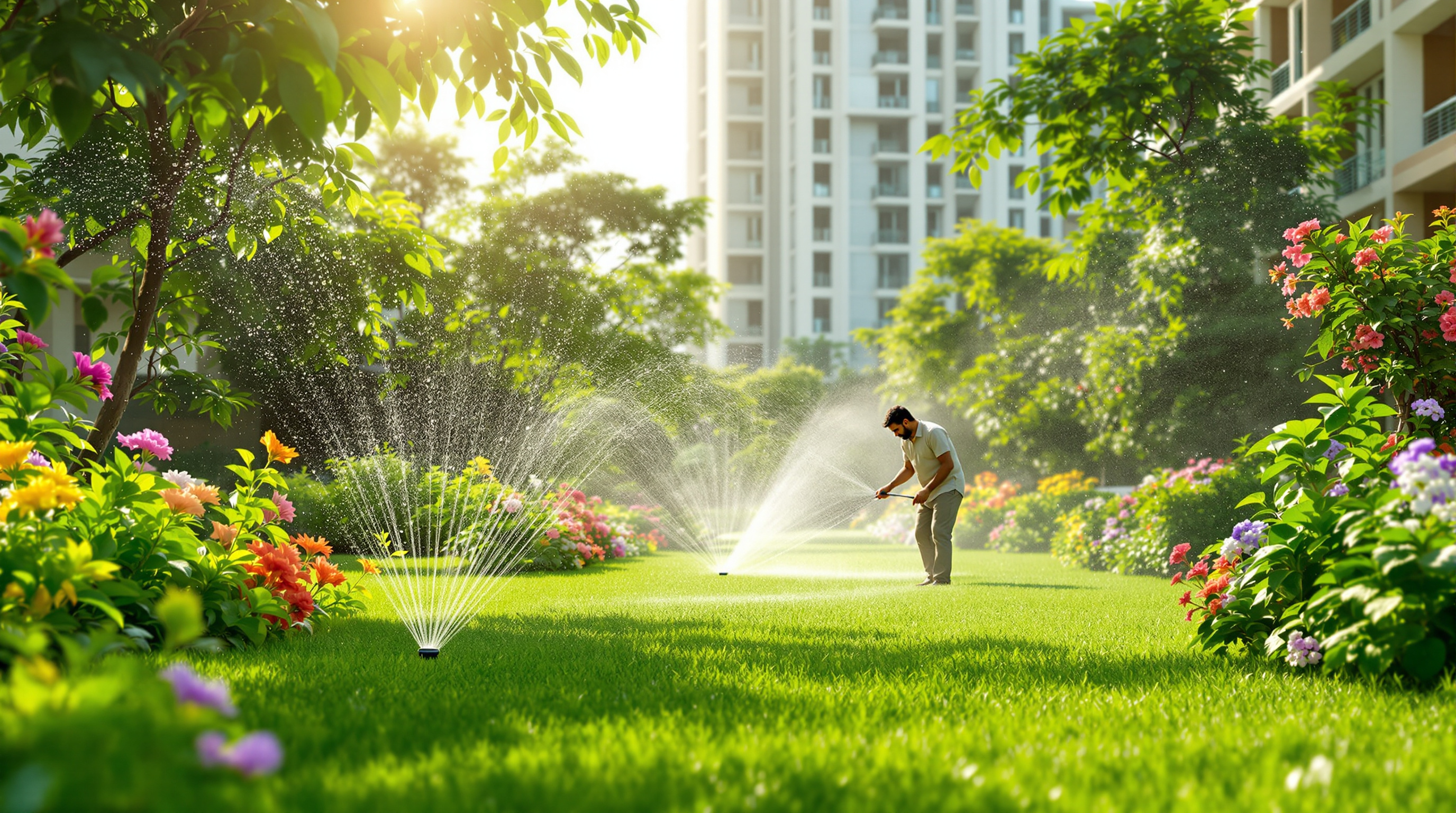
The running cost is only half the story. The other half is what the plant saves: an STP recovers 80–85% of a building's water for flushing, gardening and cooling, offsetting tanker and municipal bills. Weigh the two together with the ROI of water recycling guide and the Water Reuse Savings Calculator or STP ROI Calculator.
And when choosing between technologies at the design stage, compare lifetime cost, not just the sticker price — a cheaper-to-build plant that guzzles power can lose the race over 15 years. The STP lifecycle cost comparison guide and the Lifecycle Cost Comparison Tool make that trade-off explicit.
The bottom line
An STP's annual operating cost is real, recurring and, for most Indian buildings, dominated by two things: power and people. Budget honestly — roughly ₹10–40 per kilolitre treated depending on size, with small plants at the painful end — and remember that the cheapest operating cost of all is a plant that is right-sized, well-run and actually loaded. Start with a specific estimate from the Annual Operating Cost Calculator, then keep learning across the Sewage Treatment Plants guide library.
Sources and benchmarks: Green Planet Solutions — STP CAPEX/OPEX guide, SusBio — STP cost per KLD 2026, SusBio — hidden STP costs & ROI, HECS — STP O&M services guide. Figures are indicative 2025–26 market ranges and vary widely by capacity, city, technology, site conditions and vendor — always obtain a written quote for your specific project.
Export this guide
Related Guides — Deep-dive reading
STP Chemical Cost Analysis: Chlorine, Coagulants, Antiscalants & pH Correction (India 2026)
What the chemicals in a sewage treatment plant actually cost each month in India — chlorine, coagulants, polyelectrolyte, antiscalant and pH correction — with realistic dose rates, rupee ranges by capacity, and the practical levers that keep the bill down.
Sewage Treatment PlantsSTP Electricity Cost Analysis: What Powering a Sewage Treatment Plant Really Costs in India
Electricity is the single largest running cost of an STP — and aeration eats most of it. Here is what your plant's specific energy use (kWh/m³) really is, what the monthly bill looks like by capacity, and how to keep it in check, with honest India ranges for 2025–26.
Sewage Treatment PlantsMBR STP Cost Guide: What a Membrane Bioreactor Really Costs in India (2026)
Why MBR carries the highest capital and running cost of any sewage treatment technology in India — membranes, power and replacements — and exactly when that premium pays for itself through water reuse and a smaller footprint.
Sewage Treatment PlantsRelated Tools — Try Free
STP Lifecycle Cost Comparison Tool
Compare MBBR, SBR and MBR sewage treatment plants on total lifecycle cost — capex plus lifetime energy — at your capacity, lifespan and power tariff, and see the lowest-cost technology.
STP CalculatorWater Reuse Savings Calculator
Estimate the money you save by reusing STP-treated water instead of buying fresh supply, with daily, monthly and annual savings.
STP CalculatorApartment STP Planner
Plan an apartment complex sewage treatment plant from flats and occupancy — get population load, sewage flow, recommended STP capacity in KLD, treatment technology and approximate space.
Planner