
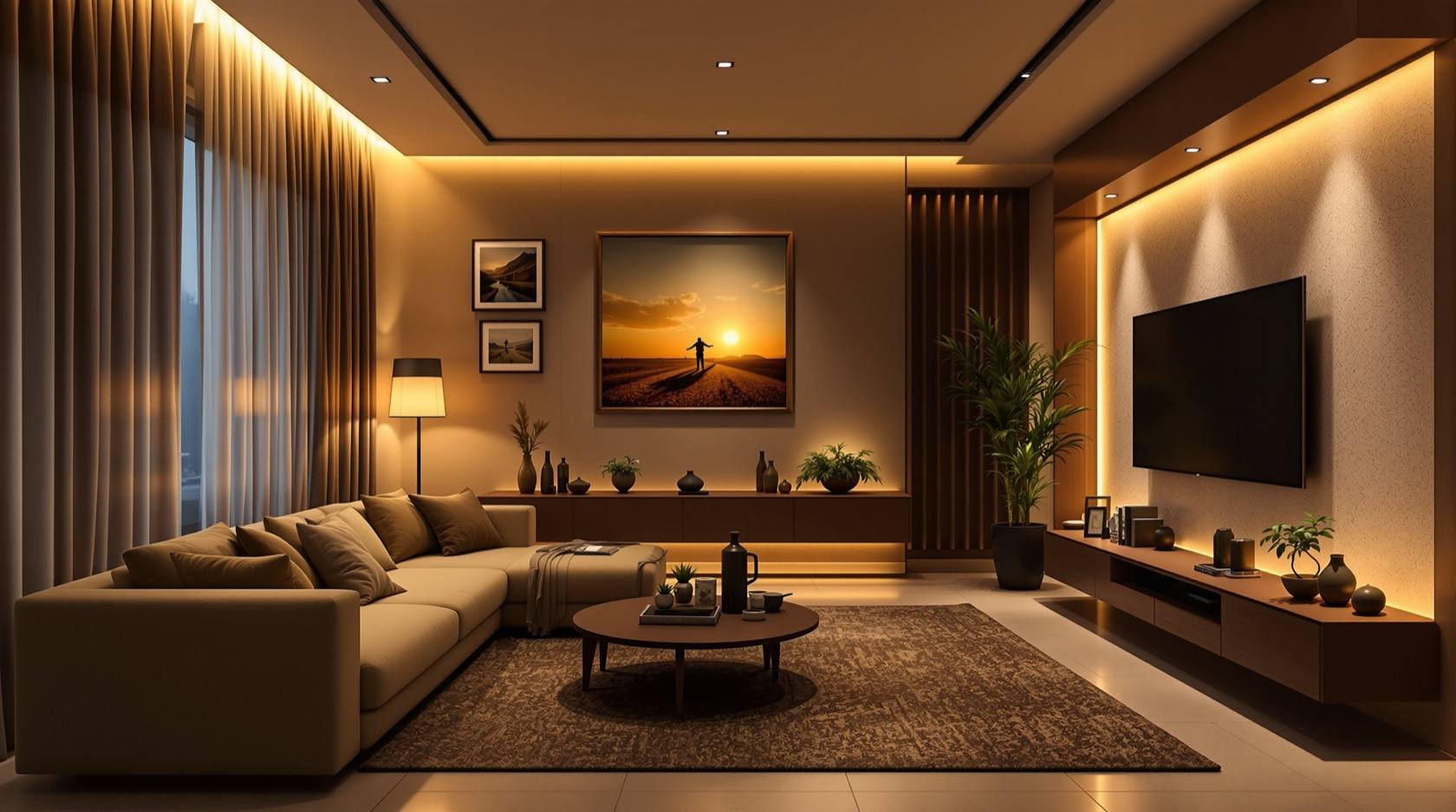
Living Room Lighting Design for Indian Homes (2026)
The design guide to lighting the most-used, most-layered room in the house - how to build a flexible, dimmable, multi-scene living room scheme with ambient, task, accent and decorative layers, warm evening light, a comfortable TV wall and open-plan zoning.
The living room - the hall, the drawing room, whatever your family calls it - is the hardest-working room in the Indian home and the one most people light the worst. It hosts the weekday evening in front of the TV, the weekend guests, the child doing homework on the sofa, the reader in the corner chair, the pooja-day gathering and the everyday pass-through, and it is expected to look good through all of them. Yet the typical living room runs on a single trick: one or two ceiling fixtures on one switch, blazing at full or off. Flat, bright, and wrong for every mood except cleaning.
The fix is not a bigger light. It is layers - several sources at different heights, on more than one switch, dimmable - so the same room can shift from a bright everyday wash to a soft, warm, cinema-like calm in a second. This is the design guide to that. It sits inside the complete guide to lighting in India and applies the theory of the layered lighting guide and functional vs ambient vs accent lighting to this one demanding room.
Scope & how to read this. This is a design and specification guide - how to plan the scheme, choose fixtures and set the mood - not a wiring manual. All lux, wattage and cost figures are indicative planning aids to help you brief a professional; confirm illumination levels against IS 3646 and NBC (SP 7:2026), and get local quotes. The actual wiring, circuits, switch grouping, dimmer installation and load is electrical work for a licensed electrician and is safety-critical - do not DIY it. Scenes, app control and automation live in the smart lighting guide and the Smart Home hub; deep colour-temperature and LED-buying technicals live in the Electrical hub.
Why the living room needs the most flexible scheme
No other room switches jobs as often. A bedroom is mostly rest; a kitchen is mostly work. The living room is everything, sometimes within the same hour. List the modes and the reason for layering becomes obvious.
- Relaxing and TV. Low, warm, indirect light - bright enough not to strain the eyes against a glowing screen, dim enough to feel restful. The enemy here is glare and a black hole around the television.
- Entertaining. Guests over, the room lifts to a sociable mid-level - the pendant on, accents picking out art and the feature wall, faces flattered by light at multiple heights rather than one flat ceiling wash.
- Reading or homework. One focused pool of brighter, cooler-leaning light over a chair or the sofa end, while the rest of the room stays soft.
- Everyday and cleaning. The bright, practical wash - all layers up - for chores, finding a dropped earring, or a bright daytime feel.
Because these pull in opposite directions - dim-and-warm versus bright-and-even - no single setting serves them. The living room is the one room that most repays a dimmable, multi-scene setup: layers wired to separate switches or a scene controller, so you recall "Relax" or "Bright" instead of juggling switches. One of the most common failures in the common lighting mistakes guide is exactly this - a big room on a single bright circuit.
The four layers, applied to a living room
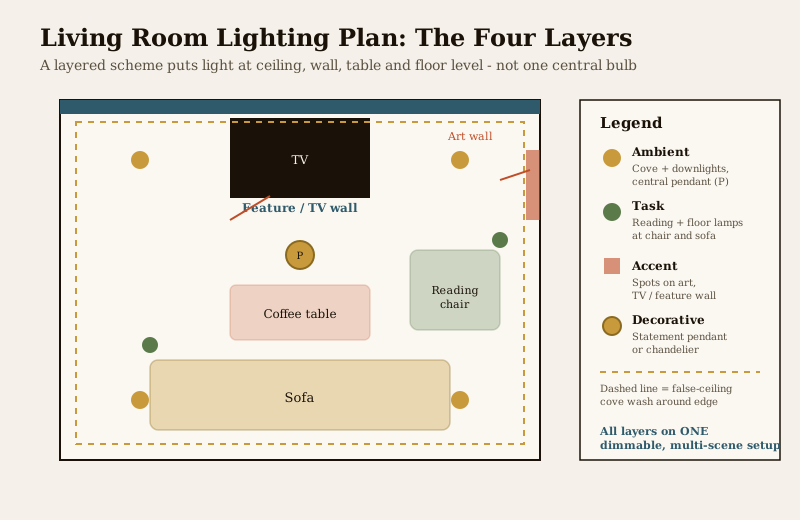
Every good living room scheme is built from four layers stacked together. Get all four and the room has depth; skip one - usually accent or task - and it falls flat.
- Ambient (the base wash). The soft general light the room floats on. In Indian living rooms this is typically a false-ceiling cove running the perimeter, a scatter of recessed downlights, or a central fixture - ideally more than one of these, on a dimmer. See cove and indirect lighting and the recessed and downlight guide for how each behaves.
- Task (light for a job). A reading lamp or floor lamp beside the corner chair, a table lamp on the console, or a focused source over the sofa end where people actually read. Portable lamps are the easiest way to add this layer - no wiring, fully movable.
- Accent (drama and focus). Directional light that models the room - spotlights or track grazing a feature wall, a wall-wash over a textured surface, an uplight in a large plant, a picture light on art. This is the layer that turns "lit" into "designed"; see track and spotlight lighting and strip and profile lighting.
- Decorative (the jewellery). The fixture you look at rather than by - a statement pendant or chandelier over the seating or the centre of the hall. It anchors the room and does light work as ambient, but its main job is to be beautiful. See the pendant lighting guide and chandeliers guide.
The table below maps the layers onto a typical hall and what each is trying to achieve.
| Layer | Typical fixtures | Where it goes | The job it does |
|---|---|---|---|
| Ambient | Cove, downlights, central pendant | Perimeter ceiling + grid | Soft base wash; sets the overall level |
| Task | Floor lamp, reading lamp, table lamp | Beside chair, sofa end, console | Focused light for reading and close work |
| Accent | Spotlights, track, wall-wash, plant uplight | Feature wall, art, plants, texture | Depth, drama, a focal point |
| Decorative | Statement pendant or chandelier | Over seating / centre of hall | The eye-catching centrepiece |
The key moves that make a living room work
Layers are the framework; these are the specific decisions that separate a good living room from a harsh one.
1. Dimmable, multi-scene - the single most important move
If you do one thing, make the ambient layer dimmable and split the layers across at least two or three switches. Even a simple wall dimmer transforms the room; a scene setup that recalls "Relax / Entertain / Read / Bright" transforms it further. Your electrician wires it; if you want app or voice scenes, that is the smart lighting guide.
2. Warm colour temperature for evenings
Living rooms are evening rooms. Aim for warm white, 2700-3000K, for the ambient and decorative layers - it flatters skin, wood and fabric and reads as relaxed. Cooler light (4000K+) belongs to task pools and cleaning, not the whole-room evening wash. The theory is in colour temperature and CRI; to preview shades, use the colour temperature selector.
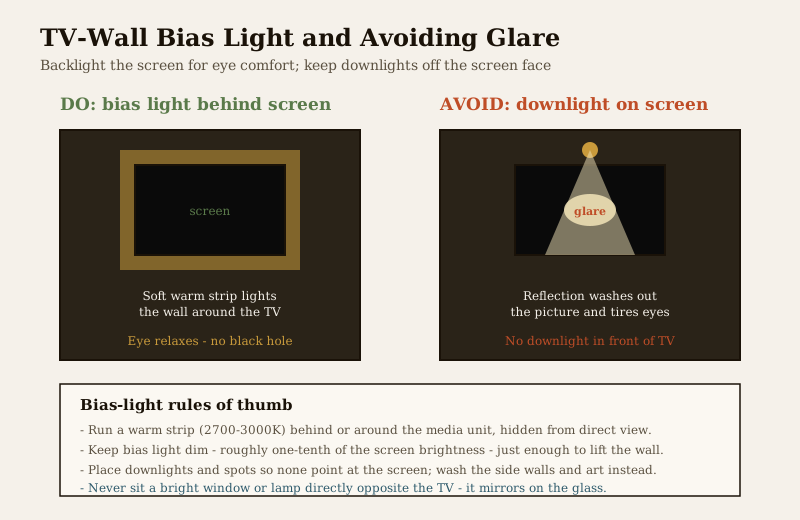
3. Light the TV wall, not the TV
A bright television in a dark room is hard on the eyes and reads as a black hole. Run a soft, warm bias light behind or around the media unit - a hidden strip washing the wall - so the eye has something to rest against. Keep it dim, roughly a tenth of the screen brightness. Crucially, keep downlights and spots off the screen face: a fixture pointing at the TV throws a glare hotspot that washes out the picture. Wash the side walls and art instead.
4. Light the walls, not just the floor
A grid of downlights lights the floor and leaves the walls - and the room - feeling dim and cave-like. Push light onto the vertical surfaces: wall-wash a feature wall, graze a textured surface, uplight a corner. Bright walls make a room feel larger and brighter than the same lux aimed at the floor.
5. Layer at different heights - use lamps
The commonest Indian living-room mistake is all light coming from the ceiling. Put light low too - a floor lamp by the sofa, a table lamp on the console, a reading lamp by the chair. Light at eye and table level is what makes a room feel warm and intimate after dark; the ceiling alone never will.
6. Highlight one focal point
Pick the room's hero - the art wall, the TV console, a large plant, the pooja niche - and give it a dedicated accent so the eye has somewhere to land. A room where everything is lit equally has no focus; a single well-lit focal point gives the whole scheme a centre.
7. Light the seating
Where people sit is where light should gather - a pool over the coffee table from the pendant, lamps flanking the sofa, a reading light at the corner chair. This is the sociable heart of the room; light it deliberately rather than hoping the general wash reaches it.
Setting the scenes
Think of the scheme as four recallable moods, each mixing the layers at a different level. This is what "multi-scene" means in practice.
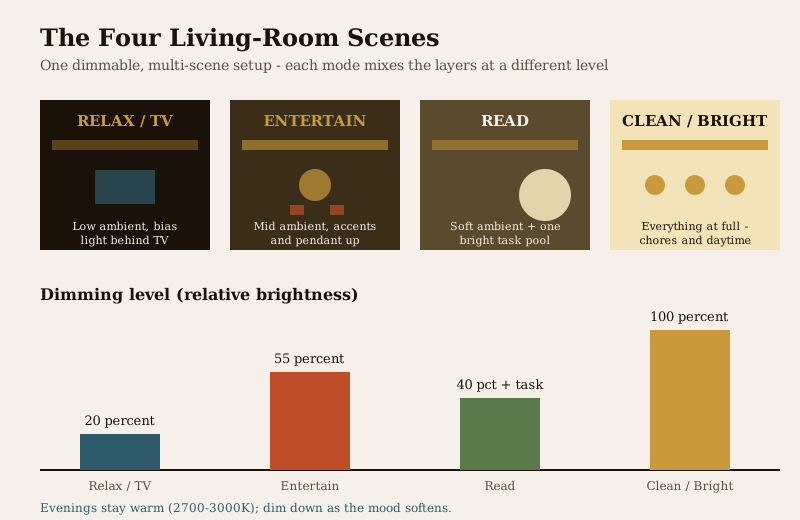
| Scene | Ambient | Task | Accent | Decorative | Feel |
|---|---|---|---|---|---|
| Relax / TV | Very low (~20%) | Off or minimal | Off | Off | Cinema-calm; bias light behind TV |
| Entertain | Medium (~55%) | Off | On - art & feature wall | Pendant on | Warm, sociable, faces flattered |
| Read | Low-medium ambient | One bright pool at chair | Off | Off | Restful room, one crisp work area |
| Clean / Bright | Full | On | Optional | On | Practical daytime wash for chores |
Evenings stay warm across all of these; only "Read" and "Clean" call on cooler, brighter task light where the job needs it.
Sizing light to the room
Numbers help you brief an electrician and sanity-check a plan, but treat them as bands, not gospel. For general living-room ambient, aim in the region of 150 lux at the level you use the room; reading and close-work areas want more - 300 lux or higher in that local pool. These follow the interior-illumination levels in IS 3646 and NBC (SP 7:2026); confirm against them.
| Zone / task | Indicative lux band | How to hit it |
|---|---|---|
| General ambient (relaxed evening) | ~100-150 lux, dimmable lower | Cove + downlights on a dimmer |
| Everyday / cleaning wash | ~200-300 lux | All layers up |
| Reading / homework pool | ~300-500 lux (local) | Floor or reading lamp at the seat |
| TV / accent bias | Low, indirect | Hidden warm strip, no direct glare |
Rather than count lumens by hand, feed your room size into the lux level calculator; for a fuller room plan try the Room Lighting Calculator or Home Lighting Planner. Fixture counts and spacing are covered by the fixture quantity and lighting spacing tools.
False-ceiling cove culture - use it well
The gypsum false ceiling with a perimeter cove is the default of the Indian living room, and it is a genuinely good ambient move - soft, glare-free, indirect light bouncing off the ceiling. Two cautions. First, a cove alone is not enough - it gives a flat, shadowless wash; add downlights, lamps and accents on top of it or the room stays dull. Second, warm strips (2700-3000K) inside the cove read best in a living room; harsh cool strips make the ceiling look like an office. The full craft is in cove and indirect lighting, and the ceiling build itself in the false ceiling guide.
Open-plan living-dining - zone it with light
Many Indian flats and villas run the living and dining areas as one open space, and lighting is how you separate them without a wall. Give the dining table its own decisive fixture - a low pendant or small chandelier that says "this is the table" - and keep the living zone on its own softer, layered scheme. The two zones should feel distinct and be independently dimmable, so you can have a bright dinner while the sofa side stays low, or vice versa. The dining half has its own design logic in the dining room lighting guide; zoning open-plan flats is also covered in apartment lighting planning.
What is the electrician's job, not yours
Design the scheme here; the physical electrical work is a licensed professional's, and it is safety-critical. Hand off:
- Wiring, circuits and load - how the layers are grouped, cable runs, the DB, earthing. Never DIY this.
- Switch grouping and dimmers - which fixtures share a switch, dimmer type matched to the driver, physical install.
- Concealed and cove wiring inside the false ceiling, and any new points.
You decide the layers, fixtures, colour temperature and scenes; the electrician makes it safe and legal. For app-controlled scenes and automation, that is the smart lighting guide, not the electrician.
How it connects
- Start with the complete guide to lighting in India, then the layered lighting guide and functional vs ambient vs accent lighting for the framework this room applies.
- Go deep on the fixtures: cove and indirect lighting, track and spotlight lighting, strip and profile lighting and lamps and portable lighting.
- For adjoining rooms, see the bedroom lighting guide and the dining room lighting guide.
- For scenes, app control and voice, read the smart lighting guide; leave wiring, circuits and dimmer install to a licensed electrician.
- Size and plan it with the lux level calculator and preview shades with the colour temperature selector.
- For inspiration, browse living room design ideas.
Key takeaways
- The living room does the most jobs - relax, entertain, read, everyday - so it needs the most flexible, dimmable, multi-scene scheme; a single bright circuit fails every mood but cleaning.
- Build four layers: ambient (cove, downlights, central), task (floor and reading lamps), accent (spots on art and the feature wall) and decorative (statement pendant or chandelier).
- Go warm (2700-3000K) for evenings; bias-light the TV wall and keep downlights off the screen to avoid glare and a black hole.
- Light the walls, not just the floor, and layer at different heights - lamps low - so the room feels warm and larger; highlight one focal point.
- Aim for roughly 150 lux ambient and 300 lux+ at reading spots, per IS 3646 / NBC (SP 7:2026) - use the calculators, treat numbers as bands.
- Use the false-ceiling cove as the base but never alone; zone open-plan living-dining with a distinct dining fixture and independent dimming.
- Design the layers and scenes yourself; leave wiring, circuits and dimmer install to a licensed electrician, and automation to the smart-home hub.
References
- IS 3646 - code of practice for interior illumination (recommended lux levels for living and general areas; named generally).
- National Building Code of India, NBC (SP 7:2026), Bureau of Indian Standards - general lighting and illumination provisions.
- National Lighting Code - general guidance on interior lighting practice.
- IS 16107 / IS 10322 and IEC 60598 - LED luminaire performance and luminaire safety (named generally).
- BEE star rating and ECBC - energy efficiency and lighting power density guidance for residential fixtures (named generally).
- Licensed electrician - wiring, circuits, load, switch grouping and dimmer installation (safety-critical work).
All lux figures, wattages, colour-temperature ranges and cost notes here are indicative planning aids only; confirm illumination levels against IS 3646, NBC (SP 7:2026) and the National Lighting Code, get local quotes for cost, and have a licensed electrician design and certify all wiring, circuits, load and dimmer installation.
Export this guide
Related Guides — Deep-dive reading
Lighting Controls & Dimming Design: Zones, Scenes & Switches (2026)
How to plan lighting control so an Indian home's light is flexible — split each room's layers onto separate switches, choose dimmers that actually work with LEDs, add two-way switching where you need it, and layer scenes on top. The design decisions you must settle before the electrician wires.
LightingLighting Design Principles: The Rules Good Schemes Follow (2026)
The design rules that separate a room that feels considered from one that feels like a floodlit hall — layering on separate controls, glare control, colour-temperature discipline, direction and shadow, lighting at different heights, and washing the walls — written for the Indian home.
LightingHome Office & Study Lighting: Bright, Glare-Free & Focused (2026)
The design guide to lighting a home office or study for long-hour focus and eye comfort in an Indian home — a good ambient base, a proper task lamp, no screen glare or reflections, the right colour temperature through the day, and flattering light for the video call.
LightingRelated Tools — Try Free
Circadian Light Meter
Patient-centric circadian lighting visualizer for Indian healthcare design — time-of-day × intensity → CCT, melanopic lux (EML / mEDI), melatonin suppression, and an alertness curve. Calibrated against WELL v2 L03 Circadian Lighting Design, CIE S 026:2018, Brainard 2001, and Lucas et al. 2014.
Circadian ToolElectrical Safety & Load Audit
Home electrical audit — 10 categories, 65+ checkpoints across earthing, RCCB, MCB, wiring, switchboards, appliance circuits, DG/inverter backup.
Safety AuditFalse Ceiling Cost Estimator
Live ₹/sqft across 8 ceiling types — POP, gypsum, designer, metal, PVC, wooden — with cove and spot lighting for 20 Indian cities.
Cost Calculator