
Interactive Planner · 2026
Home Lighting Planner
Enter room dimensions, pick a room type and fixture — required lumens and fixture count calculate automatically. Download a landscape PDF lighting schedule.
Quick start — activity preset
0.0 sq m
Total Area
all rooms
—
Total Lumens
required
—
Total Fixtures
across all rooms
—
Electrical Load
estimated
| Room Name | Length (m) | Width (m) | Area (sq m) | Room Type | Lux | Fixture | Lm / Fixture | Req. Lumens | Fixtures | Watts | Switch Zone | Notes | |
|---|---|---|---|---|---|---|---|---|---|---|---|---|---|
| — | — | — | — |
Formula: Required Lumens = Recommended Lux × Room Area (sq m). Fixtures = ⌈Required Lumens ÷ Lumens per Fixture⌉. Select a Room Type and Fixture to auto-fill values.
Lighting layer references
Ambient · task · accent · mood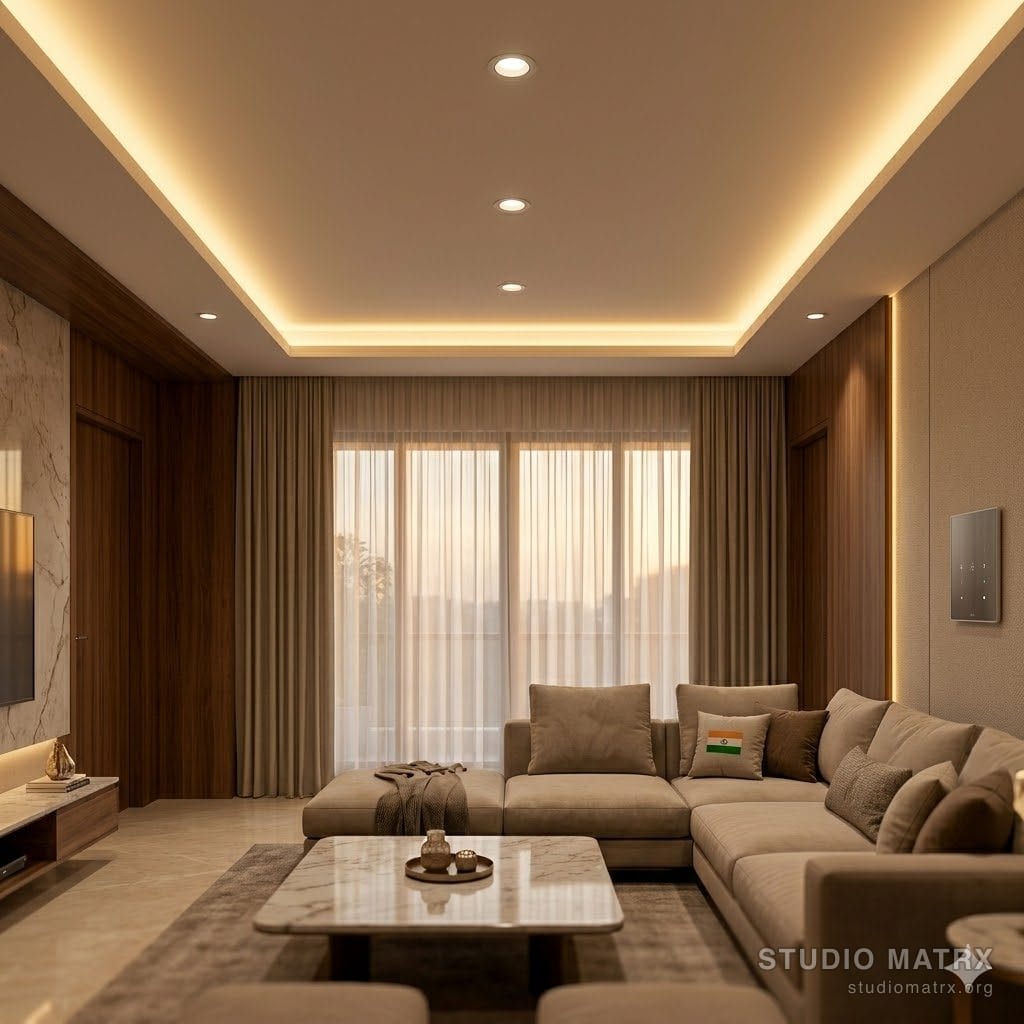
Ambient · living
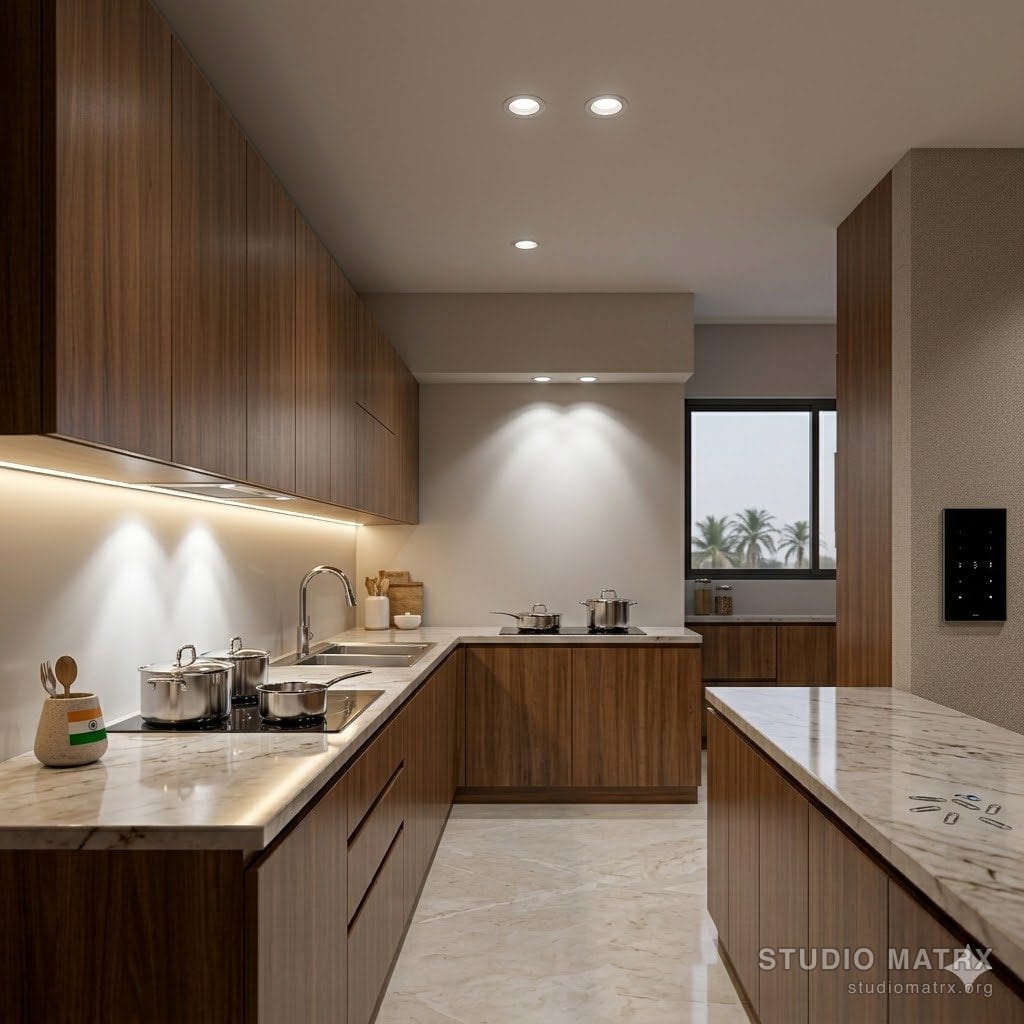
Task · kitchen
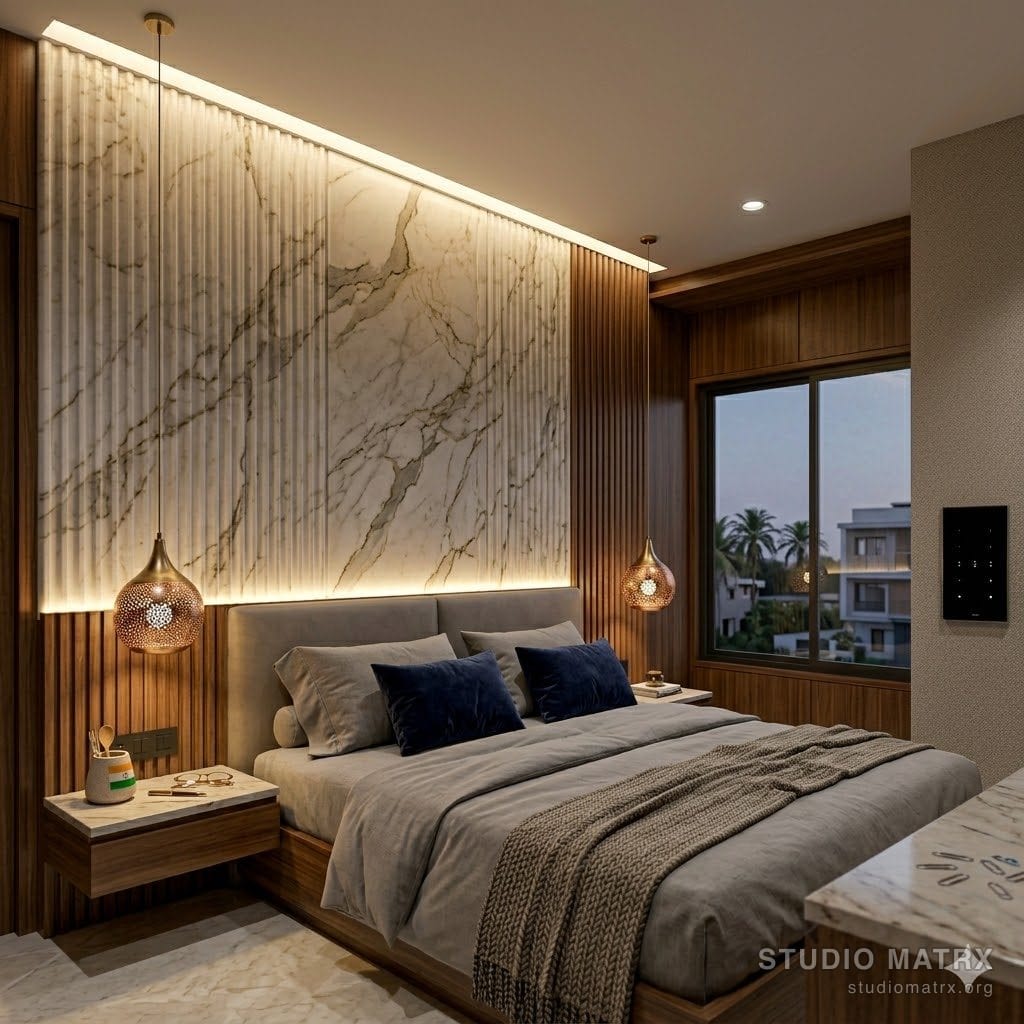
Accent · bedroom
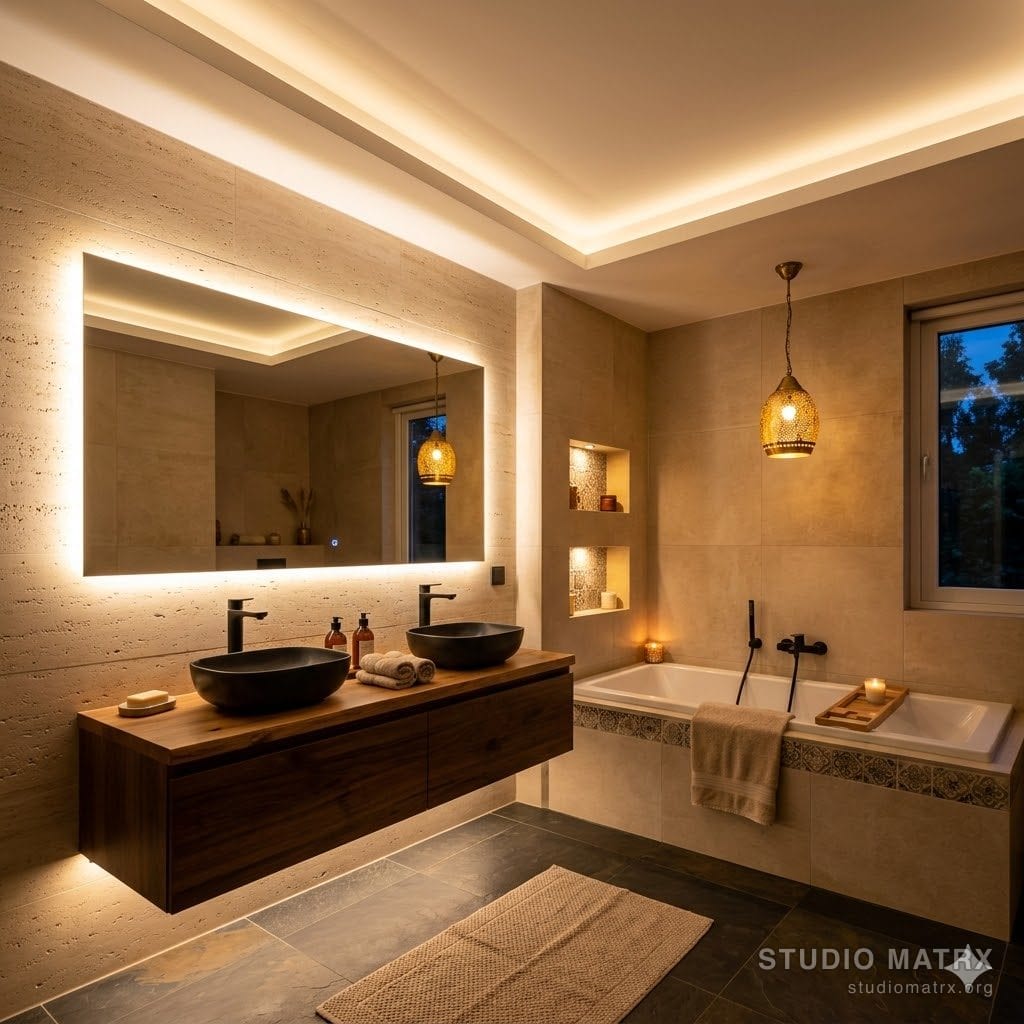
Mood · bath
Get lighting concepts from DesignAI
Hand your lighting schedule to DesignAI — it’ll spec fixture brands, dimmer scenes, and circuit groupings against your floor plan.
Home Lighting — A Working Reference
Most uncomfortable rooms in Indian apartments aren't dark — they're lit wrong. A single ceiling fixture floods the room with flat, shadowless light that's simultaneously too much (for relaxing) and not enough (for reading). Good lighting is built up in layers — ambient, task, and accent — each with its own switch, its own colour temperature, and its own job. The calculator above translates room dimensions into lumens and fixture counts; this reference explains the design vocabulary behind it.
The Three Layers of Lighting
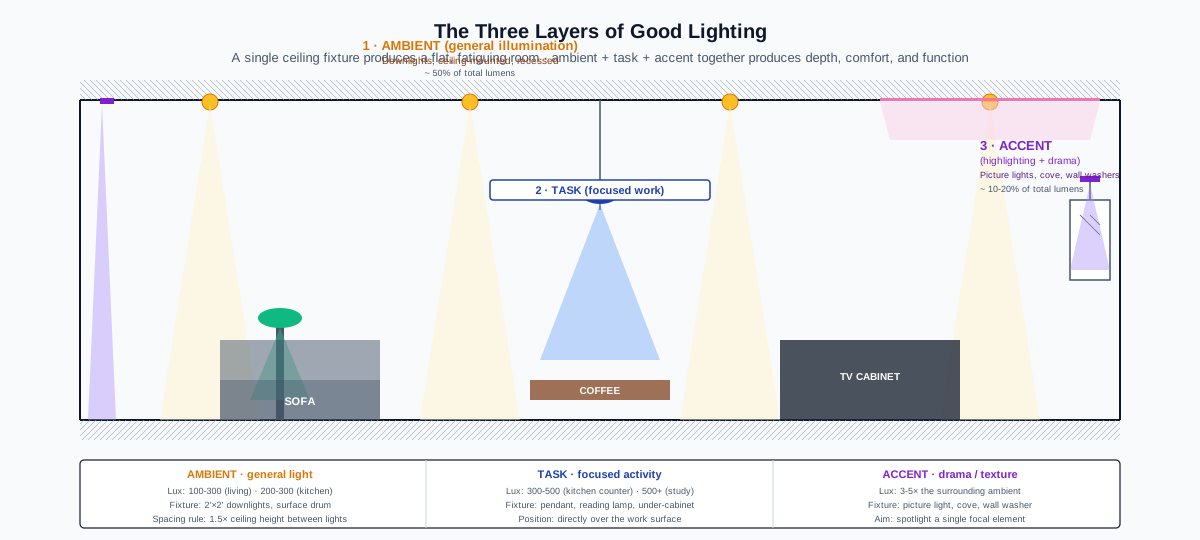
Every well-lit room balances three layers. Ambient light fills the room evenly — usually ceiling downlights or surface fixtures. Task light focuses where activity happens — a pendant over the dining table, an under-cabinet strip in the kitchen, a bedside lamp. Accent light highlights a specific object or surface — a picture light, a cove behind a TV, a spot on a textured wall. The diagram below shows all three at work in a single living room.
Lux Targets by Room
Lux is the only number that actually matters when sizing lighting — it measures the light falling on the surface where you do the work. A bedroom at 150 lux feels comfortable; a study desk at 150 lux feels gloomy. The chart below summarises NBC 2016 and IESNA recommendations for ten common Indian-home rooms.
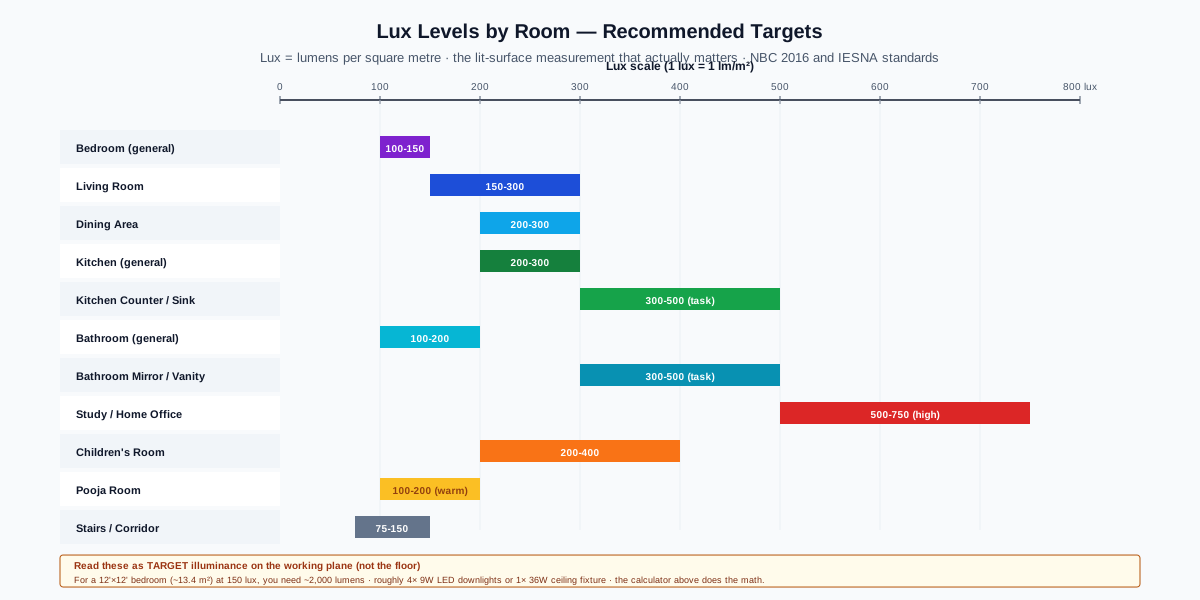
Quick conversion: a 12′×12′ (~13.4 m²) bedroom at 150 lux needs about 2,000 lumens — roughly four 9 W LED downlights. The calculator does this math for you given room dimensions.
Color Temperature (CCT) — Warm vs Cool
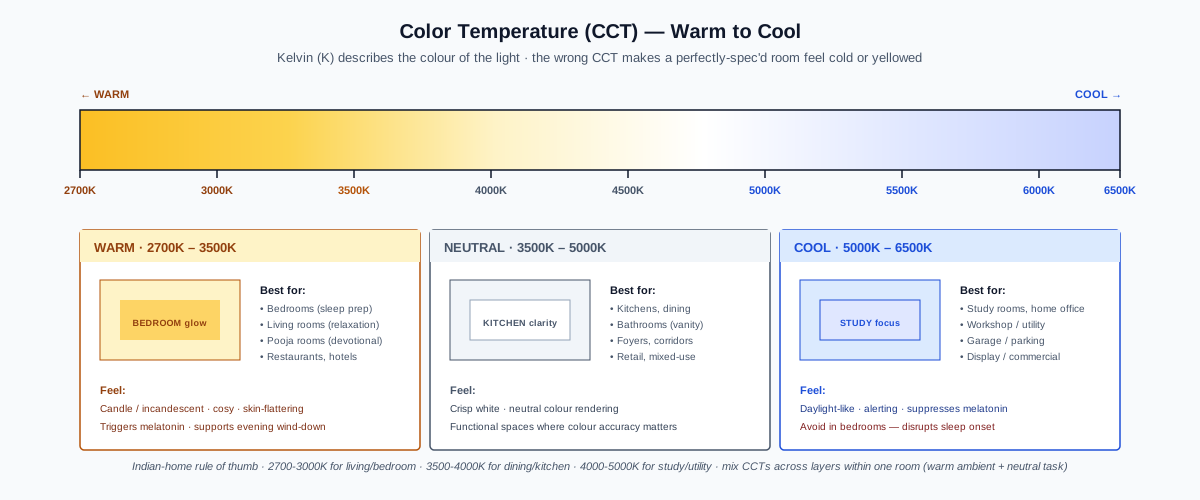
The Kelvin (K) value of a bulb describes the colour of the light it produces. Lower numbers (2700K) look warm and yellow-orange, like candlelight. Higher numbers (6500K) look cool and blue-white, like overcast daylight. Picking the right CCT for each room is as important as picking the right lux — the wrong CCT makes a perfectly-spec'd room feel either washed-out or yellowed.
A Working Set of Rules
- Plan the activity, not the fixture. Lay out where people will sit, eat, cook, read, and dress before deciding where lights go.
- Each layer on its own circuit. Ambient, task, and accent should be independently switchable — that's what lets one room flex from cleaning-mode to evening-mode.
- Dim ambient, switch task. Dimmers belong on ambient and accent; task lights are usually full-on or off.
- CRI 80 minimum, CRI 90 for kitchen / bath / wardrobe. Cheap LEDs at CRI 70 make food, skin, and clothes look wrong.
- Mix CCTs across layers within one room. Warm (2700K) ambient + neutral (4000K) task in a kitchen is more pleasant than uniform 4000K throughout.
- Test before committing. Buy one fixture of your shortlist, install it, and live with it for a week before ordering all eight.
Cross-References
- Lighting Design for Indian Homes (Guide) — deeper treatment with case studies
- Electrical Safety Checklist — wiring & load planning
- Sun Path Analyzer — daylight is your fourth lighting layer
- Colour Palette Generator — paint and CCT interact
Disclaimer: Lux and CCT recommendations follow NBC 2016 and IESNA 11th Edition recommended practice. Specific accessibility and circadian-health requirements may impose stricter targets — verify with a licensed lighting designer for healthcare, hospitality, and aged-care projects.
Related Guides — Deep-dive reading
Lighting Buying Guide India: How to Buy Fixtures & Bulbs Well (2026)
The practical, non-technical how-to-buy guide for home lighting in India — where to shop, how to read a bulb or fixture pack, the numbers that actually matter, buying by layer and room, spotting quality, and what to avoid so you never buy the wrong light twice.
Lighting3BHK House Design — Complete Guide for India
Layouts, Bedroom Hierarchy, Living-Dining-Kitchen Configurations, Bath Counts, Vastu, Costs & Checklist
Room Planning50 Modern TV Unit Ideas for Indian Homes
Floating consoles, fluted feature walls, marble backdrops, warm-wood cladding, and dark eclectic columns — with dimensions, lighting, and cost guidance
Room PlanningRelated Tools — You may also find these useful
Apartment Interior Planning Checklist
51-item checklist across structural, ceiling, lighting, furniture, storage, electrical, kitchen, bathroom.
ChecklistFalse Ceiling Cost Estimator
Live ₹/sqft across 8 ceiling types — POP, gypsum, designer, metal, PVC, wooden — with cove and spot lighting for 20 Indian cities.
Cost CalculatorRoom Lighting Calculator
Estimate the target lux, total lumens and number of LED fixtures a room needs, from its type and size — a general-illumination planning guide.
Lighting