
Functional vs Ambient vs Accent Lighting: What Each Does (2026)
The four jobs light does in a room — ambient fill, task/functional brightness, accent contrast and mood glow — what each is for, the fixtures it wants, how bright it should be relative to the others, and the mistake people make with each.
Ask most people to "add more light" and they buy a brighter bulb for the fan-hook in the middle of the ceiling. The room gets brighter and no better — flat, shadowless, and still hard to read a book or admire a painting in. That is because brightness is not the point. Function is. Light does at least four different jobs, and a bulb chosen for one job is usually wrong for another.
This guide is about telling those four jobs apart: ambient (general fill), task (functional, targeted at an activity), accent (highlighting objects and architecture), and mood (the decorative, emotional layer). Its sibling, the layered lighting guide, is about combining them into one scheme — so this one deliberately stays on the "what is each function, and which do I need here" question. Read them together; start with the complete guide to lighting for the whole hub.
Scope & how to read this. This is a design explainer — it helps you decide which kind of light a spot needs, choose fixtures and set the mood. It is not a wiring guide. Any circuit, switch, dimmer, load or earthing work is safety-critical and belongs to a licensed electrician — never DIY mains wiring. Lux and colour numbers here are typical, indicative planning aids; confirm them against IS 3646 (interior illumination) and NBC (SP 7:2026). For the deep buying technicals — lumens, CRI, LED chips, dimmer compatibility — cross-link to the Electrical hub. Costs are indicative bands; get local quotes.
Brightness is not a function — light does four jobs
Before the four layers, hold one idea: a room is not "lit" when it is bright. It is lit when each of its uses has the light that use needs. A single ceiling light tries to do every job at once and does none of them well. So separate the jobs first, then give each its own source. The four functions below are the vocabulary designers use — and once you can name them, you stop over-buying downlights and start placing light on purpose.
Ambient / general — the base your eyes rest at
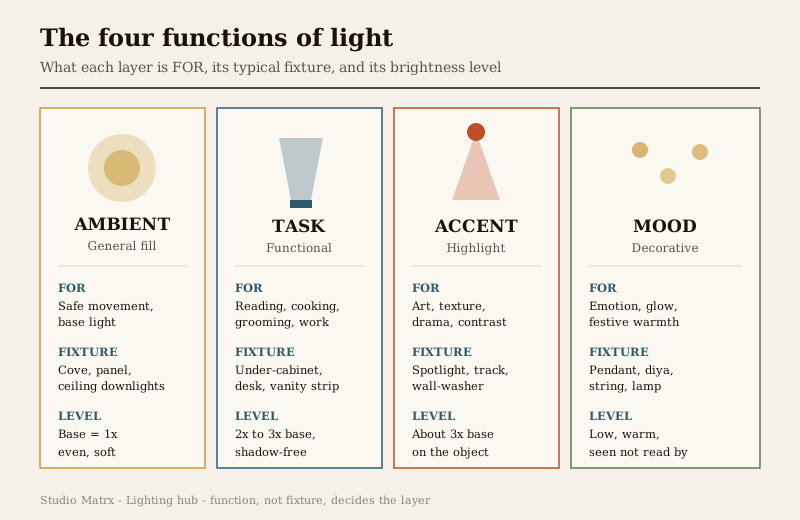
What it is for. Ambient light is the room's foundation: an even, comfortable base level that lets you walk in, see the whole space, and move safely without any single lamp switched on. It is the light you notice least and miss most — a room with no ambient layer feels like a stage with only spotlights, all pools and black gaps.
Typical fixtures. Ceiling cove and profile lighting, flush panels, recessed downlights on a wide spacing, a large flush fixture, or light bounced off the ceiling. In an Indian home the tube-light-on-the-wall and the central fan-light traditionally were the ambient layer — the upgrade is to make it soft and even rather than one glaring point.
Where it goes. Everywhere, as a spread — not one bright centre. Think of it as filling the room's volume, not marking its middle.
Brightness relative to others. This is your base level, call it 1x. Task light will sit two to three times above it; accent will sit about three times above it on the object; mood sits below it. Ambient is deliberately the dimmest general light in a good scheme — enough to move by, not to read by.
Colour temperature tendency. Warm to neutral — roughly 2700K–3500K in living and sleeping spaces for a relaxed feel, edging to 4000K in kitchens and utility zones. Keep it consistent so the room does not look patchy.
The mistake people make. Treating ambient as the whole scheme — one big bright ceiling light and nothing else. It flattens the room, kills shadow and depth, and still leaves every task and object under-lit. Ambient is the floor of the design, not the building.
Task / functional — light aimed at an activity
What it is for. Task (or functional) light serves a specific activity in a specific place: reading, chopping vegetables, shaving at the mirror, doing homework, working at a laptop, applying make-up. Here brightness and — just as important — shadow control matter most. The light must fall on the work and not be blocked by your own head or hands.
Typical fixtures. Under-cabinet LED strips over a kitchen counter, an adjustable desk or study lamp, vanity lights beside (not only above) a bathroom mirror, a focused bedside reading light, a pendant low over a dining or study table.
Where it goes. Directly over or in front of the work surface, positioned so you do not cast a shadow onto it. The classic kitchen error — a downlight behind you throwing your own shadow onto the chopping board — is a shadow-placement failure, covered further in kitchen lighting mistakes.
Brightness relative to others. The brightest functional layer — about 2x to 3x the ambient base on the task surface. A study or kitchen counter wants clearly more light than the room around it; the eye handles the step-up comfortably as long as the surroundings are not pitch black.
Colour temperature tendency. Neutral to cool-neutral — 3500K–4000K for kitchens, workshops, study desks and mirrors, where you want crisp detail and true colour. A high CRI matters here for judging food, skin and fabric colour; see colour temperature and CRI.
The mistake people make. Assuming the ceiling light is "enough" and skipping task light entirely — then squinting at the counter, or lighting the vanity only from directly overhead, which drops ugly shadows into the eye sockets. Task light is placed for the hands and face, not the room.
Accent — light that creates contrast and drama
What it is for. Accent light exists to make one thing stand out: a painting, a textured wall, a plant, a sculpture, a pooja niche, a stone or brick feature. It works entirely by contrast — the object is brighter than its surroundings, so the eye goes to it. Accent is what turns a lit room into a composed one; it is the layer that gives a space depth and a sense of the deliberate.
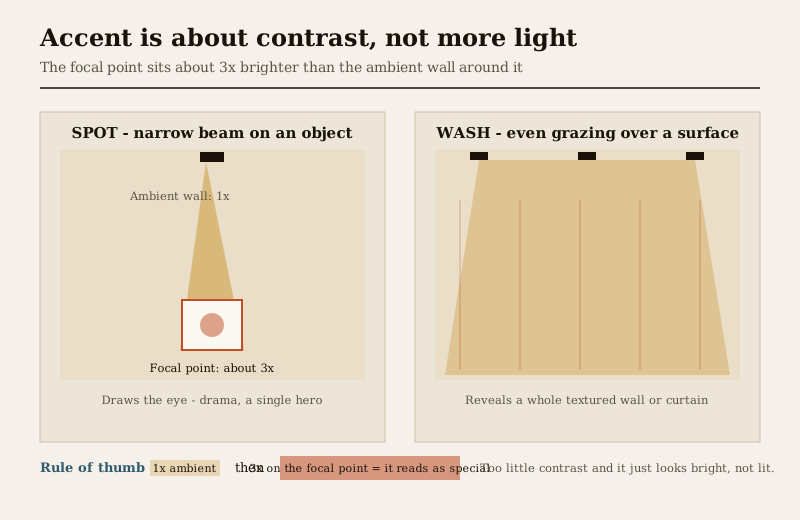
Typical fixtures. Adjustable recessed spots, track lights, picture lights, a tight-beam wall-washer to graze a textured surface, a mini-spot in a display niche. Beam angle is the tool here — a narrow beam for a single object, a wider wash for a whole wall.
Where it goes. On the focal point, not the floor around it. Aim it at the thing you want seen and let everything else stay at ambient level.
Brightness relative to others. The key number: aim for roughly three times the ambient level on the focal point — enough that it clearly reads as special, not so much that it glares. Below about that ratio the "accent" just looks like more general light; the contrast, not the wattage, does the work.
Colour temperature tendency. Usually matched warm to the room (2700K–3000K) so the highlight feels intentional rather than clinical — though a whiter beam can suit a modern art piece or a cool stone. High CRI is worth it so the accented object's colours stay true.
The mistake people make. Two, really. First, accenting everything — when every object is spotlit, nothing stands out and you are back to flat. Pick a hero. Second, forgetting the contrast: putting an "accent" spot in an already bright room so it disappears. Accent needs the surrounding ambient to stay lower. For architectural and gallery-style accenting, architectural lighting design and decorative lighting go deeper.
Mood / decorative — the emotional layer
What it is for. Mood light is not really about seeing — it is about feeling. It sets the emotional register of a room: the warm low glow of an evening living room, a festive string across the balcony at Diwali, the flicker of diyas at the pooja, a soft bedside lamp for winding down. It is often the fixture you look at rather than the light you see by — a beautiful pendant, a lantern, a lamp.
Typical fixtures. Decorative pendants and chandeliers, table and floor lamps, wall sconces, string and fairy lights, diyas and candles, dimmed cove light run low. Dimming is central — mood light is frequently just ambient or accent turned right down.
Where it goes. Wherever the room gathers and relaxes — the living seating, the balcony, the bedside, the pooja and entry. It is the layer that makes a house feel like a home in the evening.
Brightness relative to others. The lowest level — below the ambient base. Mood light is meant to be gentle; warmth and low intensity are the whole point. This is where dimmers earn their keep, letting the same fixtures drop from working-bright to evening-soft.
Colour temperature tendency. Warm, 2200K–2700K — the "candle-to-tungsten" range that signals rest and relaxation. Never cool: a bluish "mood" light reads as harsh and defeats the purpose.
The mistake people make. Buying a gorgeous decorative fixture and expecting it to also be the room's task or ambient light. A statement chandelier is mood and sculpture — it rarely lights a room evenly or a book well. Let it be beautiful, and add the working layers separately.
How to tell which function a spot needs
Stand in the spot and ask, in order: What happens here? What must be seen? What should be felt?
- If the answer is "people move through and gather generally" — it needs ambient.
- If it is "someone does a specific thing here — reads, cooks, grooms, works" — it needs task, aimed and bright.
- If it is "there is something worth looking at — art, texture, a deity, a feature" — it needs accent, at about 3x contrast.
- If it is "this is where we relax, celebrate or wind down" — it needs mood, warm and low.
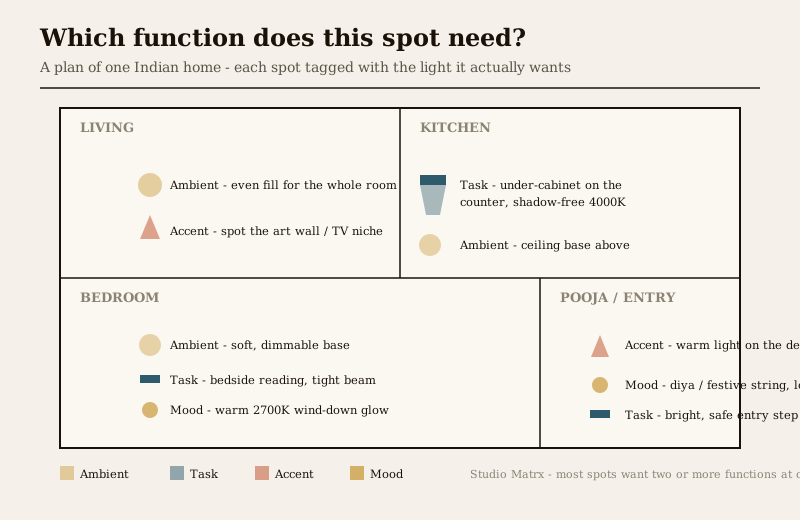
Most real spots want two or more at once: a kitchen wants ambient plus task; a living room wants ambient plus accent plus mood; a bedroom often wants all four. That overlap is exactly why you layer — the subject of the layered lighting guide — but you can only layer well once you can name what each layer is for.
The four functions at a glance
| Function | What it is for | Level (base = ambient 1x) | Typical fixtures | Colour tendency | Common mistake |
|---|---|---|---|---|---|
| Ambient / general | Safe movement, even base fill | 1x (the base itself) | Cove, panels, spread downlights, bounced ceiling | 2700K–3500K warm-neutral | Making it the only layer — flat, shadowless |
| Task / functional | Reading, cooking, grooming, work | About 2x–3x on the work surface | Under-cabinet, desk lamp, vanity strip, low pendant | 3500K–4000K neutral, high CRI | Skipping it, or lighting only from overhead (shadows) |
| Accent | Highlight art, texture, features | About 3x on the focal point | Adjustable spots, track, picture light, wall-wash | 2700K–3000K matched warm, high CRI | Accenting everything, or too little contrast |
| Mood / decorative | Emotion, glow, festive warmth | Below base — the lowest, dimmable | Pendants, lamps, sconces, diyas, string lights | 2200K–2700K warm only | Expecting the pretty fixture to also light the room |
Which function for this spot
| Spot in the home | Ambient | Task | Accent | Mood | Notes |
|---|---|---|---|---|---|
| Living room seating | Yes | For reading | Art / feature wall | Evening glow | The room that most wants all four |
| Kitchen counter | Yes (ceiling) | Essential under-cabinet | Rarely | No | Task placed to avoid your own shadow |
| Study / work desk | Yes | Essential, aimed | No | No | Bright neutral task; avoid screen glare |
| Bathroom mirror | Yes | Essential, beside mirror | No | Optional soft | Side light beats top-only for grooming |
| Bedroom | Yes, dimmable | Bedside reading | Optional | Yes, warm | Wind-down mood is the priority layer |
| Dining table | Low ambient | Pendant over table | Optional on sideboard | Yes | Warm pendant doubles as mood |
| Pooja room / niche | Low | Safe step light | Yes on the deity | Diya / festive | Warm accent, never harsh cool |
| Entrance / foyer | Yes | Safe on steps | Optional feature | Welcoming glow | First impression — keep it warm |
| Balcony / terrace | Low | For any activity | Plants | Festive strings | Outdoor-rated fixtures only (IP-rated) |
How it connects
- This guide names the functions; the layered lighting guide shows how to combine them, and the lighting design principles guide gives the underlying rules — both branch off the complete guide to lighting pillar.
- To apply this room by room, use the residential lighting design guide, and check yourself against common lighting mistakes.
- For the buying technicals behind the colour and brightness numbers, see colour temperature and CRI and the LED lighting guide.
- Put numbers to your ambient base and task levels with the lux level calculator and the room lighting calculator.
- For accent and mood inspiration in real rooms, browse living room design ideas; for wiring, circuits, dimmers and load, hand off to a licensed electrician via the Electrical hub.
Key takeaways
- Brightness is not a function. A room is lit when each use has the light it needs — not when one bulb is bright.
- Ambient is the even base (1x), warm-neutral, for safe movement — never the whole scheme.
- Task is the brightest working layer (about 2x–3x on the surface), neutral and high-CRI, placed to avoid your own shadow.
- Accent works by contrast — aim for roughly 3x the ambient level on the focal point, and pick a hero rather than spotlighting everything.
- Mood is the lowest, warmest layer (2200K–2700K), for feeling and festivity — dimmers make it possible; a pretty fixture alone is not a lighting plan.
- Ask of every spot: what happens, what must be seen, what should be felt — most spots want two or more functions, which is why you layer.
- All lux and colour figures are indicative — confirm against IS 3646 and NBC (SP 7:2026), and leave all wiring to a licensed electrician.
References
- IS 3646 — code of practice for interior illumination; recommended lux levels by space and task (named generally).
- National Building Code of India, NBC (SP 7:2026), Bureau of Indian Standards — general illumination and lighting provisions.
- National Lighting Code and IS 16107 — LED luminaire performance and general lighting practice (named generally).
- IS 10322 / IEC 60598 — luminaire safety; IP ratings per IS/IEC 60529 for damp, outdoor and wet locations (named generally).
- Bureau of Energy Efficiency (BEE) star rating for LED lamps and ECBC lighting power density guidance (named generally).
- A licensed electrician for all circuit, switching, dimmer and load work — mains wiring is safety-critical and not a DIY task.
Every lux level, colour temperature and brightness ratio here is an indicative planning aid only; confirm the governing values against IS 3646, NBC (SP 7:2026) and the National Lighting Code, get local quotes for cost, and have all wiring, switching and dimmer work designed and executed by a licensed electrician.
Export this guide
Related Guides — Deep-dive reading
Bathroom Mirror Lighting India: Shadow-Free Vanity Light, Colour Temp, CRI & Cost (2026)
Why a single ceiling downlight throws ugly shadows on your face, how vertical sconces either side of the mirror beat a light bar above, when a backlit mirror is glow not task light, plus the colour temperature, CRI, mounting height, IP rating and 2026 rupee costs that actually get make-up and shaving right.
BathroomsBedroom Lighting Design for Indian Homes: Calm, Layered & Dimmable (2026)
How to light an Indian bedroom for rest first and function second — why the harsh central tube light in your eyeline is the classic mistake, how to layer soft ambient, bedside reading task, accent and a low night light, and how to specify warm 2700K, dimming and two-way switching so the room winds down with you.
LightingKitchen Lighting Design for Indian Homes: Task-First & Shadow-Free (2026)
The design guide to lighting an Indian kitchen where task and safety matter most: the one rule that ends counter shadows, the ambient-task-accent layers, the right lux, neutral colour and high CRI so food looks true, and where wiring near water hands off to a licensed electrician.
LightingRelated Tools — Try Free
Circadian Light Meter
Patient-centric circadian lighting visualizer for Indian healthcare design — time-of-day × intensity → CCT, melanopic lux (EML / mEDI), melatonin suppression, and an alertness curve. Calibrated against WELL v2 L03 Circadian Lighting Design, CIE S 026:2018, Brainard 2001, and Lucas et al. 2014.
Circadian ToolBathroom Lighting Calculator
A lux-based bathroom lighting plan — total lumens, number of LED downlights, mirror task lighting and indicative wattage.
Bathroom CalculatorRoom Lighting Calculator
Estimate the target lux, total lumens and number of LED fixtures a room needs, from its type and size — a general-illumination planning guide.
Lighting