
Bedroom Lighting Design for Indian Homes: Calm, Layered & Dimmable (2026)
How to light an Indian bedroom for rest first and function second — why the harsh central tube light in your eyeline is the classic mistake, how to layer soft ambient, bedside reading task, accent and a low night light, and how to specify warm 2700K, dimming and two-way switching so the room winds down with you.
The bedroom is the one room in an Indian home where the usual lighting instinct is exactly wrong. Everywhere else we chase brightness; here we should chase calm. Most bedrooms in India are lit by a single bright tube light or a big LED panel dead centre on the ceiling — which means the last thing you see before sleep, and the first thing that hits you when a two-way switch clicks on at 5 a.m., is a glaring fixture straight in your upturned eyeline. It is unflattering, it kills the mood, and it works against the way light is meant to help you wind down. A well-lit bedroom does the opposite: it is warm, soft, low-glare and above all flexible, so the same room can be bright enough to fold laundry and dim enough to fall asleep in.
This is the bedroom room-guide in the Studio Matrx lighting hub. It is design-led: it helps you plan the layers, place the fixtures, choose the colour temperature and specify the switching and dimming for a restful room. It is a sibling to the living room lighting guide and builds on the universal method in the layered lighting guide.
Scope & how to read this. This is a design and specification guide — layers, fixture placement, colour temperature, mood and controls — not a wiring manual. All wattages, lux and cost figures are typical and indicative to help you plan and brief a professional; confirm against IS 3646 (interior illumination), NBC (SP 7:2026) and product data. Anything involving circuits, switch boxes, dimmer wiring, two-way loop-in or load is electrical work — safety-critical — and must be designed, wired and certified by a licensed electrician. Automation and app control belong in the smart lighting guide; the deep lumens/CRI/LED-buying technicals live in the Electrical hub.
The goal: rest first, function second
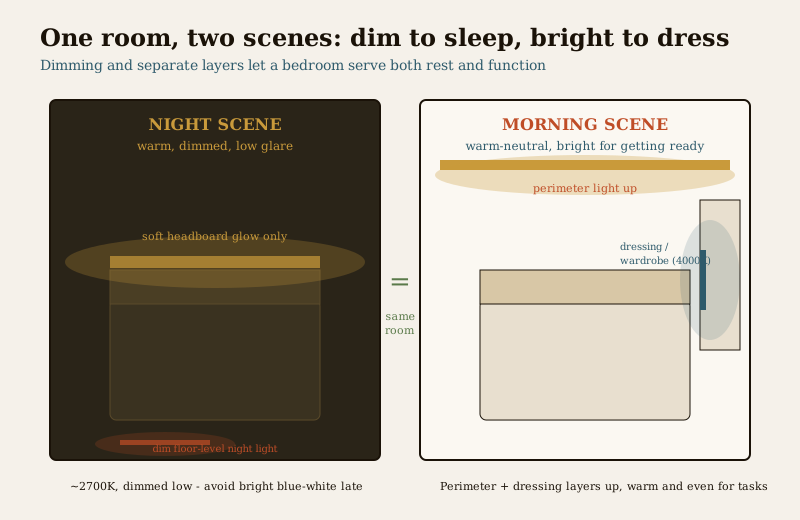
A bedroom has two moods and they pull in opposite directions. At night it should feel like a cocoon — dim, warm, glare-free, restful. In the day and evening it still has to work: making the bed, choosing clothes, reading, packing a suitcase, feeding a baby. The trick is not a single "right" brightness but layers you can turn up and down independently, so the room slides from bright-and-functional to soft-and-sleepy without rewiring your habits.
Four principles run through every choice below:
- Warm, not cool. Bedrooms want 2700K (warm white) light — the colour of a low sun, not an office tube. Save cool white for the wardrobe and mirror where you judge colour.
- Low glare, nothing in the eyeline. When you lie down you look straight up. Keep bright sources off that axis — no bare bulb, no undimmed panel centred over the bed.
- Flexible and dimmable. The single biggest upgrade a bedroom can have is a dimmer. Dimming down at night lets the room follow you toward sleep.
- Layered and independently switched. Ambient, bedside task, accent and a night light, each on its own control, so you light only what you need.
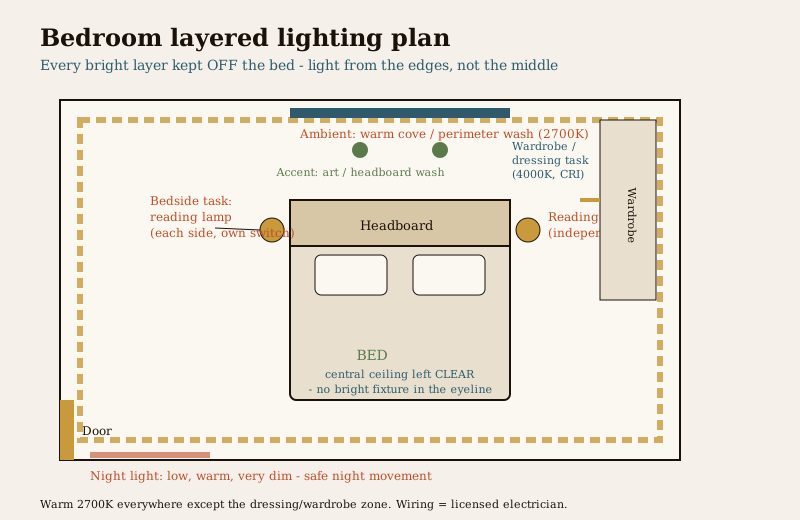
The layers of a bedroom
1. Ambient — soft, and off the bed
Ambient is the gentle fill that lets you move around safely. In a bedroom the golden rule is that the ambient layer should never blast down onto the bed. Get your general light from the edges instead of the middle:
- Cove / perimeter light. A warm strip hidden in a false ceiling cove or a profile channel washes the ceiling and walls with indirect glow — no visible source, no glare when you look up. This is the single best ambient move for a bedroom. See cove and indirect lighting.
- Dimmed downlights around the perimeter. If you use recessed downlights, place them over the walking paths, wardrobe and dressing zone — not centred over the mattress — and always on a dimmer. Deep-baffle, anti-glare trims matter here more than anywhere.
- A pendant, only as decor. A small pendant can hang off-centre or over a corner chair as a decorative flourish, but it is not your main light.
What to avoid is the default: one bright ceiling panel or tube in the centre, undimmed, straight above the pillows.
2. Bedside task — free the table, one each side
This is the layer most Indian bedrooms miss, and the one that changes the room most. You need focused, warm light for reading in bed — bright enough on the page, contained so it does not spill onto your partner:
- Wall-mounted swing-arm reading lamps flanking the headboard are the designer's choice: they free up the bedside table (no cluttered lamp fighting the phone, water glass and spectacles), aim exactly where you read, and look intentional. See wall lights and sconces.
- Table lamps are the flexible, no-electrician alternative — a warm shade on each nightstand, plugged in. See lamps and portable lighting.
- Independent switch each side. Non-negotiable: each person controls their own reading light without disturbing the other. One reads, one sleeps.
- Warm and focused. 2700K, a tight-ish spread, roughly at shoulder height when sitting up in bed so the light falls on the book, not your eyes.
3. Accent — quiet drama
Accent light gives the room depth once the bright layers are off. Keep it subtle:
- A small spotlight or track grazing a piece of art or a textured feature wall.
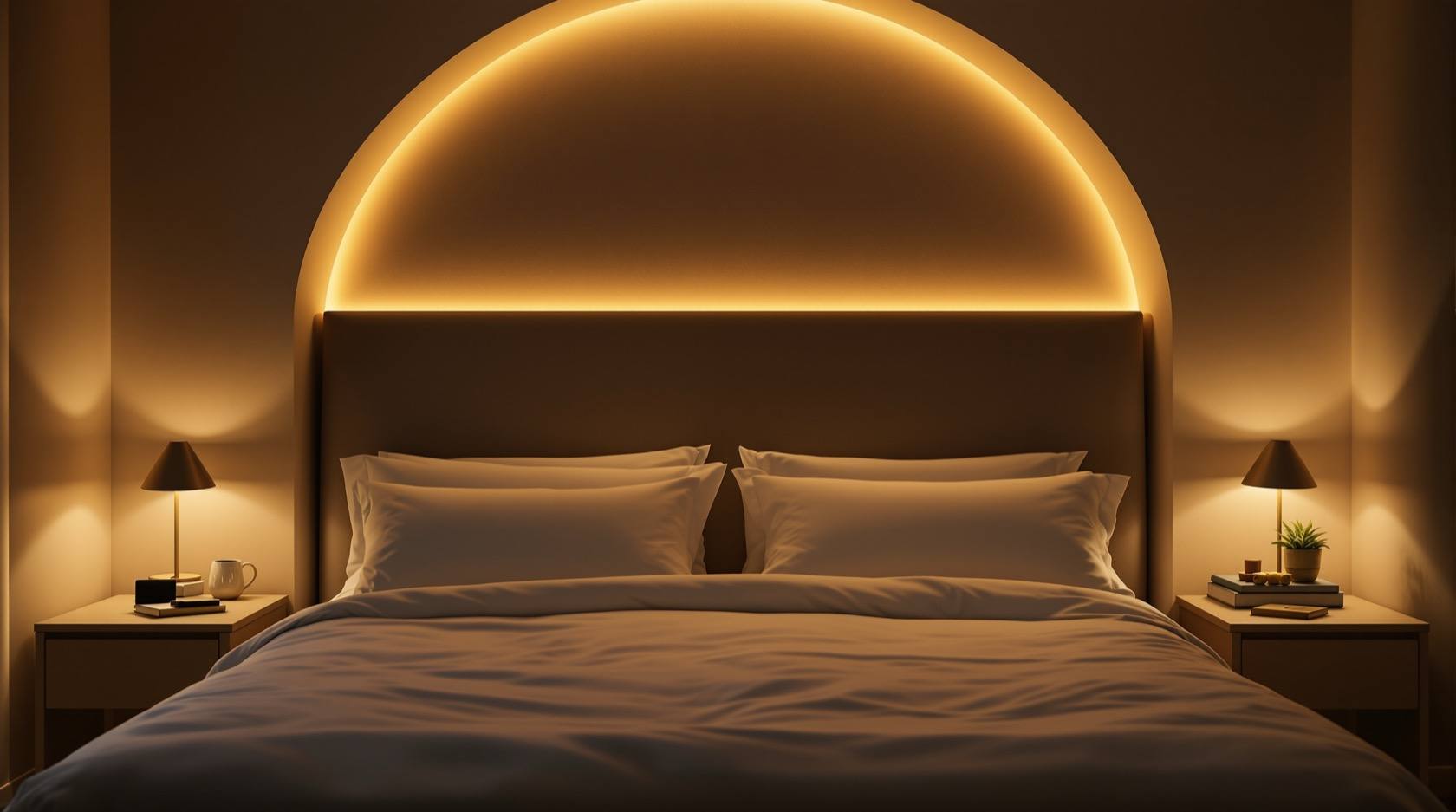
- A headboard wash — a hidden strip behind or above the headboard throwing a soft halo — is a signature bedroom move that reads as luxury for very little cost.
- Wardrobe or niche accent that doubles as orientation light at night.
4. Decorative — personality
Fairy lights over a headboard, a paper lantern, a sculptural table lamp, festive decorative lighting for the pooja corner or Diwali — the layer that makes the room yours. It is mood, not function; keep it dim and warm.
Colour temperature and dimming — the wind-down move
If you change only two things in your bedroom, change these.
Warm colour temperature. Specify 2700K for the whole restful zone — ambient, bedside, accent. Warmer, gentler light in the evening simply feels calmer, and dropping toward warm-and-dim as the night goes on supports the natural wind-down toward sleep; cool, bright, blue-heavy light late at night does the opposite and keeps you alert. So keep late-evening light warm and low, and avoid bright blue-white screens and fixtures in the hour before bed. The one exception is the wardrobe and dressing mirror, where a neutral 4000K helps you judge colours — more on that below. Use the colour temperature selector to compare Kelvin values before you buy, and colour temperature and CRI for the science.
Dimming. A dimmer on the ambient (and ideally the bedside) circuit is the feature that lets the room follow you from awake to asleep. Bright to dress and clean; a low glow to read; the faintest wash to drift off. Note that not every LED dims smoothly — you need dimmable-rated lamps matched to a compatible dimmer, and the dimmer wiring itself is an electrician's job. Specify "dimmable" on the fixtures and let your electrician confirm the dimmer type.
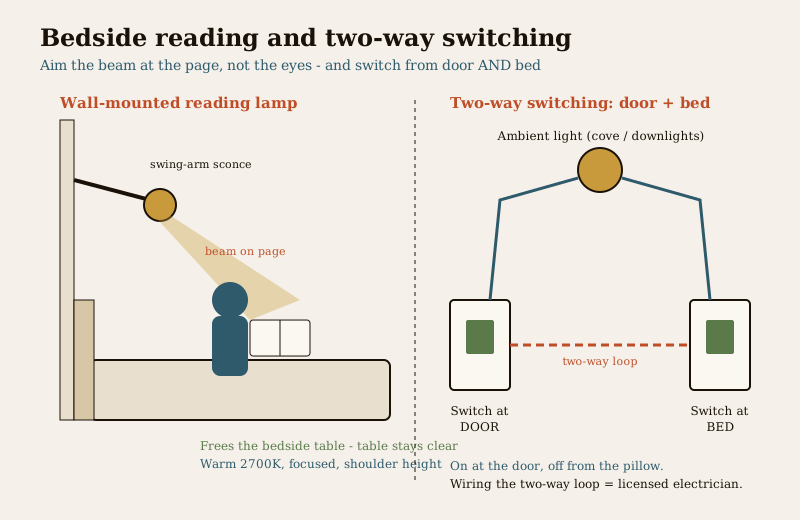
Controls: switch at the door AND the bed
Bedroom lighting lives or dies on where the switches are. The room is used lying down, in the dark, half-asleep — so the controls have to reach you there.
- Two-way switching (door and bed). The single most useful bedroom wiring feature: switch the ambient light on at the door as you enter and off from the bed without getting up, and vice versa. This is standard practice but is often skipped — ask for it explicitly. The wiring (a two-way loop between switch points) is the electrician's work; you just specify that you want it, and let them handle the switch-box wiring and dimmer compatibility.
- A bedside switch plate or panel. Group the reading lights, night light and a master "all off" at the bedside so the whole room can be settled from the pillow.
- Dimmers on the main and bedside circuits. As above — specify dimmable fixtures and a compatible dimmer.
- Smart control (optional). Scenes, voice and schedules — a "goodnight" scene that fades everything to a night glow — are lovely but belong to the smart lighting guide, not this one.
The switching & controls plan
| Control | What it does | Where it lives | Who does it |
|---|---|---|---|
| Two-way switch (ambient) | On/off from door and from bed | Door jamb + bedside | Licensed electrician (two-way loop) |
| Bedside switch plate | Reading lights, night light, master off | Reachable from pillow, each side | Licensed electrician |
| Dimmer (ambient) | Fades cove/downlights bright to dim | Bedside or door, compatible type | Electrician + dimmable fixtures |
| Independent reading switches | Each side controls own lamp | Beside each pillow | Electrician / plug-in lamp |
| Night light / motion light | Low glow for safe night movement | Skirting, under-bed, or path to bathroom | Electrician (fixed) or plug-in/battery |
Night light: moving safely in the dark
Anyone who gets up at night — for the bathroom, a baby, a glass of water — should never have to choose between blinding overhead light and stumbling in the dark. A low-level night light solves it:
- A dim, warm skirting or under-bed strip on its own switch, or an under-bed motion sensor light that fades on when your feet touch the floor and off again after you settle — the most elegant option, and kind to a sleeping partner.
- A warm glow on the path to the bathroom — a tiny plug-in night lamp or a low sconce — so no bright light is needed for a 3 a.m. trip.
- Keep it warm and very dim (amber-ish is ideal): enough to see the floor, not enough to wake you fully. Bright white night lights defeat the purpose.
Fixed night lights and motion sensors that tie into the mains are wiring; a plug-in or battery night light you can add yourself.
Dressing and wardrobe: the working corner
The one place a bedroom wants brighter, cooler, more accurate light is where you get ready.
- Wardrobe task light. A strip or profile light inside the wardrobe — ideally on a door sensor so it lights the shelves when you open up — makes finding clothes easy. Neutral 4000K here helps you read true colours.
- Dressing mirror. Light the face, not the mirror: vertical lights on either side of the mirror (like a wall sconce pair) give even, shadow-free light on your face, far better than a single downlight overhead that casts shadows under the eyes. Neutral-to-cool and good CRI so make-up and colour-matching are honest.
- Keep this zone switched separately from the restful layers so a bright dressing light never intrudes on the sleep mood.
Special cases: kids' rooms and elderly bedrooms
Kids' rooms. Children need a soft, comforting night light — a warm, low glow that helps with fear of the dark and lets a parent check in without flooding the room. Add bright, even, glare-free light over the study/desk (a separate task layer — see home office and study lighting), and keep switches at a height a child can reach. Playful decorative lighting is welcome; the sleeping layer stays warm and dim.
Elderly bedrooms. Safety leads. Prioritise a reliable night light and a lit path to the bathroom to prevent falls, larger, easy-to-find switches (or motion sensors that remove the need to fumble for a switch at all), even ambient light with no dark corners or trip hazards, and slightly higher overall levels since older eyes need more light. Rocker switches with a locator glow at the door and bedside make the room forgiving in the dark. Accessible lighting is part of good design under the spirit of the RPwD Act 2016.
False ceiling and headboard cove
If you are doing a false ceiling, the bedroom is the ideal room to build the lighting into it:
- A perimeter cove running the ceiling edge gives you the whole ambient layer as indirect, glare-free glow — no fixture in the eyeline at all.
- A headboard cove or backlit headboard (a strip hidden behind or above the headboard) is the single most flattering bedroom feature: a soft halo that frames the bed and doubles as a gentle night light.
- Keep any downlights in the false ceiling to the perimeter and dressing zone, dimmable, and off the mattress.
Warm 2700K strips, hidden channels, clean plaster lines — cove is where design and calm meet.
A bedroom layer plan
| Layer | Fixture (typical) | Colour temp | Placement | Control |
|---|---|---|---|---|
| Ambient (fill) | Cove / profile strip; dimmed perimeter downlights | 2700K warm | Ceiling edge & walking paths — off the bed | Two-way + dimmer |
| Bedside task | Wall swing-arm reading lamps or table lamps | 2700K warm, focused | Flanking the headboard, ~shoulder height | Independent switch each side |
| Accent | Small spot / track; headboard wash | 2700K warm | Art, feature wall, behind headboard | Own switch (mood) |
| Decorative | Fairy lights, lantern, sculptural lamp | 2200-2700K very warm | Headboard, corner, pooja niche | Own switch / plug |
| Night light | Skirting / under-bed strip or motion light | Amber / very warm, very dim | Floor level, path to bathroom | Own switch or motion sensor |
| Dressing / wardrobe | Mirror side-lights; in-wardrobe strip | 4000K neutral, high CRI | Beside mirror; inside wardrobe | Separate switch / door sensor |
Rough levels: a bedroom's general lighting sits gentle (well below a kitchen), while the reading and dressing tasks need a focused brighter pool. Use the lux level calculator and colour temperature selector to size and specify — and confirm task levels against IS 3646.
How it connects
- Start at the complete guide to lighting (the pillar), then read the method in the layered lighting guide.
- Compare rooms: living room lighting is the sibling for the sociable, layered living space.
- Go deep on the fixtures this room uses: wall lights and sconces for bedside reading, lamps and portable lighting for nightstands, and cove and indirect lighting for the ambient layer.
- Avoid the usual traps in common lighting mistakes, and take app control and scenes to the smart lighting guide.
- Specify with the colour temperature selector and the lux level calculator, and gather looks in the bedroom design ideas gallery.
Key takeaways
- Rest first. Warm, soft, low-glare and flexible beats bright — and never a harsh central overhead in the eyeline above the bed.
- Layer it: soft ambient off the bed (cove or dimmed perimeter downlights), warm focused bedside reading task with an independent switch each side, quiet accent, and a low night light.
- Warm 2700K and a dimmer are the two biggest upgrades — dim and warm at night to wind down; avoid bright blue-white light late.
- Wall-mounted reading lamps free the bedside table and aim exactly where you read; table lamps are the plug-in alternative.
- Two-way switching (door and bed) plus a bedside switch plate mean you control the room from the pillow.
- Add a warm, very dim night light — under-bed motion light or a lit path — for safe movement; vital in kids' and elderly rooms.
- Give the wardrobe and dressing mirror its own neutral 4000K, high-CRI light, switched separately from the sleep layers.
- All wiring — two-way loops, dimmers, fixed night lights — is a licensed electrician's job; you specify, they design and certify.
References
- IS 3646 — code of practice for interior illumination (recommended lux levels for residential and task areas; named generally).
- NBC (SP 7:2026), Bureau of Indian Standards — general provisions for illumination and lighting in buildings.
- IS 16107 / IEC 60598 — LED luminaire performance and luminaire safety (named generally, for fixture selection).
- ECBC / BEE star rating — energy efficiency and lighting power density guidance for residential LED lighting.
- RPwD Act 2016 — accessibility considerations informing switch placement, night lighting and safe movement for elderly and disabled users.
- A licensed electrician — for all circuits, two-way switching, dimmer selection and wiring, and fixed night-light installation.
All wattages, lux levels, colour-temperature and cost notes here are indicative design and planning aids only; confirm the governing values against IS 3646, NBC (SP 7:2026) and product data, get local quotes, and have a licensed electrician design, wire and certify all switching, dimming and fixed lighting circuits.
Export this guide
Related Guides — Deep-dive reading
Lighting Controls & Dimming Design: Zones, Scenes & Switches (2026)
How to plan lighting control so an Indian home's light is flexible — split each room's layers onto separate switches, choose dimmers that actually work with LEDs, add two-way switching where you need it, and layer scenes on top. The design decisions you must settle before the electrician wires.
LightingBathroom Mirror Lighting India: Shadow-Free Vanity Light, Colour Temp, CRI & Cost (2026)
Why a single ceiling downlight throws ugly shadows on your face, how vertical sconces either side of the mirror beat a light bar above, when a backlit mirror is glow not task light, plus the colour temperature, CRI, mounting height, IP rating and 2026 rupee costs that actually get make-up and shaving right.
BathroomsThe Complete Guide to Home Lighting Design in India (2026)
The start-here master guide to designing light for an Indian home — what good lighting really does, the layered-design mindset that replaces the single ceiling tubelight, the decision sequence from tasks to budget, and where the design work hands off to a licensed electrician.
LightingRelated Tools — Try Free
Circadian Light Meter
Patient-centric circadian lighting visualizer for Indian healthcare design — time-of-day × intensity → CCT, melanopic lux (EML / mEDI), melatonin suppression, and an alertness curve. Calibrated against WELL v2 L03 Circadian Lighting Design, CIE S 026:2018, Brainard 2001, and Lucas et al. 2014.
Circadian ToolFalse Ceiling Cost Estimator
Live ₹/sqft across 8 ceiling types — POP, gypsum, designer, metal, PVC, wooden — with cove and spot lighting for 20 Indian cities.
Cost CalculatorBathroom Lighting Calculator
A lux-based bathroom lighting plan — total lumens, number of LED downlights, mirror task lighting and indicative wattage.
Bathroom Calculator