
Colour Temperature & CRI: Choosing the Right White for Every Room
The two numbers that decide how light feels and how true colours look — colour temperature in kelvin (warm to cool) and the colour rendering index (CRI). What warm, neutral and cool light suit, why CRI matters for skin, food and fabric, and the room-by-room choices for an Indian home.
Two bulbs can give the exact same brightness and yet make a room feel completely different — one warm and inviting, the other clinical and cold. The difference is colour temperature, and it is the lighting decision people most often get wrong, filling a bedroom with harsh blue-white "daylight" or a workspace with sleepy yellow light. A second number, CRI, decides whether colours — skin, food, fabric, wood — look true or washed out. Get these two right and every room feels the way it should. This guide explains both, simply.
It pairs with the LED lighting guide and the home lighting design guide.
The safety line. Choosing colour temperature is pure design preference — no safety implication. As always, hard-wired fittings are installed by a licensed electrician.
Colour temperature: the warmth of white
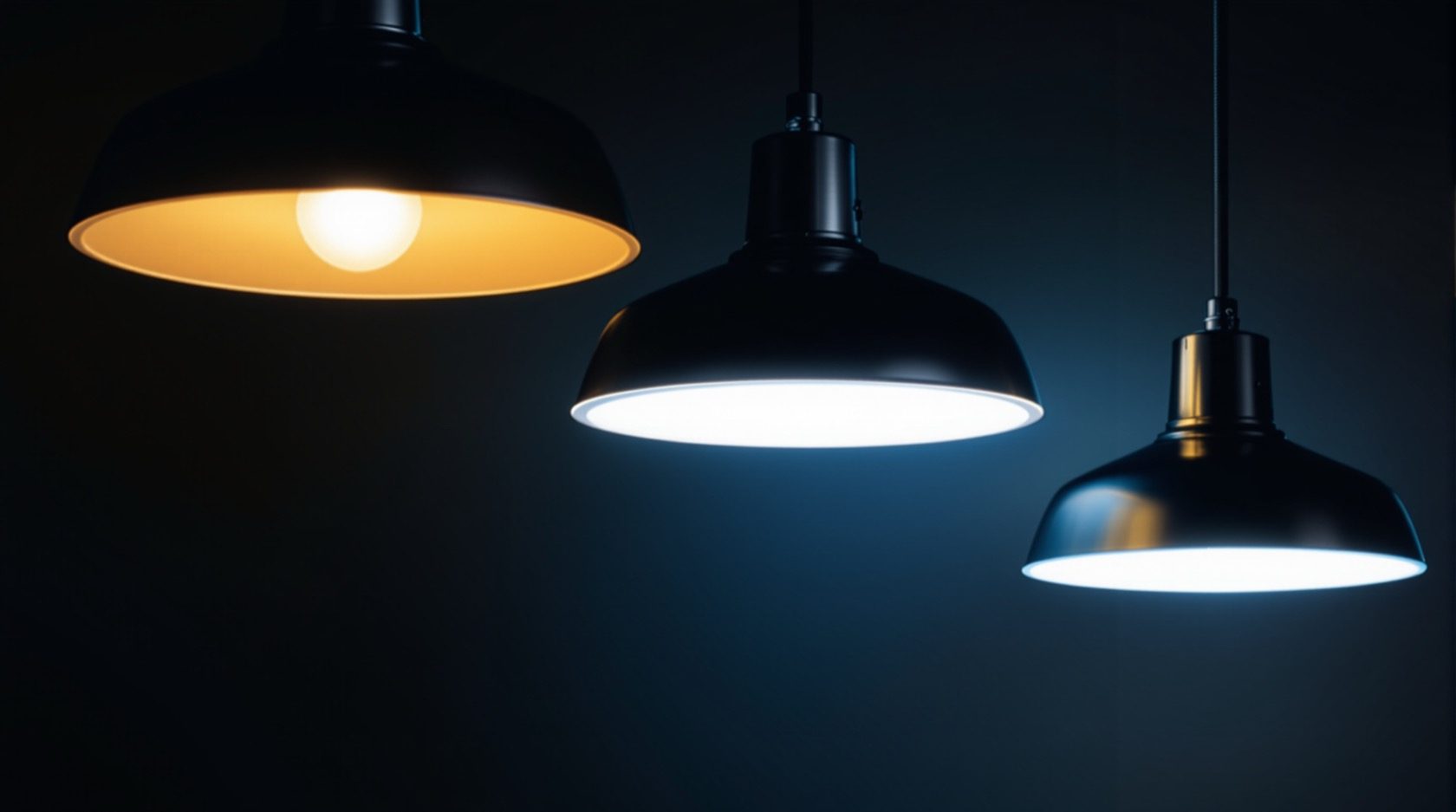
Colour temperature describes whether white light leans warm (yellow) or cool (blue), measured in kelvin (K). Counter-intuitively, lower kelvin is warmer (more yellow), and higher kelvin is cooler (more blue):
- 2700K–3000K — Warm white. Cosy, relaxing, flattering, like a traditional bulb or golden-hour light. For living rooms, bedrooms, dining — anywhere you relax.
- 3500K–4000K — Neutral / cool white. Clean and balanced, neither yellow nor blue. For kitchens, bathrooms, studies — anywhere you work and want clarity.
- 5000K–6500K — Cool white / daylight. Crisp, energising, bright-blue-white. For garages, utility areas, task-intensive workspaces, and security lighting — but often too harsh for living spaces.
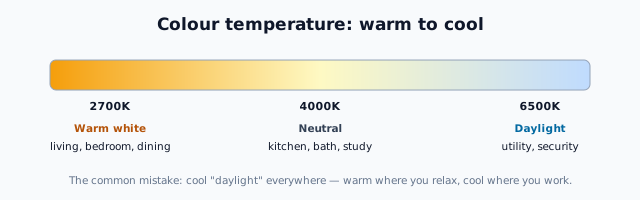
The most common mistake in Indian homes is cool "daylight" (6500K) everywhere — it is bright and cheap, but it makes living rooms and bedrooms feel like an office or a hospital. The fix is simple: warm white where you relax, neutral/cool where you work.
A quick rule: if the room is for resting, go warm (2700–3000K); if it's for doing, go neutral to cool (3500–4000K); reserve true daylight (6000K+) for utility and security.
CRI: how true colours look
Colour Rendering Index (CRI) measures how accurately a light shows the true colours of what it illuminates, on a scale to 100 (natural daylight = 100). A low-CRI light can make skin look sickly, food unappetising, and fabric colours wrong — even at the right brightness and colour temperature.
- CRI 80+ — good, the sensible minimum for a home.
- CRI 90+ — excellent; worth it where colour really matters: the kitchen (judging food), the bathroom/dressing area (skin tone, make-up), and anywhere you display art, textiles or wood.
- Below 80 — avoid for living spaces; colours look flat and muddy.
Cheap LEDs often skimp on CRI to cut cost, which is one reason a bargain bulb can make a beautiful room look drab. Check the CRI on the pack alongside the lumens and kelvin.
Room by room
| Room | Colour temperature | CRI | Why |
|---|---|---|---|
| Living room | Warm 2700–3000K | 80–90+ | Relaxed, welcoming; higher CRI flatters people and décor |
| Bedroom | Warm 2700K | 80+ | Calm, restful; warm light aids winding down |
| Kitchen | Neutral 3500–4000K | 90+ | Clarity for work; high CRI to judge food |
| Bathroom / dressing | Neutral 3500–4000K | 90+ | True skin tone for grooming and make-up |
| Study / office | Neutral 4000K | 80+ | Alert, clear, low eye strain |
| Dining | Warm 2700–3000K | 90+ | Intimate; food looks appetising |
| Utility / garage | Cool 5000–6500K | 80+ | Maximum clarity, mood not a concern |
| Outdoor / security | Cool 5000–6500K | — | Bright, alert; see outdoor lighting |
Tunable white: having both
Modern tunable-white LEDs and smart bulbs can shift colour temperature on demand — warm in the evening, cool for a work task — from the same fitting. It is a genuinely useful feature for rooms that do double duty (a study that's also a reading nook, a living room that hosts both work and relaxation), and it pairs naturally with smart lighting. For most rooms, though, simply choosing the right fixed colour temperature is enough.
The one-line answer
Colour temperature (kelvin) sets the mood — warm white (2700–3000K) where you relax, neutral/cool (3500–4000K) where you work, and daylight (6000K+) only for utility and security — and the commonest home mistake is cool "daylight" everywhere, which makes living spaces feel clinical. CRI sets colour accuracy — aim for 80+ generally and 90+ in the kitchen, bathroom and anywhere colour matters. Choose the right fixed temperature per room, or use tunable-white LEDs to get both from one fitting.
Where to go next
- The technology: LED Lighting Guide.
- The whole design: Home Lighting Design Guide.
- Shifting colour on demand: Smart Lighting Guide.
- Outside: Outdoor & Landscape Lighting.
References
- IS 16102 (Parts 1 & 2), Self-Ballasted LED Lamps for General Lighting Services, Bureau of Indian Standards.
- IS 3646 : Part 1 : 2025, Interior Illumination — Code of Practice, BIS.
- Bureau of Energy Efficiency, Standards & Labelling programme: https://beeindia.gov.in/
- National Electrical Code of India, SP 30 : 2023, BIS: https://www.bis.gov.in/
Colour-temperature and CRI recommendations are general design guidance for typical Indian homes; personal preference and the specific space matter. Verify any standard's status via the BIS catalogue before relying on it.
Export this guide
Related Guides — Deep-dive reading
Circadian Lighting for Homes
Light is the master cue for your body clock. Here is how to design a home's electric lighting — colour temperature, brightness and layers through the day — so it supports sleep, mood and energy instead of quietly wrecking them.
Healthy HomesHome Office & Study Lighting: Bright, Glare-Free & Focused (2026)
The design guide to lighting a home office or study for long-hour focus and eye comfort in an Indian home — a good ambient base, a proper task lamp, no screen glare or reflections, the right colour temperature through the day, and flattering light for the video call.
LightingKitchen Lighting Design for Indian Homes: Task-First & Shadow-Free (2026)
The design guide to lighting an Indian kitchen where task and safety matter most: the one rule that ends counter shadows, the ambient-task-accent layers, the right lux, neutral colour and high CRI so food looks true, and where wiring near water hands off to a licensed electrician.
LightingRelated Tools — Try Free
Circadian Light Meter
Patient-centric circadian lighting visualizer for Indian healthcare design — time-of-day × intensity → CCT, melanopic lux (EML / mEDI), melatonin suppression, and an alertness curve. Calibrated against WELL v2 L03 Circadian Lighting Design, CIE S 026:2018, Brainard 2001, and Lucas et al. 2014.
Circadian ToolFull-Room BOQ — Living, Bedroom, Kitchen, Bath
Room-wise BOQ across living, bedrooms, kitchen, utility, and bathrooms with line-item pricing.
Full-Room BOQDesign Style Finder Quiz
Answer 10 visual questions to discover your Indian interior style profile with materials and colours.
Interactive Quiz