
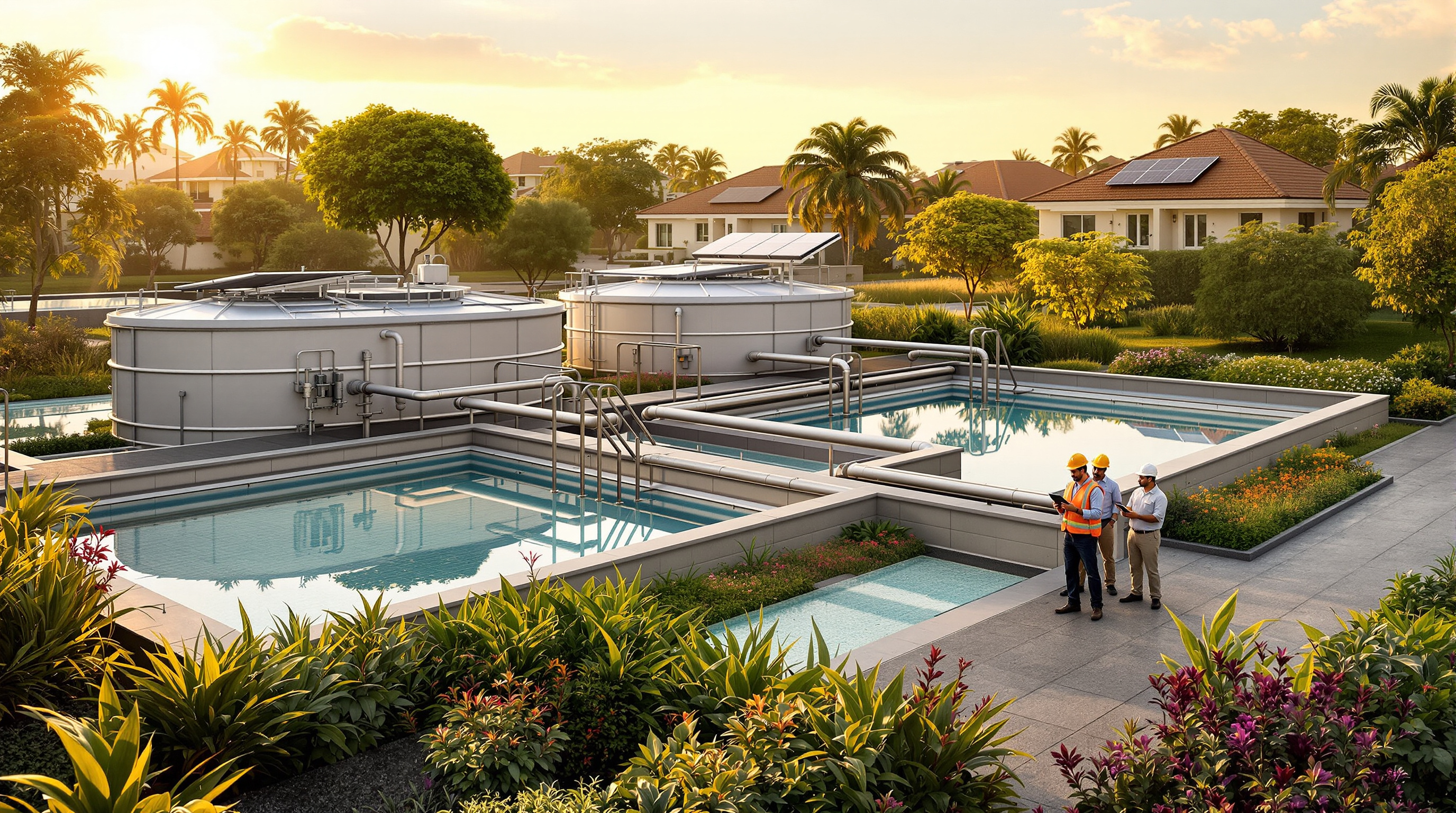
The Future of Sewage Treatment: Where STP Technology Is Heading in India
Energy-neutral plants, resource recovery, decentralisation, AI-run operations and reuse-first design — a forward-looking, honest tour of the technologies reshaping how India cleans its wastewater over the next decade.
For most of its history, a sewage treatment plant has been treated as a cost centre — a legally required, power-hungry box in the basement whose only job was to make a problem disappear cleanly enough to satisfy the pollution board. That definition is now quietly falling apart. Across India, the questions being asked of a new STP are changing: not just does it meet the norms? but how little energy can it use, how much water can it give back, and how much of it can run itself?
This guide is the forward-looking map that ties the emerging-technology guides in this library together. It is deliberately honest about maturity — separating what is deployable on a project tender today from what is still finding its feet in Indian conditions. If you are new to the basics, start with What is a Sewage Treatment Plant and How Does an STP Work; this guide assumes you know the four stages and asks where they are going next.
The plant of the next decade is not a disposal system that happens to recover a little water. It is a resource-recovery facility that happens to also treat sewage. That inversion — from waste-out to resource-out — is the single idea behind almost every trend below.
Five directions the technology is moving
The change is not one breakthrough but five overlapping shifts, each already visible on real Indian projects to different degrees.
| Direction | What it means | Maturity in India |
|---|---|---|
| Energy neutrality | The plant produces as much energy as it consumes, mostly via biogas and solar | Emerging on large plants; aspirational for small ones |
| Resource recovery | Water, energy, nutrients and even sludge treated as products, not waste | Water reuse mature; nutrient recovery early |
| Decentralisation | Smaller, packaged, modular plants close to where sewage is produced | Mainstream and accelerating |
| AI & automation | Sensors, analytics and controls that run and optimise the plant | Fast-growing on premium projects |
| Reuse-first design | The plant is designed around where the water goes, not just discharge limits | Becoming the default brief |
From energy-hungry to energy-neutral
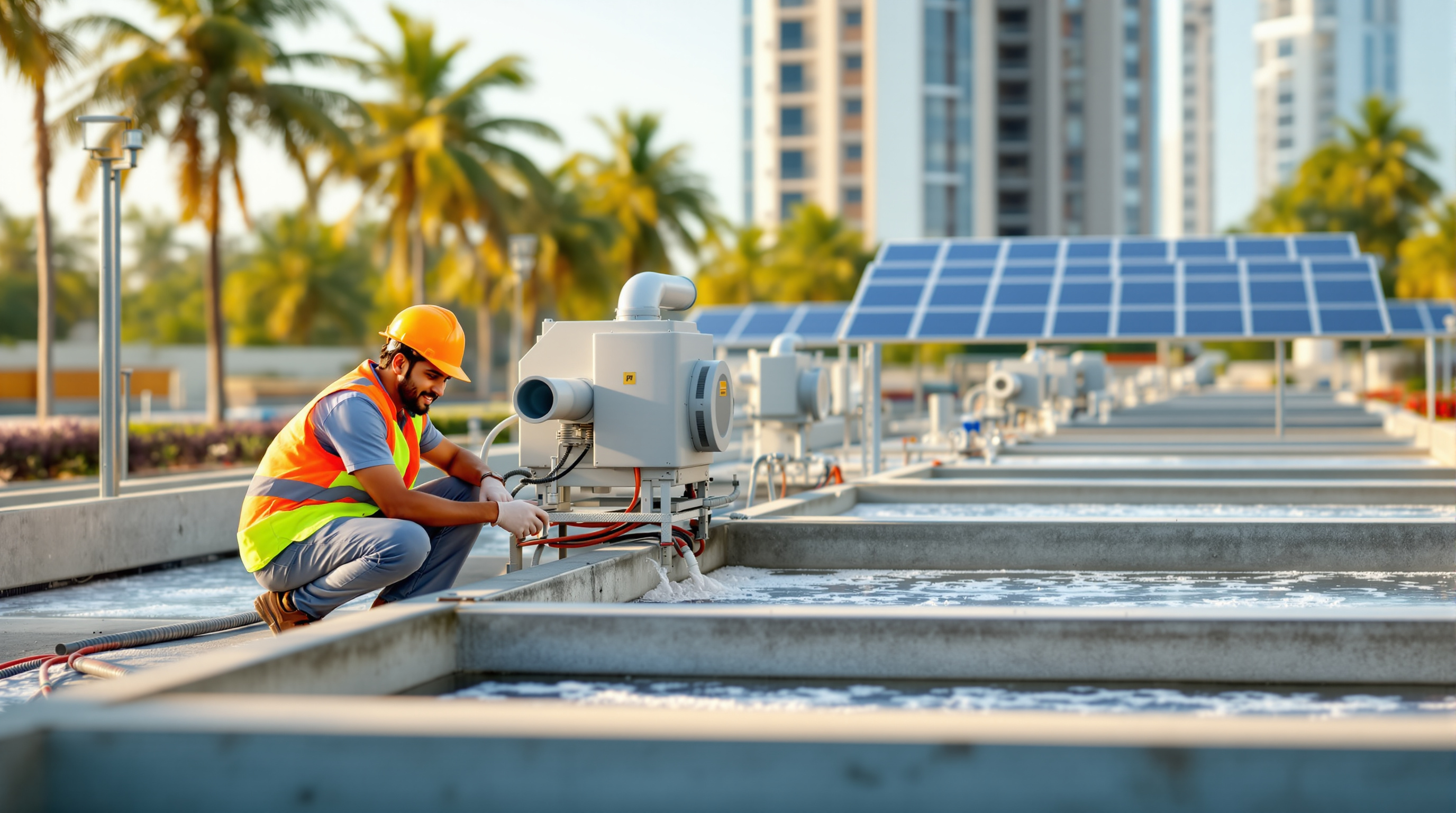
Aeration — pushing air into the biological tank so microbes can breathe — is the single largest electricity cost in a conventional STP, often more than half the power bill. The future of sewage treatment is, to a large extent, a war on that number.
Two levers are being pulled together. The first is using less: high-efficiency blowers, fine-bubble diffusers, and above all smart control that matches airflow to the actual load instead of running flat out around the clock. Simply installing dissolved-oxygen sensors that throttle blowers can trim aeration energy meaningfully — the practical tactics are covered in Reducing STP Electricity Consumption. The second lever is making energy on site: capturing the biogas from the sewage itself, typically via anaerobic processes such as the UASB reactor, and adding rooftop solar over tanks and buildings.
Put them together and the goal of an energy-neutral STP — net-zero grid electricity over a year — becomes realistic for large plants with strong organic loads. Be honest about the ceiling, though: for a small apartment STP treating a few hundred KLD, full neutrality is rarely economic yet. The near-term win there is efficiency, benchmarked against peers — the Energy Benchmark Calculator shows where a plant sits on the kWh-per-kilolitre curve and how much room it has to improve.
From waste disposal to resource recovery
The deepest shift is philosophical: sewage stops being waste and becomes a mine. Three streams are being recovered.
- Water — already the mainstream product. A well-run plant returns 80–85% of a building's water for flushing, landscaping and cooling. The frontier is pushing quality and reliability high enough for higher-value reuse, the subject of The Future of Water Reuse.
- Energy — biogas from sludge digestion, burned for heat or power, closing the loop described above.
- Nutrients — nitrogen and phosphorus, currently a disposal headache, are increasingly seen as fertiliser feedstock. This is genuinely early-stage in India and mostly relevant to large municipal plants, but it points to a future where the sludge stream from your sludge holding tank has value rather than only a disposal cost.
This is the engine of the urban water circular economy: every output of the plant becomes an input to something else, and the campus edges toward closing its own water and nutrient loops.
From central and monolithic to decentralised and modular
The old model was one giant municipal plant at the end of a vast pipe network. The direction of travel is the opposite: many smaller plants close to the source. Decentralisation cuts the cost and leakage of long sewer lines, lets treated water be reused exactly where it is generated, and scales in step with a city that grows building by building.
The enabling technology is the prefabricated packaged STP — a factory-built, skid-mounted unit that arrives largely assembled and commissions in weeks rather than months. Compact biological processes like MBBR and MBR are what make these small footprints possible, packing high treatment capacity into a plant room or a basement corner. For the existing building stock, the parallel trend is retrofitting old STPs — upgrading tired plants with better media, membranes, blowers and controls rather than demolishing them.
From manual operation to AI and automation
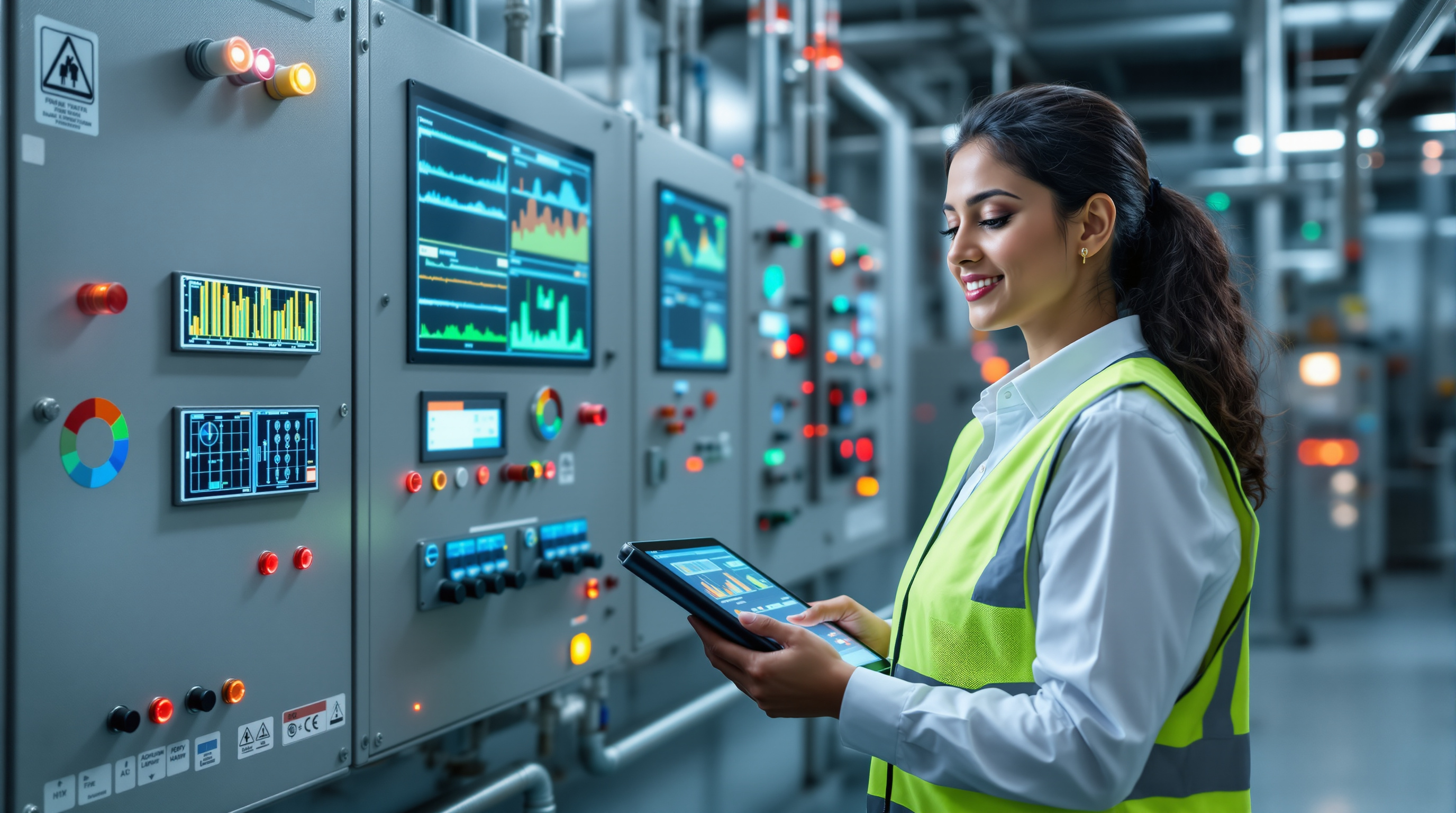
Historically an STP lived or died by the diligence of one operator reading gauges and adjusting valves by feel. The most visible near-term change on premium Indian projects is that the plant is learning to run itself.
The stack builds up in layers:
- Smart sensors measuring dissolved oxygen, flow, turbidity and MLSS continuously instead of a technician sampling twice a day.
- IoT monitoring and remote dashboards that let a single team oversee many plants across a city from one screen.
- AI in STP operations that turns that data into action — tuning aeration, flagging anomalies, and predicting problems before they breach a norm.
- Predictive maintenance that catches a failing pump or blower from its vibration and current signature, and eventually digital twins — a live simulation of the plant used to test changes safely before making them for real.
The honest caveat: automation reduces routine effort but does not remove the operator. It shifts the skill from valve-turning to interpreting data, and a plant with sophisticated controls and no trained eye behind them can fail in more expensive ways. The reliable pumps and instrumentation underneath still matter more than the dashboard on top.
From discharge-limited to reuse-first design
The quietest but most consequential change is in the brief itself. A plant designed to a discharge limit asks only is the water clean enough to let go? A reuse-first plant asks where is every drop going, and what quality does each destination need? — and designs backward from that answer.
That reframing pulls tertiary treatment, disinfection and dual-plumbing from optional extras to the centre of the design. It also changes sizing: reuse demand, storage and diurnal patterns drive the numbers as much as inflow does. The fundamentals of getting that right are in How to Size an STP, and you can put a first number on your own project with the STP Capacity Calculator.
What this means for a project today
If you are specifying or upgrading a plant now, the future is less a gamble than a set of graded choices. The mature moves — high water reuse, efficient blowers with DO control, packaged decentralised plants, remote monitoring — belong in every serious brief today and usually pay back quickly. The emerging moves — full energy neutrality, nutrient recovery, AI-driven optimisation and digital twins — are worth designing for even if you phase them in: leave space, power and data provisioning so tomorrow's upgrade is a retrofit, not a rebuild.
The economics increasingly reward it. As you weigh options, keep the running cost in view alongside the capital figure — the STP Cost Estimator and the cost-per-KLD guide help frame that trade-off, and energy and water savings are exactly where the emerging technologies earn their keep.
The direction is clear even where the timeline is not. The sewage treatment plant is evolving from a compliance box that consumes power and produces clean-enough water into a compact resource-recovery facility that gives back water, energy and, eventually, nutrients — and increasingly runs itself. To go deeper on any thread, browse the full Sewage Treatment Plants guide library, where each of these futures gets a guide of its own.
Export this guide
Related Guides — Deep-dive reading
AI in STP Operations: What Actually Works Today (and What Doesn't)
A practical, honest look at how AI and machine learning are used to run sewage treatment plants — optimising aeration and energy, predicting effluent quality, catching faults early, and easing operator dependence — with a clear-eyed view of what is mature and what is still marketing.
Sewage Treatment PlantsEnergy-Neutral & Energy-Positive STPs: The Path from Power-Hungry to Power-Neutral
How a sewage treatment plant can approach net-zero energy — through anaerobic biogas recovery, solar power, ultra-efficient aeration and heat recovery — and how close Indian STPs can realistically get today.
Sewage Treatment PlantsSTPs and the Urban Water Circular Economy: How Reuse Closes the City Water Loop
How decentralised sewage treatment and treated-water reuse turn a building's wastewater into a resource — cutting freshwater demand, ending pollution at source, and pointing the way to a genuinely water-circular Indian city.
Sewage Treatment PlantsRelated Tools — Try Free
Rainwater Tank Sizer
How big should your rainwater tank be? Computes annual harvest, recommended tank capacity in litres, water-bill savings, and payback — for 10 Indian cities.
RWH CalculatorWater Recycling Dashboard
Enter fresh supply, sewage and treated-water reused (KLD) to see your building's reuse percentage plus the money, water and CO₂ saved each year, with live charts.
DashboardApartment STP Planner
Plan an apartment complex sewage treatment plant from flats and occupancy — get population load, sewage flow, recommended STP capacity in KLD, treatment technology and approximate space.
Planner