
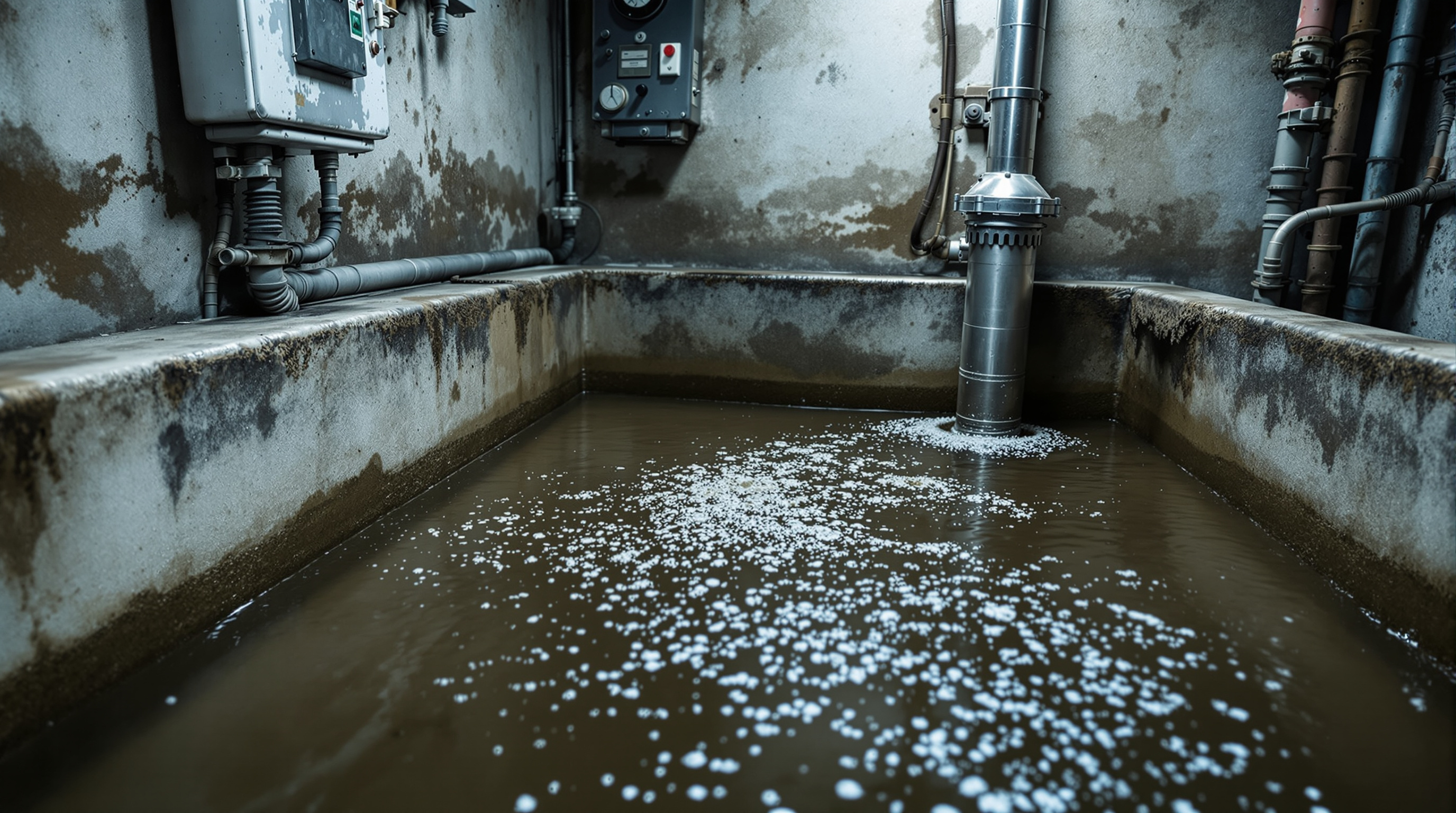
Sludge Holding Tank in an STP: Role, Sizing & Odour Control Explained
The tank that stores, aerates and thickens waste sludge before it is dewatered — what it does, how big it needs to be, why it smells if neglected, and where it sits in your STP's treatment flow, in plain language.
Every sewage treatment plant makes two things: clean water, and sludge. The water gets all the attention — it is the visible reward, piped back up for flushing and gardening. But the sludge, the concentrated muck the microbes leave behind, is where most STPs quietly succeed or fail. Mismanage it and the plant clogs, stinks and stops meeting its discharge norms. The tank that keeps this from happening is the sludge holding tank.
It is one of the least glamorous parts of an STP and one of the most important. This guide explains what a sludge holding tank is, the job it does, how engineers size it, why it turns smelly when neglected, and how it fits into the wider sewage treatment process flow.
A sludge holding tank is the STP's holding pen for waste. It stores the sludge the plant generates every day, keeps it aerated and stable, and slowly thickens it — so that dewatering happens in planned batches instead of a daily emergency.
What a sludge holding tank actually is
In simple terms, a sludge holding tank (also called a sludge sump or sludge storage tank) is a dedicated tank that collects the surplus sludge drawn off from the biological treatment stage and stores it until it can be dewatered and carted away.
Here is where the sludge comes from. In the aeration tank, billions of bacteria eat the organic pollution in the sewage and, in doing so, multiply. The clarifier settles these fattened microbes to the bottom as a thick blanket. Most of that settled sludge is pumped back to the aeration tank to keep the population strong — this is the return activated sludge. But the microbes keep breeding, so every day a portion has to be bled off to stop the system from overloading. That surplus is the waste activated sludge (WAS), and the sludge holding tank is where it goes.
Without this tank, you would have to run the dewatering equipment — a filter press, a centrifuge, or sludge drying beds — every single day, in tiny amounts, whether it was convenient or not. The holding tank breaks that link. It lets sludge accumulate for days, so dewatering becomes a scheduled, efficient batch job.
The four jobs it does
A well-designed sludge holding tank does more than just sit there full of sludge. It performs four distinct functions.
- Storage (buffering). It holds several days of waste sludge so the operator can dewater on a sensible schedule — say twice a week — instead of daily.
- Thickening. Given time, solids settle and compact at the bottom while clearer liquid rises. This supernatant is decanted back to the collection tank or inlet, so the sludge that finally goes to dewatering is thicker and smaller in volume. Thicker sludge means less water to squeeze out and lower disposal cost.
- Stabilisation. In most modern STPs the tank is gently aerated. The air keeps the sludge from going anaerobic (oxygen-starved), which is what makes it stink. The residual microbes also keep digesting the organic matter, so the sludge becomes more stable and less offensive over time. This is why it is often called an aerated sludge holding tank.
- Feed conditioning. By keeping the sludge mixed and homogeneous, the tank delivers a consistent feed to the dewatering unit, which works far better on uniform sludge than on lumps.
Where it sits in the treatment flow
The sludge holding tank lives on the solids side of the plant — the parallel track that handles what the water track leaves behind. A simplified map:
| Stage | What happens | Where sludge goes |
|---|---|---|
| Aeration tank | Microbes eat organic waste and multiply | Mixed liquor flows to clarifier |
| Clarifier / settler | Sludge settles; clear water rises | Most returns as RAS; surplus is wasted |
| Sludge holding tank | Surplus sludge stored, aerated, thickened | Supernatant back to inlet; thickened sludge to dewatering |
| Dewatering (beds / press) | Water squeezed out of the sludge | Dry cake carted off site |
So the holding tank is the junction between the biological plant and final sludge disposal. To understand the upstream biology feeding it, the activated sludge process guide is the natural companion read; SBR, MBBR and MBR plants all generate waste sludge that needs the same holding-and-thickening treatment.
Sizing basics — how big should it be?
Sizing a sludge holding tank starts with one question: how much sludge does the plant make per day? That depends on the incoming load — the volume of sewage and its strength in BOD, COD and TSS. As a rough directional rule for domestic sewage, an STP generates in the order of 0.5–1 kg of dry solids per kg of BOD removed, which for a typical building works out to a modest but steady daily volume of thickened sludge.
Two design levers then set the tank volume:
- Retention time. The tank is usually sized to hold anywhere from a few days up to a week or more of wasted sludge, so dewatering can be batched. Longer retention gives more thickening and stabilisation but needs a bigger tank and more aeration.
- Sludge concentration. Waste sludge enters at a low solids concentration (often under 1%) and thickens over time. The tank must have enough volume at that dilute inlet concentration, plus freeboard.
For a real project you should never guess the incoming load. The Sewage Generation Calculator converts your building's occupancy into a daily wastewater figure, and the STP Capacity Calculator turns that into a plant size — both give you the flow and load numbers a designer needs before sizing any sludge tank. Treat published rules of thumb as directional; the final volume should be set by a qualified STP designer against CPCB and NBC guidance for your project type.
Odour control — the make-or-break issue
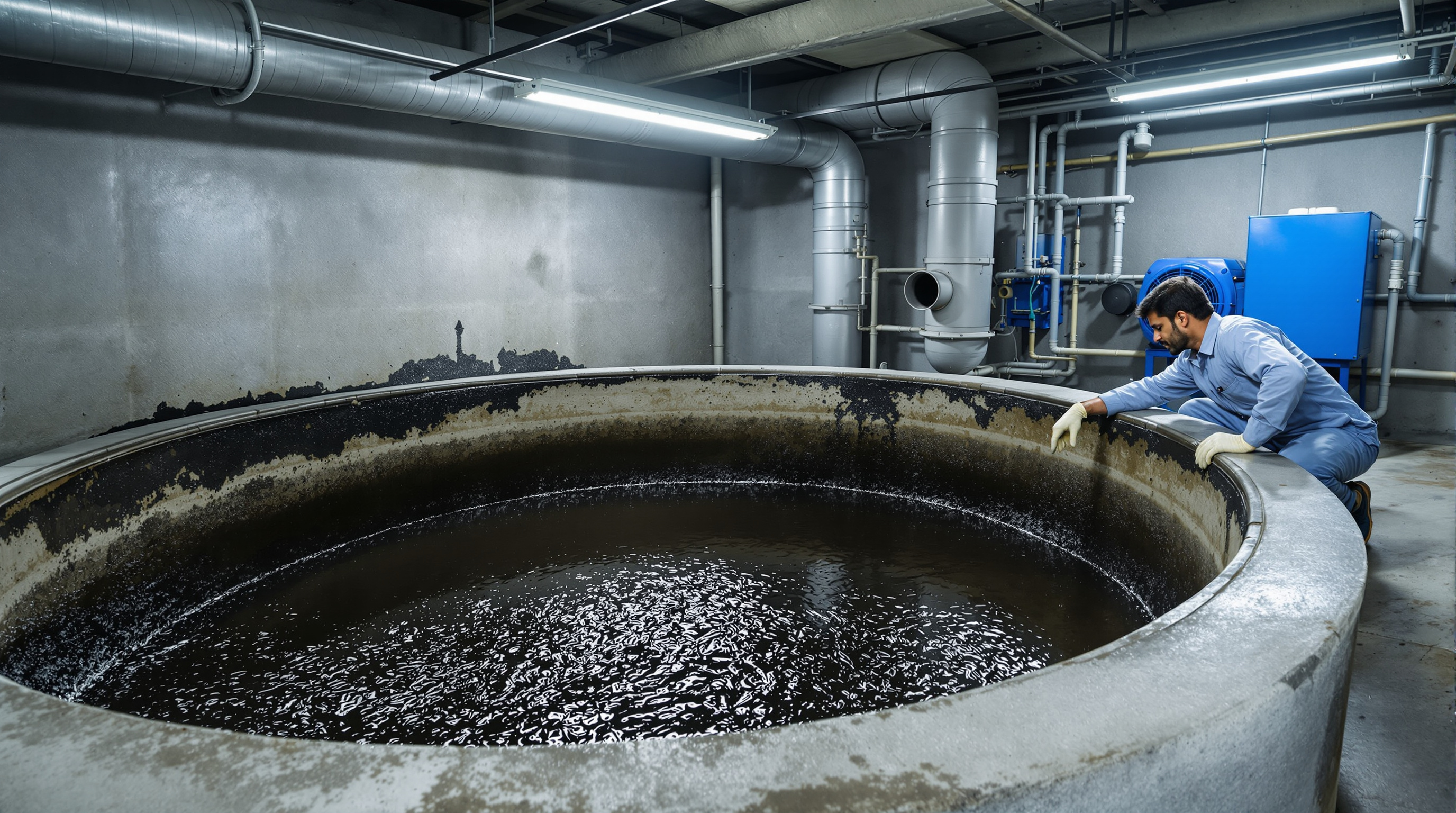
Ask any facility manager about their STP's worst complaints and "the smell near the sludge tank" will be near the top. The chemistry is simple: when sludge sits without oxygen, anaerobic bacteria take over and produce hydrogen sulphide (the rotten-egg smell) and other foul gases. A sludge holding tank that is under-aerated, overloaded or left stagnant is the single most common source of odour in a residential STP — and the reason residents living above a basement plant grow to hate it.
Keeping the tank sweet comes down to a few disciplines:
- Keep it aerated. Continuous, gentle aeration from the air blowers and diffusers keeps oxygen in the sludge and anaerobic souring at bay. This is the primary defence.
- Don't let it overfill. Dewater on schedule. A tank left full for weeks will turn anaerobic no matter how well it is aerated.
- Decant supernatant regularly. Returning the clear liquid keeps the tank working as a thickener and prevents solids from packing into a septic, gas-producing mass.
- Cover and vent. Many basement STPs cover the tank and route the air through an activated-carbon or bio-filter odour scrubber before it reaches occupied areas.
Common problems and O&M
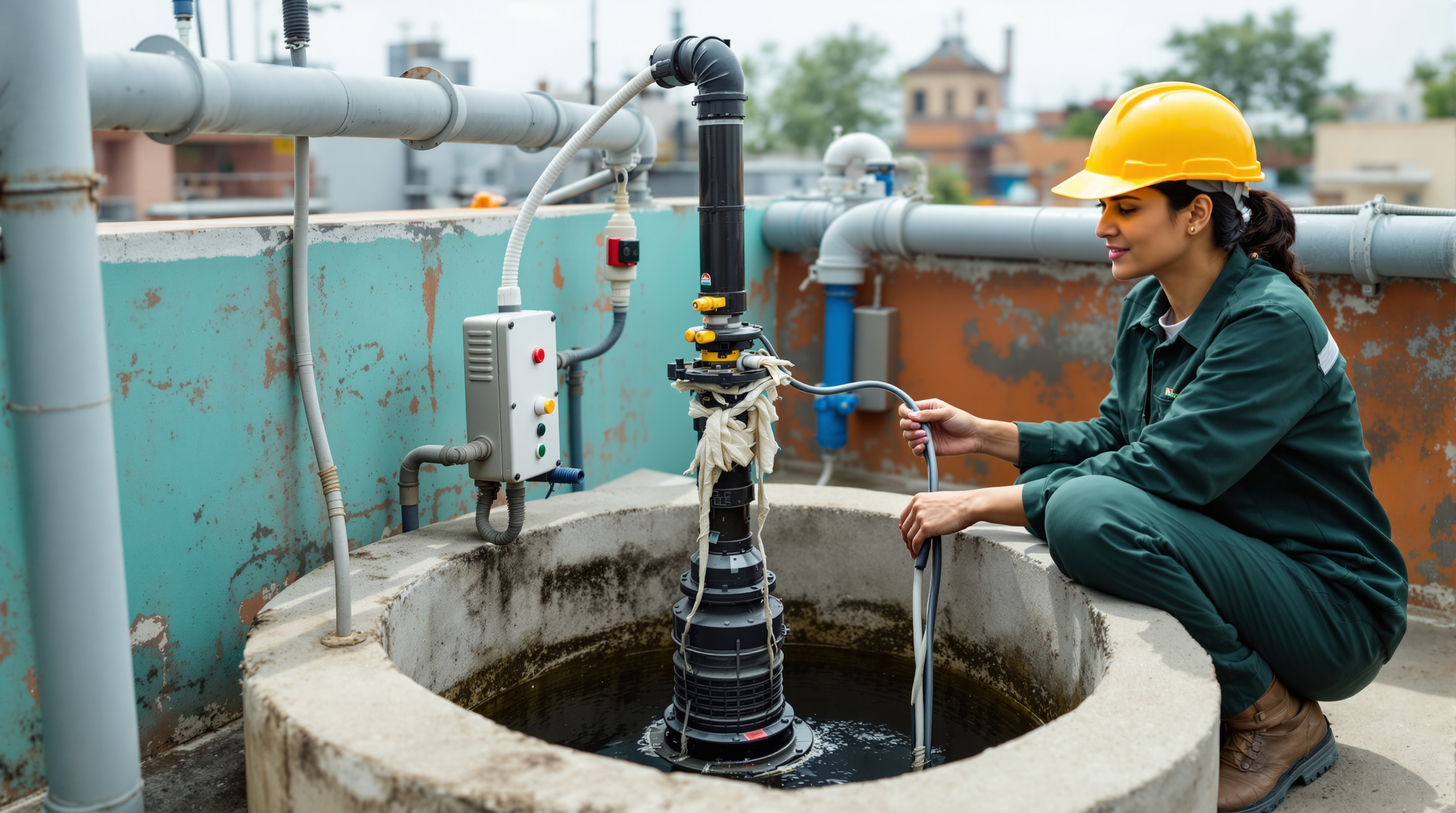
The sludge holding tank is low-maintenance by STP standards, but a handful of issues recur:
- Septic, black, stinking sludge — the classic sign of failed aeration or an overfull tank. Restore air supply and dewater promptly.
- Poor thickening — if the supernatant is cloudy and the sludge won't compact, the tank may be over-aerated (too much turbulence keeps solids suspended) or overloaded. Aeration should be enough to prevent souring, not so violent that it stops settling.
- Pump problems — the submersible or positive-displacement pump feeding the dewatering unit can clog with rags and grit that escaped the bar screen chamber upstream. Good screening protects the whole solids line.
- Grit accumulation — heavy inorganic grit settles and builds up at the bottom over years, cutting into working volume; periodic desludging of the tank itself is needed.
Routine O&M is undramatic: check the aeration is running, log the sludge level, decant supernatant, dewater to a schedule, and keep the pump and its float switches clean. Do those five things and the sludge tank will never make the news.
The bottom line
A sludge holding tank is the STP's answer to an unavoidable fact: cleaning sewage produces sludge, and that sludge has to go somewhere before it can be dried and disposed of. The tank stores it, aerates it to keep it stable and odour-free, and thickens it so the plant dewaters efficiently in planned batches rather than daily. Get it right — adequately sized, always aerated, dewatered on schedule — and it disappears into the background. Get it wrong and it becomes the smelliest, most complained-about part of the entire building.
To see how the sludge tank connects to everything upstream and down, walk through the full sewage treatment process flow, or return to the Sewage Treatment Plants guide library for the rest of the component series — from the aeration tank that feeds it to the sludge drying beds that finish the job.
Export this guide
Related Guides — Deep-dive reading
Sludge Generation Estimation in STPs: How Much Sludge Will Your Plant Produce?
Every STP that cleans water also makes sludge — and the biosolids you forget to plan for become the operating headache you cannot ignore. Here is how to estimate sludge generation, understand the yield concept, and size dewatering before you build.
Sewage Treatment PlantsSTP Sludge Removal & Disposal: A Practical O&M Guide for Operators
How to waste sludge on schedule, dewater it on drying beds or a filter press, dispose of or reuse it safely, and keep the compliance records that inspectors ask for — written for the people who actually run building STPs in India.
Sewage Treatment PlantsSTP Odour Control Design: Why STPs Smell and How to Stop It
Sewage plants only stink when something is wrong. This guide explains what actually causes STP odour, and the practical fixes — keeping the plant aerobic, sealing and venting foul air, activated-carbon and bio-scrubbers, and smart siting — that keep a plant a good neighbour.
Sewage Treatment PlantsRelated Tools — Try Free
STP Capacity Calculator
Size a sewage treatment plant in KLD from your building's occupancy — water demand, sewage generated and recommended STP capacity.
STP CalculatorSewage Generation Calculator
Estimate the daily sewage a building generates and its peak flow in KLD from occupancy, LPCD, sewage return factor and peak factor.
STP CalculatorFalse Ceiling Cost Estimator
Live ₹/sqft across 8 ceiling types — POP, gypsum, designer, metal, PVC, wooden — with cove and spot lighting for 20 Indian cities.
Cost Calculator