
Prefabricated & Packaged STPs: The Plug-and-Play Guide for Villas and Small Buildings
What a packaged STP actually is, why factory-built FRP, MS and containerised plants are so popular for villas and small projects, the sizes they come in, and where a civil-built plant still wins — explained plainly for owners and engineers alike.
Not every building that needs to treat its own sewage is a 500-flat apartment complex. A villa, a boutique hotel, a school block, a highway restaurant, a small office — each produces sewage measured in a few thousand litres a day, not lakhs. Building a full concrete treatment plant for that little flow is slow, expensive and often physically impossible on a tight plot. This is exactly the gap the packaged STP fills.
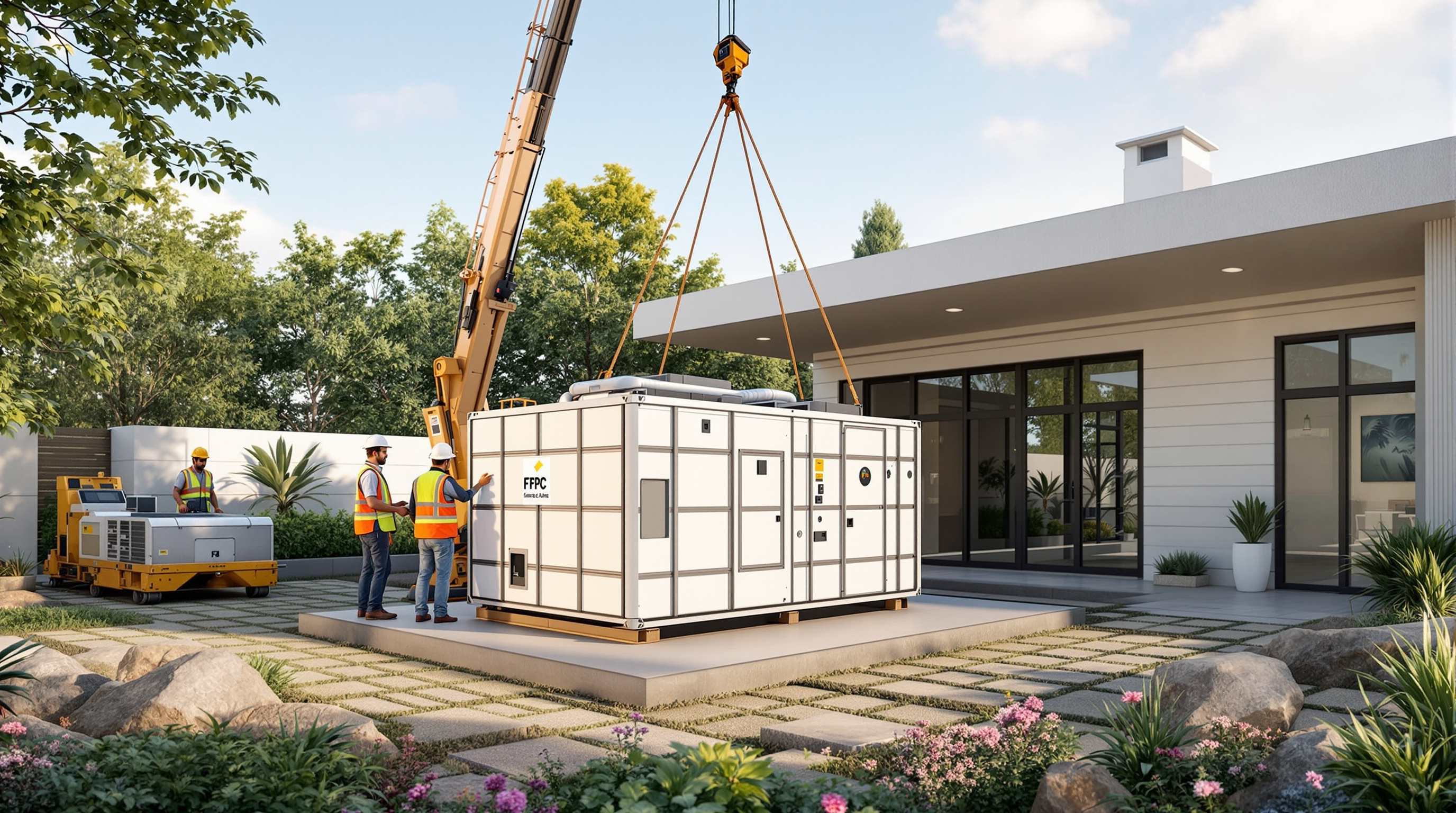
A packaged STP is a complete sewage treatment plant that is manufactured, assembled and factory-tested as a single unit — or a few bolt-together modules — and then delivered to site ready to run. Instead of a contractor pouring tanks in the ground over two months, a lorry arrives, a small crane lifts the unit onto a prepared pad, a plumber connects the inlet, outlet and power, and the plant starts working. If you are new to sewage treatment altogether, start with what an STP is; this guide assumes you know the basics and focuses on the factory-built way of buying one.
A packaged STP is to a civil-built plant what a window AC is to a central chiller: the same job, pre-engineered into a box you install rather than build. You trade some flexibility for speed, certainty and a far smaller footprint.
What "packaged" and "prefabricated" actually mean
The two words are used loosely and often interchangeably, but there is a useful distinction:
- Prefabricated means the tanks and structure are built off-site in a factory rather than cast in concrete on your plot. The shell arrives ready-made.
- Packaged means the whole system — tanks, blowers, pumps, media, filters, disinfection and often the control panel — is integrated into one pre-plumbed, pre-wired unit that is tested before it ships. Almost every packaged STP is prefabricated; not every prefab tank is a fully packaged plant.
In practice, when a vendor sells you a "packaged STP" they mean a single skid- or shell-mounted plant that you connect and switch on. The treatment biology inside is usually the same proven process you would find in a civil plant — most commonly extended aeration or MBBR, and increasingly compact MBR where the treated-water quality demand is high. What changes is the packaging, not the fundamental way the microbes clean the water.
The three common build types
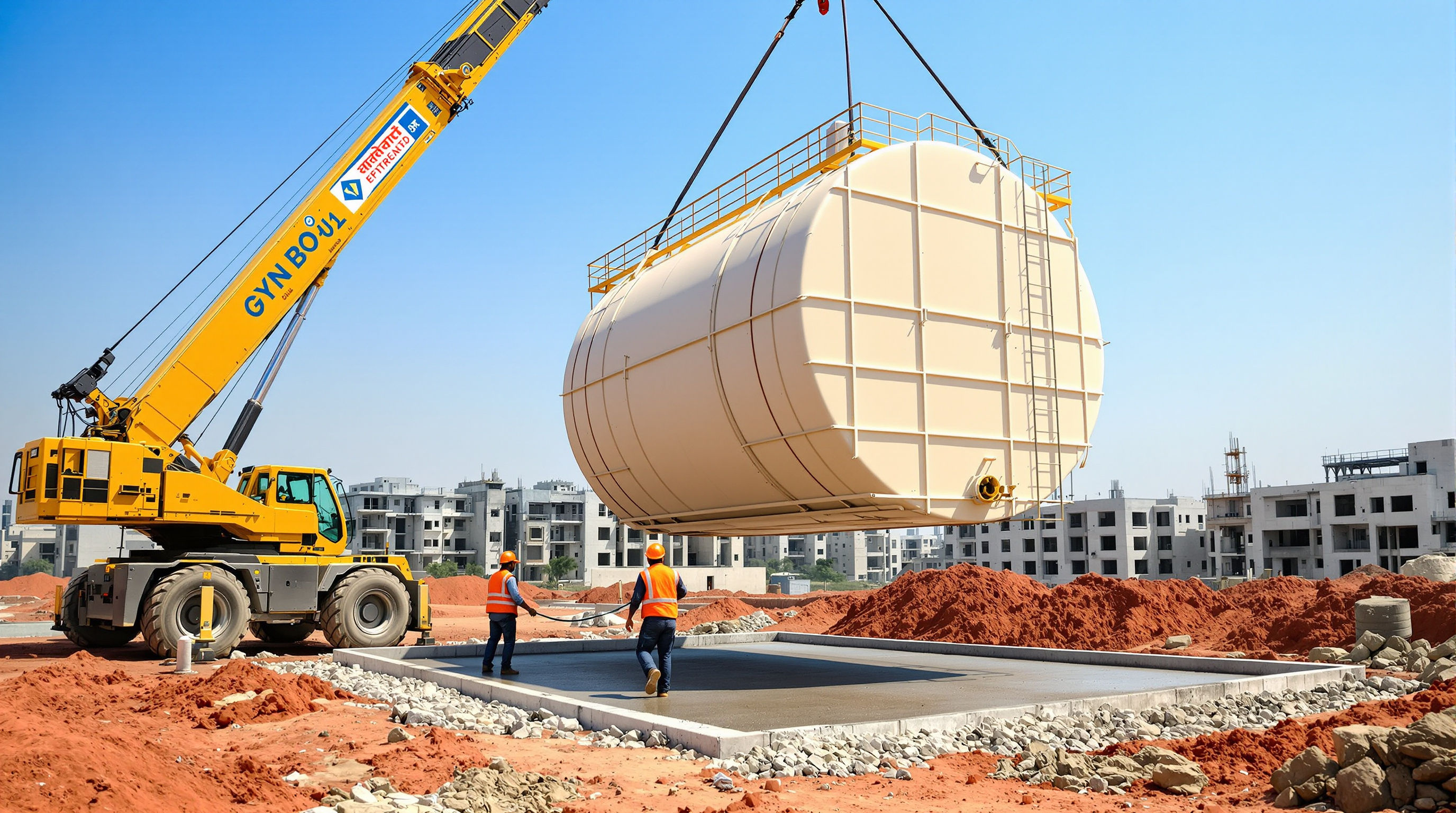
Packaged plants come in three broad constructions, and the right one depends on capacity, siting and budget.
| Type | What it is | Best for | Watch-outs |
|---|---|---|---|
| FRP (Fibre-Reinforced Plastic) | Cylindrical moulded shells, corrosion-proof and light | Villas and small units, roughly 5–50 KLD | Buoyancy if buried in high water table; needs correct anchoring |
| MS (Mild Steel) | Welded steel tanks with protective coatings | Mid-size plants, ~10–100 KLD | Coating integrity is everything — corrosion if the lining fails |
| Containerised | Full plant built inside a shipping container | Rapid deployment, remote or temporary sites | Higher cost per KLD; container corrosion over long life |
FRP is the workhorse for the villa and small-building market because it does not rust, weighs little, and can be dropped in above ground or partly buried. MS units suit slightly larger flows where a steel tank is more economical than a big moulding. Containerised plants — the whole works inside a 20- or 40-foot box — shine when you need a plant fast, at a construction camp, a resort under development, or a site with no room to build.
Sizes and where they fit
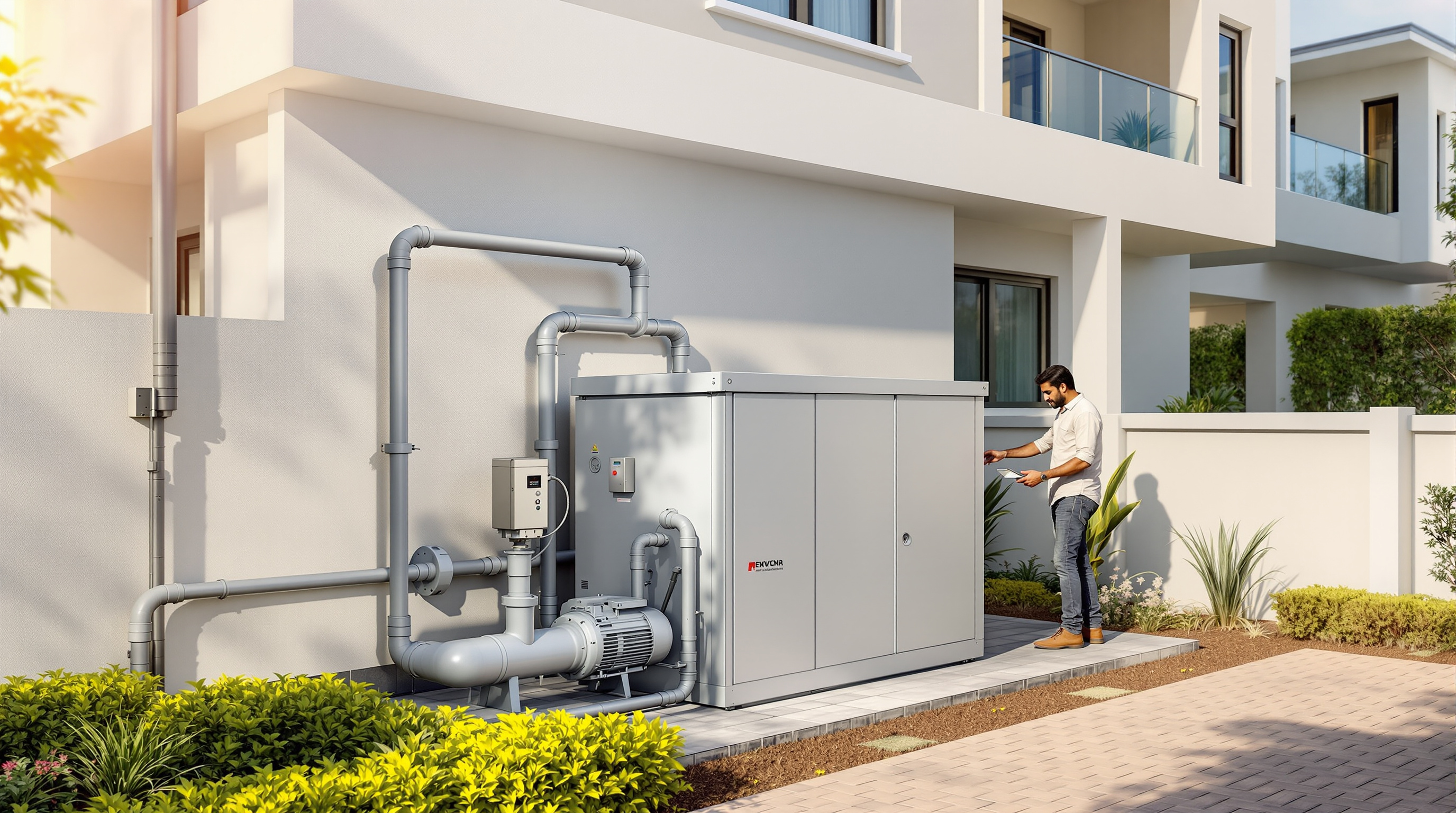
Packaged STPs are sold in standard capacity steps, usually rated in KLD (kilolitres, i.e. thousands of litres, per day). Typical off-the-shelf sizes run from about 5 KLD up to 100 KLD, with the sweet spot for factory units sitting below roughly 50 KLD. Above that, the tanks get too large to transport economically and civil construction usually takes over.
A rough sense of scale:
- 5–10 KLD — a large villa, a small guesthouse, a petrol-pump complex.
- 10–30 KLD — a boutique hotel, a school, a small office building or clubhouse.
- 30–100 KLD — a mid-size commercial block or a small residential development.
To translate your own occupancy into a capacity figure before you talk to any vendor, run the numbers through the STP Capacity Calculator, and read how to size an STP so you understand the peak-flow and buffer assumptions behind the KLD figure. Never let a supplier size the plant purely from their catalogue — the sizing should start from your flow.
The plug-and-play advantages
For the projects they suit, packaged plants win on several fronts at once:
- Speed. A civil plant can take 6–10 weeks of excavation, shuttering, curing and fit-out. A packaged unit can be commissioned in days once the pad and connections are ready. For a project racing to occupancy certification, that is decisive.
- Small footprint. Everything is stacked into a compact shell, so the plant fits in a corner, a setback, or even on a podium. On a villa plot where every square metre is precious, this often makes the difference between possible and impossible.
- Factory quality and testing. Welds, coatings, media loading and control wiring are done in a controlled shop and wet-tested before dispatch — far more consistent than site labour working in a pit.
- Predictable cost and timeline. You buy a defined product with a defined price, not an open-ended civil contract. Fewer site variables mean fewer surprises.
- Relocatable. A packaged plant can, in principle, be lifted and moved — genuinely useful for leased premises, phased developments or temporary camps.
- Cleaner O&M. Because the layout is standardised, spares, blowers and pumps are known quantities, which simplifies servicing and predictive maintenance.
The honest limits
A packaged STP is not automatically the right answer, and a good engineer will tell you where it is not:
- It does not scale up gracefully. Beyond roughly 50–100 KLD the economics and transport logistics tip firmly back toward civil-built tanks. For large developments, prefab is usually a false economy.
- Shell life and corrosion. MS and containerised units live or die by their coatings; once a lining fails, a buried steel tank is hard to repair. FRP avoids rust but must be correctly anchored, or a near-empty tank can float in a high water table.
- Buffer and shock capacity. Compact plants have less equalisation volume, so they are less forgiving of sudden load surges or long idle spells — a concern for banquet halls or seasonal resorts with wildly variable occupancy.
- Retrofit and expansion. Adding capacity later usually means buying another unit rather than extending a tank. If growth is likely, plan for it up front.
- Standardisation vs. site reality. A catalogue unit assumes typical sewage strength; unusually strong or industrial-tinged waste may need customisation the standard package does not offer.
None of these are dealbreakers — they are simply the trade-offs you accept for speed and compactness. The failure mode is buying a packaged plant for a project it was never sized for.
How to choose: a quick decision guide
Reach for a packaged STP when your flow is modest (broadly under ~50 KLD), your site is tight, your timeline is short, or you may need to move the plant later. Choose a civil-built plant when capacity is large, the plant is permanent, waste strength is unusual, or long-term corrosion-free life outweighs speed. Many mixed developments quite reasonably do both: a packaged unit for an early clubhouse or sales office, a civil plant for the final large phase.
Whichever way you lean, the discipline is the same — verify the process, the CPCB discharge norms it must meet, the running cost, and the after-sales support before you sign. Sanity-check the electricity load with the Energy Benchmark Calculator and the price against the STP Cost Estimator, and if you are weighing it against the low-tech alternative for a single home, read STP vs septic tank.
The bottom line
A packaged STP takes the proven biology of sewage treatment and wraps it in a factory-built, tested, ready-to-run box. For villas, small buildings and anywhere speed and space matter more than raw scale, it is often the smartest way to meet the law without turning your plot into a construction site for two months. Know your flow, respect the size limits, insist on quality coatings and honest support — and a packaged plant will quietly do a big plant's job in a fraction of the space. To go deeper on processes, costs and monitoring, browse the full Sewage Treatment Plants guide library.
Export this guide
Related Guides — Deep-dive reading
STP for Villas: Do You Need One, and Which Type Fits a Single Home?
When an individual villa actually needs a sewage treatment plant instead of a septic tank, the tiny capacities involved, and how to choose a compact MBBR or extended-aeration package that fits the plot, the budget and the garden.
Sewage Treatment PlantsSTP vs Septic Tank: Which Is Better for Your Building?
A plain-language decision guide comparing a modern sewage treatment plant against a traditional septic tank — how each works, whether the water becomes reusable, and which one your building actually needs, from an isolated bungalow to a regulated apartment complex.
Sewage Treatment PlantsUnderground vs Above-Ground STPs: The Complete Comparison Guide
Space, cost, maintenance, odour, aesthetics, ventilation and flood risk — a plain, honest comparison of underground and above-ground sewage treatment plants, and how to choose the right one for your Indian project.
Sewage Treatment PlantsRelated Tools — Try Free
Rainwater Tank Sizer
How big should your rainwater tank be? Computes annual harvest, recommended tank capacity in litres, water-bill savings, and payback — for 10 Indian cities.
RWH CalculatorApartment STP Planner
Plan an apartment complex sewage treatment plant from flats and occupancy — get population load, sewage flow, recommended STP capacity in KLD, treatment technology and approximate space.
PlannerBefore vs After — Cost Reality Check
Compare what you expected to pay vs what you actually paid, category by category.
Reality Check