

Retrofitting & Upgrading Old STPs: How to Revive a Failing Plant
Why old sewage treatment plants fail, what you can bolt on to fix them — MBBR media, new blowers, automation, tertiary polishing — and how to decide honestly between a retrofit and a full rebuild, in Indian conditions and rupees.
Most STPs in India do not die suddenly. They fade. A plant that was commissioned ten or fifteen years ago — sized for an occupancy that has since doubled, run by operators who have changed four times, and starved of spares — slowly stops meeting its numbers. The odour creeps back into the basement. The lab report shows BOD drifting above the limit. The pollution-control board sends a notice. And the association is suddenly staring at a decision it never budgeted for: fix the old plant, or tear it out and build a new one.
The good news is that a failing STP is very often a repairable STP. The biology is forgiving, the civil structure usually still sound, and a well-chosen retrofit can restore — sometimes exceed — the original performance at a fraction of the cost of rebuilding. This guide is about making that call well: what actually goes wrong with old STPs, what you can bolt on to fix each fault, and when a retrofit is throwing good money after bad.
An old STP rarely needs replacing. It needs the right three upgrades in the right order — and an honest look at whether the tank was ever big enough for the building it now serves.
Why old STPs fail
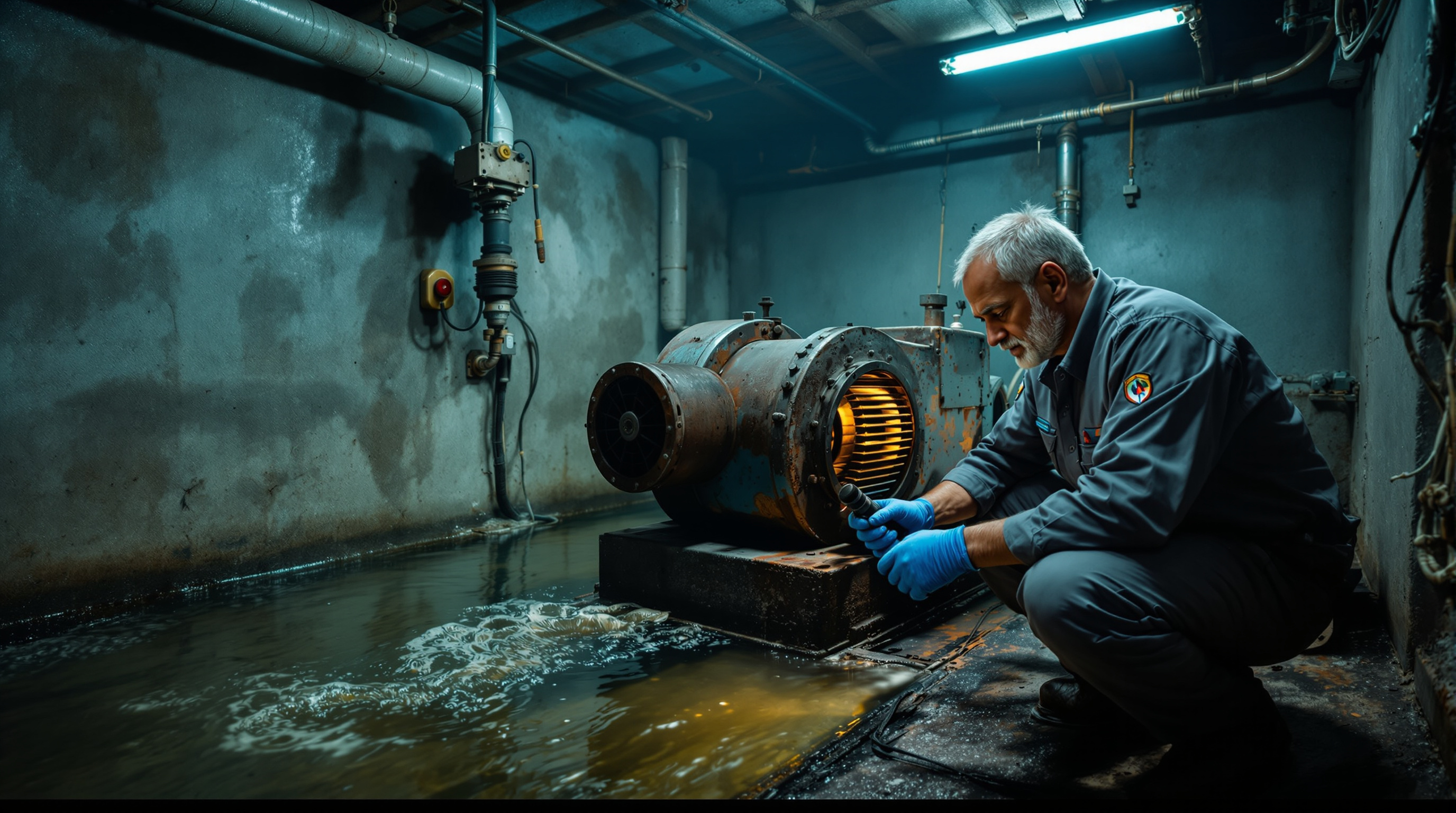
Before you spend a rupee, diagnose. Nine times out of ten a struggling plant is failing for one of a short list of reasons, and they compound each other. If you have not already, walk through the symptoms with the STP troubleshooting fundamentals — knowing how the plant is meant to behave is what makes a bad reading legible.
- Hydraulic and organic overload. The building filled up; the STP did not grow with it. A plant sized for 400 KLD now sees 550. Retention time collapses, the microbes cannot keep up, and BOD/TSS climb. This is the single most common root cause.
- Worn or undersized aeration. Blowers are the heart of a conventional STP and the first thing to age. Bearings wear, diffuser membranes clog and tear, and dissolved oxygen in the aeration tank falls below the ~2 mg/L the culture needs. Starved of oxygen, the biology stops working and starts to smell.
- Dead or absent automation. Older plants ran on float switches and a caretaker's judgement. Timers drift, sensors were never installed, and the plant is either over-aerated (burning electricity) or under-aerated (failing norms) with nobody the wiser.
- No real tertiary stage. Many older STPs were built to discharge standards, not reuse standards. Without proper filtration and disinfection, the water is not fit for the flushing and landscaping that today's water economics demand.
- Sludge mismanagement. Neglected sludge wasting overloads the tanks with solids, and clogged or absent sludge drying beds mean sludge has nowhere to go.
The retrofit toolkit
Each failure mode above maps to a specific, well-proven intervention. You rarely need all of them — you need the ones your diagnosis points to.
1. Add MBBR media to boost capacity
The most powerful single retrofit for an overloaded tank is to drop Moving Bed Biofilm Reactor media into the existing aeration basin. These floating plastic carriers give bacteria a vast surface to grow on, packing far more biomass into the same volume — which is exactly what a hydraulically overloaded plant lacks. Converting a tired activated-sludge tank to an MBBR (or hybrid IFAS) configuration can lift treatment capacity 30–50% without pouring any new concrete. It is the workhorse of Indian STP upgrades for good reason; the MBBR guide covers how the media and screens work.
2. Replace and right-size the blowers
If dissolved oxygen is the problem, new twin-lobe or screw blowers paired with fresh fine-bubble diffusers transform a plant. Modern high-efficiency blowers deliver the same oxygen for materially less power, and diffuser replacement is cheap relative to its impact. Because aeration is typically 50–65% of an STP's electricity bill, this upgrade often pays for itself — check the numbers against the energy benchmark calculator and the deeper playbook in reducing STP electricity consumption.
3. Bolt on automation and monitoring
This is the cheapest upgrade with the biggest operational return. A PLC with a dissolved-oxygen probe and a variable-frequency drive on the blower lets the plant aerate to demand instead of running flat out — cutting power and stabilising the effluent. Layer on remote IoT monitoring and you get alerts before a limit is breached, not after the notice arrives. For plants under real regulatory pressure, AI-assisted operations and predictive maintenance are maturing fast — genuinely useful now for early-warning, though still worth treating as an assist to a good operator rather than a replacement for one.
4. Add a proper tertiary train
To turn discharge-grade water into reuse-grade water, add a pressure sand filter, activated carbon filter, and UV or chlorine disinfection as a compact skid downstream. This is a modular, low-disruption add-on and it is what unlocks the water-saving economics that justify the whole exercise.
Matching problem to fix
| Symptom | Likely cause | Retrofit |
|---|---|---|
| BOD/TSS above limit, plant overloaded | Occupancy outgrew capacity | Add MBBR media / IFAS conversion |
| Low DO, odour, weak biology | Worn or undersized blowers | New blowers + fine-bubble diffusers |
| High power bill, erratic quality | No automation | PLC + DO probe + VFD |
| Water fails reuse standard | No tertiary stage | Filtration + UV/chlorine skid |
| Frequent breakdowns, no warning | No visibility | IoT sensors + remote monitoring |
Retrofit or rebuild? An honest reckoning
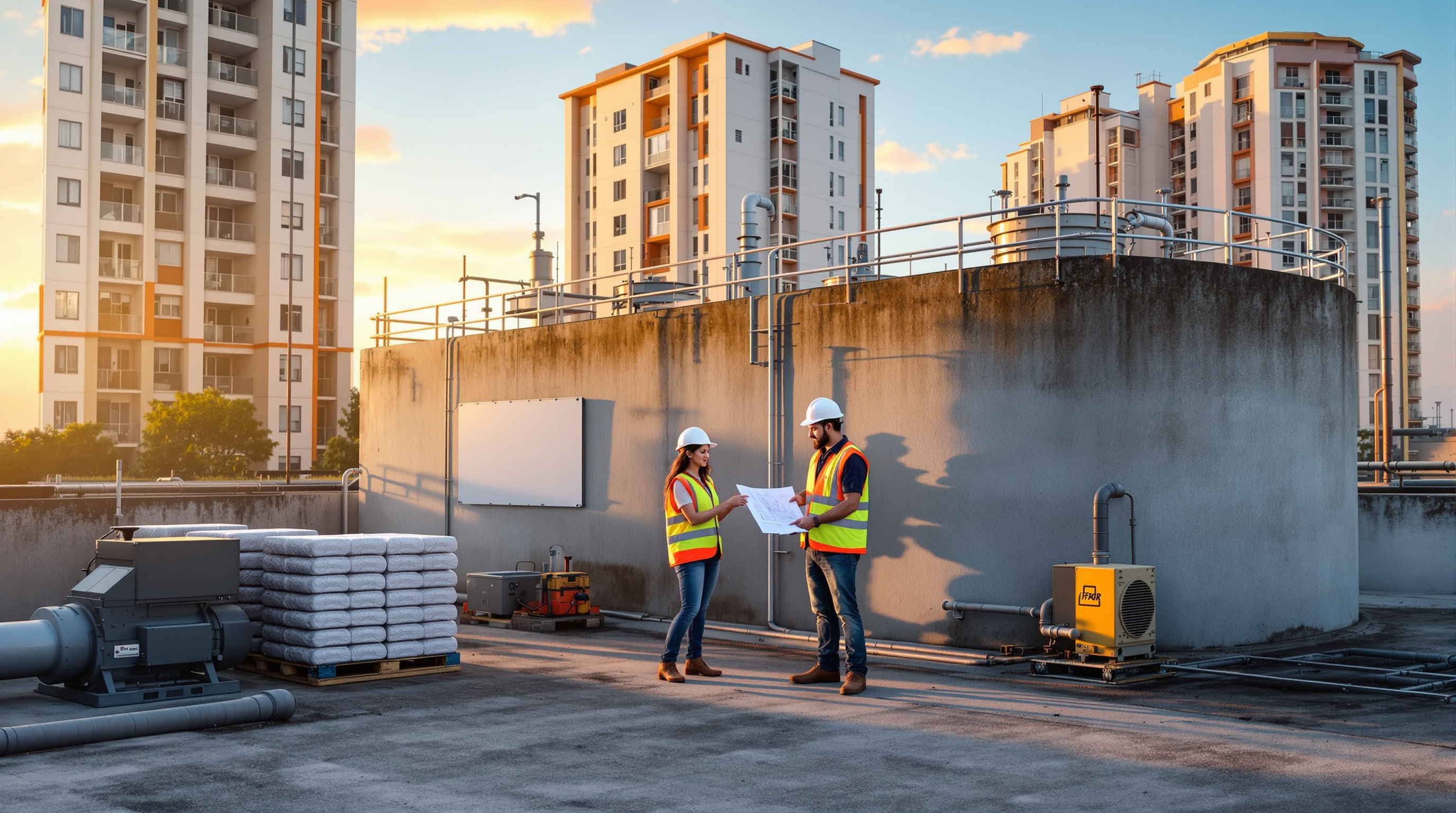
The instinct to rebuild is often driven by frustration, not arithmetic. Work the numbers first. Confirm what capacity you actually need today with the STP capacity calculator, and price both paths with the STP cost estimator — a full rebuild in India runs anywhere from Rs 15–30 lakh per 100 KLD of new plant depending on technology and finish, while a targeted retrofit is frequently 30–50% of that.
Lean towards a retrofit when:
- The civil structure is sound — tanks not cracked, no major leakage. Concrete is the expensive, slow part; if it is good, keep it.
- The shortfall is moderate (say, up to ~40% more capacity) — squarely in MBBR territory.
- You can tolerate the plant running through the works, or shut it briefly.
Lean towards a rebuild when:
- Tanks are structurally failing or the layout is fundamentally wrong for any modern process.
- The capacity gap is large — you need to more than double throughput, which MBBR alone cannot bridge.
- Footprint is the constraint and you need a compact MBR or packaged plant to fit reuse-grade output into a tiny basement.
Do not forget the running-cost dimension. A cheap rebuild that guzzles power can cost more over five years than a smart retrofit. And whichever path you choose, the biggest determinant of success is not the hardware but the operator — plan the upgrade around who will run it, and hand them the automation and training to keep the plant on-spec.
The bottom line
A failing old STP is a solvable problem, not a write-off. Diagnose the real fault — overload, aeration, automation, tertiary, or sludge — then apply the matching retrofit rather than reaching straight for the wrecking ball. MBBR media for capacity, efficient blowers for oxygen, automation for control, a tertiary skid for reuse: those four moves revive the large majority of struggling Indian plants for well under the cost of rebuilding.
Start with the diagnosis and the numbers. Browse the full Sewage Treatment Plants guide library for the technology deep-dives, and if you are unsure whether your tank was ever big enough for today's building, the STP capacity calculator will tell you in a minute — the single most useful number before any retrofit decision.
Export this guide
Related Guides — Deep-dive reading
Reducing STP Electricity Consumption: The O&M Guide to Cutting Your Biggest Running Cost
Aeration eats 50–70% of an STP's power bill. This practical guide shows facility managers and operators how to right-size air, add DO control and VFDs, fix leaks, run off-peak, and cut the monthly electricity spend without ever breaking discharge norms.
Sewage Treatment PlantsSTP Troubleshooting: Common Problems & Fixes (Operator's Guide)
Odour, cloudy effluent, high BOD, sludge bulking, foaming, choked diffusers, pump trips and rising power bills — a practical symptom-to-cause-to-fix guide for facility managers running an Indian building STP.
Sewage Treatment PlantsAeration Tank: The Biological Heart of an STP
The tank where blowers push oxygen into billions of microbes that eat the sewage's organic load — how it works, what DO, MLSS, F/M and HRT mean, and why it quietly runs up the biggest electricity bill in the plant.
Sewage Treatment PlantsRelated Tools — Try Free
Apartment STP Planner
Plan an apartment complex sewage treatment plant from flats and occupancy — get population load, sewage flow, recommended STP capacity in KLD, treatment technology and approximate space.
PlannerFilter Sizing Calculator (PSF/ACF)
Size a pressure sand or activated carbon filter from flow and filtration rate to get vessel diameter, filter area and hourly design flow.
STP CalculatorWindow Hardware Cost Calculator
Estimate window hardware cost — hinges, handles, locks, rollers and multipoint gears.
Window Calculator