
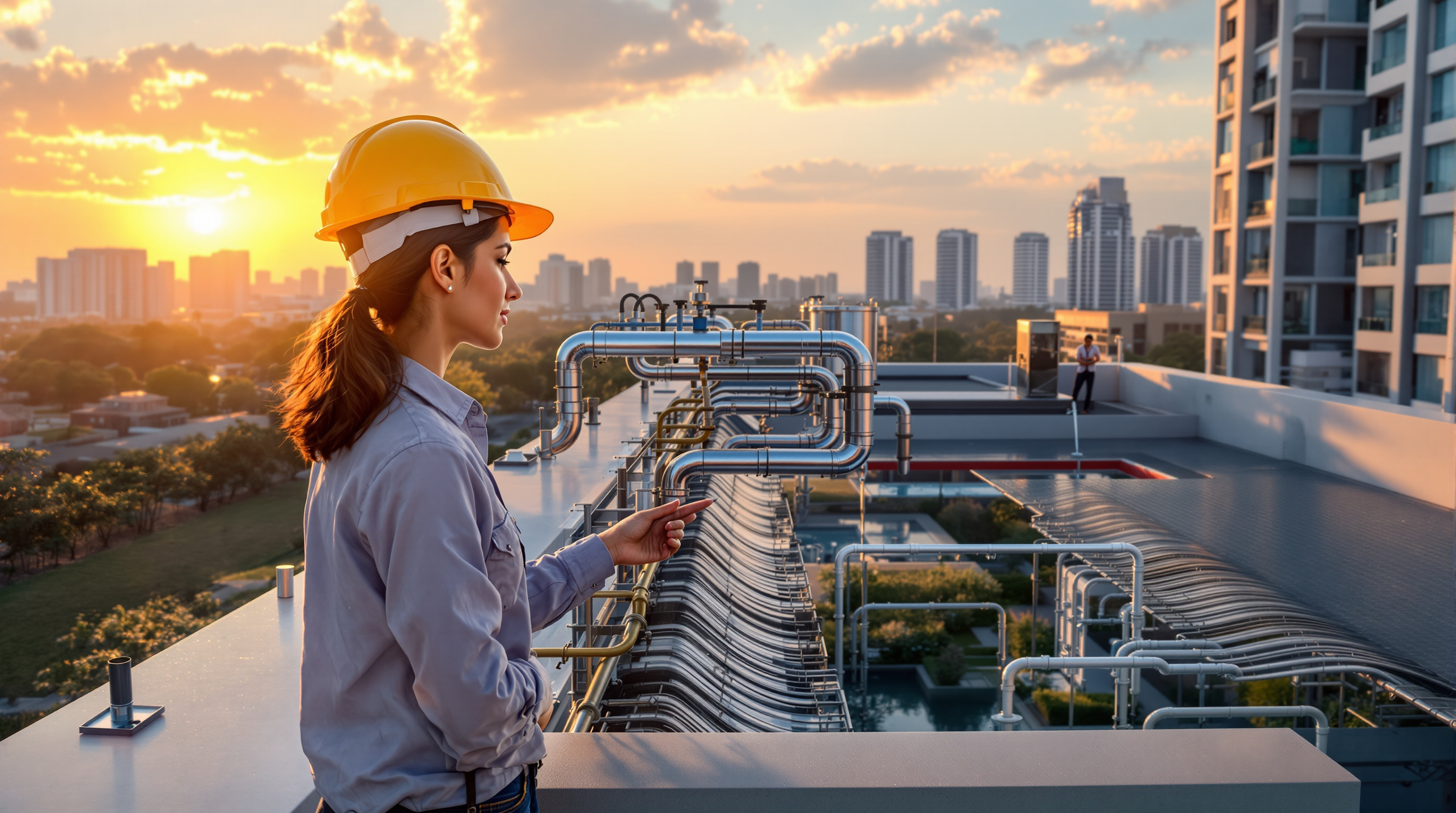
The Future of Water Reuse & Recycling: Potable Reuse, City Networks and the Circular-Water City
Where water reuse is actually heading in India — from building-scale recycling to potable reuse, city-wide reuse networks and enforceable mandates — and what today's owners and engineers should build for now.
For most of the last two decades, water reuse in India meant one modest thing: taking the output of a building's sewage treatment plant and piping it back to flush toilets and water the garden. That was reuse as a by-product of compliance — you built the STP because the law said so, and reusing the water was a nice way to recover some of the cost.
That era is ending. Water scarcity, tightening regulation and a hard economic logic are pushing reuse from the edge of the design to its centre. The question is no longer whether a building recycles its water, but how far up the value chain that recycled water can go — and whether the city around it is built to move reused water at scale. This guide maps where the future of water reuse is actually heading, and what owners and engineers should build for today so they are not stranded tomorrow.
The frontier is not a bigger tank. It is a shift in mindset: from treating sewage so we can throw it away legally, to treating it so we can use it again — and again — until a city consumes almost no new freshwater at all.
Where reuse stands today
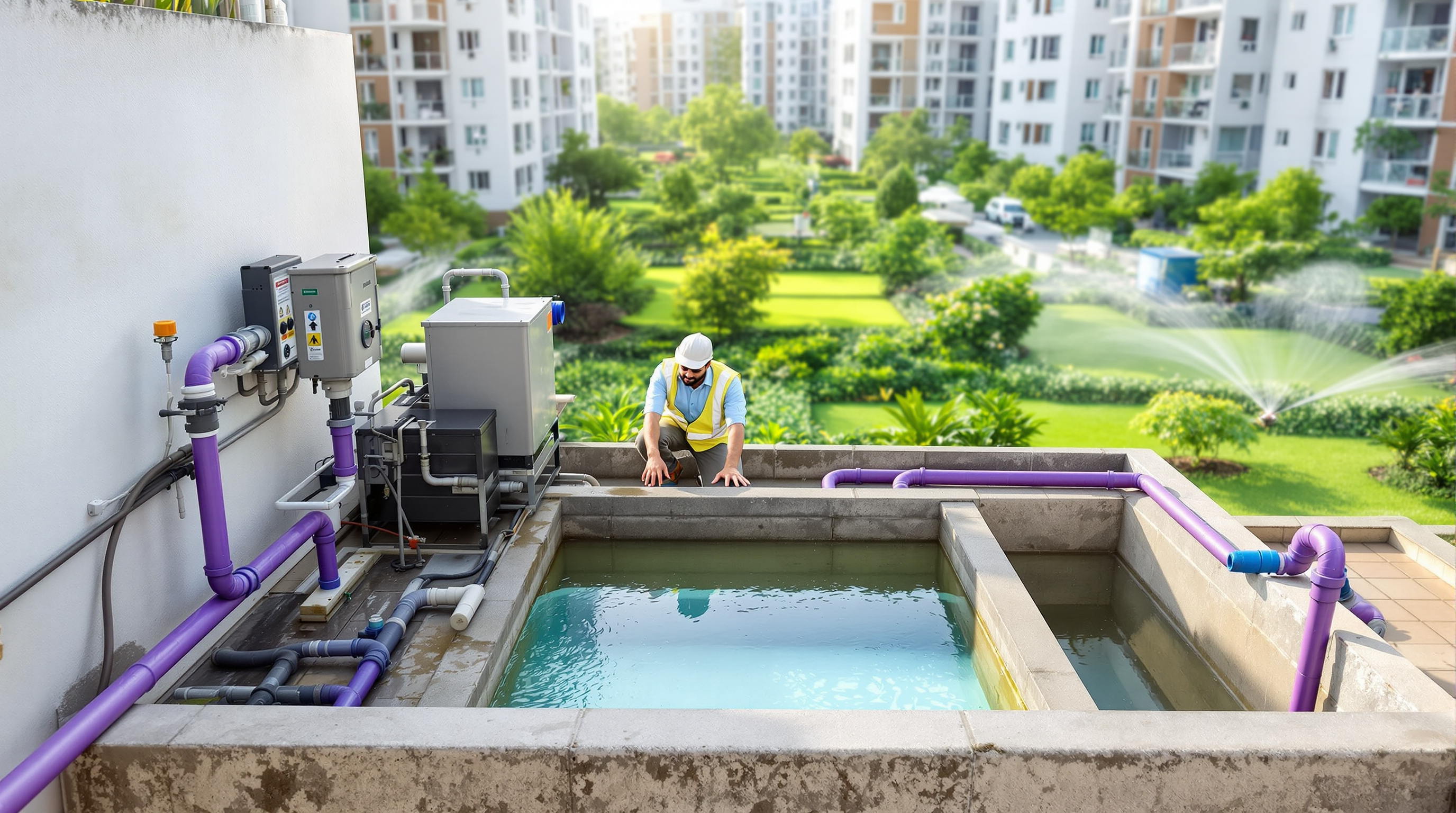
Today's baseline in Indian cities is non-potable, on-site reuse. A building treats its wastewater, recovers 80–85% of it, and reuses that for flushing, landscaping, cooling towers and vehicle washing. The technology is mature and well understood — most plants run on activated sludge, MBBR or, where reuse quality has to be high, membrane bioreactor (MBR) systems that produce water clear enough to feed straight into a filter and disinfection train.
What holds reuse back today is rarely the treatment. It is three practical gaps:
- Dual plumbing — a building needs a separate reticulation line for recycled water. Retrofitting it into an existing tower is expensive, so reuse is easiest to design in from day one.
- Demand mismatch — a residential complex can only reuse so much flushing and gardening water. The surplus, often 30–40% of what it treats, has nowhere to go and is discharged.
- Perception — recycled water carries a stigma, so owners cap its use at the "safe, invisible" applications and stop there.
Every frontier below is essentially an answer to one of those three gaps.
Frontier 1: Potable reuse
The boldest direction is closing the loop entirely — treating wastewater back to drinking quality. Globally this comes in two forms, and the distinction matters:
| Reuse type | What it means | Maturity in India |
|---|---|---|
| Indirect potable reuse (IPR) | Highly treated water is returned to a lake, aquifer or river, then re-abstracted and treated again as a normal water source | Emerging — closest to viable near stressed cities |
| Direct potable reuse (DPR) | Treated water goes straight into the drinking supply with no environmental buffer | Experimental globally; not yet mainstream in India |
| Non-potable reuse | Flushing, irrigation, cooling, construction, industry | Standard practice today |
Potable reuse depends on an advanced multi-barrier train — typically ultrafiltration, reverse osmosis and an advanced oxidation step (UV with hydrogen peroxide) stacked after conventional biological treatment. Each barrier is independently capable of removing pathogens and micro-pollutants, so the system is safe even if one stage underperforms.
Be honest about the maturity: DPR is not around the corner for most Indian utilities. The engineering is proven, but the monitoring, public trust and regulatory framework are not yet in place at scale. IPR — using a natural waterbody as the buffer — is the more realistic near-term step, and a few water-stressed regions are already moving that way. For an owner today, potable reuse is a direction to design headroom for, not a system to install now.
Frontier 2: City-scale reuse networks
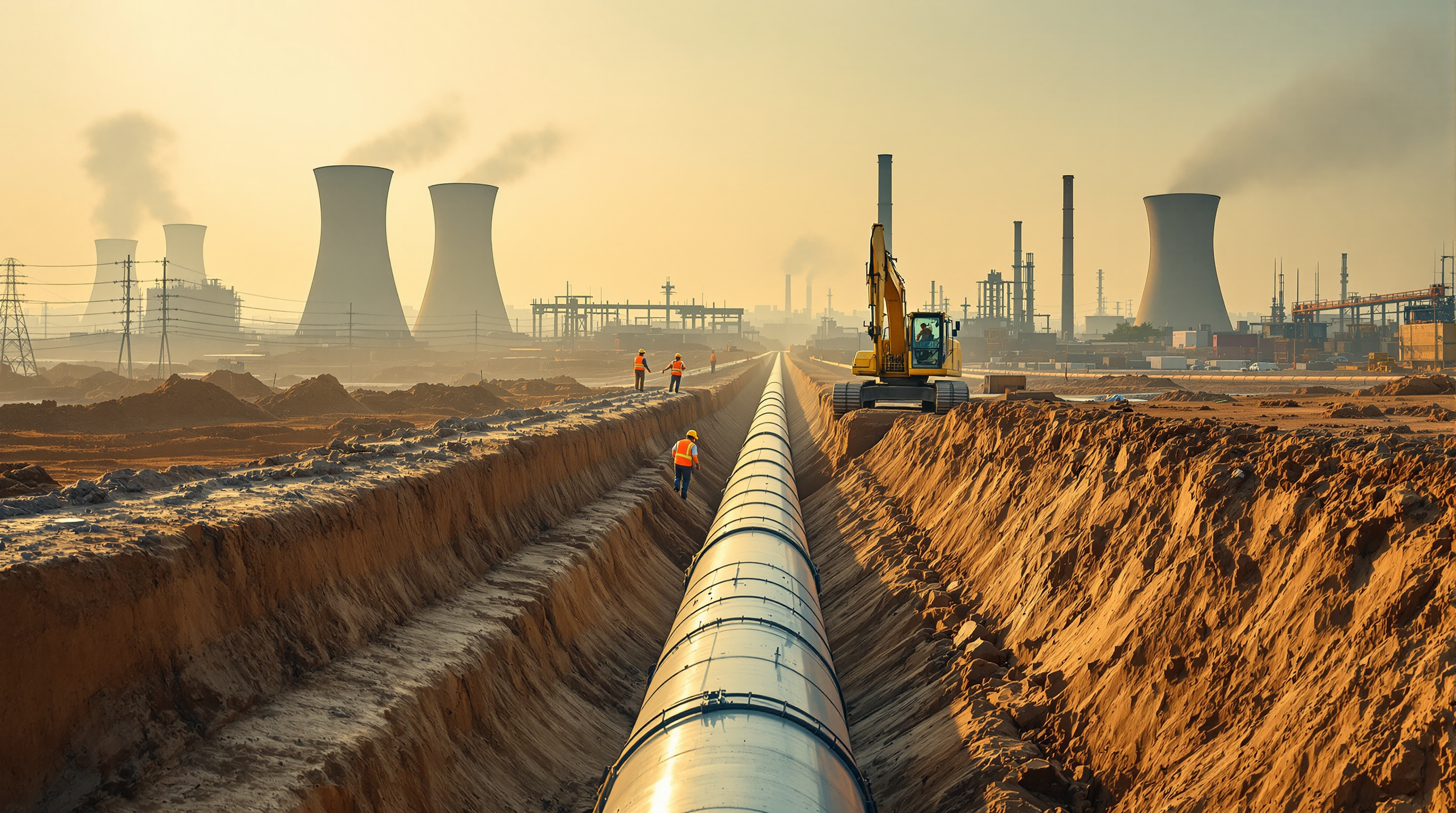
The second frontier fixes the demand-mismatch problem. A single residential building can only absorb so much recycled water — but a city can absorb almost unlimited quantities, if the pipes exist to move it.
The model that is emerging is the secondary reticulation network: a parallel, city-scale "purple pipe" system carrying treated water to the users who need large volumes and do not need it to be potable —
- Industrial estates and thermal power plants for cooling and process water
- Construction sites (a huge, thirsty, freshwater-guzzling demand today)
- Public parks, medians and urban forests
- District cooling plants and commercial cooling towers
In this model the building-scale STP does not disappear — but it plugs into something larger. A cluster of buildings, or a whole township, feeds a shared treatment hub, and the output is distributed as a utility. This is where reuse crosses from a building feature into genuine urban infrastructure, and it is the physical backbone of the urban water circular economy — the idea that a city should recover and recirculate its own water rather than importing freshwater from ever-further away.
Frontier 3: Mandates with teeth
None of this happens on goodwill. The decisive lever is regulation, and Indian reuse policy is moving in one clear direction: from "treat before you discharge" to "reuse before you discharge."
The signals are already visible. The CPCB and state pollution-control boards increasingly frame treated-water reuse as an expected outcome, not an optional benefit. Several cities and industrial policies now push large water consumers toward mandated reuse percentages, and "water-positive" or "net-zero-water" targets are appearing in green-building rating systems and large-development approvals.
For owners and developers, the practical implication is a planning one:
- Design for a reuse mandate that does not exist yet. Reserve space and pipe routes for advanced polishing and dual plumbing even if today's norms stop at non-potable reuse.
- Size for recovery, not just discharge. Use the STP Capacity Calculator to fix the treatment volume, then plan reuse demand deliberately around it rather than discharging the surplus.
- Assume the standard will tighten. A plant designed to just scrape past today's discharge norms is a liability the day the norm becomes a reuse quota.
The circular-water city
Put the three frontiers together and you get the destination: the circular-water city, where water is not consumed once and thrown away but cycled through the urban system many times. Fresh water enters at the top, is used, recovered, treated, and reused — for flushing, then irrigation, then industry — and only the truly unusable remainder leaves. The same logic already reshaping energy and materials arrives for water.
The technology to run this is arriving in parallel. Decentralised plants are getting smarter and cheaper to operate through IoT monitoring and AI-assisted operations, which make it viable to run hundreds of small, high-quality reuse plants across a city without an army of operators. Lower energy consumption matters here too — reuse-grade treatment is energy-intensive, and the economics of a circular-water city only work if the per-kilolitre energy cost keeps falling.
What to do now
The frontier is exciting, but the actions it implies for a project today are concrete and unglamorous:
- Build reuse-grade, not discharge-grade. Specify a treatment train (MBR or a well-designed tertiary polish) whose output already clears reuse quality, so you are not rebuilding when the mandate tightens.
- Lay the dual plumbing now. It is cheap during construction and painful to retrofit.
- Plan the demand. Match every kilolitre you recover to a genuine reuse — flushing, cooling, landscape, recharge — before designing the discharge line.
- Leave headroom. Reserve footprint and hydraulic capacity for an advanced polishing stage you may add later.
The future of water reuse is not a single technology you buy. It is a direction the whole system is moving — toward water used many times over, moved at city scale, and required by law. The buildings that will look prescient in ten years are the ones designed for that direction today.
To go deeper on the machinery and economics behind these choices, browse the full Sewage Treatment Plants guide library, and where reuse ambitions raise your treatment grade, sanity-check the trade-off with the STP Cost Estimator.
Export this guide
Related Guides — Deep-dive reading
STPs and the Urban Water Circular Economy: How Reuse Closes the City Water Loop
How decentralised sewage treatment and treated-water reuse turn a building's wastewater into a resource — cutting freshwater demand, ending pollution at source, and pointing the way to a genuinely water-circular Indian city.
Sewage Treatment PlantsSmart City Wastewater Guidelines: Urban Reuse Rules Developers Must Know
How the Smart Cities Mission, AMRUT 2.0 and India's reuse framework are turning treated sewage into a mandated resource — and what the shift to decentralised treatment and reuse targets means for developers, RWAs and facility managers.
Sewage Treatment PlantsZero Liquid Discharge (ZLD): When No Water Leaves the Site
What zero liquid discharge actually means, the biological-plus-RO-plus-evaporator train that recovers nearly all the water and leaves only dry solids, why it is expensive and energy-hungry, when it is mandated, and the lighter near-ZLD options that make sense for most buildings.
Sewage Treatment PlantsRelated Tools — Try Free
Rainwater Tank Sizer
How big should your rainwater tank be? Computes annual harvest, recommended tank capacity in litres, water-bill savings, and payback — for 10 Indian cities.
RWH CalculatorWater Recycling Dashboard
Enter fresh supply, sewage and treated-water reused (KLD) to see your building's reuse percentage plus the money, water and CO₂ saved each year, with live charts.
DashboardHealing View Impact Calculator
Evidence-Based Design dashboard quantifying the recovery impact of nature view + daylight factor on analgesic use, length of stay, and HCAHPS patient-experience uplift. Calibrated against Ulrich 1984 (Science), Park & Mattson 2008, and the CHD EBD evidence base.
EBD Calculator