
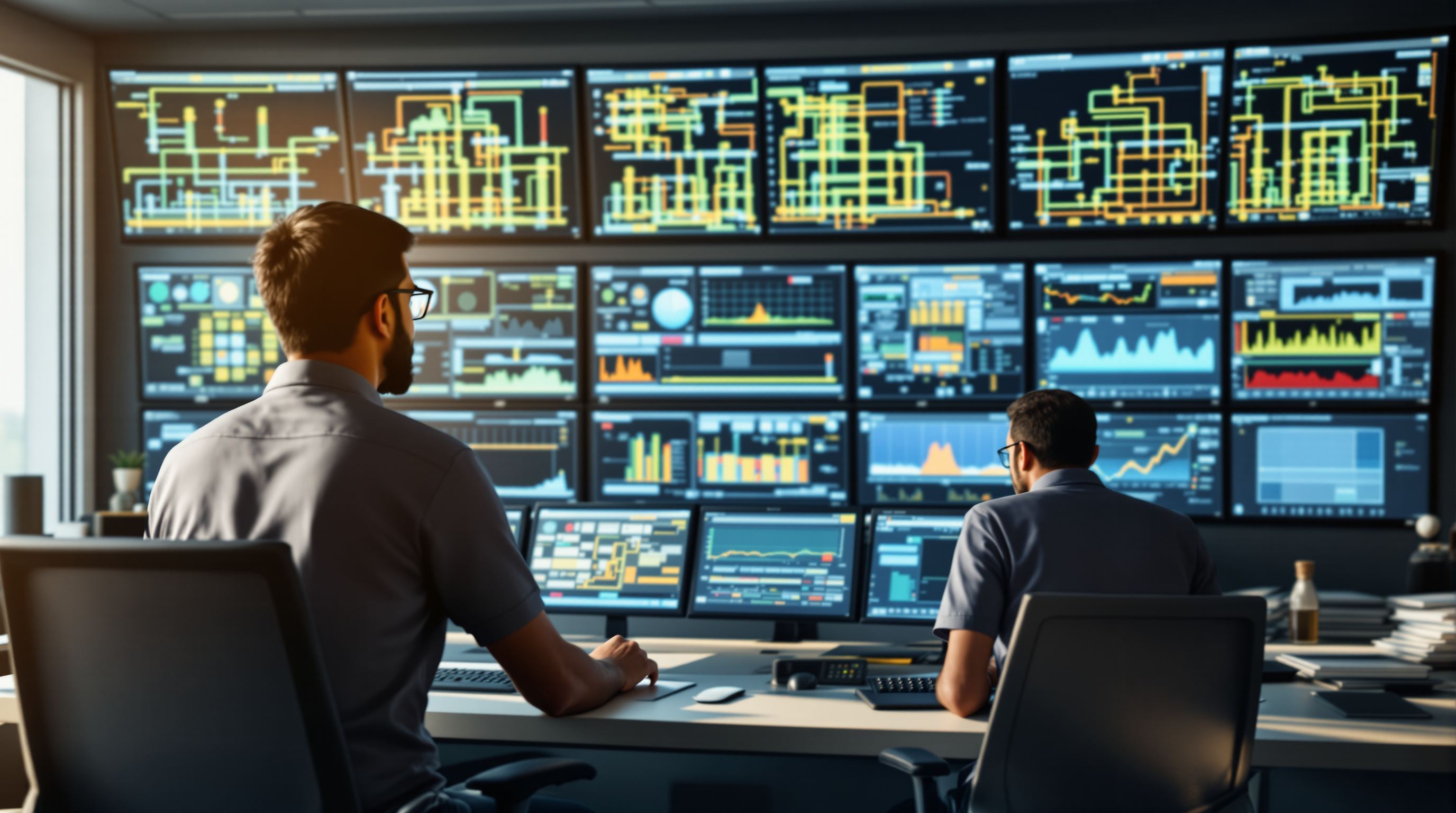
Remote STP Monitoring & Operation: Running Sewage Plants from a Control Room
How cloud SCADA, remote-operations centres and managed-service O&M let a small building get expert STP operation without a full-time expert on site — what works today, what is still maturing, and what it costs.
The hardest problem in small-building sewage treatment has never been the technology — it is the operator. A 50 KLD plant behind an apartment block needs the same biological know-how as a 500 KLD one, but it cannot justify a full-time, qualified operator sitting beside it. So it gets a part-time cleaner who opens a valve, or nobody at all. The tank goes septic, the effluent fails, and the plant that cost lakhs to build quietly stops working.
Remote operation is the answer the industry has settled on. Instead of putting an expert at every plant, you put the plant's data in front of one expert who watches many plants from a single screen. This guide explains how remote STP monitoring and remote operation actually work in India today — the cloud SCADA that carries the data, the operations centres that watch it, the managed-service model that ties it together — and where the technology is genuinely reliable versus still maturing.
Remote operation does not remove the human operator. It moves the operator off the site and lets one skilled person do properly what a dozen absentee operators were doing badly.
What "remote" actually means here
Three separate things get bundled under the word "remote," and it helps to keep them apart.
- Remote monitoring — sensors and meters send live readings to a dashboard you can open from anywhere. You can see the plant. This is mature and widely deployed.
- Remote control — beyond seeing, you can act: start a pump, change a blower's speed, trigger a backwash, acknowledge an alarm — all over the network. This is real but demands robust automation and safe fallback.
- Remote operation (managed O&M) — a service company combines the two with human expertise: their operations centre watches your plant, adjusts it, dispatches a technician only when hands are physically required, and takes contractual responsibility for the effluent.
Most Indian installations today do the first well, the second partially, and buy the third as a service. To understand the sensing layer that makes any of this possible, the companion guide on IoT-based STP monitoring is the natural next read.
The technology stack, bottom to top
A remotely operated STP is a small pyramid of layers, each feeding the one above.
| Layer | What sits here | What it does |
|---|---|---|
| Field sensors | pH, DO, MLSS, flow, level, energy meters | Turn the plant's physical state into numbers |
| PLC / controller | Local logic panel | Runs pumps and blowers, holds safe-mode rules |
| Telemetry / gateway | 4G router, edge device | Pushes data up, receives commands down |
| Cloud SCADA | Hosted dashboards, historian | Stores trends, draws the live schematic, raises alarms |
| Operations centre | Human operators + software | Interprets, decides, adjusts, dispatches |
The crucial link is the PLC holding safe-mode rules locally. A well-designed remote plant never depends on the internet to stay safe — if the 4G link drops, the local controller keeps aerating, keeps the biology alive, and simply queues its data until the connection returns. Remote is a layer on top of sound local automation, never a substitute for it. The instruments themselves are covered in STP pumps and instrumentation and the newer sensing hardware in smart sensors in STPs.
Cloud SCADA: the plant on a screen
Traditional SCADA (Supervisory Control And Data Acquisition) ran on a dedicated computer in the plant room. Cloud SCADA moves that screen to a hosted server, so the same live schematic — tanks filling, blowers running, DO holding at 2 mg/l — is visible on a laptop in a city office or a phone at 11 p.m.
What a good cloud SCADA layer gives an operator:
- A live mimic of the plant with real-time values on every tank and pump.
- Historian trends — weeks of DO, flow and energy data to spot a slow drift before it becomes a failure.
- Alarms with escalation — a high-level or low-DO alarm SMSes the operator, then their supervisor if unacknowledged.
- Remote set-point changes — nudging a blower timer or a dosing rate without a site visit.
- Automatic compliance logs — the flow and quality record regulators increasingly expect.
On that last point: CPCB and several state boards already mandate online continuous monitoring for large and industrial effluent plants, with data streaming directly to the regulator's server. Domestic STPs are not universally under that mandate yet, but the direction is unmistakable — the same telemetry that helps you operate the plant is becoming the telemetry that proves you are compliant.
The remote-operations centre
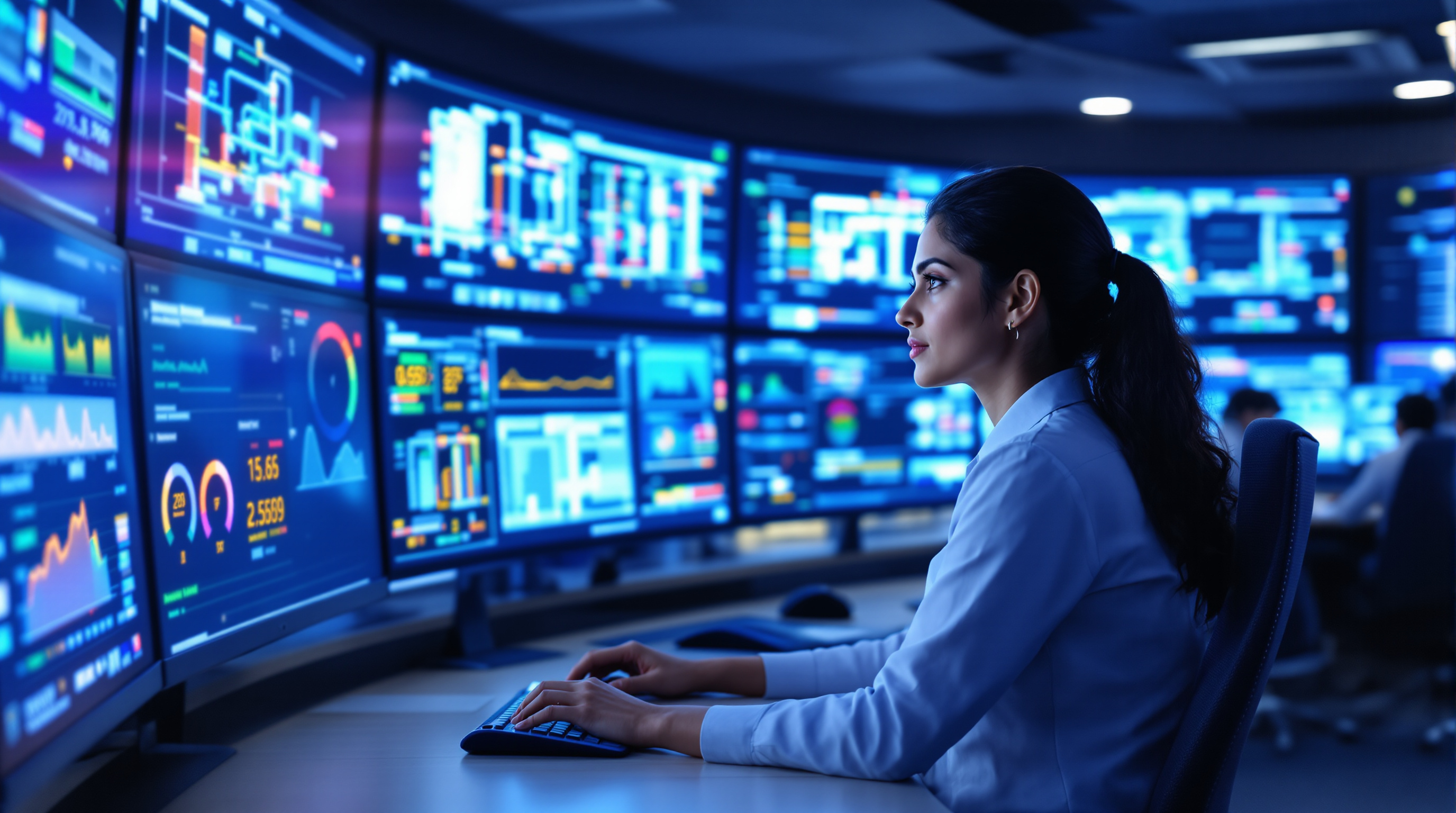
Sitting above the dashboards is the part that makes remote operation work: a staffed operations centre (sometimes a "command centre" or "network operations centre"). One skilled operator there watches tens of plants at once. Software surfaces only the plants that need attention — a rising ammonia trend here, a tripped pump there — so human expertise is spent on judgement, not on staring at healthy plants.
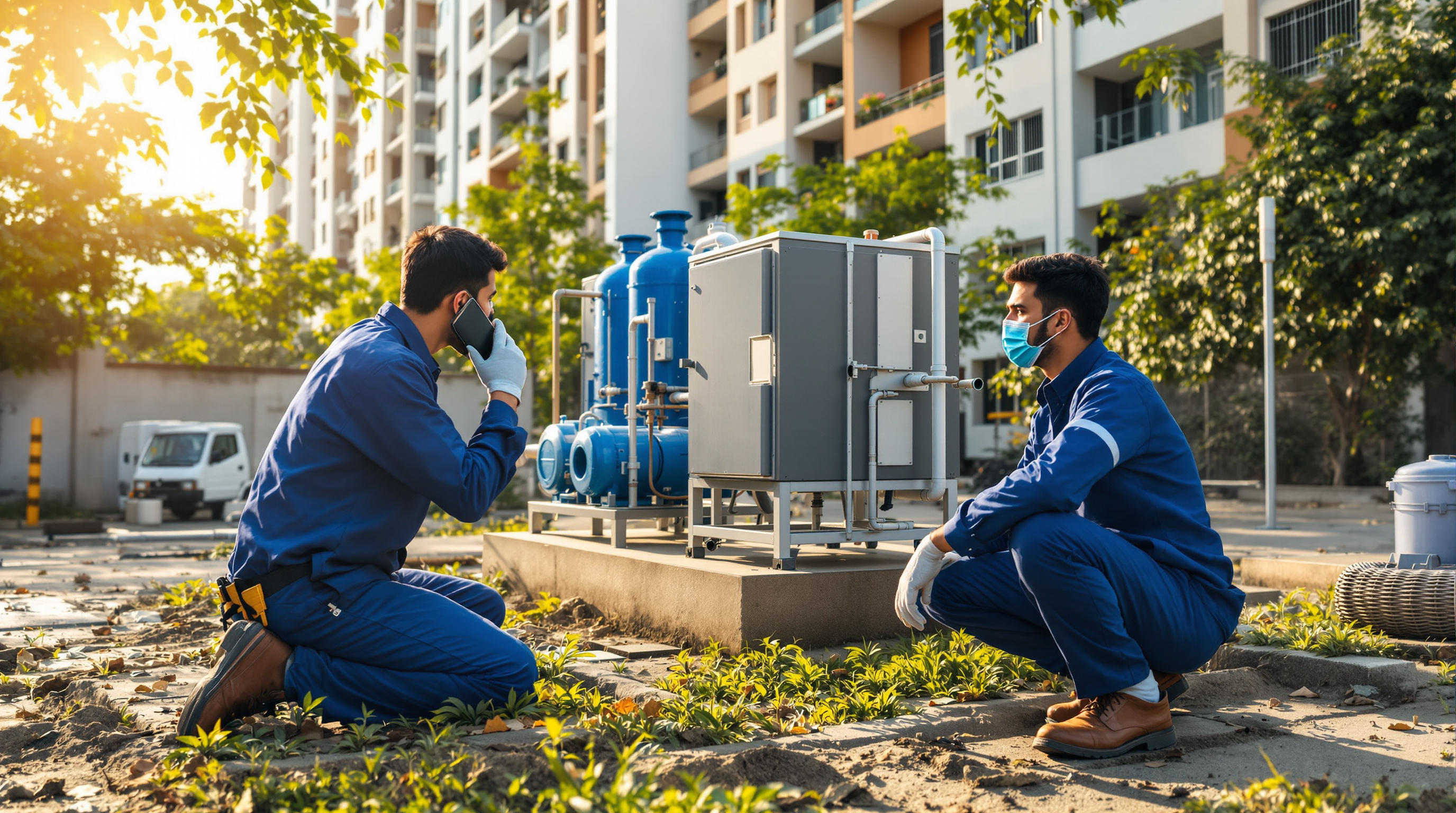
When a plant needs a physical action a screen cannot perform — desludging, cleaning a diffuser, replacing a dosing pump — the centre dispatches a field technician, often a lightly trained local hand guided step-by-step over the phone by the remote expert. This hub-and-spoke split — centralised brains, local hands — is what finally makes expert operation affordable for a plant far too small to employ an expert of its own. The analytics that help the centre triage many plants are explored in AI in STP operations and predictive maintenance for STPs.
How small buildings finally get expert operation
Put the pieces together and the model for a small STP looks like this:
1. The plant is built with proper local automation and a modest instrument set — DO, flow, level, energy.
2. A gateway streams that data to a cloud platform run by a managed-service O&M provider.
3. The provider's operations centre monitors it around the clock, tunes set-points remotely, and holds the effluent-compliance guarantee in the contract.
4. A shared technician visits on a route — scheduled for routine work, on-demand when an alarm calls — instead of one operator sitting idle at one plant.
The economics are simply better. One expert amortised across twenty plants costs each plant a fraction of a dedicated operator, and every plant gets better operation than a lone part-timer could give. Energy, usually the largest running cost, drops too, because blowers are matched to real load instead of running flat out — the mechanics of which are laid out in reducing STP electricity consumption. You can put a number on that saving with the Energy Benchmark Calculator, and sanity-check running costs against the STP Cost Estimator.
An honest word on maturity
Remote operation is real and working, but it is not magic, and vendors oversell it. Keep three things clear-eyed:
- Sensors drift. A DO or pH probe fouls in weeks in sewage; a dashboard fed by an uncalibrated probe shows confident, wrong numbers. Remote monitoring reduces site visits, it does not eliminate calibration and cleaning.
- Connectivity and power fail. The safe-mode fallback in the local PLC is not optional. A plant that goes blind and stops aerating when the link drops is worse than one that was never connected.
- "Fully autonomous" and "digital twin" are still emerging. Genuine closed-loop autonomous control and live digital twins for STPs are advancing but not yet routine for small domestic plants. Treat them as the direction of travel, not today's default — the honest picture is in the future of sewage treatment.
The bottom line
Remote STP monitoring and operation solve the real bottleneck in decentralised treatment — not the tanks and blowers, but finding a skilled person to run them. Cloud SCADA puts the plant on a screen; a staffed operations centre puts an expert behind that screen; the managed-service model shares that expert across many plants so even a 30 KLD building gets professional operation. Insist on sound local automation underneath it, calibrated sensors feeding it, and an honest view of what is proven versus promised — and remote operation becomes the most cost-effective upgrade a small Indian STP can make.
To see how the whole picture fits together, start at the Sewage Treatment Plants guide library, and if you are still sizing the plant itself, the what is an STP and how does an STP work guides are the place to begin.
Export this guide
Related Guides — Deep-dive reading
IoT Monitoring for STPs: Real-Time Sensors, Dashboards & OCEMS Compliance
How IoT sensors, connectivity and dashboards turn a blind, manually-logged sewage plant into a plant you can watch, alarm and prove compliant in real time — what to install, what it costs, and where the technology is genuinely ready.
Sewage Treatment PlantsDigital Twins for STPs: A Live Simulation of Your Sewage Treatment Plant
What a digital twin of an STP actually is, how a live virtual model helps you operate, optimise and train without risk, and an honest read on where the technology stands for building-scale plants in India.
Sewage Treatment PlantsAI in STP Operations: What Actually Works Today (and What Doesn't)
A practical, honest look at how AI and machine learning are used to run sewage treatment plants — optimising aeration and energy, predicting effluent quality, catching faults early, and easing operator dependence — with a clear-eyed view of what is mature and what is still marketing.
Sewage Treatment PlantsRelated Tools — Try Free
Rainwater Tank Sizer
How big should your rainwater tank be? Computes annual harvest, recommended tank capacity in litres, water-bill savings, and payback — for 10 Indian cities.
RWH CalculatorApartment STP Planner
Plan an apartment complex sewage treatment plant from flats and occupancy — get population load, sewage flow, recommended STP capacity in KLD, treatment technology and approximate space.
PlannerSTP Compliance Checklist Tool
Interactive self-audit that ticks off STP consents, discharge norms, reuse metering, online monitoring and O&M records to give a live compliance readiness score.
Checklist