
Smart Sensors in STPs: Online DO, Ammonia, Turbidity, Flow & TSS for Automated Control
How online DO, ammonia, turbidity, flow and TSS sensors turn a sewage treatment plant from a hand-tuned machine into a self-regulating one — cutting energy, catching upsets early, and proving compliance in real time.
For most of the history of sewage treatment, an STP was flown by feel. An experienced operator watched the colour of the mixed liquor, sniffed the air over the aeration tank, ran a settling test in a glass cone, and adjusted the blowers and pumps by hand — usually the same way, every day, regardless of what the sewage was actually doing that hour. It worked, but it was blind. The plant only "knew" its own condition when a human went and looked.
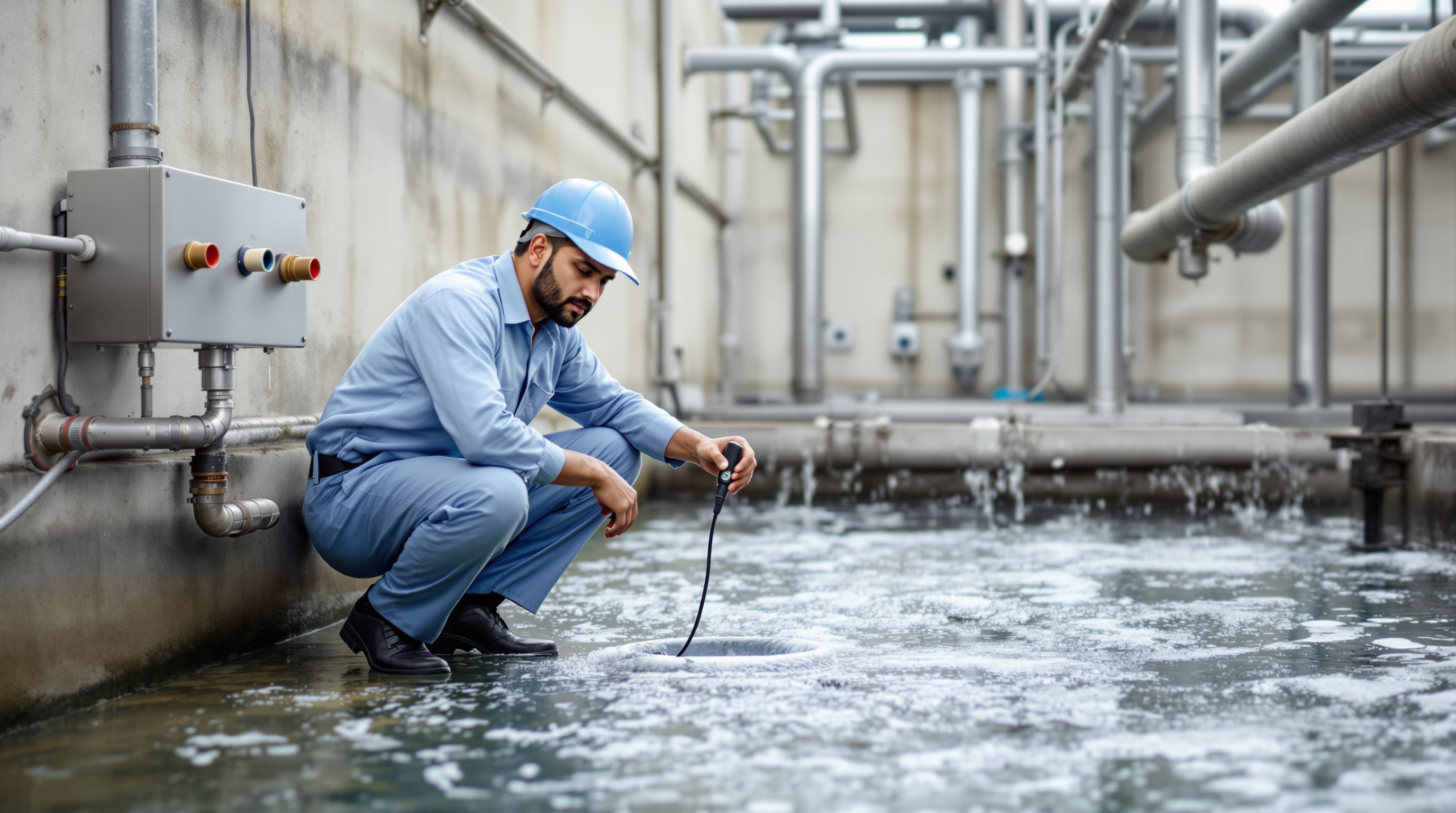
Smart sensors change that. By putting continuous, online measurement inside the process — a dissolved-oxygen probe in the aeration tank, an ammonia analyser at the outlet, a turbidity sensor on the treated water — an STP can finally sense itself in real time and adjust automatically. This is the quiet revolution reshaping Indian STPs: not flashy AI, not dashboards, but the humble instruments that give a plant its senses. This guide is about those senses.
A blower does not know whether the tank needs more air. A dissolved-oxygen sensor does. Put the two together and the plant starts breathing on its own — using exactly as much energy as the microbes need, and no more.
Sensors versus connectivity — an important distinction
It is easy to blur "smart sensors" with "IoT". They are related but not the same. A sensor is the physical instrument that measures a real quantity — oxygen, ammonia, cloudiness, flow. Connectivity is the layer that carries those readings to a screen, a server or a regulator. A sensor with no network is still useful; it can drive a local controller. A network with no good sensors is worthless — it just streams garbage faster.
This guide is about the sensing layer: what can now be measured continuously and reliably in an Indian STP, and what that measurement unlocks. For the layer that moves and stores the data, see the companion guide on IoT-based STP monitoring; for how remote teams watch multiple plants at once, see remote STP monitoring. Get the sensors right first — everything downstream depends on them.
The five sensors that matter most
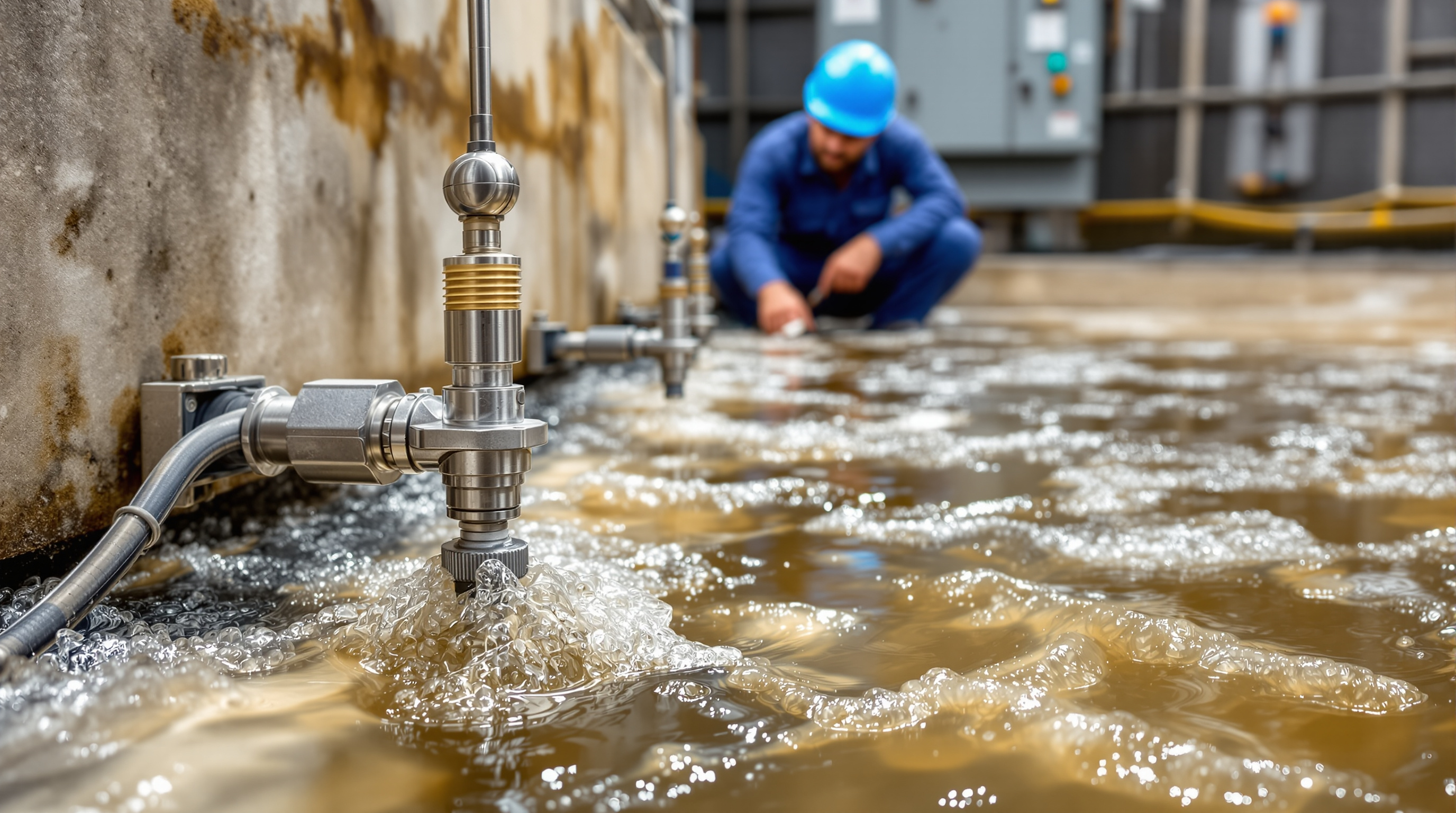
Not every parameter is worth measuring online. Some drift too slowly to bother, others are cheap to sample by hand in the lab. The five below earn their keep because they change fast, drive a control decision, or prove compliance.
| Sensor | What it measures | What it controls or proves |
|---|---|---|
| Dissolved Oxygen (DO) | Oxygen available to the microbes in the aeration tank | Blower speed — the single biggest energy lever in the plant |
| Ammonia (NH₄-N) | Nitrogen that has not yet been treated | Whether nitrification is complete; end-of-pipe compliance |
| Turbidity / TSS | Cloudiness and suspended solids in the treated water | Clarifier or membrane performance; a leaking-solids alarm |
| Flow | Volume of sewage entering and treated water leaving | Load, chemical dosing, and the KLD figure regulators ask for |
| pH | Acidity of the wastewater | Whether the biology is in its safe, near-neutral comfort band |
Dissolved oxygen — the money sensor
If an STP buys only one online sensor, it should be a DO probe. Aeration — running the blowers that push air into the biological tank — typically consumes 50–60% of an STP's entire electricity bill. Run the blowers flat out and you waste power dissolving oxygen the microbes cannot use; run them too low and the biology starves and the plant fails its BOD limit. The old habit was to run them high "to be safe", burning money around the clock.
A modern optical (luminescent) DO sensor measures the oxygen in the tank continuously and feeds it to a controller that trims blower output — often via a variable frequency drive (VFD) — to hold a target of around 2 mg/L. This one loop routinely cuts aeration energy by 15–30%. It is the clearest, fastest payback in the whole smart-STP story, which is why it anchors any serious plan for reducing STP electricity consumption.
Ammonia — the compliance sensor
Ammonia is the parameter regulators increasingly care about, because leftover ammonia in discharged water is toxic to fish and a marker of incomplete treatment. Measuring it used to mean a lab test hours after the fact. An online ammonia analyser (ion-selective electrode or a small wet-chemistry unit) reports it live.
That does two things. It confirms nitrification is actually finishing before the water leaves — real-time compliance instead of a next-day surprise. And it enables ammonia-based aeration control, a smarter cousin of DO control: instead of holding a fixed oxygen setpoint, the plant aerates only as hard as the actual ammonia load demands, saving even more energy when the incoming sewage is weak (which, in a residential complex, is most of the night).
Turbidity and TSS — the early-warning sensor
A turbidity sensor shines light through the treated water and measures how much is scattered by suspended particles. Clear water scatters little; cloudy water scatters a lot. Placed on the final effluent, it is a continuous proxy for TSS (Total Suspended Solids) — one of the headline numbers in every discharge standard.
Its real value is as an alarm. If a clarifier starts "bulking" and washing solids over its weir, or an MBR membrane develops a breach, turbidity spikes within minutes — long before a daily lab sample would catch it. That early warning is often the difference between a small correction and a full compliance breach.
Flow — the sensor that counts
Everything in an STP is "per litre". Chemical dosing, the KLD capacity a regulator licenses, energy benchmarks, reuse accounting — all of it needs a trustworthy flow figure. An electromagnetic flow meter on the inlet and outlet gives it continuously, with no moving parts to clog. Flow data is also the backbone of paced chemical dosing and of any honest energy benchmark — kWh per kilolitre treated means nothing without a reliable litre count. If you are still sizing or specifying a plant, the STP capacity calculator gives you the design flow these meters will later verify.
From measurement to automatic control
Sensors on their own just produce numbers. Their power is realised when those numbers close a loop — when a reading directly drives an actuator without waiting for a human:
- DO → blower VFD. Hold 2 mg/L automatically; slow the blowers when the microbes are satisfied.
- Flow → dosing pump. Match coagulant or chlorine dose to actual flow, not a fixed guess.
- Turbidity → alarm & diversion. Trip an alert, or divert off-spec water back for re-treatment, the moment solids break through.
- Ammonia → aeration setpoint. Aerate to the real nitrogen load, hour by hour.
This is the leap from monitoring to control. It is also the foundation the more advanced layers build on: AI in STP operations needs good sensor streams to learn from, predictive maintenance reads sensor drift to foresee failures, and a digital twin is only as truthful as the live data feeding it. No sensors, no smart plant — full stop.
Being honest about the maturity

This technology is real and installed today, but it is not plug-and-play, and India-specific realities matter.
- Fouling is the enemy. An STP is a warm, dirty, biological soup. Optical DO and turbidity sensors handle it far better than the old membrane-style probes, but every sensor in the tank needs cleaning and periodic recalibration — automatic air-blast cleaning helps, discipline helps more. A neglected sensor lies, and a controller that trusts a lying sensor makes things worse.
- Ammonia and nutrient analysers cost more. DO, flow, pH and turbidity are affordable and robust. Online ammonia is a bigger investment and needs more upkeep — justified on larger plants and where the regulator demands it, harder to justify on a small residential STP.
- CPCB online monitoring is mainly for large plants. Continuous online effluent monitoring connected to regulators applies chiefly to big and industrial installations, not every apartment STP — though the direction of travel is clearly towards more, not less, live measurement.
- Garbage in, garbage out. A false sense of safety from an uncalibrated instrument is more dangerous than no instrument. Budget for maintenance, not just purchase.
Used well, though, the economics are compelling. A DO-controlled blower pays for itself in energy inside a couple of years; a turbidity alarm can save a single compliance penalty larger than the sensor's cost. Feed those savings into an STP cost estimator and the case usually makes itself.
The bottom line
Smart sensors are the senses an STP was always missing. DO trims the biggest energy bill in the plant; ammonia proves and sharpens treatment; turbidity and TSS catch upsets before they become breaches; flow counts everything that matters; pH guards the biology. Individually they are modest instruments. Together they turn a hand-flown plant into one that senses itself and adjusts in real time — the essential first step toward every "smart STP" idea that follows.
Continue through the Sewage Treatment Plants guide library for the connectivity and intelligence layers that sit on top of these sensors, or revisit how an STP works to see exactly where in the process each of these five instruments belongs.
Export this guide
Related Guides — Deep-dive reading
IoT Monitoring for STPs: Real-Time Sensors, Dashboards & OCEMS Compliance
How IoT sensors, connectivity and dashboards turn a blind, manually-logged sewage plant into a plant you can watch, alarm and prove compliant in real time — what to install, what it costs, and where the technology is genuinely ready.
Sewage Treatment PlantsAI in STP Operations: What Actually Works Today (and What Doesn't)
A practical, honest look at how AI and machine learning are used to run sewage treatment plants — optimising aeration and energy, predicting effluent quality, catching faults early, and easing operator dependence — with a clear-eyed view of what is mature and what is still marketing.
Sewage Treatment PlantsAeration Tank: The Biological Heart of an STP
The tank where blowers push oxygen into billions of microbes that eat the sewage's organic load — how it works, what DO, MLSS, F/M and HRT mean, and why it quietly runs up the biggest electricity bill in the plant.
Sewage Treatment PlantsRelated Tools — Try Free
Window Cleaning Cost Calculator
Estimate professional window cleaning cost per visit and per year by access and frequency.
Window CalculatorApartment STP Planner
Plan an apartment complex sewage treatment plant from flats and occupancy — get population load, sewage flow, recommended STP capacity in KLD, treatment technology and approximate space.
PlannerSTP Compliance Checklist Tool
Interactive self-audit that ticks off STP consents, discharge norms, reuse metering, online monitoring and O&M records to give a live compliance readiness score.
Checklist