
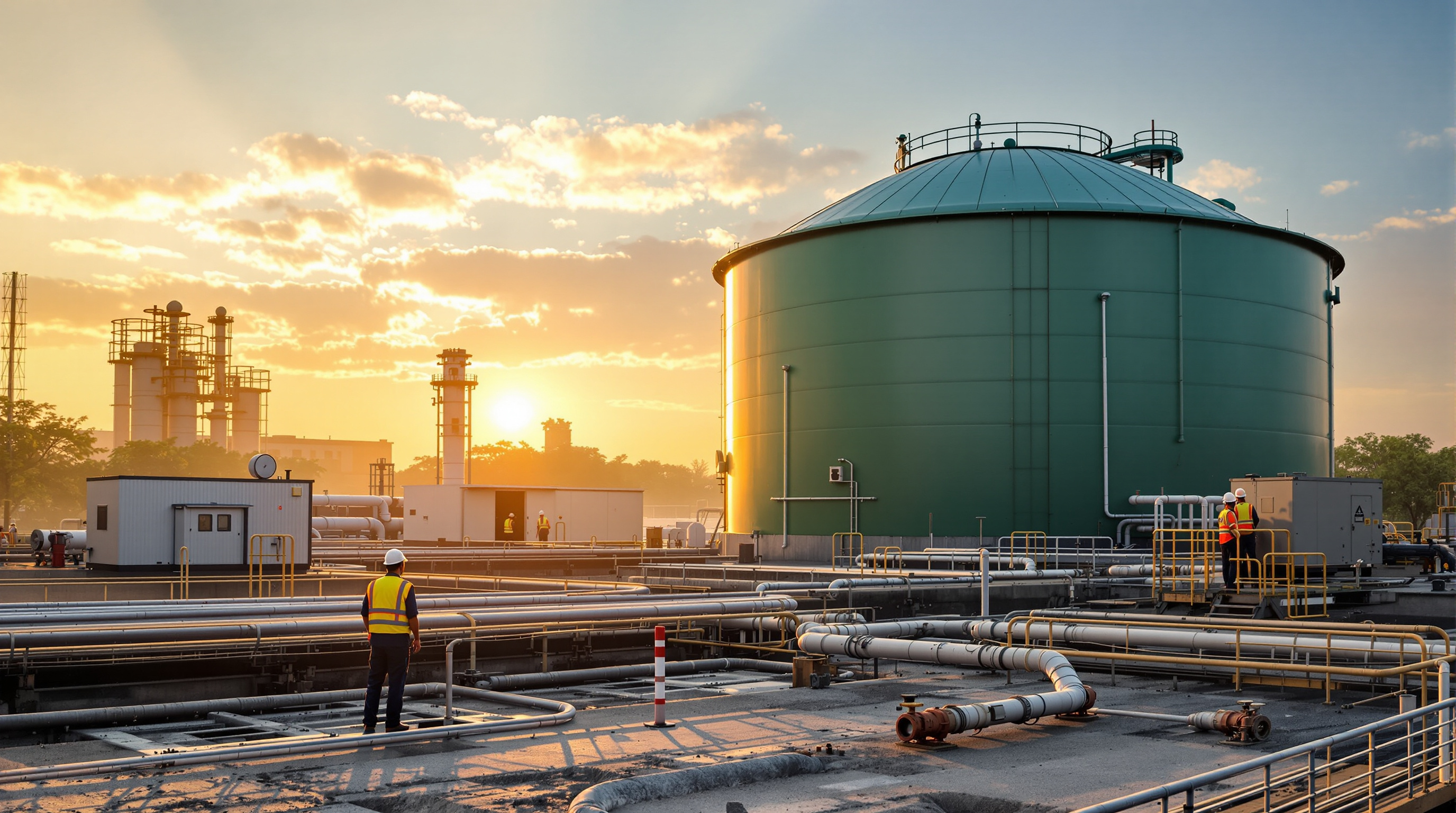
Biogas from Sewage: Energy Recovery in Indian STPs
How anaerobic treatment turns sewage sludge into methane-rich biogas, how that gas becomes power and heat, and where energy recovery actually makes financial sense in Indian sewage treatment plants.
Most of what a sewage treatment plant does costs energy. Blowers push air into aeration tanks, pumps lift water, and the electricity bill is often the single largest line in an STP's running cost. But sewage is not only a problem to be cleaned — it is also a store of chemical energy. The organic matter that pollutes water is, quite literally, fuel. Treat that organic load in the absence of oxygen and the microbes involved hand you back a combustible gas: biogas. Capturing and burning it is how a large STP can claw back a meaningful slice of the power it consumes — and, in the best cases, approach running on its own waste.
This guide explains how biogas from sewage is produced, what it can and cannot power, and — the part that matters most in India — where the numbers actually work.
Aerobic treatment spends energy to destroy pollution. Anaerobic treatment recovers energy while destroying it. The same organic load that costs you electricity in an aeration tank can hand some of it back as gas in a digester.
Where the gas comes from: anaerobic digestion
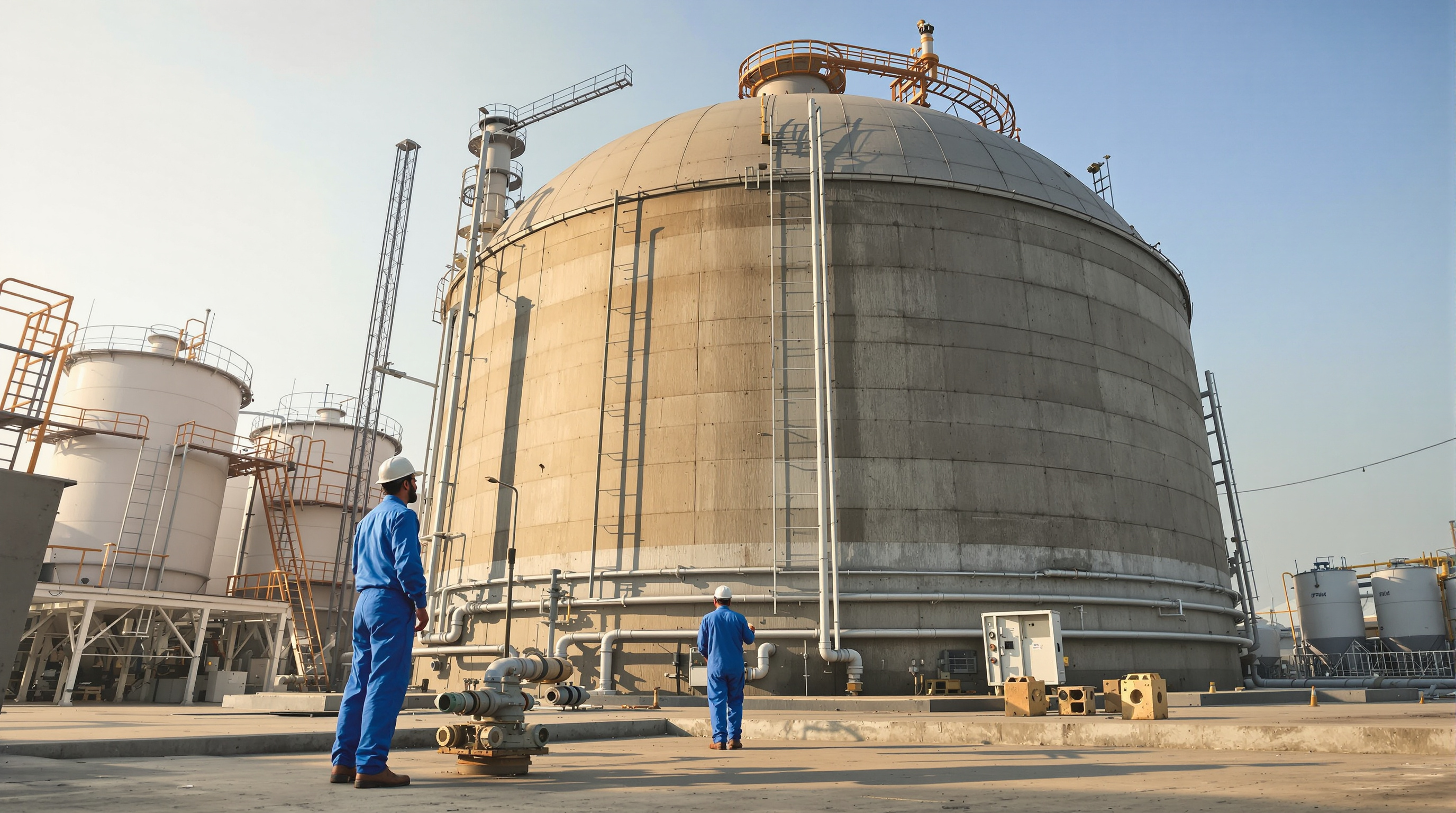
In conventional secondary treatment, air blowers feed oxygen to bacteria that eat organic waste — the aerobic process behind the extended aeration process and most package plants. Anaerobic treatment does the opposite: it seals the organic matter in an air-free tank and lets a different community of microbes break it down. The end product of that airless digestion is biogas — roughly 60–65% methane (CH₄), the rest mostly carbon dioxide, with traces of hydrogen sulphide and moisture.
There are two places this happens in an STP:
- Sludge digesters. Every STP produces sludge — the settled and biological solids skimmed off along the way. Feeding that sludge into a heated, sealed anaerobic digester for 15–30 days both stabilises it (less volume, less odour, safer to handle) and releases biogas. This is the classic route at large municipal plants.
- UASB reactors. The Upflow Anaerobic Sludge Blanket (UASB) treats the sewage itself anaerobically, pushing raw sewage up through a dense blanket of granular biomass. It removes a large share of the organic load with almost no aeration energy and collects biogas directly off the top of the reactor. Much of India's large-city sewage infrastructure, built under programmes like the Ganga and Yamuna plans, runs on UASB precisely because it is low-energy and generates gas.
Either way, the principle is the same: convert organic pollution into methane instead of spending electricity to oxidise it away.
From gas to useful energy
Raw biogas is wet, slightly corrosive and low-grade. Before it earns its keep it usually needs light conditioning — moisture removal and, importantly, H₂S scrubbing, because hydrogen sulphide is corrosive to engines and toxic. Cleaned-up biogas is then put to work in one of three ways:
| Use | How it works | Best suited to |
|---|---|---|
| Heat only | Burn biogas in a boiler to keep the digester itself warm (digesters work best near 35 °C) | Cold-climate or northern plants; the simplest use |
| Power (CHP / gas engine) | Feed cleaned gas to a gas engine driving a generator; capture engine heat for the digester | Medium-to-large STPs wanting to offset electricity |
| Upgraded bio-CNG | Strip out CO₂ to reach ~95% methane, compress and bottle it | Large plants near a fuel offtaker or vehicle fleet |
The workhorse for energy recovery is combined heat and power (CHP): a gas engine burns the biogas to make electricity, and the waste heat off the engine keeps the digester at temperature. Done well, the digester heats itself and the plant gets net electricity on top. As a rule of thumb, biogas carries roughly 6 kWh of energy per cubic metre, of which a gas engine converts perhaps a third to electricity — the rest is recoverable as heat.
Does it move the electricity bill?
This is the honest heart of the matter. Biogas rarely makes an STP fully self-powered, but at the right scale it makes a real dent. A large municipal plant with dedicated sludge digestion can commonly recover somewhere in the region of a third to half of its own electricity from biogas — the figure swings widely with sewage strength, digester temperature control, and how well the gas is cleaned and used.
To see where your plant sits before and after, benchmark it with the Energy Benchmark Calculator; every unit of recovered biogas power shows up directly against the kWh-per-kilolitre figure that defines an efficient plant.
Energy recovery pairs naturally with the broader efficiency playbook. The cheapest kilowatt-hour is the one you never draw, so biogas belongs alongside the demand-side measures in reducing STP electricity consumption and the whole-plant thinking behind energy-neutral STPs. Recovery plus efficiency is what actually gets a plant toward energy neutrality — neither alone usually does.
Where it makes sense in India — and where it doesn't
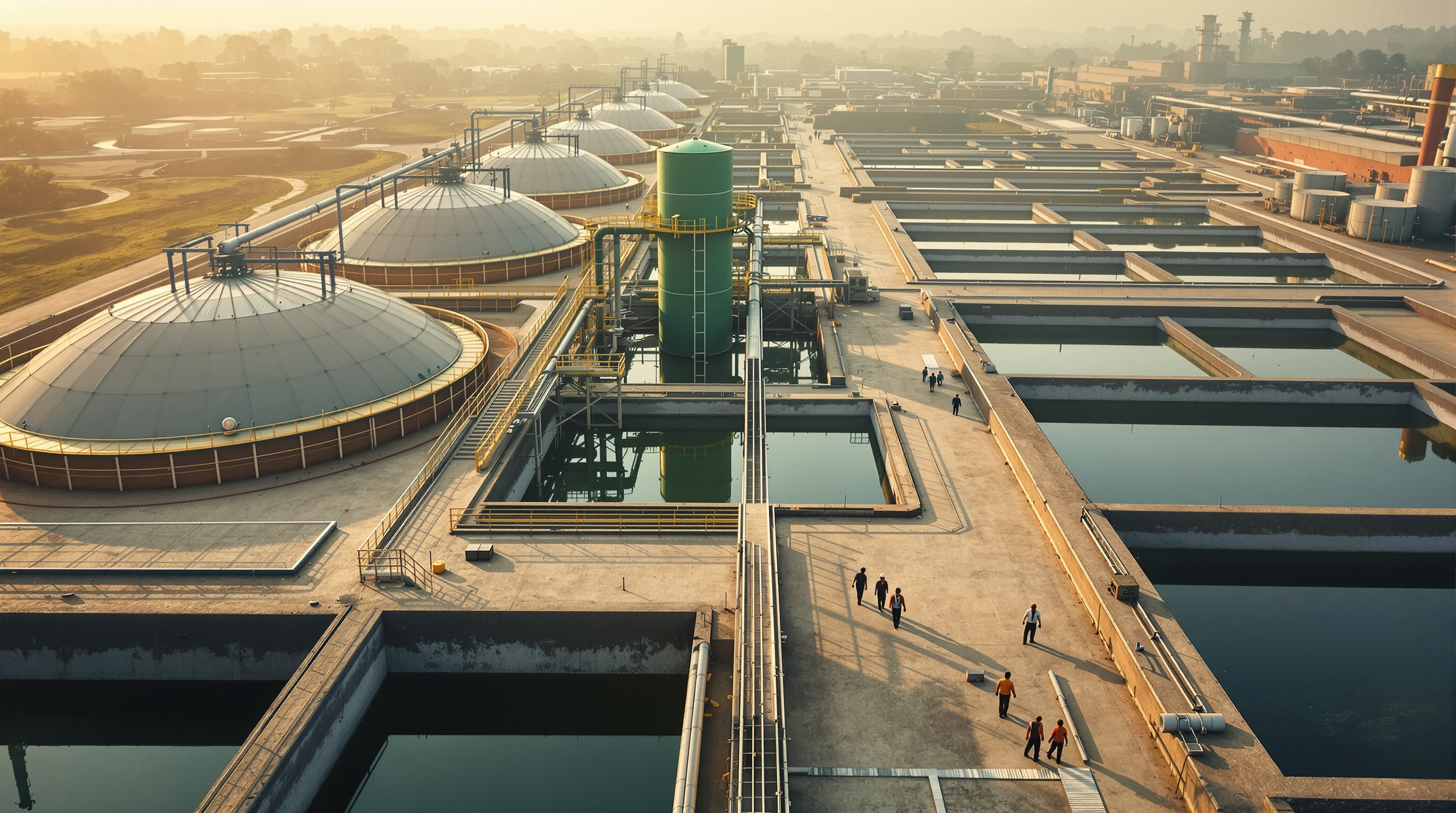
Biogas recovery is real, proven technology, but it is not free and it is not for everyone. It carries capital cost (digester, gas holder, scrubber, gas engine), needs skilled operation, and only pays back above a threshold of scale and organic load.
It tends to make sense when:
- The plant is large — think tens of MLD of municipal sewage, not a 200 KLD apartment STP. Gas yield scales with organic tonnes; small domestic plants simply do not produce enough.
- The design is already anaerobic — a UASB-based plant is collecting biogas anyway, so flaring it instead of using it is pure waste.
- Sewage is strong and consistent, and there is space and skilled staff to run digesters and engines.
It rarely makes sense when:
- The STP is a small building or society plant. Here the sludge volume is tiny and dilute; the sensible route is good sludge dewatering and drying beds, not a digester. For these, get the treatment and sizing right first — start with how to size an STP.
- There is no one to operate a gas engine safely. Uncleaned biogas and neglected H₂S will wreck an engine fast.
CPCB and the various river-cleanup missions have pushed anaerobic, energy-generating designs at the municipal scale for exactly these reasons; at the building scale, aerobic package plants remain the norm because they fit the load.
The bottom line
Biogas turns the awkward by-product of sewage treatment — sludge — from a cost into a partial energy source. In a large, anaerobically designed Indian STP, recovering that gas through CHP can offset a serious fraction of the power bill, stabilise the sludge, and cut both odour and disposal volume in one move. It is not a magic route to a free plant, and it does nothing useful for a small society STP. But wherever sewage arrives in large, strong volumes, capturing biogas from sewage is one of the clearest wins in the whole field — waste literally paying part of its own way.
To place this within the full treatment picture, work back through how an STP works and the anaerobic-specific UASB guide, or return to the Sewage Treatment Plants guide library for the rest of the series.
Export this guide
Related Guides — Deep-dive reading
Upflow Anaerobic Sludge Blanket (UASB): Anaerobic Sewage Treatment Explained
The no-oxygen reactor where sewage flows up through a blanket of granular sludge, destroying pollution while producing biogas and using almost no energy — how the sludge blanket and gas-solid separator work, why Indian municipal STPs favour it, and why it always needs an aerobic polishing step.
Sewage Treatment PlantsEnergy-Neutral & Energy-Positive STPs: The Path from Power-Hungry to Power-Neutral
How a sewage treatment plant can approach net-zero energy — through anaerobic biogas recovery, solar power, ultra-efficient aeration and heat recovery — and how close Indian STPs can realistically get today.
Sewage Treatment PlantsSludge Generation Estimation in STPs: How Much Sludge Will Your Plant Produce?
Every STP that cleans water also makes sludge — and the biosolids you forget to plan for become the operating headache you cannot ignore. Here is how to estimate sludge generation, understand the yield concept, and size dewatering before you build.
Sewage Treatment PlantsRelated Tools — Try Free
Apartment Video Door System Planner
Enter flats, entrances, floors and guard desk for a first-pass building intercom plan — door stations, indoor monitors, guard station, the right architecture and an indicative cost band.
Building PlannerApartment STP Planner
Plan an apartment complex sewage treatment plant from flats and occupancy — get population load, sewage flow, recommended STP capacity in KLD, treatment technology and approximate space.
PlannerSTP Electricity Consumption Calculator
Estimate a sewage treatment plant's daily power use and its monthly and annual electricity running cost from capacity, specific energy and tariff.
STP Calculator