
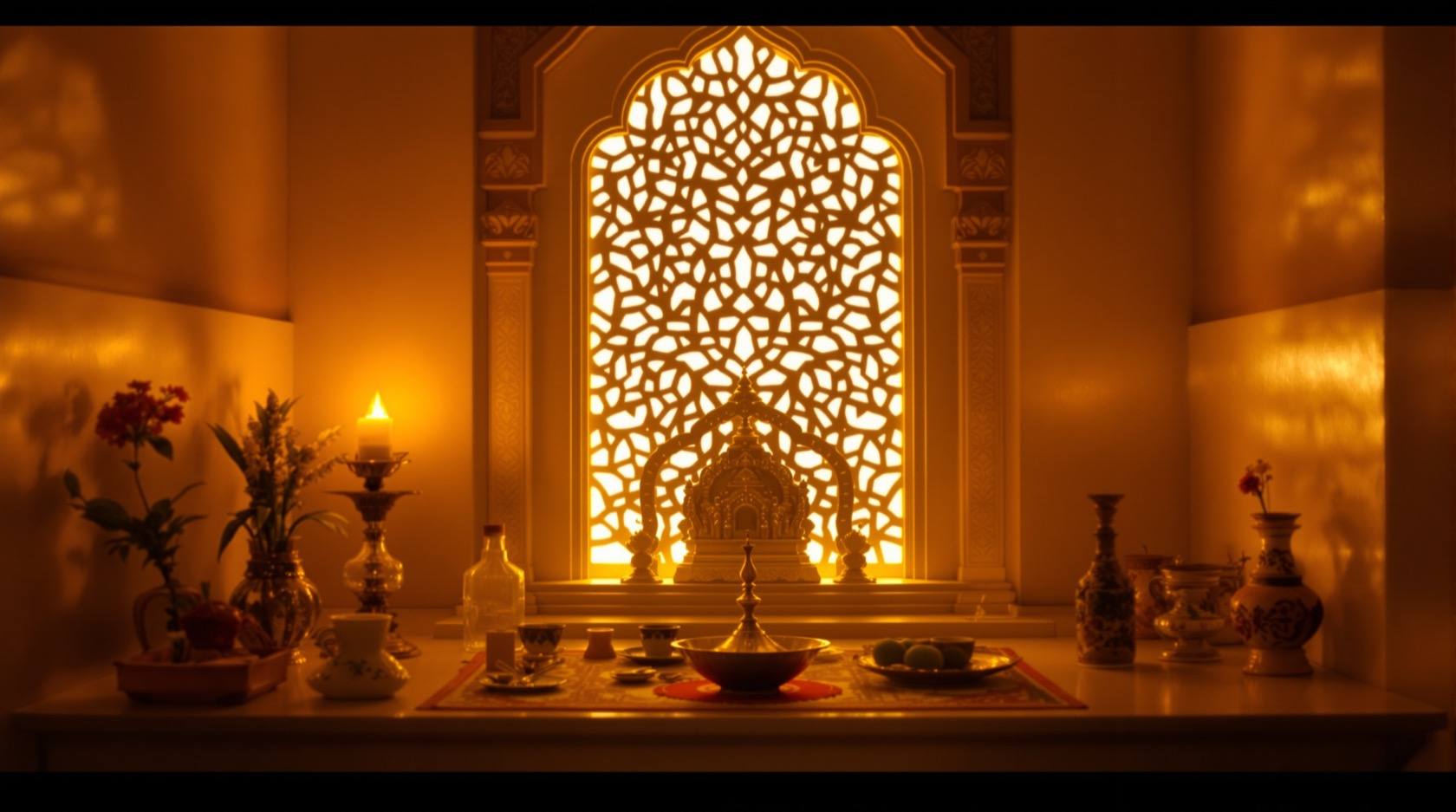
Pooja Room Lighting Design: Warm, Reverent & Practical (2026)
How to light a pooja room or home mandir so it feels warm, golden and serene — the layers that create a reverent glow, gentle accent on the deities without glare, the diya-and-soot reality nobody plans for, and where the wiring becomes a licensed electrician's job.
The pooja room is the one space in an Indian home where the light is meant to be felt, not just used. It should read warm, golden and still — the glow of a lit diya rather than the flat wash of an office. Yet it is also a working corner: someone lights a lamp here at dawn, does aarti in the evening, cleans it weekly, and every one of those flames leaves a little soot behind. Good pooja room lighting holds both truths at once — it makes the space feel reverent and serene, and it survives real flames, real smoke and daily use.
This is the design guide to lighting a pooja room or home mandir — the mood, the layers, the fixtures and the practical realities. It is part of the Lighting hub; start at the complete guide to lighting for the whole picture, and read layered lighting and functional vs ambient vs accent lighting for the layering logic this guide applies to a very specific, very personal room.
Scope & how to read this. This guide covers design and specification — the mood, the layers, which fixtures and finishes to choose, how to place them so the light feels devotional and the worshipper is never dazzled. It stays clear of religious instruction: no claims about auspicious directions, health or fortune — only light, warmth and practicality. Every wattage, colour and cost note is indicative to help you plan and brief. All wiring, circuits, switching, dimmer installation and any fitting near a live flame is safety-critical electrical work for a licensed electrician — plan the scheme here, have a professional install it. Automation belongs to the Smart Home hub.
The mood goal: warm, golden, serene
Before a single fixture, settle the feeling. A pooja room wants warm, low, even light with a soft focus on the deities — the visual equivalent of calm. That translates into a few firm rules:
- Warm colour temperature — 2700K, never cool white. Cool 4000K-6500K light makes a mandir look clinical, drains the gold from brass and silk, and kills the diya-flame warmth you are trying to echo. Stay at 2700K (warm white); 3000K at most for a marble mandir where you want a touch more crispness. The deep dive on this lives in colour temperature and CRI; if you want to preview how a room feels at different Kelvin values, the colour temperature selector shows the shift.
- High colour rendering (high CRI). Brass, gold zari, marble, flowers and vermilion only look right under a lamp that renders colour honestly — choose CRI 90-plus warm LEDs so the reds stay red and the gold stays gold.
- Dimmable. The room is not used at one brightness. A gentle glow for daily darshan, a brighter level for cleaning and reading, a very low ember for late evening. Specify dimmable warm LEDs on a dimmer (installed by your electrician) rather than a single fixed level.
- Low glare, soft shadows. Nothing should shine into the worshipper's eyes, and no single harsh downlight should carve deep shadows across the idol's face. Diffuse, layer and aim — the whole craft is below.
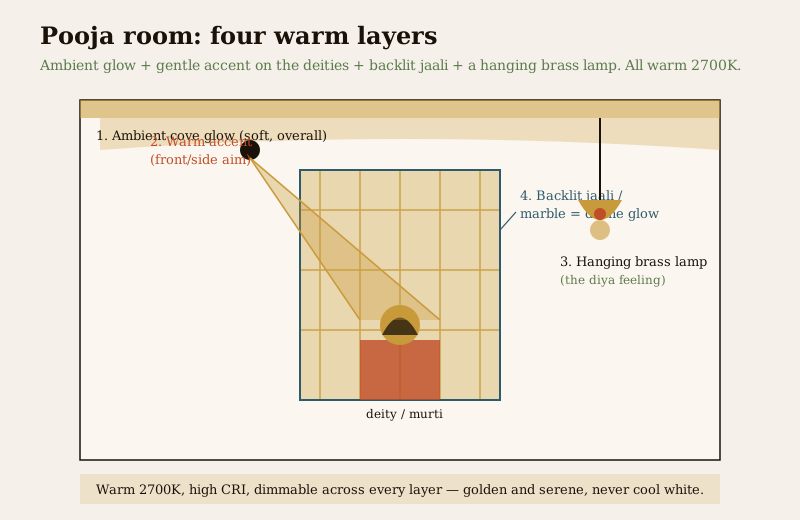
The layers of pooja room light
As with any room, the magic is in layering — but here the layers carry a mood, not just a lux level. Build these four and blend them on the dimmer.
| Layer | Job | Typical fixtures | Notes |
|---|---|---|---|
| Ambient | A soft overall glow so the space is never dark or gloomy | Warm cove/strip lighting, a small warm surface light, or an indirect cove wash | Keep it gentle — ambient sets calm, not brightness |
| Accent | Gently light the deities/idols so the face is clear and dignified | Warm mini-spot, small track/spotlight, or a picture light above | Aim from front/side, never a harsh top-down glare |
| Decorative | The devotional character — a warm, lamp-lit feeling | Hanging brass/temple lamp, diya-like warm points, small decorative fittings | Echoes the diya; this is the room's personality |
| Backlight / glow | A "divine" halo behind or around the mandir | Backlit marble/jaali, a warm cove behind the unit, a concealed strip | Hidden source, visible glow — reverence, cheaply done |
A few notes on each.
Ambient. Resist the urge to flood the room. A single bright ceiling light flattens everything and feels like a store. A soft cove or a low warm wash keeps the room lit enough to move and clean, while leaving the deities as the visual focus.
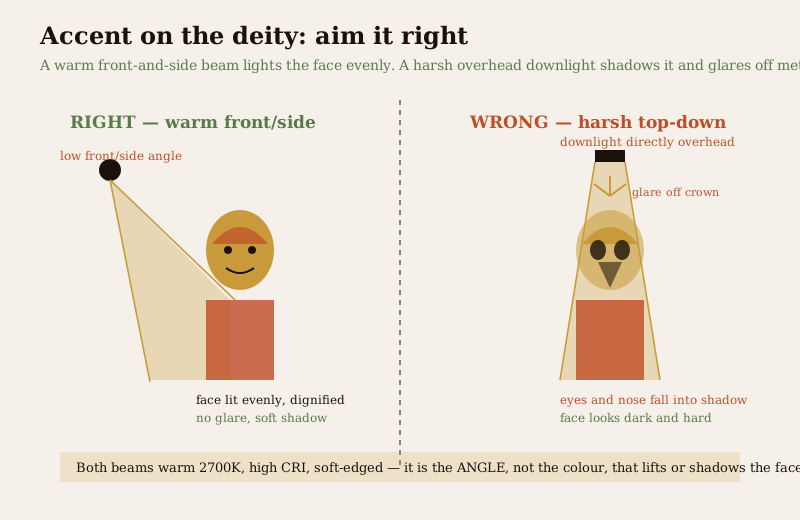
Accent on the deities — done right. This is the layer that makes or breaks the room. The aim is to light the murti's face and form clearly and warmly, so it reads with dignity, without glare bouncing off metal or a hard shadow under the brow. A warm narrow-to-medium spot aimed from slightly in front and to one side does this beautifully; a picture light or mini-track skimming down the front works for a niche. What to avoid: a single recessed downlight directly overhead, which drops the eyes and nose into shadow and glares off a metal crown. Keep the beam soft and the angle low.
Decorative — the diya feeling. A hanging brass temple lamp (a traditional deepa or a modern warm pendant in brass), or a row of small diya-like warm points, gives the room its devotional character. These need not be bright; they are there to be seen glowing, echoing the oil lamp. Warm metals — brass, antique gold, oxidised copper — belong here more than chrome or matt black.
Backlight — the divine glow. The single most effective "wow" in a modern mandir is a backlit marble or jaali panel behind the deities, or a warm cove tucked behind the mandir unit. A hidden warm strip throws a halo of light around the form — reverent, serene, and surprisingly inexpensive. Use warm 2700K strip, hide the source completely behind a lip, and let only the glow show.
The diya, aarti and soot reality
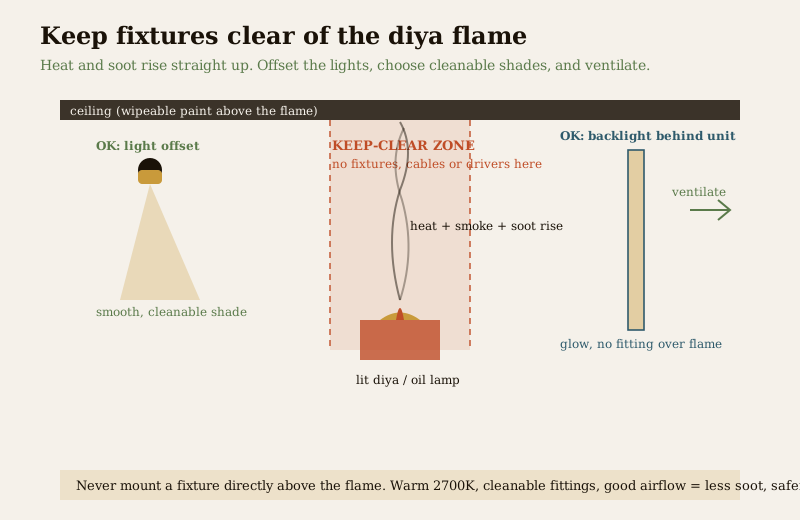
This is the part generic lighting advice ignores, and it is the single biggest practical difference in a pooja room. Real flames — diyas, oil lamps, camphor aarti, agarbatti — produce heat, smoke and soot. Over months that soot settles as a dark film on nearby surfaces: the ceiling directly above the flame, and any fixture mounted close to it. Plan for it or repaint every year.
- Never mount a fixture directly above the flame. Heat and soot rise straight up. Keep lights offset — to the sides, in a cove, behind the mandir — not hovering over the diya or lamp.
- Choose cleanable fittings. Smooth glass or metal shades wipe clean; fabric shades, intricate fretwork and open-mesh diffusers trap soot and yellow. In a room with daily flames, cleanable beats fancy.
- Ventilate. A small exhaust or an openable window near the pooja area clears smoke and dramatically slows soot build-up on both lights and ceiling. Design ventilation and lighting together.
- Seal and protect the ceiling above the flame. A wipeable paint finish there ages far better than distemper.
- Keep LED drivers cool and away from heat. Concealed strip drivers should sit in a ventilated, accessible spot, not boxed in above a lamp that runs hot.
Matching the fixtures to your mandir
Pooja spaces come in three broad forms, and each lights a little differently.
| Mandir type | The lighting move | Watch for |
|---|---|---|
| Small niche / alcove | One warm accent skimming down the front + a hidden backlight strip | No room for glare — a single soft source does it |
| Dedicated pooja room | Full layering — soft ambient cove, warm accent on deities, decorative lamp, backlit panel | Ventilation and soot planning matter most here |
| Modular mandir unit | Integrated warm strip in the frame + a small warm spot for the deity | Factory strips are often cool white — insist on 2700K |
For a modular unit, the most common mistake is accepting the built-in cool-white strip the vendor supplies. Specify warm 2700K, dimmable, high-CRI — it is a small change that transforms the feeling. For a dedicated room, layer fully and put soot and ventilation at the centre of the plan. For a niche, restraint wins: one warm accent and a backlight is often the whole scheme.
A warm-scheme spec you can brief
Use this as a starting specification to hand your designer or electrician — adjust to your mandir and taste.
| Element | Specify | Finish / detail |
|---|---|---|
| Colour temperature | 2700K warm white (3000K max for marble) | Consistent across every fixture — mixing warm and cool looks broken |
| CRI | 90-plus (Ra90) | So brass, gold, marble and flowers render true |
| Dimming | Dimmable driver + dimmer (electrician-installed) | Daily glow, cleaning-bright, and low-ember levels |
| Accent on deity | Warm mini-spot / picture light, front-and-side aim | Soft beam, low angle — no overhead glare or shadow |
| Backlight | Warm 2700K concealed strip behind jaali/marble/unit | Source fully hidden behind a lip; only the glow shows |
| Decorative | Brass / antique-gold hanging lamp, warm points | Cleanable surfaces; echoes the diya |
| Fixtures near flame | Offset, smooth, wipeable | Never directly above the diya |
| IP / safety | Standard dry-rated indoor fittings | Wiring, dimmer and any near-flame fitting by a licensed electrician |
Costs are indicative and depend on fixture quality and how much backlighting you build — a simple niche scheme is modest; a fully backlit marble mandir with integrated coves and a brass lamp sits higher. Get local quotes; treat any figure as a band, not a price.
A gentle "morning aarti" scene
If your home has smart lighting, one lovely, restrained touch: a soft warm morning scene that brings the pooja room up to a gentle glow at dawn — the ambient cove and backlight rising slowly to a low, warm level, ready for the day's first darshan, then easing off. Keep it subtle and warm; the point is calm, not theatre. Set it up through the Smart Home hub rather than treating it as core wiring, and never let automation replace a physical switch you can always reach.
Safety — take this seriously
A pooja room combines open flames, fabric, decoration and electricity in a small space, so a few rules are non-negotiable:
- Flames near fabric and decoration are a fire risk. Keep diyas, lamps and camphor well clear of curtains, garlands, dupattas, dried flowers and any hanging decoration. Never leave a flame unattended.
- Keep the flame zone clear of fittings and wiring. No cables, drivers or shades in the rising heat and soot above a lamp.
- All electrical work is a licensed electrician's job. Wiring, the dimmer, the concealed-strip driver, any fitting near the flame zone — these are safety-critical and go to a qualified professional, not a DIY afternoon. This is the same firm line the whole Lighting hub takes, and the Electrical hub covers the technical side.
- Ventilate for smoke. Good airflow is a safety measure as much as a soot measure.
How it connects
- Start at the complete guide to lighting (the pillar), then read layered lighting and functional vs ambient vs accent lighting for the layering logic behind this room.
- For the fixtures used here: track and spotlight lighting for the accent on the deity, cove and indirect lighting and strip and profile lighting for the backlit glow, and decorative lighting for the brass lamp.
- Get the warmth right with colour temperature and CRI and preview it in the colour temperature selector.
- For the automated morning scene, hand off to the Smart Home hub and smart lighting; for looks and styling, browse moodboards.
Key takeaways
- Warm, not cool. Light a pooja room at 2700K, dimmable, high-CRI — cool white kills the reverent, golden feeling and drains the brass and marble.
- Layer for mood. A soft ambient glow, a gentle warm accent on the deities, a decorative brass lamp, and a hidden backlight behind the mandir together make the space feel serene.
- Accent the murti without glare. Light the face from the front and side with a soft beam — never a harsh overhead downlight that shadows the face and glares off metal.
- Plan for the diya. Real flames mean heat, smoke and soot — mount lights offset (never above the flame), choose cleanable fittings, and ventilate.
- Backlit jaali or marble is the cheapest way to a divine glow — hide a warm strip and show only the light.
- Safety is non-negotiable — keep flames clear of fabric and fittings, and leave all wiring, dimmers and near-flame fittings to a licensed electrician.
- Every colour, wattage and cost note here is indicative — confirm against IS codes and get local quotes.
References
- National Building Code of India, NBC (SP 7:2026), Bureau of Indian Standards — general illumination and lighting provisions (named generally).
- IS 3646 — code of practice for interior illumination and recommended lux levels (named generally).
- IS 16107 / IS 10322 and IEC 60598 — LED luminaire performance and luminaire safety (named generally).
- IP ratings per IS/IEC 60529 — ingress protection classes for fittings (standard dry-rated indoor fittings for a pooja room).
- BEE star rating and ECBC lighting-power-density guidance — energy efficiency of LED lighting (named generally).
- A licensed electrician for all wiring, dimmer and driver installation, and any fitting in or near the flame zone.
All colour temperatures, wattages, fixture notes and cost bands here are indicative design aids only; confirm the governing values against the relevant IS codes and NBC (SP 7:2026), get local quotes for cost, and have a licensed electrician design and install all wiring, dimmers and any fitting near an open flame. This guide addresses lighting design and practicality only and makes no religious claims.
Export this guide
Related Guides — Deep-dive reading
LED Bathroom Mirror India: Backlit vs Front-Lit, Colour Temperature, Cost & The Point Behind the Glass
A practical India-first guide to LED and backlit bathroom mirrors — integrated shadow-free face lighting, 2700K-6500K colour temperature and tunable white, halo backlight versus sandblasted front strips, plus the concealed electrical point, IP rating, demister and driver access you must plan behind the mirror before you tile.
BathroomsLighting Controls & Dimming Design: Zones, Scenes & Switches (2026)
How to plan lighting control so an Indian home's light is flexible — split each room's layers onto separate switches, choose dimmers that actually work with LEDs, add two-way switching where you need it, and layer scenes on top. The design decisions you must settle before the electrician wires.
LightingCove & Indirect Lighting: The Soft Glow Done Right (2026)
The design guide to cove and indirect lighting for Indian false ceilings — what it really is, why it is so loved and so often botched, and the depth, lip, setback, strip density and colour rules that separate a smooth ceiling wash from a strip of visible dots.
LightingRelated Tools — Try Free
Circadian Light Meter
Patient-centric circadian lighting visualizer for Indian healthcare design — time-of-day × intensity → CCT, melanopic lux (EML / mEDI), melatonin suppression, and an alertness curve. Calibrated against WELL v2 L03 Circadian Lighting Design, CIE S 026:2018, Brainard 2001, and Lucas et al. 2014.
Circadian ToolCross-Ventilation Analyzer
Estimate airflow and air changes per hour (ACH) from room size, window areas, layout, and local wind — with NBC 2016 Part 8 compliance check.
Ventilation CalculatorFalse Ceiling Cost Estimator
Live ₹/sqft across 8 ceiling types — POP, gypsum, designer, metal, PVC, wooden — with cove and spot lighting for 20 Indian cities.
Cost Calculator