
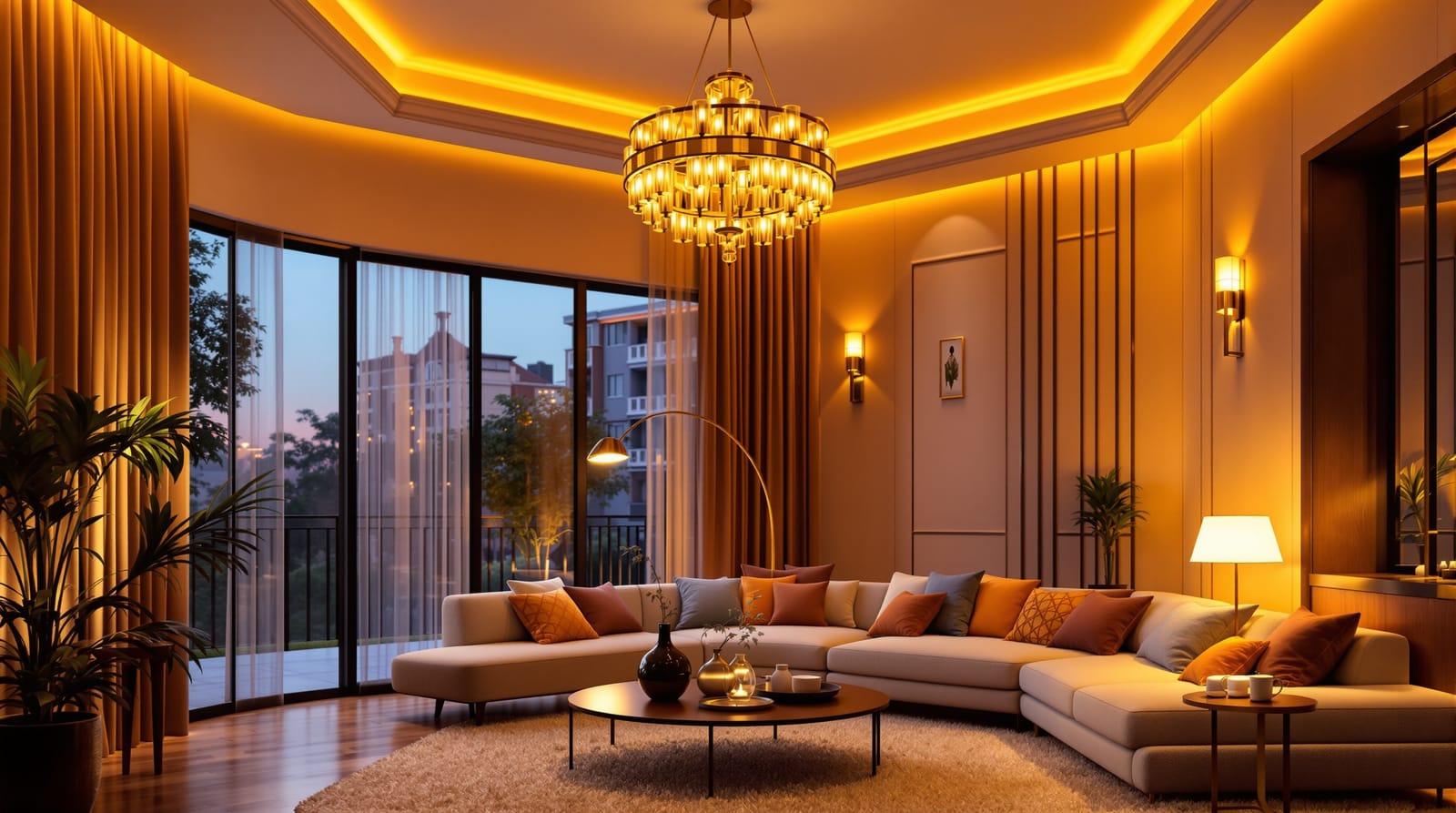
Decorative Lighting — A 2026 Guide for Indian Homes
The most powerful decor element · Chandeliers to LED art · Layer light for mood, depth & ambiance
Lighting is the most powerful decorative element in any home — it shapes mood, depth and ambiance more than almost any single object you can place in a room. A beautiful sofa stays the same colour at 7am and 7pm. Light does not. The same living room can feel like a clinical waiting hall under one flat tube light, or like a warm, layered retreat under a chandelier, a floor lamp and a candle stand working together. In Indian homes in 2026 — where one room often does the work of three, and where festivals, guests and daily life all share the same space — lighting is the cheapest, fastest way to change how a room feels without moving a single wall.
This guide treats light as decor, not just utility — the three layers every room needs, the eight decorative elements worth knowing, the colour-temperature calls that quietly make or break a room, how to layer by room and by style, what it costs in India, and the mistakes almost everyone makes the first time.
The Three Layers of Light
Good lighting is never one thing — it is three working together. Ambient light is the general wash that lets you walk through a room safely: ceiling lights, cove, large pendants. Task light is focused and functional: a reading lamp, kitchen under-cabinet strips, a study desk lamp. Accent light is the decorative, mood-making layer: a wall sconce grazing a painting, a candle stand, an LED strip behind a TV unit.
A single ceiling tube light fails because it does only one job — flat, shadowless ambient light — and does it harshly. It flattens the room, kills depth, throws unflattering light on faces, and gives you nowhere soft to land in the evening. Layering is the whole game: combine all three, put as many as possible on dimmers or separate switches, and you can dial one room from bright-and-busy to low-and-intimate in seconds. Everything below is just choosing the fixtures that fill those three layers well.
The Eight Decorative Lighting Elements
Chandeliers
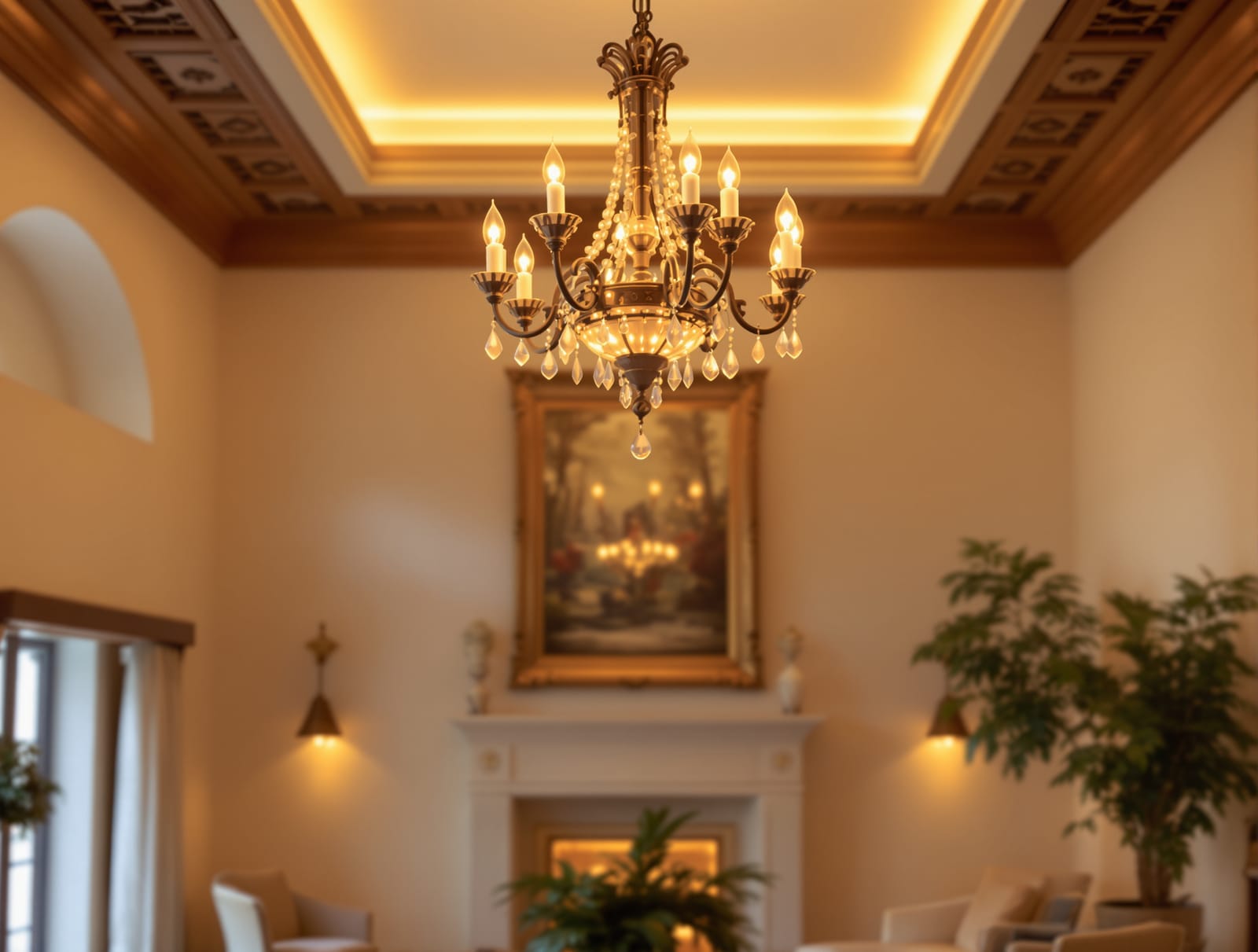
What it does: a chandelier is a statement ambient fixture — it anchors a room and signals occasion. Best placement is over a dining table, in a double-height living room, or in a foyer with a tall ceiling. Scale tip: add the room's length and width in feet and treat that sum in inches as a rough diameter — a 12 × 14 ft room suits roughly a 26-inch fixture; over a dining table, aim for half to two-thirds the table's width, hung 30–36 inches above the top. Mood: grand, warm, celebratory. India note: glass and crystal chandeliers suit larger flats and villas, but in standard 9–10 ft ceiling apartments a slim semi-flush or tiered drum design avoids the cramped, head-knocking look.
Pendant lights
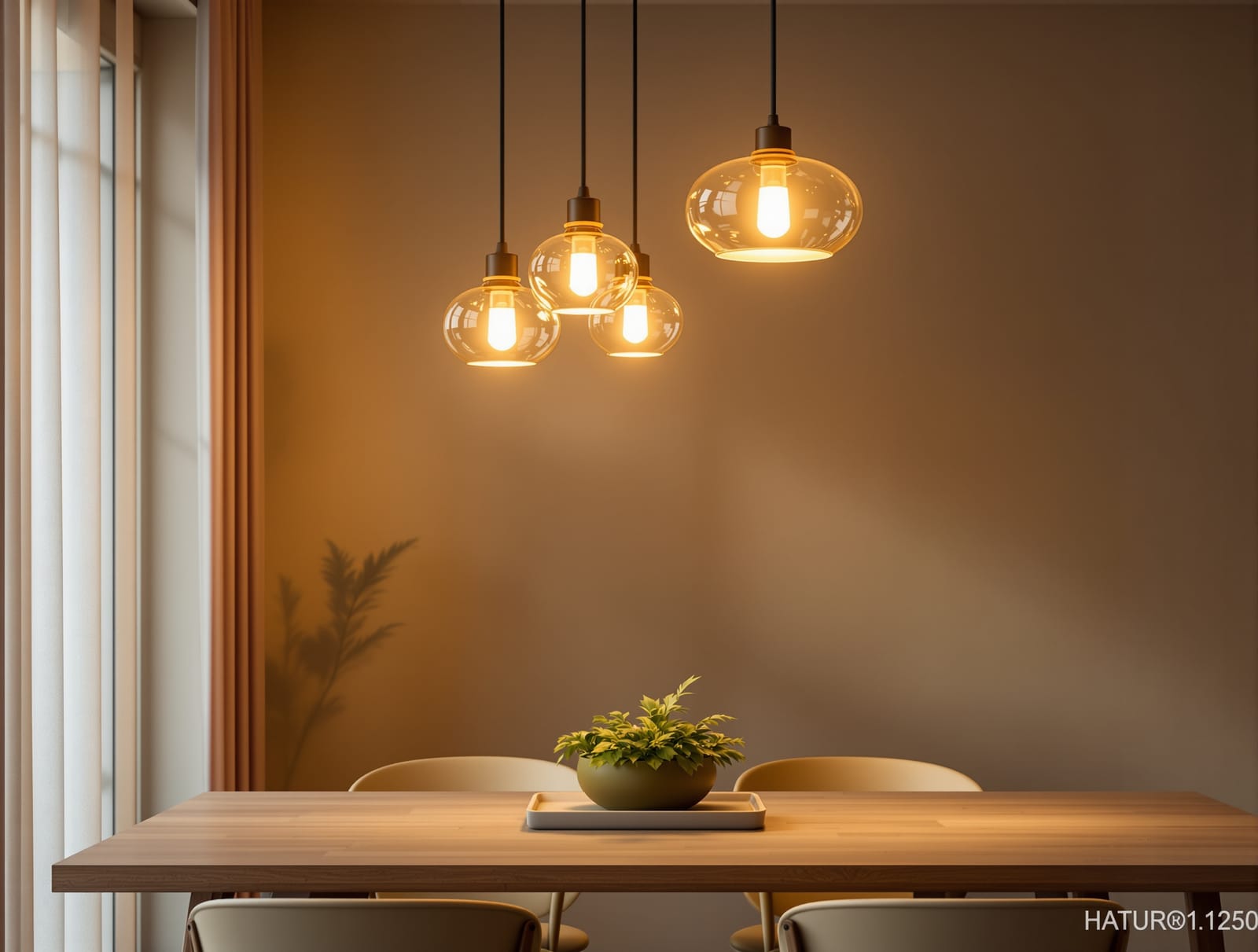
What it does: focused decorative ambient or task light from a single hanging fixture. Best placement is over a dining table, kitchen island, breakfast counter, or as a pair flanking a bed in place of table lamps. Scale tip: hang a single large pendant 30–36 inches above a table; for a row over a long counter, use two or three smaller pendants spaced evenly with even gaps at the ends. Mood: intentional, modern, intimate pools of light. India note: pendants are the easiest upgrade in a rented flat — many come with adjustable cords, and brass, terracotta and cane shades suit Indian interiors beautifully while reading as both modern and rooted.
Floor lamps
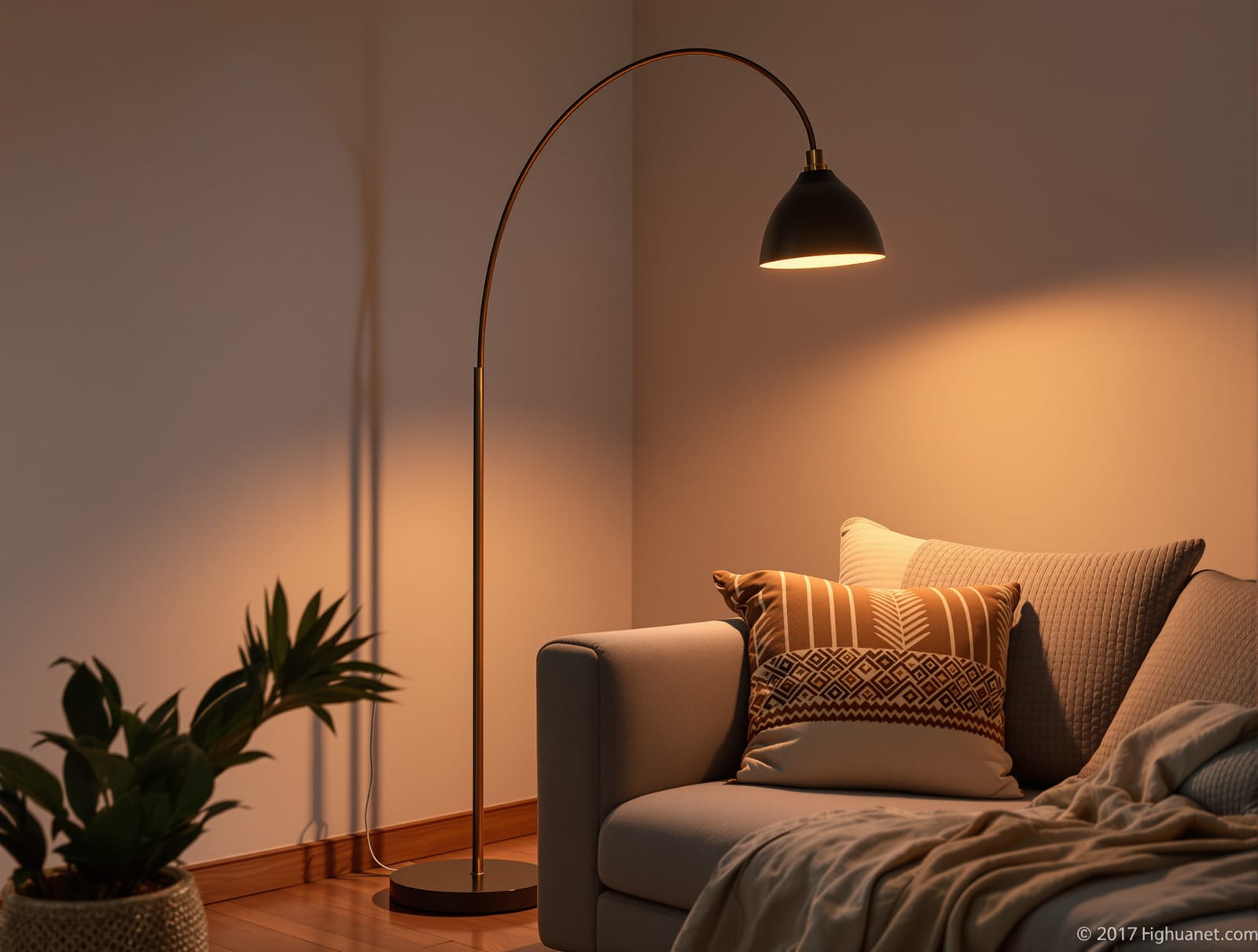
What it does: a movable accent-plus-task fixture that adds a vertical glow and fills the dead corners a ceiling light ignores. Best placement is beside a sofa, reading chair or in an empty corner; an arc floor lamp can reach over a sofa to act as a reading light without a side table. Scale tip: the bottom of the shade should sit roughly at eye level when you are seated — around 58–64 inches total height for most lamps. Mood: cosy, lived-in, soft. India note: floor lamps are perfect for renters and small flats because they need no wiring or drilling — just a plug point — and instantly add the missing accent layer to a room that only had a tube light.
Table lamps
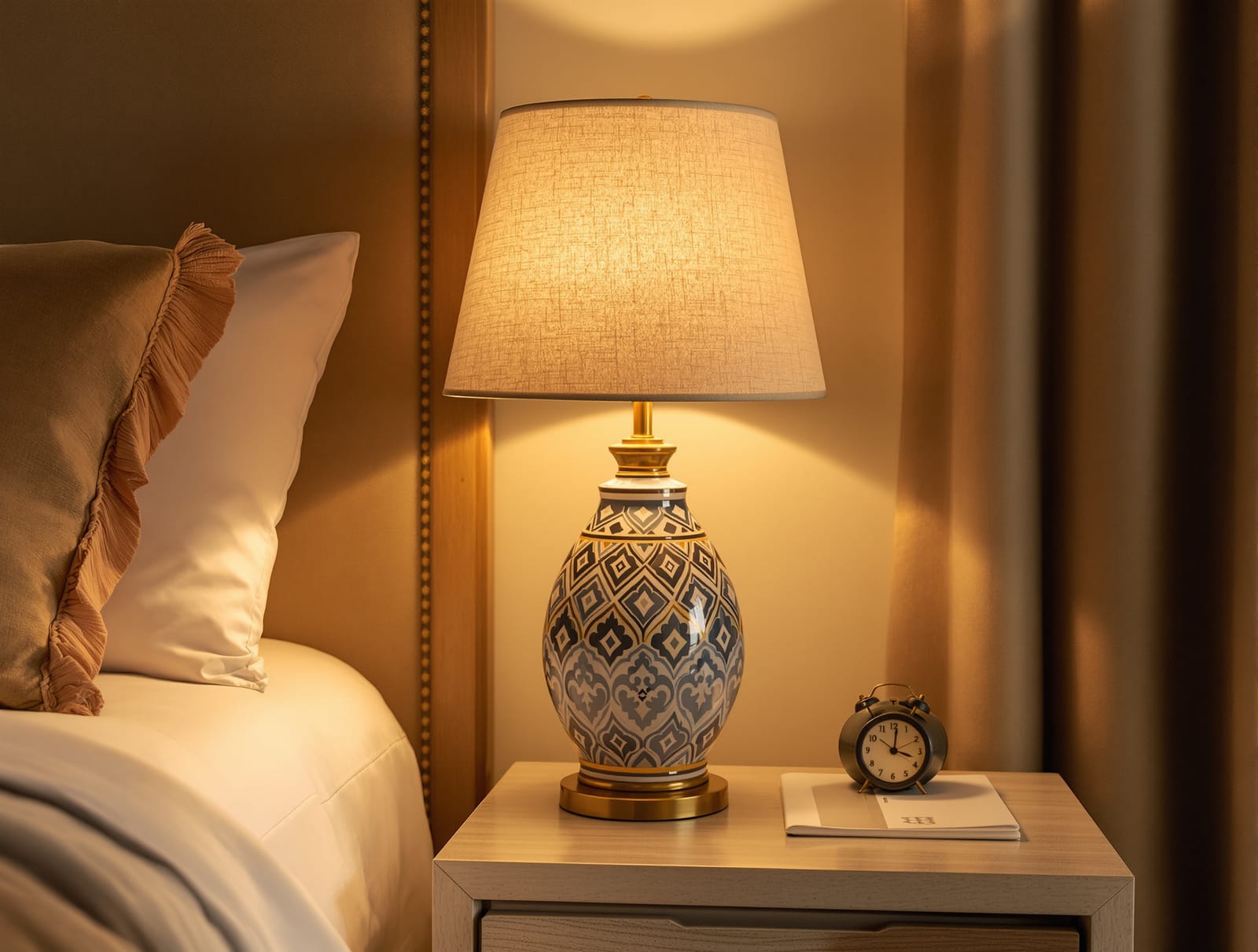
What it does: low, warm, decorative light at sitting and bedside height — the layer that makes a room feel finished. Best placement is bedside tables, console tables, side tables and study desks. Scale tip: the lamp should be roughly one-and-a-half times the height of the surface it sits on, and on a bedside table the bottom of the shade should sit near eye level when you are sitting up in bed. Mood: intimate, restful, personal. India note: a pair of matching bedside lamps is one of the highest-impact, lowest-cost decor moves in an Indian bedroom — and they let you switch off the harsh ceiling light entirely at night.
Wall sconces
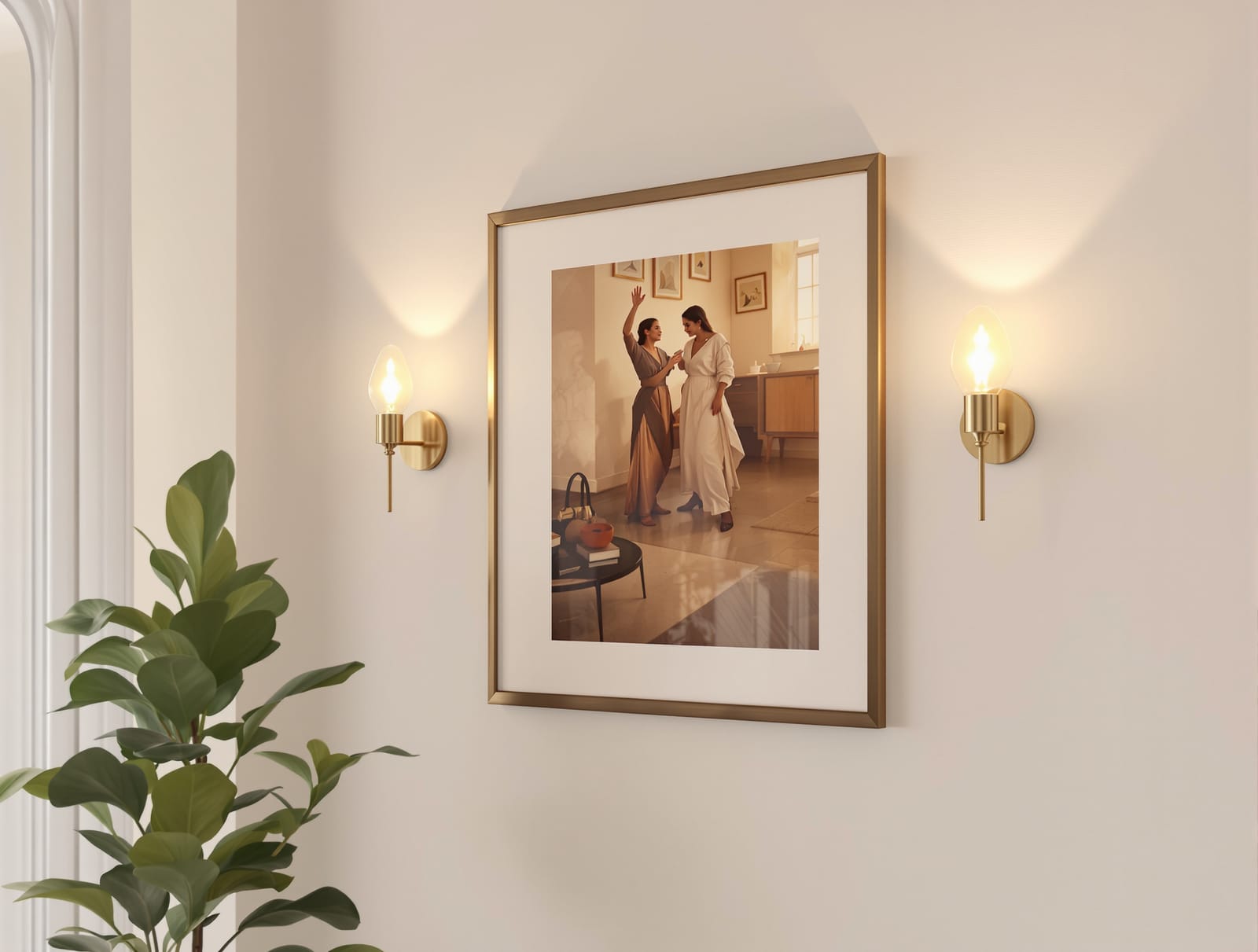
What it does: fixed wall-mounted accent light that frees up floor and table space and washes walls, art or a headboard with glow. Best placement is flanking a bed, mirror or artwork, along a hallway, or beside the main door. Scale tip: mount sconces around 60–66 inches from the floor, or just above eye level; over a bathroom mirror place a pair at roughly face height to light the face evenly rather than from above. Mood: architectural, layered, hotel-like. India note: sconces need wiring, so they are easiest to plan during a renovation or false-ceiling job; brass and antique-finish sconces flanking a piece of art or a deity niche are a classic Indian look.
Lanterns
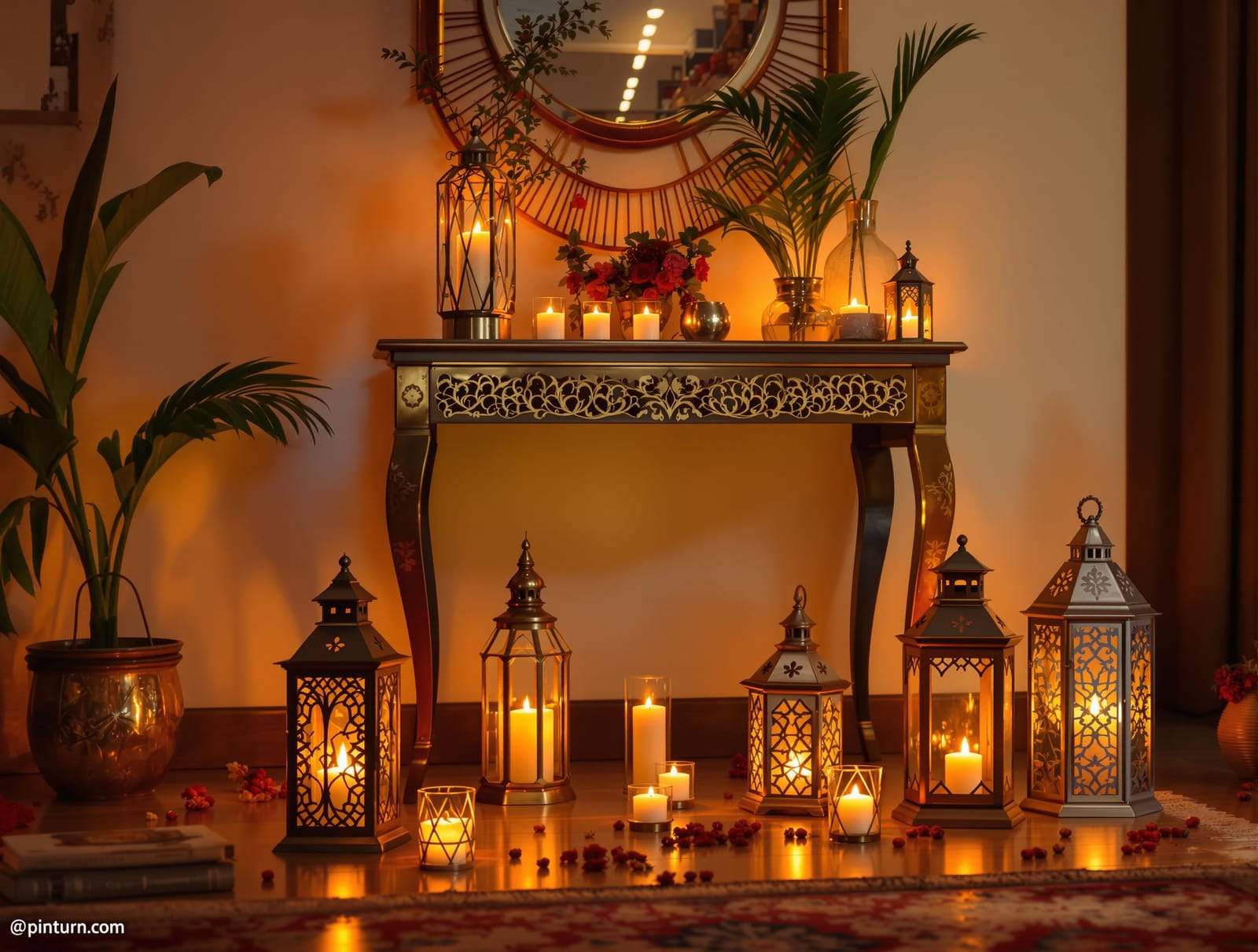
What it does: portable, decorative, atmospheric light — equal parts object and glow, whether candle-lit or fitted with a warm bulb. Best placement is balconies, entryways, floor groupings beside seating, and outdoor or semi-open spaces. Scale tip: group lanterns in odd numbers and varying heights for a natural, layered look rather than a single lonely piece. Mood: festive, romantic, relaxed. India note: lanterns are deeply at home in Indian decor — Moroccan-style metal lanterns, brass hanging lanterns and paper lanterns shine during Diwali and weddings, and battery tea-light versions are a safe alternative to open flames around children and curtains.
Candle stands
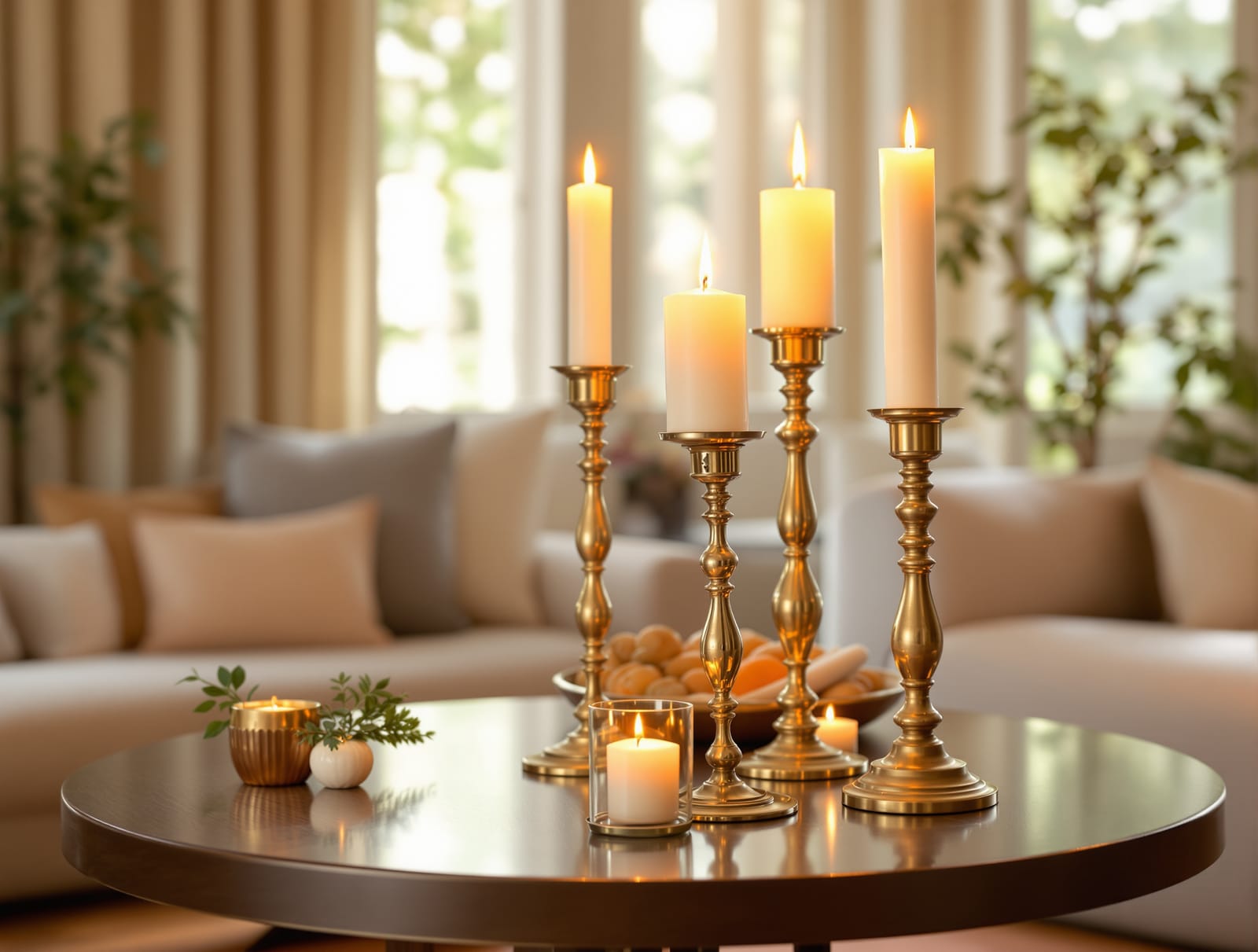
What it does: pure accent and ritual light — the softest, most flattering glow there is, and a decor object even when unlit. Best placement is dining tables, console tables, mantels, pooja and prayer corners, and balcony ledges. Scale tip: cluster candle stands of three different heights together, and keep table-centre arrangements low enough to see across. Mood: warm, intimate, ceremonial. India note: brass diyas, pillar-candle stands and tall floor candle stands tie naturally into Indian festivals and everyday pooja; always keep open flames away from dupattas, curtains and reach of children, and consider LED candles for daily use.
LED art lighting
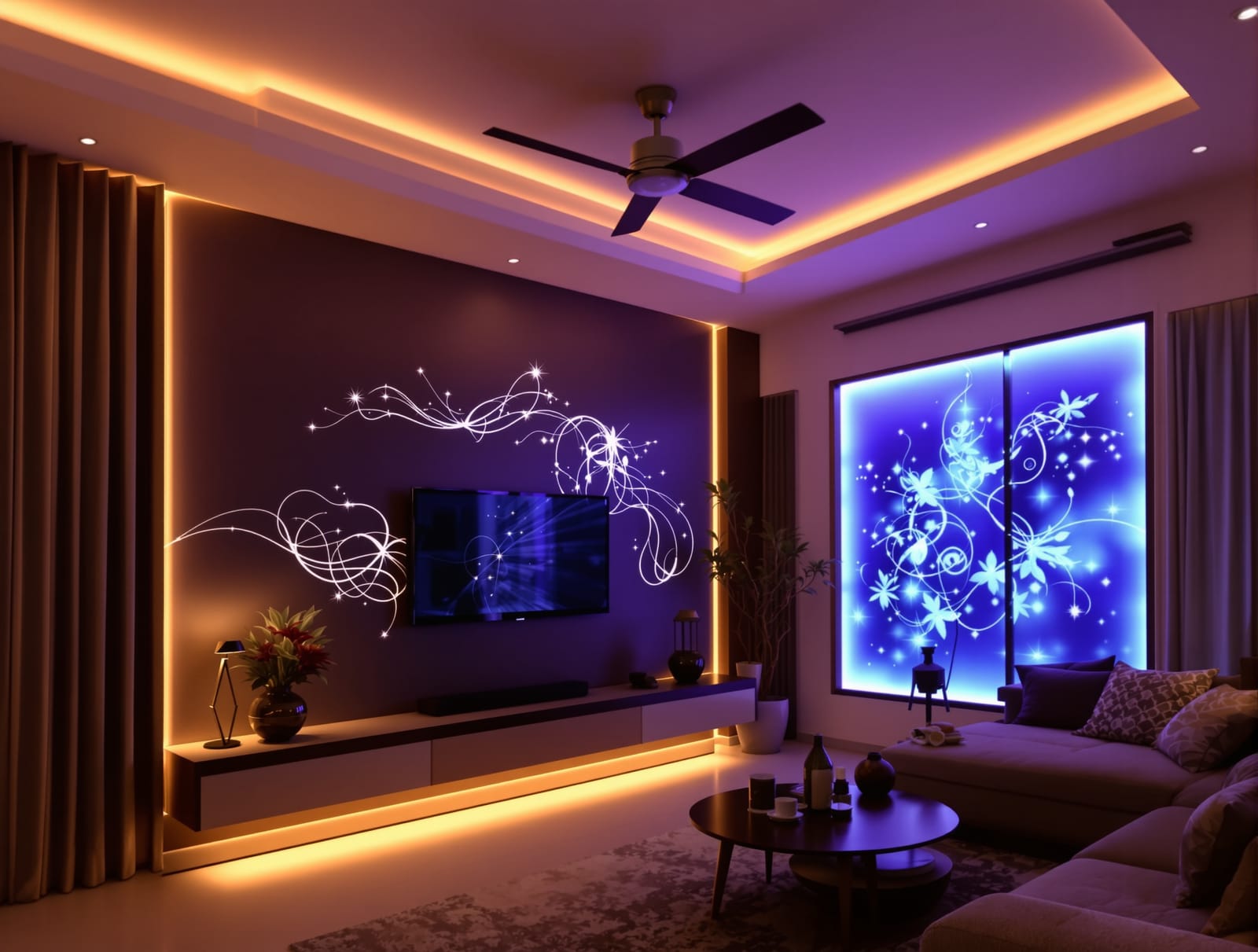
What it does: integrated, hidden-source light — cove, backlit panels, LED strips, profile lights and backlit wall art — that creates glow without a visible fixture. Best placement is false-ceiling coves, behind TV units and headboards, under floating shelves, and along stair edges. Scale tip: hide the strip behind a lip so you see the glow and never the diodes; choose warm-white for living and bedrooms, and a quality strip with even spacing to avoid a dotted look. Mood: contemporary, calm, architectural. India note: cove and strip lighting is hugely popular in Indian false ceilings — keep it a secondary mood layer, not the main light, and avoid permanent colour-changing RGB in living spaces, which reads as a showroom.
Colour Temperature & Bulbs
Colour temperature, measured in Kelvin (K), decides whether light feels warm and cosy or cool and clinical. 2700K is warm white — the soft, golden, candle-adjacent light that suits living rooms and bedrooms. 3000K is a slightly crisper warm white, good for a balanced living-dining zone. 4000K is cool/neutral white — energising and clear, right for kitchens, study desks and bathrooms where you need to see detail.
Two more numbers matter. CRI (Colour Rendering Index) measures how truthfully a light shows colours; aim for CRI 80 or higher (90+ for dressing areas and where you judge fabric and skin tone) so your walls, food and faces look right. Dimmers are the single best upgrade you can make — a dimmable warm light lets one fixture be bright for cleaning and low for relaxing, which is the heart of mood lighting.
The rule of thumb: warm light (2700K) for rooms where you relax, cooler light (4000K) for rooms where you work. Mixing temperatures randomly across one room is what makes a space feel unsettled.
| Room | Recommended colour temperature | Why |
|---|---|---|
| Living room | 2700K–3000K warm | Relaxing, flattering, welcoming for guests |
| Bedroom | 2700K warm | Calming, helps wind down for sleep |
| Dining | 2700K–3000K warm | Makes food and faces look appetising |
| Kitchen | 4000K cool/neutral | Clear, accurate light for prep and cleaning |
| Study / home office | 4000K cool | Alert, focused, reduces eye strain |
| Bathroom | 3000K–4000K | Accurate for grooming; warmer if used to relax |
| Pooja room | 2700K warm + accent | Soft, reverent glow with focused light on the deity |
| Entryway | 2700K–3000K warm | Warm first impression as you walk in |
Layering by Room
Living room: combine an ambient layer (cove or chandelier), a task layer (floor or table lamp for reading) and an accent layer (sconce or strip behind the TV unit), as much as possible on dimmers.
Bedroom: keep the ceiling light soft and rarely used; lean on a pair of bedside table lamps or wall sconces, add a warm cove or strip behind the headboard, and a floor lamp in a reading corner.
Dining: a pendant or chandelier centred over the table is the hero; add candle stands for evening meals and a dimmer so the table glows rather than glares.
Kitchen: cooler ambient ceiling light plus essential under-cabinet task strips on the counter; pendants over an island or breakfast counter add the decorative layer.
Bathroom: sconces or vanity lights at face height beside the mirror (not just overhead), a clear ambient ceiling light, and a warm night-glow strip if it doubles as a relaxing space.
Pooja room: a soft warm ambient glow with a focused accent light or small spot on the deity, plus brass diyas or candle stands for ritual; warm tones suit the reverent mood.
Entryway: a welcoming warm pendant or lantern, a console table lamp, and a sconce or mirror light so faces look good as people arrive and leave.
Match Lighting to Your Style
Lighting should speak the same language as the rest of your room. Build the look first on your Moodboards, then choose fixtures that fit:
- Luxury and Traditional: crystal and glass chandeliers, brass fixtures, ornate sconces and candle stands.
- Industrial and Minimal: sleek metal pendants, track lighting, exposed-bulb fixtures and clean linear forms.
- Coastal and Traditional: woven cane and rattan pendants, metal lanterns and natural-material shades.
- Contemporary: LED cove lighting, backlit art, profile lights and slim architectural fixtures.
- Bohemian: clustered candle stands, mixed lanterns, layered table lamps and warm eclectic glow.
For a deeper dive on getting the high-end look right, see Designer Lighting for Luxury Homes, and if you are planning a whole flat from scratch, Apartment Lighting Planning walks through the layout. Lighting also pairs beautifully with greenery — see Indoor Plants and Decorative Planters to light up a styled corner.
Budget — What It Costs in India
Indicative costs to light a 2–3 BHK well across all three layers. Prices vary by city, brand and finish; treat these as planning ranges, not quotes.
| Tier | What you get | Indicative cost (2–3 BHK) |
|---|---|---|
| Starter | Basic LED ceiling lights, a couple of table lamps, one floor lamp, LED strips, dimmable warm bulbs | ₹15,000 – ₹35,000 |
| Mid | Decorative pendants, a modest chandelier, matched table and floor lamps, wall sconces, cove lighting, dimmers throughout | ₹50,000 – ₹1,50,000 |
| Premium | Statement chandeliers, designer pendants, integrated profile and cove lighting, smart dimming, high-CRI fixtures across rooms | ₹2,00,000 and above |
Where to Buy in India
For bulbs, fittings and reliable basics, Philips, Havells, Wipro and Orient cover most ceiling lights, LED bulbs, strips and dimmers. Jaquar is strong for bathroom and architectural lighting. For decorative and traditional pieces — lanterns, brass and ethnic shades — Fabindia is a dependable go-to. For furniture-led lighting (table lamps, floor lamps, pendants), look at Urban Ladder and Pepperfry. For statement chandeliers and premium fixtures, The White Teak Company specialises in exactly this. IKEA is excellent value for affordable lamps, shades and smart bulbs. Finally, do not overlook local lighting markets — most Indian cities have a dedicated electrical-and-lighting market for chandeliers, fittings and custom work at sharp prices; take measurements and a clear style reference with you.
Not sure what suits your room? Try DesignAI to visualise fixtures and moods in your own space before you buy.
Ten Common Mistakes
1. Relying on one central tube light or ceiling light and skipping all other layers.
2. Installing no dimmers, so every room is stuck at one brightness.
3. Mismatching colour temperatures within a single room, making it feel unsettled.
4. Choosing a chandelier too small for the room, so it looks lost and mean.
5. Skipping the accent layer entirely, leaving the room flat and without depth.
6. Using harsh cool CFL or 6500K light in living rooms and bedrooms where warm light belongs.
7. Ignoring lamp and fixture height — pendants too high, table lamps too low, sconces off eye line.
8. Over-brightening bathrooms with a single cold overhead light and no face-level vanity light.
9. Leaving LED strips and diodes visible instead of hiding the source behind a lip or channel.
10. Setting RGB colour-changing cove lighting on a permanent neon colour, which reads as a showroom, not a home.
FAQ
Best lighting for a living room in India?
Layer three sources: a warm ambient ceiling light or cove (2700K–3000K), a task light such as a floor or table lamp for reading, and an accent like a wall sconce or strip behind the TV. Put them on dimmers so the room can shift from bright-for-guests to low-for-evenings.
Warm or cool light for home?
Warm light (2700K) for rooms where you relax — living room, bedroom, dining and pooja. Cooler light (4000K) for rooms where you work or need detail — kitchen, study and bathroom. The relax-versus-work rule keeps the whole home coherent.
How do I layer lighting?
Fill all three layers: ambient (general wash), task (focused, functional) and accent (decorative, mood). Use a different fixture type for each, keep them on separate switches or dimmers, and you can tune any room from busy to intimate.
What size chandelier for my room?
Add the room's length and width in feet; that sum in inches is a good rough diameter — a 12 × 14 ft room suits about a 26-inch fixture. Over a dining table, aim for half to two-thirds the table's width, hung 30–36 inches above the top.
Are LED strip lights good for homes?
Yes, as a secondary accent layer. Use warm-white strips for living and bedrooms, hide the source behind a lip so you see glow not dots, choose a good-quality strip with even spacing, and avoid permanent colour-changing modes in everyday living spaces.
Cove lighting in a false ceiling — worth it?
It is, if treated as mood lighting rather than the main light. Cove adds soft, sourceless ambient glow and a contemporary feel, works best in warm white, and pairs well with a separate task and accent layer. It is most cost-effective to plan it alongside the false-ceiling work itself.
Light is the one decor decision you live inside every evening. Get the layers and the warmth right, and even a simple room will feel considered, calm and unmistakably yours.
Last verified: June 2026 · Next verify: June 2027.
Export this guide
Related Guides — Deep-dive reading
Pendant Lighting Guide: Sizing, Height & Placement for Indian Homes (2026)
The design guide to pendant lights for Indian homes — what pendants are and where they earn their place, the four types, and the two numbers that make or break the look: hanging height and size. Plus dimming, style, scale and the clean hand-off to your electrician.
LightingBathroom Mirror Lighting India: Shadow-Free Vanity Light, Colour Temp, CRI & Cost (2026)
Why a single ceiling downlight throws ugly shadows on your face, how vertical sconces either side of the mirror beat a light bar above, when a backlit mirror is glow not task light, plus the colour temperature, CRI, mounting height, IP rating and 2026 rupee costs that actually get make-up and shaving right.
BathroomsCove & Indirect Lighting: The Soft Glow Done Right (2026)
The design guide to cove and indirect lighting for Indian false ceilings — what it really is, why it is so loved and so often botched, and the depth, lip, setback, strip density and colour rules that separate a smooth ceiling wash from a strip of visible dots.
LightingRelated Tools — Try Free
False Ceiling Cost Estimator
Live ₹/sqft across 8 ceiling types — POP, gypsum, designer, metal, PVC, wooden — with cove and spot lighting for 20 Indian cities.
Cost CalculatorCircadian Light Meter
Patient-centric circadian lighting visualizer for Indian healthcare design — time-of-day × intensity → CCT, melanopic lux (EML / mEDI), melatonin suppression, and an alertness curve. Calibrated against WELL v2 L03 Circadian Lighting Design, CIE S 026:2018, Brainard 2001, and Lucas et al. 2014.
Circadian ToolApartment Furniture Size Chart
Standard furniture dimensions for Indian apartments — sofas, beds, tables, dining, storage.
Reference Chart