
Video Door Phone Cost in India (2026): Honest Price Bands and Total Cost of Ownership
What a video door phone actually costs in India — indicative price bands by class, what drives the number up, the forgotten install and subscription costs, and worked five-year totals for a flat and a villa.
Ask three shops what a video door phone costs and you will get three very different numbers — and none of them is the number you will actually spend. The sticker on the box is only the first line of the bill. By the time the door station is wired, powered, mounted under a rain-hood and, on many smart models, signed up to a cloud plan, the real outlay looks quite different from the shelf price.
This guide is about that real number. The video door phone cost you should plan around is not the device price alone — it is the device plus installation, backup power, and the recurring subscription that some models quietly need to stay useful. This is the last piece of Studio Matrx's video door phone library: once you have decided which class suits you and which model to buy, this is how to budget honestly — and why the cheapest kit today is rarely the cheapest kit over five years.
Scope & what this is not. This is a budgeting guide for a single home's door phone, so you can plan and get comparable quotes — the physical fitting (mains point, cabling at height, any door-hardware or lock work) is a licensed electrician's or installer's job. A door device also records people at your entrance, which is personal data under the Digital Personal Data Protection Act, 2023, so a subscription is a data decision as much as a cost one. For a whole-home security budget — cameras, alarms, gate — see the home security guide and building security systems guide; this page is the door phone alone. Prices here are indicative 2026 bands that move with brand, city and spec — educational guidance, not a quotation.
The price bands, by class
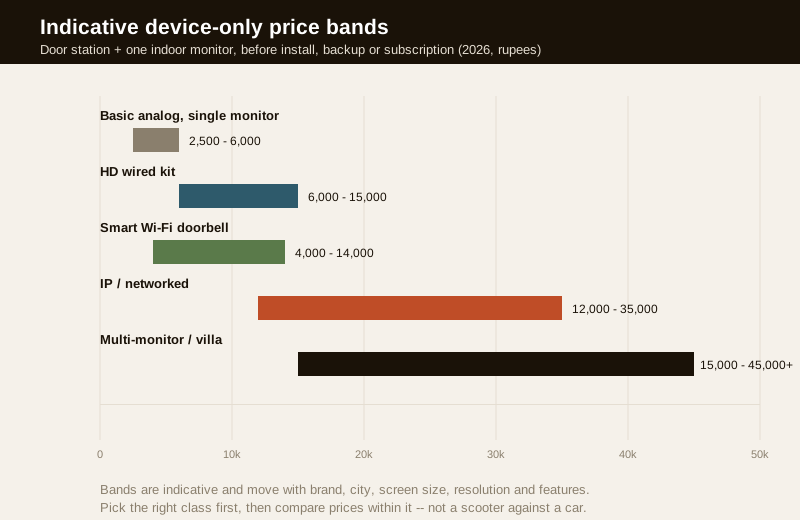
There is no single "video door phone price" because a video door phone is really five different products wearing the same name. A no-frills analog kit and a multi-monitor IP system are as far apart as a scooter and a car. The table below groups them into classes with indicative device-only bands — the door station plus one indoor monitor, before installation, backup or subscription.
Treat these as bands to sanity-check a quote, not fixed rates. They move with brand, city, screen size, resolution and features, and street prices shift through the year.
| Class | What you get | Indicative device-only band | Best for |
|---|---|---|---|
| Basic analog, single monitor | SD/low-HD door camera, one small colour monitor, wired, no app | ₹2,500 – ₹6,000 | A simple "see who is at the door" for a small flat |
| HD wired kit | 720p–1080p camera, larger touchscreen monitor, wired, local recording to SD card | ₹6,000 – ₹15,000 | Most flats and small homes wanting a clear picture |
| Smart Wi-Fi doorbell | HD camera, phone app, cloud clips, two-way audio, often battery or low-voltage | ₹4,000 – ₹14,000 | Renters and retrofits wanting phone answering — see smart video doorbells |
| IP / networked | 2MP+ camera, PoE or Wi-Fi, app plus monitor, integrates with NVR and other cameras | ₹12,000 – ₹35,000 | Villas and tech-forward homes — see IP video door phones |
| Multi-monitor / villa | One door station feeding two or more indoor monitors on different floors | ₹15,000 – ₹45,000+ | Villas and duplexes — see villa video door phones |
A few honest caveats sit behind that table. A "₹3,000 video door phone" is almost always a basic analog single-monitor kit with a modest night image; a "₹30,000" one is usually IP or multi-monitor with better optics and integration. Neither is wrong — they are different tools. The type selector walks you to the right class before you compare prices, so you are not pricing a scooter against a car.
What actually drives the number up
Within any class, the same features push the price the same way. Understanding these lets you read a quote and know what you are paying for — and what to drop if the budget is tight.
- Class first, everything else second. Moving from analog to IP changes the price more than any single feature. Decide the class before you argue over rupees.
- Camera and screen resolution. A 2MP door camera and a larger high-resolution indoor monitor cost more than a basic sensor and a small screen — and are worth it, because the whole point is recognising a face.
- Number of indoor monitors. Each extra monitor for another floor or room adds meaningfully to the bill; this is the main reason villa systems cost more than flat kits.
- Night vision. Proper infrared or low-light performance costs more than a token IR LED — and matters, because most doorstep events you care about happen after dark. See night vision door phones.
- App, cloud and smarts. Phone answering, cloud clip storage and any facial recognition add to both the device price and, crucially, the running cost. See mobile-app door phones.
- Lock and access integration. A model that can release an electric strike or talk to a smart lock or access control costs more, and the lock hardware is a separate line again.
- Weatherproofing and build. A properly IP-rated door station that survives Indian monsoon, dust and heat outlasts a cheap one — a real cost saving over five years even if it costs more today.
- Brand and warranty. Established brands with local service and spare parts cost more than grey-market kits; that premium often buys you the difference between a repairable system and a disposable one.
Use the feature-selector tool to decide which of these you actually need before you let a salesperson bundle in the ones you do not.
The costs everyone forgets
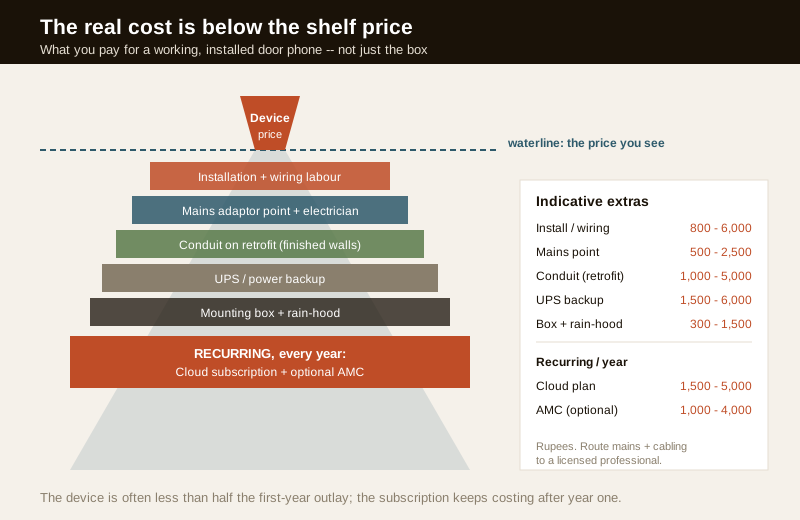
Here is where budgets go wrong. Shoppers compare device prices and forget that the device is often less than half of what a working, installed door phone costs. These are the lines that turn a ₹8,000 kit into a ₹15,000 project — and the recurring ones that keep costing after year one.
| Forgotten cost | Why it exists | Indicative amount |
|---|---|---|
| Installation / wiring labour | Fitting the door station, running cable to the monitor, terminating and testing | ₹800 – ₹3,000 (flat); ₹2,000 – ₹6,000+ (villa) |
| Mains adaptor point + electrician | The monitor needs a power point; often a new socket or spur near it | ₹500 – ₹2,500 |
| Conduit / cabling on retrofit | New cable path through finished walls when there is no existing intercom wire | ₹1,000 – ₹5,000+ |
| UPS / power backup | So the door phone survives a power cut — India's daily reality | ₹1,500 – ₹6,000 (see power backup) |
| Mounting box + rain-hood | Weatherproof back-box and hood so the door station survives monsoon | ₹300 – ₹1,500 |
| Cloud subscription (recurring) | Many smart models need a plan for clip history and full app features | ₹1,500 – ₹5,000 per year |
| AMC (optional, recurring) | Annual service contract for cleaning, checks and fault response | ₹1,000 – ₹4,000 per year |
Two of these deserve emphasis because they are the ones that bite later.
Wiring and power are not free. On a new build where the intercom cable and the monitor's power point are planned in, the wiring cost is modest. On a retrofit into a finished flat — no existing cable, no socket where the monitor goes — running conduit through plastered walls and adding a mains point can cost as much as the device itself. Always ask a quote to itemise device, cabling, and the electrician's mains point separately, and route that mains work to a licensed electrician; see the electrical hub.
The subscription is the one that compounds. A smart Wi-Fi doorbell that looks cheap on the shelf may need a cloud plan of ₹1,500–₹5,000 a year to keep clip history and unlock the features you bought it for. Over five years that is ₹7,500–₹25,000 on top of the device — often more than the device cost. A wired kit that records locally to an SD card or NVR has no such recurring line. This is the single biggest reason the cheapest upfront option is frequently the most expensive one over its life.
A note on GST
The prices you see quoted may or may not include GST — always ask. Electronic goods like a video door phone typically attract GST, and a reputable installer will show tax on the invoice for both the device and the labour. A quote that is suspiciously cheaper than the rest is sometimes cheaper only because it excludes GST or a proper bill; a tax invoice also protects your warranty claim. Budget on the tax-inclusive figure, and keep the invoice.
Worked example 1: a typical 2BHK flat
A homeowner in a metro flat wants a clear HD door phone with phone answering, fitted into a finished apartment (so, a retrofit). Here is an honest first-year total using mid-band figures — yours will vary with city and choices.
| Line | Choice | Indicative cost |
|---|---|---|
| Device | HD wired kit with app, one monitor | ₹10,000 |
| Installation + wiring labour | Retrofit, one monitor near the entry | ₹2,000 |
| Mains point for the monitor | Existing socket nearby, minor work | ₹800 |
| Mounting box + rain-hood | Weatherproof back-box | ₹600 |
| Power backup | Small UPS to ride out power cuts | ₹2,500 |
| First-year cloud subscription | Optional plan for clip history | ₹2,000 |
| First-year total | ~₹17,900 | |
| Recurring (year 2 onward) | Cloud subscription only | ~₹2,000 / yr |
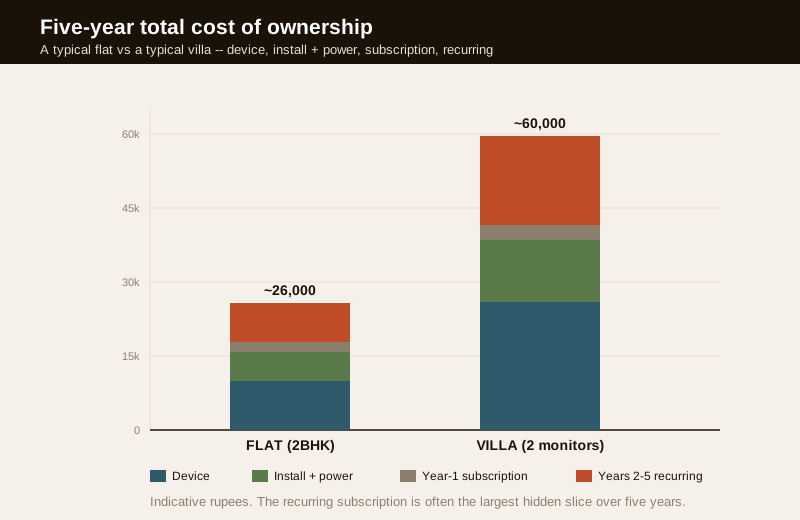
So a "₹10,000 door phone" is really about ₹18,000 in year one, and roughly ₹2,000 a year after that if you keep the cloud plan. Over five years, that is about ₹26,000 all-in. Choose a locally-recording model instead and you drop the recurring line entirely — a real saving if you are happy checking footage on the monitor rather than the cloud.
Worked example 2: a typical villa
A villa or duplex usually needs the door station to reach two indoor monitors (say, ground floor and first floor), longer cable runs, and often better weatherproofing at an exposed gate. Costs scale accordingly.
| Line | Choice | Indicative cost |
|---|---|---|
| Device | Multi-monitor / IP kit, door station + 2 monitors | ₹26,000 |
| Installation + wiring labour | Two monitors, longer runs across floors | ₹5,000 |
| Mains points for two monitors | Two power points | ₹1,800 |
| Mounting box + rain-hood | Exposed gate, robust weatherproofing | ₹1,200 |
| Power backup | Larger UPS covering the run | ₹4,500 |
| First-year cloud subscription | Optional plan | ₹3,000 |
| First-year total | ~₹41,500 | |
| Recurring (year 2 onward) | Cloud (optional) + optional AMC | ~₹3,000 – ₹6,000 / yr |
The villa's five-year all-in, keeping a cloud plan and a light AMC, lands around ₹55,000–₹65,000. The jump over the flat is not mostly the device — it is the second monitor, the longer cabling, the bigger backup and the recurring lines. To size a villa or multi-floor layout properly, work through the villa door phone guide and confirm your own numbers with the cost calculator.
Cheapest today versus cheapest over five years
Put the two ways of buying side by side and the lesson is stark. Imagine two door phones for the same flat:
| Over 5 years | Option A: cheap smart doorbell + cloud | Option B: mid HD wired kit, local recording |
|---|---|---|
| Device | ₹5,000 | ₹10,000 |
| Install + power backup | ₹4,000 | ₹5,900 |
| Cloud subscription (5 yr) | ₹3,000/yr × 5 = ₹15,000 | ₹0 |
| Likely replacement | Cheap unit may need replacing once | Sturdier, likely lasts the term |
| 5-year total | ~₹24,000+ | ~₹15,900 |
The unit that looked half the price on the shelf ends up costing more over five years, because the recurring subscription and a shorter life outrun the upfront saving. This is the core budgeting lesson of a door phone: compare five-year totals, not shelf prices. A locally-recording, well-built kit with no mandatory subscription frequently wins even though it costs more today.
That does not make cloud wrong — a subscription buys off-site clip history that survives someone smashing the door station, which is genuinely valuable. Just count it as the multi-year cost it is, and decide with eyes open. And remember those cloud clips are personal data: keep the account secure and pointed only at your own doorstep, per the privacy guide.
The apartment / society case is different
Everything above is for a single home's door phone. A whole apartment block or gated community is a different animal: one or more gate door stations calling dozens of flats, a guard-to-resident layer, building intercom wiring risers, and a shared cost split across residents. The per-flat maths, the wiring topology and the governance all change.
Do not price a society job off this guide. Use the multi-apartment door systems guide and the dedicated apartment video door system planner, which is built for that shared, multi-unit calculation.
When to bring in a professional. You can plan the budget, choose the class and get comparable itemised quotes yourself. Hand the actual fitting to the trades: a licensed electrician for the mains point and any spur, and an experienced installer for cabling at height, the weatherproof door-station mount, and any lock or access wiring. Insist every quote itemises device, installation, cabling/conduit, power point and any subscription separately, includes GST, and gives a tax invoice — that is your warranty and your protection. For anything touching the consumer unit or a spur, see the electrical hub.
Key takeaways
- A video door phone cost is device plus install plus backup plus subscription — the shelf price is often less than half the real first-year outlay, so budget on the total, not the box.
- Price follows class: basic analog kits run ₹2,500–₹6,000, HD wired ₹6,000–₹15,000, smart Wi-Fi ₹4,000–₹14,000, and IP or multi-monitor villa systems ₹12,000–₹45,000+ — all indicative and moving with brand, city and spec.
- The forgotten costs bite: installation and wiring labour, a mains point and electrician, conduit on retrofit, a UPS, a rain-hood, and above all a recurring cloud subscription (₹1,500–₹5,000/yr) plus optional AMC.
- Cheapest today is rarely cheapest over five years — a subscription-hungry cheap doorbell can outspend a sturdier local-recording kit within the term; compare five-year totals with the cost calculator.
- A society or apartment block is a different calculation — use the multi-apartment guide and the apartment system planner, not this single-home guide.
References
- Digital Personal Data Protection Act, 2023 — a door phone records people at your entrance, which is personal data; any cloud subscription stores that data off-site, so treat the plan as a privacy decision as well as a cost, secure the account and point the camera only at your own doorstep.
- Manufacturer specifications and price lists — verify the device band, whether a cloud plan is required for the features you want, the IP weatherproofing rating and the warranty on the maker's own datasheet before buying; grey-market "bargains" often trade away local service and spares.
- National Building Code of India (SP 7), Bureau of Indian Standards, and local municipal bye-laws for any electrical point, spur or cabling aspect of the install; verify the current edition via the BIS catalogue: https://www.services.bis.gov.in/
This is an educational budgeting overview, not a quotation, tax advice or legal advice. All prices are indicative 2026 bands that vary with brand, city and specification. The mains point, cabling and any lock or access work are qualified professional tasks — engage a licensed electrician and installer, insist on an itemised GST invoice, and verify any standard's current status via the BIS catalogue before relying on it.
Export this guide
Related Guides — Deep-dive reading
Wireless CCTV Cost in India (2026): Cheap to Buy, Read the Running Costs First
What Wi-Fi and wire-free CCTV really costs an Indian home — a low, DIY-friendly install price that hides a subscription, battery and reliability bill. An honest, capex-versus-opex look at where the money actually goes over three to five years, with indicative bands and the drivers that move them.
SecuritySmart Doorbell Cost in India (2026): The Unit Is Cheap, Read the Subscription First
What a Wi-Fi video doorbell really costs an Indian home once you add a chime, the wired-versus-battery choice, and the recurring cloud plan that quietly becomes the biggest number over its life.
SecurityCCTV vs Video Door Phone: Which Does Your Home Need?
They look similar and get confused constantly, but a CCTV camera and a video door phone do different jobs — one watches the whole property and records, the other answers your door and controls who comes in. This guide settles CCTV vs video door phone for Indian homes: what each is for, where they overlap, real rupee costs, apartment versus villa relevance, and why most homes end up wanting both.
Smart HomeRelated Tools — Try Free
Apartment Video Door System Planner
Enter flats, entrances, floors and guard desk for a first-pass building intercom plan — door stations, indoor monitors, guard station, the right architecture and an indicative cost band.
Building PlannerVideo Door Phone Feature Selector
Tick what you want the door phone to do — app, night vision, two-way audio, smart lock, access control or facial recognition — and get the features and integrations to spec, with the privacy and safety caveats.
Feature SelectorVideo Door Phone Type Selector
Answer a few questions about your building, cabling, budget and internet and get the right video door phone — analog / wired / wireless / IP, single-home or multi-apartment, monitor or app.
Door Phone Selector