
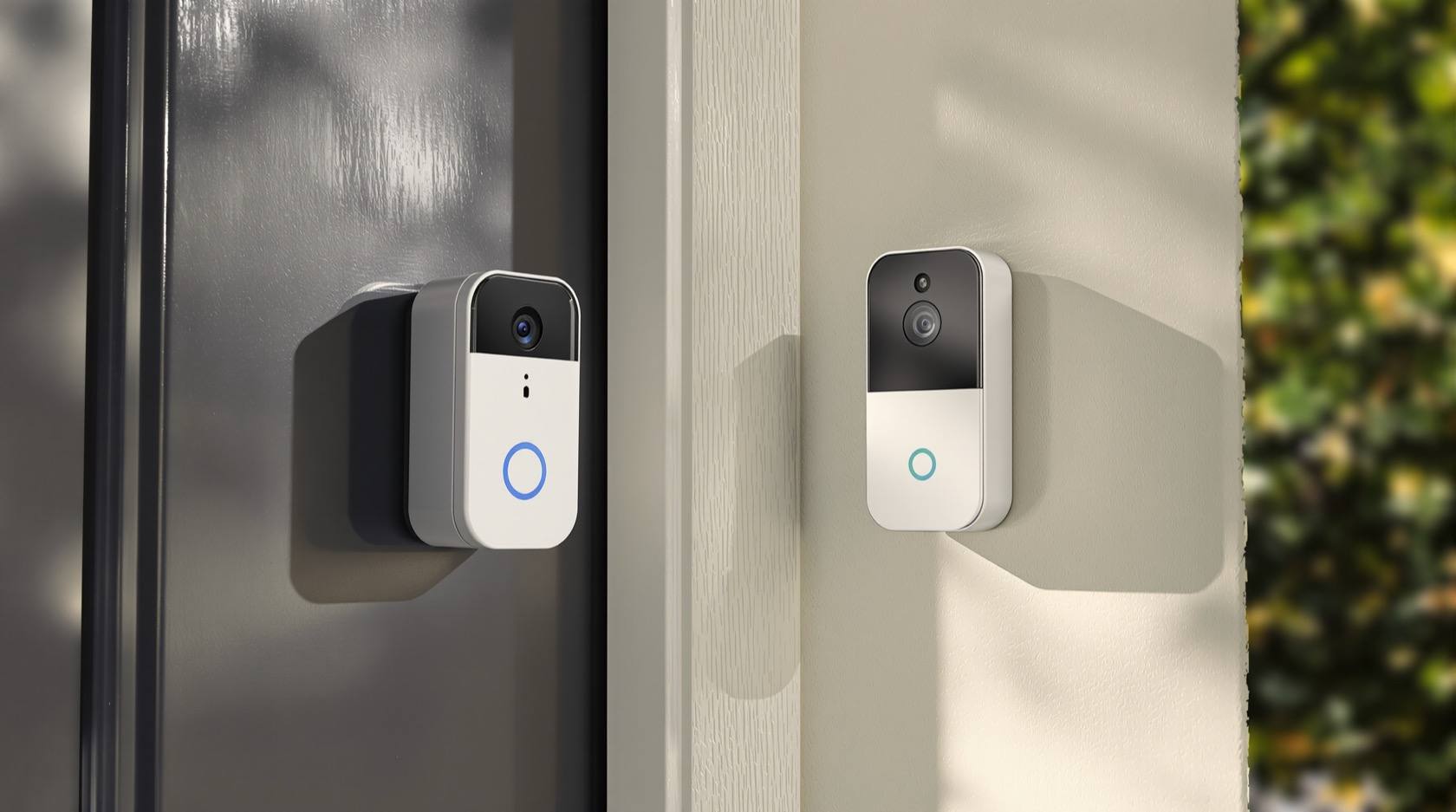
Smart Doorbell Cost in India (2026): The Unit Is Cheap, Read the Subscription First
What a Wi-Fi video doorbell really costs an Indian home once you add a chime, the wired-versus-battery choice, and the recurring cloud plan that quietly becomes the biggest number over its life.
A smart video doorbell is the easiest security purchase to get wrong on price, because the shelf price is honest about the wrong number. The doorbell unit is genuinely cheap and genuinely useful: it sees who is at the door, talks to them through your phone, and works whether you are in the kitchen or in another city. What the box does not put on the front is the part that actually costs money over the years you own it — the cloud subscription that stores your video and sends the smart alerts, the choice between a battery you recharge and wiring you may need an electrician for, and the little indoor chime you will probably want to add.
This guide is about the whole cost, not the sticker. The pattern to hold in your head is simple and it is the same pattern behind every honest security purchase: there is a one-time cost (the doorbell, plus any install or chime) and there is a running cost (the cloud plan, the battery upkeep, the Wi-Fi it leans on). For most homes the running cost, added up over three or four years, quietly overtakes the unit. A smart doorbell that cost a few thousand rupees can cost more than that again in subscription before it is old.
None of the numbers below are quotes. They are wide, indicative bands to help you budget and read an offer, and they move with brand, spec, the plan you pick and the day you buy. Treat them as a way to sanity-check a price, never as the price.
Scope & how to read the numbers. These are indicative ballpark bands for a homeowner, not quotations — get current prices from the brand and, if you need any wiring, at least two or three itemised electrician quotes before you commit. Keep the one-time cost (doorbell + chime + any install) firmly separate from the running cost (cloud subscription + battery upkeep + Wi-Fi), because the running cost is where the real long-run money is. Prices move with brand, spec, plan and time; GST applies to the device and to the subscription, so read whether a quoted figure is inclusive. A doorbell is not life-safety equipment — it will not replace a smoke alarm or a proper lock — so do not let it crowd those out of the budget.
Where the money actually goes
A smart doorbell spend has four buckets, and confusing them is how budgets go wrong. Two are one-time, two are recurring.
| Bucket | Type | What it is | Indicative band |
|---|---|---|---|
| The doorbell unit | One-time | The Wi-Fi camera-and-button itself, battery or wired | Roughly a low-thousands to mid-thousands band; premium models run higher |
| Chime / receiver | One-time | An indoor speaker that actually rings inside the house | Often bundled; a separate one is a modest add-on |
| Install (wired only) | One-time | Transformer, wiring, electrician labour if you go wired | Nil for battery; a modest-to-moderate band if an electrician is needed |
| Cloud subscription | Recurring | Video history, person alerts, sharing — often required to be useful | A recurring plan per camera, billed monthly or annually |
The trap is reading only the first row. A battery doorbell with no chime and no plan is the cheapest possible entry — and also the least useful, because without a subscription many doorbells only show a live view when you happen to open the app, and without a chime nobody inside hears the door. The honest budget is the sum of the buckets you will actually use, run forward a few years.
The one-time cost: the doorbell and the wired-versus-battery choice
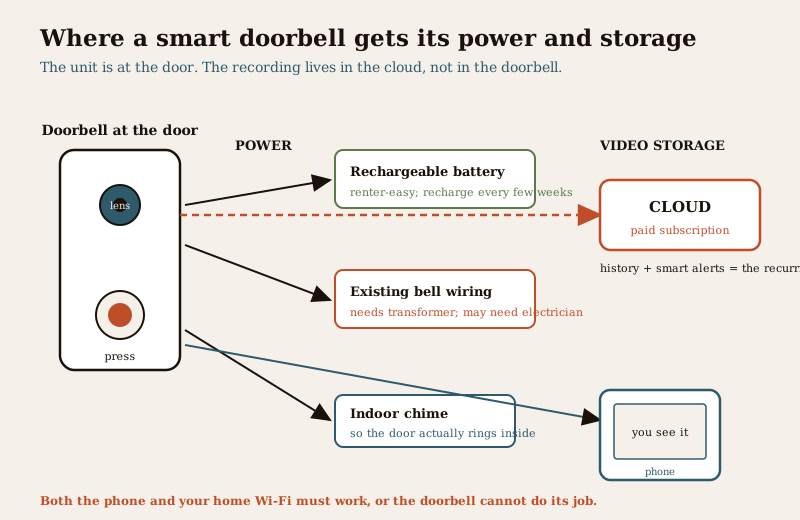
The single decision that shapes your one-time cost is how the doorbell gets its power, and it splits cleanly.
Battery doorbells are the renter-friendly, no-electrician path. The unit clips to a bracket by the door, charges over USB, and needs nothing behind the wall. The one-time cost is essentially just the doorbell. The catch is not upfront money — it is opex-flavoured effort: every few weeks to a couple of months, depending on how busy your door is and how cold it gets, you take it down and recharge it. In a busy Indian entrance with a lot of passing motion, that can be often enough to become a chore. Some homes buy a spare battery so the door is never blind during a charge, which is a small extra to plan for.
Wired doorbells run off your existing doorbell wiring and a low-voltage transformer, so they never need recharging — the running effort disappears. The cost moves to the front: many Indian homes do not have doorbell transformer wiring behind the button the way the products assume, so going wired can mean an electrician, a transformer and a bit of chasing wire. That is a genuine one-time expense and a genuine reason a renter or a clean-walls apartment owner picks battery instead. If you are already renovating or wiring a new home, adding proper doorbell wiring then is far cheaper than retrofitting later, and it is worth telling your electrician up front.
There is no universally right answer. Battery buys convenience of installation and pays it back in recharge chores; wired buys freedom from recharging and pays for it once, in install. Match it to whether you own or rent, and whether the wiring already exists.
The running cost: the subscription is the real long-run number
Here is the part the shelf hides. Most smart doorbells are built around a cloud subscription, and without it the doorbell is dramatically less capable. Typically, no plan means live view only — you can look when you open the app, but there is no recorded history, so the clip of who came while you were out simply does not exist, and the smarter alerts (a person versus a passing car, a familiar face, a package spotted) are switched off. With a plan, you get rolling video history, richer alerts and the ability to review and share what happened. That is the feature most people actually bought a doorbell for.
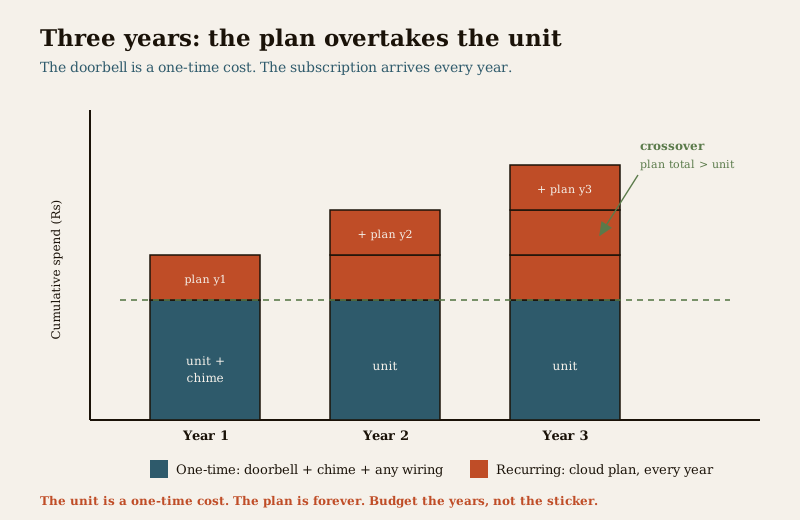
The plan is charged per camera, monthly or annually, and annual billing is usually cheaper per month. It is a wide band by brand and tier, but the shape is what matters: it is a bill that arrives every year for as long as you use the doorbell. Run it forward. A doorbell that cost a few thousand rupees to buy, paired with a modest annual plan, will have spent more on subscription than on hardware somewhere around the second or third year — and it keeps going. Over the life of the device the recurring cost is usually the larger half of the total.
A few real levers on that running cost:
- Number of cameras. Plans are per-camera. One doorbell is one plan; add a second camera later and the bill roughly doubles unless the brand offers a multi-camera plan.
- Annual vs monthly. Paying yearly is normally cheaper than twelve monthly charges; decide before the free trial that ships with the device quietly rolls into paid.
- Local storage as an alternative. Some doorbells can record to a microSD card or a home hub instead of the cloud, trading the recurring bill for a one-time card and the risk that a thief who takes the doorbell takes the footage. For continuous, off-site, review-anywhere history, cloud is simpler; the logic is the same trade-off explored for cameras in the cloud CCTV cost guide.
- GST. The subscription is a service and carries GST; the quoted plan price may or may not include it, so check.
Budget the plan before you buy the doorbell. The single most common regret is buying the cheapest doorbell, loving it, then discovering the features you assumed were built in live behind an annual fee. Decide which plan tier you will actually pay for, add it to your budget as a yearly line, and only then compare doorbells. A slightly dearer doorbell on a cheaper plan can be the lower total over five years.
Total cost of ownership: a worked way to think about it
Do not compare doorbells on their box price. Compare them on a few years of ownership, which is the only number you actually pay. A useful back-of-envelope sum for a homeowner:
One-time: doorbell unit + chime (if not bundled) + install (nil if battery, a modest-to-moderate band if you go wired and need an electrician).
Plus recurring, times the years you will keep it: annual cloud plan (per camera) + a small allowance for battery replacement over time if it is a battery model.
Run that for, say, five years and the ranking of "cheap" and "expensive" doorbells often flips, because the low-priced unit tied to a pricier mandatory plan loses to a slightly dearer unit with a modest or optional plan. This is exactly the lifecycle thinking the home security system cost guide applies across a whole home, and the cost sub-hub collects the same capex-versus-opex discipline for every security spend. A doorbell is a small purchase, but it is the one where the recurring trap is easiest to fall into.
The honest trade-off: smart doorbell versus a full video door phone
A smart doorbell is not a small video door phone; it is a different animal with a different bargain, and the cost comparison only makes sense once you see that.
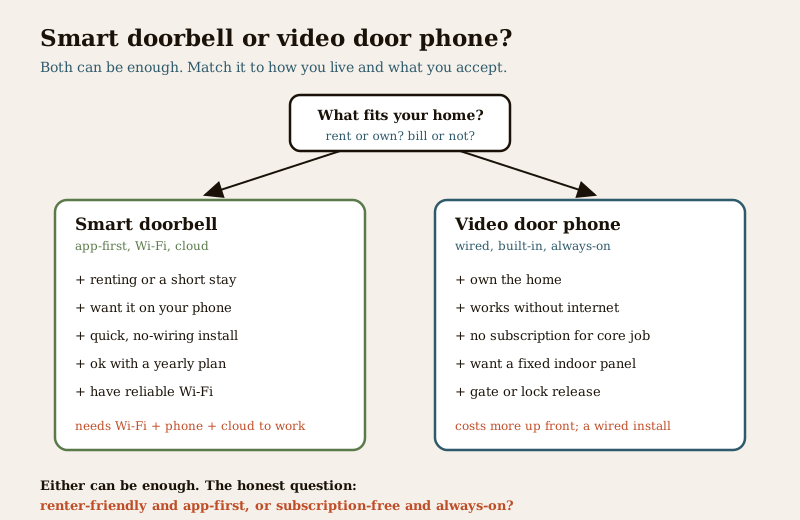
A smart doorbell is app-first: it lives on your phone, over your home Wi-Fi, backed by the cloud. That makes it wonderfully renter-friendly and quick — a battery model installs in minutes with no wall-opening, moves house with you, and needs no dedicated indoor panel. The price of that convenience is dependence: no Wi-Fi, no doorbell; phone in another room on silent, missed door; cloud outage or lapsed plan, reduced features. And because it is an internet-connected camera on the outside of your home, a badly secured one is a real privacy and security liability — the same botnet-and-snooping risk any cheap Wi-Fi camera carries.
A video door phone (VDP) is the wired, built-in cousin: an outdoor panel and a fixed indoor monitor, working on their own wiring whether or not the internet is up, and often integrated with a gate or lock release. It costs more to buy and install, is not something a renter puts in, but it does not depend on your phone or a subscription to do its core job. The direct money-and-capability comparison is laid out in the video door phone cost guide, and the video door phones hub covers the wired-system world in depth.
When a smart doorbell is enough, and when to step up
A smart doorbell is genuinely enough when you rent or move often, when you mainly want to see and speak to whoever is at the door from your phone, and when a reliable home Wi-Fi and a modest annual plan are things you are happy to keep. For a flat, a paying-guest room, or a first layer at a home that already has a lock, it is often the right-sized, best-value choice.
Step up to a video door phone when you own the home and want the door system built in and independent of the internet, when you want a fixed indoor panel anyone in the house can use without a smartphone, or when the door needs to trigger a gate or smart lock release as one system. The two are not rivals so much as different fits — the honest question is whether you value renter-friendly and app-first over subscription-free and always-on.
Privacy, security and the law — which is also a cost
A smart doorbell records people, so under the DPDP Act 2023 the footage is personal data and you are responsible for it. That responsibility has cost-shaped consequences worth budgeting for as care, not cash:
- Change the default password immediately and keep the app and firmware updated. A doorbell shipped on its factory password is the classic recruit for a botnet and an open window for a stranger to watch your door. This is the cheapest and most important thing you will do.
- Point it at your own door and threshold, not a neighbour's door, their window, or the shared corridor of an apartment. Aiming a camera into someone else's private space is both a neighbourly wrong and a data-protection problem, and in a housing society it is the fastest way to a complaint.
- Read what the cloud keeps and for how long. The subscription that stores your video is also storing recordings of everyone who approaches; know the retention and who can see it.
None of this is a rupee line, but a doorbell that is cheap to buy and left on its default password is expensive in the way that matters most. Treat security hygiene as part of the true cost of ownership, alongside the wider security spend.
Key takeaways
- The unit is the cheap part; the subscription is the real long-run cost. Budget the annual cloud plan as a yearly line before you compare doorbells — over a few years it usually overtakes the price of the hardware.
- Separate one-time from recurring. One-time is the doorbell, the chime and any wiring; recurring is the cloud plan, battery upkeep and the Wi-Fi it leans on.
- Battery versus wired is a convenience-versus-effort choice. Battery installs anywhere and suits renters but needs recharging; wired never recharges but may need a transformer and an electrician.
- Without a plan, many doorbells only do live view. No recorded history, weaker alerts — decide the tier you will pay for up front so features you assumed were built in do not surprise you.
- A smart doorbell is renter-friendly and app-first, but it depends on Wi-Fi, your phone and the cloud. A video door phone costs more and is wired, but works without the internet or a subscription — match the choice to whether you rent or own.
- A badly secured doorbell is a privacy and botnet risk. Change the default password, update it, and point it at your own door, not a neighbour's — DPDP makes the footage your responsibility.
- GST applies to both the device and the subscription — check whether any quoted figure is inclusive, and get current prices rather than trusting a band.
Where to go next
- The pillar: home security system cost — how a doorbell fits the whole-home budget, and the cost sub-hub for every security spend.
- Video door phone cost and the video door phones hub — the wired cousin, compared directly on money and capability.
- Cloud CCTV cost — the same subscription-versus-local-storage trade-off, for cameras.
- Smart lock cost — if you want the door to see and to open as one system.
- The main security hub — where the doorbell sits in a layered, right-sized home security plan.
References
- Digital Personal Data Protection Act, 2023 (DPDP) — a doorbell camera records identifiable people, so the footage is personal data; you are responsible for how it is stored, who can view it, how long it is kept, and for not capturing a neighbour's private space. Verify current text and rules at the official source.
- Goods and Services Tax — GST applies to both the doorbell hardware and the cloud subscription service; confirm whether a quoted price or plan figure is inclusive of tax before comparing offers.
- Bureau of Indian Standards (BIS) — prefer BIS/ISI-marked electrical equipment for anything wired into your home; verify a mark's status via the BIS catalogue: https://www.services.bis.gov.in/
This is an educational, right-sizing cost overview for homeowners, not a quotation, an endorsement of any brand, or an installation manual. All rupee figures are wide indicative bands that move with brand, spec, plan and time; get current prices from the brand and itemised quotes from a licensed electrician for any wiring before you commit. A smart doorbell is not life-safety equipment and does not replace a smoke alarm or a proper lock. Verify any standard, tax rate or legal duty against its official source before relying on it.
Export this guide
Related Guides — Deep-dive reading
Wireless CCTV Cost in India (2026): Cheap to Buy, Read the Running Costs First
What Wi-Fi and wire-free CCTV really costs an Indian home — a low, DIY-friendly install price that hides a subscription, battery and reliability bill. An honest, capex-versus-opex look at where the money actually goes over three to five years, with indicative bands and the drivers that move them.
SecurityHome Security System Cost in India (2026): The Honest Budgeting Guide
There is no single price for a home security system — it is a stack of choices. This pillar gives you the mental model to budget the whole home: the cost drivers, the split between one-time capex and ongoing opex, wide indicative tier bands, a five-year total-cost lens, and how to read and compare quotes.
SecurityCCTV vs Video Door Phone: Which Does Your Home Need?
They look similar and get confused constantly, but a CCTV camera and a video door phone do different jobs — one watches the whole property and records, the other answers your door and controls who comes in. This guide settles CCTV vs video door phone for Indian homes: what each is for, where they overlap, real rupee costs, apartment versus villa relevance, and why most homes end up wanting both.
Smart HomeRelated Tools — Try Free
CCTV Cloud vs Local Cost Calculator
Compare cloud CCTV subscription against a local NVR + HDD — upfront, 5-year total, monthly fee and break-even.
Cloud vs LocalApartment Video Door System Planner
Enter flats, entrances, floors and guard desk for a first-pass building intercom plan — door stations, indoor monitors, guard station, the right architecture and an indicative cost band.
Building PlannerSecurity System Cost Estimator
Estimate the all-in capex with GST, annual running cost and 5-year total cost of ownership of a home or building security system.
Cost Estimator