
RFID Vehicle Access in India (2026): Hands-Free Boom Entry, and Its Honest Limits
The FASTag-style windscreen tag and long-range reader lift the society or office-park boom without the driver stopping - fast, logged and far better than a photocopied resident sticker. But an RFID tag identifies the TAG, not the driver, so treat it as convenience and audit, never high assurance.
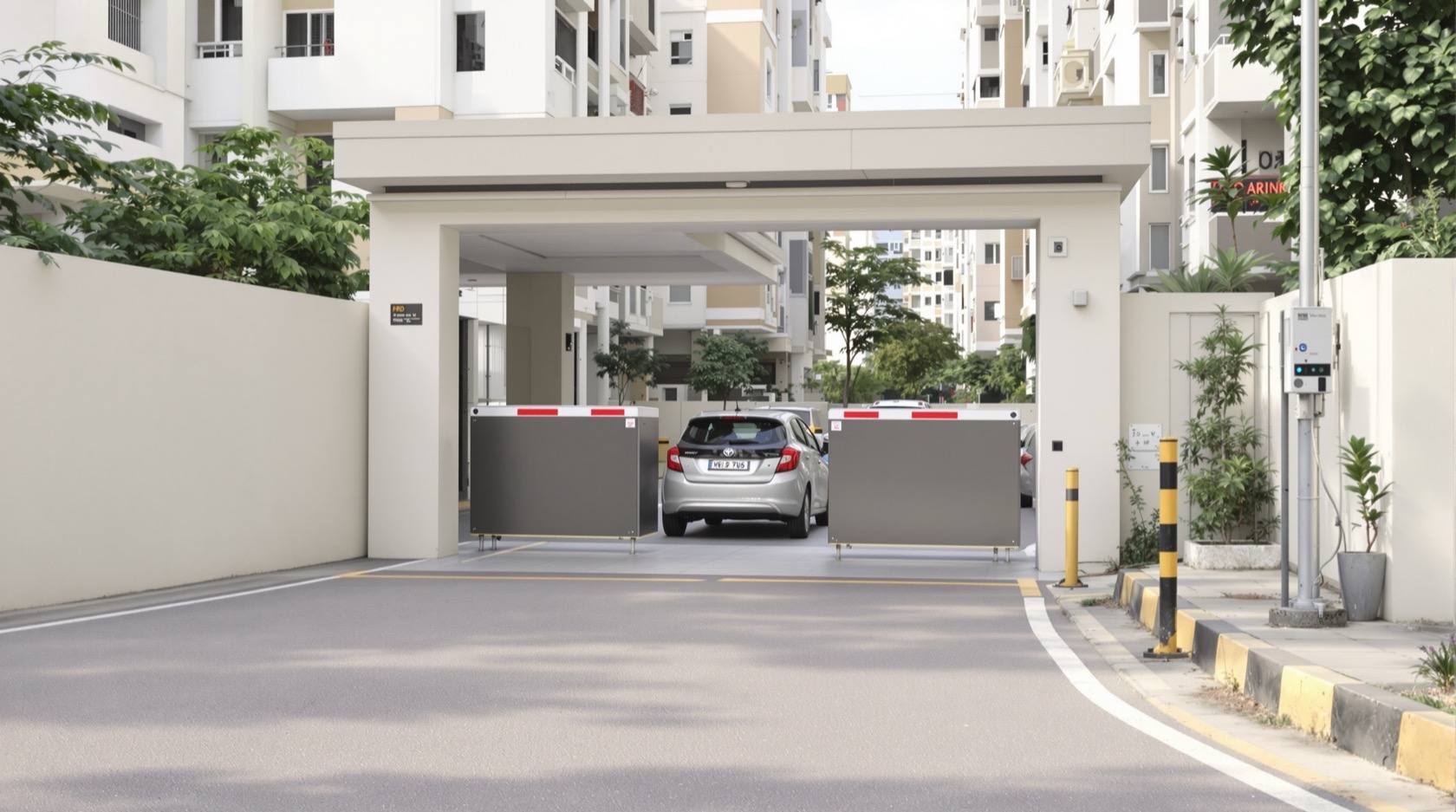
Watch the resident lane at almost any Indian gated society or office park at nine in the morning and you see the appeal at once: cars roll up to the ramp, a slim reader on a pole picks up the windscreen tag from a few car-lengths away, the boom rises, and the driver never touches a thing. No fumbling for a card, no guard walking over, no queue backing onto the road. This is rfid vehicle access - the same passive-tag idea behind the FASTag on the national highways, borrowed to control who drives into a residential or commercial parking area. Done well it is fast, hands-free, and it quietly logs every entry and exit. It is also, in most Indian societies, a genuine upgrade on the thing it replaces: the paper "resident sticker" pasted on the windscreen that anyone can photograph and photocopy in five minutes.
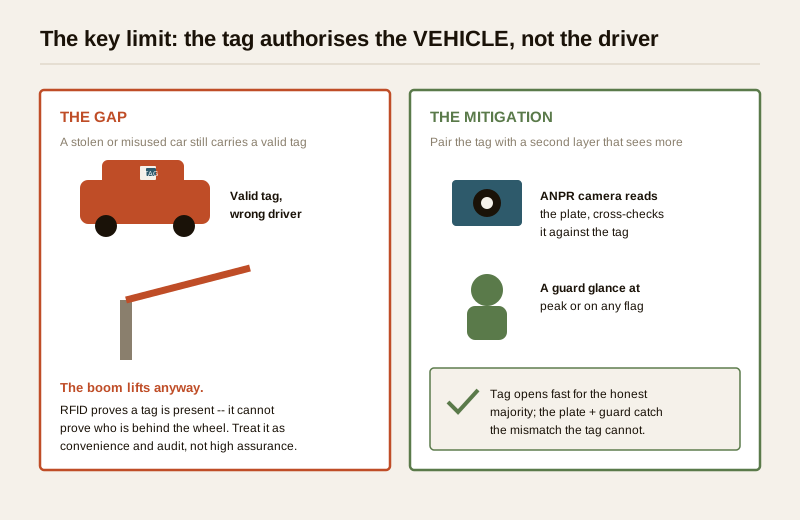
But the convenience hides a limit that this guide exists to make plain. An RFID tag proves that a valid tag is present at the reader. It does not, and cannot, prove who is driving. A stolen car with its resident tag still on the glass will lift the boom exactly as smoothly as its owner would. So rfid vehicle access belongs in your scheme as a convenience-and-audit layer, not as a high-assurance gate - powerful when it is paired with a plate reader and a guard's attention, dangerous when it is trusted to do a job it was never built for.
This guide is part of Studio Matrx's parking and garage security library and its pillar overview, and it sits directly beside the parking access control guide, the boom barriers guide and the gate access control guide. It covers how UHF RFID actually lifts a boom, why it beats the resident sticker, its honest security caveats, the tag-lifecycle discipline that keeps a whitelist safe, and the DPDP duty that comes with holding vehicle-and-resident data.
Scope & safety. This guide helps you plan, decide and coordinate an RFID vehicle-entry scheme - assess the traffic and the threat, choose where the tag fits, and set the governance around it - while a licensed electrician and a competent installer do the reader, boom and mains work. It is strictly about controlling honest vehicle access and understanding its limits, never a how-to for cloning, reading or defeating a tag. Three hard truths run through it: a tag identifies the tag, not the driver; the RFID layer must never trap traffic or block the fire tender in a power or reader failure, so keep a manual guard fallback; and the vehicle-and-resident whitelist is personal data you must collect minimally and secure. This is educational guidance, not legal advice.
How UHF RFID lifts the boom hands-free
The hands-free behaviour that makes RFID worth having comes from passive UHF tags. The windscreen tag carries no battery of its own; a long-range reader at the ramp transmits radio energy, the tag draws on that energy to reply with its unique identifier, and the reader hears the reply from a distance - which is why the driver need not slow to a card-tap. That identifier is then looked up against a whitelist: a register that maps each tag to a resident, a flat or unit, and an authorised vehicle. If the tag is on the list and active, the controller signals the boom barrier to rise. If it is not, nothing happens and the vehicle is held for the guard.
The read happens in one smooth pass:
- The tag sits on the windscreen (or as a hard tag on the vehicle), mapped in advance to one resident and one vehicle.
- The reader on a pole at the ramp energises and reads the tag as the car approaches, ideally far enough ahead that the arm is already rising by the time the vehicle reaches it - so throughput stays smooth and no one stops.
- The controller checks the whitelist - is this tag known, active and authorised for this lane and this time?
- The boom rises for a valid tag, and the event is written to a log with a timestamp.
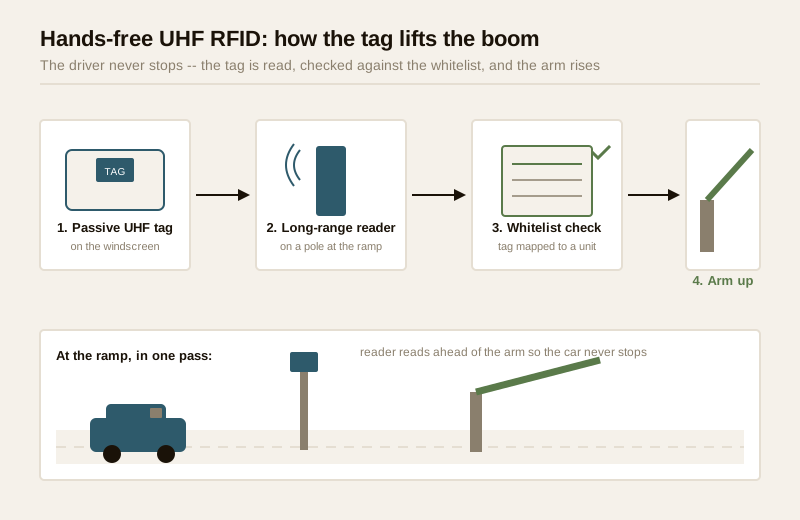
Two design notes matter for a smooth Indian install. First, read range is a vendor-and-site property, not a fixed number - it depends on the reader, the tag, the antenna, the mounting angle and the surroundings, so specify it against the vendor's tested figure for your lane rather than trusting a marketing metre-count. Second, place the reader so it reads the lane's vehicle and not the car in the next lane or the one queued behind, or you get phantom lifts. Coordinate all of this within the wider parking access control and gate access control design, and read it alongside the complete access-control guide.
Why it beats the paper resident sticker
The system RFID usually replaces is the printed resident sticker - a coloured decal or a paper pass on the windscreen that the guard eyeballs and waves through. It is cheap, and it is almost worthless as access control. Anyone can photograph a genuine sticker and reprint it; the guard, checking a colour and a shape at a glance in a queue, cannot tell the copy from the original. It carries no log - there is no record of who came in when - and when a resident sells the car or moves out, the sticker just... stays on the glass.
RFID fixes each of those weaknesses:
- Not trivially copyable. A tag is not a photograph. You cannot reproduce an authorised tag by pointing a phone at a windscreen the way you can a sticker. (This is a relative strength, not an absolute one - see the caveats below.)
- It logs. Every entry and exit is timestamped against the tag, giving an audit trail a sticker never provides - useful for investigating an incident and for simply knowing who is inside.
- It can be revoked instantly. When a vehicle is sold or a tenant leaves, the tag is deactivated in the whitelist and stops working that day - no physical decal to chase and scrape off.
- It is hands-free and fast. No stopping, no guard walking to each car, so the resident lane flows even at the school-run peak.
| Question | Paper resident sticker | RFID windscreen tag |
|---|---|---|
| Can it be copied by anyone with a phone? | Yes - photograph and reprint | No - not by copying the windscreen |
| Does it create an entry / exit log? | No | Yes - timestamped audit trail |
| Can it be revoked when the car is sold? | No - it stays on the glass | Yes - deactivate in the whitelist that day |
| Does the driver have to stop? | Yes - guard glance | No - long-range hands-free read |
| Does it prove who is driving? | No | No - it proves the tag, not the driver |
That last row is deliberately the same for both, because it is the point of the next section.
The honest limits and security caveats
This is the part of rfid vehicle access that is oversold in India, so read it carefully. RFID makes access convenient and auditable. It does not make it high-assurance. Design around what it genuinely cannot do.
A tag identifies the tag, not the driver. This is the central limit. The reader confirms that an authorised tag is at the ramp; it says nothing about who is behind the wheel. A car taken without the owner's consent - stolen, borrowed, or driven off by someone who should not have it - still carries its resident tag, and the boom lifts for it just as readily. RFID cannot catch this class of problem on its own. The mitigation is to pair the tag with a second layer that sees more: an ANPR / number-plate camera that reads the plate and can cross-check that the plate matches the tag, and a guard's glance at peak times or on any flag. The tag opens fast for the honest majority; the plate and the guard catch the mismatch the tag cannot.
Treat tags as convenience, not as a secret credential. In principle, radio tags can be read at range and, depending on the type, cloned - the details are not something this guide will explain, and you should never treat that as a project for your own site. What matters for planning is the conclusion: do not build a scheme that assumes the tag is a strong, unforgeable secret. It is a convenience token with a useful audit trail. Where you need real assurance about who is entering - a high-value store, a restricted level, a critical facility - RFID vehicle entry is a supporting layer under human verification, CCTV and stronger access control, not the whole answer.
Deactivate lost, stolen and sold-vehicle tags promptly. A tag's audit value collapses if the whitelist is stale. The day a resident reports a lost tag, sells the car, or moves out, the tag must be revoked. A live tag on a vehicle you no longer control is exactly the hole an attacker walks through - and it is the commonest governance failure in the field.
Keep a manual guard fallback for the boom. Readers fail, networks drop, and India's power is not reliable. When the RFID layer is down, the entrance must still work: a guard raises the boom by hand, and the arm must never trap traffic or block the fire-tender lane. Coordinate the barrier's power-cut behaviour, its manual release and battery backup exactly as the boom guide describes, so a reader outage is an inconvenience, not a life-safety failure. Fire-tender and emergency access always come first.
RFID is one layer. It rides on the boom barrier for the physical arm - and a boom is not an anti-ram device - and it works best beside ANPR, CCTV and a guard. Its cousin on the pedestrian and door side is the RFID lock, which has the same "identifies the credential, not the person" caveat.
Tag-lifecycle governance - the discipline that keeps it safe
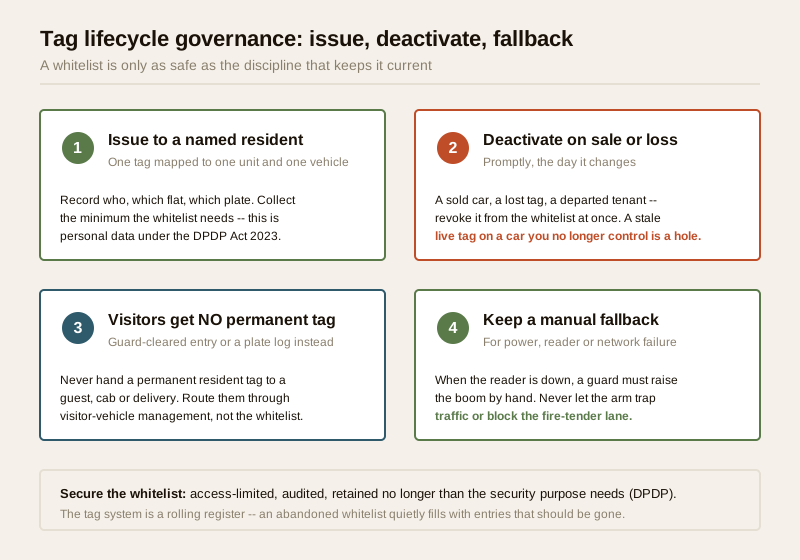
An RFID scheme is only as trustworthy as the register behind it. A whitelist that is issued carefully but never pruned quietly fills with tags that should be gone. Treat the tag population as a rolling register with clear rules for its whole life.
- Issue to a named resident. One tag mapped to one unit and one authorised vehicle, recorded against who, which flat and which plate. Collect the minimum the whitelist needs - this is personal data (see DPDP below).
- Deactivate on sale or loss, promptly. A sold car, a lost tag, a departed tenant - revoke it the day it changes. Do not batch this to a monthly clean-up; a stale live tag is a live hole.
- Visitors get no permanent tag. Never hand a permanent resident tag to a guest, a cab or a delivery rider. Route them through visitor vehicle management - guard-cleared entry, a plate log, or a time-limited pass - not the resident whitelist.
- Keep the manual fallback. For power, reader or network failure, the guard must be able to raise the boom by hand without the arm ever trapping traffic or blocking the fire tender.
- Audit the whitelist periodically. Reconcile the active-tag list against actual residents and vehicles, so departed units and sold cars do not linger.
| Life stage | What to do | Why it matters |
|---|---|---|
| Issue | Map one tag to a named resident, unit and vehicle; record the minimum | Keeps the whitelist accountable and lean |
| In use | Log entries / exits; keep the log access-limited | Audit trail without over-collecting |
| Sale / loss / move-out | Deactivate the tag the same day | A stale live tag is the commonest real hole |
| Visitor | No permanent tag; use visitor-vehicle management | Guests never enter the resident whitelist |
| Failure | Manual guard fallback that never blocks egress or the fire tender | Reader outage stays an inconvenience, not a hazard |
The DPDP duty on the whitelist
The moment you map a tag to a resident and a vehicle and log their movements, you are holding personal data, and the Digital Personal Data Protection Act 2023 applies. This is not a reason to avoid RFID; it is a reason to run it responsibly.
- Collect minimally. Hold only what the security purpose needs - the tag, the unit, the authorised vehicle. You do not need a resident's life story to lift a boom.
- Secure it. The whitelist and the entry/exit logs must be access-limited to those who genuinely need them, not left open on a shared PC in the guard cabin.
- Retain no longer than needed. Keep movement logs only as long as the security purpose justifies, then dispose of them; an indefinite archive of who drove in when is a liability, not an asset.
- Post notice and do not run ad-hoc recognition. Tell residents and visitors what is captured, and do not bolt informal face- or plate-matching onto the system outside a stated, lawful purpose.
Verify the current DPDP position and any rules made under it, and align the CCTV/ANPR side with the ANPR guide. The same discipline runs through the whole gated-community security picture.
A note on the FASTag ecosystem
Because the FASTag on the highways uses the same passive-UHF family, some Indian societies and commercial parks are tempted to reuse the existing FASTag on residents' vehicles to lift the society boom, rather than issue a separate estate tag. Qualitatively, this can work and saves handing out another sticker - but treat it as a design decision to take with your vendor, not a default. The trade-offs are real: reusing a tag tied to a national tolling and payments ecosystem raises its own data, consent and dependency questions, and a resident who deactivates or replaces their FASTag for tolling reasons then affects their society access. Whether you issue a dedicated estate tag or ride on the FASTag, the governance in this guide is unchanged - the tag still identifies the tag not the driver, still needs prompt deactivation, and the whitelist is still personal data. Decide it deliberately and confirm the current operational and data position with your vendor.
India realities to design out
A handful of failure patterns recur at Indian RFID entrances. Name them, then design them out.
- The boom trusted as security. The society believes the RFID arm is stopping intruders when it only meters honest, tagged vehicles. Set expectations honestly and pair it with ANPR and a guard.
- The stale whitelist. Tags never revoked after a car is sold or a tenant leaves, so the register fills with live holes. Deactivate the same day and audit periodically.
- Visitor tags handed out casually. A permanent resident tag given to a regular cab or a relative, which then circulates. Route every visitor through visitor-vehicle management instead.
- No fallback when the reader dies. A power cut or a dead reader locks the lane, the guard has no manual release, and traffic - or the fire tender - is trapped. Mandate a manual boom fallback and battery backup.
- The whitelist left wide open. Resident names, flats and plates sitting unsecured on the guard-cabin PC. Access-limit it and retain minimally under DPDP.
To pressure-test your entrance against these, the home security risk scorecard and the site perimeter security assessment walk through the weak points and help match the layers to the actual threat and traffic.
Safety, liability and when to bring in a professional. Plan the RFID scheme and its governance yourself, but hand the specialist work over. A licensed electrician must do the reader and boom mains supply, earthing and any UPS/battery wiring - this is powered equipment in a wet outdoor lane. Insist the installer commissions the boom's safety loop, photocell, manual release and battery backup so the arm can never fall on a vehicle or person and can be raised in a power cut without blocking the fire tender. Treat the tag as convenience and audit, never high assurance - pair it with ANPR, CCTV and a guard where who-enters really matters. Hold the whitelist and logs under the DPDP Act 2023, and coordinate the whole entrance with fire-tender / emergency access under the National Building Code (SP 7:2026) and your local bye-laws; verify the current editions. This is educational guidance, not legal advice.
Key takeaways
- RFID vehicle access is convenience and audit, not high assurance - a passive UHF windscreen tag lifts the boom hands-free and logs every entry, but it identifies the tag, not the driver.
- It genuinely beats the resident sticker - a tag cannot be copied by photographing a windscreen, it creates a timestamped log, and it can be revoked the day a car is sold; a paper decal does none of that.
- A tag proves the tag, not the person - a stolen or misused car with its valid tag still lifts the boom, so pair RFID with ANPR and a guard where who-enters matters, and never treat the tag as an unforgeable secret.
- Governance is the whole game - issue to a named resident on minimal data, deactivate lost/sold tags the same day, give visitors no permanent tag via visitor-vehicle management, and keep a manual boom fallback that never blocks the fire tender.
- The whitelist is personal data - collect minimally, secure it, retain no longer than the security purpose needs and post notice, under the DPDP Act 2023.
Where to go next
- Complete guide to parking and garage security - the pillar this sits under.
- Parking access control and gate access control - the wider schemes RFID plugs into.
- Boom barriers - the arm RFID lifts, and its safety must-haves.
- ANPR CCTV cameras - the plate-reading layer that covers RFID's blind spot.
- Visitor vehicle management - where guests go instead of the resident whitelist.
- RFID locks - the door-lock cousin with the same credential-not-person caveat.
- Security guide for gated communities and the complete access-control guide.
- Tools: the home security risk scorecard and the site perimeter security assessment.
References
- Digital Personal Data Protection Act, 2023 (India) - governs the resident-and-vehicle whitelist and the entry/exit logs as personal data; collect minimally, secure it, post notice, retain no longer than the security purpose needs, and do not run ad-hoc recognition. Verify the current position and any rules made under it.
- National Building Code of India (SP 7:2026), Bureau of Indian Standards, together with your local municipal / development-authority bye-laws - govern the vehicle entrance, and critically the fire-tender / emergency-vehicle access the RFID boom must never block; verify the current edition and local requirement via https://www.services.bis.gov.in/ and your development authority.
- State Fire Services / local fire authority - for the emergency-access route and the requirement that an automatic barrier must never block a fire tender or ambulance during a power or reader failure; confirm the local rule before finalising a gated vehicle entrance.
- Private Security Agencies (Regulation) Act, 2005 (PSARA) - for the guard element that verifies the driver behind the tag and provides the manual fallback; engage a licensed agency.
- Manufacturer and vendor specifications for the UHF reader, tags and controller - for the tested read range, mounting, and any FASTag-ecosystem reuse; treat read range as a site-tested figure, not a guaranteed metre-count, and confirm the current operational and data position for any FASTag reuse.
This is an educational overview, not legal advice. It is strictly about controlling honest vehicle access and understanding RFID's limits, never about reading, cloning or defeating a tag. An RFID tag identifies the tag, not the driver, and is a convenience-and-audit layer, not a high-assurance credential. Mains-electrical work, the boom and its life-safety devices, and fire-tender access are for licensed professionals and are governed by the DPDP Act, the National Building Code and local bye-laws and fire rules that vary and change. Verify any standard's current status via the BIS catalogue and confirm local rules before you install.
Export this guide
Related Guides — Deep-dive reading
Visitor Vehicle Management in India: A Professional Guide
The everyday weak point of every society and office gate is not the resident's car — it is the visitor, the cab, the delivery rider and the contractor who must be let in without opening the whole park to anyone. This is the process, not just the hardware: verify at the gate before the boom lifts, park visitors away from resident bays, and never jam the gate a fire tender needs.
SecurityBoom Barriers in India (2026): Traffic Control at the Gate - and What They Do NOT Stop
The rising arm at the society, office and parking entrance controls honest vehicle flow one authorisation at a time - but a boom barrier is not an anti-ram device, and here is how to specify, integrate and make it safe.
SecurityAccess Control Maintenance in India (2026): Readers, Locks and Fail-Safe Egress
How to keep a card, keypad, fingerprint or face access-control system reading reliably and locking securely — and, above everything, how to test that its doors still release on a fire alarm and on power loss, so an access-controlled door never becomes a life-safety trap.
SecurityRelated Tools — Try Free
Access-Control Battery-Backup Calculator
Size the standby battery so an access system keeps running through a power cut, with an egress life-safety note.
Battery BackupGate Access Planner
Size a vehicle gate or boom barrier — lanes needed at peak and the right credential speed (RFID, ANPR, manual).
Gate FlowHome Security Risk Scorecard
Score your home across six security layers — perimeter, entry points, lighting, detection, alarm and habits — and get a prioritised action plan.
Security Scorecard