
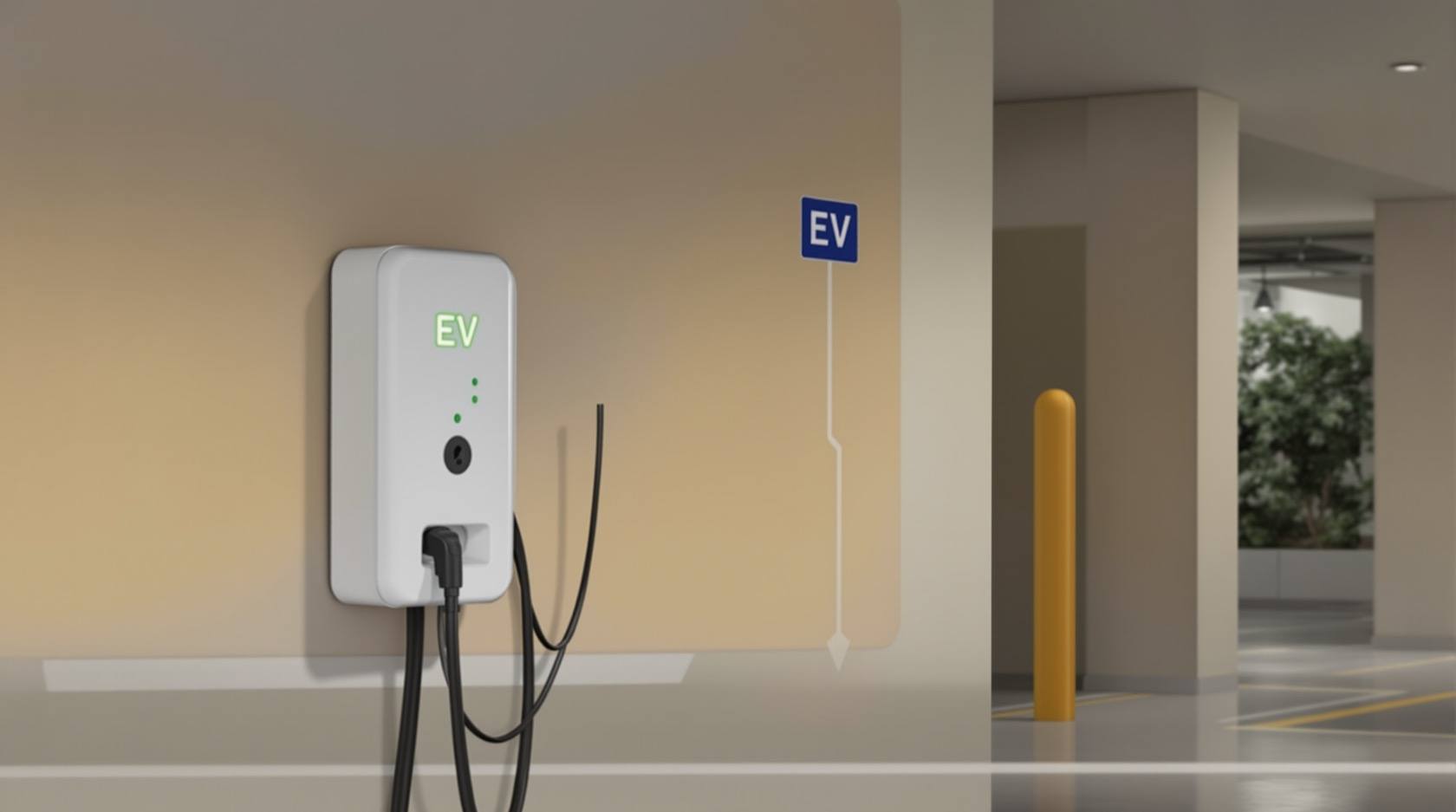
EV-Charging Bay Security in India: A Professional Guide
The charging point in your basement or stilt park is now a copper-rich cable to steal, a free socket a neighbour will use on your bill, and an expensive box to vandalise. This is the security of the EV bay — theft, unauthorised use, billing integrity and access — kept strictly separate from its fire and electrical safety.
Five years ago the parking bay held a car and, if you were lucky, a light overhead. Today one bay in a growing number of Indian societies and office basements also holds a wall-box or a pole-mounted charger, a metre or two of thick copper-cored cable, a meter, and — increasingly — a live grievance between neighbours about whose electricity is paying for whose car. The EV charging bay has arrived faster than the security thinking around it, and it brings problems the ordinary parking bay never had: a cable worth stealing, a socket worth freeloading on, a meter worth tampering with, and a box worth vandalising.
This is a professional, strictly defensive guide to the security of that bay. It sits in the Security Knowledge Hub under the parking and garage sub-hub, beside the complete parking and garage security guide that frames the whole subject. It is deliberately narrow: it is about theft, unauthorised use, billing integrity, access and vandalism at a charging point — not about the battery fire, the earthing or the ventilation, which are life-safety and have their own guide.
Scope & safety. This is an educational planning guide for owners, RWAs and facility managers. You plan, decide and coordinate; a licensed electrician installs and certifies the charger, its circuit, earthing and protection — a charging point is mains equipment and its wiring is not a DIY or a security-vendor job. This guide covers the security of the bay only. The fire and electrical safety of EV charging — battery fire, RCD/earth-leakage protection, earthing, ventilation and clearances — is life-safety and lives in EV charging fire safety. Read both. No security measure here may ever defeat that electrical safety, block a fire-escape route, or obstruct fire-tender access. Verify every requirement against the National Building Code of India (SP 7:2026) and your local municipal and electrical bye-laws in their current editions, and treat any billing arrangement under the Digital Personal Data Protection Act 2023 and your electricity supplier's rules.
The five security problems the EV bay actually has
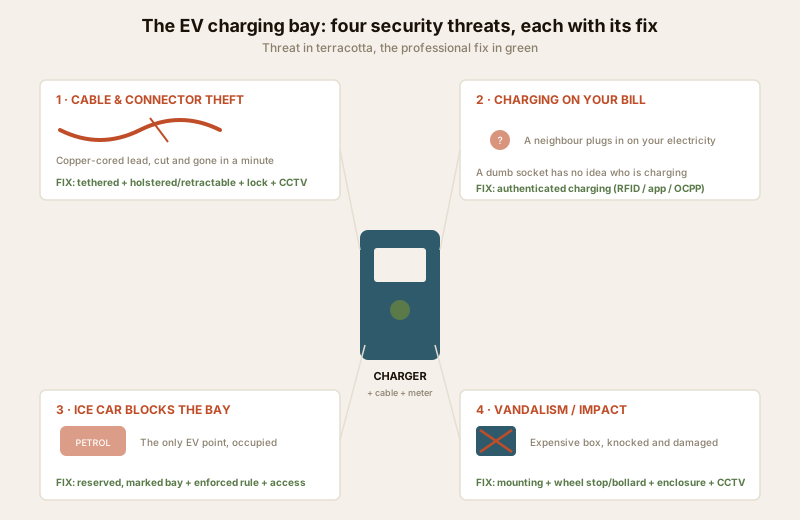
A charging bay fails in ways an ordinary parking bay does not. Line them up before choosing any fix, because the right response is different for each.
1. Cable and connector theft
The single most physical, most common loss is the cable. A charging lead is thick with copper, easy to cut, and in an unwatched basement at night it is gone in a minute and sold for scrap — the same economics that drives the theft of earthing strips, DG cabling and lift-pit copper across Indian buildings. A charger left with a loose, portable cable coiled at its base is an invitation. The fixes are ordinary and effective:
- Prefer a tethered charger — the cable is permanently attached to the unit rather than a detachable lead anyone can lift and walk away with.
- Holster or retract the cable — a wall holster or a retractable reel keeps it off the floor, out of the way and visibly belonging to the unit rather than lying loose.
- Use a cable lock where a detachable lead is unavoidable — a lock that secures the connector to the vehicle or the unit during a charge, so it cannot simply be unplugged and pocketed.
- Site the point where it is overlooked, not hidden. A charger tucked into the darkest far bay is the easiest to strip; one in view of a camera, a light and passing residents is a poor target. This is the same natural-surveillance logic as vehicle theft prevention and it drives camera placement in CCTV placement for parking.
2. Unauthorised use — charging on someone else's bill
The quieter, more corrosive problem is freeloading. A charging point wired off a common supply, or off one resident's meter, that is really just a socket anyone can plug into will, sooner or later, charge a neighbour's car, a visitor's scooter, or an outsider's vehicle — on someone else's electricity. In a society this becomes a running dispute; in an office it becomes a leak on the facility bill.
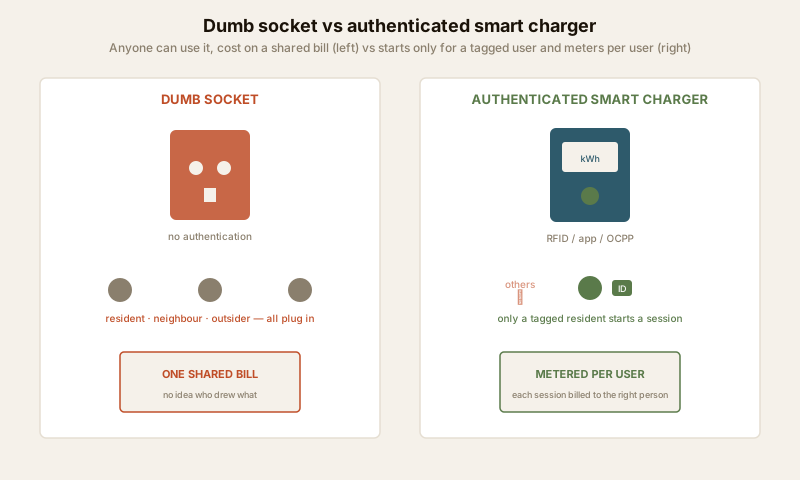
The fix is not a padlock on a socket — it is authenticated charging. A charger worth its name only starts a session for an authorised user and records who charged and how much. In practice that means:
- A smart charger with RFID, app or PIN authentication, so a session begins only when a recognised resident tags on — the same credential logic as parking access control and RFID vehicle access, applied to the electron rather than the boom.
- An open, network-managed back end. Chargers that speak an open protocol such as OCPP (Open Charge Point Protocol) can be managed by a back-office or charge-point-operator platform that authorises users and meters each session centrally, rather than each box running blind. Treat OCPP here as a generic, vendor-neutral capability to look for, not a specific product.
- A dumb socket is the anti-pattern. A plain 15A or industrial socket on a common line, with no authentication and no per-user meter, is the configuration that guarantees the dispute. The difference is the whole game, and it is worth seeing plainly.
3. Metering and billing integrity
Authentication decides who may charge; metering decides who pays what. Once a bay is shared, the society or operator needs a defensible answer to "how much did each car draw?" — and that answer must survive a dispute.
- Per-user sub-metering. Each charging point (or each authorised user via the charger's own session metering) should record consumption separately, so a bill can be raised against the actual user rather than smeared across the common-area account.
- Tamper-evident metering. A meter that can be bypassed or reset quietly is a billing hole; use metering that is sealed or tamper-evident and whose readings the charger logs, so a tampered or bypassed session shows up.
- A clear billing model, decided by the society or a charge-point operator (CPO). Whether residents are billed at the electricity tariff plus a maintenance share, or a CPO runs the points commercially, the model must be written down and agreed. This guide states no tariff, no per-unit rate and no rupee figure — those come from your electricity supplier's current tariff and your society's resolution, not from here.
- The data is personal data. Session logs tie a person to a place and a time, so treat them under the DPDP Act 2023: collect only what billing needs, secure the records, tell users what is logged, and do not repurpose the data.
4. Access to the bay itself
A charger only earns its keep if the car that needs it can actually reach the bay — and the commonest real failure is not theft at all but an ICE (petrol/diesel) car parked in the EV bay, blocking the only point in the basement. Bay access is a security-and-management problem in its own right:
- Reserve and mark EV bays clearly, and back the marking with an enforceable society rule, so the bay stays available to the cars that need it.
- Control who reaches the bay in a shared basement. In a controlled park the same entry layer that governs the ramp — boom, credential, ANPR — already decides who is on the floor; the charging bay inherits that control. See basement parking security for the enclosed case and parking access control for the credential layer.
- For a home garage, the charger sits inside an already-controlled space; the relevant treatment is in garage security. The problem shrinks to keeping the garage itself secure, not policing shared use.
5. Vandalism — the charger is expensive equipment
A charging unit is a costly, exposed, mains-connected box on a wall or pole in a semi-public space. It gets knocked by reversing cars, has its screen or connector damaged, and is occasionally vandalised outright. Protect it as the equipment it is:
- Mount it well and protect it — at a sensible height, on a solid wall or a protected pole, behind a wheel stop or bollard if reversing vehicles can reach it, in an enclosure rated for the location's dust and damp (again a spec to confirm with the installer and the vendor, not a number to invent here).
- Put it on camera. A charger in a camera's view is both deterred against vandalism and evidenced if it happens; fold it into the parking coverage map rather than treating it as an afterthought.
The cyber note — a networked charger is an IoT device
A smart, network-managed charger is, at bottom, an internet-of-things device on your building's network — and it deserves the same basic hygiene as any other. Keep this high-level; the detail belongs with your IT or systems integrator and with the broader treatment in building security systems:
- Change every default password on the charger and its management app before it goes live — factory defaults are public knowledge.
- Keep the firmware updated, so known vulnerabilities are patched.
- Segregate the network — put chargers on their own VLAN or network segment, not on the same flat network as residents' devices or the building's other systems, so a compromised charger cannot reach further.
This is a note, not a manual: a networked charger should be commissioned by someone who does this properly, the way any access-control or CCTV system on the network should be.
The security / safety split — read both, never blur them
The one line a professional must hold is the boundary between security (this guide) and fire-and-electrical safety (the separate guide). They are different disciplines with different failure modes, and a fix for one must never defeat the other.
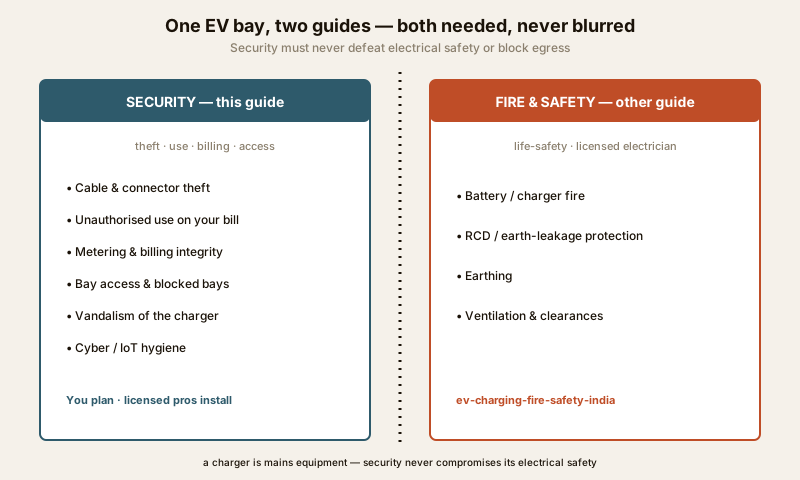
| Concern | Which discipline | Where it lives |
|---|---|---|
| Cable and connector theft | Security | This guide |
| Unauthorised charging on your bill | Security | This guide |
| Metering and billing integrity | Security / management | This guide |
| Bay access and blocked bays | Security / management | This guide |
| Vandalism of the charger | Security | This guide |
| Battery / charger fire | Fire & life-safety | EV charging fire safety |
| RCD / earth-leakage protection, earthing | Electrical safety | EV charging fire safety |
| Ventilation and clearances | Fire & life-safety | EV charging fire safety |
The rules that override every security idea in this guide:
- A charger is mains equipment installed by a licensed electrician. Its circuit, earthing, RCD/earth-leakage protection and load are electrical-safety work, not security work — never let a security fitting compromise them.
- Security must never block egress or fire-tender access. A cable, a bollard, a lock or a reserved-bay barrier that obstructs the escape route or the fire-tender lane is a life-safety failure, whatever it does for theft. See basement parking security for the enclosed case.
- A locked cable must still release in an emergency. Anti-theft locking on a connector or cable must never trap a person or a vehicle when the building is being evacuated.
Putting it together
| Security problem | Common Indian failure | The professional fix |
|---|---|---|
| Cable / connector theft | Loose copper-cored lead in a dark far bay | Tethered charger, holstered/retractable cable, cable lock, overlooked-but-seen siting, CCTV |
| Unauthorised use on your bill | A dumb socket anyone plugs into | Authenticated charging — RFID/app/OCPP smart charger that starts only for an authorised user |
| Billing integrity | One common meter, no per-user record, quiet tampering | Per-user sub-metering, tamper-evident meters, a written society/CPO billing model |
| Bay access | ICE car parks in the only EV bay; outsiders reach the floor | Reserved, marked bays with an enforced rule; inherit ramp access control |
| Vandalism | Exposed unit knocked, damaged, unwatched | Good mounting, wheel stop/bollard, rated enclosure, on the camera map |
| Cyber / IoT | Default password, stale firmware, flat network | Change defaults, update firmware, segregate the network |
Sequence it by what it protects and what it costs you: an unauthenticated point bleeding money onto a shared bill is a daily loss worth fixing before a cable theft that may never happen, but both are cheaper to design in than to retrofit after the first dispute. When you are ready to turn this into findings for a specific site, run the parking security audit over the whole park, and score the wider property with the home security risk scorecard and the site perimeter security assessment.
Where the licensed professional comes in
Do the planning, the walk-around and the society case yourself. But the charger, its circuit, earthing and protection are a licensed electrician's work — coordinate the security layout with that install, never around it. The billing model is a society resolution or a CPO contract; the network hygiene is your IT integrator's; the CCTV and access layer are the parking security vendor's. Your job is to make sure none of these fights the others — and that none of them fights the electrical safety in the fire-safety guide.
Key takeaways
- The EV bay has security problems an ordinary bay does not — a copper-rich cable to steal, a free socket to freeload on, a meter to tamper with, a bay that gets blocked, and an expensive box to vandalise.
- Beat cable theft with the physical basics — a tethered charger, a holstered or retractable cable, a cable lock, and siting the point where it is overlooked and on camera rather than hidden in a dark bay.
- Beat unauthorised use with authenticated charging, not a padlock: an RFID/app/OCPP smart charger that starts only for an authorised user and meters each session — the opposite of a dumb socket anyone can plug into.
- Get billing right with per-user, tamper-evident metering and a written society or CPO model — and treat session logs as personal data under the DPDP Act. State no tariff or rupee figure here.
- Manage bay access and vandalism, and treat a networked charger as an IoT device — change defaults, update firmware, segregate the network.
- Never blur security with safety. The battery fire, earthing, RCD protection and ventilation are life-safety and live in EV charging fire safety; a charger is installed by a licensed electrician, and no security measure may defeat that safety or block egress and fire-tender access.
Where to go next
- Read the safety half in EV charging fire safety, and frame the whole subject with the complete parking and garage security guide and the parking sub-hub.
- Build the authentication layer with parking access control and RFID vehicle access.
- Protect the vehicle and the point with vehicle theft prevention and CCTV placement for parking.
- Secure the space around the bay with basement parking security for a shared basement and garage security for a home charger.
- Handle the network hygiene within building security systems.
- Turn it into findings with the parking security audit, and score the property with the home security risk scorecard and the site perimeter security assessment.
References
- National Building Code of India, SP 7:2026 (Bureau of Indian Standards) — Part 4, Fire and Life Safety, for parking and basement provisions. Verify the current edition and amendments.
- Local municipal building, electrical and fire bye-laws, and your electricity supplier's rules and tariff, for EV charging installation and billing — confirm the specific requirement with your architect, electrician and society.
- Open Charge Point Protocol (OCPP) — an open, vendor-neutral protocol for network-managed charge points, referenced generically as a capability to look for.
- Digital Personal Data Protection Act, 2023 — for charging session logs, CCTV and access records that capture personal data.
- PSARA 2005 — Private Security Agencies (Regulation) Act, where deployed security personnel are involved.
This is an educational, strictly defensive planning guide to the security of an EV charging bay. It does not describe how to defeat any security measure or bypass any charging or metering system. The charger and its circuit, earthing and protection are licensed electrical work; the fire and electrical safety of EV charging is covered separately in the EV charging fire safety guide. Never let any security measure defeat that electrical safety, block a fire-escape route, obstruct a fire tender, or violate an applicable National Building Code or municipal bye-law.
Export this guide
Related Guides — Deep-dive reading
The Complete Guide to Parking and Garage Security in India (2026): Access, CCTV, Lighting, People-Safety & Vehicle Protection
The pillar overview of parking and garage security for Indian apartments, offices and homes — how to control who enters, watch every corner, light and de-isolate the space, and protect the vehicles, without ever blocking the escape route or the fire tender.
SecurityVisitor Vehicle Management in India: A Professional Guide
The everyday weak point of every society and office gate is not the resident's car — it is the visitor, the cab, the delivery rider and the contractor who must be let in without opening the whole park to anyone. This is the process, not just the hardware: verify at the gate before the boom lifts, park visitors away from resident bays, and never jam the gate a fire tender needs.
SecurityAccess Control Maintenance in India (2026): Readers, Locks and Fail-Safe Egress
How to keep a card, keypad, fingerprint or face access-control system reading reliably and locking securely — and, above everything, how to test that its doors still release on a fire alarm and on power loss, so an access-controlled door never becomes a life-safety trap.
SecurityRelated Tools — Try Free
Electrical Safety & Load Audit
Home electrical audit — 10 categories, 65+ checkpoints across earthing, RCCB, MCB, wiring, switchboards, appliance circuits, DG/inverter backup.
Safety AuditCCTV Camera Coverage & Count Calculator
Estimate how many CCTV cameras you need, the NVR channels, storage in TB for your retention period, and an indicative all-in cost with GST.
CCTV CalculatorHome Security Risk Scorecard
Score your home across six security layers — perimeter, entry points, lighting, detection, alarm and habits — and get a prioritised action plan.
Security Scorecard