
Boom Barriers in India (2026): Traffic Control at the Gate - and What They Do NOT Stop
The rising arm at the society, office and parking entrance controls honest vehicle flow one authorisation at a time - but a boom barrier is not an anti-ram device, and here is how to specify, integrate and make it safe.
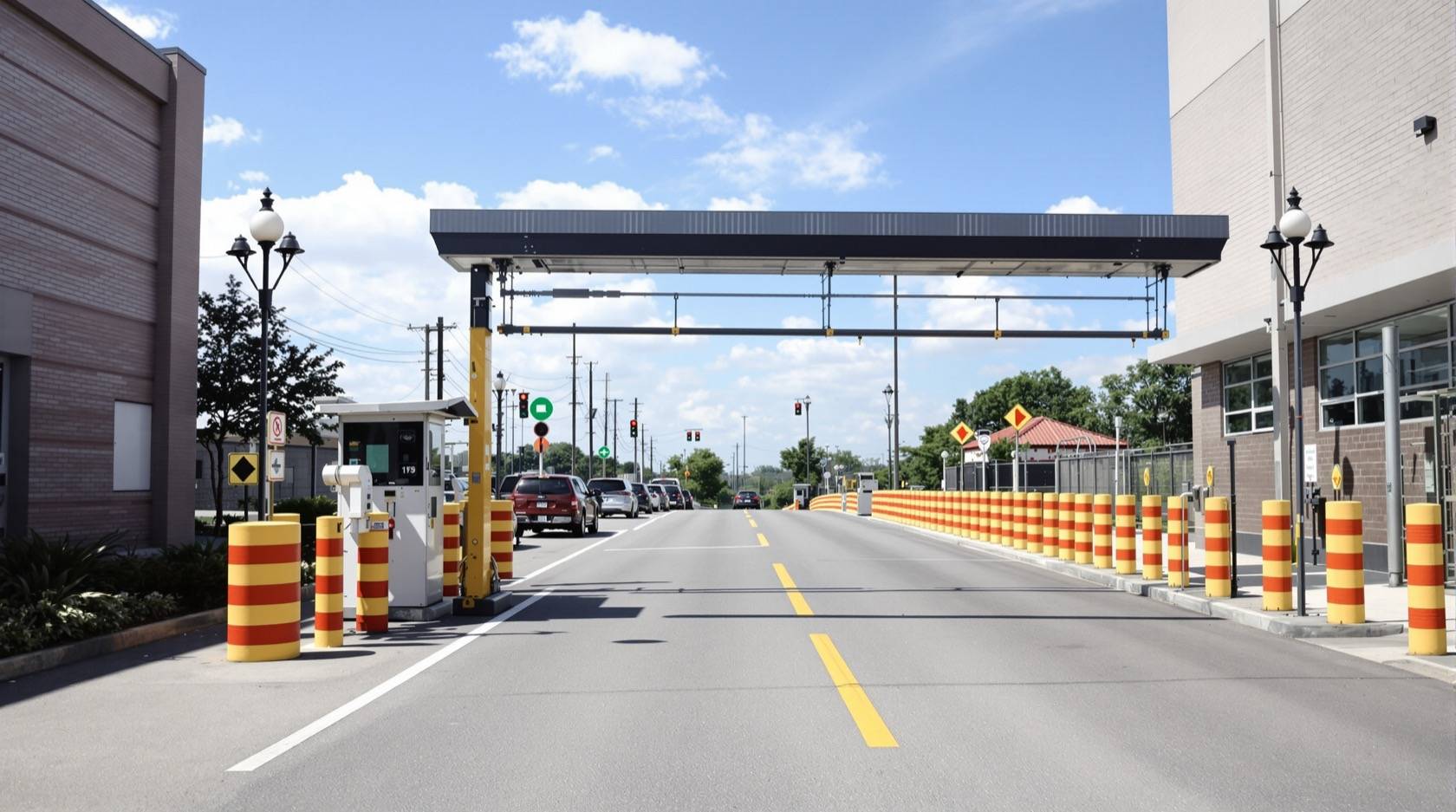
Drive up to almost any Indian gated society, office park, mall basement or factory gate and the same slim striped arm rises to let you in and drops behind you. The boom barriers at these entrances are the workhorse of Indian vehicle access - cheap, fast, easy to integrate with an RFID tag or a number-plate reader, and familiar to every driver. They are excellent at one job: managing honest traffic, letting one authorised vehicle through at a time, and creating a log of who came and went. But they are routinely sold, bought and trusted as security barriers, and that is the mistake this guide exists to correct. A boom barrier is a traffic-control and access-management device, not an anti-ram barrier - a determined vehicle simply drives straight through the arm, snapping a thin aluminium or steel boom like a matchstick.
This guide is part of Studio Matrx's perimeter security library and its pillar overview, and it sits directly beside the gate security guide and the automatic gate systems guide. It covers what a boom barrier is and is not, the types and specs that matter, how it integrates with RFID, ANPR, loop detectors and CCTV, the life-safety must-haves that are missing from far too many Indian installations, and - crucially - when you actually need a bollard or a road blocker instead of, or behind, the boom.
Scope, safety and the honest limit. This guide helps you plan, decide and coordinate a controlled vehicle entrance - assess the traffic and the threat, choose the right barrier, and route the mains-electrical and civil work to licensed trades. It is strictly about managing access and understanding a barrier's limits, never a how-to for defeating one. Three hard truths for this topic: a boom barrier does not stop a determined ram - it stops honest, cooperative drivers only; a boom must have loop and photocell safety so the arm never falls on a vehicle or a person; and it must never trap traffic or block the fire tender in a power cut - manual release and battery backup are not optional in India. This is educational guidance, not legal advice.
What a boom barrier is - and what it is not
Be clear-eyed from the start. A boom barrier is a motorised, counter-balanced arm that rises and falls to open or close a single vehicle lane. Its entire security value comes from three things, none of which is physical strength:
- Managing honest traffic. It admits one authorised vehicle per action - the resident with a valid RFID tag, the visitor the guard clears, the ticket-holder in a paid parking lane. It turns a wide-open gate into a metered, one-at-a-time lane.
- Logging and accountability. Paired with RFID or ANPR it records every entry and exit with a timestamp, plate and tag - a deterrent and an investigation trail that an open gate never gives you.
- Enforcing timing and anti-tailgating. A well-set boom with a safety loop closes promptly behind each vehicle, so a second car cannot slip through on the same authorisation - the single most valuable security behaviour a boom offers.
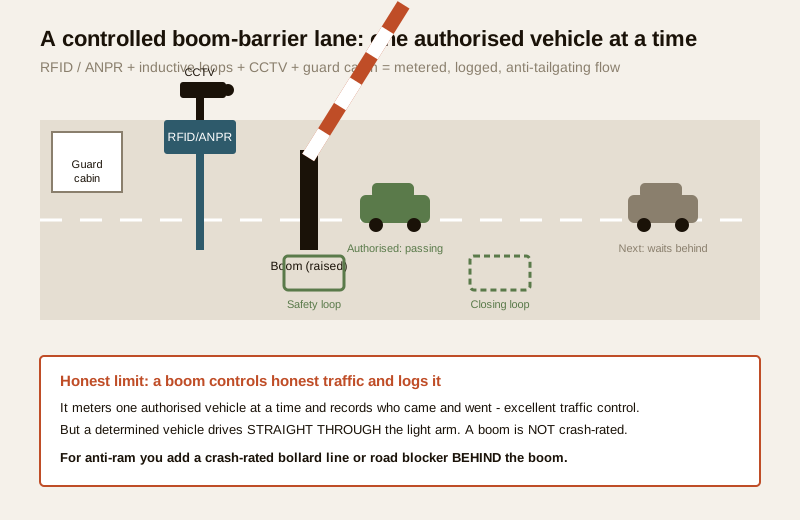
What a boom barrier cannot do is resist force. The arm is designed to be light so the motor can move it quickly and so it does the least harm if it does strike something - which is exactly why a car at any speed drives clean through it. A boom is not crash-rated, is not hostile-vehicle mitigation, and will not stop a ram-raid, a stolen vehicle used as a weapon, or anyone who simply decides not to stop. Treating the boom as your anti-ram defence is the central India error this guide names. If the threat you are defending against includes a vehicle used as a weapon or a determined forced entry, the boom is the traffic layer and you add a crash-rated bollard line or a road blocker as the ram layer behind it.
| Question | Boom barrier answer |
|---|---|
| Does it control honest, cooperating traffic? | Yes - its core, well-designed job |
| Does it log entries and exits? | Yes, with RFID / ANPR integration |
| Does it stop tailgating (one vehicle per authorisation)? | Yes, if a safety loop and correct timing are set |
| Does it stop a determined driver who will not stop? | No - the arm breaks; it is not a physical barrier |
| Is it crash-rated / anti-ram (PAS 68 / IWA 14)? | No - never; use rated bollards / road blockers for that |
| Does it need mains power and a fail-safe? | Yes - manual release and battery backup are mandatory in India |
Types of boom barrier and the specs that matter
Boom barriers differ mainly in the shape of the arm and the speed of the motor. Match the type to the lane width, the ceiling height and the traffic volume.
- Straight-arm boom. The default - a single straight arm for lanes up to roughly the arm's reach. Simple, cheap, reliable. The arm length must exceed the lane width so it fully blocks the opening.
- Folding / articulated-arm boom. The arm folds at a hinge as it rises, for low-ceiling locations such as basement parking where a full straight arm would hit the slab. Essential where headroom is tight; slightly slower and dearer.
- Fence-boom (skirted) barrier. The arm carries a hanging fence or drop-skirt below it so people cannot duck under the raised or lowered arm - used where pedestrian crossing under the boom is a problem, or for a tidier visual closure.
The specifications that actually decide a good installation:
- Arm length vs lane width. The boom must fully span the lane with margin. A common Indian mistake is an arm too short for a widened lane, leaving a gap a two-wheeler slips through.
- Opening speed and duty cycle. High-traffic entrances (a busy society at 9 am, a mall basement) need a fast barrier (a low opening time in seconds) rated for a high duty cycle - many operations per hour, continuously - or the motor overheats and fails. A low-traffic side gate can use a slower, cheaper unit.
- Motor type. Electromechanical is the norm and easiest to service in India; higher-end hydraulic units suit very high-duty industrial gates. Either way, insist on local spares and service - a boom down for weeks because a part is imported is a security and traffic failure.
- Housing and ingress protection. The cabinet must suit an outdoor Indian entrance - rated for dust and monsoon water, powder-coated against corrosion, with the electronics protected.
| Boom type | Best for | Watch-out |
|---|---|---|
| Straight-arm | Most surface lanes, societies, offices | Arm must exceed lane width; no low ceiling |
| Folding / articulated | Basement / low-headroom parking | Slightly slower; costs more; still not anti-ram |
| Fence-boom (skirted) | Stopping people ducking under the arm | Heavier arm; check motor duty and speed |
Integration: RFID, ANPR, loop detectors and CCTV
A bare boom with a guard pressing a button is only marginally better than a manned gate. The value comes from integration, which is where a boom earns its place in an access-control scheme - coordinate it with the wider gated-society access control design.
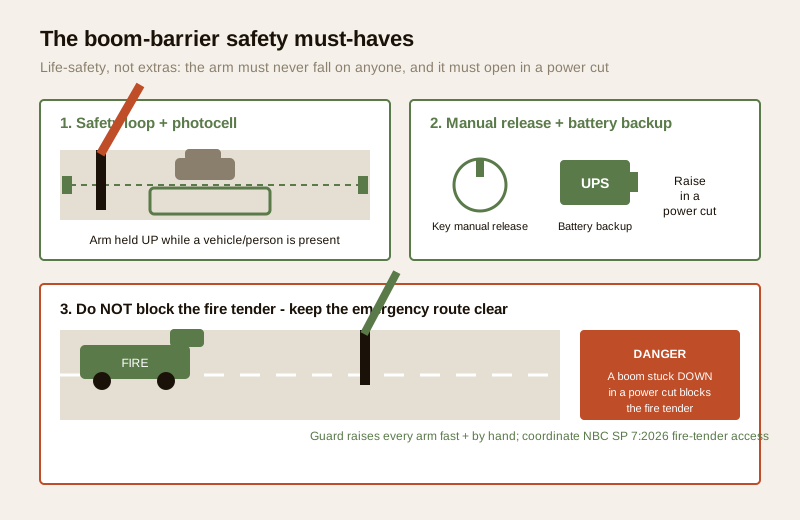
- RFID / tag readers. Long-range UHF RFID tags on resident and staff vehicles trigger the boom hands-free at speed, with each tag mapped to a person and a flat/unit - fast throughput and a clean log. This is the standard society and office resident lane.
- ANPR / number-plate recognition. An automatic number-plate-recognition camera reads the plate and opens the boom for a whitelisted vehicle, or logs and flags an unknown one for the guard. Pair ANPR with the boom for visitor management and a plate record of everyone.
- Ticket / access-control systems. Paid-parking booms integrate with a ticket or pay-on-foot machine; corporate lanes tie to the building access-control system and card credentials.
- Inductive loop detectors. Loops cut into the road do two safety-critical jobs: a safety loop under the arm holds the boom up while a vehicle is present so it never falls on the car, and a closing / free-exit loop triggers the arm to open for an exiting vehicle or to close once the vehicle has fully cleared. Loops are not optional on a serious installation.
- CCTV. An overhead CCTV camera at the lane captures the driver and vehicle at the point of authorisation, ties the video to the entry log, and covers the blind spot a boom alone leaves. The perimeter alarm and control room see the same event.
The boom controls traffic; the bollard stops the ram
This is the distinction that governs the whole vehicle-barrier decision, so it deserves its own section. A boom barrier and a crash-rated barrier are not competitors - they do different jobs and, on a high-threat site, they work together.
- The boom is the traffic-control layer. It meters honest vehicles, checks authorisation, logs the movement and enforces one-at-a-time. It is fast, cheap and driver-friendly - and it offers no physical resistance.
- The bollard or road blocker is the anti-ram layer. A crash-rated bollard line or a road blocker / rising kerb is engineered to absorb the impact of a vehicle used as a weapon and stop it dead, tested to a recognised impact standard - PAS 68 or IWA 14 (verify the rating class for the threat and speed at your site). An un-rated decorative bollard, like the boom, will not stop a determined vehicle; only a rated one will.
For most Indian residential societies and low-threat offices, the honest-traffic control the boom gives, plus tyre killers on a strictly one-way lane where wrong-way entry is the concern, is proportionate. For a high-threat site - a data centre, an embassy, a critical facility, a crowded public frontage exposed to hostile-vehicle attack - you add a crash-rated line behind the boom so that even a driver who smashes the arm is stopped by the bollards. Never let a boom barrier be sold to you as the anti-ram solution; it is not.
The safety must-haves - missing from too many Indian installs
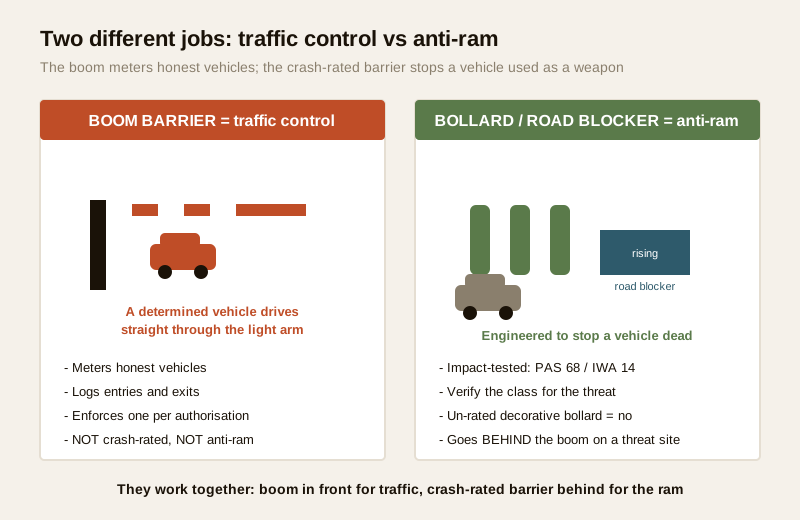
A boom barrier is a moving mechanical arm at head and windscreen height in a lane full of people and vehicles, and in India it runs on a supply that fails regularly. That makes safety features life-safety features, not extras. The following are non-negotiable, and their absence is exactly what goes wrong on Indian sites.
- Safety loop / photocell (the arm must never fall on a vehicle or person). An inductive safety loop under the arm and/or an infrared photocell beam across the lane detects a vehicle or person in the path and holds the boom up - so the arm physically cannot descend onto a car bonnet, a windscreen, a two-wheeler rider or a pedestrian. A boom set on a blind timer with no loop and no photocell is the classic cause of an arm crashing down on a car or hitting a rider - a real and repeated Indian failure. Insist on it.
- Manual release and battery backup (India power cuts). When mains power fails - which it does routinely - the boom must be openable. A manual release (a key-operated clutch or crank) lets the guard raise the arm by hand, and a battery / UPS backup keeps the barrier and its safety devices working through an outage. A boom that locks down in a power cut and cannot be raised is not just an inconvenience; it can block the fire tender or the ambulance.
- Do not block the fire tender - emergency access and fail-safe. The entrance must keep a clear emergency route. Coordinate the lane with fire-tender access under NBC (SP 7:2026) and your State Fire Services, define whether the barrier fails open or closed on power loss for your risk, and make sure the guard can raise every arm fast and by hand. A society that gates itself so tightly that a fire tender cannot get in has traded a small risk for a catastrophic one.
- Anti-tailgating timing. Set the closing loop and timing so the arm drops promptly once a vehicle clears - long enough that it never falls on the car it just admitted, short enough that a second vehicle cannot slip in on one authorisation. A slow-closing arm with no loop is how tailgating happens under a boom that everyone assumed was "secure".
- Safety edge and visibility. A pressure-sensitive safety edge on the arm, high-visibility red-and-white striping, and a lamp or LED on the boom tip reduce impact harm and make the arm obvious to drivers at night and in the monsoon.
Throughput and lane design
A boom barrier sits inside a lane, and the lane is where most real-world problems are designed in or out. Coordinate the civil layout with the gate security and automatic gate design.
- Separate entry and exit, and separate residents from visitors. A single shared lane throttles at peak. High-traffic societies and offices run dedicated entry and exit lanes, and a fast RFID resident lane separate from a slower, guard-checked visitor lane so residents are not stuck behind a visitor being verified.
- Stacking and queuing space. Leave enough approach length that a queue at the boom does not spill back onto the public road. A boom too close to the gate line creates a hazard and blocks the street at peak.
- Reader position and read range. Place the RFID reader far enough ahead that the tag reads and the arm is rising before the vehicle reaches it, so throughput stays smooth - but not so far that the wrong vehicle triggers it.
- Pair the boom with the pedestrian route. Vehicles use the boom lane; people should use a separate turnstile or wicket gate beside it, so nobody walks in the vehicle lane and nobody tailgates a car on foot under the arm.
- Duty-cycle sizing for peak. Size the barrier's speed and duty rating for the busiest ten minutes of the day, not the average - the school-run and office-start peaks are when a slow or under-rated boom fails.
For setting-specific layouts, see the guides for gated communities, apartments and commercial buildings; the whole entrance sits within the building security systems and home security picture and the wider security hub. Route the mains supply and any cabling through the electrical hub.
India realities to design out
A handful of failure patterns recur at Indian boom-barrier entrances. Name them, then design them out.
- The boom treated as security. The commonest error - a society believes its striped arm is stopping intruders, when it only stops honest drivers. Anyone who will not stop drives through it. Set expectations honestly and add a rated barrier if the threat needs one.
- Tailgating under a slow-closing arm. No safety loop, a long timer, and a second vehicle slips in behind the first on one tag. Fix with a closing loop and correct timing.
- No safety loop or photocell - the arm falls on a car. Booms sold and installed cheap, without loops or photocells, that drop on bonnets, windscreens and two-wheeler riders. Non-negotiable to fix.
- Stuck down in a power cut, blocking the fire tender. No battery backup and no accessible manual release, so an outage locks the arm down and the emergency route is blocked. Mandate battery backup and a fast manual release, and coordinate fire-tender access.
- Arm too short or lane too wide. A two-wheeler or the widened lane leaves a gap the boom does not span. Match arm length to the lane.
- Under-sized for peak traffic. A cheap, slow, low-duty boom that overheats or crawls at the morning peak, queues onto the road and gets propped open "temporarily" - which becomes permanent. Size for peak.
To pressure-test your entrance against these, the site perimeter security assessment, the home security risk scorecard and the anti-vehicle barrier selector walk through the weak points and help match the barrier to the actual threat and traffic.
Safety, liability and when to bring in a professional. Plan the entrance and choose the barrier type yourself, but hand the specialist parts over. A licensed electrician must do the mains supply, earthing and any UPS/battery wiring - a boom is powered equipment in a wet outdoor lane. Insist the installer fits and commissions the safety loop and photocell so the arm can never fall on a vehicle or person, and the manual release and battery backup so it can be raised in a power cut - their absence is a genuine injury and life-safety liability. Coordinate the lane with fire-tender access under NBC (SP 7:2026) and your State Fire Services so the barrier never blocks the emergency route. And remember the honest limit: a boom is not anti-ram - if the threat includes a vehicle used as a weapon, specify crash-rated bollards or road blockers to PAS 68 / IWA 14 (verify the class) and have them installed by a competent contractor. This is educational guidance, not legal advice.
Key takeaways
- A boom barrier controls honest traffic, it does not stop a ram - its value is metering one authorised vehicle at a time, logging entries and exits, and enforcing anti-tailgating; a determined vehicle drives straight through the light arm.
- Integration is where a boom earns its place - RFID or ANPR for hands-free authorisation and a plate/tag log, inductive loop detectors for safety and closing, and CCTV over the lane tie the boom into real access control.
- The safety must-haves are life-safety, not extras - a safety loop and photocell so the arm never falls on a vehicle or person, and a manual release plus battery backup so it can be raised in an Indian power cut without blocking the fire tender.
- The boom is the traffic layer; the bollard is the ram layer - for a real hostile-vehicle threat, add a crash-rated bollard line or road blocker tested to PAS 68 / IWA 14 behind the boom; never trust the arm to do that job.
- Design the lane, not just the barrier - separate entry, exit, resident and visitor flows, leave stacking space off the public road, size the duty cycle for peak, and give pedestrians their own turnstile route so nobody walks under the arm.
References
- PAS 68 and IWA 14 (impact-test standards for vehicle security barriers / hostile-vehicle mitigation) - the recognised international ratings to cite where a crash-rated bollard or road blocker sits behind or instead of a boom barrier; verify the rating class for the threat and approach speed at your site. A boom barrier itself is not crash-rated.
- National Building Code of India (SP 7:2026), Bureau of Indian Standards, together with your local municipal / development-authority bye-laws - govern the gate line, setbacks and, critically, fire-tender / emergency-vehicle access at a controlled vehicle entrance; verify the current edition and local requirement via https://www.services.bis.gov.in/ and your development authority.
- State Fire Services / local fire authority - for the emergency-access route, keep-clear widths and the requirement that an automatic barrier must never block a fire tender or ambulance; confirm the local rule before finalising a gated vehicle entrance.
- Manufacturer specifications and the applicable machinery / gate-automation safety standard (verify) - for the boom's duty cycle, arm length, safety loop, photocell, safety edge, manual release and battery backup; have a licensed electrician and a competent installer specify and commission the barrier and its safety devices.
This is an educational overview, not legal advice. It is strictly about controlling honest vehicle traffic at an entrance and understanding a boom barrier's limits, never about defeating one. A boom barrier is not an anti-ram device; crash-rated barriers, mains-electrical work, life-safety loop and photocell devices, and fire-tender access are for licensed professionals and are governed by local bye-laws and fire rules that vary. Verify any standard's current status via the BIS catalogue and confirm local rules before you install.
Export this guide
Related Guides — Deep-dive reading
Boom Barrier Not Operating (2026): Diagnose a Stuck or Dead Parking Gate Arm
A calm, ordered diagnostic path for a facility or security team when an apartment, office or parking boom barrier will not raise or lower, is stuck up or down, or will not respond — starting with the manual release so a jammed arm never traps a vehicle or blocks a fire lane, then power, trigger, safety loop and mechanical causes, and a clear line between safe checks and technician-only work.
SecurityVisitor Vehicle Management in India: A Professional Guide
The everyday weak point of every society and office gate is not the resident's car — it is the visitor, the cab, the delivery rider and the contractor who must be let in without opening the whole park to anyone. This is the process, not just the hardware: verify at the gate before the boom lifts, park visitors away from resident bays, and never jam the gate a fire tender needs.
SecurityParking Access Control in India (2026): Boom Barriers, RFID, ANPR and Safe Vehicle Entry
How to control vehicle entry and exit at a society, office or mall car park: long-range RFID tags, ANPR number-plate reading, QR for visitors, boom barriers and bollards, and the safety loops that stop a barrier ever striking a car or a person.
SecurityRelated Tools — Try Free
Gate Access Planner
Size a vehicle gate or boom barrier — lanes needed at peak and the right credential speed (RFID, ANPR, manual).
Gate FlowAccess-Control Battery-Backup Calculator
Size the standby battery so an access system keeps running through a power cut, with an egress life-safety note.
Battery BackupHome Security Risk Scorecard
Score your home across six security layers — perimeter, entry points, lighting, detection, alarm and habits — and get a prioritised action plan.
Security Scorecard