
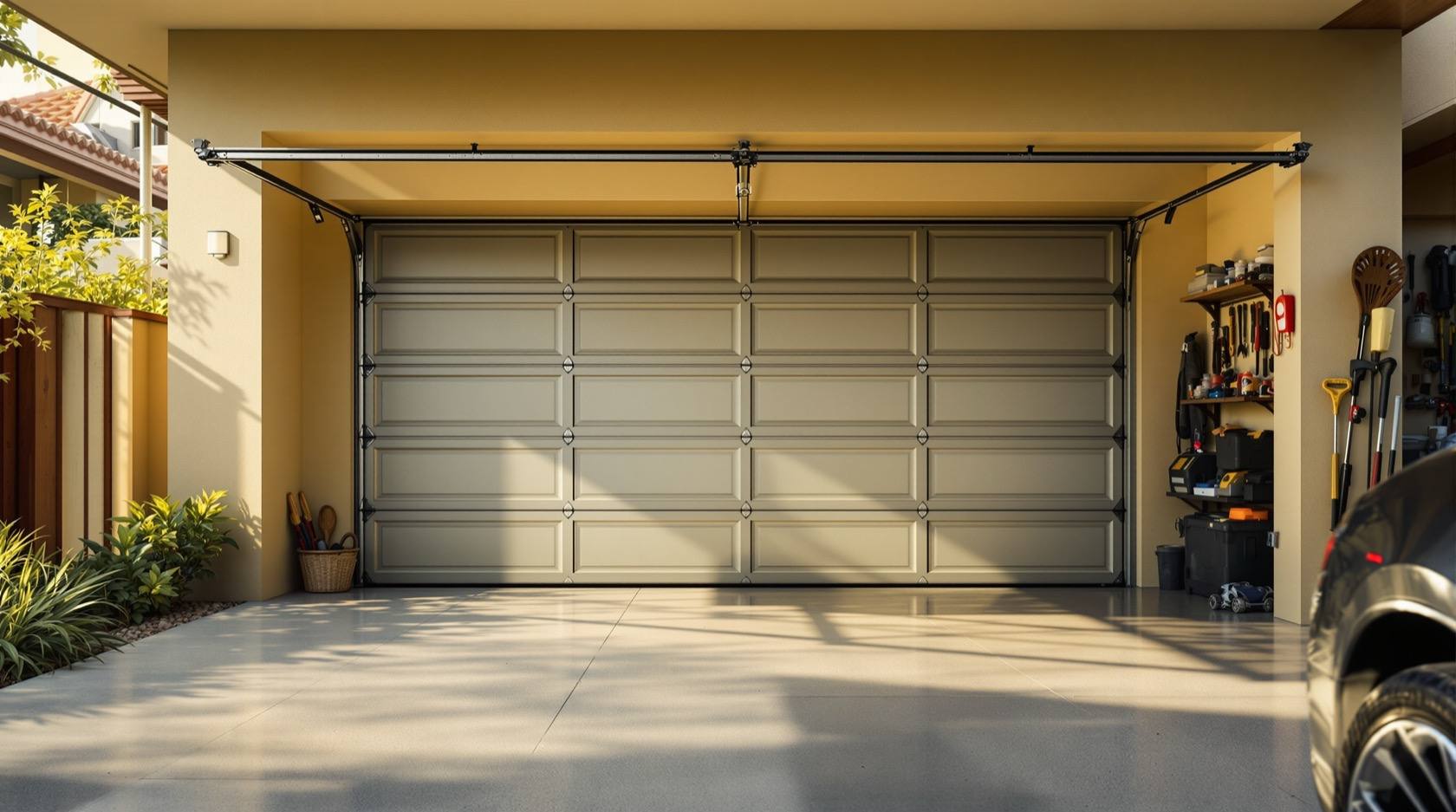
Garage Security in India (2026): Hardening the Home Garage as a Door Into Your House
The private home garage holds your car, tools and cycles behind a door that is usually weaker than your front door — and if it is attached, it is a direct route into the house. Here is how to harden the garage door, the internal door, the contents and the risks.
The garage is the door most Indian homes forget to lock. The front door gets a good frame, a deadbolt, a chain and a peephole; the garage gets a light metal shutter, a remote that lives in the car, and a habit of being left half-open while the family carries in the shopping. Yet the garage is often where the most is at stake. It holds the car, but it also holds the expensive drill set, the two cycles, the ladder, the spare LPG cylinder, the boxes of "we might need this". And in a great many Indian homes the garage is attached — a shared wall and a plain internal door away from the bedrooms. Burglars know all of this. A garage is frequently not the target itself but the chosen way in: the weakest door on the plot, opening onto the softest door into the house.
This guide is the home-garage chapter of Studio Matrx's parking and garage security hub. It is written for the homeowner deciding how to protect a private garage — attached or detached — not a communal car park, which the pillar guide and the basement and stilt guides handle separately. It sits inside the wider home security hub and complements the ultimate home security guide.
Scope and safety. This guide helps you plan and decide. Fitting or adjusting an automatic opener, running mains cabling, wiring a light or sensor circuit, and installing an EV charger are jobs for a licensed electrician and a qualified installer — never DIY on the garage mains. Nothing here should block your own escape: an attached garage is part of your home's exit path, so any lock on the internal door must open from the inside without a key, and a security shutter must never trap someone during a fire. Fire and carbon-monoxide points below are safety-critical. This is educational content, not legal or engineering advice; verify structural, electrical and fire matters against the National Building Code and your local bye-laws.
Why the garage is a soft target
Three things combine to make the garage the weak link.
It holds a lot. The car is the obvious prize, but the everyday loss in India is smaller and quieter: the cordless drill and tool kit, the good bicycle, the electric two-wheeler, the pressure washer, the camping gear. These are portable, saleable and rarely marked. A thief who cannot start the car will happily leave with an armful of tools and both cycles.
Its door is usually the weakest on the plot. A front door is a considered purchase; a garage door is often whatever the builder fitted — a thin rolling shutter or a light up-and-over panel, sometimes with a single central lock and flexing tracks. It is the largest opening in the house and frequently the least resistant.
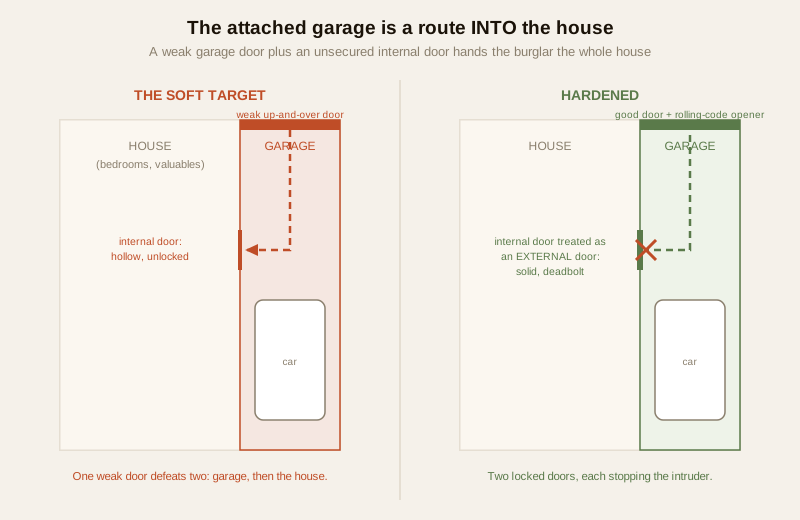
When attached, it is a route in. This is the point most people miss. Once someone is inside an attached garage, they are working out of sight of the street, with the garage door closed behind them, with time and often with your own tools to hand — and only a plain internal door between them and the house. That internal door is very often a hollow-core door with a simple latch, weaker than the garage door they just beat. The garage turns two modest barriers into one easy path.
The garage door is the weak point
Start where the burglar starts. Most garage break-ins are not brute-force smashes; they exploit the door, the opener or the remote.
Door types and their weaknesses.
| Door type | Common weakness | What helps |
|---|---|---|
| Rolling shutter | Thin slats, a single central lock, can be levered or the bottom rail forced up | A rigid, good-gauge shutter with side locks or ground bolts; a shutter is convenience, not high security |
| Up-and-over (one panel) | Flexes at the corners; the emergency-release cord is often reachable | Ground bolts or side latches; shield the release; a defeat-resistant opener |
| Sectional (panels on tracks) | Relies on the opener holding it down; gaps at the top | A good opener with a locked or braced track; close the top gap |
| Roller (auto, insulated) | Depends entirely on the motor and its release | A quality motor, a physical lock for when away, a shielded release |
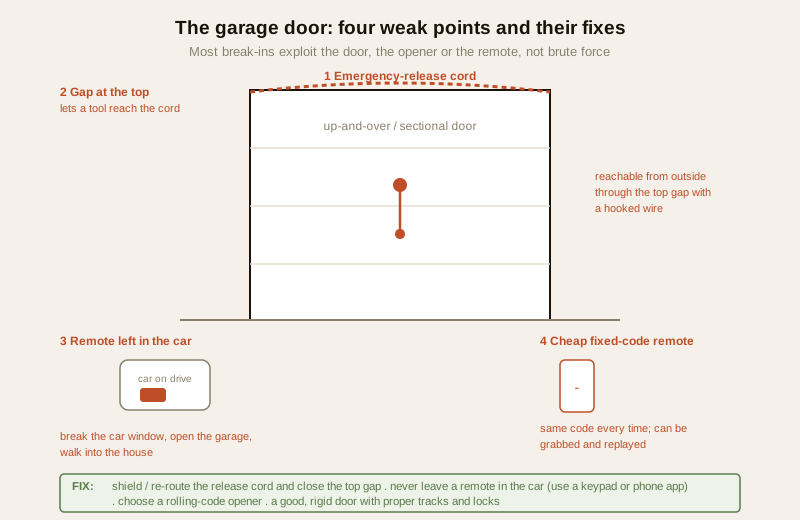
The emergency-release cord. Automatic openers have a red pull-cord that disengages the motor so you can lift the door by hand in a power cut — essential and often mandatory. On some doors, especially up-and-over and sectional, that cord can be reached from outside: a hooked wire pushed through the gap at the top of the door snags the cord, disengages the motor, and the door lifts. The fix is not to remove the release (you must keep it) but to shield or re-route it — a release-guard shield, a shorter cord, or a lock that immobilises the door when you are away — and to close the gap the wire comes through. Ask your installer specifically about this.
The remote in the car. The commonest own-goal: the garage remote clipped to the sun visor of a car parked on the drive. Break the car window, press the button, the garage opens — and if it is attached, so does the route into the house. Keep the opener off the car: use a keypad by the door, a phone-app opener, or carry the remote. See smart garage locks and openers for keypad and app options.
Fixed-code versus rolling-code remotes. A cheap opener with a fixed code sends the same signal every time; that signal can be captured and replayed to open the door later. A rolling-code (hopping-code) opener changes the code on every press, so a captured signal is useless. When you choose or upgrade an opener, insist on rolling-code — it is standard on any decent modern unit and the single most important electronic feature. The home garage door guide covers door construction and opener choice in depth.
Harden the door — and the internal door most of all
Hardening the garage is a set of layers, not one purchase.
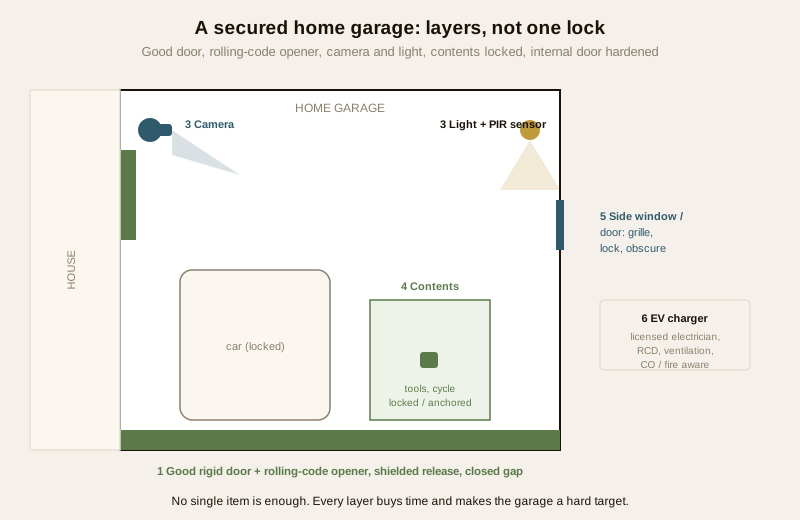
- A good door. A rigid door of decent gauge, on proper tracks, with locks that engage the frame or floor — not a flexing panel with one central catch. For manual doors, add ground bolts or side locks so the door cannot be levered up at a corner.
- A defeat-resistant opener. Rolling-code, with the release shielded and the top gap closed, and a manual lock or "vacation" mode for when you are away for days.
- The internal garage-to-house door — treat it as an external door. This is the most important line in this guide. Because the garage gives an intruder cover and time, the door between the garage and the house should be as strong as your front door, not the hollow-core latch-only door builders usually fit. That means a solid-core or metal door, a proper frame, and a deadbolt — turnable from the inside without a key for escape. If the door has glass or a side window, make sure the deadbolt cannot be reached by breaking it. Bring the door and window library to bear: the door and window security guides apply to this internal door exactly as they do to a front door, and the parking entry door guide covers the entry-door principles. This one upgrade removes the whole "garage as a route into the house" threat.
- Do not leave it open. The commonest failure of all needs no lock-picking: the garage door left open. An open garage advertises the tools, the cycles and a way in, to everyone who passes — the courier, the delivery rider, the person casing the lane. Close it every time, not just at night. A door left open for "just five minutes" is how most opportunist garage thefts happen.
Windows, side doors and the contents
Windows and side doors. Many garages have a side pedestrian door or a small window — often the least-considered openings on the plot. The side door should have a solid leaf, a good frame and a deadlock; the window should have a grille or bars and, ideally, obscured glazing so nobody can inventory your tools from the lane. A garage window left on a latch is an easy, quiet entry that bypasses the big door entirely.
Lock the contents — even inside the garage. A locked garage is a barrier, not a vault. Assume someone may get in and make the second layer count:
- Anchor and lock cycles and e-two-wheelers to a floor or wall anchor with a good lock, even indoors — see bicycle parking security. Cycle and two-wheeler theft is the commonest real loss.
- Lock tools in a cabinet or chest rather than leaving them loose on a bench where they are both stolen and used to break further in.
- Lock the car, every time, even inside the garage, and keep nothing of value visible in it. General vehicle measures are in vehicle theft prevention.
- Keep house keys, spare car keys and documents out of the garage — never on a hook by the internal door.
Lighting, a camera and a sensor. A garage benefits from the same three-part treatment as any approach: light, a camera and a sensor.
- Lighting on the garage approach and inside removes the dark cover a thief relies on — plan it with parking and driveway security lighting. A PIR-triggered light that snaps on when someone approaches at night is both a deterrent and a prompt to you.
- A camera covering the garage door and its approach records the person, not just the car — position it using CCTV placement for parking and driveways. Aim it only at your own garage, drive and boundary; if it catches a shared lane, place notice and follow the DPDP Act, 2023 spirit of collecting only what you need.
- A door/opening sensor on the garage door and internal door tells you the moment either opens — useful for the "did I leave it open?" question and for an alert when you are away. If your home has a panic-button scheme, the garage entry is a sensible place to include.
EV charging, fire and carbon monoxide
A home garage is increasingly also a charging point and, always, a fire risk beside the house. Security must not come at the cost of safety.
EV charging. A home EV charger is a mains installation for a licensed electrician — a dedicated circuit, the right cable, an RCD/earth-leakage device and a proper earth, never a socket-and-adaptor bodge on the garage's existing lighting circuit. Charge with the cable un-pinched and the charger's ventilation clear; do not leave a car charging unattended overnight on a doubtful circuit. The security angle matters too: a garage cable and connector are a theft target in their own right (EV cable theft is real in India). See EV charging fire safety for the safety detail and EV charging bay security for protecting the charger and cable.
Fire. A garage stores fuel, oils, paint, a spare cylinder, the car itself — it is a genuine fire load right against the living space of an attached home. Keep flammable stores minimal and ventilated, keep a suitable extinguisher to hand, and do not turn the internal door into a fire path: it should be a solid, well-fitting door (which happens to be exactly what security wants too — the same door serves both).
Carbon monoxide — never run an engine in a closed attached garage. Warming up the car, or leaving it idling, in a closed attached garage lets carbon monoxide seep into the house through the internal door and shared wall. It is colourless, odourless and can be fatal. Reverse out before you idle; never run an engine or a generator in a closed garage; and if the garage is attached, a CO alarm on the house side of the internal door is cheap insurance.
Attached versus detached — what changes
| Consideration | Attached garage | Detached garage |
|---|---|---|
| Main threat | A route into the house | A store to be stripped, out of sight |
| Top priority | Harden the internal door to external grade | The door, windows and contents, since no one is nearby |
| Fire / CO | CO into the house; internal door as a fire barrier | Fire risk to a separate structure; less CO risk to people |
| Surveillance | Covered by the house's cameras and lights | Needs its own light, camera and sensor — it is isolated |
| Leaving it open | Opens the house too | Advertises the contents to the lane |
An attached garage lives and dies by the internal door and the CO point. A detached garage is more like a small outbuilding — it needs its own eyes on it, because when you are in the house you cannot hear or see it.
Key takeaways
- The home garage is often the weakest door on the plot, and when attached it is a direct route into the house — burglars frequently choose it as the way in.
- The garage door is the weak point: shield the emergency-release cord, close the top gap, never leave a remote in the car, and choose a rolling-code (not fixed-code) opener.
- Treat the internal garage-to-house door as an external door — solid, framed, with a deadbolt that opens from inside for escape. This single upgrade removes the "garage as a route in" threat.
- Do not leave the garage open — the commonest failure — and secure the side door and windows with a solid leaf, deadlock and grille.
- Lock the contents inside (anchor cycles and tools, lock the car), add light, a camera and a sensor, and mind EV, fire and carbon-monoxide safety — engage a licensed electrician for the opener and any EV or mains work.
Where to go next
- Complete guide to parking and garage security — the pillar for the whole cluster.
- Home garage door guide and smart garage locks and openers — door construction, openers and keypad/app control.
- Parking entry door security and the door and window security library — for the internal door.
- EV charging fire safety and EV charging bay security — for a garage charge point.
- Bicycle parking security and vehicle theft prevention — for the contents and the car.
- Ultimate home security guide — the whole-home picture. Score your setup with the home security risk scorecard.
References
- National Building Code of India (SP 7), Bureau of Indian Standards — for structural, electrical, fire and life-safety aspects of a garage, including escape paths and the internal door as a fire barrier. Verify the current edition and any figures against the BIS catalogue: https://www.services.bis.gov.in/ and your local municipal bye-laws.
- Digital Personal Data Protection Act, 2023 — aim any garage camera only at your own garage, driveway and boundary; place notice where a shared lane is caught and collect only what security needs.
- Manufacturer specifications for garage doors, automatic openers (confirm rolling-code), release-guards, EV chargers and RCD/earth-leakage devices — follow the vendor's rated installation and have mains work done by a licensed electrician.
This is an educational overview, not legal or engineering advice. Fitting openers, wiring lights or sensors, and installing an EV charger are licensed-electrician tasks; never let a security measure block your escape from an attached garage, and verify any standard's current status via the BIS catalogue before relying on it.
Export this guide
Related Guides — Deep-dive reading
The Complete Guide to Parking and Garage Security in India (2026): Access, CCTV, Lighting, People-Safety & Vehicle Protection
The pillar overview of parking and garage security for Indian apartments, offices and homes — how to control who enters, watch every corner, light and de-isolate the space, and protect the vehicles, without ever blocking the escape route or the fire tender.
SecuritySmart Garage Doors & Openers for Indian Homes (2026 Guide)
A garage door is the largest moving object in most homes, and a heavy one. This guide covers smart garage doors and openers for Indian homes end to end — motorised sectional, roller and sliding doors; what a smart opener actually adds; retrofit controllers versus smart openers; the safety sensors you must never skip; rolling-code security; the manual release for power cuts; integration with cameras and your wider smart home; and real brands with ₹ prices.
Smart HomeBicycle Parking Security in India: Stand, Lock and Location
Cycles, e-cycles and e-scooters are among the most-stolen things in an Indian society precisely because we treat them casually. The fix is the same three-part logic as any theft: a good stand to lock to, a good lock used well, and a good place to leave it.
SecurityRelated Tools — Try Free
Home Security Risk Scorecard
Score your home across six security layers — perimeter, entry points, lighting, detection, alarm and habits — and get a prioritised action plan.
Security ScorecardSecurity Vendor Evaluation Scorecard
Rate a CCTV/security installer or guarding agency across eight weighted criteria for a hire / negotiate / walk-away verdict.
Vendor ScorecardCCTV Camera Coverage & Count Calculator
Estimate how many CCTV cameras you need, the NVR channels, storage in TB for your retention period, and an indicative all-in cost with GST.
CCTV Calculator